Published: August 2025 | Last updated: May 2026
A rash that turns up after a sexual encounter is one of the fastest paths to a 3 a.m. internet spiral. The reassurance most readers came here for is real: most rashes have nothing to do with HIV. The acute HIV seroconversion rash exists and it is recognizable, but it has a specific look, a specific timeline, and it almost never shows up alone. The next sections walk through what it looks like on lighter and darker skin, which conditions get mistaken for it, and the testing window where an at-home result will actually answer your question.
What an HIV Rash Actually Looks Like
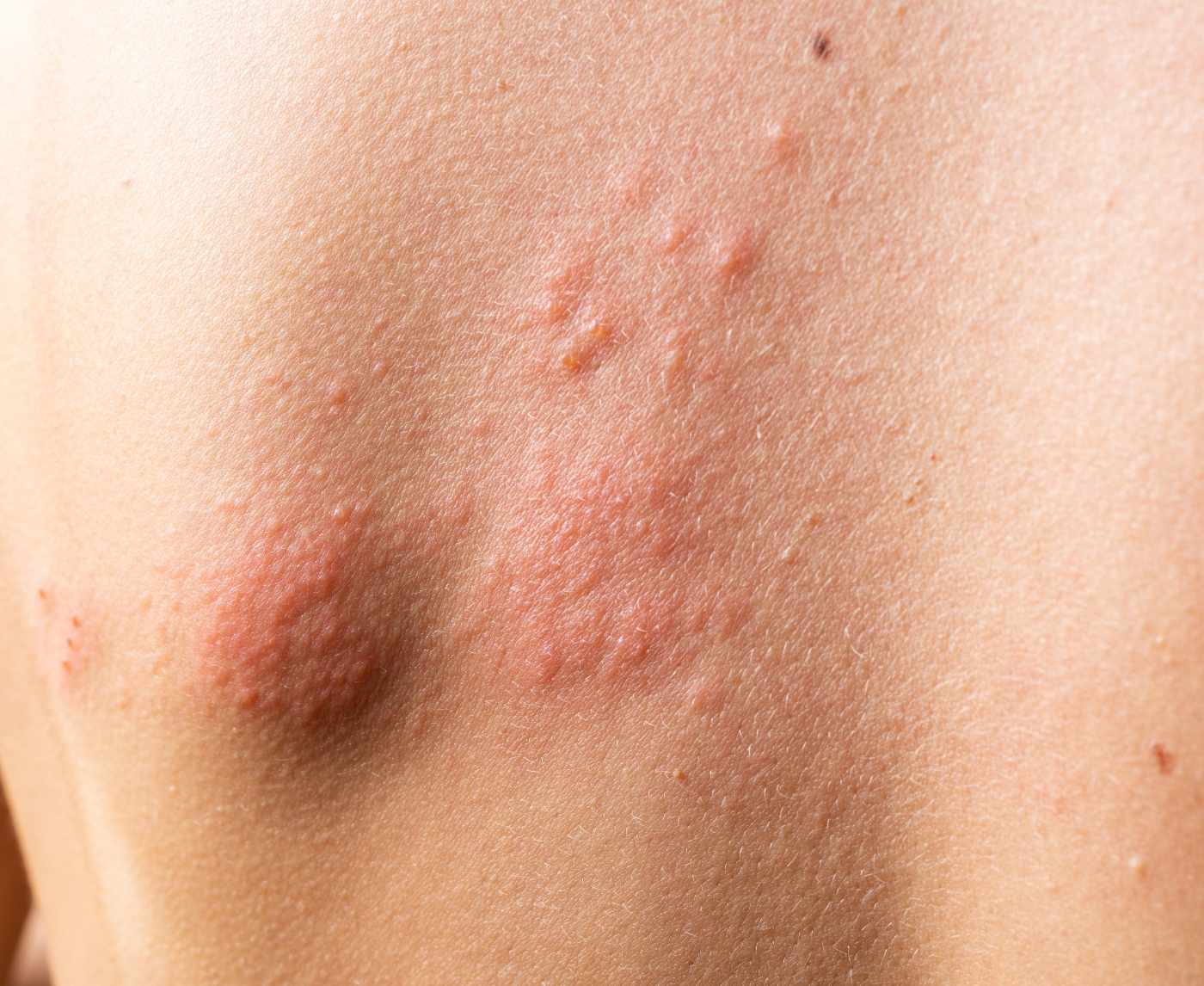
The medical name for the acute HIV rash is a maculopapular exanthem. In plain English, that is a mix of flat discolored patches and slightly raised bumps spread across a wide area of skin. The look is a diffuse flush rather than a cluster of sores, a single ulcer, or a blister. It covers broad areas of the body and tends to stay put rather than shifting around the way hives do.
On lighter skin tones the rash appears reddish or pink, often described as a mild sunburn with uneven coloring. On medium to dark skin the contrast is much lower, presenting as deep purple or brownish discoloration that is easy to miss in dim lighting or a quick mirror check. The rash still appears; it is simply subtler and easier to dismiss as nothing. Many people with a new HIV infection develop a noticeable rash as part of the acute illness (hiv.gov symptoms overview), and those who do typically experience the full flu-like illness around it.
Itch is variable. Some people find the rash mildly itchy, others not at all. It does not have the intense, unbearable itch of an allergic reaction or scabies. The skin in the affected area may feel slightly warm or tender. The chest and back tend to flare first, then the upper arms, neck, and sometimes the face. The rash does not preferentially appear on the genitals during the acute stage; those locations belong to other conditions, which the rash-versus-rash sections below cover. A subset of people do see involvement of the palms or soles, which overlaps with the secondary syphilis pattern and is worth flagging to a clinician.
What does an HIV rash look like?
An acute HIV rash appears 2 to 4 weeks after exposure as widespread, flat or slightly raised discoloration. It looks reddish or pink on lighter skin and deep purple or brownish on darker skin, usually covering the chest, back, and upper arms. It almost always shows up alongside flu-like symptoms (fever, fatigue, sore throat, swollen lymph nodes), called acute retroviral syndrome. No rash alone confirms HIV. The reliable answer comes from an antibody test 6 weeks after exposure, with confirmation at 12 weeks (<a href="https://www.cdc.gov/hiv/" target="_blank" rel="noopener">CDC HIV basics</a>).
What an HIV Rash Looks Like on Different Skin Tones
Most descriptions of an HIV rash, and most of the images that dominate search results, are based on how it presents on lighter skin. That is a real gap, because the rash looks different on brown and dark skin tones. If you are working from the “red spots” description and your skin is darker, you may be looking for the wrong thing entirely.
On lighter skin the seroconversion rash presents as pink or red spots, relatively easy to notice against a pale background. On medium to darker skin tones the same rash typically appears as purple, deep brown, or hyperpigmented patches that can be harder to distinguish from the surrounding skin in certain lighting. The texture and pattern stay the same: flat or slightly raised, symmetrical, spread across the trunk and face. The color difference is significant enough to cause real confusion, and timing matters when it comes to HIV exposure and testing.
According to CDC HIV surveillance data, Black and Hispanic individuals are disproportionately affected by HIV in the United States, and gaps in health information that do not reflect diverse skin tones contribute directly to delayed testing and delayed diagnosis. Knowing what the rash looks like on your skin is part of being informed enough to act.
| Feature | What to Expect |
|---|---|
| Appearance | Flat patches and slightly raised bumps; widespread, not clustered |
| Color (lighter skin) | Red or pink, like uneven sunburn |
| Color (darker skin) | Deep purple or brownish, lower contrast, easier to miss |
| Primary location | Chest, back, upper arms, sometimes neck, face, palms, or soles |
| Itching | Mild or absent |
| Timing | 2 to 4 weeks after exposure, typically around 3 days after fever onset |
| Duration | 5 to 8 days on average, with the full acute illness clearing in 1 to 2 weeks |
| Usually with | Fever, fatigue, sore throat, swollen lymph nodes |
| Confirms HIV? | No. Testing is the only confirmation |
HIV Rash and Common Look-Alikes, Side by Side
The acute HIV rash has a recognizable shape: flat or slightly raised, widespread, symmetrical, paired with flu-like illness. The rashes most often confused with it look different in ways that are easier to see than to describe. The figures below show the typical maculopapular pattern on lighter and darker skin alongside two of the most frequent imitators, pityriasis rosea and acute hives, so the difference is immediate rather than abstract.
None of these visual cues replace a test. Skin photos vary by lighting, camera, and stage of the rash, and conditions can overlap in unusual presentations. Treat the gallery as a reference point for what each typically looks like, and rely on testing at the right window for the actual answer.
Most Rashes After Sex Are Not HIV
Before going deeper, this point matters: the vast majority of rashes that send people searching turn out to be something far more common than HIV. The mainstream culprits are allergic reactions, friction or heat irritation, drug reactions, and a handful of benign viral skin conditions that have nothing to do with sexual transmission. If the encounter was protected or low-risk, a rash is almost certainly not the acute HIV presentation.
Hives and allergic reactions
Hives (urticaria) are raised, welted patches that spread fast and look alarming, but they behave differently from the HIV rash. Individual welts from an allergy show up and fade within hours, shifting around the body. The HIV seroconversion rash does not do that. It stays put, persists for days, and is not triggered by a food, detergent, or new product. If your rash responds to an antihistamine, that points squarely at an allergic cause.
Pityriasis rosea
Pityriasis rosea is another common misidentification. It is a benign viral rash that begins with one large herald patch and then spreads across the trunk in a pattern often described as a Christmas tree, which is exactly the location people associate with HIV. The differences are real: pityriasis rosea is scaly rather than smooth, follows that distinctive trunk distribution, and does not come with flu-like illness. It also has nothing to do with sexual contact.
Heat rash, eczema, contact dermatitis
Heat rash clusters in areas where sweat gets trapped (under the arms, behind the knees, in the groin crease) and improves when you cool down. Eczema tends to be chronic and concentrated in inner elbows, behind the knees, hands, and is tied to known triggers like cold weather or harsh soaps. Contact dermatitis from a new detergent, lotion, latex, or fabric typically appears where the irritant touched the skin. Seborrheic dermatitis around the scalp and face, and stress hives, round out the list. None of these are dangerous and none of them are HIV.
Drug reactions
A drug-induced maculopapular rash is the trickiest comparison. It can look nearly identical to an HIV seroconversion rash: widespread, red, symmetrical. The key question is simple. Did you start a new medication in the past 1 to 3 weeks? Antibiotics, NSAIDs, and certain anticonvulsants are common offenders. Drug rashes typically appear days to weeks after the new drug starts and resolve when the drug is stopped or switched. Clinicians always ask about medication history when evaluating a new rash for exactly this reason.
What changes the picture is the combination: a rash plus a meaningful exposure plus flu-like symptoms appearing 2 to 4 weeks later.
If your rash is not paired with fever, sore throat, swollen lymph nodes, or fatigue, and there was no real exposure event, the odds you are looking at HIV are low. That does not mean your rash is not worth showing to a clinician for the actual cause. It does mean you can step out of the panic loop while you wait for the testing window to open.
When Does an HIV Rash Appear, and How Long Does It Last?
Timing matters as much as appearance. The rash does not show up the next day. It does not appear the same week. Biology has its own schedule, and the schedule is fairly predictable.
After HIV enters the body there is a phase called acute retroviral syndrome, the period when the immune system first recognizes the virus and mounts a response. This typically begins 2 to 4 weeks after exposure. The rash, when it appears, usually develops around 3 days after fever onset and resolves over 5 to 8 days. The whole acute illness, rash included, usually runs its course in 1 to 2 weeks, though in some people it lingers a bit longer.
If you noticed a rash 2 days after a potential exposure, that timeline does not fit acute HIV infection. If you have had a rash for 6 weeks and it is still there, that also does not fit the typical acute presentation. Neither of those things rules out testing. It simply means the rash itself is not tracking with the biology of an HIV seroconversion rash.
The rash resolving is not a sign that everything has cleared. The acute phase of HIV ends whether or not someone gets treatment, and the virus continues to replicate silently for years in some people. That pattern is why so many cases go undiagnosed; the rash fades, people feel better, and they assume it was just a bug.
Exposure, then 2 to 4 weeks, then fever onset, then rash appearing around 3 days after fever, then rash resolving in 5 to 8 days, then the acute illness clearing in 1 to 2 weeks, then a reliable antibody test possible at 6 weeks (confirm at 12 weeks for high-risk exposures).
What Comes With an HIV Rash: Acute Retroviral Syndrome
The reason the seroconversion rash is part of acute retroviral syndrome (ARS) is that it almost always shows up alongside other symptoms, not as a standalone sign. The body's response to a new HIV infection looks remarkably like a bad flu or a case of mono. That resemblance is one of the reasons HIV can go undetected for years; people assume they caught a seasonal bug, feel rough for a week or two, recover, and never connect the illness back to a specific exposure. The CDC reports tens of thousands of new HIV diagnoses each year in the United States, and a meaningful share of those people had been living with the infection unknowingly because the acute phase never registered as more than a bad flu (CDC HIV surveillance and basics).
The typical ARS picture, per CDC HIV resources, includes fever (often 38 degrees Celsius / 100.4 Fahrenheit or higher), profound fatigue, sore throat, swollen lymph nodes in the neck or armpits, muscle aches, and sometimes mouth ulcers or diarrhea. About two-thirds of people who contract HIV develop these flu-like symptoms within 2 to 4 weeks of exposure (hiv.gov symptoms overview). The rash usually shows up a few days into this illness and resolves alongside it.
Not everyone gets ARS. A meaningful share of people experience the acute phase with little or no noticeable illness, which is part of why regular testing matters even without symptoms. If a rash appears completely on its own (no fever, no fatigue, no swollen glands) the probability that it is the acute HIV rash drops sharply. People who experience no ARS at all are still capable of transmitting HIV; the absence of symptoms is not a negative result.
Most people who have flu-like symptoms within 2 to 4 weeks after infection have acute HIV infection. Symptoms can include fever, chills, rash, night sweats, muscle aches, sore throat, fatigue, swollen lymph nodes, and mouth ulcers.
HIV Rash vs. Syphilis Rash vs. Herpes vs. Shingles
Several conditions cause skin changes that people confuse with the HIV seroconversion rash, and the differences are easier to see than to describe. Photos online rarely show the full clinical context, which is part of why distinguishing them by sight alone is unreliable. The patterns below help narrow down what you may actually be looking at.
Secondary syphilis
A syphilis rash, which appears in the secondary stage of untreated infection, has one of the most distinctive presentations: copper-colored spots that very often involve the palms of the hands and soles of the feet. Per the CDC syphilis fact sheet, the secondary rash appears while the primary chancre is healing or weeks after the chancre has healed. That palms-and-soles distribution is uncommon with most other rashes and very characteristic of syphilis. HIV and syphilis can coexist after a high-risk exposure, which is why broader STI testing makes more sense than testing for one infection in isolation.
Genital and oral herpes
Herpes outbreaks, whether oral HSV-1 or genital HSV-2, are localized clusters of blisters or sores in one specific area: around the mouth, on the genitals, inner thighs, or buttocks. Per CDC herpes guidance, outbreaks blister, crust, and resolve in a way that looks nothing like the diffuse maculopapular pattern of an HIV seroconversion rash. They are not a widespread body rash. People often feel a tingling or burning warning before blisters appear, which the HIV rash does not produce. There is also a biological connection worth flagging: an active herpes outbreak with broken skin can raise HIV transmission risk during exposure, and people living with untreated HIV tend to experience more frequent and severe herpes outbreaks because the immune system is less able to suppress the virus.
Shingles
Shingles (herpes zoster) presents as a painful blistered band on one side of the body only, following the path of a single nerve. There is usually burning or hypersensitivity before the rash even appears. An HIV seroconversion rash is bilateral, non-blistered, and does not follow a nerve path. Shingles is also more common and more severe in people with weakened immunity, so a new shingles outbreak in a younger adult is sometimes itself a reason for HIV testing.
The short version: palms and soles point toward syphilis. Localized blisters point toward herpes. One-sided nerve-path blisters point toward shingles. A widespread, flat, flu-associated body rash 2 to 4 weeks after an exposure points toward HIV seroconversion. None of these are confirmed by appearance alone, but the patterns are meaningfully different.
| Feature | HIV Acute Rash | Syphilis Rash | Herpes Outbreak | Shingles |
|---|---|---|---|---|
| Location | Trunk, upper arms, neck | Palms, soles, often torso | Localized: genitals, mouth, thighs | One-sided band on torso or face |
| Appearance | Flat patches and bumps, diffuse | Copper-colored spots, widespread | Clustered blisters that crust | Painful blistered band |
| Itch or pain | Mild itch or absent | Often painless | Painful, burning | Burning before blisters, painful after |
| Timing | 2 to 4 weeks post-exposure | While primary chancre heals or weeks after | Localized blisters or sores after exposure | Reactivation of dormant virus, no exposure event |
| Comes with | Fever, fatigue, swollen glands | Sometimes systemic symptoms | Tingling before blisters | Nerve pain along the affected dermatome |
The Three Stages of HIV: Why the Acute Window Matters
HIV moves through three broad phases, and the seroconversion rash belongs to the first one. Understanding the sequence helps explain why early testing matters and why so many people get caught off guard later.
Acute HIV infection covers the first 2 to 4 weeks after exposure. Viral levels in the blood are very high, the immune system is mounting its first response, and this is when the rash, fever, and other flu-like symptoms appear if they appear at all. People are most infectious to others during this window. The acute illness usually resolves within 1 to 2 weeks.
Clinical latency, sometimes called the asymptomatic stage, follows. The virus continues to replicate and slowly damage the immune system, but most people feel fine and have no visible signs. Without treatment this stage can last for years, sometimes a decade or longer. With effective antiretroviral therapy, viral levels stay suppressed and the immune system stays intact, often indefinitely. This is the stage where regular testing matters most, because the body is not giving you any other clue.
AIDS (advanced HIV disease) is the late stage that develops when untreated HIV has substantially weakened the immune system. The CDC defines it by very low CD4 cell counts or by the presence of specific opportunistic infections and cancers. Symptoms include rapid weight loss, persistent fatigue, chronic diarrhea, recurring fever and night sweats, and infections the body would normally hold off without trouble. Effective antiretroviral therapy keeps the immune system intact and viral replication suppressed, which is what makes early diagnosis worth pursuing rather than putting off.
Testing Windows for Related Infections
Most exposures that raise HIV concern raise concern about other STIs at the same time. Testing windows differ across infections, so a single panel done on day 30 will be reliable for some and too early for others. The table below summarizes the practical windows for at-home antibody and lateral-flow tests; clinic-based NAAT and antigen-antibody panels can sometimes detect infections earlier (CDC STI screening guidance).
The pragmatic plan when one encounter created mixed risk: test once at the longest applicable window (typically 6 weeks for HIV, herpes, syphilis, and hepatitis B; 8 to 11 weeks for hepatitis C) rather than running repeated early tests that cannot yet return a clean answer. Use the time before that window to avoid further high-risk exposures and to flag any significant illness to a clinician for direct evaluation. (Disclosure: stdrapidtestkits.com sells the at-home rapid kits referenced in the banners below; we recommend products based on fit-for-purpose for the reader's concern, not commercial benefit.)
| Infection | At-Home Test From | Notes |
|---|---|---|
| HIV | 6 weeks after exposure | Retest at 12 weeks for confirmed certainty |
| Herpes (HSV-1 and HSV-2) | 6 weeks after exposure | Antibody-based; earlier testing may miss it |
| Syphilis | 6 weeks after exposure | Secondary rash typically appears weeks after the primary chancre heals |
| Chlamydia | About 14 days after exposure | Often no symptoms; worth testing even when nothing seems wrong |
| Gonorrhea | About 3 weeks after exposure | Can present with discharge; antibiotic resistance is rising |
| Hepatitis B | 6 weeks after exposure | Vaccine-preventable; test if unvaccinated |
| Hepatitis C | 8 to 11 weeks after exposure | Longest practical window; patience required for a clean result |

When to Test for HIV After a Possible Exposure
The instinct after a worrying exposure is to test immediately. Testing too early produces a false negative. The test chemistry is working correctly; the body simply has not yet produced enough antibodies for it to detect. A negative result before the window period closes is not a clean answer; it is too early for a clean answer.
For HIV, the reliable testing window for at-home antibody tests opens at 6 weeks after exposure (CDC HIV testing guidance). At that point an antibody-based HIV rapid test can return a strongly reliable result from a finger-prick blood sample in minutes. A negative at 6 weeks is highly reassuring. Retesting at 12 weeks gives confirmed certainty and closes the window.
It helps to know what test types exist and what each one can do:
- Antibody-only rapid tests. These detect the antibodies your body makes against HIV. Most at-home lateral-flow kits (including the kit sold on this site) fall into this category. Window period roughly 23 to 90 days, with most positives detectable by 6 weeks; confirm conclusively at 12 weeks if exposure was high risk.
- Antigen/antibody (4th generation) lab tests. These detect both HIV antibodies and the p24 antigen, a viral protein that appears in blood earlier than antibodies do. Available through clinics and labs, with a shorter window (typically 18 to 45 days after exposure per CDC HIV testing guidance).
- Nucleic acid tests (NAT). These look directly for the virus's genetic material in blood. They have the shortest window (around 10 to 33 days) and are the most expensive; usually reserved for very recent high-risk exposures, occupational exposure protocols, or symptomatic acute infection.
For at-home use after a possible exposure, a rapid antibody test at 6 weeks (with a 12-week retest if exposure was high risk) is the standard approach. If you need an answer sooner, a clinic-administered 4th-generation Ag/Ab test is the option to ask about.
If it has been fewer than 72 hours since a high-risk exposure, post-exposure prophylaxis (PEP) is a 28-day medication course that can prevent HIV from establishing infection. The 72-hour cutoff is firm. After that, PEP is no longer effective. Contact a clinic, urgent care, or emergency department promptly if you are inside that window. The <a href="https://www.cdc.gov/hiv/" target="_blank" rel="noopener">CDC HIV prevention resources</a> cover PEP eligibility and access.

How to Read Your Rapid HIV Test Result
An at-home rapid HIV test gives a result in roughly 15 minutes. Three outcomes are possible, and each one means something specific.
Negative. No detectable HIV antibodies were found in the sample. If the test was taken at or after 6 weeks post-exposure, that is a strong indicator. If the exposure was within the previous 3 months and you have not yet hit the 12-week mark, retesting at 12 weeks confirms the result conclusively for high-risk exposures. A negative result does not protect against future exposures; it only reflects the period before the test.
Positive. HIV antibodies were detected. A positive on a home rapid test should always be confirmed at a clinic or lab with a follow-up test. False positives on rapid tests are uncommon but possible, and confirmatory testing is standard practice. If a confirmatory test is positive, treatment with antiretroviral therapy (ART) typically begins within days. People living with HIV who take ART consistently can reach an undetectable viral load and cannot transmit the virus sexually. A confirmed positive result is the starting point for that treatment course.
Invalid. If the control line on the test does not appear, the result is invalid regardless of what other lines you see. This usually means the test was not run correctly or the kit had a problem. Repeat the test with a fresh kit, following the instructions carefully.
Take a photo of the test cassette before disposing of it. Contact a sexual health clinic, primary care provider, or local public health service the same day to arrange a confirmatory blood test. Treatment is most effective when started early, and a single positive home test is not a final diagnosis on its own.
Skin Conditions in Later-Stage HIV
The seroconversion rash is not the only skin story in HIV. People living with HIV who are not on effective treatment, or whose viral load is poorly controlled, can develop a range of skin conditions caused by the immune system's progressive weakening. These are secondary presentations, not acute infection signs, and they look completely different from the seroconversion rash.
Herpes zoster (shingles) is significantly more common and more severe in people with compromised immunity. It presents as a painful blistering rash following a single nerve pathway, typically a stripe along one side of the chest, back, or face. Molluscum contagiosum, normally a minor self-limiting viral infection, can become extensive and difficult to control when the immune system cannot suppress it. Eosinophilic folliculitis presents as an itchy, persistent rash of red bumps around hair follicles, most commonly seen in advanced HIV. Seborrheic dermatitis (the red and flaky patches around the nose, eyebrows, and scalp) is both common in the general population and disproportionately severe in people with HIV. Kaposi sarcoma, a cancer associated with human herpesvirus 8, shows up as larger purple or brown patches that do not resolve on their own and is strongly linked with late-stage disease.
Drug reactions are a separate category. Some antiretroviral medications can cause rashes, usually mild and self-limiting, occasionally more serious. The rare but severe Stevens-Johnson syndrome involves a rapidly spreading, blistering rash with fever and pain that requires emergency care. Anyone starting a new HIV medication who develops a rash should let their prescriber know, but most are manageable without stopping treatment. Early diagnosis and effective antiretroviral therapy dramatically reduce the likelihood of reaching this stage; the serious skin manifestations above appear almost exclusively in people whose infection has gone unmanaged for years.
Anyone on HIV medications who develops a rapidly progressing rash with blistering, fever above 101 degrees Fahrenheit, mouth or eye sores, or difficulty breathing should seek emergency care immediately. Stevens-Johnson syndrome is rare but life-threatening. Do not stop medication on your own, and do not wait for a routine appointment; go to an emergency department or call your provider's urgent line.
What to Do If You Think You Have an HIV Rash
If your skin has prompted enough worry that you have reached this section, the practical sequence below works in order of urgency: the 72-hour PEP window first, the 6-week testing window second, and a steadier head while you wait that makes the difference between a useful pause and a damaging spiral.
If a high-risk exposure happened fewer than 72 hours ago, contact a clinic, urgent care, or emergency department about PEP before doing anything else. The 28-day medication course is highly effective at preventing infection if started in time, and the 72-hour cutoff is firm. Past that window, the next concrete action is the 6-week antibody test. Use the time between to avoid further high-risk exposures and to flag any significant flu-like illness to a clinician (mono and other viral illnesses produce a similar picture and benefit from direct evaluation).
Documentation is worth doing while the rash is fresh. Photograph it with the date stamped on it, note where it started and how it spread, and track any other symptoms: fever, sore throat, fatigue, swollen lymph nodes, mouth sores. A clinician working through a possible diagnosis later finds that timeline far more useful than a verbal description. At the 6-week mark, an at-home HIV antibody rapid test returns a result in minutes from a finger-prick. A negative at 6 weeks is highly reassuring; a follow-up at 12 weeks closes the question.
The mental side matters too. The rash often shows up in the head and heart before any test result does. Sleep, eat, talk to someone you trust, and try to step out of the loop where panic itself becomes the larger problem. The NHS HIV resource covers what to expect from the testing process if you would like a walk-through before booking or ordering a kit.
FAQs
- What does an HIV rash actually look like?
- An HIV rash covers broad areas without clustering, unlike herpes (grouped blisters in one spot) or hives (raised welts that shift within hours). On lighter skin it reads as reddish-pink; on darker skin as deep purple or brown. Flat patches and slightly raised bumps mix together, chest and back first, appearing 2 to 4 weeks after a real exposure alongside fever, fatigue, and swollen lymph nodes.
- How soon after exposure does an HIV rash appear, and how long does it last?
- The rash tends to arrive 2 to 4 weeks post-exposure, around 3 days into the fever that precedes it, and clears within 5 to 8 days on its own. A rash appearing within 48 hours of an exposure does not fit this timeline, because the biology takes longer to play out. The 6-week mark is when an antibody test will give a reliable answer, regardless of whether a rash appeared.
- Where on the body does an HIV rash usually appear?
- The trunk first, meaning chest and back, then the upper arms, neck, and sometimes the face. It tends to be widespread and roughly symmetrical. Palms and soles can be involved in a minority of cases, which overlaps with the secondary syphilis pattern; localized clusters on the genitals point more toward herpes than HIV.
- Can a rash appear on the palms of the hands with HIV?
- It can, in a minority of acute HIV cases. The seroconversion rash extends to the palms and soles in some people, which is one feature it shares with the secondary syphilis rash. A rash on the palms alongside other systemic symptoms is worth taking seriously, and testing for both HIV and syphilis at the same time is the sensible move.
- Does an HIV rash look different on darker skin?
- Yes, and this matters clinically. On darker skin the rash presents as deep purple or brownish discoloration rather than the bright red or pink seen on lighter skin. The lower contrast makes it easier to miss, which contributes to delayed diagnosis. Look in good lighting and check the chest and back specifically.
- Is an HIV rash itchy, and does it go away on its own?
- It is mildly itchy for some people and not itchy at all for others. It does not have the intense itch of an allergic reaction or scabies. Without treatment the seroconversion rash usually clears in 5 to 8 days, but the virus stays active. The acute phase ending is the start of the chronic, typically symptom-free stage that can persist for years without antiretroviral treatment.
- Can a rash by itself confirm HIV?
- No. Many conditions produce a similar widespread red or purple rash, including allergic reactions, pityriasis rosea, viral exanthems, and drug reactions. The combination of rash plus a real exposure plus flu-like symptoms is what makes the picture clinically meaningful. Confirmation always requires a test.
- Can stress cause a rash that looks like an HIV rash?
- Yes. Stress hives, anxiety-related skin flushing, and stress eczema can all look concerning. Stress rashes tend to be patchy, itchy, and resolve faster, and they do not come with fever, swollen glands, or the systemic symptoms of acute retroviral syndrome. If the only thing happening is a rash and anxiety, that is a very different picture from HIV seroconversion.
- When is the earliest I can take a reliable HIV test after exposure?
- For antibody-based at-home rapid tests, the window period closes around 6 weeks after exposure for most people; testing earlier risks a false negative. Lab-based 4th-generation antigen/antibody tests can detect HIV earlier, typically 18 to 45 days after exposure per CDC guidance. For full certainty after a high-risk exposure, retest at 12 weeks; a negative at 12 weeks is conclusive.
- U.S. Centers for Disease Control and Prevention. About HIV: symptoms, surveillance, transmission, prevention, and PEP eligibility (including the 72-hour window).
- U.S. Centers for Disease Control and Prevention. HIV testing: types of tests, window periods (including the 18-to-45-day window for laboratory 4th-generation antigen/antibody tests), and recommended retesting after a high-risk exposure.
- U.S. government HIV.gov. Symptoms of HIV: acute infection, clinical latency, and progression, with the about-two-thirds figure for flu-like illness during the 2-to-4-week acute window.
- U.S. Centers for Disease Control and Prevention. STD landing page covering screening guidance and infection-specific fact sheets, including the secondary-stage syphilis rash that involves the palms and soles.
- U.S. Centers for Disease Control and Prevention. Herpes (HSV) overview, including outbreak presentation as localized clusters of blisters or sores rather than a widespread body rash.
- United Kingdom National Health Service. HIV and AIDS overview, including symptom timeline, PEP guidance, and what to expect from the testing process.