Vaginal discharge can be a normal process in a woman's reproductive system, yet many colours, textures, and even odours hint at prevailing health issues a woman may have, including sexually transmitted diseases. While some discharge can be considered normal, colour and consistency can often produce concern, most especially when set in relation to other symptoms. In this article, we are going to discuss the different colours of vaginal discharge, what they may mean, and how they can indicate an STD or other health issues. We'll also take a look at symptoms of STDs, testing, and unusual discharge from the penis or anus.
05 October 2024
7 min read
2678347
Colours of Discharge and Their Meanings
The condition of vaginal discharge usually changes in the course of the menstrual cycle, but there are some certain colours of discharge that may indicate cases of infections or STDs. Understanding what different colours of discharge mean will help you to understand when it may be time to visit the doctor or take an at-home test for STDs.
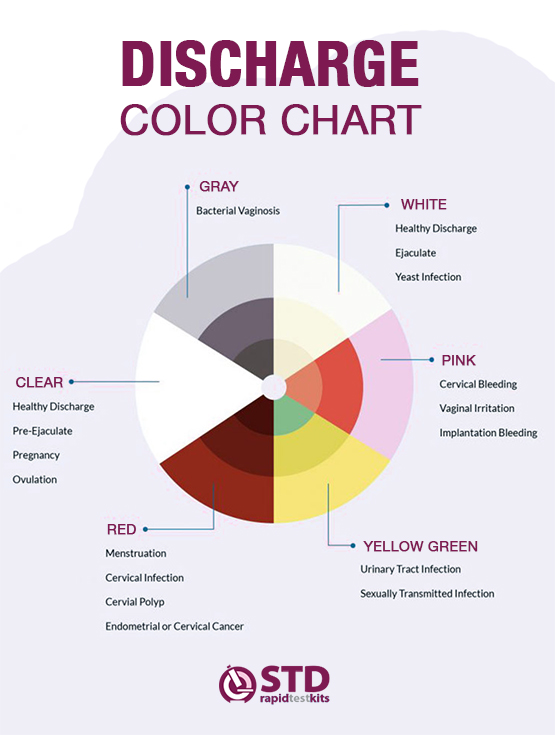
Vaginal Discharge Color Chart and Meanings
Different Shades of Discharge Color and Its Possible Causes
Clear Discharge
Clear discharge typically does not raise any causes for concern, especially when a woman is ovulating. During this time, the quantity of clear discharge increases. It's usually elastic and doesn't have any smell or irritation.
Meaning: Normal, healthy discharge related to ovulation or sexual arousal.
White Discharge
White discharge can be normal, and it can range in consistency, but thick, white discharge that resembles cottage cheese means you have a yeast infection.
Normal white discharge: Thin and milky, not typically dangerous.
Yeast infection discharge: Thick, white, clumpy. May be associated with itching, burning, or irritation of the vulva.
Pink Discharge
Pink discharge often means that there is some blood mixed with normal vaginal secretions. This can be due to implantation bleeding in early pregnancy, light spotting before the start of the menstrual period, or irritation due to sexual activity.
Meaning: Can be normal after intercourse or can be a sign of implantation bleeding or early pregnancy.
Yellow Discharge
Yellow discharge can vary in color. A light yellow generally isn't a cause for concern, but bright yellow discharge, especially if it's thick or has a foul odor, can be a sign of infection.
This may indicate bacterial infection or STDs such as chlamydia or gonorrhea.
Yellow-Green Discharge
A yellow-green discharge most often indicates that you have an infection, such as trichomoniasis—an STD caused by a parasite.
High suspicion of trichomoniasis, especially with a strong bad odor, itching, or irritation.
Green Discharge
Green discharge is an indication of infection, especially STDs like trichomoniasis. It is usually foamy and with a bad smell.
Meaning: Usually, this discharge is related to trichomoniasis or other bacterial infections.
Brown-Yellow Discharge
Brown-yellow discharge often means the presence of old blood, which could be considered as normal when it occurs after menstruation or due to spotting between periods. However, it can point to a more serious condition, such as cervical infection or even early stages of cervical cancer.
Meaning: It can be because of old blood being discharged; nonetheless, it could also mean infection if it lasts long or is pursued with odor or other types of discomfort.
Red-Yellow Discharge
The combination of red and yellow discharge might mean infection with the presence of blood. This color of discharge can occur at any time due to the combination of an infection and slight bleeding.
Meaning: It might signify infection, especially in case of pelvic discomfort or pain.
Possible STDs and Symptoms
There are numerous possible STDs that may affect discharge and it is highly necessary to know the symptoms so you do not let it reach an advanced stage of complications. Below are some of the common STDs and symptoms:
Chlamydia
Symptoms: Mostly no symptoms, but when present, symptoms include abnormal discharge, dysuria, and metrorrhagia.
Color of discharge: Yellow or green.
Gonorrhea
Symptoms: Discharge, painful urination, pelvic pain, or no symptoms whatsoever.
Color of discharge: Yellow, green, or cloudy.
Trichomoniasis
Symptoms: Frothy, greenish discharge which has a peculiar odor of fish, itching, and dyspareunia.
Color of discharge: Green or yellow-green.
Yeast Infection
Symptoms: Thick, white, cottage cheese-like discharge, itching, and burning.
Color of discharge: White or yellow.
Bacterial Vaginosis (BV)
Symptoms: Thin, gray or white discharge with a strong, fishy odor.
Discharge color: Gray, white, or yellow.
Syphilis
Symptoms: Sores or ulcers in the genital area, followed by rash and flu-like symptoms.
Discharge color: Syphilis doesn't cause any discharge itself, but it might lead to some sores with accompanying discharge.
Herpes
Symptoms: Painful blisters or sores around the genitals or mouth. Sometimes discharge may come from the sores.
Discharge color: Clear or yellow from the sores.
Testing for STDs with a Home Test Kit
Abnormal discharges that may necessitate treatment can be conveniently and confidentially diagnosed with the assistance of an STD home testing kit. A rapid home test STD testing kit enables you to collect at-home samples yourself for quick results for some of the most prevalent STDs, including chlamydia, gonorrhea, HIV, and syphilis.
Take a sample: Depending on the examination, you can provide a urine sample, blood sample, or vaginal swab.
Home test: Follow the instructions in the kit. Sometimes the result is instant, but at times, you may be required to send a sample to the laboratory.
Get results: Most home tests offer immediate results, prompting you to act accordingly.
Pregnancy Discharge Colors and the Risk of STDs
The nature of vaginal discharge is different during pregnancy, and understanding these differences will help you to distinguish whether you have a normal pregnancy-related discharge or an infection.
Discharge During Normal Pregnancy
Leukorrhea: A thin, white, and milky discharge occurs during pregnancy; this is quite normal and helps to keep the birth canal free from infection.
Pregnancy Discharge Colors and Infections
Yellow, green, or brown discharge: During pregnancy, these colors can be a sign of an infection or sexually transmitted disease. These may further cause complications, such as preterm labor, low birth weight of the baby, or the infections passed on to the baby.
Implantation bleeding: Light pink or brown spotting at times happens when the embryo implants itself into the uterus.
In case of unusual discharge during pregnancy, a doctor should be consulted in order to avoid any risks either to the mother or the baby.
Why Does My Vaginal Discharge Have an Odor?
A bad odor of the discharge is usually from an infection. Common causes include:
Bacterial Vaginosis: Thin gray discharge with a distinct foul smell, like fishy odor.
Trichomoniasis: Frothy green discharge with a foul smell.
Yeast Infection: Generally odorless but sometimes it can have a sour smell.
In cases of a bad smell along with abnormal discharge, one must get tested for infections or STDs.
Discharge from the Penis and Anus
Discharge may occur in other parts of the body other than the vagina, including the penis and anus; it can also be an infection or STD.
Discharge from the Penis
Chlamydia and Gonorrhea: Both these STDs are known for causing yellow or white discharge through the penis and pain while urination.
Trichomoniasis: The STD can result in clear or whitish discharge through the penis.
Discharge from the Anus
STDs: The discharge of the anus caused by gonorrhea, chlamydia, or herpes can be clear, yellow, or green. Itchy and irritated discharge usually accompanies it.
Knowing various colors of discharges and what they mean will help you identify some health issues, including sexually transmitted diseases. Yellow, green, pink, or brown-yellow discharge, whether you have been experiencing the unusual smell of your discharge, should be taken seriously. STD testing is important for timely detection and treatment of infections to avoid complications.









 For Men & Women
 Results in Minutes
 No Lab Needed
 Private & Discreet


