





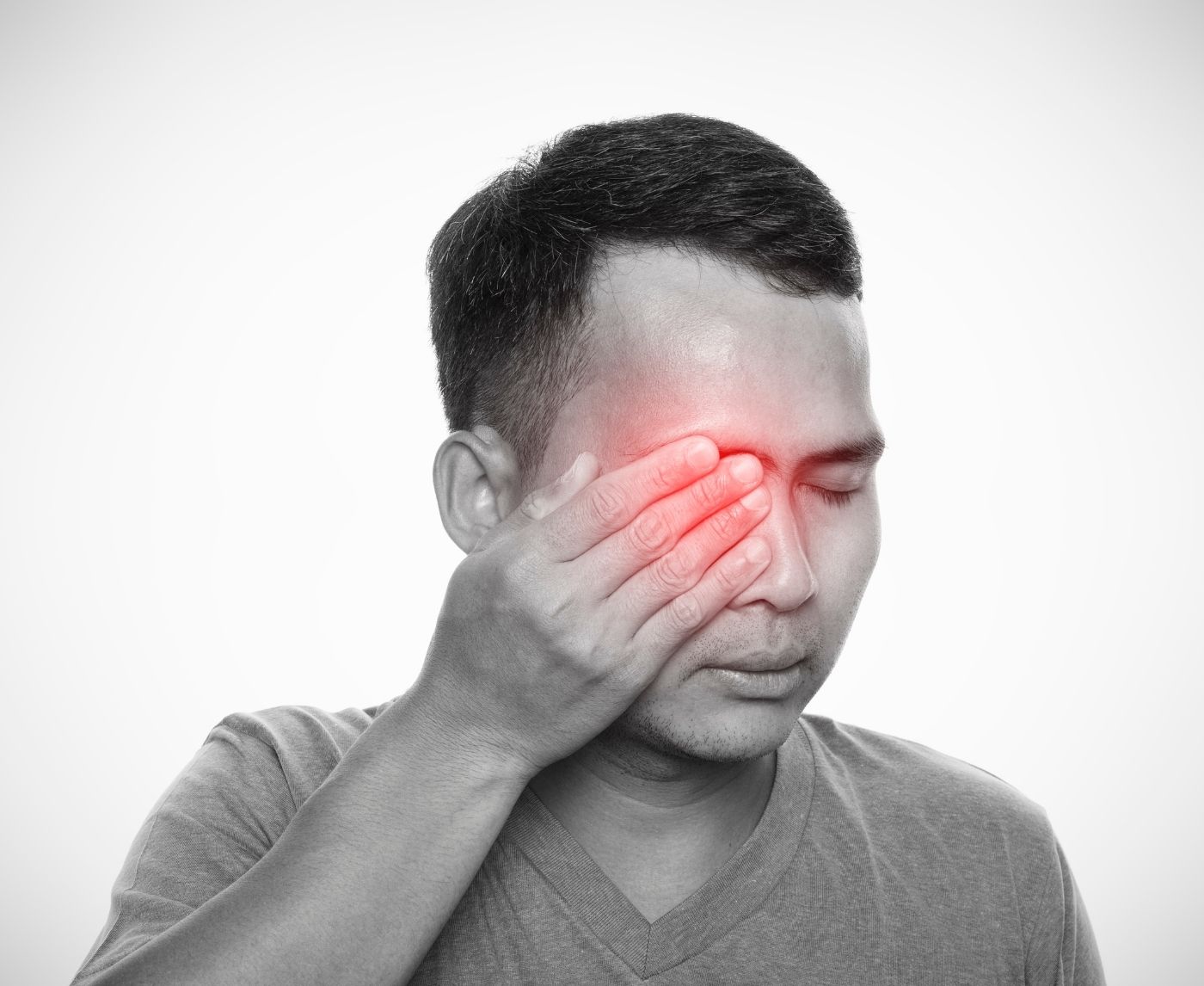

Quick Answer: STD in eye symptoms can look like “pink eye,” but infections like Chlamydia, Gonorrhea, and Herpes can affect the eye through hand-to-eye contact or exposure to infected fluids. If you have thick discharge, significant swelling, eye pain, light sensitivity, or symptoms after a recent sexual encounter, get same-day medical evaluation and consider STD testing.
The Part Nobody Says Out Loud: Yes, STDs Can Infect Your Eyes
Let’s make this simple and shame-free: your eye is mucous membrane tissue, just like your mouth, throat, vagina, and urethra. It’s soft, wet, and vulnerable to germs that love mucous membranes. That doesn’t mean you did something “bad.” It means your body has a normal entry point that infections can exploit.
Most common “pink eye” is viral or typical bacteria and spreads through hand-to-eye contact, contaminated surfaces, and respiratory illness. The CDC specifically notes that viral conjunctivitis is often spread through hand-to-eye contact and contaminated objects, because eyes are easy to inoculate without realizing it. Clinical Overview of Pink Eye (Conjunctivitis).
Now layer sex into that same reality. If someone has a genital infection (even without symptoms), and those organisms get onto hands, towels, bedding, or directly into the eye area, infection becomes possible. It’s not always common, and it’s not always an STD, but it is common enough that clinicians have defined categories for it, including “adult inclusion conjunctivitis” caused by sexually transmitted Chlamydia. Adult Inclusion Conjunctivitis (MSD Manual).
Here’s the micro-scene that usually triggers the panic search. It’s Sunday morning, you’re in the bathroom, one eye swollen, and you’re replaying last night in your head like surveillance footage. The sex was good. You felt safe. But now you’re typing “eye discharge after sex” into your phone with shaky thumbs. That reaction makes sense. It’s your nervous system trying to protect you with information.
How an STD Gets Into the Eye (It’s Usually Not What People Imagine)
People tend to picture a dramatic, direct splash of fluids into the eye. That can happen, but it’s not the most common pathway. The most common pathway is boring and human: hands. You touch genitals, wipe fluids, adjust a condom, clean up, use the bathroom, pull on underwear, rub your eye because it itches, and your eye gets exposed. That’s it. That’s the whole plot.
The CDC’s guidance on conjunctivitis emphasizes how easily eye infections spread through hand-to-eye contact and contaminated materials. In other words: your eye doesn’t need a big event. It just needs contact. CDC: Clinical Overview of Pink Eye.
There’s also a second pathway that’s very real: autoinoculation. That’s the clinical word for transferring germs from one site on your body to another. If you have a genital infection, or a sore, or a recent exposure, it’s possible to move organisms to the eye with your hands. The concept of autoinoculation is also used in other infections where transferring virus from a lesion to the eye can cause ocular involvement, which is why clinicians emphasize avoiding touching eyes after contact with lesions. CDC: Ocular Infection Clinical Considerations.
And yes, there’s the “fluid exposure” pathway. During oral sex, genital-to-mouth contact can put organisms into the mouth and throat. Then kissing, saliva, and hands can create a chain of exposure. This is why the phrase “STDs don’t only affect genitals” is medically true. The head-to-toe body is connected by behavior, not by moral categories.
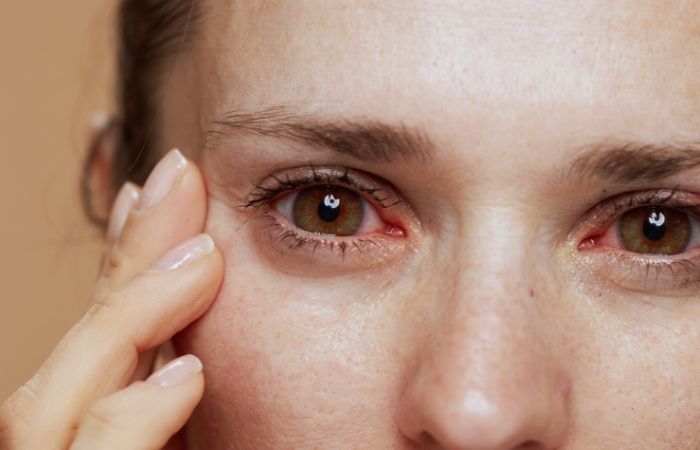
People are also reading: Is It Just a Virus or Could It Be HIV Here’s How to Tell
Pink Eye vs STD in the Eye: The Confusion That Traps People
Most people do not go to urgent care for “mild irritation.” They go when symptoms escalate or when the timing feels suspicious. The problem is that basic conjunctivitis and STD-related conjunctivitis can look similar in the early stages. Both can involve redness, tearing, irritation, and discharge.
Here’s the catch: some STD-related eye infections can be more severe, more aggressive, and more likely to need urgent treatment. Gonococcal conjunctivitis in adults is uncommon, but when it happens, the CDC notes limited data and recommends specialist consultation in some situations. That’s a polite, clinical way of saying: don’t play around with it. CDC: Gonorrhea Treatment Guidelines (Adults) – Gonococcal Conjunctivitis.
One of the most important “trust your gut” moments is this: if your eye feels painful, your vision feels threatened, or light hurts, stop assuming it’s ordinary pink eye. Pain and photophobia can suggest corneal involvement, and that’s the territory where clinicians get serious quickly.
| Feature | Typical Viral/Bacterial Pink Eye | Possible STD-Related Eye Infection |
|---|---|---|
| Timing | Often follows cold/respiratory illness or exposure to someone with conjunctivitis | Can follow recent sexual contact, new partner, oral sex, or known STD exposure |
| Discharge | Watery (viral) or mild-moderate mucus (bacterial) | Can be thick, heavy, mucopurulent, and persistent (especially with bacterial STDs) |
| One eye vs both | Often starts in one eye then spreads to the other | May stay in one eye for longer, especially with chlamydial conjunctivitis |
| Pain / light sensitivity | Usually irritation and grittiness more than sharp pain | Pain, photophobia, or vision changes can raise concern for corneal involvement and need urgent evaluation |
| Other body clues | Cold symptoms, cough, sick contacts | Genital discharge, burning urination, pelvic pain, sores, or recent STD diagnosis in self/partner |
| What to do | Hygiene, avoid contact lenses, seek care if severe or not improving | Same-day evaluation if severe; ask about STD testing and treatment for you and partner(s) |
Figure 1. Pink eye vs STD-related eye infection. The overlap is real, but timing, discharge severity, pain, and sexual exposure clues can change what “smart next step” looks like.
Order Now $129.00 $343.00 Check Your STD Status in Minutes
Test at Home with Remedium
7-in-1 STD Test Kit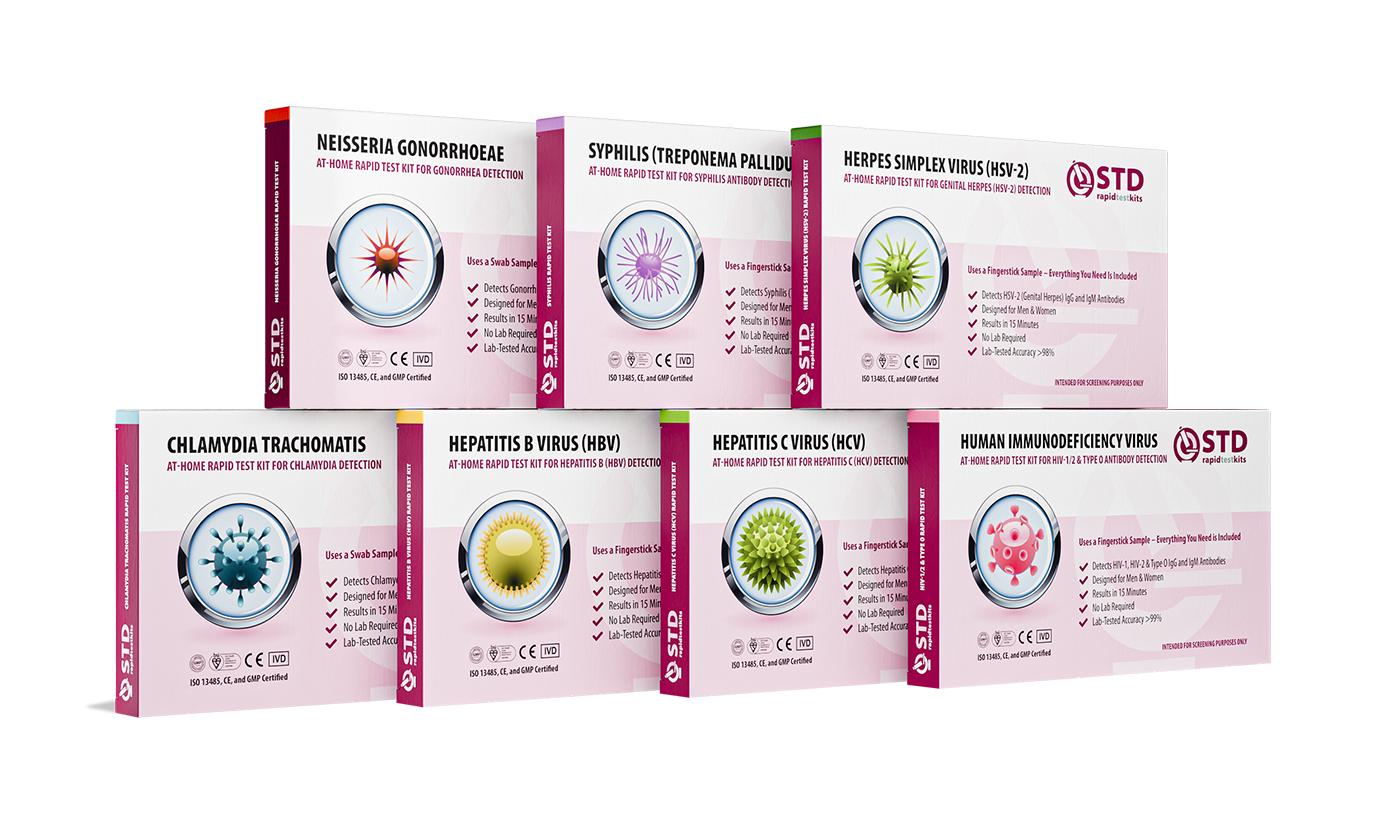
 For Men & Women
 Results in Minutes
 No Lab Needed
 Private & Discreet
For all 7 tests
The Main STDs That Can Show Up in the Eye
Not every STD is likely to infect your eye. When people search “STD in eye,” the conversation usually centers on three infections: Chlamydia, Gonorrhea, and Herpes. Each has a different vibe, a different urgency level, and a different testing strategy.
Think of this section like a flashlight. You’re not diagnosing yourself through a blog. You’re learning which patterns deserve a same-day clinic visit and which patterns suggest “test and plan,” not “panic and spiral.”
When Chlamydia hits the eye (adult inclusion conjunctivitis)
Adult chlamydial conjunctivitis is a defined clinical entity. The MSD Manual explains that adult inclusion conjunctivitis is caused by sexually transmitted Chlamydia and often presents with chronic redness and mucopurulent discharge. It’s not typically a one-day flare that disappears. It can linger and smolder. MSD Manual: Adult Inclusion Conjunctivitis.
Micro-scene: It’s day five. You tried over-the-counter drops. You washed your pillowcases. You stopped wearing contacts. But your eye is still red, still oozing, and you feel that gritty sand feeling every time you blink. You’re annoyed, and you’re also starting to feel weirdly embarrassed, like your body is accusing you. That emotional twist matters, because shame makes people delay care.
Chlamydia is also common overall, and many genital infections have no symptoms, which is why people can unknowingly carry it and spread it. The CDC describes chlamydial infection as the most frequently reported bacterial infectious disease in the U.S., with high prevalence in younger people. CDC: Chlamydial Infections – STI Treatment Guidelines.
When Gonorrhea hits the eye (rare, but urgent)
Gonococcal conjunctivitis in adults is uncommon, which is why people assume it can’t be them. But uncommon does not mean impossible, and when it happens, it can be aggressive. The CDC’s gonorrhea treatment guideline includes a section on gonococcal conjunctivitis and notes limited data, with recommendations that can involve specialist input. CDC: Gonorrhea Treatment Guidelines (Adults).
Micro-scene: You look in the mirror and your eyelid is puffy like you got punched. The discharge is thick, and it keeps coming back even after you wipe it. The eye looks angry. That’s the moment you don’t want a blog; you want same-day medical care. If your eye is very swollen, painful, producing heavy pus, or your vision is changing, treat it like urgent.
To ground this in real literature, there are published case reports of conjunctivitis caused by dual infection with Chlamydia and Gonorrhea, which is a reminder that mixed infections can occur. Case Report: Adult Conjunctivitis Secondary to Dual Infection.
When Herpes hits the eye (ocular herpes / HSV keratitis)
Ocular herpes is a different kind of scary because it can involve the cornea. The CDC explains HSV keratitis as an infection of the cornea caused by HSV, and notes that severe infections can lead to scarring and blindness. That doesn’t mean that’s the most likely outcome for you, but it does mean eye herpes deserves respect and prompt evaluation. CDC: What Causes HSV Keratitis.
Micro-scene: Your eye isn’t just “goopy.” It feels sharp. Light is annoying. You catch yourself squinting all day. Maybe you also have a cold sore history, or you had what looked like a blister near your eye area. Or maybe you don’t know any of that, and your only clue is that something feels deeper than irritation.
Clinicians describe recurrent HSV eye disease as a risk for complications, which is why early diagnosis and treatment matters. NCBI Bookshelf: Herpes Simplex Ophthalmicus (StatPearls).
| Infection | How it can reach the eye | Common eye clues | Why urgency varies |
|---|---|---|---|
| Chlamydia | Hand-to-eye transfer after genital exposure; sometimes concurrent genital infection | Persistent redness, mucopurulent discharge, irritation that doesn’t quit | Often treatable but can linger; partner treatment matters to prevent ping-pong reinfection |
| Gonorrhea | Exposure to infected secretions; hand-to-eye transfer | Marked swelling, thick pus-like discharge, rapid worsening | Can be aggressive; needs same-day treatment and clinician evaluation |
| Herpes | Autoinoculation from oral/genital HSV; contact with lesions or secretions | Pain, light sensitivity, watery tearing, foreign-body sensation, sometimes lid/skin involvement | Corneal involvement can threaten vision; prompt treatment reduces risk |
Figure 2. The big three “STD in eye” culprits. This table is meant to guide urgency and the right questions to ask a clinician, not to diagnose you at home.
“It’s More Common Than You Think” , What That Actually Means
Let’s be precise about the claim in your headline so it stays honest. “More common than you think” does not mean that most pink eye is an STD. It means that STD-related eye infections are common enough that clinicians recognize them, define them, publish guidelines, and see cases. It also means that sexually active adults are more likely to have exposures that make “STD in the eye” a reasonable question, not an irrational one.
Chlamydia is widespread in the population and often silent, which makes it easier to spread without anyone realizing. That’s why STD testing is often about routine health, not “catching someone.” CDC: Chlamydial Infections.
On the eye side, the CDC’s pink eye guidance explains that infections are easily transmitted through contact. So when your life includes sex, sweat, towels, and late-night cleanup, your eye is not living in a bubble. CDC: Clinical Overview of Pink Eye.
This is why the most helpful mindset is not fear. It’s pattern recognition. Symptoms plus timing plus exposure equals a smarter next step. That’s all.
Red Flags: When to Treat This Like “Same-Day Care,” Not “Wait and See”
If you’re trying to decide whether you can sleep on it, this section is your anchor. Some eye symptoms suggest a more serious infection, corneal involvement, or something that needs prescription treatment quickly. The point is not to terrify you. The point is to keep your vision safe.
If you have any of the following, it’s worth urgent or same-day evaluation: intense eye pain, significant swelling, heavy thick discharge that keeps reappearing, light sensitivity, vision changes, or a sense that the eye is getting worse fast rather than slowly improving.
For HSV keratitis specifically, the CDC notes that severe infections can lead to scarring and blindness, which is why prompt care matters. CDC: HSV Keratitis. And for gonococcal conjunctivitis, the CDC’s adult guideline includes specific treatment considerations and notes the limited evidence base, which is another reason clinician guidance is important. CDC: Gonorrhea Guidelines.
Micro-scene: You’re on a work call with your camera off, holding a warm compress to your eye, pretending you’re fine. You keep wiping discharge away. You keep blinking hard. You keep telling yourself, “It’ll pass.” If your eye is telling you it’s not passing, listen. You don’t get extra points for toughing it out.
Testing: Can a Regular STD Test Detect an Eye Infection?
This is where people get tripped up, because “STD testing” is often described as if it’s one universal test. In reality, testing depends on what infection you’re looking for and where it’s located. Some STD tests look for antibodies in blood. Others look for organisms in urine or swabs. When your symptoms are in the eye, clinicians may take an eye swab or culture, depending on the suspected cause and severity.
That said, an eye infection can be a clue that you may also have a genital infection, even if you feel totally normal below the waist. Adult inclusion conjunctivitis is associated with sexually transmitted Chlamydia, and treatment often includes systemic antibiotics, not just eye drops, because the infection is not necessarily “only in the eye.” MSD Manual: Adult Inclusion Conjunctivitis.
So what do you do if your eye is the only symptom you have? You do two things at once. You get the eye evaluated so you don’t risk complications. And you consider STD screening based on your exposure history, because it can protect you and your partners and prevent reinfection.
If you want privacy and speed for genital screening while you arrange medical care for the eye itself, at-home kits can be one step in the plan. For example, you can explore discreet options on STD Rapid Test Kits, including combo panels like the Chlamydia & Gonorrhea 2-in-1 At-Home Rapid Test Kit or broader panels like the Complete 8-in-1 STD At-Home Rapid Test Kit.
Important reality check: at-home STD tests do not replace eye evaluation when the eye is actively symptomatic, especially if pain or vision changes are involved. Think of at-home testing as a parallel track: answers about genital exposure while the clinician handles the eye appropriately.
| Your situation | Smart next step | Why it helps |
|---|---|---|
| Red eye + mild irritation + cold symptoms | Hygiene, avoid contacts, monitor; seek care if not improving | Many cases are viral; supportive care may be enough |
| Red eye + thick discharge + sexual exposure timing feels “too perfect” | Same-day evaluation; ask about chlamydia/gonorrhea testing and partner treatment | Some bacterial STDs require systemic treatment, not just drops |
| Eye pain, light sensitivity, vision changes | Urgent evaluation (same day or emergency care depending on severity) | Possible corneal involvement; early treatment reduces complication risk |
| Eye symptoms plus genital symptoms (discharge, burning, sores) | Full STD screening and clinician evaluation | Increases chance of catching concurrent infection and preventing reinfection |
| You want private genital screening while arranging care | Use a discreet at-home kit plus schedule evaluation if eye is symptomatic | Gives clarity and reduces “waiting in the dark” anxiety |
Figure 3. Decision guide for “pink eye vs STD in eye” situations. The goal is not to self-diagnose; it’s to match urgency to symptoms and protect your vision.
What to Do Right Now (Without Making It Worse)
When people are scared, they overcorrect. They scrub. They use random drops. They share towels because they’re trying to be polite. They keep wearing contact lenses because they “need to see.” This is where gentle, practical boundaries matter.
If your eye is actively symptomatic, pause contact lenses until a clinician clears you. Keep your hands clean, and try to avoid touching the eye. If you do touch it, wash your hands immediately. The CDC’s pink eye guidance emphasizes how easily conjunctivitis spreads through contaminated hands and objects, which is exactly why these steps matter. CDC: Pink Eye Overview.
Micro-scene: You’re in bed scrolling and you keep rubbing your eye because it itches. You don’t even notice you’re doing it until the eye stings. This is a good moment to set your phone down, wash your hands, and use a clean cool compress instead. Your nervous system wants to “do something.” Give it something that actually helps.
If you suspect Herpes involvement, avoid steroid eye drops unless a clinician specifically prescribes them. Steroids can worsen certain infections and are not a DIY solution. The right treatment depends on what’s happening in the cornea, and that’s why professional evaluation matters. CDC: HSV Keratitis.
Partner Conversations: The Awkward Part You Can Still Do With Dignity
If you’re reading this, there’s a decent chance you’re also thinking, “Do I have to tell them?” That question carries fear: of being judged, blamed, ghosted, or turned into a villain. Here’s the truth: notifying a partner is not a confession. It’s care. It’s the same category as telling someone you tested positive for COVID. It’s a health update that protects both of you.
You don’t have to diagnose yourself to communicate. You can say, “I’m dealing with a pretty intense eye infection that might be related to an STD exposure, and I’m getting checked. I wanted you to know so you can monitor symptoms and consider testing.” It’s direct, calm, and it keeps the focus on next steps, not blame.
Micro-scene: You type the message, then you stare at it for three minutes. You almost delete it. You feel your throat tighten. Then you remember: this is what maturity looks like. You press send. Your future self will thank you.

People are also reading: Still Positive After STD Treatment? Here’s When to Retest
Where At-Home Testing Fits (And Where It Doesn’t)
At-home STD tests are about access. They help when you want privacy, speed, and control. They also help when clinic barriers are real: cost, time off work, transportation, stigma, or fear. But your eye is not the place to “wait and see” if symptoms are severe. Vision is a high-stakes body function. It deserves real-time care.
Here’s a balanced way to use at-home testing in an “STD in eye” situation: if you’re being evaluated for an eye infection and you’ve had recent sexual exposure, you can also screen for common genital infections to catch concurrent issues. That can reduce reinfection cycles and lower the chance that you treat one thing while another infection quietly stays in the background.
If you’re not sure what to choose, combo options are often the least mentally exhausting because they cover multiple common infections in one plan. You can start at STD Rapid Test Kits and consider a focused option like Chlamydia & Gonorrhea 2-in-1 At-Home Rapid Test Kit or a broader panel like Complete 8-in-1 STD At-Home Rapid Test Kit if your exposure history is more complex.
And if you’re in the “I just need peace of mind so I can breathe” phase, that’s valid. Anxiety loves ambiguity. Testing replaces ambiguity with information, which is often the first step toward calm.
Check Your STD Status in Minutes
Test at Home with Remedium7-in-1 STD Test Kit
For Men & WomenResults in MinutesNo Lab NeededPrivate & DiscreetOrder Now $129.00 $343.00
For all 7 tests
Case Study: “I Kept Treating It Like Pink Eye”
Rafael, 28, noticed his right eye was red and leaking after a weekend hookup. It wasn’t dramatic at first. He figured it was irritation from being out late, maybe from smoke in a bar. He bought over-the-counter drops and told himself he’d be fine in the morning.
By day three, he was still waking up with crusted lashes. The discharge was thicker, and the eye looked angry in photos. He stopped wearing contacts, washed his pillowcases, and used warm compresses. It helped a little, but not enough. He also noticed something else: a mild burning when he peed that he kept dismissing as dehydration.
He finally went in for evaluation. The clinician asked about sexual history, examined the eye, and talked about the possibility of a sexually transmitted cause. Rafael left with a plan that treated the eye appropriately and also included STD testing. The emotional shift was immediate. He stopped spinning. He had steps.
This is why clinicians emphasize the difference between “common conjunctivitis” and conditions like adult inclusion conjunctivitis or gonococcal conjunctivitis, which have distinct management considerations. MSD Manual: Adult Inclusion Conjunctivitis. CDC: Gonorrhea Guidelines.
FAQs
1. Can you get an STD in your eye from oral sex?
Yep, it can happen, and usually in a very unsexy, ordinary way. The common path is hands: oral sex (or any sex) happens, fluids get on fingers, you wipe your face, rub your eye because it feels dry, and boom, your eye just got introduced to germs it didn’t ask to meet. It’s not proof that anything went “wrong.” It’s just how mucous membranes work, and eyes are basically exposed VIP entrances for bacteria and viruses. If your eye symptoms show up after a recent hookup and the timing feels suspicious, that’s a reasonable clue, not a reason to panic.
2. What does gonorrhea in the eye look like?
When people say “goopy,” this is the kind of goopy they mean. Gonorrhea in the eye can cause very thick, pus-like discharge and dramatic swelling, and it can feel like things are getting worse fast instead of slowly improving. If your eyelid looks puffy like you got in a bar fight, the discharge keeps coming back even after you wipe it, or your eye hurts in a sharp way, don’t do the “wait three more days” routine. Same-day care is the move here because aggressive infections can mess with the cornea, and your vision is not something to gamble with.
3. Can chlamydia cause pink eye in adults?
Yes, and it’s one of the most classic “this isn’t clearing up” situations. Chlamydial conjunctivitis in adults can hang around like a bad houseguest: persistent redness, gritty irritation, and mucus that doesn’t seem to quit, often in one eye for longer than typical pink eye. A lot of people try three different drugstore drops and start to feel like they’re losing their mind. You’re not. The issue is that this kind of infection often needs systemic treatment, not just soothing eye products. And if it’s chlamydia-related, partner treatment matters too, or you can get stuck in a frustrating loop.
4. Can herpes infect your eye?
Unfortunately, yes. Eye herpes isn’t always dramatic-looking, which is part of why people miss it. Sometimes it’s watery tearing and a “sand in my eye” feeling that won’t go away. Sometimes it’s pain or light sensitivity that makes you squint like a vampire on a sunny day. If bright light hurts, if your vision feels off, or if you’ve ever had cold sores (or suspect you have), it’s worth being evaluated promptly. This isn’t about fear, it’s about protecting your cornea so a treatable problem doesn’t become a long-term headache.
5. How do I tell pink eye from an STD in the eye?
Here’s the honest truth: you can’t always tell from vibes alone. Regular viral/bacterial conjunctivitis and STD-related conjunctivitis overlap a lot early on. But timing and intensity can tip the scales. If you’ve got a recent new partner or a sexual encounter that involved fluids around your face, and now you have thick discharge that’s not improving, that’s a reason to ask a clinician about STD causes. And if you have pain, light sensitivity, or vision changes, that’s a “stop scrolling and get seen” moment, because those symptoms are less “annoying pink eye” and more “something might be affecting the cornea.”
6. If it’s only in my eye, do I still need an STD test?
Maybe, and it’s not because you’re “dirty.” It’s because some eye infections can be a clue that a genital infection exists quietly in the background. Chlamydia, for example, is famous for being silent in many people. So even if everything feels normal below the waist, screening can be a smart way to protect your health and prevent passing something back and forth with a partner. Think of it like checking the whole house when you smell smoke, not because you’re dramatic, but because you want to know where it’s coming from.
7. Will antibiotic eye drops fix an STD eye infection?
Sometimes eye drops help, but they’re not always the full solution. If the organism is sexually transmitted (like chlamydia or gonorrhea), treatment often needs to address the body more broadly, not just the surface of the eye. This is also why “I tried leftover drops from last year” is a risky game. Wrong med, wrong target, wrong timing. The best use of drops is the right prescription for the right infection, plus whatever systemic treatment your clinician recommends if an STD cause is suspected.
8. How soon after exposure would an STD eye infection show up?
Timing varies, and that’s why people get confused. If your eye was exposed through hand-to-eye contact, symptoms can show up fairly soon after that transfer, because the eye is quick to react when something irritating or infectious lands on it. But “soon” doesn’t automatically mean “STD,” and “later” doesn’t rule it out either. The practical rule is: if it’s persistent, worsening, or severe, you don’t need to solve the timeline puzzle alone, get evaluated.
9. Can I spread it to my other eye or to other people?
Yes, and this is the part where your towels and pillowcases become the villains. Conjunctivitis of any kind spreads easily through hands and shared items, which is why you want a clean towel, clean washcloth, and a separate pillowcase while you’re symptomatic. And please, no contact lenses until cleared. If you touch your eye and then touch a door handle, you can pass germs around like party favors. Washing hands isn’t “extra.” It’s how you stop the infection from touring your household.
10. What should I do tonight while I’m waiting to be seen?
Go gentle, not aggressive. Stop contacts, avoid rubbing your eyes, wash your hands like it’s your side hustle, and use a clean warm or cool compress for comfort. If your symptoms are severe, pain, light sensitivity, swelling that’s getting worse, vision changes, don’t wait for a convenient appointment. Urgent care or emergency evaluation can be the right move. Your goal isn’t to “tough it out.” Your goal is to keep your eye safe.
Can I use an at-home STD test if I’m embarrassed to go to a clinic?
For genital screening, yes, at-home testing can be a huge relief when you want privacy and control. But if your eye is actively infected, especially if it’s painful or affecting vision, you still need medical evaluation for the eye itself. The best “two-lane plan” is often: get the eye checked promptly, and if your exposure history is making you spiral, use discreet screening to get clarity on common genital infections at the same time. That way you’re not stuck in the worst place, uncertainty plus symptoms.
Before You Spiral, Here’s the Move That Protects You
If your eye is red and goopy, it might be ordinary conjunctivitis. It might also be an STD-related infection like Chlamydia, Gonorrhea, or Herpes, especially if the timing lines up with a recent sexual encounter. The goal is not to label yourself. The goal is to protect your eye, your peace of mind, and your partners with the right next step.
If symptoms are severe or worsening, get same-day evaluation. If you also want clarity about exposure, don’t let uncertainty run your week. You can start discreetly with a focused option like the Chlamydia & Gonorrhea 2-in-1 At-Home Rapid Test Kit, or choose broader coverage like the Complete 8-in-1 STD At-Home Rapid Test Kit if you want a wider screen from home. Either way, you deserve answers that don’t require you to beg for care or swallow shame.
How We Sourced This Article: We combined current guidance from leading medical organizations with peer-reviewed research and clinically reviewed medical references to make this guide practical, compassionate, and accurate.
Sources
1. Adult Inclusion Conjunctivitis – MSD Manual Professional Edition
2. Gonococcal Infections Among Adolescents and Adults – CDC STI Treatment Guidelines
3. What Causes HSV (Herpes Simplex Virus) Keratitis – CDC
5. Clinical Overview of Pink Eye (Conjunctivitis) – CDC
8. Genital Herpes – CDC Fact Sheet
9. Keratitis – Symptoms and Causes – Mayo Clinic
10. Sexually Transmitted Infections (STIs) – World Health Organization
About the Author
Dr. F. David, MD is a board-certified infectious disease specialist focused on STI prevention, diagnosis, and treatment. He blends clinical precision with a no-nonsense, sex-positive approach and is committed to expanding access for readers who want privacy, speed, and clarity.
Reviewed by: Morgan Alvarado, RN | Last medically reviewed: December 2025
This article is for informational purposes and does not replace medical advice.


