







STD in the Throat? Signs You Might Have an Oral STD
Vulnerability of the Eyes in Sexual Activity
One important factor that is always overlooked is that eyes can become the entry point of bacteria, viruses, and sexually transmitted diseases. Unlike the skin, the eyes cannot act as a protective barrier, and they happen to be highly susceptible to them. For example, while shower gel does not harm your skin, with any contact at all, the eyes immediately begin to sting. According to the Canadian Centre of Occupational Health and Safety, the reason this occurs is because anything-material in liquid, dust, vapor, gas, aerosol, or mist-form-can easily pass through the eye and into your bloodstream. The same risk exists when one is exposed to semen during facial sex.
Complications of Semen in the Eye
Semen also contains corrosive substances, like acid phosphatase and citric acid, which would irritate the eyes upon contact. More importantly, it can serve as a medium for different bacteria, viruses, and sexually transmitted diseases when transferred to the receiver of facial intercourse. One well-known example of this is HIV. It enters the body through open wounds, sores, mucous membranes, and, importantly in this case, the eyes.
Despite this, eye infection through semen is rare, especially if proper eye-cleaning procedures are followed promptly.
Health Risks Caused by Sperm Exposure
The consequence of having semen in the eye may vary depending on the individual. In others, a good wash would do if the ejaculating partner is healthy. However, even healthy semen can have some bacteria that can cause an eye infection. If the person who ejaculated has an STD, he can also pass it onto his partner if semen enters the eye. The following are some of the possible STD-related and non-STD-related conditions that may affect a person as a result of facial sex.
Non-STD-Related Conditions
Conjunctivitis
Conjunctivitis is most often due to the bacteria present in semen. Symptoms may be a pink or red eye, swollen eyelid, grittiness, itchiness, or light sensitivity. Symptoms of this sort would usually be treated by a health care provider with an antibiotic solution.
Stye
Other eye infections from the Staphylococcus bacterium include styes, which generally occur when the eye is scratched or irritated after being exposed to semen.
STD-Related Conditions
HIV
HIV is less likely to enter your eyes through semen. If you scratch or irritate your eyes, the chance of infection increases. There is no estimated likelihood on record for this incident.
Herpes
Herpes can lead to ocular herpes, which could cause visual disturbances if left untreated. Symptoms include swelling, redness, irritation, and light sensitivity. Since there is no cure for herpes, medication with anti-inflammatory and antiviral properties can provide relief.
Chlamydia and Gonorrhea
Both infections can be transmitted through contact with semen in the eye. Symptoms include redness, continued irritation, swelling, and a pus-like discharge. Both are treatable with antibiotic eye drops.
Syphilis
Though rare, it's possible to contract ocular syphilis through facial sex. Untreated, this can lead to blindness. Symptoms include redness, pain, and vision changes. Treatment usually includes oral antibiotics or antibiotic eye drops.
Hepatitis B and C
Although not usually sexually transmitted through oral-to-facial contact, hepatitis B and C can be transmitted if sperm enters the eye. Symptoms may include dryness and discomfort, with the potential for ulcers or sores. Treatment involves oral or injectable antibiotics.
Check Your STD Status in Minutes
Test at Home with Remedium7-in-1 STD Test Kit
Claim Your Kit Today
Save 62%
 For Men & Women
 Results in Minutes
 No Lab Needed
 Private & Discreet
Order Now $129.00 $343.00
For all 7 tests
The Importance of STD Testing Following Oral Sex
If you've had facial sex and semen landed on your face, especially in your eyes, it is advisable to get tested for STDs. You cannot assume that your eyes being closed during ejaculation guaranteed protection from infection.
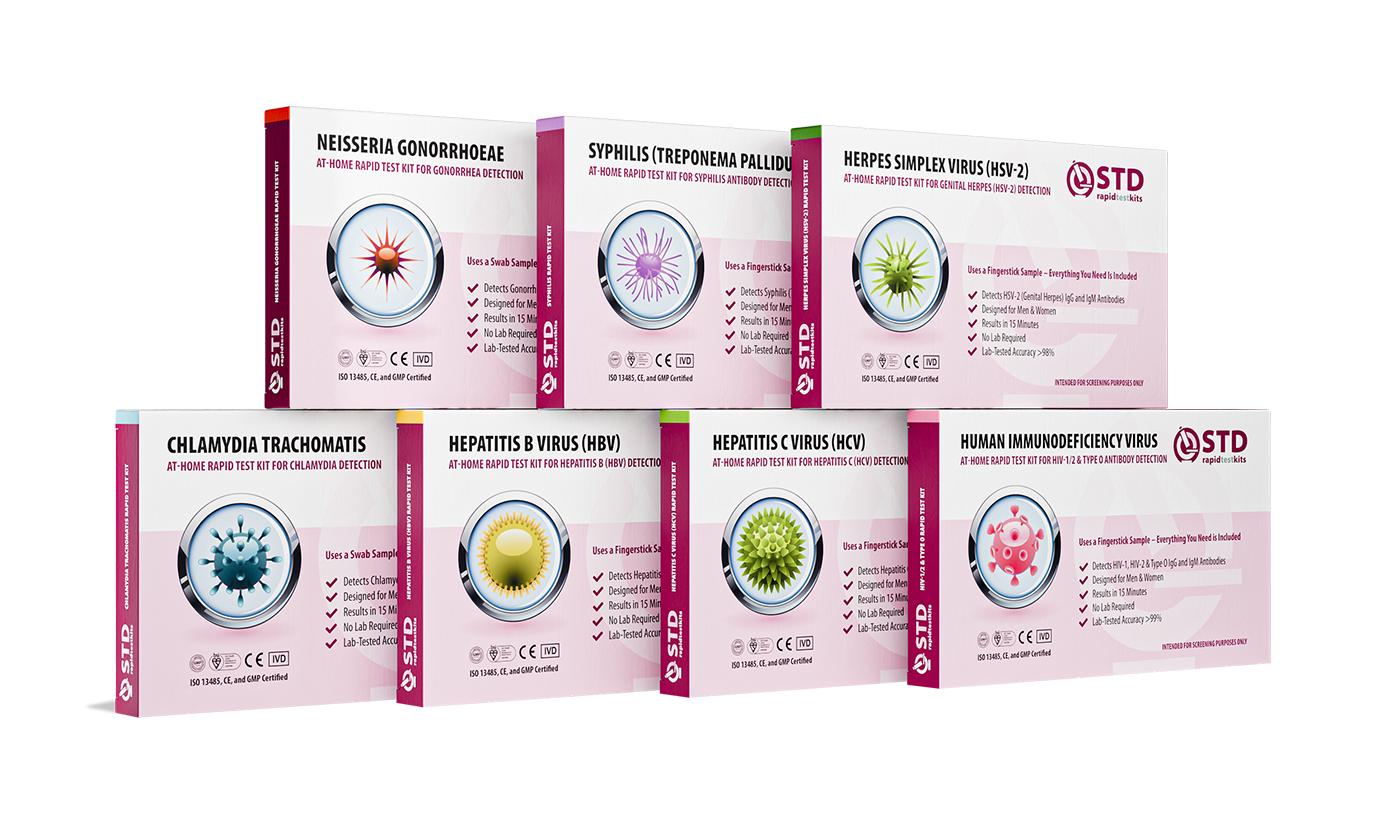
There are effective ways to test for STDs. The following infections can be tested using STD rapid kits: HIV, herpes, chlamydia, gonorrhea, syphilis, and hepatitis B and C. We offer a full Combo STD Rapid Screen Test package for testing seven of the most common STDs.
Three of the easiest ways to maintain your sexual health:
- Know the risks of oral sex.
- Learn how to protect yourself.
- Regularly get tested.
References
-
"Eye Safety - Eye Protection for Infection Control | NIOSH | CDC." Centers for Disease Control and Prevention. https://www.cdc.gov/niosh/topics/eye/eye-infectious.html.
-
"Chemical hazards in the workplace - OSHwiki." Canadian Centre of Occupational Health and Safety. https://oshwiki.eu/index.php/Chemical_hazards_in_the_workplace.
-
"What is Conjunctivitis? | American Academy of Ophthalmology." https://www.aao.org/eye-health/diseases/what-is-conjunctivitis.
-
"Ocular Herpes: Symptoms, Types & Causes | American Academy of Ophthalmology." https://www.aao.org/eye-health/diseases/ocular-herpes.
-
"Eye Health | Hepatitis B and C." World Health Organization. https://www.who.int/blindness/causes/HepatitisBandC/en/.
-
"Chlamydial Infections - 2015 STD Treatment Guidelines." Centers for Disease Control and Prevention. https://www.cdc.gov/std/tg2015/chlamydia.htm.
-
"Gonococcal Infections - 2015 STD Treatment Guidelines." Centers for Disease Control and Prevention. https://www.cdc.gov/std/tg2015/gonorrhea.htm.
-
"Syphilis - 2015 STD Treatment Guidelines." Centers for Disease Control and Prevention. https://www.cdc.gov/std/tg2015/syphilis.htm.
-
"HIV Transmission | HIV Basics | HIV/AIDS | CDC." Centers for Disease Control and Prevention. https://www.cdc.gov/hiv/basics/transmission.html.
-
"What to Know About Styes: Causes, Symptoms, and Remedies." Healthline. https://www.healthline.com/health/eye-health/eye-stye.


