The stimulation of the genitalia of one partner with the mouth, lips, and tongue of another constitutes oral sex, a rather common sexual behavior among adults. Regardless of sexual orientation, understanding the risks involved and practicing ways of minimizing these risks are important for safe sexual health.
02 October 2024
4 min read
1440
Understanding Oral Sex: Prevalence and Practices
Oral sex is the stimulation of the penis, vagina, or anus by means of the mouth. Statistics show that 85% of sexually active heterosexual adults have, or have in the past, engaged in oral sex between the ages of eighteen and forty-four years old. Same-sex or heterosexual, there is the possibility of acquiring an STD with either partner if protection is not worn.
Oral Sex and the Transmission of STDs: An Inevitability?
There is a risk of acquiring or transmitting STDs during oral sex, especially when it is performed without protection. If one's partner already has an STD, one can easily acquire the infection in his or her mouth or throat. Conversely, when one has an STD in the mouth or throat and gives oral sex, one's partner may become infected.
Factors determining the risk for acquiring certain STDs include the pathogen responsible for the STD, type of sexual behavior, frequency of sexual behavior, and the prevalence of a specific STD in a particular partner's community. The presence or absence of symptoms, or other outward visible signs, does not eliminate the potential to transmit the infection. One can concurrently have an STD infection in different parts of the body.
Types of STDs that are Transmittable through Oral Sex
Chlamydia
This STD, caused by the bacterium Chlamydia trachomatis, may be asymptomatic in both the mouth and genital area. Symptoms, when they occur, can include genital discharge, pain or burning sensation during urination, or rectal discharge. Symptoms of oral chlamydia may present with a sore throat. Oral chlamydia is more common in performing oral sex with an infected penis, vagina, or anus.
Gonorrhea, caused by the bacterium Neisseria gonorrhoeae, can cause symptoms similar to chlamydia. Oral gonorrhea may lead to a sore throat and, surprisingly, can also be transmitted through kissing.
Syphilis is an infection caused by the bacterium Treponema pallidum. It is spread through contact with a syphilis sore or rash on the lips, mouth, throat, or genitals of an infected person. Symptoms might include sores on the location where the infection first set in, a rash, and flu-like symptoms, but there may be no visible signs.
HPV is a viral STD that can cause benign or malignant changes at the site of infection. You can get oral HPV by giving oral sex to an infected partner or get genital HPV from someone who has an oral infection. The HPV vaccine may protect against some strains of the virus.
HIV
HIV is a potentially fatal infection that attacks the immune system. The virus can be transmitted if the infected person has a high viral load. It's much harder to transfer the disease when lower levels of the virus are present.








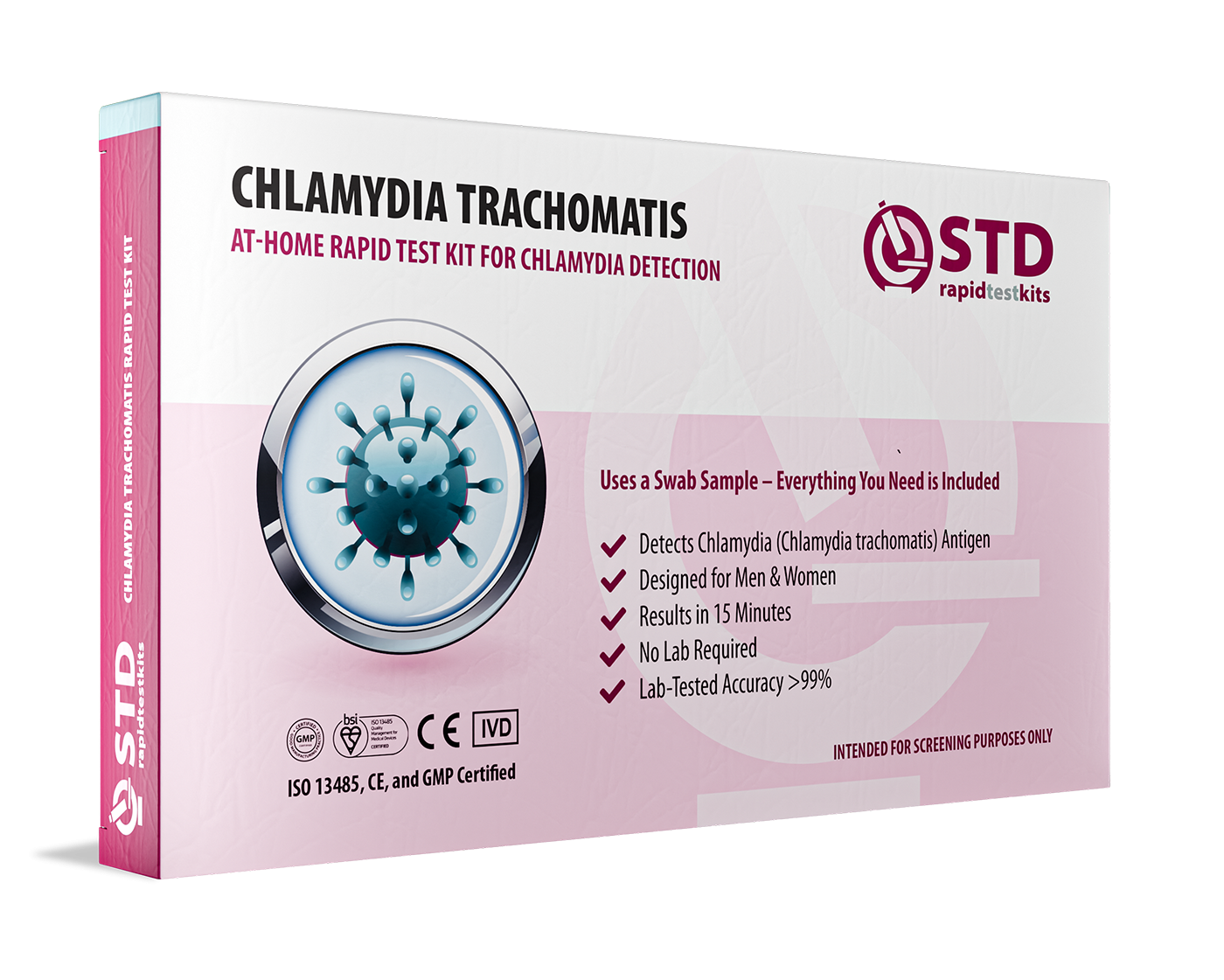
 For Men & Women
 Results in Minutes
 No Lab Needed
 Private & Discreet