







Burning, Itching, Discharge: Yeast Infection or STD?
Knowing Penile Discharge: What is Normal and What's Not
Penile discharge refers to any liquid that exits from the penis head (urethral opening) that isn't urine or semen. Simple enough, isn't it? Not all discharge is created equal, though.
What's "Normal" Penile Discharge?
- Pre-ejaculate (Pre-cum): Clear, lubricating fluid that comes out upon arousal to provide lubrication. Totally normal.
- Morning or random discharge: Now and then associated with hormonal surges, usually in young men or after an exceptionally graphic dream.
- Smegma (variety of): Technically not discharge but rather dead cells, oil, and dampness under the foreskin that may appear when viewed from the underside of the glans. Not unsafe but rather an implicative suggestion you will have to clean more often.
What's NOT Normal?
- Yellowish-green, cloudy white fluid
- Smells extremely potent
- Discharge associated with burning or pain when you pee
- Related itching, swelling, or sores
These are symptoms to recognize. They generally signal infections, specifically sexually transmitted infections.

The Key Benefits of Knowing the Difference
It's not just for peace of mind that knowing the difference between normal and abnormal penile discharge is important—it can save you from enduring long-term health issues.
Catch Infections Early
Most STIs including gonorrhea, chlamydia, and trichomoniasis start with discharge as the earliest symptom. Stopping it at an early time can:
- Stop the infection from spreading
- Treat it less complicated
- Reduce the risk for complications like infertility
Keep Your Partners Safe
Staying aware if something's amiss makes you safe the one you are sexual with. Most STIs show no symptoms whatsoever, but with discharge, you know it is time to quit and get yourself checked.
Encourage Better Hygiene and Health
Sometimes discharge is due to poor hygiene, or infections like balanitis (inflammation of the foreskin). Being aware can lead to better self-care.
Reduce Medical Costs
Early diagnosis and treatment are almost always less expensive than allowing symptoms to develop.
Check Your STD Status in Minutes
Test at Home with Remedium7-in-1 STD Test Kit

Claim Your Kit Today
Save 62%
 For Men & Women
 Results in Minutes
 No Lab Needed
 Private & Discreet
Order Now $129.00 $343.00
For all 7 tests
The Not-So-Bad News: Abnormal Discharge Risks and Challenges
Penile discharge dismissal or doubting can lead to serious complications. Here's why one must take it seriously.
Silent STIs Can Spread Easily
Some infections like chlamydia are known as "silent" for a reason—they often don't cause noticeable symptoms. Discharge may be your only early warning.
Stigma and Delay
Most individuals are ashamed to be tested. It merely provides the infection time to establish and potentially transmit to sexual partners.
Self-Misdiagnosis
Google is great, but it is no physician. Misdiagnosing your symptoms can lead to wasted time or risky behavior.
Risk of Complications
Untreated STIs can cause:
- Prostatitis (prostate infection)
- Epididymitis (painful swelling around the testicles)
- Infertility
- Reactive arthritis in severe cases

Taking Charge: What You Can Do Right Now
You don't need to panic—but you do need a plan. The following are steps of action in case you have discharge:
Write down the Symptoms
Pay attention to:
- Discharge color and smell
- Any burning, itchiness, or redness
- When it occurs (e.g., morning, after sex, all day)
Hold Off on Sexual Contact
Until you're sure what's going on, it's a good idea to hold off on sex—even when using a condom.
Get Tested
Use an at-home STD test kit for convenience and discretion. Many will test for gonorrhea, chlamydia, and trichomoniasis—all common causes of discharge.
See a Doctor
If you persist in having symptoms, have a full workup. You may need antibiotics or additional testing.
Check Your STD Status in Minutes
Test at Home with Remedium3-in-1 STD Test Kit
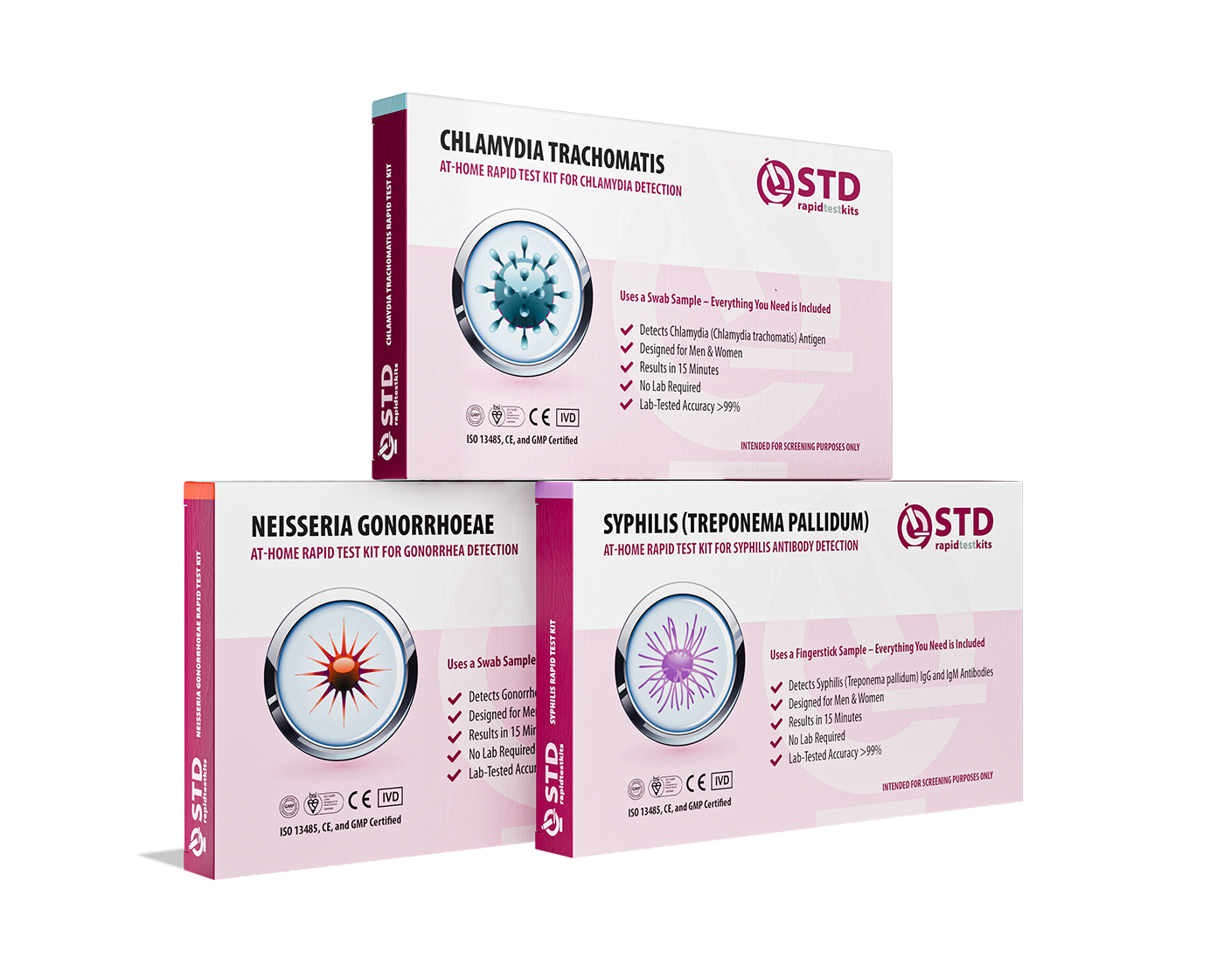
Claim Your Kit Today
Save 53%
For Men & WomenResults in MinutesNo Lab NeededPrivate & DiscreetOrder Now $69.00 $147.00
For all 3 tests
What the Numbers Say
Let us view the facts to put this issue in context:
- Over 1.6 million chlamydia infections and 700,000 gonorrhea infections were diagnosed in the U.S. in 2021, states the CDC.
- 75% of men with gonorrhea infections have abnormal penile discharge as the primary symptom.
- A study in StatPearls noted that discharge in the urethra is typically the first and most obvious symptom of an STI in a man.
- 50% of men infected with chlamydia may not have any symptoms at all—but discharge may happen.
Causes other than STIs, like prostatitis and UTIs, affect more than 2 million men each year, and discharge is a primary symptom.
The takeaway? Discharge can be normal, but it's never to be ignored.
Real Stories & Expert Opinions: What the Professionals and Patients Say
Expert Insight
Dr. Elaine Fischer, a California urologist, said in an interview with Medical News Today:
"Discharge isn't necessarily a sign of an STI, but it's almost always worth investigating. The colour, smell, and texture tell us a tremendous amount. If in doubt, test—it's fast and simple now."
She states that it is now early diagnosis, also by means of in-home tests, that allows infections to be caught early, before they develop into full-scale issues.
Firsthand Experiences
From the Reddit r/STD community to blog sites, men tend to come forward with these kinds of stories as:
"I thought it was irritation, but was actually gonorrhea."
"I had discharge, but was negative. Turned out to be a prostate issue."
"Tested positive from a home kit, began antibiotics right away, and cleared it up before things worsened."
These real testimonials highlight the variation in symptoms and that testing is the best course of action.

The History of Penile Discharge and STD Awareness
You might think knowledge of discharge as a medical symptom is new, but it dates back centuries.
- Ancient Egypt had records of male discharge caused by curses or divine wrath.
- During the Middle Ages, doctors recorded "unpure fluids" as symptoms of sexual misconduct or imbalance.
- By the 19th century, syphilis and gonorrhea were well-researched, and discharge was a major diagnostic sign.
Today, we know that not everything that produces discharge is infectious, and testing can separate normal secretions from STI symptoms.
Misconceptions in history fueled stigma still present today—but modern medicine is reversing the tide.
Forward-Thinking: Future STD Testing and Genital Health
Penile discharge is leading the way in innovation in testing.
- Home-test kit costs decline while being made cheaper and more discreet to employ.
- The AI-aided symptom screeners improve (although still no replacement for the test).
- Epidemiologic research appears in terms of how unbalance in urethral microbiota may also explain discharge independent of an STD.
- Increased focus is coming down on bringing youth men in early with symptom awareness at onset and transmission reduction.
Soon, even more men will be diagnosing and curing STDs without ever setting foot in a clinic—education is that much more important.
Daily Uses: What to Do if You Notice Discharge
Now that we've talked about what to do, let's cover it.
Daily Tips
- Track symptoms in a note-taking app or journal
- Be clean: Good penile health, especially if uncircumcised, can prevent irritation-based discharge
- Drink plenty of water to prevent irritation or early UTI signs
- Test regularly if sexually active with multiple partners
Even if you don't have symptoms now, knowing what to look for can help you respond quickly if something changes.
Check Your STD Status in Minutes
Test at Home with Remedium10-in-1 STD Test Kit

Claim Your Kit Today
Save 61%
 For WomenResults in MinutesNo Lab NeededPrivate & Discreet
Order Now $189.00 $490.00
For all 10 tests
FAQs
1. Is all penile discharge a sign of an STD?
No, not necessarily. Perhaps because of non-STD infections like a UTI or prostatitis, or naturally occurring body responses.
2. What should normal discharge look like?
Typically clear, minor, and when one becomes aroused. It should not smell bad or hurt.
3. What STD produces yellow discharge?
Gonorrhea most commonly has thick, yellow discharge.
4. Can I be infected with an STD and no discharge?
Yes—some conditions like chlamydia or HPV produce absolutely no discharge.
5. What if I'm experiencing discharge but test negative for STDs?
Check for other non-STD causes like prostatitis, allergy, or chemical irritation. See a physician for re-testing.
6. Is morning discharge normal?
Yes, especially if it's clear and odorless. If it doesn't resolve or change, get checked out.
7. Can stress or diet cause penile discharge?
They can cause inflammatory conditions like prostatitis that result in discharge.
8. Can STDs that result in discharge be treated at home?
Only with diagnosis and antibiotic prescription. Home kits will diagnose but not treat.
9. What's the best test to take?
A comprehensive at-home STD test kit that screens for multiple infections is a good start.
10. How soon after exposure can discharge appear?
Anywhere from 1–14 days depending on the infection. Gonorrhea often shows early; chlamydia may take longer.
Take Charge of Your Health Today
If you’re noticing discharge or just want to be proactive:
- Order a reliable at-home STD test kit today—it’s discreet, fast, and empowering.
- See a medical provider if symptoms persist or worsen. Some conditions need antibiotics or further exams.
- Share this article to help others understand the difference between a body’s normal function and signs of something more serious.
It’s your body, your health, and your call. And now, you’ve got the facts to make the right move.
Sources
1.- Medical News Today – What Causes Male Discharge?
2.- Verywell Health – Penile Discharge
3.- Better2Know Blog – I Tested Negative But Still Have Discharge


