







Skin Rash and STDs: Symptoms, Types, Differentiation
First Steps: What to Do Right Away
If your partner informs you that they've tested positive for an STD, you have to keep a cool head and react the right way. Here's what you do immediately:
Be Calm and Avoid Blame
How you react will set the tone for the rest of the conversation. As much as you will be shocked or distressed, try not to lash out or blame your partner for anything. Incubation for some STDs can take years, so it's possible that either one of you could have had it without even knowing.
Get Yourself Tested
If you suspect your partner has an STD, you likely have also been infected. You cannot tell for certain except by getting tested. The CDC suggests a standard test for sexually active individuals with numerous or new partners.
Learn About the STD in Question
Different STDs have different consequences. Some, like gonorrhea and chlamydia, can be cured with antibiotics. Others, like herpes and HIV, must be controlled on an ongoing basis. Being aware of the condition will allow you to make informed decisions about your health and your relationship.

Discuss Protection Moving Forward
Depending on the STD, you might need to take precautions like condoms, dental dams, or antiviral medication to avoid transmitting it. Your doctor can advise you on what's best.
Consult a Doctor
Regardless of whether you test positive or not, it is important to see a healthcare provider. They can talk about treatment, prevention, and address any questions you have.
Understanding the Emotional and Psychological Impact
Discovering that your partner has an STD does not only impact your physical well-being—it can also take a toll emotionally. You may feel betrayed, insecure, or even ashamed, and these need to be dealt with.
Beyond Stigma and Misinformation
Many people might believe that STDs are a sign of promiscuity or irresponsibility, but this is a harmful stereotype. Truthfully, any sexually active person can acquire an STD. Even people in a monogamous relationship might test positive due to an undiagnosed past infection.
Expert Opinion:
"We have to stop making STDs a badge of shame," Dr. Alicia Thompson, an expert in sexual health, says. "An STD is a medical condition—nothing more, nothing less. Our response to a diagnosis is a factor in how we can move forward."
Trust and Communication Management
One of the most difficult aspects of dealing with an STD diagnosis in a relationship is trust. Most people jump to assume cheating, but it is not necessarily so. STDs have been present in the body for years before they show up with symptoms.
Laura, age 29, had the following to say:
"My boyfriend tested positive for HPV, and I was devastated at first. I thought he'd been cheating on me. I did some research and found out that HPV can be dormant in your body for years without any symptoms. It turns out he likely contracted it years before we ever met. Knowing this made all the difference."
The best policy for dealing with these difficult conversations is honesty. If your partner has told you about their diagnosis, they have already been brave by being honest with you. Being supportive and understanding when you react can make a huge difference.
Check Your STD Status in Minutes
Test at Home with Remedium10-in-1 STD Test Kit
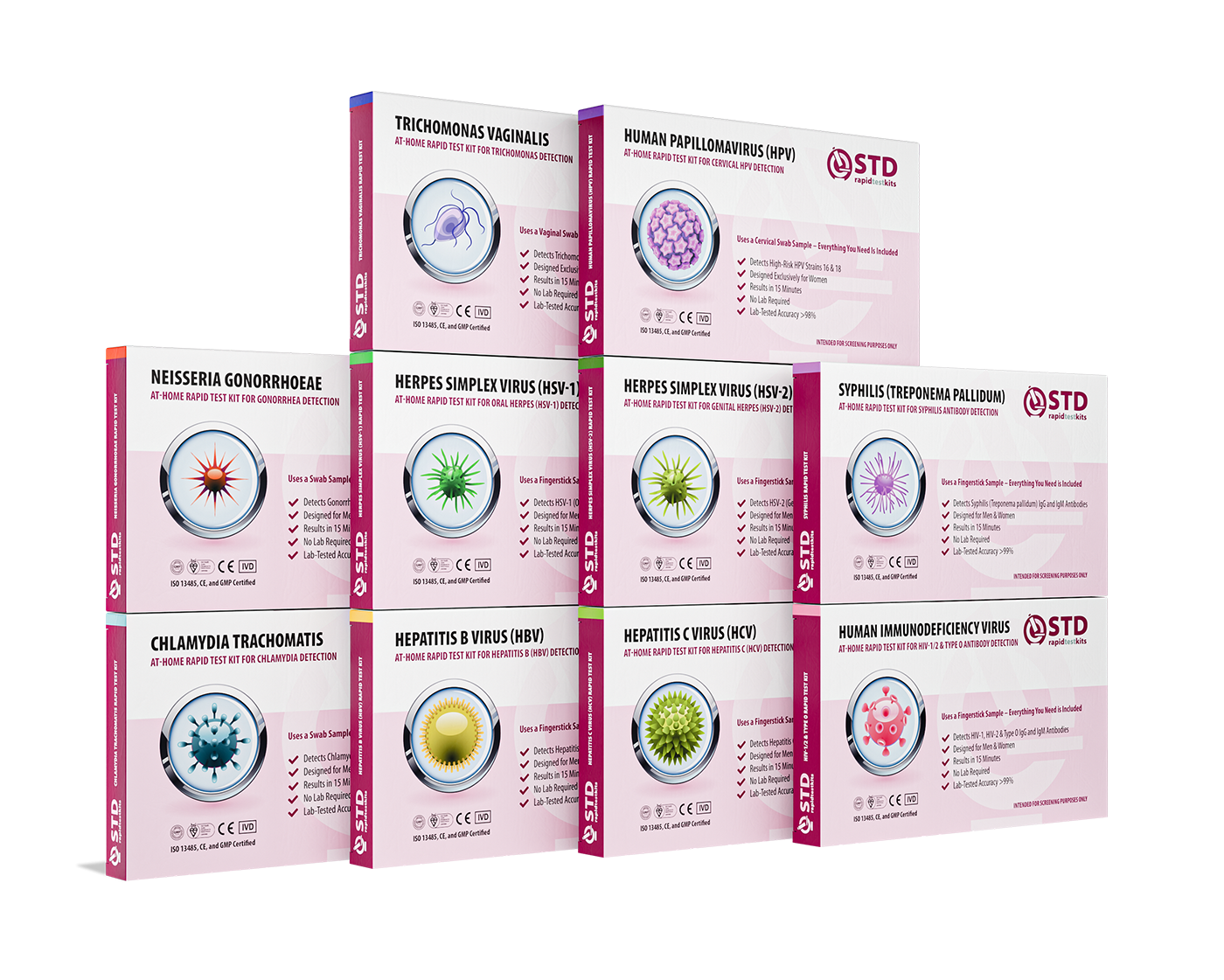
Claim Your Kit Today
Save 61%
 For Women
 Results in Minutes
 No Lab Needed
 Private & Discreet
Order Now $189.00 $490.00
For all 10 tests
Protecting Yourself: Prevention and Treatment
If the partner has tested positive for an STD, what are the implications for your health? Following are some facts you should know:
Should You Get Tested?
Yes— even if you're not showing symptoms. Certain STDs, like chlamydia, gonorrhea, and herpes, can have no noticeable symptoms. Getting regular STD testing is how you stay healthy.
What If You Test Positive as Well?
If your test is positive, do not worry. Most STDs can be treated, and some can be cured. Your doctor will discuss the treatment, which may be antibiotics (for bacterial infections like chlamydia and gonorrhea) or antiviral medication (for viruses like herpes or HIV).
Preventing Future Transmission
If you or your partner has an STD, you might have to take additional precautions, such as:
- Using condoms or dental dams to reduce the risk of transmission.
- Taking antiviral drugs (for HIV or herpes) to reduce the possibility of transmitting the virus to a sex partner.
- Avoiding sexual activity during outbreaks (for herpes).
- Regular follow-up examinations to check on your health.
According to a 2022 study published in the Journal of Infectious Diseases, consistent condom use can reduce the risk of STD transmission by up to 90%. While not foolproof, using protection is one of the most effective ways to prevent the spread of STDs.

How to Emotionally Support Your Partner
When your partner is diagnosed with an STD, they may already be dealing with rejection, shame, or guilt. Your response can have a strong influence on the way they feel. The following is how you can be a comfort:
Be Compassionate Instead of Judgmental
Your partner could be in a vulnerable state already. Blaming or anger would make the situation worse. Instead, try dealing with the situation with empathy.
"How a partner handles an STD diagnosis can either build or destroy a relationship," says Dr. Emily Carter, couples therapist. "Compassion, honesty, and respect are necessary."
Learn About Their Condition
Finding out about the particular STD your partner has will not just keep you safe but also make your partner feel loved. Trustworthy sources such as the CDC or Mayo Clinic provide correct information.
Prevent Isolation—Encourage Professional Support
Others pull away after an STD diagnosis because of shame or stigma. Encourage your partner to discuss this with a doctor, therapist, or support group.
Ryan, 32
"When my girlfriend got herpes, she was heartbroken. She thought I would dump her, but I told her it didn't make any difference to me. We read everything about it together and found out that with medication, we could still have a healthy relationship."
Honor Their Treatment Regimen
Encourage your partner to adhere to their treatment, take medicine as directed, and attend follow-up visits. If their STD is contagious, prevention will be an unavoidable subject for discussion.
Check Your STD Status in Minutes
Test at Home with Remedium7-in-1 STD Test Kit

Claim Your Kit Today
Save 62%
 For Men & WomenResults in MinutesNo Lab NeededPrivate & Discreet
Order Now $129.00 $343.00
For all 7 tests
Common Misconceptions About STDs
- Myth #1: Solely Promiscuous People Get STDs
- Fact: Any person who is sexually active can get an STD—even individuals in a monogamous relationship.
- Myth #2: If You Have No Symptoms, You Don't Have an STD
- Fact: Most STDs, such as chlamydia, gonorrhea, and HPV, can be symptomless.
- Myth #3: Condoms are 100% Protective
- Fact: Although condoms greatly minimize the risk of STDs, they do not abolish it. Skin-to-skin diseases such as herpes and HPV can still be passed on.
- Myth #4: If You Test Negative Once, You're in the Clear
- Fact: Certain STDs do have incubation periods. Getting tested too early after exposure can lead to a false negative.
FAQ
1.- Does this imply that my partner had an affair?
Not always. Certain STDs can lie dormant for years. Your partner might have had it prior to being with you and not known.
2.- What is the first thing I should do if my partner tests positive?
Stay calm, get yourself tested too, and go see a doctor for consultation.
3.- Can we still have sex?
It varies with the STD. Some need to be treated first, and some can be managed with precautions such as condoms or medication.
4.- What if I am negative?
You might have avoided infection, or it might be too soon for the infection to be detected. Follow your doctor's instructions about being retested.
5.- Are STDs normally curable?
Bacterial STDs, such as chlamydia and gonorrhea, can be treated with antibiotics. Viral STDs, such as HIV and herpes, which are chronic, can be managed.
6.- How do I broach this with my partner?
Be receptive, be positive, and attempt to find the solution rather than pointing fingers.
7.- How frequently should I get tested for STDs?
The CDC recommends annual screening for sexually active patients and more frequent screening for individuals with multiple sexual partners.
8.- What occurs if an STD is left untreated?
If left untreated, STDs can cause long-term health problems, such as infertility, chronic pain, and illnesses like pelvic inflammatory disease (PID).
9.- Do we inform previous partners?
Yes. Informing previous partners enables them to be tested and treated if required. Anonymous partner notification services are provided by most clinics.
10.- Where do we go for help?
Physicians, sexually transmitted disease clinics, and organizations such as Planned Parenthood provide testing, treatment, and counseling.
Forging Ahead Together
A diagnosis of an STD can be scary, but it does not determine who you are or your relationship. If handled correctly, you and your partner can weather this together.
- Get tested – Your health is the priority.
- Foster open communication – Non-judgmental conversation enhances relationships.
- See a doctor – Your doctor can provide you with personalized advice.
- Practice protection – Minimize transmission risks by practicing safe measures.
- Be supportive of your partner – Here is a chance to be sympathetic and understanding.
By handling an STD diagnosis sensitively and knowledgeably, you can protect your health and ensure a strong and trusting relationship.
Sources
1.- CDC: STD Screening Recommendations
2.- Mayo Clinic: STD Diagnosis and Treatment
3.- National Library of Medicine: Partner Services for STI Prevention


