The "Silent Intruder": Why Routine Testing for Herpes is Imperative for Managing Cold Sores
Among the most common and cunning infections globally, herpes simplex virus type 1, commonly known as cold sores, tends to remain asymptomatic for a lengthy duration. Often termed a "silent intruder," HSV-1 lives quietly in the body without expressing itself through visible symptoms. But when it does turn on, it can cause painful and unsightly cold sores, usually around the mouth. It is this periodic nature of HSV-1 that makes it such a prevalent yet often unindependent virus, being passed from host to host without anyone knowing or realizing. And accordingly, HSV-1 is rather easy to transmit-even by those who do not show symptoms.
This article will discuss HSV-1's elusive nature, the importance of regular testing, and the benefits of at-home test kits in making proactive health management easier and more accessible.
30 October 2024
9 min read
1643
Understanding HSV-1: A Common Yet Often Undetected Virus
Since HSV-1 virus is so contagious, transmission could involve direct personal contact like kissing and even sharing drinking glasses or anything similar to that and even by touching the surface that the infected person or victim had touched. Because of this mode of transmission, a huge number of the population in the world carries this virus, but the majority of them are completely unaware of it. This is because, in people who remain asymptomatic, HSV-1 can be silently transmitted from person to person as it is a well-known "silent" virus.
Until recently, HSV-1 has classically presented itself as oral herpes or cold sores, but it can also appear as genital herpes when the virus is transmitted through oral-genital contact. It is this duality that makes HSV-1 more than just a minor cold sore regarding a person's health. The most specific form this takes is in the form of genital herpes presented via HSV-1, which is highly misrepresented and shamed despite its widespread nature. It is observed that HSV-1, being frequently asymptomatic or mild in nature, many of the infected individuals are unaware of their infection and thus often remain potential unconscious transmitters to sexual partners or loved ones.
There is further complexity with HSV-1 due to its ability to become latent in the ganglionic nerve cells for indefinite time spans. After the initial infection, HSV-1 buries itself in the nervous system, lying dormant until conditions are right that may provoke an outbreak. This might be initiated by anything from stress to sickness, exposure to sunlight, or changes in hormones. To uninformed persons who carry HSV-1, these flares will catch them by surprise, more often than not with confusion and misunderstanding of how the virus works.
Why Regular Herpes Testing Matters
HSV-1 is silent in most persons, and this asymptomatic characteristic can give rise to a transmission of the infection. This is why regular herpes testing is important. Here's why testing for HSV-1 can make all the difference:
Early Detection and Management
Perhaps one of the best reasons for getting tested for HSV-1 is that this opens one's door for early detection. Many people do not know they have HSV-1 infection until they show symptoms-an outbreak. By that time, they may have already passed their virus onto another person. Testing on a regular basis helps so one would be aware when the virus is active, even if they did not show any symptoms. Thus, knowing about this helps them to act more carefully in order not to pass the virus and reduce outbreaks. Early detection also allows for proactive management, including lifestyle modifications, stress management, or antiviral medicines that may impede outbreaks.
Protecting Partners
Getting tested for herpes is the responsible thing to do for anyone in a relationship-be it monogamous, polyamorous, or otherwise. Knowing one's status in regard to HSV-1 empowers an individual to be transparent and communicative with partners, a very key component in reducing the risk of transmission. Results from an HSV-1 positive status can help individuals and their partners negotiate prevention strategies, such as barrier protection during intimacy or avoiding skin-to-skin contact during active outbreaks. In fact, being up-front with health status can help a couple or polycule enjoy a very clear level of trust and respect. It is also a commitment to the health safety of each partner that at least all are informed and empowered.
Identifying and Minimizing Triggers
Regular testing for HSV-1 can also help one be more aware of how to monitor and manage potential triggers of cold sore outbreaks. Knowing their HSV-1 status helps such people to better observe patterns or conditions that appear to lead up to an outbreak: being in a high-stress situation, sickness, or sun exposure. Being able to identify this pattern allows one to make the necessary lifestyle adjustments, thus enabling one to more easily avoid such triggers or minimize their impact. A life with reduced HSV-1 triggers could mean fewer or milder cold sore outbreaks, paving the way for a far more comfortable and symptom-free life.
Check Your STD Status in Minutes
Test at Home with Remedium Genital & Oral Herpes Test Kit
Living with the "Silent Intruder": How At-Home Herpes Testing Kits Can Help
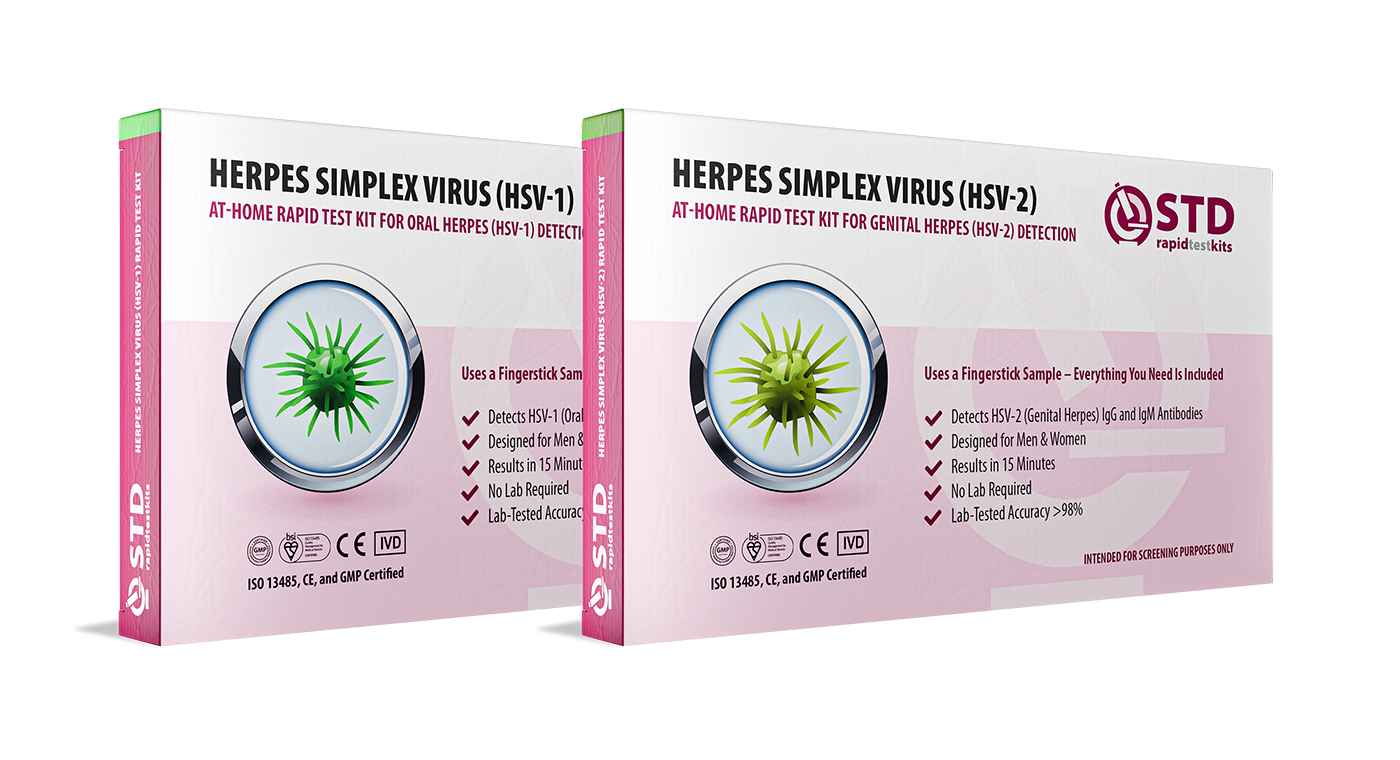
Testing for herpes has grown increasingly comfortable and private in recent years due to a number of at-home herpes test kits that have made it easier to know one's status from the comfort of one's home. These kits are reliable and highly accurate, and they provide a good avenue through which one can independently test for an HSV-1 infection without necessarily attending a clinic. Some of the advantages of using at-home herpes test kits include the following:
Privacy and Convenience
HSV-1 testing may be sensitive, and not many would actually feel comfortable visiting a clinic to discuss or manage the virus in question. At-home herpes test kits offer the discreet and very private way to check HSV-1 status. The results become available directly from the comfort of your own home, without any need to concern yourself with stigma or public visibility. This added privacy is an asset to many people who like to keep their health information private.
Early Detection
Early detection is the key word in HSV-1 management, and test kits at home make reaching out to results easily accessible without any delay. Detecting HSV-1 early before any outbreaks can take place reduces the risk of spreading the virus to partners unconsciously. This could also help individuals inform a decision about their health. Early detection can also give them an opportunity to ponder over choices regarding the management of the virus with healthcare providers, if so wished.
Monitoring on a Regular Basis
At-home herpes test kits can give, to those who would want to keep a regular cadence of testing, the flexibility to monitor their HSV-1 status with convenience. It could be testing every six months or annually-one can know their status about their health and note changes in the HSV-1 status without the hustle of visiting clinics more often. This practice is very important for asymptomatic persons who want to assure themselves that they will not forget their health.
Monitoring Personal Health Trends
Regular testing due to HSV - 1 is unique because it enables a person to monitor their trend in health. A person is allowed to observe symptoms over time, triggers, and the test results, enabling him to learn about his pattern of health. It could be very helpful for people who experience outbreaks very frequently. The outbreaks allow them to understand how lifestyle, levels of stress, or health habits will ensure the virus is highly active. This also provides a good view of their bodies and assists them in making informed, proactive decisions to support good health.
FAQ
1.- Why would I get tested for HSV-1 if I don't have symptoms?
You may still be carrying HSV-1 even when you do not show any symptoms, and thus are capable of passing the virus to others. Mostly, people remain unaware that they have HSV-1 infection due to a lack of symptoms like cold sores. Regular tests help in early diagnosis and allow you to take the right decisions regarding the prevention of transmission and management of health, which you might not be able to visualize as cold sores.
2.- How often should I get tested for herpes?
It is generally recommended every six months to a year, especially for those with multiple partners or those who are unsure of their exposure. Regular testing gives one peace of mind about their status and any changes therein for more competent health management.
3.- Can HSV-1 be spread without visible cold sores?
Yes, the infection of HSV-1 can be transmitted even in the absence of sores. They call this asymptomatic shedding: the virus is active on the skin surface, but it has no symptoms. Therefore, regular testing and safety precautions become crucial in order to avoid accidental transmission.
4.- How reliable are herpes home-testing kits?
At-home herpes test kits are reliable, FDA-approved, and carry the same amount of accuracy as clinical testing. These kits provide a discreet and convenient way to check your HSV-1 status in the privacy of your own home.
5.- If I test positive for HSV-1, then what?
If you test positive, consider speaking with a healthcare provider to discuss management options and resources for understanding the virus. Maintaining good health, managing stress, being cognizant of triggers, will also minimize outbreaks and their severity, making long-term management of HSV-1 easier.
6.- Can HSV-1 Spread to Other Parts of the Body?
Yes, it can be transmitted to the genitals via oral-genital contact. The risk of transmission to other parts of the body or to the partners can be reduced by continuing good practices that include barrier protection and avoidance of intimate contact during outbreaks.
7.- How do I protect my partner if I have HSV-1?
Open communication is very important, as is regular testing and safe-sex practices, such as the use of a barrier.
8.- Can a herpes test tell me if I'm a carrier without symptoms?
Yes, herpes testing can uncover carriers even when they do not have symptoms, thereby helping to prevent the virus from spreading.
9.-Is at-home herpes testing as reliable as in-clinic testing?
Herpes test kits for home use are extremely accurate and dependable. To ensure accuracy, always use a test kit from a reliable vendor.
10.-How often should I be checked for herpes if I am asymptomatic?
If you are sexually active, regular testing is recommended, even if you do not have symptoms, to help you manage and monitor your health more effectively.
Keeping Yourself and Others Healthy by Regular Testing
The most substantial quantity of HSV-1 is silent and at times asymptomatic shedding. These underline the need for regular herpes testing for any person committed to proactive health care. By getting tested regularly, people can avoid the danger of unknowingly passing on HSV-1, while making better choices concerning their relationships and social contact. That is to say, it allows people to know, through a health professional or even an at-home test kit, their status and take measures that will further protect themselves and others.
Invest in your health today, and purchase an easy to use, at-home herpes test kit for the sake of knowing, prevention, and taking control in the comfort of your home.








 For Men & Women
 Results in Minutes
 No Lab Needed
 Private & Discreet


