Perhaps you're wondering how STDs are transmitted and how you can get infected. Such questions will let you pay great attention to your sexual health. By knowing through which modes an STD can be transmitted, you will be able to take care of your precautions better. This informative booklet will enlighten you on how sexually transmitted diseases spread, how to identify symptoms, possible health complications if STDs are left unattended, prevention measures, and many more.
For our first course, we shall embark on the ways of STD transmission and some home-testing options for the men as well as the women. This is courtesy of STDRapidtestkits.com.
08 October 2024
7 min read
3651
Modes of STD Transmission
Transmission Through Sexual Contact
STDs more appropriately stand for sexually transmitted diseases. They are a group of infections that are most commonly acquired by an individual through sexual contact. These include an infection caused by either bacteria, viruses, or parasites through semen, blood, and vaginal fluids, among other bodily discharges, passed from one individual to another. The main modes of transmission for STDs involve intercourse; both vaginal and anal, and oral sex. As in these modes of transmission, it should be noted that the exchange of these fluids does not require the presence of ejaculation; in the absence of it, too, STDs can be passed on from one partner to another.
Non-Sexual Transmission
Some STDs also spread non-sexually, including through blood transfusions and shared needles. Unsterilized equipment used in body piercings or tattooing also transmits some infections such as HIV, hepatitis B, and hepatitis C.
Transmission from Mother to Baby
In addition, the infection may be passed from an infected mother to her baby during pregnancy or childbirth. Gonorrhea, chlamydia, HIV, and syphilis are infections that may be passed along this way.
Skin-to-Skin Transmission
For most STDs that cause genital ulcers, such as genital herpes, syphilis, and human papillomavirus (HPV), the general mode of transmission is by skin-to-skin contact with an infected sore.
Common Causes of STDs
Sexually transmitted diseases are usually linked to three major causes, including;
Bacterial Infections: Chlamydia, gonorrhea, and syphilis.
Viral Infections: Human immunodeficiency virus (HIV), herpes simplex virus, human papillomavirus, hepatitis C virus, cytomegalovirus (CMV), and Zika virus.
Parasitic Infections: Such as Trichomonas vaginalis or small arthropods like crab lice or scabies mites.
The Role of Unprotected Sex in STD Transmission
One might wonder, "Can you get an STD even with a condom?" The short answer is "yes." We shall see how condoms can prevent STDs and discuss their limitations.
Effectiveness of Condoms
They offer protection against most STDs, like chlamydia and gonorrhea, a shocking 98% of the time. They also reduce the risk of acquiring HIV, which is the virus responsible for AIDS, as much as 70% when used consistently and correctly.
Condoms, particularly those made of latex, can also prevent the spread of other sexually transmitted infections, such as those caused by genital secretions. They also offer protection against the infections that cause genital ulcers and, to a lesser extent, against the infections including the human papilloma virus infection, which causes warts on the genitals, anus, and cervix and has been associated with cervical cancer.
Disadvantages of Condoms
Yet, all the same, it should be underlined that condoms cannot protect against all STDs 100 percent, since some can be taken or passed on even while using a condom because they are partly spread through skin-to-skin contact. The condom may not be able to cover all the skin that is potentially exposed and therefore is not able to prevent the infection.
However, appropriate and consistent use of a condom can greatly reduce the risk of acquiring or spreading infections like genital herpes or syphilis. It is thus always recommended to practice protected sex consistently.
Identifying Symptoms of STDs
Identifying how a person gets an STD goes hand in hand with the identification of symptoms associated with the condition. Symptoms can show just days following exposure, or it may take a number of years for them to appear. Some of the symptoms to look out for are:
Sores or bumps in the mouth, rectum, or genital area
Painful or burning urination
Discharge from the penis or unusual vaginal discharge that smells bad
Abnormal bleeding from the vagina
Painful sex
Swollen lymph nodes, usually in the groin
Lower abdominal pain
Fever
Rash on your entire body, palms of your hands, or soles of your feet
Not all sexually transmitted diseases are symptomatic, and an individual may be infected without realizing it. It is for this reason that learning how regular testing for STDs will help safeguard your sexual health. Many times, a person with an STD is not diagnosed until health complications set in or when a diagnosis has been established for a partner.
Health Complications from STDs
If left untreated, some STDs such as chlamydia, gonorrhea, HIV, and HPV will lead to serious health problems. These include but are not limited to the following:
Pelvic Inflammatory Disease (PID)
Complications during pregnancy and delivery
Eye inflammation
Arthritis
Infertility
Heart disease
Certain types of cancers, including HPV-associated cervical and rectal cancers
STD Prevention Measures
The only sure way to avoid transmitting STDs is to not have sexual relations with an infected person. However because a person can be asymptomatic or may not have their infection recently detected, it is often not easy to know whether or not a person is infected. Thus the following safe sex practices can reduce your risk of getting an STD:
Always using a condom with sexual relations
Having a long-term mutually monogamous sexual relationship with a partner who has been tested and is known to be uninfected
Low number of sex partners, and regular testing for STDs
Talking with your healthcare provider about your number of sex partners so that you know the right timing for testing
Diagnosing STDs
Doctors and other health professionals are most likely to ask about your sexual history and take fluid from the infected person's vagina or penis, or do a blood test in most cases for diagnosing the disease. The laboratory test can detect bacterial or viral infections that may cause STDs.
Accurate diagnosis of STDs is important because the sooner an STD is diagnosed, the more effective the treatment is likely to be and the less chance there is that complications will occur. If you are sexually active, regular testing should be part of your healthcare routine if you have multiple sexual partners or if your sexual partner does. Keep in mind, some STDs have no symptoms so regular testing is important even if you feel fine.
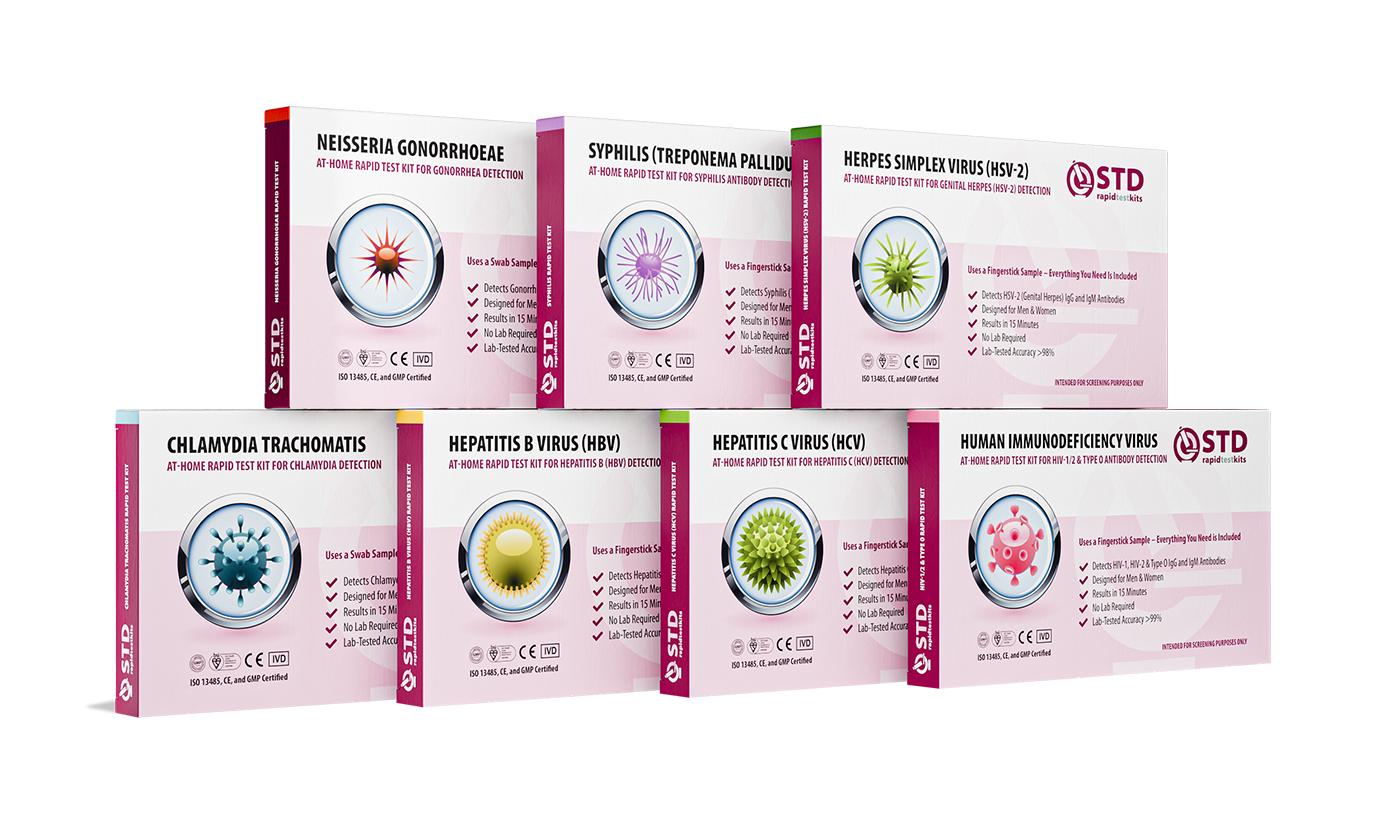
Besides clinical testing, medical technology has also developed trustworthy home-testing solutions. For example, online services such as STDRapidtestkits.com can even afford you the privacy and accurate home-testing kits for your own convenience to take matters into your hands in the comfort of your home. If you think you may have been exposed to an STD or are developing symptoms that bother you, see a doctor immediately. Whether through a visit with a health professional or with an at-home test, getting tested is the first step in taking care of one's sexual health.
No discussion of how STDs are spread could be complete without a mention of some of the key statistics related to the spread and prevalence of the diseases. According to the World Health Organization estimates:
More than 1 million sexually transmitted infections are acquired daily worldwide.
An estimated 376 million new infections of chlamydia, gonorrhea, syphilis, and trichomoniasis occur every year.
About 500 million have genital herpes.
Human papillomavirus-HPV is the most commonly acquired STD; more than 290 million women are infected with it.
In most infections with STDs, symptoms do not appear, or they are very discreet.
Some STDs like herpes type 2 and syphilis can make a person more vulnerable to acquiring HIV infection.
In 2016 alone, 988000 pregnant women were infected with syphilis and lead to over 350000 adverse birth outcome.








 For Men & Women
 Results in Minutes
 No Lab Needed
 Private & Discreet


