






Quick Answer: Mouth sores after oral sex can be caused by irritation, minor infections, or STDs like herpes or syphilis. Most are harmless, but sores that are painful, clustered, or don’t heal within 1–2 weeks should be tested.
This Is the Part Nobody Talks About After a Hookup
Arjun noticed it first. A small, white ulcer on the inside of his lip the morning after going down on someone new. “I just froze,” he said. “I didn’t even want to Google it because I already knew what would come up.”
This is the moment most people recognize, the quiet panic mixed with uncertainty. Oral sex is often framed as “low risk,” which is technically true compared to other forms of sex. But low risk doesn’t mean no risk, and it definitely doesn’t mean zero symptoms afterward.
The truth is, your mouth is sensitive. It reacts quickly to friction, bacteria, and exposure. So a sore after oral sex could be your body saying, “Hey, something irritated me,” not necessarily, “You have an STD.”
What Mouth Sores After Oral Sex Actually Are (Most of the Time)
Before jumping straight to worst-case scenarios, it helps to understand how many completely non-STD things can cause sores in your mouth after oral sex. And honestly, they’re more common than infections.
Your mouth lining is thin and delicate. Add friction, new bacteria, or even just dehydration, and it can react quickly. That reaction can look like a sore, a cut, or a small ulcer.
| Cause | What It Feels Like | When It Shows Up |
|---|---|---|
| Friction/Irritation | Tender, raw spot | Within hours |
| Canker sore | White/yellow ulcer with red edge | 1–2 days later |
| Minor cuts | Sharp pain, especially with food | Immediate |
| Bacterial irritation | Redness, mild soreness | 1–3 days |
Notice something important here: timing. If the sore shows up almost immediately, it’s far more likely to be irritation than an STD. Most infections have a delay, they don’t appear overnight.
That doesn’t mean you ignore it. It just means you don’t need to panic yet.
People are also reading: Burning, Spotting, or Nothing at All: Chlamydia’s Most Missed Signs
When a Mouth Sore Might Actually Be an STD
Now let’s talk about the part people are afraid to ask out loud: yes, some mouth sores after oral sex can be caused by STDs. But they tend to follow patterns, and once you know those patterns, they’re a lot less mysterious.
The three main infections that can cause visible sores or symptoms in the mouth are Herpes, Syphilis, and less commonly, oral Gonorrhea.
| STD | What It Looks Like | Timing |
|---|---|---|
| Herpes (HSV-1 or HSV-2) | Clusters of small blisters that break into painful sores | 2–12 days |
| Syphilis | Single painless ulcer (chancre) | 10–90 days |
| Gonorrhea (oral) | Usually sore throat, not visible sores | 2–7 days |
Here’s the key difference: STD-related sores usually follow a timeline and have distinct characteristics. They don’t just pop up randomly a few hours later and disappear quickly.
Elena described her first oral herpes outbreak like this: “It wasn’t just one sore. It felt like my whole lip was on fire, and then I saw the cluster. That’s when I knew it wasn’t just a canker sore.”
That intensity, that clustering, that delay, that’s what separates infection from irritation most of the time.
The Timing Trick That Changes Everything
If you remember nothing else from this article, remember this: timing tells you more than Google ever will.
A sore that shows up the same day or the morning after oral sex is rarely an STD. Infections need time to replicate in your body before they cause visible symptoms. That’s called the incubation period, and it matters more than the sore itself.
On the flip side, a sore that appears several days later, especially if it gets worse, spreads, or comes with other symptoms, deserves more attention.
This is where people get tripped up. They assume proximity equals cause. But your body doesn’t work that fast when it comes to most infections.
So instead of asking, “Did this cause it?” a better question is, “Does the timing actually match how this infection behaves?”
When It’s Not Just a Sore, It’s Anxiety Talking
There’s a very real psychological layer to this. After any new sexual experience, especially with someone you don’t know well, your brain becomes hyper-aware of your body.
You notice things you would’ve ignored last week. A tiny bump feels bigger. A normal ulcer suddenly feels suspicious. And every symptom starts to feel like a clue.
Jasmine put it bluntly: “I’ve had canker sores my whole life. But the second I had oral sex with someone new, suddenly every sore felt like a diagnosis.”
This doesn’t mean your concern isn’t valid. It just means your brain is trying to protect you, sometimes a little too aggressively. The goal is to balance awareness with accuracy.
So… Should You Get Tested?
This is where things shift from guessing to clarity.
If the sore is mild, shows up quickly, and starts healing within a few days, you can usually monitor it. But if something feels off, if it’s painful, persistent, or just doesn’t match what you’ve experienced before, testing is the move that gives you control back.
And here’s the part most people don’t realize: you don’t have to wait in a clinic or explain anything to anyone to get answers.
Take back control of your health. You can use a discreet at-home STD test to check for common infections quickly and privately, without the stress of waiting rooms or awkward conversations.
If your concern is tied to a recent oral exposure, a broader panel like a combo STD home test kit can help rule out multiple infections at once and give you a clearer picture.
Because the real issue isn’t just the sore, it’s the uncertainty. And that’s something you don’t have to sit with.
Check Your STD Status in Minutes
Test at Home with Remedium7-in-1 STD Test Kit

 For Men & Women
 Results in Minutes
 No Lab Needed
 Private & Discreet
Order Now $129.00 $343.00
For all 7 tests
What It Looks Like: Breaking Down the Most Common Scenarios
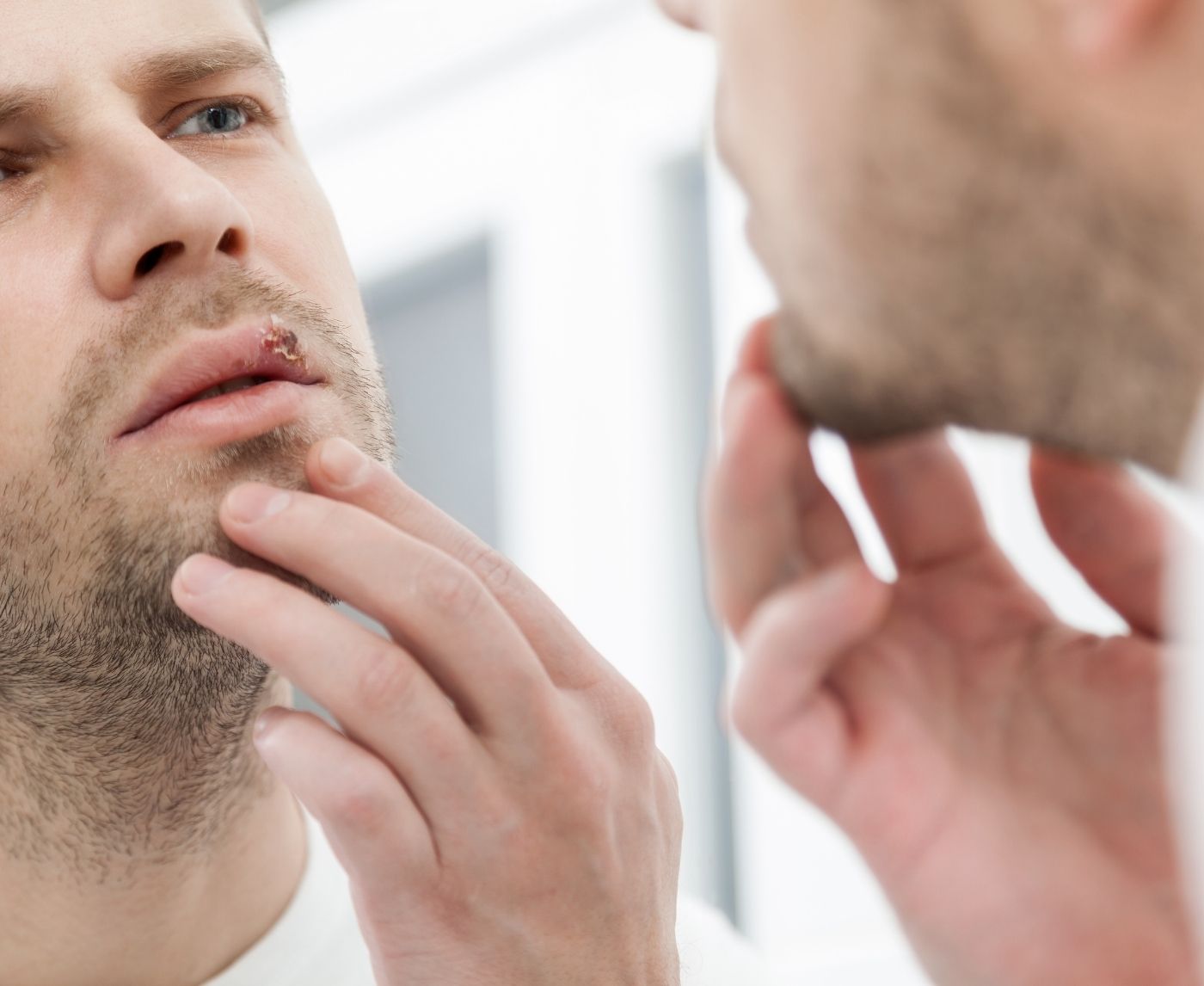
At some point, everyone ends up doing the same thing, standing in front of a mirror, stretching their lip, tilting their head, trying to decide what they’re looking at. Is it just a canker sore? Is it something contagious? Is it about to get worse?
The truth is, most mouth sores fall into a few recognizable patterns. And once you see how they behave, not just how they look, you start to get a much clearer answer.
| Type | Pain Level | Appearance | Healing Time |
|---|---|---|---|
| Canker sore | Moderate sting | White center, red border | 7–10 days |
| Friction irritation | Mild soreness | Red, raw patch | 2–5 days |
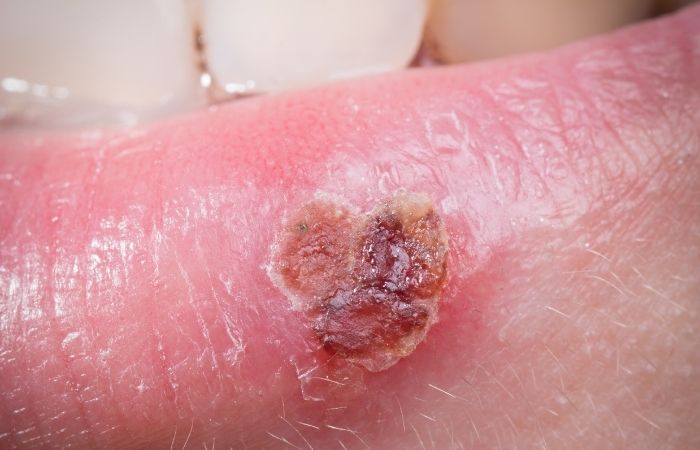
| Herpes | High, burning pain | Clustered blisters → ulcers | 10–14 days |
| Syphilis sore | Usually painless | Single, firm ulcer | 3–6 weeks (untreated) |
One of the biggest tells is whether the sore is alone or part of a group. A single sore that stings when you eat something acidic is usually a canker sore. Multiple blisters that seem to evolve over a few days, that’s when herpes starts entering the conversation.
And then there’s the curveball: painless sores. Those are the ones people ignore, especially with Syphilis. “It didn’t hurt, so I thought it was nothing,” one patient told me. That’s exactly why it gets missed.
The Difference Between “It’s Annoying” and “Something’s Off”
Your body gives you subtle cues before anything becomes obvious. The challenge is knowing which signals actually matter.
An irritation-based sore tends to feel mechanical. It shows up where there was friction. It doesn’t spread. It doesn’t come with fatigue, fever, or swelling. It’s annoying, but predictable.
Infections feel different. They evolve. They escalate. They often come with extra signals your body layers on top.
“I thought it was just a sore, but then my throat started hurting and I felt run down. That’s when I knew something wasn’t lining up.”
If your symptoms are changing day by day instead of gradually healing, that’s your cue to stop watching and start acting.
What About a Sore Throat Instead of a Visible Sore?
This is where things get more confusing, and honestly, where a lot of people miss what’s happening.
Not all oral STDs show up as visible sores. In fact, oral Gonorrhea often doesn’t. Instead, it shows up as a sore throat that feels suspiciously like something you’ve had before, but not quite the same.
It might feel scratchy, inflamed, or just “off.” And because it doesn’t look dramatic, it’s easy to brush off.
The same goes for early-stage infections that haven’t fully developed visible symptoms yet. You can feel something before you see something.
That’s why focusing only on visible sores can be misleading. Your throat counts too.
What Actually Increases Your Risk (And What Doesn’t)
Let’s clear up one of the biggest misconceptions: not all oral sex carries the same level of risk. Context matters, who, what, and how all play a role.
Risk isn’t about judgment. It’s about exposure.
| Factor | Why It Matters |
|---|---|
| Open cuts in mouth | Easier entry point for bacteria/viruses |
| Active sores on partner | Higher chance of transmission |
| Rough or prolonged friction | Makes irritation and micro-tears worse |
| Immune system status | Changes how your body reacts |
"Having oral sex" is not on that list. Because that by itself doesn't guarantee anything.
This isn’t about eliminating risk completely, it’s about understanding it realistically. And once you do that, the fear starts to shrink into something manageable.
People are also reading: HIV Rapid Test vs Lab Test: What’s More Accurate and When?
When to Stop Watching and Actually Do Something
There’s a point where monitoring turns into overthinking. And then there’s a point where ignoring becomes risky. The goal is to land somewhere in the middle.
If your sore lasts longer than 10–14 days, keeps getting worse, or starts showing patterns like spreading or clustering, it’s time to move beyond guesswork.
And here’s something people don’t say enough: you don’t need to be 100% sure something is wrong to get tested. Testing isn’t a last resort, it’s a clarity tool.
If something feels off, trust that instinct. Not in a panic-driven way, but in a grounded, “I’d rather know than wonder” kind of way.
Because once you have an answer, everything else gets easier. Decisions become clearer. Anxiety drops. And you’re no longer stuck refreshing search results at midnight trying to diagnose yourself.
Let’s Talk About Herpes, Because That’s the Fear Everyone Jumps To
We should say it out loud: when people notice a mouth sore after oral sex, most of the fear points in one direction, Herpes. Not quietly, not subtly. It’s usually immediate and intense.
“I didn’t even finish brushing my teeth before I was Googling ‘oral herpes symptoms,’” one reader admitted. That reaction is incredibly common, especially because herpes is both widespread and misunderstood.
So here’s the grounded version: herpes can cause mouth sores after oral sex, but it doesn’t behave like a random single ulcer that appears overnight and fades quietly.
Instead, herpes tends to follow a pattern that’s hard to miss once you know what to look for.
| Feature | Herpes Pattern |
|---|---|
| Number of sores | Usually multiple (clustered) |
| Pain level | Burning, tingling, intense |
| Progression | Blisters → open sores → crust/heal |
| Timing | Appears days later, not instantly |
If what you’re seeing is a single sore that showed up quickly and isn’t evolving, that’s already a strong signal it may not be herpes.
That said, if you notice clusters, worsening pain, or a spreading pattern over a few days, that’s when testing becomes important, not because you should panic, but because you deserve clarity.
The One People Miss: Syphilis Doesn’t Try to Scare You
Unlike herpes, Syphilis doesn’t announce itself loudly. It doesn’t burn or sting the same way. In fact, its first symptom, a chancre, often does the opposite.
It sits there quietly. A single, firm sore. No pain. No urgency. No reason, at least at first glance, to worry.
And that’s exactly why people overlook it.
“I thought it was a random mouth ulcer. It didn’t hurt, so I ignored it. Weeks later, I found out it was syphilis.”
Syphilis sores also take longer to appear. They don’t show up the next day. They follow a slower timeline, often weeks after exposure, which makes them harder to connect back to a specific encounter.
This is why timing and behavior matter more than fear. A painless sore that lingers deserves attention, even if it doesn’t feel urgent.
Why “It Happened Right After” Can Be Misleading
This is one of the biggest traps people fall into: assuming that because a sore appeared right after oral sex, the two must be directly connected as cause and effect.
But your body doesn’t operate on coincidence, it operates on biology. Most infections require time to incubate, multiply, and then show symptoms. That process doesn’t happen in a few hours.
So when a sore shows up immediately, it’s often your body reacting to the act itself, not an infection that somehow appeared instantly.
Think of it this way: your mouth just experienced friction, exposure to new bacteria, and possibly minor trauma. A reaction is normal. An infection, that fast, is not.
Understanding this one concept can prevent a huge amount of unnecessary panic.
Check Your STD Status in Minutes
Test at Home with Remedium6-in-1 STD Rapid Test Kit
 For Men & WomenResults in MinutesNo Lab NeededPrivate & Discreet
Order Now $119.00 $294.00
For all 6 tests
What to Do While You’re Waiting (Because Waiting Is the Hardest Part)
The hardest stretch is always the in-between, the time where you’ve noticed something, but don’t yet have answers. That’s where anxiety tends to grow the fastest.
So instead of refreshing symptom checkers every hour, focus on what actually helps your body and your clarity.
- Keep the area clean: Gentle oral hygiene supports healing
- Avoid irritation: Skip spicy, acidic, or rough foods temporarily
- Watch for changes: Is it healing, staying the same, or evolving?
These aren’t treatments, they’re ways to give your body space to either heal or reveal more information. Either outcome helps you make a better decision.
And if the uncertainty is getting to you, you don’t have to wait passively. You can move toward answers instead of sitting in the unknown.
Don’t wait and wonder. You can look into private options, like an at-home STD testing kit that lets you check your status without having to make appointments or talk to someone about your symptoms in person.
What Doctors Actually Look For (That Google Doesn’t Explain Well)
When clinicians evaluate mouth sores after oral sex, they’re not just looking at the sore itself. They’re looking at patterns, timing, progression, associated symptoms, and context.
A single snapshot doesn’t tell the whole story. The order is what matters.
| Factor | Why It Matters |
|---|---|
| Onset timing | Helps distinguish irritation vs infection |
| Number of lesions | Single vs clustered patterns |
| Pain profile | Painful vs painless clues |
| Systemic symptoms | Fever, fatigue, swollen glands |
This is why self-diagnosing based on appearance alone can be misleading. Two sores can look similar but behave completely differently, and that behavior is what tells the real story.
You don’t need to become an expert overnight. You just need enough understanding to know when something is likely harmless, and when it deserves a second look.
FAQs
1. I got a sore in my mouth right after oral sex, did I catch something?
Probably not. If it showed up within hours or the next morning, that’s almost always irritation or a canker sore, not an STD. Infections need time to develop, so your body reacting that quickly usually means friction, not transmission.
2. This feels like a canker sore… but what if it’s actually herpes?
Fair question, and a common spiral. Herpes usually doesn’t show up as one quiet little sore; it tends to come in clusters and feel more intense, like burning or tingling before it even appears. If it’s just sitting there minding its business and not getting worse, that leans away from herpes.
3. Can you actually get an STD in your mouth from oral sex?
Yes, you can, but it’s not as automatic as your brain might be telling you right now. Infections like herpes, syphilis, and gonorrhea can be transmitted through oral sex, especially if there are cuts or active sores involved. Still, most exposures don’t lead to symptoms, and most mouth sores aren’t STDs.
4. What does a syphilis sore in the mouth even look like?
This one’s sneaky. It’s usually a single sore that doesn’t hurt, which is exactly why people ignore it. No drama, no burning, just a firm ulcer that sticks around longer than you’d expect.
5. Why does my throat feel weird after oral sex but I don’t see any sores?
You’re not imagining it. Some infections, especially oral gonorrhea, don’t show up as visible sores at all. It can feel like a mild sore throat, the kind you’d normally brush off, but if it lingers or feels off compared to your usual “I’m getting sick” feeling, it’s worth paying attention.
6. How long should a normal mouth sore last before I start worrying?
Most harmless sores start improving within a few days and clear up in about a week. If you’re hitting that 10–14 day mark and it’s still hanging around, or worse, evolving, that’s your sign to stop watching and start checking.
7. Can I kiss someone while I have this?
This is where you play it safe. If you don’t know what it is yet, it’s better to pause. Some things, like herpes, can spread through contact even if the sore seems small.
8. What if it doesn’t hurt at all? Isn’t that a good sign?
Not always. Painful sores are usually annoying but harmless. Painless ones? Those are the ones that sometimes matter more, especially with infections like syphilis. If it’s lingering and doing nothing… that’s actually something.
9. Do I really need to get tested, or am I overreacting?
You’re not overreacting, you’re trying to understand your body. Testing isn’t about assuming the worst; it’s about removing the question mark. If the uncertainty is bothering you, that’s already enough reason to check.
10. What’s the easiest way to figure this out without making it a whole thing?
Honestly? Start simple. Give it a few days, watch how it behaves, and if it’s not clearly healing or something feels off, use a discreet at-home test. No waiting rooms, no explanations, just answers.
You Deserve Clarity, Not Guesswork
A sore in your mouth after oral sex can feel bigger than it is. Not just physically, but mentally. It pulls you out of the moment and into analysis, second-guessing, and worst-case scenarios. The goal isn’t to label every symptom as something serious. The goal is to understand what your body is actually signaling.
If the sore showed up fast and starts healing, it’s likely irritation. If it lingers, changes, or doesn’t follow a normal pattern, test. If symptoms expand beyond the sore, like throat discomfort or multiple lesions, take that seriously. Each step isn’t about fear. It’s about narrowing uncertainty until you’re left with facts.
Don’t wait and wonder. If there’s even a small question in your mind, start with a discreet option like the Combo STD Home Test Kit. Your results stay private. Your decisions stay yours. And clarity always beats guessing.
How We Sourced This Article: This guide combines current clinical guidance on oral STDs with peer-reviewed infectious disease research and real-world symptom patterns. We reviewed medical literature on herpes simplex virus, syphilis progression, oral gonorrhea, and non-infectious mouth ulcers to ensure accuracy while keeping the language clear and usable. Only reputable medical authorities and research-backed sources informed the distinctions presented here.
Sources
1. Centers for Disease Control and Prevention – Herpes Fact Sheet
2. Centers for Disease Control and Prevention – Syphilis Fact Sheet
3. Centers for Disease Control and Prevention – Gonorrhea Fact Sheet
5. World Health Organization – Sexually Transmitted Infections Fact Sheet
6. Planned Parenthood – Herpes Overview
7. Johns Hopkins Medicine – Oral Herpes
About the Author
Dr. F. David, MD is a board-certified expert in infectious diseases who works to stop, diagnose, and treat STIs. He uses a direct, sex-positive approach that puts clarity, privacy, and patient empowerment first, along with clinical accuracy.
Reviewed by: Board-Certified Infectious Disease Specialist | Last medically reviewed: March 2026
This article is just for information and shouldn't be used in place of medical advice.


