The symptoms of gonorrhea in men include an increased urge to urinate, and a burning or irritation sensation when urinating. The symptomatology encompasses swelling of the testicle, a bump on the testicle, tenderness of the penis, pustules on the head of the penis, and jock itch, which is a fungal infection. Symptoms in the rectum, which could give cause for suspicion of gonorrhea, particularly from anal intercourse, could be itching, bleeding, or discharge. Besides that, strange discharges from the penis might happen in yellow, clear, milky, or green colors and may include this disease, gonorrhea.
02 October 2024
3 min read
9409
Complications of Late-Stage Gonorrhea
If left untreated for a long period, gonorrhea can lead to an inflammation of the male genital tract known as epididymitis. In epididymitis, scarring may occur, which in turn blocks sperm ducts. Such blockage inhibits sperm movement from the duct to the penis, hence potentially affecting fertility.
Most Susceptible Male Age Group to Gonorrhea
Young men between the ages of 18-24 and 25-29 are most susceptible to gonorrhea infection. A person below 29 years and sexually active with a single or multiple partner is recommended for routine gonorrhea test.
Gonorrhea: Symptoms Manifestation Period
Symptoms often develop within one week upon acquiring this infection. Sometimes it takes one month before symptoms appear in some patients.
Possible Complications of Untreated Gonorrhea
Inability or sub-fertility, as well as susceptibility to other sexually transmitted infections, are possible in a person who has neglected gonorrhea. This is a curable disease; however, if it is not cured, it can cause very serious damage.
How Frequently Should You Undergo STD Testing?
Forcibly speaking, technology has made taking a test for STDs like gonorrhea easier today and with complete accuracy from the comfort of one's home. Importantly, gonorrhea is almost always co-infecting with other STDs like chlamydia. So, testing becomes necessary in cases of unprotected sex.
If you are diagnosed with gonorrhea, you and your partner(s) should receive medical treatment immediately to avoid reinfection. It is suggested that sexual contact should not be resumed for at least a week following the treatment course so that the infection has been completely eradicated.
Protecting Yourself from Gonorrhea
However, although not infallible, the use of a condom during sexual intercourse can reduce the risk of infection by at least 50%. Gonorrhea bacteria are usually spread by vaginal, anal, or penile fluids, and ejaculation does not have to occur for transmission to take place.
Testing regularly, even without symptoms, is important. If you have unprotected sex in your life, then you are more likely than average to be taking risks of getting gonorrhea. Regular testing is, therefore, very important for you and your partner(s).
A confirmatory positive result should be followed by immediate treatment regarding gonorrhea or other STDs. If left without appropriate treatment, the infections may cause complications. According to the UK National Health Services, the infection requires treatment with antibiotics by following all the prescriptions.
Gonorrhea is the most common STD that results from unprotected vaginal, oral, and anal sex with an infected partner. Without any distinctions by gender, any sexually active person may be at risk. However, in the case of heterosexual males, the chance of acquiring gonorrhea is estimated to be around 20%, while in females, the incidence is as high as 60-90%.








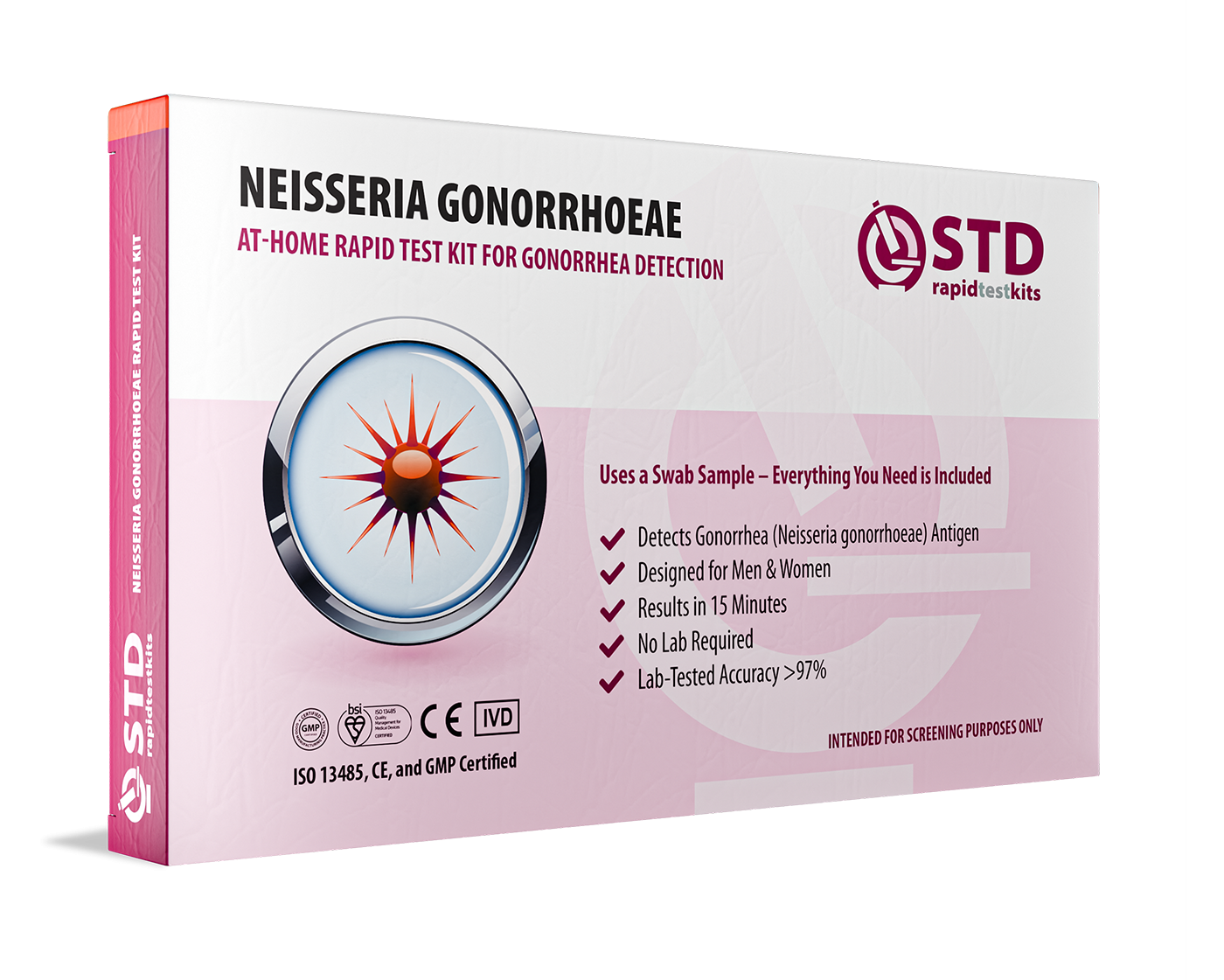
 For Men & Women
 Results in Minutes
 No Lab Needed
 Private & Discreet


