






Quick Answer: You can have chlamydia for months or even years without knowing because many infections cause no noticeable symptoms. Without treatment, the bacteria can remain in the body indefinitely and may eventually lead to complications like pelvic inflammatory disease or infertility.
The Quiet Infection Most People Never Feel
Doctors sometimes call chlamydia a “silent infection,” and that description isn’t exaggerated. Studies consistently show that most infections produce few symptoms or none at all. Roughly 70–80% of women and about half of men with chlamydia don’t notice anything unusual during the early stages.
That means the bacteria can live in the reproductive tract for a long time before anyone realizes it’s there. Someone might feel completely healthy while still carrying and potentially spreading the infection to partners.
One patient described it this way during a clinic interview:
“I only got tested because a friend said she was going. I felt totally normal. When the nurse told me I had chlamydia, I honestly thought there had been a mix-up.”
This scenario is incredibly common. The infection can quietly sit in the cervix, urethra, throat, or rectum without causing the kind of dramatic symptoms people associate with sexually transmitted infections.
That’s why routine testing is so important. Many people discover chlamydia not because they feel sick, but because they decide to check.
How Long Can Chlamydia Stay in the Body Without Treatment?
The uncomfortable truth is that Chlamydia usually doesn't go away on its own if you don't get treatment. Chlamydia trachomatis, the bacteria that cause the infection, can live in human cells and keep making more of themselves.
Without antibiotics, the infection may persist for a very long time. Medical researchers have documented cases where people unknowingly carried chlamydia for years.
| Stage | Typical Timeline | What May Happen |
|---|---|---|
| Initial infection | 1–3 weeks after exposure | Some people may have symptoms, but most people don't notice them. |
| Silent phase | Months or longer | Infection continues with minimal symptoms. |
| Long-term infection | Years without treatment | The risk of complications rises. |
The timeline is different for each person. Some people eventually develop symptoms that prompt testing. Others only discover the infection during routine screening or when a partner tests positive.
A sexual health nurse once put it bluntly during a patient education workshop:
“Chlamydia isn’t like a cold that burns out and disappears. If the bacteria are still there, they keep living there until antibiotics clear them.”

People are also reading: Scared You Gave Someone Herpes? Here’s What to Say
When Symptoms Do Show Up (And Why They’re Easy to Miss)
Even when chlamydia does produce symptoms, they’re often subtle. Many people mistake them for something else, irritation, a mild infection, or simply normal body changes.
The most common symptoms tend to be mild and inconsistent, which is part of why the infection goes unnoticed for so long.
| Possible Symptom | Where It Occurs | Why People Ignore It |
|---|---|---|
| Burning when urinating | Urinary tract | Often mistaken for a mild UTI. |
| Unusual discharge | Genitals | May be subtle or intermittent. |
| Pelvic discomfort | Lower abdomen | Often blamed on cramps or digestion. |
| Testicular pain | Men | May come and go. |
Sometimes the infection affects other areas of the body as well. Oral sex can transmit chlamydia to the throat, where it usually causes no symptoms at all. Rectal infections may cause irritation or discharge but are also frequently asymptomatic.
A patient named Elena once described her experience during a screening interview:
“I kept thinking the discharge was just hormonal. It wasn’t painful. It wasn’t dramatic. I had no idea it could be an STD.”
Stories like this explain why millions of infections remain undiagnosed each year.
What Happens If Chlamydia Stays Untreated for a Long Time
While many people feel fine during the early stages of chlamydia, the infection can eventually cause serious complications if it stays untreated. The longer the bacteria remain in the body, the greater the chance they will move deeper into the reproductive system.
Pelvic inflammatory disease, or PID, is one of the biggest risks for women. This occurs when the infection spreads from the cervix into the uterus and fallopian tubes.
PID can leave scars on the inside of the reproductive organs. In very bad cases, that scarring could make it harder for a woman to get pregnant or cause an ectopic pregnancy.
Men can also develop complications, although they tend to occur less frequently. Untreated chlamydia can sometimes lead to epididymitis, an infection that causes swelling and pain in the testicles.
The most annoying thing is that a lot of these problems take a long time to get worse. Someone might feel fine for months while the infection slowly harms their insides.
A public health researcher once summarized the situation during a medical lecture:
“Chlamydia is deceptive. It doesn’t always announce itself loudly, but the longer it remains untreated, the more likely it is to leave lasting consequences.”
This is why routine screening is recommended for sexually active individuals, particularly those under 25 or anyone with new partners.
Testing early lets treatment start before problems happen.
Why So Many People Carry Chlamydia Without Realizing It
The answer to your question about how someone could have Chlamydia for months or even years without knowing is that the bacteria act in a certain way inside the body. Chlamydia doesn't cause a lot of inflammation right away, unlike other infections that do. Instead, it often just irritates cells a little. The immune system doesn't respond very quickly, and when it does, it doesn't always cause symptoms.
This means that the infection can stay in parts of the body like the cervix or urethra without causing pain or other obvious signs of trouble. The bacteria quietly reproduce inside cells, spreading slowly instead of quickly.
This biological behavior is why screening programs exist in the first place. Doctors know that relying on symptoms alone would miss a huge number of infections.
One sexual health clinician explained it this way during a community workshop:
“People imagine STDs as something that immediately makes you feel sick. But chlamydia often behaves more like background noise in the body, it’s there, but you don’t necessarily notice it.”
For this reason, testing recommendations are based on risk factors and sexual activity rather than symptoms alone.
Check Your STD Status in Minutes
Test at Home with Remedium7-in-1 STD Test Kit

 For Men & Women
 Results in Minutes
 No Lab Needed
 Private & Discreet
Order Now $129.00 $343.00
For all 7 tests
How Doctors Detect a “Silent” Chlamydia Infection
Even when someone has no symptoms, chlamydia is relatively easy to detect with modern testing methods. Most clinics today use nucleic acid amplification tests (NAATs), which are very sensitive and can find even the smallest amounts of bacterial DNA.
These tests can be performed using a urine sample or a swab from the affected area. Because the bacteria often live in the cervix or urethra, these samples give doctors a reliable way to identify the infection even if it has been present for months.
| Test Type | Sample Needed | Typical Use |
|---|---|---|
| Urine test | Urine sample | Common screening for men and women. |
| Cervical swab | Cervical swab | Often used in gynecological exams. |
| Urethral swab | Take a swab from the urethra. | Sometimes used when there are symptoms. |
| Rectal or throat swab | Swab sample | Used when exposure may have occurred in these areas. |
Testing doesn’t usually require a complicated clinic visit. In many cases, it can be done quickly and discreetly. Some people also choose mail-in or at-home testing kits if privacy is a concern.
If you're not sure about your status, STD Rapid Test Kits can help you find discreet testing options. A lot of people like to test at home because it takes away the stress of making appointments at a clinic or waiting in a public waiting room.
When Should You Test After a Possible Exposure?
Timing matters when it comes to STD testing. Testing too early after exposure can lead to a false negative because the bacteria may not yet be detectable.
For chlamydia, most medical guidelines suggest waiting at least several days after exposure before testing, with optimal accuracy reached after about one to two weeks.
| Time After Exposure | Testing Accuracy | Recommendation |
|---|---|---|
| 1–3 days | Too early | Wait before testing. |
| 5–7 days | Possible detection | Some infections may show up. |
| 10–14 days | High accuracy | Recommended testing window. |
If symptoms appear sooner, such as burning during urination or unusual discharge, testing should happen immediately. Even mild symptoms are enough reason to check.
Waiting for symptoms isn’t always helpful because, as we’ve seen, many infections remain silent. Testing based on exposure is usually the safest strategy.
For people who want fast answers without visiting a clinic, the Combo STD Home Test Kit allows you to screen for multiple infections at once. Many individuals prefer this approach because it provides clarity without delays.
Why Routine Testing Matters Even If You Feel Completely Fine
Sexual health professionals repeat one message again and again: feeling healthy doesn’t always mean you’re infection-free. If you only look at symptoms, you might miss a diagnosis of chlamydia.
Routine screenings help find infections early, before they get worse and before they spread to partners.
Many countries' health guidelines say that sexually active people, especially younger adults and those with new or multiple partners, should get tested regularly. The goal isn’t to alarm people, it’s simply to make sure infections don’t remain hidden for years.
One college health educator summarized it well during a student seminar:
“Testing isn’t about assuming something is wrong. It’s about removing uncertainty. Most of the time the result is negative, and when it’s not, treatment is straightforward.”
Chlamydia is highly treatable with antibiotics, and early treatment prevents long-term complications. But the key step is knowing whether the infection is present.
That’s why regular testing is considered part of routine health care, just like dental checkups or annual physicals.
People are also reading: Still Positive After Treatment? Here’s When to Retest for Each STD
Can Chlamydia Ever Go Away on Its Own?
This is one of the most common questions people ask after learning how quiet Chlamydia can be. If the infection can stay unnoticed for months or years, it seems reasonable to wonder whether the body might eventually clear it naturally.
The short answer is that it usually doesn't. Sometimes, the immune system can stop the infection for a short time, but the bacteria that cause chlamydia are very good at living inside human cells. They don't die; instead, they often stay alive in the reproductive tract.
Researchers studying untreated infections have found that some people carry the bacteria for extended periods without symptoms. In those cases, the infection doesn’t necessarily become weaker over time, it simply stays hidden.
A sexual health physician once explained this to a patient during a consultation:
“Chlamydia isn’t something your body reliably clears the way it clears a cold. If it’s there, it usually stays there until antibiotics remove it.”
This is why medical guidelines consistently recommend treatment whenever chlamydia is detected, even if symptoms are mild or nonexistent.
What Treatment Actually Looks Like
The reassuring part of the story is that chlamydia is one of the most treatable sexually transmitted infections. After the disease is diagnosed, the usual treatment is a short course of antibiotics that kill the bacteria in the body.
The type of medicine and how long it lasts depend on medical guidelines and the patient's situation, but treatment is usually easy and works well.
| Treatment Step | What Happens | Typical Timing |
|---|---|---|
| Diagnosis | Positive lab or home test | After screening |
| Antibiotic treatment | Prescription medication eliminates bacteria | Usually about 7 days |
| Recovery period | Body clears infection | About 1–2 weeks |
| Follow-up testing | Ensures infection is gone | Around 3 months later |
When a person is on antibiotics and has an infection, doctors usually tell them not to have sex. This helps keep you from getting sick again or passing it on to your partner.
It’s also common for healthcare providers to recommend that recent partners be tested and treated as well.
The Emotional Side of a Surprise Diagnosis
Finding out that you might have had chlamydia without knowing can make you feel a lot of things. People often replay past relationships in their heads, trying to figure out when the infection might have started.
That reaction is incredibly normal. But in reality, it’s often impossible to determine the exact moment of infection. Because symptoms are frequently absent, the bacteria may have been present for a long time before anyone noticed.
A patient named Jordan described the experience after discovering the infection during a routine screening:
“My first thought was, ‘How long has this been there?’ I kept thinking about past partners. But the doctor told me it’s very common not to know exactly when it started.”
Sexual health professionals emphasize that infections like chlamydia are extremely common and very treatable. The most important step isn’t figuring out the past, it’s addressing the infection once it’s discovered.
Testing and treatment are ultimately tools for protecting your health and your future partners.
Check Your STD Status in Minutes
Test at Home with Remedium6-in-1 STD Test Kit
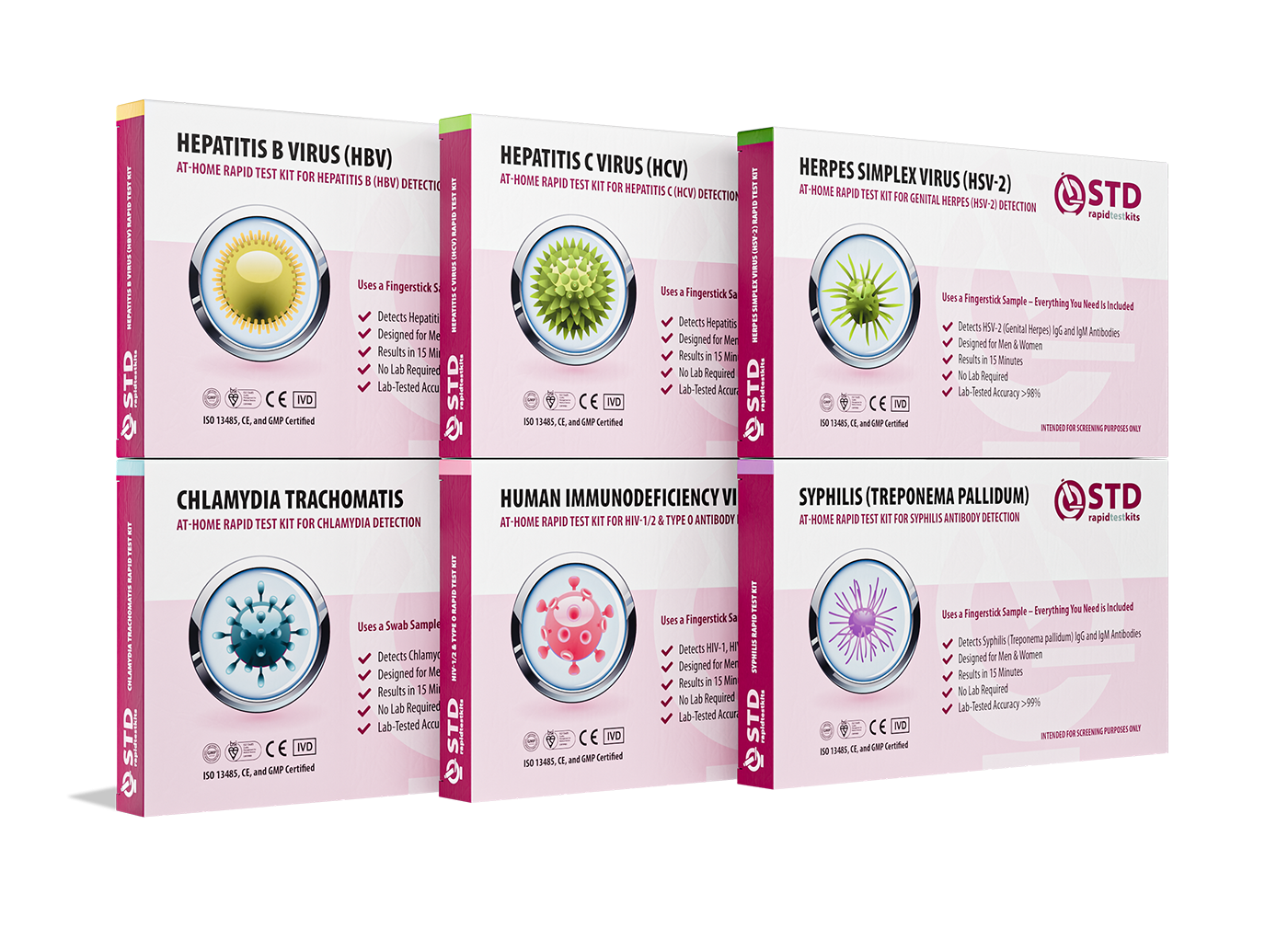 For Men & WomenResults in MinutesNo Lab NeededPrivate & Discreet
Order Now $119.00 $294.00
For all 6 tests
How People Usually Discover a Long-Standing Infection
Because symptoms are unreliable, many people only discover chlamydia during routine screening or after a partner tests positive. In other cases, mild symptoms eventually appear and prompt testing.
Here are some of the most common ways to find infections:
- Routine screening: Many clinics test sexually active patients during annual exams.
- Partner notification: A partner tests positive and tells the other person to get tested.
- Mild symptoms:Sometimes people notice small changes, like unusual discharge or a slight burning feeling when they pee.
- Fertility tests: The infection may only show up during a routine checkup for reproductive health.
Because of how common asymptomatic infections are, health organizations encourage regular testing for anyone who may be at risk.
For people who prefer privacy or convenience, many choose to screen from home. Discreet testing options like those available at STD Rapid Test Kits allow individuals to check their status without needing a clinic appointment.
The most important step is simply removing the uncertainty.
FAQs
1. Wait… so I could actually have chlamydia for years and not know it?
Yes, and that’s the part that surprises a lot of people. Chlamydia is notorious for staying quiet, no pain, no dramatic symptoms, sometimes not even a hint something’s off. Many people only discover it during a routine screening or after a partner gets tested and sends that slightly awkward text: “Hey… you might want to get checked.”
2. If I feel completely fine, do I really need to test?
Honestly, yes. Feeling normal doesn’t always mean everything is normal when it comes to chlamydia. Doctors see this all the time, someone comes in for a routine check, expecting a clean bill of health, and the test comes back positive even though they felt perfectly okay.
3. Could my body just clear chlamydia on its own?
It’s a tempting idea, but unfortunately it’s not something you want to gamble on. The bacteria that cause chlamydia are good at hiding inside human cells, which means the infection often sticks around until antibiotics remove it. In other words, it’s not like a cold that fades away with time.
4. What usually tips people off that something might be wrong?
Sometimes it’s subtle things, a slight burning sensation while peeing, a little more discharge than usual, maybe mild pelvic discomfort. But just as often, the clue is a conversation with a partner who recently tested positive. In sexual health clinics, that partner notification call is actually one of the most common ways infections are discovered.
5. How soon after sex would chlamydia show up on a test?
Most tests can accurately find the infection one to two weeks after exposure. If there aren't any urgent symptoms, doctors often recommend waiting 10 to 14 days before testing because it can sometimes miss it.
6. Is chlamydia actually dangerous if it stays untreated?
It can be. The early stages are usually mild or silent, but over time the infection can move deeper into the reproductive system. In women, that can lead to pelvic inflammatory disease, and in men it can occasionally cause painful inflammation around the testicles. The good news is that catching it early usually prevents those complications.
7. Does a positive test mean I've had chlamydia for months?
Not all the time. It's hard to tell when the infection first started because chlamydia doesn't always cause symptoms. It could be new, or it could have been around for a while and no one noticed. Doctors usually try to fix it instead of putting the timeline back together in real life.
8. Is treatment complicated?
Fortunately, no. Most of the time, a short course of antibiotics will clear up chlamydia. During treatment, doctors usually tell people to avoid sex for a short time and to tell recent partners so they can get tested too.
9. What is the easiest way to find out if I might have it?
Testing is the easiest way to go. A lot of clinics will do a quick screening with a urine sample, but some people like to use at-home testing kits because they are more private and convenient. In either case, the process is usually quick, and the peace of mind is worth it.
10. Be honest, should I be freaking out right now?
Nope. Take a breath. Chlamydia is one of the most common and most treatable STIs out there. If there’s any chance you’ve been exposed, the smartest move isn’t panic, it’s simply getting tested so you know exactly where things stand.
You Deserve Clarity, Not Guesswork
Discovering that you could have carried Chlamydia without knowing can feel unsettling, but it’s far more common than most people realize. The infection often stays quiet, which is why millions of people only discover it during routine testing or after a partner brings it up.
The important thing to remember is that chlamydia is both detectable and highly treatable. Once diagnosed, a short course of antibiotics usually clears the infection quickly and prevents long-term complications.
Testing is the easiest way to remove the uncertainty. People who want to quickly and privately test for a few common infections often choose the Combo STD Home Test Kit.
Getting tested is not something to be ashamed of or blame. It's just a smart way to stay healthy and learn more about how your body works.
How We Sourced This Article: This guide combines clinical guidelines on Chlamydia with peer-reviewed research on asymptomatic sexually transmitted infections and long-term infection timelines. We looked over epidemiological data on silent chlamydia infections, how they spread, and how well treatments work to make sure the information is up to date with current public health advice and easy for readers to understand without feeling ashamed.
Sources
1. Centers for Disease Control and Prevention – Chlamydia Fact Sheet
3. Mayo Clinic: Signs and Causes of Chlamydia
4. Planned Parenthood: Information about Chlamydia
5. World Health Organization – Sexually Transmitted Infections Fact Sheet
6. Centers for Disease Control and Prevention – Chlamydial Infections Treatment Guidelines
7. MedlinePlus – Chlamydia Infections
About the Author
Dr. F. David, MD is a board-certified infectious disease specialist focused on sexually transmitted infection prevention, diagnosis, and treatment. His work centers on translating complex clinical guidance into practical, judgment-free information that helps people make informed decisions about their sexual health.
Reviewed by: Michael R. Levin, MD, Infectious Disease | Last medically reviewed: February 2026
This article is for informational purposes and does not replace professional medical advice.


