






Quick Answer: Itching after anal sex is usually caused by friction, skin irritation, or hemorrhoids, but it can also signal rectal gonorrhea, chlamydia, or herpes. If symptoms persist beyond a few days, worsen, or include discharge, sores, or pain, testing is recommended.
First, Let’s Talk About Friction (Because It’s the Most Common Reason)
Anal tissue is delicate. Unlike vaginal tissue, it doesn’t self-lubricate. That means friction is the number one reason people wake up itchy after anal sex. Even when you used lube. Even when it felt good in the moment. Even when nothing seemed “rough.”
Picture this: You had sex. You were relaxed. Maybe you used latex condoms. Maybe silicone lube. Maybe you went longer than usual. Tiny micro-tears can happen without you feeling them. They’re small. Invisible. But as the tissue heals, nerve endings wake up. And healing tissue often itches.
This kind of itching usually appears within 12 to 24 hours. It doesn’t come with fever. It doesn’t come with thick discharge. It doesn’t create painful blisters. It’s just irritation that gradually improves over two to four days.
Sometimes the culprit isn’t friction itself but what touched your skin. Latex sensitivity can show up as itching without a rash. Certain lubes, especially those with warming agents or glycerin-heavy formulas, can disrupt the skin barrier. If you’ve ever searched “can lube cause anal itching,” the answer is yes. It absolutely can.
When It’s Not Just Irritation: The STI Conversation
Now let’s slow down and shift gears. Because sometimes itching isn’t just friction.
Rectal sexually transmitted infections happen more often than people realize. According to public health data from the Centers for Disease Control and Prevention, rectal infections with gonorrhea and chlamydia are frequently asymptomatic. That means some people feel nothing. Others feel mild itching or irritation before anything else appears.
A person named Marcus once described it this way: “It didn’t hurt. It just felt… off. Like I needed to wipe more. I kept thinking maybe I didn’t clean well enough.” Two weeks later, he noticed discharge. Testing confirmed rectal gonorrhea.
That’s the difference. STI-related itching tends to evolve. It doesn’t quietly fade. It builds. You may notice mucus-like discharge. A feeling of rectal fullness. Pain with bowel movements. Or small sores if herpes is involved.
| Cause | When It Starts | Other Symptoms | Does It Worsen? |
|---|---|---|---|
| Friction / Micro-tears | Within 24 hours | Mild tenderness | Usually improves in 2–4 days |
| Lube or Latex Sensitivity | Within 24 hours | Burning, irritation | Improves once irritant removed |
| Hemorrhoids | Anytime | Swelling, minor bleeding | Can flare intermittently |
| Rectal Gonorrhea / Chlamydia | 5–14 days | Discharge, discomfort | Often persists or worsens |
| Herpes (HSV) | 2–12 days | Blisters, sores, pain | Lesions develop, then heal |
| Pinworms | Nighttime dominant | Intense itching at night | Continues without treatment |
The timeline matters. If you’re itchy the next morning and it fades by day three, friction is likely. If you’re itchy a week later and something feels progressively wrong, testing becomes important.
People are also reading: From Testicles to Testosterone: How STDs Can Mess With Your Hormones
The Parasite Question: Why Is It Worse at Night?
Nighttime itching deserves its own attention. If you’re waking up scratching, especially several days after sex, your brain may jump straight to “STD.” But parasites like pinworms have a very specific pattern. They cause intense itching at night because that’s when female worms lay eggs around the anus.
It’s more common in children, but adults can get it too, especially through close household contact. The itching feels sharp and relentless, not just mildly annoying. And unlike STI-related itching, it doesn’t usually come with discharge or pain during bowel movements.
One woman in her early thirties described staying up Googling “itchy anus at night STD” at 2 a.m., convinced something terrible was happening. A simple over-the-counter treatment solved it in days. Not every itch is a moral crisis. Sometimes it’s biology doing something mundane.
Hemorrhoids: The Unsexy but Common Explanation
We rarely want this to be the answer, but hemorrhoids are incredibly common. Anal sex can irritate existing hemorrhoids or cause temporary swelling. The itching from hemorrhoids often comes with a feeling of pressure or a small lump near the opening.
If you notice light streaks of blood on toilet paper, that’s often hemorrhoidal irritation rather than an STI. That said, persistent bleeding should always be evaluated. Your body deserves clarity, not assumptions.
The key difference? Hemorrhoid-related itching tends to fluctuate. STI-related inflammation tends to stay steady or intensify.
When Should You Actually Test?
This is where panic turns into a plan.
If itching appears immediately and fades within a few days, you can monitor. If you still have itching after 5 to 7 days, especially after having anal sex without protection, you should think about getting tested for rectal gonorrhea and chlamydia. If sores show up between 2 and 12 days, it's time to get tested for herpes.
Timing matters because every STI has what’s called a window period. Testing too early can give false reassurance. Testing too late can mean living with unnecessary anxiety.
| Infection | Earliest Reliable Test | Optimal Testing Window |
|---|---|---|
| Chlamydia (Rectal) | 7 days | 14 days |
| Gonorrhea (Rectal) | 7 days | 14 days |
| Herpes (HSV-1/2) | 2–12 days if lesions present | When sores appear |
If your symptoms match the timeline and you don’t want to wait in a clinic, discreet at-home testing is available. You can explore reliable options through STD Rapid Test Kits, including combo panels that cover the most common infections in one step.
You don’t need to catastrophize. But you also don’t need to guess.
When the Itch Doesn’t Go Away: What Persistent Symptoms Can Signal
Here’s the part no one tells you: rectal STIs don’t always feel dramatic. There isn’t always severe pain. There isn’t always discharge pouring out. Sometimes it’s just a low-grade irritation that lingers long enough to make you hyper-aware of every sensation.
Imagine this. It’s day eight. The itching hasn’t exploded, but it hasn’t disappeared either. You’re sitting at work, shifting in your chair. You tell yourself it’s nothing. Then you remember the night you didn’t use a condom. Now your brain won’t stop replaying it.
Rectal chlamydia and gonorrhea can present exactly like that. Mild itching. Slight mucus. A subtle sense of rectal fullness. According to the Centers for Disease Control and Prevention, many rectal infections are asymptomatic, but when symptoms appear, they often include irritation, discharge, or discomfort during bowel movements. The tricky part is that these symptoms can overlap with hemorrhoids or irritation from sex.
Herpes behaves differently. It usually begins with tingling or burning before small blisters form. Those blisters can rupture and become painful ulcers. The itching isn’t vague. It’s sharper. More electric. And often accompanied by flu-like symptoms during a first outbreak.
So if your itch is morphing into pain, sores, fever, or visible lesions, that’s your body escalating the conversation.
Check Your STD Status in Minutes
Test at Home with Remedium7-in-1 STD Test Kit

 For Men & Women
 Results in Minutes
 No Lab Needed
 Private & Discreet
Order Now $129.00 $343.00
For all 7 tests
How Symptoms Evolve Over Time (And Why That Matters)
One of the clearest ways to distinguish friction from infection is by watching the pattern. Irritation heals. Infection progresses. Not always dramatically, but predictably.
| Day After Sex | Irritation Pattern | STI Pattern |
|---|---|---|
| Day 1–2 | Mild itching or tenderness | Usually no symptoms yet |
| Day 3–5 | Improving discomfort | Early irritation or tingling may begin |
| Day 6–10 | Mostly resolved | Discharge, sores, or persistent itching possible |
| Day 10+ | Fully healed | Ongoing symptoms without treatment |
This timeline isn’t meant to scare you. It’s meant to give you structure. If you’re on day two and already spiraling, breathe. If you’re on day ten and things are getting stranger, that’s actionable information.
The 72-Hour Spiral: What to Do Immediately After You Notice It
The first 72 hours are emotional more than medical. You check. You wipe. You Google. You swear you’ll never have sex again. Then you calm down. Then you panic again.
Instead of cycling through worst-case scenarios, anchor yourself in observable facts. Did you use protection? Was there visible trauma? Are you experiencing discharge or just itching? Is the itching worse at night, suggesting something like parasites? Or is it steady throughout the day?
If it’s early and symptoms are mild, focus on soothing the area. Avoid additional friction. Skip fragranced wipes. Switch to gentle cleansing. If symptoms intensify or persist beyond a week, plan for testing instead of guessing.
If you want clarity without sitting in a waiting room replaying your sexual history to a stranger, discreet at-home options exist. A rectal screening panel or combo kit from this combo STD home test kit can check for common infections quickly and privately. Peace of mind is sometimes the fastest way to stop the itch spiral.
Can You Have a Rectal STI Without Anal Sex?
This question comes up quietly. Often whispered. Often searched at midnight.
The short answer is yes, but context matters. Receptive anal intercourse is the highest-risk activity for rectal STIs. However, infections can also spread through oral-anal contact, shared sex toys, or genital fluids making contact with the anal area. Transmission doesn’t require penetration every time.
That reality can feel uncomfortable, especially for people who thought they were being “careful.” But STIs are about biology, not morality. If exposure happened, testing is just information gathering.
How to Reduce False Negatives When You Test
Timing is everything. Testing too early after exposure can produce a negative result even if infection is present but not yet detectable. For rectal chlamydia and gonorrhea, waiting at least seven days makes the results more reliable. Most rapid or lab-based tests are most accurate after two weeks.
Sample collection matters too. If you’re using a swab, following instructions precisely increases accuracy. Rushing the process because you’re anxious can compromise results. Slow down. Read. Breathe. Then collect the sample correctly.
If you test early because anxiety won’t let you sleep, that’s understandable. Just schedule a retest at the optimal window. Testing isn’t a one-shot decision. It’s a timeline.
When It’s Definitely Time to Seek Medical Care
There are moments when waiting isn’t wise. Severe rectal pain. Fever. Significant bleeding. Pus-like discharge. Painful ulcers. Those symptoms deserve immediate evaluation, not watchful waiting.
If you experience systemic symptoms like chills or swollen lymph nodes alongside rectal sores, that leans more toward a first episode of herpes. That requires prompt treatment. The earlier antivirals are started, the better they work.
Your body isn’t being dramatic. It’s communicating.
The Emotional Side: Shame Makes Everything Feel Worse
There’s a particular kind of shame that can attach itself to anal symptoms. It’s layered with stigma. With assumptions. With cultural silence. And that shame can amplify normal bodily sensations into catastrophic fear.
A client once said, “I felt dirty. Like I did something wrong.” But sex between consenting adults is not wrong. Exploring pleasure is not wrong. Testing when you’re unsure is responsible.
Anal itching after sex does not automatically mean you’re infected. And even if you are, infections are medical conditions, not character flaws.

People are also reading: Is That Burning Normal? Gonorrhea Symptoms Guys Often Miss
When Irritation and Infection Overlap
Here’s something most people don’t consider: irritation and infection can happen at the same time. Friction can create micro-tears, and those tiny openings can make it easier for bacteria or viruses to enter. That doesn’t mean every irritated area becomes infected. It means the body isn’t always dealing with just one variable.
Picture someone who had vigorous sex, noticed mild soreness the next day, assumed it was friction, and ignored it. A week later, the irritation hasn’t faded. There’s a subtle discharge. That doesn’t mean they were reckless. It means biology doesn’t care about our assumptions.
This is why watching progression matters more than reacting to the first sensation. If symptoms calm down steadily, that supports irritation. If they stall or intensify, testing is clarity, not overreaction.
Condoms, Lube, and the Small Details That Make a Big Difference
Prevention conversations can feel preachy, so let’s keep this grounded. Anal tissue is more prone to microscopic tearing than vaginal tissue. Condoms reduce STI transmission significantly, but only when used consistently and with adequate lubrication.
Water-based and silicone-based lubes reduce friction. Oil-based products can degrade latex condoms, increasing breakage risk. A broken condom doesn’t always mean transmission occurred, but it changes the exposure risk profile.
Some people discover latex sensitivity the hard way. The itching isn’t infectious. It’s inflammatory. If itching appears consistently after latex use but not with non-latex condoms, that pattern tells a story. Your body keeps receipts.
Testing remains part of prevention. It’s not about distrust. It’s about routine maintenance. Many sexually active adults incorporate periodic STI screening the same way they schedule dental cleanings. It’s normal. It’s proactive.
Testing Options: Clinic, Lab, or At-Home?
Once you decide to test, the next question becomes how. Clinics offer in-person evaluation, which is helpful if you have severe symptoms. Lab-based mail-in kits provide high sensitivity with privacy. Rapid at-home kits offer speed and discretion, which can be emotionally grounding when anxiety is high.
Someone sitting in their apartment at midnight doesn’t always want to wait five days for an appointment. Discreet testing through STD Rapid Test Kits allows you to take action immediately. That shift from rumination to movement can be psychologically powerful.
The right choice depends on symptom severity, timing since exposure, and your comfort level. What matters most is not doing nothing out of fear.
Check Your STD Status in Minutes
Test at Home with Remedium6-in-1 STD Test Kit
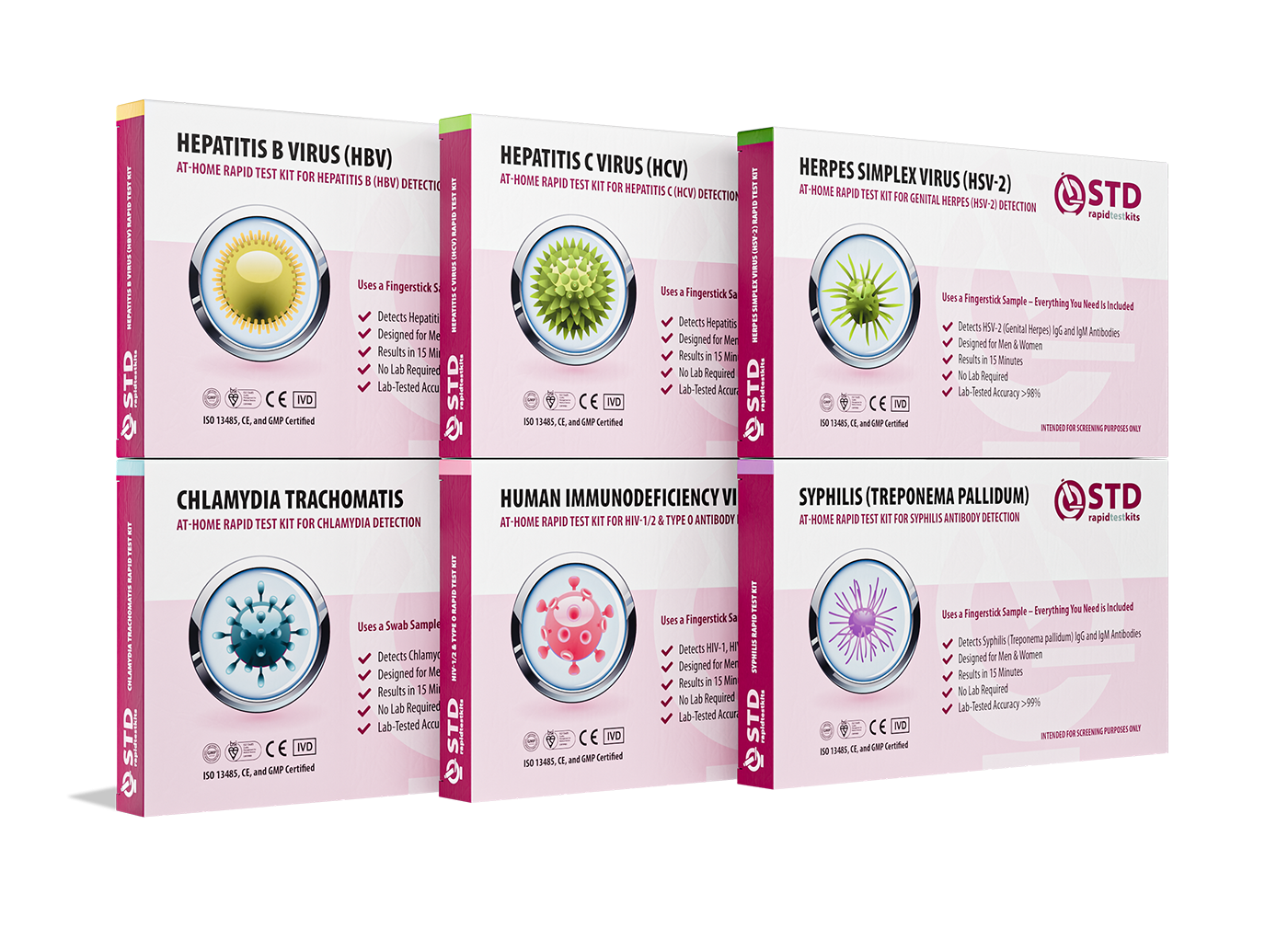 For Men & WomenResults in MinutesNo Lab NeededPrivate & Discreet
Order Now $119.00 $294.00
For all 6 tests
If the Result Is Positive
Take a breath. Most rectal bacterial STIs are treatable with antibiotics. Treatment is straightforward. Follow-up testing may be recommended to confirm clearance, especially if symptoms persist.
For herpes, antiviral medications reduce outbreak severity and transmission risk. The first diagnosis often carries emotional weight. That weight softens with information and support. Millions of people live full, connected lives with herpes.
Partner communication can feel daunting. But honesty framed around care tends to be received better than silence. A simple message like, “I tested positive for something that’s treatable. I wanted you to know so we can both stay healthy,” is often enough.
You are not alone in this. And you are not the first person to have this conversation.
Before You Panic Again, Here’s What Matters Most
Itching after anal sex is common. Most cases are irritation. Some are hemorrhoids. A smaller percentage are infections. The body doesn’t hand you a label. It gives you patterns.
Watch the timeline. Notice progression. Test when appropriate. Avoid self-shaming narratives. And remember that sexual health is healthcare.
If uncertainty is stealing your sleep, don’t wait and wonder. A discreet screening option like the at-home combo STD test kit checks for common infections quickly and privately. Your results, your privacy, your power.
FAQs
1. Can anal itching really be the only sign of an STI?
It can be, and that’s what makes it confusing. Rectal chlamydia or gonorrhea doesn’t always come in loud. Sometimes it starts as a subtle, persistent itch that doesn’t quite behave like simple irritation. If it lingers beyond a week, especially after unprotected anal sex, that’s your cue to test. Not panic. Just test.
2. How do I know if it’s herpes or just friction?
Friction feels sore and itchy but gradually improves. Herpes tends to escalate. There’s often tingling first, then small blisters or painful sores. It doesn’t quietly fade in three days. It builds, peaks, and then heals. If you see actual lesions, that’s not friction, that’s a medical conversation worth having.
3. It’s way worse at night. Does that mean parasites?
Night-dominant itching can point toward pinworms, especially if it’s intense enough to wake you up. But here’s the thing: anxiety also gets louder at night. If the itch is sharp and relentless after dark but calmer during the day, parasites move higher on the list. If it’s steady 24/7, think irritation or infection instead.
4. I used a condom. Am I still at risk?
Condoms dramatically reduce STI risk, especially for rectal gonorrhea and chlamydia. But no protection method is perfect. Breakage, slippage, or skin-to-skin infections like herpes can still occur. Protection lowers risk. It doesn’t make exposure biologically impossible.
5. What if it started the very next morning?
Symptoms appearing within hours are almost always irritation, not infection. Bacterial STIs need time to incubate. If you’re itchy the morning after and it fades within a few days, friction is the most likely explanation. Your body heals quickly when it’s just surface-level irritation.
6. Can lube really cause this much itching?
Absolutely. Warming agents, flavored formulas, and high-glycerin products can disrupt the skin barrier. Some people tolerate them fine. Others don’t. If the itch shows up every time you use a specific product, that’s a pattern worth noticing. Your body is consistent even when your anxiety isn’t.
7. What if I’m too embarrassed to go to a clinic?
You’re not alone in that feeling. Anal symptoms carry a lot of cultural silence. That’s exactly why at-home testing exists. Privacy matters. You deserve answers without feeling judged. Testing is health care, not confession.
8. Is rectal discharge always something serious?
Not always, but persistent mucus-like discharge after anal exposure deserves testing. If you have clear or slightly cloudy discharge and it itches or hurts, it's more likely to be an infection than just an irritation. It's not about one moment, but patterns.
9. If my test is negative but I still feel off, what then?
Timing might be the issue. Testing too early can miss infections. Testing again at the suggested time might help clear things up. If the symptoms don't go away after negative tests, a doctor can look for other causes that aren't STIs, such as fissures, dermatitis, or hemorrhoids.
10. Why does this symptom make me feel so strongly?
Because it’s intimate. Because anal sex still carries stigma in many communities. Because we’re taught to equate sexual symptoms with wrongdoing. But your body reacting to friction, bacteria, or viruses isn’t a moral verdict. It’s physiology. You’re allowed to seek clarity without shame.
You Deserve Answers, Not Assumptions
An itch is not a verdict. It’s not proof that you were reckless. It’s not a scarlet letter. It’s a sensation, and sensations need context, not shame.
Most post-anal itching is irritation. Some of it is hemorrhoids. A smaller slice is infection. The only way to separate those possibilities is with timing, observation, and sometimes testing. Not spiraling. Not self-blame. Not late-night doom scrolling that convinces you every symptom is catastrophic.
If it’s fading, your body is healing. If it’s evolving, your body is asking for attention. Either way, you’re allowed to respond calmly.
And if uncertainty is sitting heavy in your chest, if you keep replaying that night, that moment, that “what if”, then clarity is power. A discreet screening option like the at-home combo STD test kit checks for common infections quickly and privately. No waiting room. No awkward explanations. Just information.
You deserve to know what’s happening in your own body. Not guesses. Not assumptions. Not fear. Just answers.
How We Sourced This Article: This guide synthesizes current clinical guidance from major public health authorities, peer-reviewed infectious disease research, and lived-experience reporting to provide accurate, stigma-free education.
Sources
1. CDC Guidelines for Managing Sexually Transmitted Infections
2. Mayo Clinic: A Summary of Anal Itching
3. Fact Sheet from the World Health Organization on Sexually Transmitted Infections
4. Planned Parenthood: STD Symptoms and Testing
7. CDC Fact Sheet: Genital Herpes
About the Author
Dr. F. David, MD is a board-certified infectious disease specialist focused on STI prevention, diagnosis, and treatment. He blends clinical precision with a no-nonsense, sex-positive approach and is committed to expanding access to accurate sexual health information.
Reviewed by: A. Reynolds, PA-C | Last medically reviewed: February 2026
This article is only meant to give you information and should not be used instead of medical advice.


