






Quick Answer: Itching down there with no rash is most often caused by irritation, dryness, friction, or a mild yeast imbalance. Some STDs like chlamydia or herpes can cause itching, but itching alone without discharge, sores, or pain is rarely the only symptom. Testing is the only way to be sure.
The 2AM Spiral: Why Itching Feels Scarier Than It Is
There’s something uniquely triggering about genital symptoms. If your elbow itched, you’d shrug. If your scalp felt irritated, you’d switch shampoo. But when it’s your vulva or penis, the story gets loud fast. Shame sneaks in. Fear follows. Google becomes a dark tunnel.
I once spoke with a college student, we’ll call her Maya, who was convinced she had herpes because she felt a faint itching sensation for two days. She checked obsessively. No blisters. No sores. No redness. “I kept waiting for something to appear,” she said. “Like I was on symptom watch.”
Nothing ever did. What she had was mild contact irritation from a new body wash. But her anxiety lasted longer than the itch.
This is common. The absence of visible symptoms doesn’t calm people. It often makes things worse because you don’t have something concrete to measure. Just sensation. And sensation, especially in sensitive skin, can mean many things.
STD vs Yeast vs Irritation: What Actually Causes Itching Without a Rash
Let’s break this down clearly. When there’s itching and no rash, we look at three broad categories: infectious causes like chlamydia, gonorrhea, or herpes; fungal imbalance like a yeast infection; and non-infectious irritation such as friction, allergic reactions, or dryness. The differences matter, but they are often subtle.
| Condition | Typical Itch Pattern | Other Common Symptoms | Likelihood of Visible Rash | When to Test |
|---|---|---|---|---|
| Chlamydia | Mild irritation or internal itch | Discharge, burning urination, pelvic discomfort (often none) | Rare | 14 days after exposure |
| Gonorrhea | Genital irritation | Discharge, pain with urination | Rare | 14 days after exposure |
| Herpes | Tingling or itching before sores | Blisters or ulcers appear within days | Common once outbreak begins | When sores appear or 3–6 weeks for blood test |
| Yeast Infection | Intense external itching | Thick white discharge, redness, swelling | Often mild redness | No STD test needed unless risk present |
| Contact Irritation | Surface-level itching | Dryness, sensitivity, recent product change | Usually none or mild redness | No STD test unless exposure occurred |
Notice something important here. Most bacterial STDs do not cause a visible rash. But they also rarely cause itching as the only symptom. When itching shows up alone, especially externally, irritation and yeast are statistically more common causes.
That said, “statistically more common” doesn’t calm a worried mind. Testing does.
People are also reading: Tested Positive for Herpes? Here’s Exactly What to Do Next
What Yeast Feels Like (And Why It’s Often Misread)
Yeast infections don’t always announce themselves dramatically. Not everyone gets thick discharge or obvious redness. Sometimes it starts with a low-grade itch that feels deeper at night. Sometimes it feels raw after sex. Sometimes it’s just persistent enough to be annoying.
Daniel, 29, described it this way: “It felt like dry friction. I kept thinking maybe I didn’t rinse soap well enough.” He didn’t have discharge. No odor. Just itchiness at the head of his penis. It turned out to be a mild fungal imbalance triggered by antibiotics.
Yeast thrives in warm, moist environments. Antibiotics, hormonal shifts, high stress, and even tight clothing can tip the balance. And when the balance tips, itching can appear before any visible change does.
The key difference? Yeast itching is often persistent and external. STD-related itching, when it happens, is usually accompanied by something else within days.
When It’s Just Irritation (And Your Skin Is Simply Mad)
Genital skin is delicate. It reacts fast. New laundry detergent. Flavored lube. A long bike ride. A hot shower followed by aggressive towel drying. Even shaving can cause micro-abrasions that itch before you see anything.
I once spoke with someone who developed itching after a weekend music festival. No sex involved. Just sweat, tight shorts, and no shower for two days. The skin was simply inflamed. Once moisture levels normalized, the itching stopped.
Irritation-based itching often improves quickly once the trigger is removed. It doesn’t escalate into discharge or sores. It fades rather than intensifies.
When to Test (Because Peace of Mind Matters)
If you’ve had a recent sexual exposure and itching started within a few days, testing too early may not give you a reliable answer. Most bacterial STDs have a window period. That means your body needs time before a test can accurately detect infection.
| STD | Earliest Detection | Best Time for Accurate Result |
|---|---|---|
| Chlamydia | 7 days | 14 days |
| Gonorrhea | 7 days | 14 days |
| Herpes | When sores appear | 3–6 weeks (blood test) |
| HIV | 10–14 days (RNA test) | 6 weeks (antigen/antibody) |
If it has been two weeks or more since exposure, testing now is reasonable. If it’s been only a few days, you may test for reassurance but plan to retest at the optimal window.
You can explore discreet at-home testing options through STD Rapid Test Kits. If you want broader screening, a combo STD home test kit checks multiple infections at once and can reduce second-guessing.
Testing isn’t an admission of guilt. It’s information. And information reduces anxiety faster than speculation ever will.
Can an STD Cause Itching Only? The Honest, Nuanced Answer
This is the question that keeps people awake. Not “what’s most likely,” but “what if I’m the exception?” You felt itching. You had sex recently. Your brain connects dots fast.
Here’s the grounded truth. Some STDs can cause itching. But itching alone, without discharge, sores, pain during urination, unusual odor, pelvic discomfort, or visible lesions, is rarely the only presenting symptom. When bacterial infections like chlamydia or gonorrhea cause discomfort, it’s usually internal and often accompanied by subtle discharge or burning. And many people have no symptoms at all.
Herpes is the infection people fear most in this scenario. Early outbreaks can begin with tingling or itching. But that sensation typically progresses within days to visible blisters or ulcers. If itching has lingered for a week or more with zero skin changes, herpes becomes less likely.
That doesn’t mean “ignore it.” It means widen the lens.
Check Your STD Status in Minutes
Test at Home with Remedium7-in-1 STD Test Kit

 For Men & Women
 Results in Minutes
 No Lab Needed
 Private & Discreet
Order Now $129.00 $343.00
For all 7 tests
A Micro-Scene: When Anxiety Lasted Longer Than the Itch
Jordan, 34, noticed itching two days after a new partner. No condom failure. No visible sores. Just a steady awareness that something felt different. “I kept checking every few hours,” he told me. “I was bracing for blisters.”
Nothing appeared. By day five, the itching was already fading. He still tested at the two-week mark for peace of mind. Negative. The likely culprit? A new brand of latex condom combined with extended friction.
Here’s the part people don’t say out loud: the anxiety spike was worse than the physical sensation. And that’s common. Genital symptoms don’t just live in your skin. They live in your imagination.
What Timing Tells You That Symptoms Alone Cannot
Timing matters more than intensity. If itching starts within 24 hours of sex, irritation is statistically more likely than infection. Most bacterial STDs require several days before symptoms, if they show at all. Viral infections have incubation periods as well.
If itching begins a week or more after exposure and is accompanied by discharge, pain, or lesions, testing becomes more urgent. If it appears immediately after a long sexual encounter, especially with friction, new products, or shaving, the skin itself is often reacting.
The body does not follow Google timelines. But patterns still exist.
| When Itching Starts | Common Explanation | What To Watch For | Recommended Action |
|---|---|---|---|
| Within 24 hours of sex | Friction, latex sensitivity, lube reaction | Redness, dryness, surface irritation | Remove irritant and monitor 3–5 days |
| 3–7 days after exposure | Possible bacterial STD or yeast imbalance | Discharge, burning urination, odor | Test at 14 days if exposure risk |
| 1–3 weeks after exposure | STD window period reaching detectability | Persistent or worsening symptoms | Full panel STD test |
| Ongoing mild itch with no progression | Dryness, stress, chronic irritation | No new symptoms develop | Skin care adjustment and optional test for reassurance |
Notice how rarely “itching only” sits alone in high-risk infection categories without evolving. Bodies usually escalate infection symptoms. Irritation tends to plateau or improve.
Testing Without Panic: A Calm Plan
If it has been at least 14 days since potential exposure, a urine-based or swab test for chlamydia and gonorrhea will give reliable answers. If sores appear at any point, testing for herpes becomes appropriate. If there were higher-risk exposures, including unprotected sex, adding an HIV screening at six weeks provides additional clarity.
For people who value privacy or simply don’t want to sit in a clinic waiting room rehearsing their explanation, discreet options exist. You can order testing directly through STD Rapid Test Kits and screen at home without public check-ins or insurance paperwork. A comprehensive option like the combo STD home test kit reduces second-guessing because it covers multiple common infections in one step.
This isn’t about assuming the worst. It’s about replacing uncertainty with data.

People are also reading: Is Monogamy Really Safe? What STD Data Reveals
The Yeast vs STD Confusion Loop
Yeast infections can be sneaky. They don’t always arrive with dramatic discharge. Sometimes they whisper first. A mild itch. Slight swelling. A change you can’t quite define.
STDs, particularly chlamydia, can also be asymptomatic. And that’s where the mental loop begins. If yeast can be mild and STDs can be silent, how do you know?
You don’t rely on sensation alone. You rely on risk assessment and testing windows.
If you had unprotected sex, multiple partners, or a partner whose status you don’t know, testing makes sense regardless of itching. If you had protected sex and itching began immediately with no progression, irritation rises on the list.
The goal is not to diagnose yourself in the mirror. It’s to gather information calmly.
When It’s Probably Not an STD
If itching improves within a few days after switching products, wearing breathable clothing, or avoiding sex temporarily, irritation is the likely culprit. If antifungal treatment clears symptoms quickly, yeast becomes more probable. If no additional symptoms develop after several weeks, infectious causes drop lower on the list.
Skin is reactive. Stress alone can heighten nerve sensitivity. Hormonal shifts can change moisture balance. Even dehydration can increase dryness and friction sensitivity.
The body is complex. Not every sensation signals infection.
The Emotional Side No One Talks About
There’s a quiet shame that attaches itself to genital symptoms. Even in healthy, sex-positive adults. People whisper their questions. They lower their voices. They say “down there” instead of naming anatomy.
You are allowed to have sex. You are allowed to have irritation. You are allowed to get infections. None of that makes you reckless or dirty.
Testing is not punishment. It’s maintenance.
Check Your STD Status in Minutes
Test at Home with Remedium8-in-1 STD Test Kit
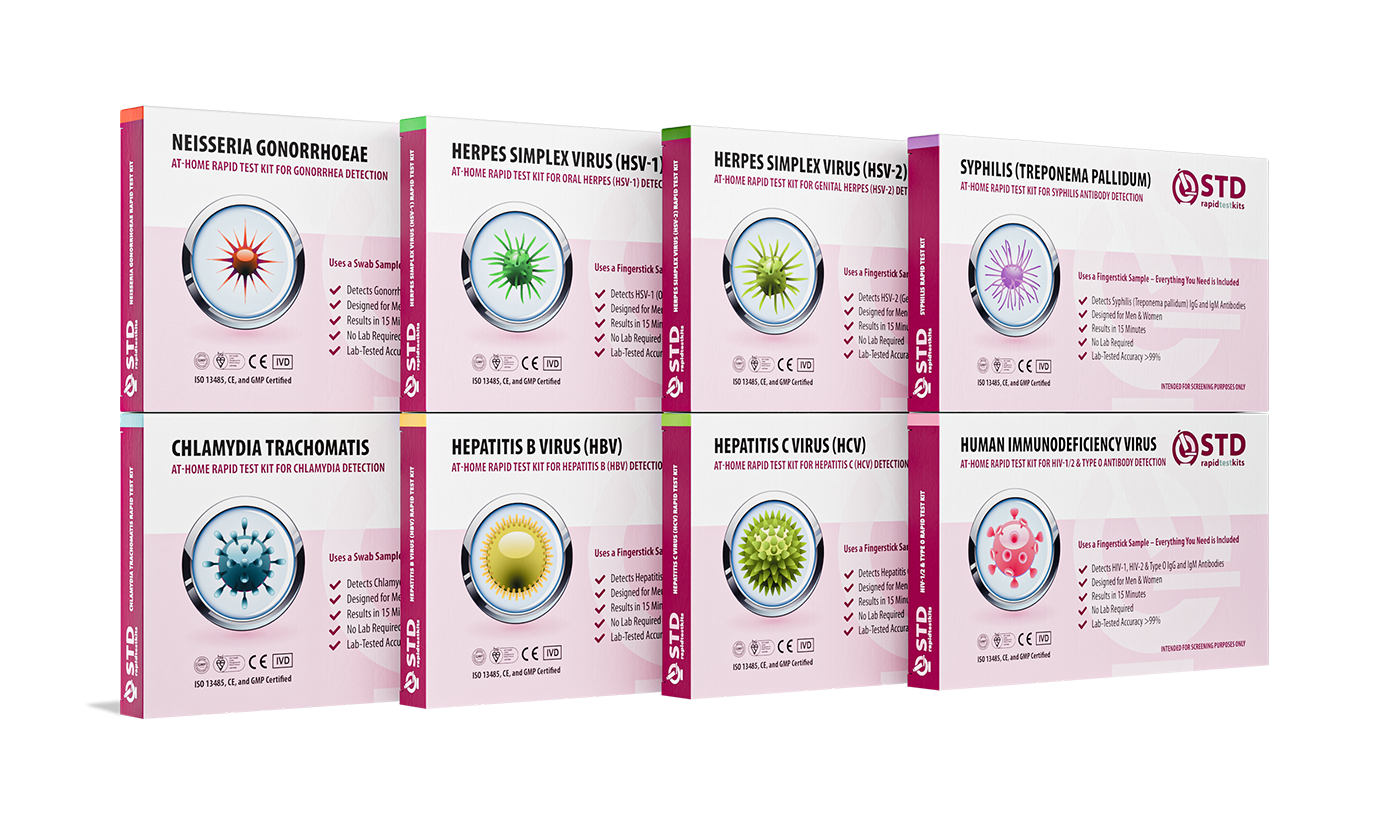 For Men & WomenResults in MinutesNo Lab NeededPrivate & Discreet
Order Now $149.00 $392.00
For all 8 tests
What Your Nervous System Has To Do With That Itch
Here’s something most symptom guides won’t tell you: the brain amplifies genital sensation. The vulva and penis are densely packed with nerve endings. When you focus on them, the sensation gets louder. When you’re anxious, it gets even louder. It doesn’t mean you’re imagining it. It means your nervous system is doing its job a little too enthusiastically.
I’ve had patients swear the itching intensified the moment they started Googling. And that’s not coincidence. Stress increases cortisol. Cortisol affects skin barrier function. Dry skin becomes reactive skin. Reactive skin becomes itchy skin. Now layer fear on top of that and suddenly a mild sensation feels urgent.
This doesn’t mean dismiss symptoms. It means don’t underestimate how anxiety interacts with them.
If you’re in that hyper-aware state, try this small reset. Stop checking for 48 hours. Avoid scented products. Wear breathable cotton underwear. Skip sex temporarily. Hydrate. If the itching fades, irritation was likely in the driver’s seat. If it persists or evolves, then testing becomes the next calm step.
And here’s another subtle but important detail. Infections typically follow patterns. They escalate. They change. They produce new signs. Irritation tends to plateau or improve once the trigger is removed. Watching progression, not just sensation, tells you more than the intensity of the itch alone.
This is where the gritty investigator voice matters. Bodies leave clues. They don’t whisper randomly. They move in timelines. If there was meaningful exposure and it’s been two weeks, test. If there wasn’t exposure and symptoms improve quickly, your skin likely just needed gentler treatment.
You don’t have to catastrophize to be responsible. You can be both calm and proactive. That balance is what sexual health actually looks like in real life.
FAQs
1. Can itching really be the only symptom of an STD?
It’s possible, but it’s not the usual pattern. Most bacterial STDs like chlamydia or gonorrhea either cause additional symptoms, discharge, burning when you pee, pelvic discomfort, or they stay completely silent. What they rarely do is just sit there and itch politely without doing anything else. If it’s been days and nothing has escalated, irritation or yeast is statistically more likely. That said, if there was real exposure risk, testing beats guessing every time.
2. I’m itchy but I had protected sex. Should I still worry?
Condoms dramatically reduce risk, especially for fluid-transmitted infections. They’re not magic shields against every skin-to-skin infection, but if the condom stayed intact and there was no direct skin contact with sores, your risk drops significantly. In that scenario, itching that starts quickly after sex often points toward friction or latex sensitivity rather than infection. Still anxious? Test at the proper window and let the data calm you down.
3. What if I keep checking and nothing ever shows up?
First, take a breath. Obsessive mirror checks can actually make the skin more irritated. Touching, stretching, prodding, all of it increases awareness. If a week passes and there are no sores, no discharge, no swelling, and no new symptoms, your body is giving you useful information. Infection usually declares itself. Irritation tends to fade quietly.
4. Does herpes always start with itching?
Not always. Some people feel tingling or itching before an outbreak. But here’s the key: that sensation usually progresses into visible blisters or ulcers within a few days. If you’re on day six or seven with nothing visible, active herpes becomes less likely. The virus doesn’t typically tease you indefinitely without showing itself.
5. Can yeast infections be mild and just itchy?
Absolutely. Not every yeast infection arrives with dramatic discharge. Sometimes it’s just a persistent external itch that feels worse at night or after sex. I’ve had patients describe it as “dry friction” or “like I used the wrong soap.” Mild cases exist. And yes, they can fool you into thinking something more sinister is happening.
6. How do I know if it’s just irritation from shaving or lube?
Think about timing. Did you shave recently? Try a new scented wash? Use a flavored lubricant? Wear tight clothes for hours? Irritation usually shows up fast, within a day, and improves when you remove the trigger. Infections tend to follow biological timelines, not product timelines. Your skin is reactive. It doesn’t need an STD to get annoyed.
7. I tested negative but I’m still itchy. Now what?
A properly timed negative test is powerful information. If you tested at least two weeks after exposure for bacterial STDs and it came back negative, your likelihood of infection drops dramatically. At that point, it makes more sense to think dermatology, hormones, dryness, or yeast. Sometimes the peace of mind from a negative test is what finally allows the nervous system to settle, and interestingly, the itching often eases once the anxiety does.
8. Should I avoid sex while I’m figuring this out?
If you’re actively itchy and unsure of the cause, a short pause is wise. Not as punishment. Not out of shame. Just to let irritated tissue calm down and to avoid passing along something unknowingly. Give your skin a break. Hydrate. Breathe. Then resume when you have clarity or when symptoms resolve.
9. When is itching actually a red flag?
If itching is paired with intense pain, visible sores, unusual discharge, strong odor, fever, pelvic pain, or symptoms that worsen quickly, that’s your cue to seek medical evaluation. Bodies usually escalate when something infectious is active. A lone mild itch that improves is very different from a cluster of evolving symptoms.
10. Be honest, am I overreacting?
You’re reacting like a human with access to the internet and a sexual history. That’s not overreacting. That’s being aware. The key is shifting from catastrophic thinking to practical action. Assess risk. Respect timing. Test if appropriate. Then move forward with facts instead of fear.
You Deserve Clarity, Not Catastrophe
Itching down there with no rash feels loud in your head. But most of the time, it isn’t dangerous. It’s your skin reacting. It’s friction. It’s imbalance. Sometimes it’s yeast. Occasionally, yes, it can be infection. But guessing never settles nerves.
If there’s any real exposure risk, give yourself the gift of certainty. Order a discreet test, follow the proper timing, and get answers. You can start at STD Rapid Test Kits and choose the option that fits your situation. Peace of mind is practical. And your health is worth straightforward clarity.
How We Sourced This Article: This guide combines clinical guidelines from the Centers for Disease Control and Prevention, peer-reviewed research on infectious diseases, and common symptom patterns reported by patients in sexual health literature.
Sources
1. Yeast Infection Symptoms at the Mayo Clinic
2. World Health Organization – STI Fact Sheet
3. PubMed – STI Symptom Research Database
5. CDC – Genital Candidiasis (Yeast Infection)
6. Mayo Clinic – Genital Herpes
About the Author
Dr. F. David, MD is a board-certified infectious disease specialist focused on STI prevention, diagnosis, and treatment. He combines clinical precision with a sex-positive, stigma-aware approach to patient education.
Reviewed by: A. Reynolds, RN, BSN | Last medically reviewed: February 2026
This article is for informational purposes and does not replace medical advice.


