







Quick Answer: STD testing after a vacation hookup is best done 2–3 weeks after exposure for most infections, with some requiring 6–12 weeks for accurate detection. Earlier tests can be done, but may need repeat testing to confirm results.
Why This Hits So Hard: Who This Is Really For
Maybe you’re the over-preparer type who packed condoms but got caught in the moment. Or maybe you didn’t think it through until now, back in your own bed, hundreds of miles from the person you slept with, with nothing but fuzzy memories and a sick feeling in your gut. This guide is for you.
It’s also for the person too scared to tell their doctor what happened. For the traveler in a hostel bathroom Googling “STD symptoms after European hookup.” For the newly out queer kid who finally felt seen abroad but now isn’t sure if that feeling of freedom came with a cost. Whether you had a single night of pleasure or found connection in a foreign city, this article is about care, not confession.
We’ll walk through exactly when to test, which infections to consider based on geography and contact type, what to expect from test results, how privacy works, and what to do if something comes back positive. Sex while traveling is human. So is the panic that can follow. You deserve clarity, not shame.
What Counts as “Testing” , and Which Tests Actually Matter
Not all STD tests are created equal, and depending on the country you visited, some clinics may have skipped key infections or used less-sensitive tests. So if you got tested abroad and still feel unsure, that’s valid. Let's break this down.
Standard STD panels usually include tests for chlamydia, gonorrhea, syphilis, and HIV. Some may test for herpes or trichomoniasis, though herpes is often skipped unless symptoms are visible. Most tests are done via urine, blood, or genital/oral/rectal swabs. Rapid tests offer results in minutes, while lab-based NAAT or PCR tests take a few days, but can catch infections earlier and more accurately.
At-home testing options, like those from STD Rapid Test Kits, use medically approved lateral flow or immunoassay tech. You can discreetly order a test panel that screens for the most common infections from one encounter, no doctor visit, no awkward waiting room.
If you’re unsure what type of sex you had, or whether protection was properly used, it’s worth leaning toward a combo test kit that covers multiple infections at once.
People are also reading: STD Symptoms in Pregnancy, When Spotting & Fatigue Aren’t Normal
Incubation, Window Periods, and Why You Might Need to Wait
One of the most frustrating things about post-hookup testing? You can’t test immediately for everything and expect clear answers. Even the best tests need time for infections to reach detectable levels.
This isn’t about morality, it’s biology. Most STDs have what's called a “window period”: the time between exposure and when the infection shows up on a test. Testing too early can give you a false sense of security. That’s why many providers suggest a two-part testing strategy: test early for peace of mind, then again at the ideal detection window.
| STD | Common Test Type | Earliest Detection | Best Time to Test |
|---|---|---|---|
| Chlamydia | NAAT / PCR (urine or swab) | 7 days | 14 days |
| Gonorrhea | NAAT / PCR (urine or swab) | 7 days | 14 days |
| Syphilis | Blood (treponemal / RPR) | 3 weeks | 6–12 weeks |
| HIV | Ag/Ab Combo or NAAT | 10–14 days | 4–12 weeks |
| Trichomoniasis | NAAT / Rapid Antigen | 5 days | 2–4 weeks |
Table 1: Approximate detection windows for common STDs post-travel. Confirmed timelines may vary slightly depending on test type and immune status.
The bottom line: If it’s only been a few days since your trip ended, testing now might not tell the full story. But you can still get started, especially if symptoms have appeared or if you need a baseline to retest from later.
Real Talk: A Story of Testing Too Soon
Ty, 27, hooked up with a bartender while visiting Madrid. “We used condoms for penetration, but there was a lot of oral,” he shared. “A week later I had a sore throat and a rash on my chest. I panicked.”
Ty bought a rapid STD kit the next day and tested himself for everything he could, chlamydia, HIV, gonorrhea. Everything came back negative. “I was relieved…until two weeks later the rash got worse, and I tested again. That time, I came back positive for syphilis.”
Ty’s story isn’t rare. It’s a perfect example of why early testing offers some reassurance, but it’s not a get-out-of-jail-free card. If the timing’s off, your body just hasn’t built up enough antibodies or viral load to register yet. That’s not a failure of the test, that’s just how infections work.
We’ll get into retesting windows and how to interpret your results soon. But for now, know this: there’s no shame in wanting answers. There’s only power in getting the timing right.
How Exposure Type Changes the Risk
Not all sex carries the same risk. That can be a tough pill to swallow when you’re trying to retrace a night you barely remember. But understanding what kind of contact occurred can help guide your testing choices and timelines.
If the hookup involved oral sex, you’re at risk for gonorrhea, herpes, syphilis, and even chlamydia, especially if it was unprotected. Yes, you can get oral chlamydia. It’s less common than genital infections, but definitely possible. A sore throat, swollen glands, or white patches may appear days to weeks later, or you may feel nothing at all.
Anal sex, whether receptive or insertive, carries a higher transmission risk for nearly all STDs, especially HIV and syphilis. If no barrier protection was used (or if there was breakage), get tested as soon as the minimum window allows and plan to retest around week 6–12.
Vaginal sex also poses risk for chlamydia, gonorrhea, trichomoniasis, and HIV, even when symptoms are absent. Some infections may show subtle signs like changes in discharge, spotting, or burning while peeing, but many people don’t feel a thing. That’s why testing based on contact type, not just symptoms, is key.
If you had oral-to-oral contact (like kissing) and you're worried about herpes, it’s possible to catch HSV-1 even if there were no visible cold sores. And it may not show up on a test unless blisters develop. That doesn’t mean you’re in the clear, it just means this one can hide well.
Check Your STD Status in Minutes
Test at Home with Remedium6-in-1 STD Test Kit
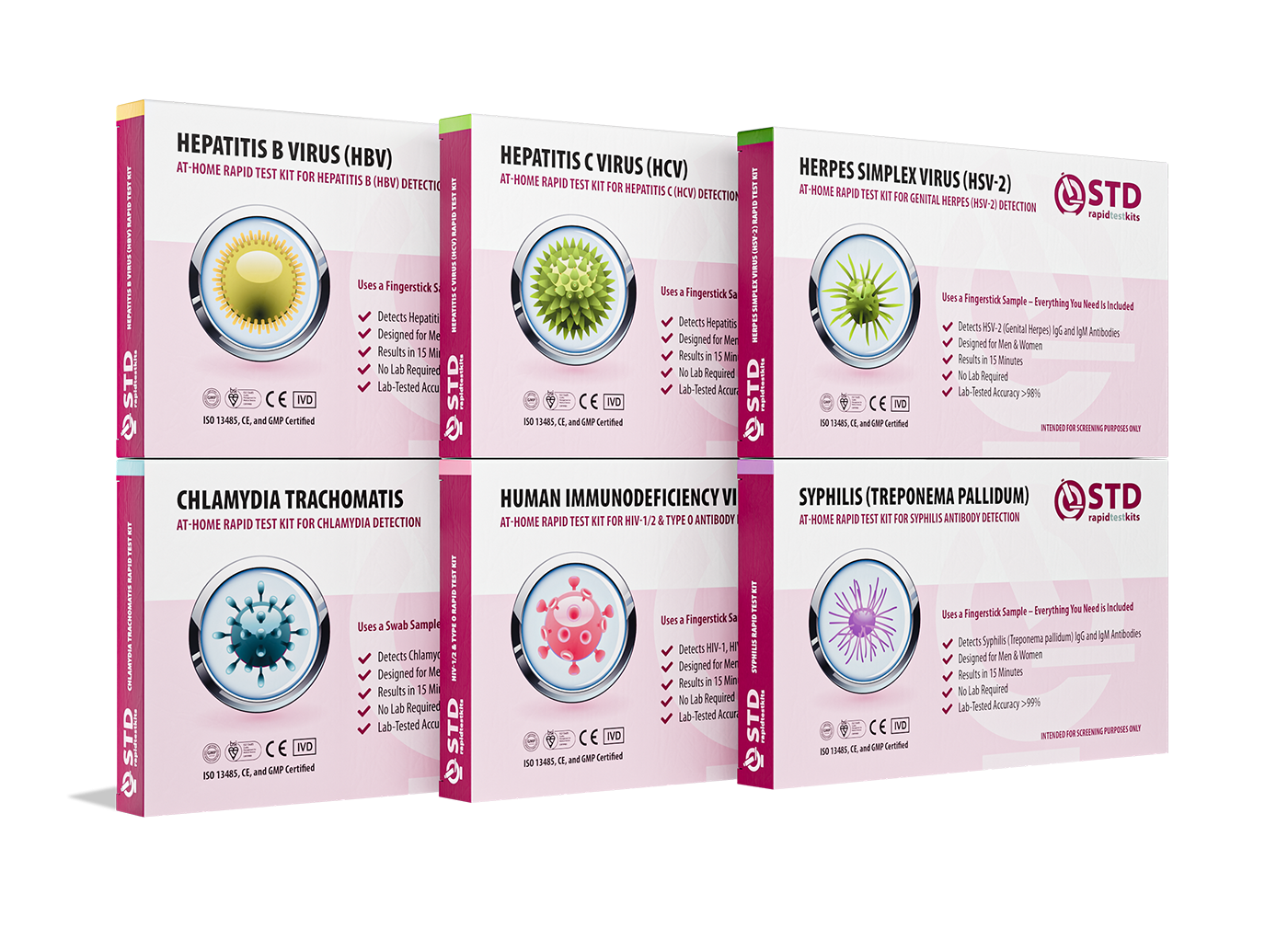
 For Men & Women
 Results in Minutes
 No Lab Needed
 Private & Discreet
Order Now $119.00 $294.00
For all 6 tests
Where You Were Matters Too: Regional STD Hotspots and Resistance
This isn’t fear-mongering, it’s factual. Some countries have higher baseline STD rates or rising antibiotic resistance. That doesn't make anyone "dirty", but it does change what you should watch for after a hookup abroad.
In some parts of Southeast Asia and Europe, for example, certain strains of gonorrhea have shown resistance to commonly used antibiotics. The World Health Organization continues to flag this trend as a global public health issue.
And while HIV rates are declining globally, transmission hotspots remain, especially in regions where access to PrEP (pre-exposure prophylaxis) is limited. In sub-Saharan Africa, parts of Eastern Europe, and some Caribbean nations, HIV prevalence remains significantly higher than in the U.S. or Western Europe.
Does that mean you’re doomed if you hooked up in those places? Absolutely not. But it does mean you’ll want to be extra thoughtful about your test selections and timelines.
| Region | Increased Risk STDs | Testing Considerations |
|---|---|---|
| Western Europe | Gonorrhea, Syphilis | Watch for antibiotic-resistant strains |
| Southeast Asia | HIV, Gonorrhea | Retest for HIV at 6–12 weeks, even if negative early |
| Sub-Saharan Africa | HIV, Syphilis | Consider lab-based HIV NAAT if exposed |
| Caribbean | Herpes, HIV | Test for HSV-2 and HIV at proper windows |
| Eastern Europe | Syphilis, HIV | Repeat testing recommended if symptoms persist |
Table 2: Examples of regional STD risks. Always test based on exposure, not assumptions about people or places.
None of this is about blaming countries or partners. Infections don’t care about passports. But the more informed you are about what to test for, and when, the less likely you are to miss something important.
Choosing the Right Test: Rapid, Mail-In, or Clinic?
When you're panicked, the urge to test right now can override everything. But here’s the reality: you’ve got three main options, and each one has tradeoffs.
Maybe you're staying with family and can't imagine explaining a package labeled “STI Collection Kit.” Maybe you're still abroad and wondering if a rapid test at a local pharmacy is good enough. Or maybe you just want answers with zero judgment.
Let’s walk through what each type of testing offers, so you can choose what fits your life, your privacy needs, and your timing.
| Testing Option | Speed | Privacy | Accuracy | Best For... |
|---|---|---|---|---|
| At-Home Rapid Test | 15–20 minutes | Very High | Moderate to High | Immediate peace of mind |
| Mail-In Lab Kit | 2–5 days | High | High (lab-grade) | Most accurate detection window |
| Clinic-Based Test | Same day to 1 week | Low to Moderate | Very High | Persistent symptoms or complex cases |
Table 3: Comparing STD testing options post-travel. Choose based on urgency, access, and comfort level.
If you're still unsure which route to take, know that a discreet combo kit can offer coverage for multiple infections at once. For many readers, it’s the most empowering first step, especially when you’re not ready to talk to a doctor yet.
If your head keeps spinning, peace of mind is one test away. And yes, you can take it in the privacy of your bathroom, with nobody else ever knowing.

People are also reading: Chlamydia Without Penetration? Yep, It Happened to Me.
Why You Might Need to Retest (Even If Your First Result Was Negative)
There’s nothing more frustrating than doing “the responsible thing” and still being left in limbo. You tested. You waited. And it came back negative. So why does something still feel off?
Part of the problem is that no test is perfect, and no infection behaves exactly the same in every body. Some people take longer to seroconvert (develop detectable antibodies). Others may have been exposed to a low viral load that takes time to establish, or were infected with a strain that’s harder to catch early. Add travel stress, jet lag, alcohol, or pre-existing conditions, and the picture gets even murkier.
Alex, 32, came back from Thailand after what she described as “the best week of her life and the most terrifying two months after.” She’d hooked up with a fellow traveler during a beach party and used a condom. “But we didn’t use one for oral,” she later admitted. “I didn’t even think about it until I noticed a sore near my throat.”
Her first test, taken ten days after the trip, came back negative across the board. But the sore didn’t go away. A follow-up test two weeks later confirmed oral gonorrhea. “I felt dumb for not waiting. But honestly, I couldn’t. I needed to know something,” she said.
This is where retesting becomes not just smart, it becomes protective. If your first test was within 14 days of exposure, plan for a second round between weeks 3 and 6 depending on the infection type. Not because you’re being paranoid, but because that’s what catching things early really looks like.
And if you did test positive for something and received treatment abroad? That’s even more reason to test again now. Medications vary country to country. Some strains may be resistant. Some local clinics may not follow WHO treatment guidelines. A post-treatment test 21–30 days later can confirm if you’re truly in the clear, or if you need a different course of care.
Privacy, Discreet Shipping, and What Testing From Home Feels Like
You don’t owe anyone an explanation for wanting privacy. And yes, ordering an STD test kit to your house might sound nerve-wracking. But here’s what actually happens when you do it.
The package doesn’t say anything about STDs. It doesn’t scream “I had sex abroad!” or “My throat is sore and I’m panicking!” It’s plain. It’s discreet. The billing? Also anonymous. You control who sees it, when you open it, and where you do the test. It can be your bathroom, your car, your office desk at lunch if that’s what feels right. Your body, your timeline.
If you're still traveling or living nomadically, the shipping timeline is worth checking. Most companies, including STD Rapid Test Kits, offer international or expedited shipping depending on your location. But even standard shipping usually arrives within 2–5 business days in the U.S., EU, and many parts of Asia and Latin America.
Results from rapid kits appear within minutes. If you use a mail-in lab kit, expect to hear back within a few days after the lab receives your sample. All of this happens confidentially, without alerts, without unnecessary notifications, and without judgment.
For some readers, testing at home isn’t just convenient, it’s the only emotionally viable option. Especially if you're navigating shame, language barriers, rural isolation, or just not ready to speak it aloud. That’s okay. You’re still doing the work. And that counts.
Check Your STD Status in Minutes
Test at Home with Remedium8-in-1 STD Test Kit
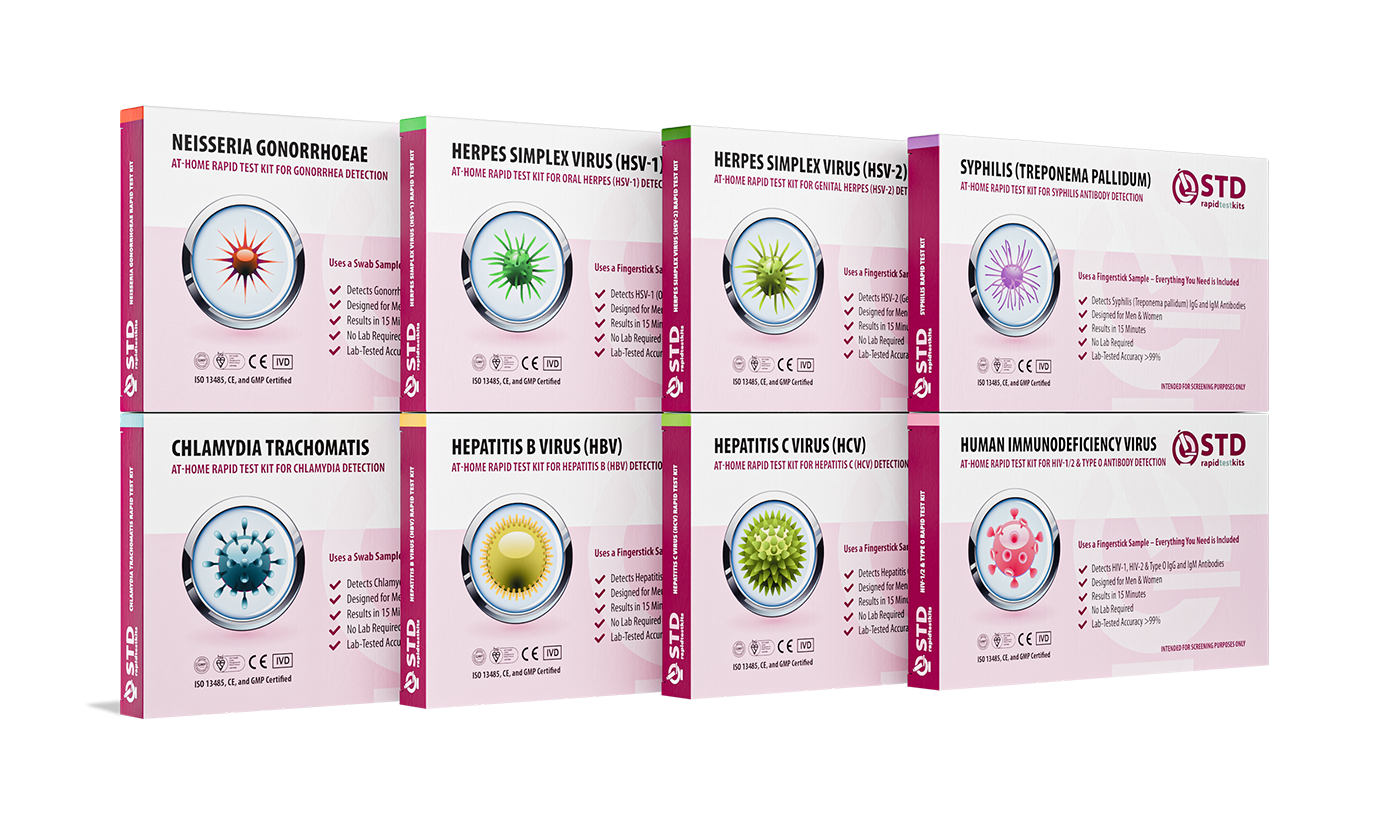 For Men & WomenResults in MinutesNo Lab NeededPrivate & Discreet
Order Now $149.00 $392.00
For all 8 tests
What If It Comes Back Positive?
First, take a breath. A positive result doesn’t define your character, your trip, or your worth. It doesn’t mean you were reckless. It means you had sex, which is normal, and now you’ve got information. And that is power.
Depending on what test came back positive, your next step may include confirmatory testing, treatment (often oral or injectable antibiotics), and, yes, talking to recent partners. If you don’t want to reach out directly, there are services that notify partners anonymously, often via text or email. It’s not about shaming anyone. It’s about stopping the chain and protecting everyone involved.
Many STDs are treatable. Even lifelong ones like herpes or HIV are manageable with proper care. And if you caught something early? That puts you in the best possible position to treat it fast and prevent long-term complications.
Think of it this way: you didn’t “mess up.” You stepped up. You noticed something felt off, or you listened to your gut, and you acted. That’s not a failure. That’s resilience.
If you’re ready to take care of yourself, and your partner(s), this at-home combo test kit checks for the most common STDs discreetly and quickly. Whether it’s a bump or a question mark, you deserve to know.
FAQs
1. Can I test for an STD the day after my trip?
You can, but here’s the thing: most tests won’t pick anything up that early. Your body needs time to show signs of an infection, what’s called the “window period.” If it’s been less than a week, you’re mostly testing for peace of mind. Still, many people test early and retest later, and that’s a totally valid move. Just don’t take an early negative as a forever answer.
2. I used a condom, why am I still freaking out?
Because you’re human. And maybe something felt off: a slip, a weird smell, a missed spot during oral. Condoms are amazing at preventing STDs that spread through fluids like chlamydia and gonorrhea, but they don’t cover everything. Skin-to-skin infections like herpes or HPV can still pass through even when you’re “safe.” The anxiety doesn’t mean you did something wrong. It means you care about your health.
3. How do I know if it’s travel stress or something serious?
Great question. Travel messes with your whole system, sleep, diet, hormones, even your gut bacteria. But if you notice burning when you pee, unexpected discharge, blisters, a sore throat that won’t quit, or a rash in weird places… get tested. Also: some STDs have zero symptoms. So if your brain won’t shut up about it, that’s reason enough to check.
4. Can I get herpes from kissing someone abroad?
Yep. Welcome to the world of HSV-1. You can absolutely get oral herpes from kissing, especially if your partner had a cold sore (even if it was healing). And HSV-1 can also cause genital infections if oral sex was involved. You won’t always know who’s carrying it, because people shed the virus even when they look totally fine.
5. How long should I wait to test again if my first test was negative?
Depends what you’re testing for. A general rule: two weeks for most bacterial infections (like chlamydia and gonorrhea), 4–6 weeks for syphilis, and up to 12 weeks for HIV to show up reliably. If you tested too soon and symptoms evolve, or your gut says something’s off, listen to that. Retesting isn’t dramatic. It’s smart.
6. I got treated abroad. Do I still need to retest?
Yes. Medications vary by country. And gonorrhea, especially, is getting resistant to older antibiotics. If you were given pills without lab confirmation, or you’re still having symptoms, it’s worth confirming you’re actually clear. One more test now is better than discovering later that something lingered.
7. What’s the most discreet way to test at home?
Easy. Order a test online, have it shipped to wherever you are, it comes in a plain package with no giant labels. Some people test in their car. Others use the bathroom at work or wait until they’re home alone. There’s no right way. Only your way. Just make sure the kit is FDA-approved or CE-marked if you're abroad.
8. How do I tell a new partner I hooked up on my trip?
Deep breath. You’re not confessing. You’re caring. Try this: “Before we go further, I wanted you to know I had a recent hookup while traveling. I tested, and I’m waiting for the window period to pass before testing again. I want us to be safe.” That’s not shame. That’s respect. If they judge you for it? That’s not someone you need inside your body.
9. What if I can’t afford a clinic test right now?
You’re not out of options. At-home tests can be more affordable than clinics, especially if you’re uninsured, queer, or undocumented and don’t want to deal with paperwork. Some community health centers offer sliding scale services, and many cities have free testing events. You’re not alone, and you deserve access either way.
10. Is it ever “too late” to test?
Nope. Even months later, tests can tell you what’s going on. In fact, for some infections like HIV or syphilis, later testing is more accurate. If you’re carrying guilt or anxiety from something that happened a while ago, that’s okay. You can still get answers. It’s never too late to care for yourself.
You Deserve Answers, Not Assumptions
The hookup already happened. The suitcase is unpacked. But your story isn’t over. Maybe it’s just starting. Whether it was a night of freedom, a moment of connection, or something you’re still processing, testing is a way to ground yourself in the present. It turns fear into action.
And it doesn’t have to be scary. Testing can be private. It can be fast. It can even be empowering. What matters is that you listen to your gut, give your body time to reveal what it needs to, and choose next steps from a place of care, not shame.
Don’t wait and wonder, get the clarity you deserve. This at-home combo test kit quickly and discreetly checks for the most common STDs.
How We Sourced This Article: We combined current guidance from leading medical organizations with peer-reviewed research and lived-experience reporting to make this guide practical, compassionate, and accurate.
Sources
1. WHO: Worldwide Trends in STDs and Drug Resistance
2. NHS: Learning About Common STIs
3. Sexually Transmitted Infections | Travelers' Health (CDC)
4. Getting Tested for STIs | CDC
5. STD Testing: What’s Right for You? | Mayo Clinic
6. Travel-related sexually transmitted infections | PubMed
7. Sex and Travel | CDC Yellow Book
8. WHO Expands Guidance on Sexually Transmitted Infections
9. Sexually Transmitted Infections in Travelers | Clinical Infectious Diseases
About the Author
Dr. F. David, MD is a board-certified infectious disease specialist focused on STI prevention, diagnosis, and treatment. He blends clinical precision with a no-nonsense, sex-positive approach and is committed to expanding access for readers in both urban and off-grid settings.
Reviewed by: Dr. Riley M., MPH | Last medically reviewed: February 2026
This article is for informational purposes and does not replace medical advice.


