






Quick Answer: STD risk increases after childbirth due to tissue changes, immune shifts, and new exposures. Pain, discharge, or burning during postpartum sex may signal a hidden infection, not just healing. Testing is the only way to know.
Why STD Risk Spikes After Birth, Even With the Same Partner
There’s a quiet assumption postpartum: that your partner didn’t cheat, that your body is just healing, and that any discomfort is par for the course. But sexually transmitted infections don’t follow emotional logic. They follow biology, and postpartum biology is more vulnerable than most people realize.
After childbirth, your cervix may stay slightly open for weeks. Microtears and internal trauma, whether from vaginal delivery or C-section, can compromise the protective barrier your body normally relies on. Even if penetration feels okay, the mucosal tissues inside are thinner, more exposed, and less able to resist infection. Add low estrogen, disrupted pH, and a compromised immune system still recalibrating, and you’ve got a perfect storm for STD transmission, even from a previously dormant infection.
And yes, you can get an STD postpartum even if your partner was “clean” before the baby. Latent infections like Herpes, HPV, and Chlamydia can sit silently for months. Pregnancy can suppress flare-ups, and postpartum immune shifts can reactivate them. That means one or both partners can unknowingly pass something on during that first “welcome back” encounter.
Is It Healing Pain or a Hidden Infection?
At 2AM, it can be hard to tell. Burning, tightness, cramping, discharge, and even spotting are all common after delivery, but they’re also common signs of infection. And the medical system doesn’t make it easier. Unless you explicitly ask about STDs during your postpartum visit, most OBs won’t test for them. The default assumption is healing, not diagnosis.
Shira, 28, thought she had a mild tear that wasn’t healing well. “It hurt inside during sex, kind of like rubbing on a bruise. But I didn’t want to seem paranoid, so I waited.” Two weeks later, her Gyn swab came back positive for Trichomoniasis, likely reactivated or acquired in the weeks after giving birth. “I thought I was safe. We’d been monogamous forever. But somehow, I wasn’t.”
The shame and confusion run deep. Many postpartum people feel betrayed by their bodies, and by silence. But the truth is: a postpartum STD doesn’t mean infidelity, filth, or failure. It means your body deserves care, not guessing. Here's how STD symptoms often masquerade as "just postpartum."
| Symptom | Possible STD | Often Mistaken For |
|---|---|---|
| Burning or stinging during sex | Herpes, Chlamydia | Tear pain, dryness, hormonal change |
| Spotting or bleeding after sex | HPV, Chlamydia | Cervical healing, normal irritation |
| Yellow or greenish discharge | Trichomoniasis, Gonorrhea | Lochia, yeast infection |
| Strong or fishy odor | Trichomoniasis, Bacterial Vaginosis | Postpartum sweat, pH imbalance |
| Painful bumps or sores | Herpes, Syphilis | Ingrown hair, healing stitches |
Table 1. Postpartum symptoms that may actually indicate an STD.
People are also reading: Herpes, Syphilis, or Nothing? The Mouth Sores You Can’t Ignore
Testing After Baby: When, What, and How
Here’s the rough truth: most people who need an STD test postpartum don’t realize it until symptoms escalate, or a partner confesses exposure. But testing after childbirth isn’t just about catching something bad. It’s about confirming healing, restoring intimacy, and removing the question marks that keep you up at night.
So when should you test? Ideally, within 6 weeks postpartum if you’ve resumed sex, especially if anything feels off. If you had multiple partners during pregnancy, your partner has a history of untreated STDs, or you notice symptoms that aren’t fading within 2–3 days, get tested now. Don't wait for your next OB appointment.
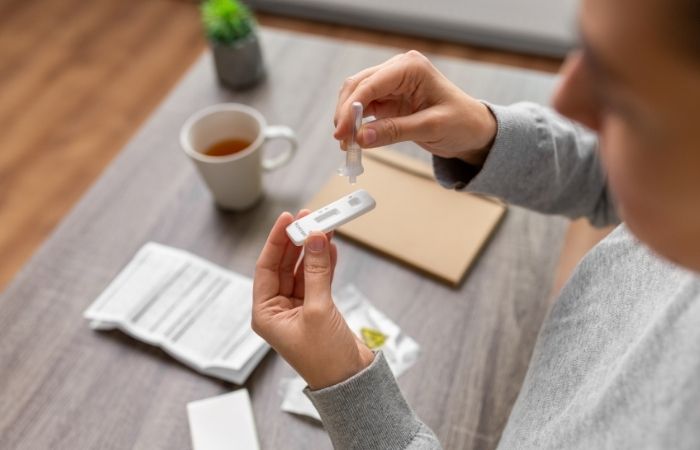
At-home options like the Combo STD Home Test Kit can be ordered discreetly and used when your baby’s finally napping. No speculum. No small talk. Just a finger prick or urine test, delivered, done, and decoded without waiting rooms.
Peace of mind shouldn't require a babysitter. And testing postpartum doesn’t mean you did something wrong, it means you care enough to check. It’s like brushing your teeth after sweets: proactive, not punitive.
Your Postpartum Body: Why It’s More Vulnerable to STDs
It’s easy to think of birth as an endpoint, pregnancy over, recovery mode on. But biologically, it’s more like open season. After delivery, your body becomes more susceptible to infection for multiple reasons. The uterus is still healing, the cervix may not be fully closed, and estrogen drops off a cliff, leaving your vaginal tissue thinner and drier than usual. Add stress hormones, sleep deprivation, and a dip in systemic immunity, and your defenses are down.
This shift isn’t just internal, it shows up on test results too. A study in the Journal of Infectious Diseases found that estrogen loss postpartum significantly alters vaginal pH, making it easier for organisms like Trichomonas and HPV to take hold. Combine that with microtears, hormone-related dryness, and less lubrication during those early sex attempts, and you have friction, trauma, and higher transmission risk, even in monogamous relationships.
And here's a kicker most OBs won’t say out loud: that "six-week clearance" isn’t a guarantee of readiness. It means your uterus is no longer bleeding heavily and there’s no sign of acute infection. It doesn’t mean your vaginal tissue has healed fully, or that you're protected from STDs. That’s on you to check, and to ask for testing if anything feels off.
What If Your Partner Was “Clean” Before Pregnancy?
This question comes up constantly in postpartum forums: Can I really get an STD now if we were both negative before? The uncomfortable answer is yes. Because “clean” isn’t permanent. Here’s why:
Infections like Herpes and HPV can remain dormant for months, even years. That means your partner could have had a virus all along, without symptoms, and transmitted it during the first postpartum hookup, when your mucosa was most vulnerable. They might still test negative on some antibody-based screenings, even if they’re carrying a low-viral-load infection.
Also, not all monogamy is symmetrical. There are cases where partners resume sex with others during long pregnancies or postpartum dry spells, then unknowingly bring something back. And it’s not always betrayal, sometimes it’s bad information. A negative test result six months ago doesn’t rule out a recent exposure or reactivation.
Jordan, 35, trusted her partner completely. But postpartum, she kept getting weird cramps and colored discharge. “I blamed pads, stress, diet, everything but an STD.” A test confirmed Chlamydia. Her partner had been asymptomatic since college. “He wasn’t cheating. He just never got retested.”
That’s why retesting postpartum isn’t about trust. It’s about bodies, and biology doesn’t lie.
Check Your STD Status in Minutes
Test at Home with Remedium6-in-1 STD Test Kit
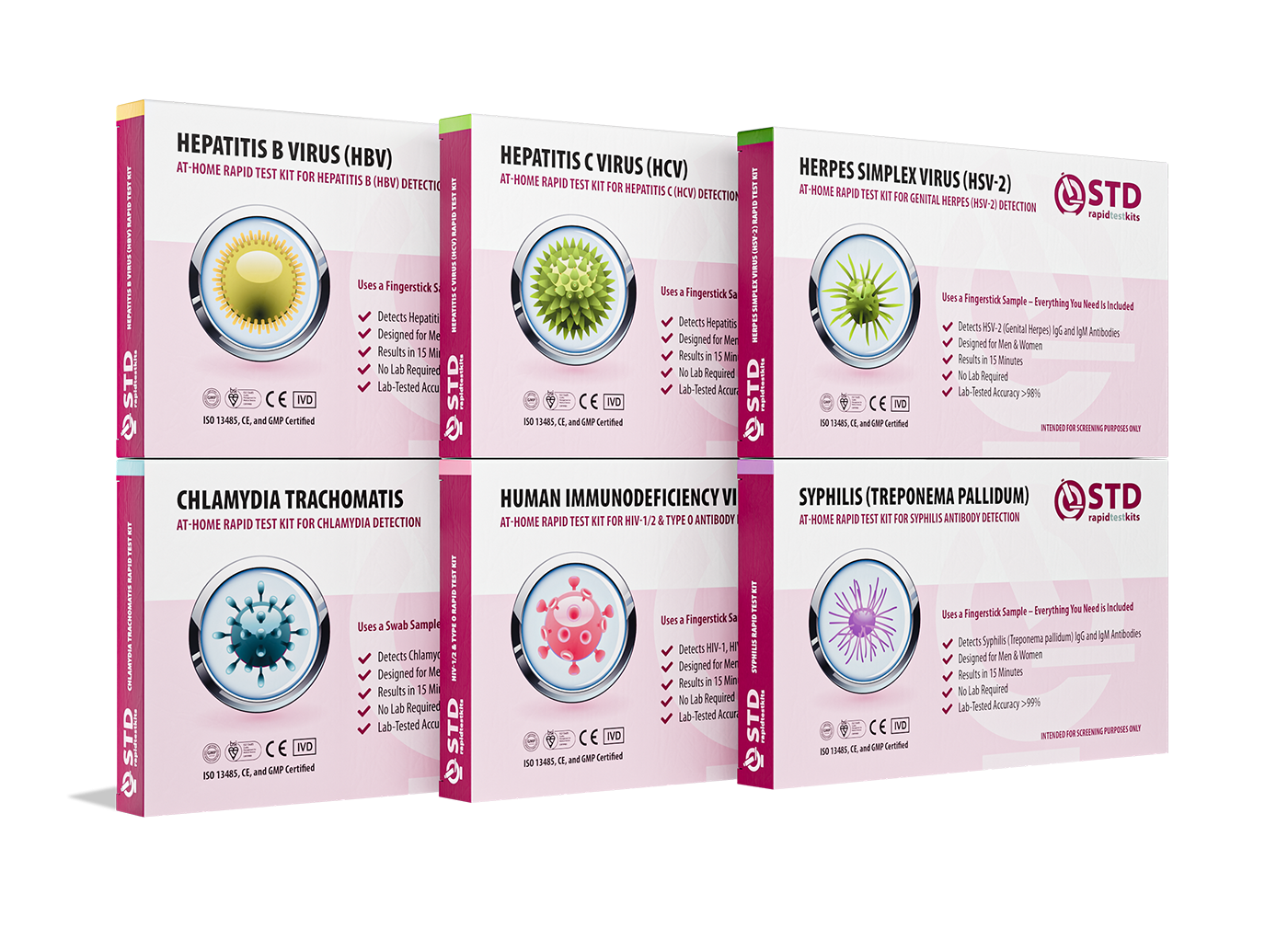
 For Men & Women
 Results in Minutes
 No Lab Needed
 Private & Discreet
Order Now $119.00 $294.00
For all 6 tests
How Long After Birth Should You Wait to Test?
If you’ve resumed sex, or plan to soon, testing between 4 and 8 weeks postpartum offers a strong baseline. It catches lingering pregnancy-acquired infections and any postpartum exposures. If you had a C-section, the timing’s the same. Vaginal trauma may differ, but internal mucosa and immune vulnerability persist across birth types.
Here’s a breakdown of testing windows after delivery, based on infection type and biological readiness:
| Infection | Earliest Test Post-Exposure | Best Accuracy Window | Notes for Postpartum Testing |
|---|---|---|---|
| Chlamydia | 5–7 days | 14 days+ | Use NAAT or combo kit; may be asymptomatic |
| Gonorrhea | 5–7 days | 14 days+ | Similar to Chlamydia; often co-occurs |
| Herpes (HSV 1/2) | Symptoms or flare only | Blood test after 12+ weeks if asymptomatic | Look for tingling, pain, or ulcers postpartum |
| Trichomoniasis | 7–10 days | 14+ days | Can resemble BV; high postpartum prevalence |
| HPV | N/A | Detected via pap/HPV co-testing, not urgent | Wait until OB clears you for cervical tests |
Table 2. STD testing accuracy timelines and special postpartum notes.
If your symptoms start early, within a week of sex, testing is still useful. Just know you might need a retest later to confirm. At-home kits make this easy. Order once, test now, and keep the second kit for a 30-day follow-up if needed.
How At-Home Testing Works (And Why It’s Postpartum Friendly)
Imagine trying to juggle a diaper bag, lactation pads, and your dignity in a clinic waiting room with pelvic pain. Not ideal. That’s why STD Rapid Test Kits exist, to meet you where you are, without judgment or logistics drama.
Most combo kits screen for Chlamydia, Gonorrhea, Syphilis, HIV, and Trichomoniasis using a urine sample or fingerstick. Instructions are simple. Results take minutes or hours, depending on the type. No pelvic exam required. And everything arrives in discreet packaging so nobody, except you, knows what’s inside.
And if you do test positive? You’ve already taken the hardest step. Results give you power, not panic. You can confirm with a doctor, treat easily (most STDs are cured with one antibiotic round), and protect your baby, body, and partner moving forward.
If your gut says something feels wrong after sex, even just a whisper, trust it. Your body knows. Testing lets you listen clearly.
People are also reading: How Did I Get HIV If I Always Use Condoms?
Case Study: “I Thought It Was Just Hormones”
María, 29, had a smooth pregnancy and an uncomplicated vaginal delivery. Her six-week checkup went fine. Her OB gave her the green light for sex, and her partner, gentle and supportive, was ready. But something felt off from the first time. “It wasn’t just pain. It was like something raw was rubbing up against a nerve,” she told us. “The smell after was... different. Not bad exactly, but not me.”
She chalked it up to low estrogen and healing. But over the next week, the smell intensified, and she noticed pale discharge with a greenish tinge. “I didn’t even think about an STD. I thought maybe I tore again.”
It was Trichomoniasis. Her partner had no symptoms, and neither of them had been tested since before the pregnancy. He likely carried it without knowing. “I felt humiliated,” she said. “Like I was dirty. But my midwife was amazing. She explained how easy it is to miss Trich, especially postpartum. She made me feel human again.”
This isn’t rare. According to the CDC, Trichomoniasis is one of the most common STDs in people assigned female at birth, yet it’s also one of the least discussed. It doesn’t always burn or itch. Sometimes it just lingers, quiet and confusing. And postpartum, it blends right in with healing discharge and hormonal shifts.
Why Shame Keeps People Silent, And Sick
There’s a cruel irony to postpartum health. You’ve just done one of the hardest, most biologically intense things a human can do. You’re bleeding, feeding, sometimes grieving, and still, there’s this pressure to bounce back. Be a partner again. Be sexual again. And when sex hurts or bleeds or smells off, you blame yourself. Maybe I’m not ready. Maybe I’m broken. Maybe this is just what being a mom feels like now.
STDs don’t even make the list of possibilities for most people. And when they do, shame smothers the voice inside that says, Something’s not right.
We hear this a lot: “My OB never mentioned STD testing.” Or: “I felt like bringing it up would make me seem paranoid.” Here’s the truth: STD testing should be routine postpartum care. But because it’s not standard, you have to be the one to ask. And that feels isolating, especially if you're scared of what it might mean for your relationship.
Testing doesn’t mean your partner cheated. It means your body changed. Your immune system shifted. Old infections can reactivate. New exposures happen. Dormant viruses resurface under stress. All of this is biological, not moral. And nothing about it means you’re dirty, dramatic, or disloyal.
Your body just had a baby. It deserves clarity, not second-guessing.
What to Say (And Not Say) to a Partner If You Need to Test
Having the STD talk postpartum feels like breaking a spell. You’ve been through labor together, survived night feeds, and now you’re saying… “Hey, we should probably test for STDs.” It can feel jarring, but it doesn’t have to be accusatory.
Here’s one approach that preserves intimacy while protecting your health: “I’ve been feeling some weird symptoms, and I know postpartum can make things tricky. I’d feel better if we both got tested, just to rule things out. It’s probably nothing, but I want to be sure.”
What not to say: “I think you gave me something.” Even if you suspect it’s true, starting with blame builds a wall. Frame it around health, healing, and connection. You’re not accusing, you’re partnering.
Lee, 34, went through this exact conversation with her wife after noticing painful urination and sores. “I was terrified to bring it up. But when I did, she said she’d been having cold sore flare-ups again and thought nothing of it. We both tested. It was Herpes. And somehow, it brought us closer, because we faced it together.”
Sexual health isn’t just about sex. It’s about truth, protection, and care. If your partner resists testing or gets defensive, that’s a red flag, not the test itself.
If your head keeps spinning, peace of mind is one test away. This at-home combo test kit screens for the five most common STDs and ships discreetly to your door.
Check Your STD Status in Minutes
Test at Home with Remedium7-in-1 STD Test Kit
 For Men & WomenResults in MinutesNo Lab NeededPrivate & Discreet
Order Now $129.00 $343.00
For all 7 tests
If You Test Positive: What Happens Next
First: take a breath. Testing positive postpartum can feel like a betrayal, of your body, your relationship, your sense of control. But here’s what you need to know: most STDs are treatable. Some are curable. And all of them are manageable.
If your result comes from an at-home test, you can follow up with a telehealth provider or clinic for confirmatory testing and treatment. Many infections, like Chlamydia or Gonorrhea, are cleared with one course of antibiotics. Others, like Herpes, are lifelong but not life-limiting. Postpartum, treatment plans often include partner testing, suppressive therapy, and symptom tracking.
It’s also worth remembering that if you’re breastfeeding, most medications used for STD treatment are safe, but always consult your provider. The CDC maintains guidelines on pregnancy and lactation safety for STD meds.
Healing doesn’t just mean physical recovery. It means emotional repair too. Testing is not the end of intimacy, it’s the beginning of informed care. And once you have the facts, you can decide what comes next without fear.
FAQs
1. Can I really get an STD from my partner after having a baby?
Yep. Even if you’ve been monogamous for years, STDs like Herpes or HPV can quietly hang out in your partner’s body and decide to flare up now, right when your postpartum immune system is least ready for it. This isn’t about betrayal. It’s about biology playing long games.
2. Sex hurts after birth, isn’t that normal?
It totally can be. But if it keeps hurting or starts feeling sharp, itchy, or like you're being scraped from the inside out, don’t write it off as “just healing.” Chlamydia, Trich, and even Gonorrhea can feel a lot like post-birth discomfort. If you’re wincing through sex, it’s time to check what’s up.
3. What does postpartum discharge normally look like, and when should I worry?
Lochia (that’s the normal healing discharge) starts red and fades to yellow or white over weeks. If it turns greenish, smells like something died in your leggings, or shows up again after fading out, that could be infection, especially Trichomoniasis or Bacterial Vaginosis. Basically, if your nose wrinkles, investigate.
4. Is it too soon to test if I just had sex last week?
Maybe. Most STDs take a few days to show up on tests. But if you’ve got symptoms, or peace of mind can’t wait, test now, and do a follow-up in a couple of weeks. Think of it like re-checking a pregnancy test when your period's still missing.
5. What if I never had symptoms, can I still have something?
Oh, absolutely. Silent infections are sneaky. Chlamydia is famous for showing up with zero symptoms and still doing damage. If you had unprotected sex (or even protected but things broke or slipped), testing is still smart, even if you feel fine.
6. Does testing hurt? I just pushed out a human, and I’m tired.
Fair. But no, at-home testing is as gentle as it gets. Urine sample? Easy. Finger prick? Quick. No speculum, no stirrups, no weird clinic smells. Just you, your bathroom, and answers that don’t involve dragging a baby through a waiting room.
7. Can an STD affect breastfeeding?
Most can’t pass through breastmilk, and the meds used to treat things like Gonorrhea or Syphilis are usually nursing-safe. But if you're ever unsure, ask a provider. Bottom line: treating you usually doesn’t mean stopping the boob buffet.
8. My partner said they tested “a while ago.” Is that enough?
Define “a while.” If it was pre-pregnancy or even last trimester, that result is now expired, especially if either of you have had any other partners, or if symptoms have popped up. Testing is like milk: fresh is best.
9. Why does this feel so awkward to talk about now?
Because nobody tells you postpartum might involve lube, pee pads, and a surprise STD convo. But awkward doesn’t mean unnecessary. Sex after birth is still sex, and your health still matters. You’re allowed to ask questions and get answers, no matter what season you’re in.
10. Do I really need to test if I feel totally fine?
If you’ve resumed sex and haven’t tested since before pregnancy, or you’re not 100% sure about your partner’s status, yes. Feeling “fine” doesn’t mean your cervix agrees. Testing clears the air so you can focus on healing, pleasure, and not overthinking every twinge.
You Deserve Answers, Not Assumptions
When sex hurts after birth, when your discharge changes, when your body feels unfamiliar, it’s not always “just hormones.” And it’s never just in your head. Postpartum isn’t a protected zone. STD risk doesn’t pause just because you had a baby.
The good news? You don’t need to panic. You need a plan. This at-home combo test can tell you what’s really going on, so you can stop guessing and start healing.
How We Sourced This Article: We combined current guidance from leading medical organizations with peer-reviewed research and lived-experience reporting to make this guide practical, compassionate, and accurate.
Sources
2. Planned Parenthood: STD Basics and Testing
3. Sex after pregnancy: Set your own timeline – Mayo Clinic
5. Chlamydial Infections – CDC STD Treatment Guidelines
6. About Pelvic Inflammatory Disease (PID) – CDC
7. STI Screening Recommendations – CDC
8. Sexually transmitted infections, pregnancy, and breastfeeding – WomensHealth.gov
9. Optimizing Postpartum Care – ACOG
10. Overview of Postpartum Care – Merck Manuals
About the Author
Dr. F. David, MD is a board-certified infectious disease specialist focused on STI prevention, diagnosis, and treatment. He blends clinical precision with a no-nonsense, sex-positive approach and is committed to expanding access for readers in both urban and off-grid settings.
Reviewed by: A. Hill, NP-C | Last medically reviewed: February 2026
This article is only for information and should not be used as a substitute for medical advice.


