





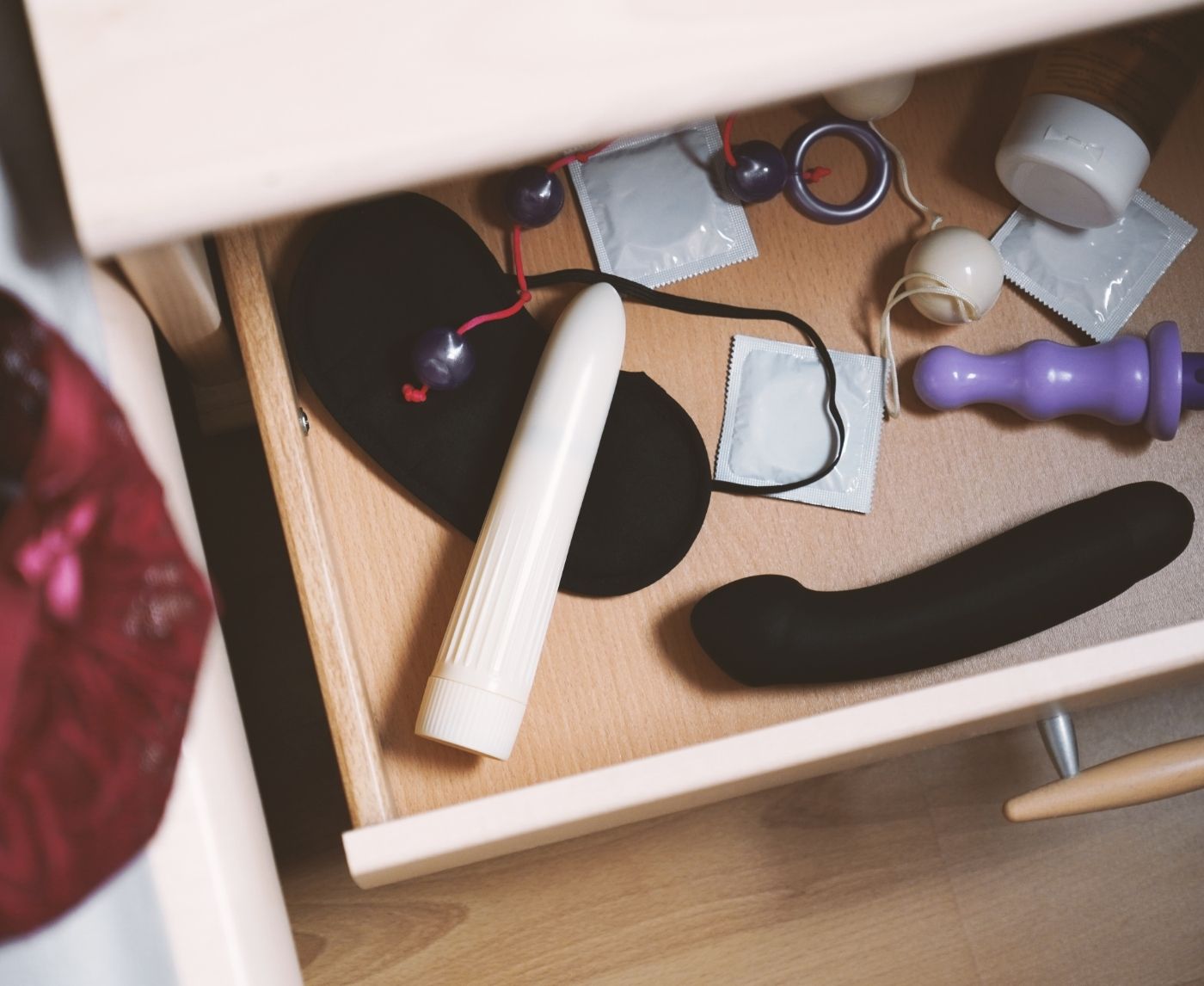

Quick Answer: Yes, you can get gonorrhea from sex toys, especially if you share them with someone and don't clean them or use condoms. Bacteria that cause gonorrhea can live on surfaces long enough to infect the next person who uses them.
Who Needs to Read This (And Why It’s Being Ignored)
This article is for the ones who feel confused, blindsided, or even ashamed after testing positive, despite thinking they played it safe. It’s for queer folks, kinksters, late-night adventurers, and everyone in between who has ever asked: “But… we didn’t even really have sex.” It’s also for anyone exploring toys for the first time, wondering what’s hype and what’s risky.
Let’s be real: mainstream STD education barely covers vaginal or anal sex, let alone dildos, anal beads, strap-ons, or shared vibrators. The truth is that gonorrhea doesn’t care what gets you off. It cares about mucous membranes. And toys, especially those not cleaned or covered between uses, can act as bridges between one body’s bacteria and another’s vulnerability.
Testing is not a confession, it’s care. And understanding how toys fit into the risk equation is part of protecting both your pleasure and your health. We’ll walk through how gonorrhea spreads, what to watch for, how long it can survive on different surfaces, how to test, and what to do if your test comes back positive.
The Biology of a Buzzkill: How Gonorrhea Travels
Gonorrhea is caused by the bacteria Neisseria gonorrhoeae, which thrives in warm, moist areas like the urethra, vagina, rectum, and throat. It spreads when infected fluid, like vaginal secretions, rectal mucous, or pre-cum, comes into contact with another person’s mucous membranes. This doesn’t require penetration. It doesn’t even require genitals to touch.
If a toy goes from one person to another without a barrier (like a fresh condom) or without being washed in between, it can transfer that bacteria just like fingers, mouths, or genitals can. Think of it as bacteria hitching a ride, not out of malice, but simply because the surface was slick and the opportunity was there.
Studies have shown that gonorrhea can survive outside the body on moist surfaces, including plastic, silicone, and latex, for up to several hours, depending on environmental conditions. That’s more than enough time between a switch of partners in a group setting or back-to-back use with a single partner.
Survival Time: How Long Can Gonorrhea Live on Toys?
The survival of gonorrhea bacteria on surfaces varies, but here's what the research and clinical insights suggest about common toy materials. This table helps illustrate why cleaning, and timing, matters when sharing pleasure devices:
| Material | Typical Toy Type | Bacteria Survival Time | Cleaning Requirement |
|---|---|---|---|
| Silicone | Vibrators, dildos, plugs | Up to 2–6 hours (moist) | Boil-safe or soap & hot water |
| Glass | Dildos, wands | Less than 2 hours | Boil-safe or dishwasher |
| ABS Plastic | Bullet vibes, wand handles | 1–5 hours | Wipe with alcohol or soap |
| Latex | Sheaths, harnesses | Several hours if moist | Soap & warm water; replace often |
Table 1. Approximate survival time of gonorrhea bacteria on various toy materials. Actual survival depends on moisture, temperature, and exposure to air or light.
This isn’t about fear. It’s about realism. If your toy touched someone else’s genitals (or was in their mouth), and then you used it without washing, you were exposed, even if you didn’t feel anything right away.

People are also reading: Syphilis Is Back in Alabama. Here’s What You Need to Know Now
When the Burn Shows Up: Early Symptoms After Toy Use
Gonorrhea symptoms vary depending on where the bacteria colonize. For people with vulvas, the signs might include burning during urination, unusual discharge, spotting between periods, or pelvic pain. But here’s the kicker: most women and AFAB folks don’t notice symptoms at all, especially if the infection is in the throat or rectum.
For people with penises, symptoms may be more obvious: white or yellow discharge, burning while peeing, testicular discomfort. But again, toys used anally or orally can lead to infections in those areas without genital signs.
Take this scene: A college senior named Dee shared a vibe with their new partner during a spring break weekend. No penetration, just external play. By the next Friday, Dee had a sore throat, assumed it was allergies, and moved on. A month later, during an unrelated screening, they tested positive for throat gonorrhea. No kissing. Just the toy. No one had told them that was possible.
Symptoms are tricky. That’s why testing isn’t just for people with flare-ups or pain. It’s for anyone who's shared toys, swapped fluids, or had a moment of “I probably should’ve wiped that down.”
Testing Timelines: When to Check for Gonorrhea After Toy Use
Let’s say you shared a toy last night. Maybe it wasn’t cleaned between partners. Maybe you’re second-guessing whether that wipe-down was thorough. The question starts circling your brain: should I test? And if so, when?
The answer depends on two things, how recently the toy was used and where it was used. Gonorrhea has what’s called a "window period", a stretch of time after exposure where the infection may not show up on a test yet, even if it’s present in your body.
For most genital and rectal gonorrhea infections, the window period is around 7–14 days. Testing earlier might miss it, especially with rapid tests. If your exposure was oral (i.e., toy inserted into mouth or throat), the window may be even shorter, but detection rates vary depending on the test type.
| Exposure Type | Recommended Test Timing | Test Type | Notes |
|---|---|---|---|
| Genital (vaginal/penile) | 7–14 days | NAAT (swab or urine) | Most accurate after day 10 |
| Rectal | 7–14 days | NAAT (rectal swab) | May require self-collection or clinic |
| Oral/Throat | 5–10 days | NAAT (throat swab) | Often missed by genital-only panels |
Table 2. When to test after possible gonorrhea exposure via sex toys, based on location of use.
If it’s been less than five days, testing now might ease your mind, but a negative isn’t definitive. The best plan? Test at day 7 or later, then again if symptoms develop or you have new exposures. If you were already tested but symptoms appeared a week later, that second test could be what catches it.
Remember Jay? They tested on day three after a party where a friend used a shared harness. Negative. But by day ten, their discharge had changed, and the repeat test came back positive. That second test didn’t just help Jay. It helped protect their next partner.
Check Your STD Status in Minutes
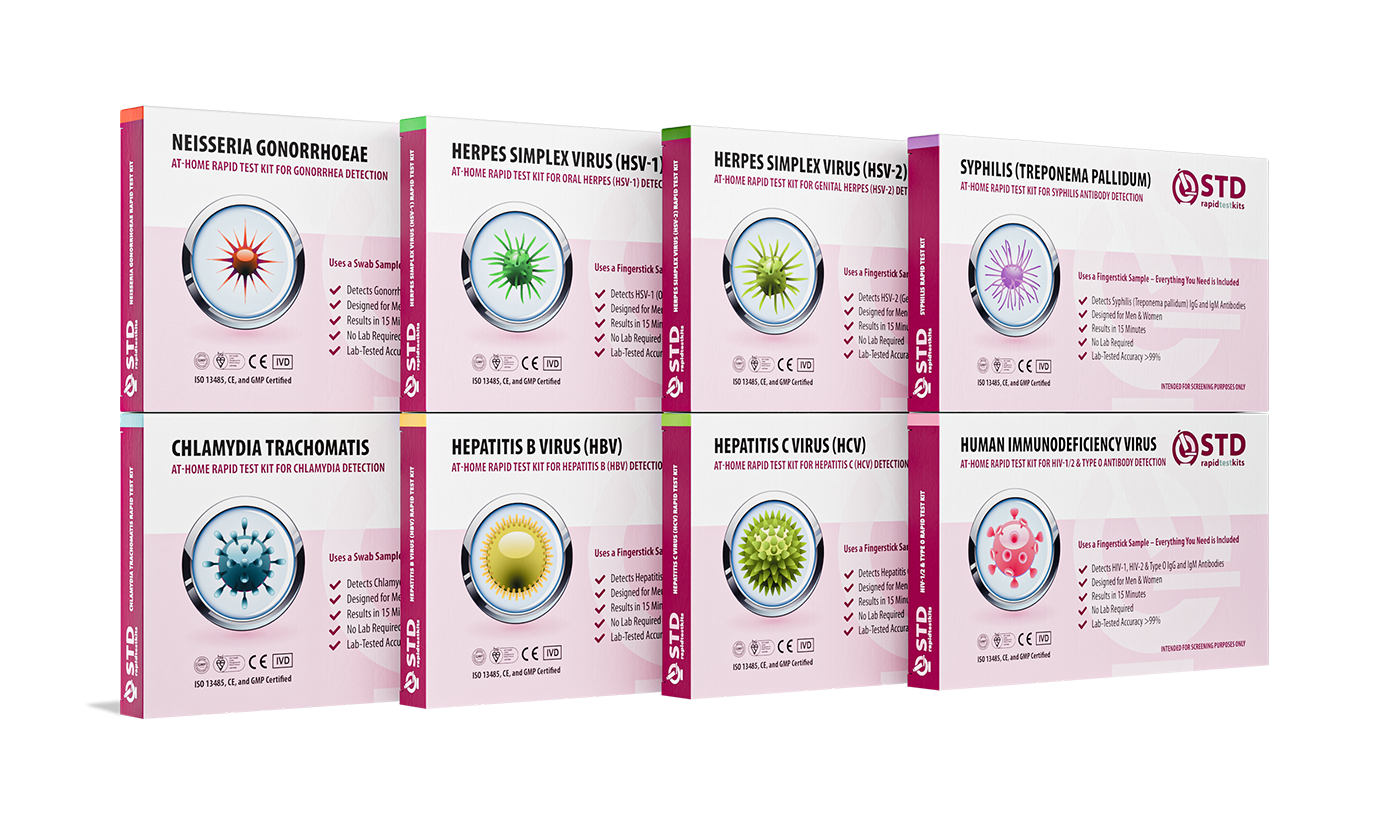
Test at Home with Remedium8-in-1 STD Test Kit
 For Men & Women
 Results in Minutes
 No Lab Needed
 Private & Discreet
Order Now $149.00 $392.00
For all 8 tests
Where and How to Test, Without a Clinic
You don’t have to go to a clinic to test for gonorrhea. In fact, for many people, at-home testing is the safer, more discreet choice. Kits that use NAAT (nucleic acid amplification test) technology offer lab-grade accuracy and can test for genital, rectal, and oral infections depending on what you select.
Here’s the key: many basic kits only check urine or vaginal samples. That means they might miss throat or rectal infections, even if those are the sites most likely to be exposed through toys. If your toy use included anal or oral play, you’ll want a kit that includes extra swabs, or offers site-specific options.
STD Rapid Test Kits offers discreet testing kits that ship directly to your door. Some are instant-result tests, while others are mail-in lab kits. For toy-related exposure, especially with unknown cleaning or shared use, we recommend the gonorrhea rapid test kit as a first screen, with a follow-up lab test for throat or rectal exposure if needed.
If your head is spinning, peace of mind is one test away. You deserve to know what’s going on with your body, without waiting in line or explaining your sex life to a stranger.
Cleaning, Condoms, and Common Mistakes: How to Actually Stay Safe
You’ve probably heard “just wash it between partners.” But what does that actually mean, and how effective is it?
Running a toy under warm water for five seconds doesn’t cut it. Bacteria like gonorrhea aren’t easily rinsed off, especially if the toy has grooves, porous material, or has been inside the mouth or rectum. Here’s what matters more: the temperature, duration, cleaning agent, and how quickly you clean after use.
Think about this: Gina had a favorite vibe she used both vaginally and anally, but not at the same time, and always on different days. She’d rinse it between uses, sometimes use hand soap. When she tested positive for rectal gonorrhea, she was stunned. The clinic nurse asked one question: “Do you use toys anally after vaginal use?” She hadn’t thought about that as cross-contamination. But it was.
Here’s the ideal setup: either clean the toy thoroughly with hot water and soap (or toy cleaner), let it dry, and then reuse, or use a condom over it and switch condoms between partners or orifices. Condoms act as a disposable barrier. It’s not overkill. It’s sexual hygiene, like changing gloves between patients.
Also, don’t forget lubes. Some lubricants can degrade toy material, especially silicone-on-silicone, which can create microtears or surfaces that harbor bacteria. Use water-based lube with silicone toys, and always check expiration dates.
People are also reading: Can You Get an STD from a Vibrator? Yes, and Here’s How
What Happens After a Positive Test (And Why It’s Not the End of the Story)
The moment you see a positive result, your body reacts before your brain catches up. Your stomach drops. Your mind races through every partner, every moment, every “what if.” This reaction is human, not dramatic. And it deserves grounding, not panic.
A positive test for gonorrhea does not mean you did something reckless. It means bacteria moved from one place to another. That’s it. The infection is common, treatable, and in most cases cleared quickly with the right antibiotics when addressed early.
Most uncomplicated gonorrhea infections are treated with a single dose of antibiotics, often ceftriaxone, sometimes paired depending on clinical guidance. Symptoms usually improve within a few days, though the bacteria may take a bit longer to fully clear. During that window, avoiding sexual contact, including toy use with others, is critical.
Consider Lena’s situation. She tested positive after sharing toys with a casual partner she trusted. She took the antibiotics, felt better in three days, and assumed it was done. Two weeks later, she reused the same toy without cleaning it thoroughly, then shared it again. The infection came back. It wasn’t reinfection from a person. It was reinfection from an object.
Why Retesting Matters More Than You Think
Retesting isn’t about distrust. It’s about biology. Even after treatment, remnants of bacterial DNA can linger for a short time, which is why testing too soon can confuse results. On the other hand, not retesting at all can miss treatment failure or reinfection, especially if toys are involved.
Most guidelines recommend retesting for gonorrhea about three months after treatment if there’s ongoing risk, or sooner if symptoms return. This is especially important for people who share toys regularly, participate in group sex, or rotate partners.
Think of testing as maintenance, not crisis response. Just like you wouldn’t drive cross-country without checking your oil, staying sexually healthy means checking in, even when nothing feels “wrong.”
| Situation | Recommended Action | Timing |
|---|---|---|
| After treatment, no symptoms | Routine retest if ongoing risk | 3 months |
| Symptoms return | Immediate retest | As soon as symptoms appear |
| Shared toys reused | Test all exposed sites | 7–14 days after reuse |
Table 3. Retesting guidance after treatment or renewed exposure involving shared sex toys.
The Hardest Part: Talking to Partners About Toys
Telling a partner you tested positive can feel harder than the diagnosis itself. Add sex toys into the mix, and many people freeze. They worry it sounds “petty” or “overly detailed.” It’s not. It’s specific, and specificity protects people.
You don’t have to give a lecture or justify your pleasure. A simple, clear message works: “I tested positive for gonorrhea, and we shared toys. You should get tested too.” That’s it. No apology. No explanation beyond what’s necessary.
Marco hesitated for days before texting his partner from a play party. When he finally did, the response surprised him: “Thanks for telling me. I didn’t know toys could do that either.” Two people tested. Two people treated. A chain stopped early.
Transparency is not awkward, it’s generous. And it’s one of the most powerful tools we have for stopping the spread of infections without shame.
Check Your STD Status in Minutes
Test at Home with Remedium7-in-1 STD Test Kit
 For Men & WomenResults in MinutesNo Lab NeededPrivate & Discreet
Order Now $129.00 $343.00
For all 7 tests
What This Means for Pleasure Going Forward
This isn’t a call to stop using toys or to make sex clinical. Pleasure and safety are not opposites. They’re partners. Understanding how bacteria move allows you to design your sex life with intention instead of fear.
That might mean keeping multiple condoms nearby for toy use. It might mean designating toys for specific partners or body parts. It might mean building a habit of cleaning immediately after use instead of “later.” These are not restrictions. They’re frameworks that let you relax more fully.
If you’re exploring with new partners or shared spaces, having a testing plan matters. At-home options make that easier than ever. You can order discreet kits, test on your own schedule, and get clarity without disrupting your life.
When questions come up, or when something feels off, you don’t have to guess. STD Rapid Test Kits exists for exactly these moments, offering private, accessible ways to check in with your body and protect the people you care about.
FAQs
1. Can a sex toy actually give me gonorrhea?
Yes, if it was used by someone who had gonorrhea and then used on you without being cleaned or covered, it absolutely can. Think of it like bacteria catching an Uber. If the toy still had fluids on it or even just touched mucous membranes, the bacteria can transfer. It doesn’t care whether there was “sex” in the traditional sense.
2. But we didn’t even have sex, how did I get it?
That’s what trips people up. No oral, no penetration, just toys… and yet, boom, positive test. Gonorrhea doesn’t need intercourse to spread. It needs contact with a warm, moist area and a path in. If a toy went from them to you, or wasn’t cleaned right, that’s all it takes. You didn’t miss something, no one ever taught you this stuff properly.
3. How long can gonorrhea live on a toy?
Long enough to matter. On silicone or latex, especially if there’s lube or moisture, it can hang out for hours. That’s not a scare tactic, it’s basic biology. If someone used a toy earlier in the night, tossed it aside, and then it ended up in you later, it could absolutely carry bacteria over.
4. We rinsed it, shouldn’t that have been enough?
Depends what “rinsed” means. Warm water for five seconds? Not enough. Toys need actual soap, hot water, and friction, or better yet, a condom if you’re sharing. Rinse-and-go sounds good in theory but doesn’t get rid of bacteria hiding in seams, textures, or leftover lube.
5. I got tested three days after the toy play, was that too soon?
Probably. Most gonorrhea tests are most accurate around day 7 to 14 after exposure. If you tested super early and got a negative but symptoms pop up later, get retested. One early test isn’t a lifetime pass, it’s just a snapshot.
6. What symptoms should I even look for?
Sometimes none, and that’s the catch. Many people have no symptoms at all, especially with throat or rectal infections. When they do show up, it might be burning when you pee, odd discharge, spotting, or just a sore throat that won’t quit. If something feels off and you shared toys recently, it’s worth checking out.
7. Is there really a risk from oral toys?
Yup. If a toy goes into someone’s mouth and then into someone else’s body, or vice versa, that’s enough. Throat gonorrhea is under-tested and often ignored, but it’s real. You don’t have to be “doing oral” to get it if toys are involved.
8. Should I tell the person I shared toys with?
Please do. You don’t need to write a novel, just a quick heads-up so they can get tested too. “Hey, I tested positive for gonorrhea after we shared toys. You might want to get checked.” That’s it. It’s not shameful, it’s responsible, and often, they’ll appreciate it more than you expect.
9. Can I get re-infected from a toy after treatment?
Unfortunately, yes. If you don’t disinfect or discard a toy used before treatment, and you use it again, it can carry the bacteria back to you. Think of it like drinking from a dirty glass after washing your mouth. If the object is still contaminated, the cycle can start again.
10. Are at-home tests good enough for this?
Many are, especially lab-based ones that use NAAT testing. Just make sure the kit tests the right area, genital, throat, or rectal, based on how the toy was used. Not all kits cover all sites, so read carefully. If in doubt, go for a combo test or check with the provider before buying.
You Deserve Answers, Not Assumptions
You’re not reckless. You’re not alone. And you’re not broken because you trusted someone, or even just forgot to clean a toy. This article isn’t here to scare you. It’s here to give you the knowledge to move forward with more power and less doubt.
Gonorrhea isn’t the end of anything. This is a reminder that sex, pleasure, and safety are all connected, and that you can stop bacteria from spreading without losing intimacy or pleasure.
Don’t wait and wonder, get the clarity you deserve. This at-home gonorrhea test kit is discreet, fast, and built for real life.
How We Sourced This Article: We combined current guidance from leading medical organizations with peer-reviewed research and lived-experience reporting to make this guide practical, compassionate, and accurate.
Sources
1. CDC – Gonorrhea – STD Fact Sheet
2. Planned Parenthood – Gonorrhea Overview
3. About Sexually Transmitted Infections (STIs) | CDC
4. Gonorrhoea (Neisseria gonorrhoeae infection) | WHO
5. Gonorrhea: Causes, Symptoms, Treatment & Prevention | Cleveland Clinic
6. Sexually transmitted diseases (STDs): Symptoms & causes | Mayo Clinic
7. The Lowdown on How to Prevent STDs | CDC
9. Kissing, saliva exchange, and transmission of Neisseria gonorrhoeae | CDC
About the Author
Dr. F. David, MD is a board-certified infectious disease specialist focused on STI prevention, diagnosis, and treatment. He blends clinical precision with a no-nonsense, sex-positive approach and is committed to expanding access for readers in both urban and off-grid settings.
Reviewed by: Shelby Carter, MPH | Last medically reviewed: February 2026
This article is only for information and should not be used as medical advice.


