







Quick Answer: STD symptoms in men often go unnoticed, many infections like chlamydia, gonorrhea, or trichomoniasis cause no discharge or pain. Testing is the only way to know for sure.
The Cost of Feeling "Fine"
If you’re reading this, there’s a good chance you’ve Googled something like: “STD but no symptoms?” or “itchy after sex no discharge.” You might’ve even talked yourself out of testing. No fever, no discharge, no pain when you pee, how bad could it be?
But here’s what most men don’t realize: up to 70% of chlamydia infections in men are asymptomatic, according to the Centers for Disease Control and Prevention (CDC). Gonorrhea, herpes, HPV, and even HIV can all linger silently before they make themselves known. And during that silence? You can still transmit the infection to others. You can still develop long-term complications, like epididymitis, infertility, or pelvic inflammation in partners.
Feeling “fine” is not the same as being clear.
So, What Are the Signs If There’s No Discharge?
Discharge is the symptom everyone waits for. It’s visible, it’s hard to ignore, and it often sends people straight to the clinic. But for many men, especially in early-stage infections, discharge doesn’t show up, or it shows up so mildly that it's mistaken for normal fluid, sweat, or even post-ejaculation moisture.
Instead, these are the symptoms that get missed or misread:
| Subtle Symptom | Why It’s Overlooked |
|---|---|
| Itching or tingling at the tip of the penis | Often dismissed as dry skin, shaving irritation, or heat rash |
| Mild testicular ache or heaviness | Attributed to tight underwear, prolonged sitting, or exercise |
| Tiny red spots or dry patches on the shaft | Mistaken for eczema, sweat irritation, or soap reaction |
| Burning after sex or urination (without discharge) | Blamed on friction, alcohol, or dehydration |
| Fatigue or low-grade fever | Too general, often overlooked as stress or flu |
Table 1. Subtle STD symptoms that often go unnoticed in men, especially in the absence of discharge or obvious lesions.
The truth is, you can’t diagnose yourself by symptom spotting. And you can’t rule out infection because a symptom didn’t appear “on cue.” Your body isn’t a textbook. Everyone reacts differently, and some STDs are designed to hide in plain sight.

People are also reading: Louisiana’s STD Spike: How to Stay Ahead Without the Clinic Wait
Why Do Some STDs Hide in Men?
There’s no shame in missing signs, especially when the infections are built to be sneaky. Biologically, men are less likely to experience outward symptoms in the early stages of some STDs. Unlike vaginal tissue, which is more sensitive and reactive, the male urethra and external genitals may not show dramatic changes right away. That doesn’t mean the infection isn’t doing damage.
Herpes is a perfect example. While it’s infamous for its painful blisters, the first outbreak in men can be so minor it feels like a chafing incident or goes entirely unnoticed. HPV, the most common STD in the world, often shows no symptoms at all in men, until genital warts appear, if they ever do. And trichomoniasis, which affects millions, is usually silent in men, despite its link to prostate issues and urethritis over time.
This is why public health experts call them “silent infections.” You feel fine. You look fine. But your partner may not be so lucky. Or your next test may not come back so clean.
The Myths That Keep Men From Testing
“If I had something, I’d know.” That phrase shows up in every Reddit thread, locker room chat, and post-hookup text exchange. But it’s not rooted in science. It’s rooted in ego, misinformation, and fear. And it’s one of the biggest reasons men delay testing, or skip it altogether.
Let’s break it down:
| Myth | What Actually Happens |
|---|---|
| If I don’t feel symptoms, I’m good. | Most STDs are asymptomatic in men during early stages. |
| Only “dirty” people get STDs. | STDs are infections, not moral failings. One unprotected encounter is enough. |
| Condoms make me invincible. | Condoms reduce risk, but don’t protect against all STDs, like herpes or HPV spread through skin contact. |
| It was oral. That doesn’t count. | STDs like gonorrhea, herpes, and syphilis can spread via oral sex, even without penetration. |
| I got tested last year. I’m still good. | STD testing isn’t one-and-done. It should follow new partners, symptoms, or unprotected exposure. |
Table 2. Common STD myths among men, and the reality that challenges them.
Juan, 27, thought the one-night stand he had after his breakup was “low risk.” They used a condom for most of it, and she seemed healthy. Three months later, during an unrelated STI screening for a job abroad, he tested positive for gonorrhea. No symptoms. No warning signs. Just a lingering infection he’d been carrying, and potentially passing on, for weeks.
The damage from untreated infections isn’t always immediate. But when it shows up, it can mean inflamed testicles, fertility problems, or painful urination that doesn’t go away. That’s not worth skipping a test for.
Check Your STD Status in Minutes
Test at Home with Remedium6-in-1 STD Test Kit
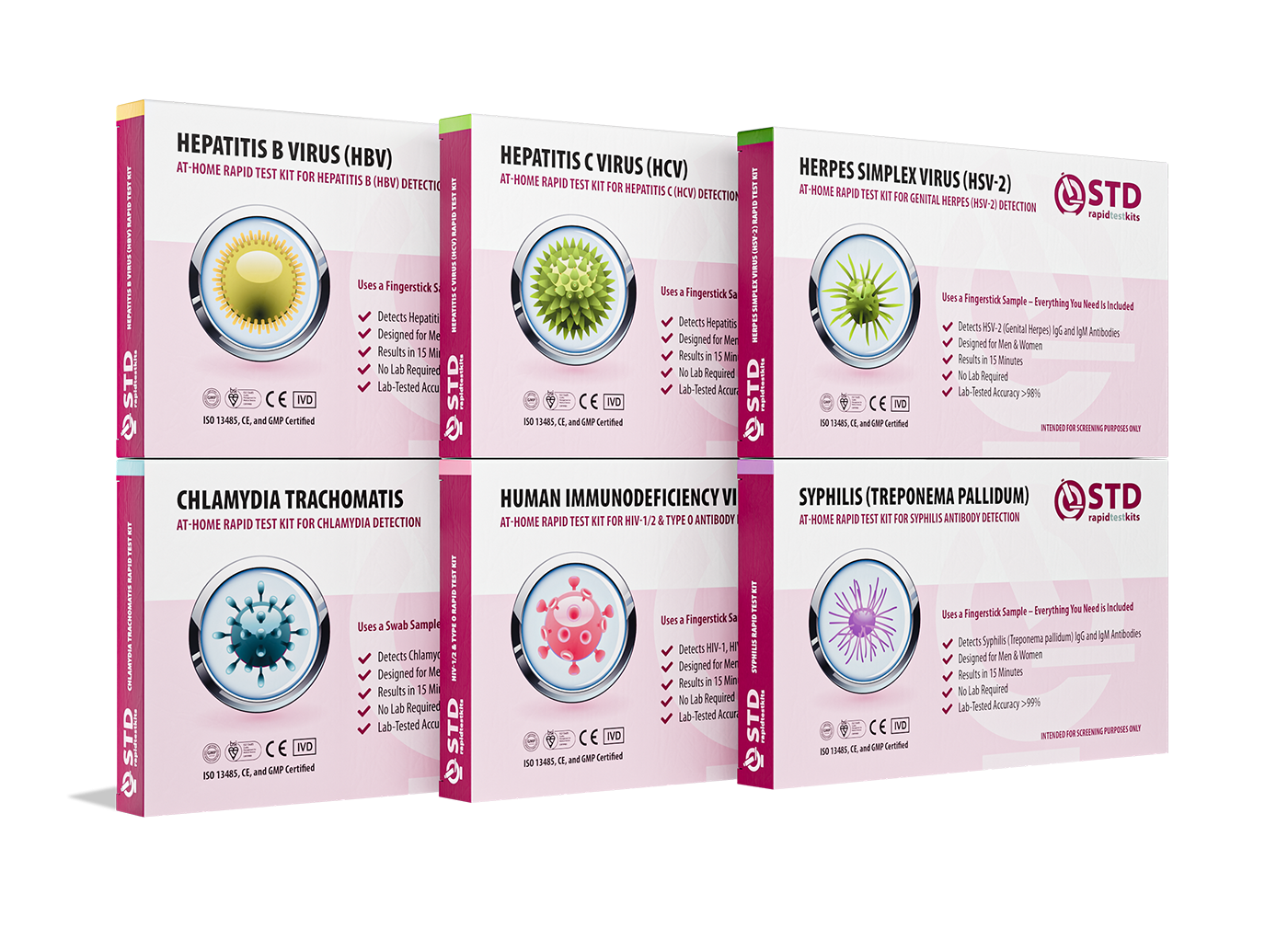
 For Men & Women
 Results in Minutes
 No Lab Needed
 Private & Discreet
Order Now $119.00 $294.00
For all 6 tests
How At-Home Testing Fills the Gap
Let’s be real: walking into a clinic and asking for an STD panel isn’t easy for everyone. It can feel invasive, shaming, or even logistically impossible. Whether you're juggling night shifts, living in a rural area, or just not ready for face-to-face disclosure, at-home testing offers a private, doctor-trusted solution.
Modern rapid tests can detect chlamydia, gonorrhea, syphilis, herpes, HIV, and more, with just a finger prick or urine sample. Some results appear within minutes; others involve mailing the sample back in discreet packaging and getting lab-grade results in a day or two.
STD Rapid Test Kits provides exactly that, access to at-home STD test kits designed for speed, privacy, and peace of mind. You can test alone, on your time, and follow up without clinic delays or awkward wait rooms.
If you're second-guessing that moment last weekend, or wondering if the rash on your thigh is just heat... take the guesswork out of it. Your body deserves facts, not maybe’s.
What Happens If You Don’t Know You’re Infected?
Sometimes, nothing, at first. And that’s what makes it dangerous. The longer an infection goes untreated, the more damage it can do under the radar. You might not notice the slow changes: a dip in energy, an ache that keeps returning, a partner complaining of symptoms you don’t have. But over time, silent STDs can lead to serious complications for you and those you’re intimate with.
Untreated chlamydia or gonorrhea can cause inflammation of the epididymis, the small tubes behind your testicles that carry sperm. That leads to pain, swelling, and, in some cases, infertility. Syphilis in its later stages can affect the nervous system, eyes, and heart. Even HIV, which can be suppressed effectively when caught early, can go years without dramatic symptoms while damaging the immune system from the inside out.
And if you’re in a relationship, the risk compounds. Your partner may develop symptoms you never had, sparking confusion, blame, or worse, health consequences you never meant to cause.
Micah, 41, found this out the hard way. He’d been in a monogamous relationship for over a year when his girlfriend developed intense pelvic pain and bleeding between periods. A trip to her gynecologist confirmed it: she had pelvic inflammatory disease (PID) caused by untreated chlamydia. Micah had tested, once, early in their dating. But never again. “I felt fine,” he told the nurse during his own follow-up. “I didn’t think I could be carrying something and not know.”
That’s the story. Over and over again.
Retesting Isn’t Just for High-Risk Folks
You don’t need a “bad” sexual history to justify retesting. You need a body. You need partners. You need peace of mind. Whether you’ve had one partner or ten, a monogamous relationship or a situationship with blurry lines, retesting matters.
Experts recommend testing:
- After any unprotected sex with a new partner
- If a partner tests positive for an STD
- At least once a year, even with low exposure
- Every 3–6 months if you're in a non-monogamous relationship or have multiple partners
- After treatment, to confirm clearance
Even if your previous results were negative, exposures don’t reset your status. Every new interaction is a new data point. And symptoms, or lack thereof, don’t override that math.
Here’s a quick reference timeline to make retesting make sense:
| STD | Best Time to Retest After Exposure | Why It Matters |
|---|---|---|
| Chlamydia / Gonorrhea | 2 weeks (NAAT) or per doctor recommendation | Early tests can miss the infection; retesting catches delayed positives |
| Syphilis | 6 weeks to 3 months | Serologic testing may not detect early infection; retest for accuracy |
| HIV | 4 weeks (early), 12 weeks (confirmatory) | Antibodies take time to build; early negatives may need confirmation |
| Trichomoniasis | 3–4 weeks | Often silent in men, so retesting is key even without symptoms |
Table 3. Retesting timelines for common STDs after potential exposure or treatment.
The takeaway? Retesting isn’t overkill, it’s protection. Not just for your health, but for the trust you build with others. Whether you test at home or through a clinic, build retesting into your routine like dental cleanings or oil changes. It’s care, not confession.
People are also reading: HIV in the Bible Belt: Why the South Is Still Losing the Sexual Health Fight
Your Privacy Isn’t Just Respected, It’s Protected
If the biggest barrier to testing is fear of being judged, your solution should start where judgment ends. That’s where at-home kits shine. They arrive in plain packaging. They don’t require you to explain your weekend to a nurse. They don’t ask you to reveal your gender identity, partner count, or orientation to a stranger unless you choose to.
From discreet shipping to encrypted results, STD Rapid Test Kits ensures that your information, your body, and your choices remain yours. You can test in your own time, without skipping work or waiting for a clinic appointment. You can take action before symptoms appear, or even if they never do.
And if you do test positive, you’re not alone. You’ll get instructions on next steps. You can seek confirmatory testing and treatment. You can protect your partners, not punish yourself. Privacy isn’t a luxury, it’s a right. And it’s one that can empower you to act, not avoid.
This Is What Prevention Looks Like
STDs don’t care about how “clean” you feel. They don’t wait for dramatic symptoms. And they definitely don’t check whether you’re in love, monogamous, queer, straight, poly, experimenting, or figuring it all out as you go. Infections happen in all kinds of situations, from planned first dates to blackout hookups to long-term relationships where one person didn’t realize they were carrying something.
Colin, 24, had been dating his girlfriend for over a year when he started to feel a vague tingling around the head of his penis. No sores, no discharge. Just… different. He chalked it up to cycling more, maybe a change in detergent. But it didn’t go away. Two weeks later, he tested positive for herpes. She hadn’t known she carried it either. Neither of them had any obvious outbreaks. And yet, there it was, a virus they now had to navigate together, emotionally and physically.
The takeaway? Testing isn’t about guilt or catching someone in a lie. It’s about staying informed and staying safe. Even when things feel steady. Even when you’re “just hooking up.” Even when you’re 99% sure it’s nothing. That 1% is worth acting on. And it’s easier to act when shame is taken off the table.
We don’t talk enough about what proactive sexual health looks like, especially for men. Not just condoms or counting partners or crossing your fingers. But actually checking in with your body. Noticing patterns. Asking questions. And choosing to know, instead of guessing.
If something’s been nudging at you, a symptom, a doubt, a partner’s weird comment about an ex, don’t bury it. Don’t wait for it to scream. You don’t need to be sick to deserve clarity. You don’t need to be reckless to get tested. You just need to care enough to check in with yourself. That’s not weak. That’s grown-man energy.
Because whether it’s a silent infection or just peace of mind you’re after, testing gives you answers. And answers give you options. That’s what prevention looks like. Not perfection, but attention.
Check Your STD Status in Minutes
Test at Home with Remedium8-in-1 STD Test Kit
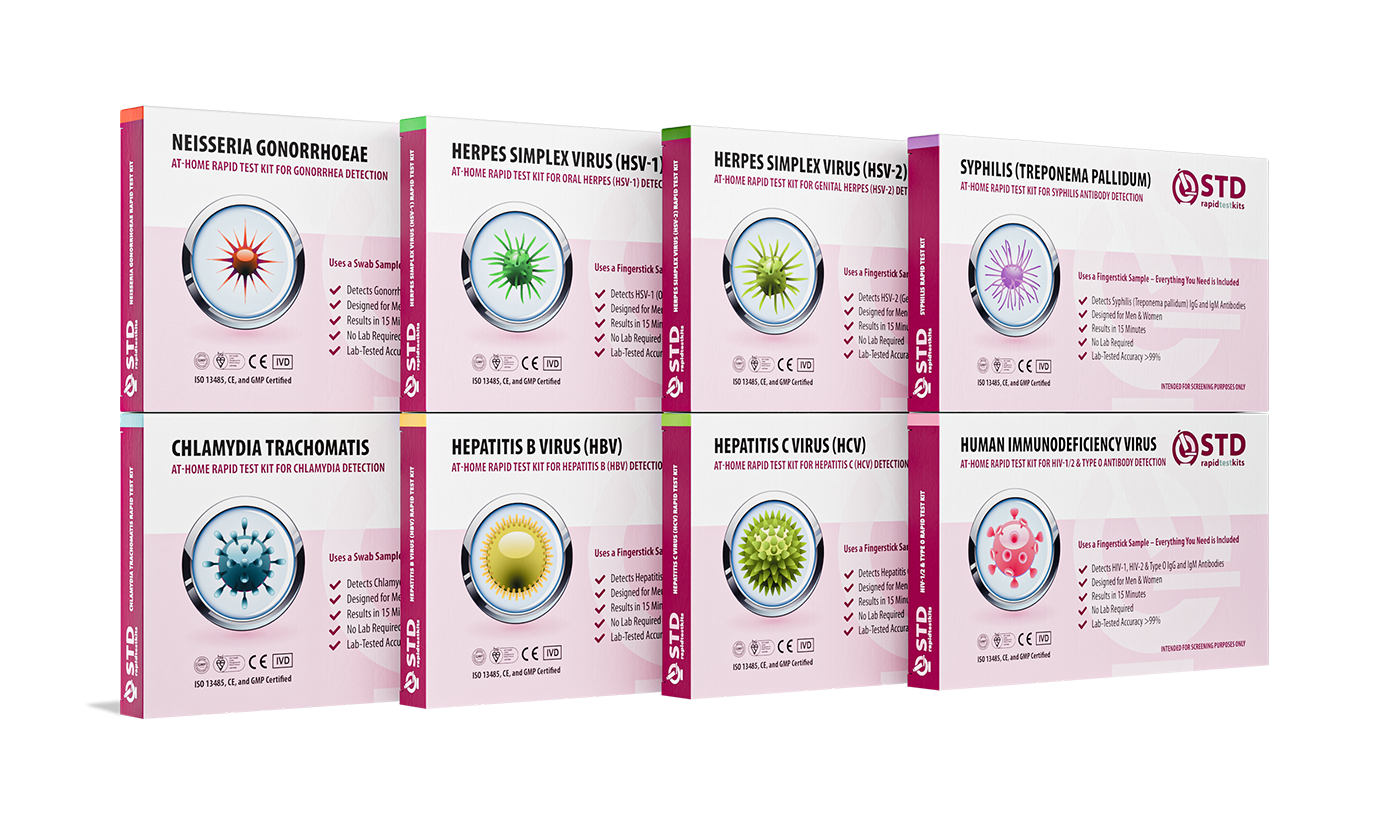 For Men & WomenResults in MinutesNo Lab NeededPrivate & Discreet
Order Now $149.00 $392.00
For all 8 tests
Testing Isn’t the End of the World, It’s the Start of Owning Your Health
Let’s get something straight: getting tested doesn’t mean you’re dirty, reckless, or guilty. It means you care. It means you’ve decided that your health, and the health of anyone you touch, is worth more than a “maybe.” That’s not weakness. That’s emotional intelligence. And it’s something more men are finally starting to claim.
Raymond, 38, had gone ten years without a single STD test. He was in long-term relationships most of that time, never had symptoms, and figured he was fine. But after a scare with a new partner, someone who was transparent about her status, he decided to order an at-home test. Turns out, he’d been living with trichomoniasis for years. Never knew it. Never had a clue. But once he knew, he could treat it. And he could stop wondering.
That’s what testing really does, it ends the wondering. It takes that invisible worry that hums in the background of casual sex, of new relationships, of old mistakes, and it turns it into action. Into knowledge. Into peace of mind or a plan. And you deserve both.
You don’t have to be scared to test. You just have to be curious enough about your own body to check. You can do it at home, on your time, with no judgment. Start here, and get the clarity your body’s been waiting for.
FAQs
1. Can I really have chlamydia or gonorrhea without discharge?
Yep, more common than you’d think. Especially in guys. You might have a full-blown infection and still feel totally fine down there. That’s why relying on symptoms alone can backfire. Discharge might never show up… but the bacteria are still doing their thing.
2. What if I feel 100% fine? Do I still need to get tested?
Here’s the thing: STDs don’t always make noise. You can feel great and still be positive. Think of it like high blood pressure, you don’t feel it until something goes wrong. Testing isn’t about assuming the worst. It’s about knowing for sure.
3. Is penile itching or irritation always a sign of an STD?
Not always. Sweat, friction, shaving, a new soap, those can all cause irritation too. But if it keeps happening after sex, lasts more than a couple of days, or comes with weird timing (like post-hookup), get tested just to rule things out. Better safe than wondering.
4. Can I get an STD from oral sex?
Absolutely. Herpes, gonorrhea, syphilis, even chlamydia can pass through oral contact, especially if there are tiny cuts or no protection. And no, you don’t need to “finish” for transmission to happen.
5. If I got tested last year and haven’t had many partners, do I really need to test again?
If you’ve had any new partners, even just one, or had unprotected sex, yes. Last year’s results don’t cover this year’s exposure. And “not many” is still >0, right?
6. How long should I wait to test after a risky hookup?
Depends on the STD. Chlamydia and gonorrhea might show up in 5–14 days. HIV and syphilis take longer, closer to a month or more. Some people test early, then retest a few weeks later just to be sure. That’s smart, not paranoid.
7. Are at-home STD tests even legit?
They are when you get them from trusted sources. The ones using NAAT or antigen-based tech are super accurate. Just make sure you follow the instructions and time it right. (And yeah, no judgment if you’re testing at midnight in your bathroom. Been there.)
8. What do I do if my test is positive but I still feel totally normal?
First, take a breath. Then follow the instructions in your kit or reach out to a healthcare provider. Even if you feel fine, untreated STDs can cause real issues over time, and they’re often easy to treat. You did the hard part already by testing.
9. Do I have to tell my partner if I test positive?
Legally? Sometimes, depending on where you live. Ethically? Yeah, you should. But you can do it in a way that’s honest, not shamey. There are even anonymous text services that help. You’re not alone in this.
10. How often should I get tested if I’m sexually active?
General rule: once a year if you have one partner, every 3–6 months if you have multiple. But life isn’t always that tidy. If anything feels off, or if someone tells you they tested positive, don’t wait for your calendar. Test now.
You Deserve Answers, Not Assumptions
There’s a dangerous myth that silence means safety. But infections don’t always come with flashing red lights or dramatic symptoms. Your body isn’t broken for not reacting loudly. It’s just human. And being human means giving yourself the care you deserve, without guilt, without delay, and without waiting for a symptom to scream before you listen.
Don't wait and wonder, get the clarity you deserve. This at-home combo test kit quickly and privately checks for the most common STDs.
How We Sourced This Article: We combined current guidance from leading medical organizations with peer-reviewed research and lived-experience reporting to make this guide practical, compassionate, and accurate.
Sources
1.CDC: Chlamydia—Facts and Symptoms in Depth
2. WHO – Sexually Transmitted Infections (STIs)
3. The CDC's Information on Sexually Transmitted Infections (STIs)
4. Getting Tested for STIs | CDC
5. Mayo Clinic: STIs, or sexually transmitted infections - Symptoms and Signs
6. StatPearls: STIs | NCBI Bookshelf
7. Chlamydia Infections: STI Treatment Guidelines | CDC
8. Patterns and Causes of STIs in the United States | NCBI
9. Major STIs in the United States: NCBI
About the Author
Dr. F. David, MD is a board-certified expert in infectious diseases who works to stop, diagnose, and treat STIs. He combines clinical accuracy with a straightforward, sex-positive approach and is dedicated to making his work available to more people, both in cities and in rural areas.
Reviewed by: Dr. Layla Nguyen, MPH | Last medically reviewed: January 2026
This article is for informational purposes and does not replace medical advice.


