







Quick Answer: At-home STD tests work for trans women when the right sample type is used for your anatomy and exposure risk. Hormone therapy doesn’t affect results, but timing and proper swabbing technique matter.
This Guide Is for You (Even If No Doctor Has Said That Before)
Whether you’re pre-op, post-op, or non-op, whether you’ve had one partner or many, whether you’re navigating stealth, dating apps, long-term love, or just a scare after a one-night stand, this article is for you. It’s for the trans women who’ve been misgendered at clinics, turned away from ERs, or handed the wrong swab because someone assumed they knew your anatomy.
We wrote this because accurate, affirming, and sex-positive STD testing isn’t a luxury, it’s a basic part of body autonomy. And if you’ve ever thought, “I want to take care of myself, but I don’t trust the system to get me right,” you’re not alone. Testing is not a confession. It’s care. It’s clarity. And it should work for your actual body and lived reality, not just some checkbox on a form.
What At-Home STD Testing Actually Tests For, and How It Works
Let’s start with the basics. Most at-home STD kits fall into two categories: rapid tests (results in minutes, done at home) and mail-in lab kits (you collect a sample and send it off). Both are valid. Both can be accurate. And both can be used by trans women, if you choose the right type of test for your anatomy and exposure.
But here’s the catch: most kits don’t ask how you identify. They ask where to test, urine, throat, rectum, or vaginal canal. That can feel erasing, but in testing terms, it’s actually a strength. The right swab in the right place is what matters most. A person’s identity doesn’t change whether gonorrhea is in their throat or their urethra. The test needs the right sample, not the right label.
Take a look at this simplified breakdown:
| Test Type | Sample Needed | Best For | Use Notes for Trans Women |
|---|---|---|---|
| Rapid HIV Fingerstick | Blood (fingerprick) | HIV status check | Works regardless of anatomy or hormones |
| Combo STD Panel (Mail-In) | Urine, throat swab, rectal swab | Chlamydia, Gonorrhea, Trichomoniasis | Choose sample sites based on sex acts, not gender ID |
| Syphilis Blood Test | Fingerprick blood sample | Syphilis screening | Not affected by hormones or surgeries |
Table 1. Sample types and common at-home tests trans women can use. Accuracy depends more on the sample site than identity label.
This means you’re in control. Did you have receptive anal sex? A rectal swab will give you the clearest answer. Got oral? Use a throat swab. Unsure which kit to choose? The combo STD test kit is built for multiple sites.
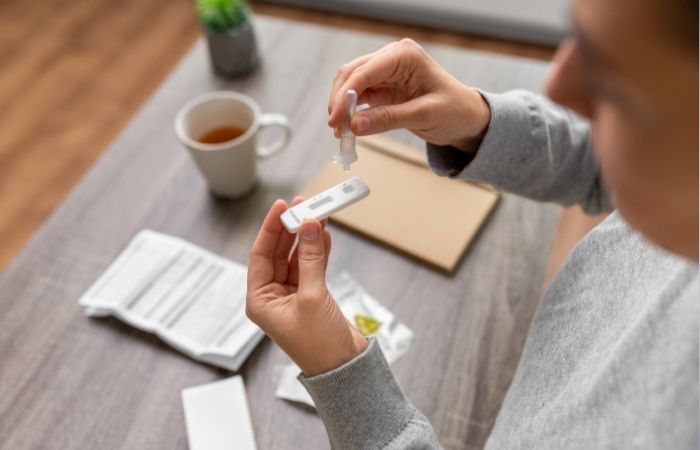
People are also reading: Anal Herpes Explained: The STD No One Warns You About
“I’m on Estrogen, Will That Affect My STD Test?”
No. Estrogen therapy doesn’t change how STDs show up on tests. Neither does testosterone blocker use. These meds don’t affect bacterial or viral replication, which is what STD tests detect. A NAAT test for chlamydia will still look for chlamydia DNA, not hormone levels.
That said, some symptoms can be more subtle or misinterpreted when you’re on hormones. Vaginal irritation from douching, discharge changes, or even post-surgical healing can mask or mimic STD signs. That’s why testing regularly, even when you feel “fine”, is essential. It’s also why at-home kits that let you choose your sample sites can be more accurate than a rushed clinic visit with a provider who’s guessing what swab you need.
In Nia’s case, she hadn’t had symptoms in a “classic” way. No pus, no pain peeing. Just a feeling. But she’d had anal sex and some oral. She used a combo test with throat and rectal swabs, followed the instructions carefully, and mailed it back. Her results came in two days later, positive for gonorrhea in her throat, negative everywhere else. She got treated the next day through telehealth.
Knowing her body, choosing her tests, and avoiding misgendering? That’s what made all the difference.
Check Your STD Status in Minutes
Test at Home with Remedium6-in-1 STD Rapid Test Kit

 For Men & Women
 Results in Minutes
 No Lab Needed
 Private & Discreet
Order Now $119.00 $294.00
For all 6 tests
When and Where to Swab: Real Talk for Real Bodies
If you’ve never been told where to swab, or been handed a cup and told to “pee in this” even though you didn’t use your urethra for sex, you’re not alone. Testing errors don’t always happen in the lab. They start when the wrong test is used for the wrong body, at the wrong time, in the wrong place.
Here’s the truth: a urine test won’t catch a throat infection. A vaginal swab won’t catch rectal exposure if you didn’t use your front hole during sex. That’s why understanding your exposure sites matters far more than your listed gender on a form.
Let’s break it down by exposure type:
| If you had... | Use this sample | Common STDs detected |
|---|---|---|
| Receptive anal sex | Rectal swab | Chlamydia, Gonorrhea |
| Receptive oral sex | Throat swab | Gonorrhea, Chlamydia (less common) |
| Penetrative sex using a vagina or front hole | Vaginal swab or urine sample | Chlamydia, Gonorrhea, Trichomoniasis |
| Shared toys, rimming, oral-anal contact | Rectal + throat swabs | Gonorrhea, Chlamydia, less often HSV |
Table 2. Matching exposure to sample type ensures accurate results regardless of gender identity.
There’s no shame in needing more than one swab. If anything, that’s smart testing. But most clinics don’t offer all sites unless you specifically ask. That’s where at-home kits become powerful: you choose. You control. You swab where you know you had contact.
Does Surgery Change What Tests You Need?
Whether or not you’ve had gender-affirming surgery, your risk of STDs is based on your behaviors, not your surgical history. That said, there are some nuances to keep in mind.
If you’ve had vaginoplasty (creating a neovagina), you may still need to test rectally or orally depending on your activity. Some post-op trans women use their vaginal canal for penetrative sex, which can carry STD risk. Others don’t. If you do, a vaginal swab is appropriate. If not, skip it.
For those who haven’t had surgery or don’t use their genitals for sex, swabbing other exposure sites is still essential. We’ve seen cases where someone tested negative on a urine-only kit but was positive in their throat. A missed swab is a missed diagnosis, and can lead to ongoing transmission, especially with asymptomatic infections.
One 2022 study published in the Journal of Sexual Medicine found that many trans women weren’t tested at all relevant sites, especially if they didn’t disclose sex acts explicitly. At-home kits remove that pressure, no explaining, no gatekeeping, just informed testing.
Remember: it’s your body, your sample, your rules. The kit is just the tool. You are the expert on what happened, and where to swab.
What About Accuracy? Are These Kits Reliable?
Most at-home STD kits use the same technology as clinics. Mail-in tests use NAAT (nucleic acid amplification testing), which is the gold standard for detecting bacterial STDs like chlamydia and gonorrhea. Rapid tests for HIV or syphilis rely on antibodies and have sensitivity rates above 99% when used correctly.
The biggest causes of inaccuracy? Bad timing and poor sample collection. This has nothing to do with being trans, and everything to do with not knowing when or how to test.
Let’s say you were exposed to chlamydia last Friday. You test on Monday using a rectal swab. You might get a false negative, not because the test is bad, but because the infection hasn’t multiplied enough to detect. That’s why timing matters.
Check out this simplified timing chart:
| STD | Test Type | Best Time to Test |
|---|---|---|
| Chlamydia / Gonorrhea | NAAT (swab or urine) | 7–14 days after exposure |
| Syphilis | Antibody test (blood) | 3–6 weeks after exposure |
| HIV | Rapid fingerstick or lab test | 2–6 weeks after exposure |
| Trichomoniasis | NAAT (swab or urine) | 5–28 days after exposure |
Table 3. Testing too early can lead to false negatives. Retest if symptoms develop or risk is ongoing.
If you’re ever unsure, the safest path is to test at day 10–14, then again a few weeks later if symptoms show up or exposure continues. Most at-home kits include instructions about window periods, but they often don’t say what to do if you’re trans. That’s where this guide fills the gap.
And if you're still wondering whether these kits are "real" or just TikTok hype? Trust the data. Brands like the ones used at STD Rapid Test Kits meet WHO and FDA quality standards. The tech is legit. You just need to use it with the right timing and swabbing strategy for your body.
“I Got a Positive Result, Now What?”
Sofia stared at her screen. Her throat swab came back positive for gonorrhea. The email said “we recommend treatment through your local provider or via telehealth.” But the last time she went to a clinic, they asked her legal name out loud in a full waiting room. That wasn’t happening again.
This is where the next stage matters. At-home kits give you results, but you still deserve care. Thankfully, many providers now offer treatment prescriptions by telehealth after reviewing your test results, even if you tested yourself. You’re not alone. And you’re not broken.
If you test positive:
- Don’t panic. Most STDs are curable with a single antibiotic or manageable with medication.
- If your test was rapid (done fully at home), consider getting a lab confirmation.
- Start treatment ASAP, and avoid sexual contact until it’s complete.
- Tell partners. It’s hard, but it protects them and shows care. Some services offer anonymous partner notification.
- Retest after treatment, usually in 3 to 4 weeks, to confirm clearance.
What’s most important? That you don’t internalize the result as a personal failure. Getting an STD means you’re human. Getting tested means you care. And the real risk isn’t having an infection, it’s not knowing you do.
People are also reading: Think Oral Sex Is Safe? These 6 STDs Say Otherwise
Let’s Talk About Privacy, Stigma, and Taking Control
Many trans women avoid clinics not because they don’t care about their health, but because they’ve been harmed by healthcare. Misgendering. Deadnaming. Asking invasive questions. Having your body talked about like a puzzle instead of a person.
At-home STD tests aren’t just about convenience. They’re about reclaiming power. You don’t have to explain yourself to a stranger. You don’t have to wonder if the nurse will understand what “front hole” means. You don’t have to answer a form that assumes all sex is vaginal or that only men get HIV.
Packages are shipped discreetly. No one knows what’s in the box. Some are delivered overnight. The return envelope is unlabeled. Results come via secure portal or encrypted email. If you’re worried about roommates, partners, or family seeing your results, these kits are built for privacy.
And if you ever need help interpreting a result, there are support lines and LGBTQ-competent providers available. Some telehealth apps now offer “affirming care” settings that let you specify pronouns and anatomy used during sex to match treatment and advice more accurately.
Testing doesn’t have to feel like punishment. It can feel like empowerment.
Check Your STD Status in Minutes
Test at Home with Remedium8-in-1 STD Test Kit
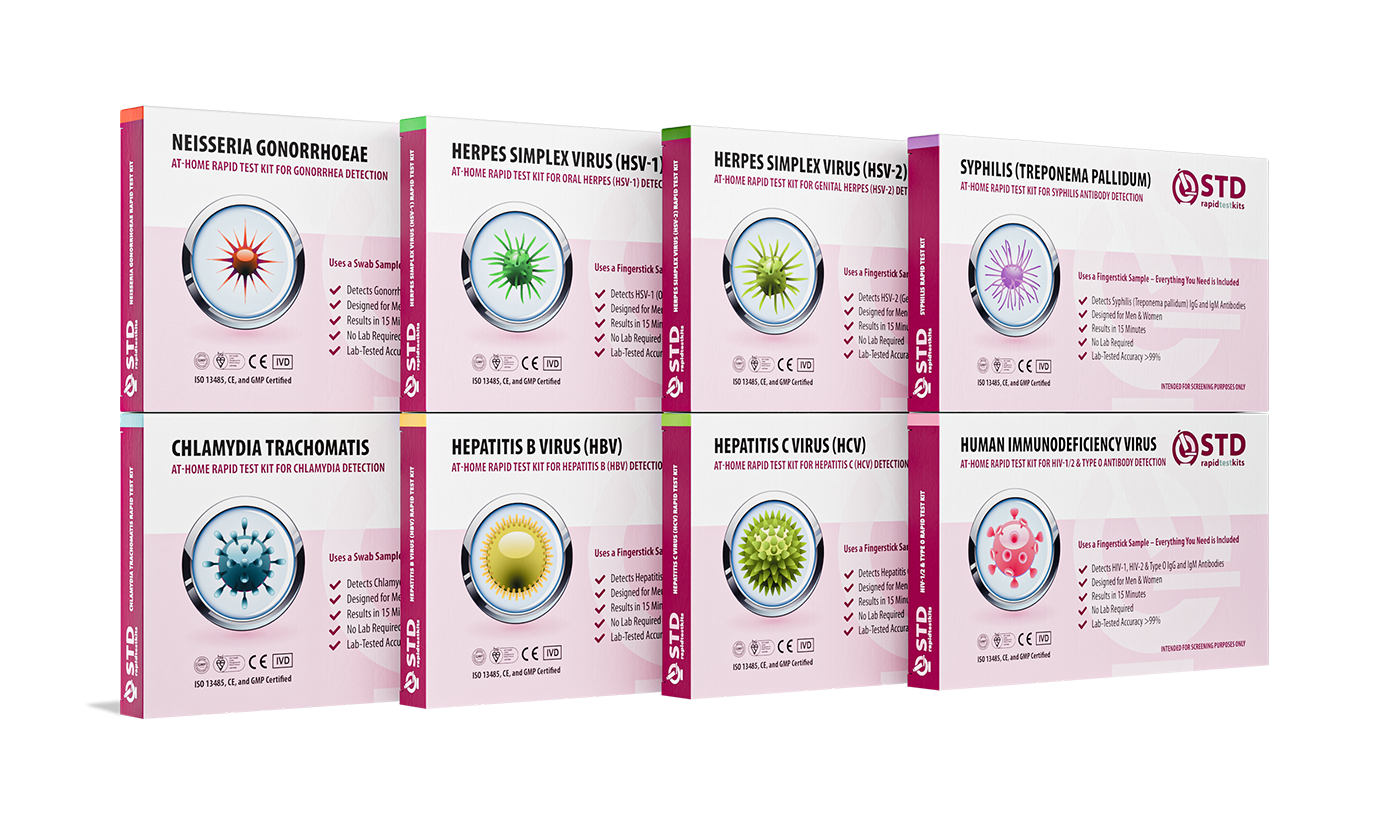 For Men & WomenResults in MinutesNo Lab NeededPrivate & Discreet
Order Now $149.00 $392.00
For all 8 tests
Take the Next Step (Without Shame)
If you’ve read this far, chances are you’re still holding that “what if” inside your chest. What if that itch is something? What if your last partner wasn’t honest? What if you’re just being paranoid?
Here’s what we know: peace of mind is worth more than guessing. And clarity helps you breathe easier. At-home STD testing doesn’t erase the gaps in healthcare, but it does give you a private, accurate, no-BS tool to protect yourself and others. Whether it’s your first time testing or your fiftieth, you deserve a process that honors your gender, your experience, and your autonomy.
Don't wait and wonder, get the clarity you deserve. This at-home combo test kit checks for the most common STDs discreetly and quickly.
FAQs
1. Do at-home STD kits actually work for trans women?
Absolutely, if you match the test to what kind of sex you had and where. These kits don’t care about your gender label, they care about sample sites. That’s good news. Whether you’ve had anal, oral, or frontal sex (surgical or not), you can choose the right swab and get answers. No explaining, no awkward questions, just real data from your real body.
2. What if I only had oral sex, do I still need to test?
Yes, and here’s the kicker: gonorrhea loves the throat. We’ve seen folks test negative in urine but positive in their throat swabs, because oral sex can absolutely transmit STDs. If someone went down on you or you went down on them, a throat swab is worth doing. It’s quick, painless, and could save you from unknowingly spreading something.
3. Do hormones like estrogen mess with test results?
Not at all. Hormone replacement therapy doesn’t change how your body shows infection. STD tests look for bacteria, viruses, or antibodies, not hormone levels. That said, estrogen can affect how you interpret certain symptoms, like discharge or irritation. So if something feels off, don’t second-guess yourself, just test.
4. I haven’t had bottom surgery, does that mean I only need a urine test?
Maybe. If you’ve only had frontal (penile) sex, a urine sample might catch what’s going on. But if you had receptive anal or oral sex, you’ll need to swab those areas too. Your anatomy doesn’t limit your risk, but the places where contact happened do. That’s why a combo kit can be a great option. You cover your bases without assumptions.
5. What if I test positive, am I stuck figuring it out alone?
No way. Most kits come with clear steps for follow-up, and many link directly to telehealth providers who can prescribe treatment. You can get meds without stepping foot in a clinic. Some even help with anonymous partner notification. A positive test isn’t a punishment, it’s a prompt to take care of yourself and anyone else involved.
6. Is it safe to use these kits if I live with other people?
Yes. The packaging is discreet, no “STD” labels, no giveaways. Results are digital, password-protected, and often encrypted. If you’re worried about privacy, consider shipping to a locker or friend’s place. You control the process.
7. Do I have to swab all three sites, mouth, rectum, and urine?
Only if you had sex involving all three. If you gave or received oral, that’s a throat swab. If you had receptive anal sex, grab the rectal one. If you used your urethra or front hole, urine or vaginal swab applies. No shame in swabbing more than one, it’s just smart testing. Your body, your call.
8. Can I test too soon?
Definitely. STDs take time to show up on tests, this is called the “window period.” For chlamydia and gonorrhea, wait 7–14 days. For syphilis, 3–6 weeks. For HIV, 2–6 weeks depending on the type of test. Test too early, and you might get a false negative. Not because you’re clear, but because it’s too soon to detect.
9. I feel fine, do I still need to test?
Yes. Most STDs are asymptomatic, especially in the throat or rectum. You could be carrying something and never know. Testing is how you protect your partners, and yourself. It’s not about being scared. It’s about staying informed.
10. How often should I test if I’m sexually active?
If you’ve had new partners or any unprotected sex, testing every 3–6 months is a good baseline. More frequent if you’re in a higher-risk group or dating casually. And always test after a known exposure, even if you feel “totally fine.” Your body deserves the truth.
You Deserve Answers, Not Assumptions
If you’ve read this far, you already know the problem isn’t just about testing, it’s about trust. Trust that the test works for your body. Trust that your gender won’t be erased in the process. Trust that your care won’t come with lectures or blank stares or “we don’t offer that here.”
Here’s the truth: you deserve better than that. You deserve a testing process that meets you where you are, respects who you are, and gives you accurate, shame-free results. Not every provider gets it, but at-home STD kits give you options that do. You choose what to test, where to swab, and when to open that results page, not anyone else.
Whether you’re testing because of a twinge, a new partner, a past trauma, or just plain self-love, know this: you are allowed to want answers. You are allowed to feel nervous. And you are still absolutely worthy of clear, accurate, compassionate care.
Don’t wait and wonder, get the clarity you deserve. This at-home combo test kit checks for the most common STDs discreetly and quickly.
How We Sourced This Article: We combined current guidance from leading medical organizations with peer-reviewed research and lived-experience reporting to make this guide practical, compassionate, and accurate. In total, around fifteen references informed the writing; below, we’ve highlighted some of the most relevant and reader-friendly sources.
Sources
1. CDC: Screening Recommendations for STDs
2. Planned Parenthood: Get Tested
3. Transgender and Gender Diverse Persons (CDC STI Treatment Guidelines)
4. STI Screening Recommendations (CDC)
5. Getting Tested for STIs | CDC
6. fast Facts: HIV and Transgender People (CDC)
7. Anatomic Site–Specific STI Prevalence and Screening (PMC)
8. Decreased Anogenital Gonorrhea and Chlamydia in Transgender Women (PMC)
9. Transgender People and Sexually Transmitted Infections (UCSF TransHealth)
10. Sexually Transmitted Infections Treatment Guidelines, 2021 (CDC PDF)
About the Author
Dr. F. David, MD is a board-certified infectious disease specialist focused on STI prevention, diagnosis, and treatment. He blends clinical precision with a no-nonsense, sex-positive approach and is committed to expanding access for readers in both urban and off-grid settings.
Reviewed by: L. Martinez, NP, AAHIVS | Last medically reviewed: January 2026
This article is meant to give information and should not be taken as medical advice.


