






Quick Answer: STD risk doesn’t wait for public warnings. If you’ve had unprotected sex, new symptoms, or any exposure concerns, testing is still critical, even if local data says risk is low.
When Public Data Goes Quiet, But the Risk Is Still Loud
Here’s the part no one likes to say out loud: STD surveillance is flawed. Not because people aren’t trying, but because it’s built to track the past, not the present. Most health departments report quarterly. That means the “latest data” is already weeks or months behind reality. Clinics get overwhelmed. Not every case gets logged. And not everyone who tests positive tells their partners, or anyone else. You could be living in a ZIP code that looks squeaky clean on paper but quietly hosts an outbreak.
Let’s say you’re in a college town where reports show a dip in chlamydia cases this quarter. Feels safe, right? But local students haven’t been tested recently. The one urgent care clinic lost funding last month. And the biggest testing center in the county switched labs, causing reporting delays. None of that shows up in the numbers. What shows up is silence. And silence doesn’t mean safety, it just means lag.
Real protection comes from your own awareness. When the system is slow or quiet, your body, your symptoms, your instincts become the most valuable data points you have.
“But I Don’t Feel Sick”, Why That’s Not a Free Pass
Jake, 26, had zero symptoms when he decided to test. “I almost didn’t go through with it. No discharge, no bumps, nothing hurt. I only did it because my roommate mentioned a rash he thought was from a new detergent, but it turned out to be syphilis.” Jake had tested negative three months earlier, so he assumed he was fine. He wasn’t. This time, his panel came back positive for gonorrhea.
STDs don’t always look like you expect them to. In fact, most common infections, chlamydia, trichomoniasis, even early-stage HIV, often have no obvious symptoms at all. What’s more frustrating is how misleading the absence of symptoms can be. You feel normal. Maybe your last test was negative. Maybe your partner says they’re “clean.” But without regular testing and attention to timing, infections can fly under the radar.
This is why relying on warning signs, both personal and public, is dangerous. The data doesn’t always show the whole picture. And neither does your body.
People are also reading: I Was on the Pill and Still Got an STD, What I Wish I Knew
Gut Feeling vs Gaslighting: Trusting Yourself in the Absence of Evidence
Aliyah, 33, works remotely and hadn’t had sex in months when she finally went on a date with someone new. “We used condoms. He said he was tested recently. I still woke up a few days later with this burning during urination that wasn’t going away. I kept asking myself if I was overreacting. Like, was it just friction? Stress? But something felt off. My friend said I was being dramatic.” Aliyah booked a rapid test anyway. The result? Positive for trichomoniasis.
Here’s the thing: self-advocacy often gets framed as paranoia when it comes to sexual health. Especially for women, queer folks, and people of color. You’re told to wait. You’re told it’s probably nothing. You’re told to trust that if it was serious, someone else would’ve said something. But that’s the trap. STD outbreaks don’t always announce themselves. They grow silently until someone brave enough to test disrupts the pattern.
If your body is sending signals, fatigue, discomfort, new irritation, or if your brain won’t let it go, trust that. You’re not imagining things. You’re intercepting the problem early.
Check Your STD Status in Minutes
Test at Home with Remedium7-in-1 STD Test Kit
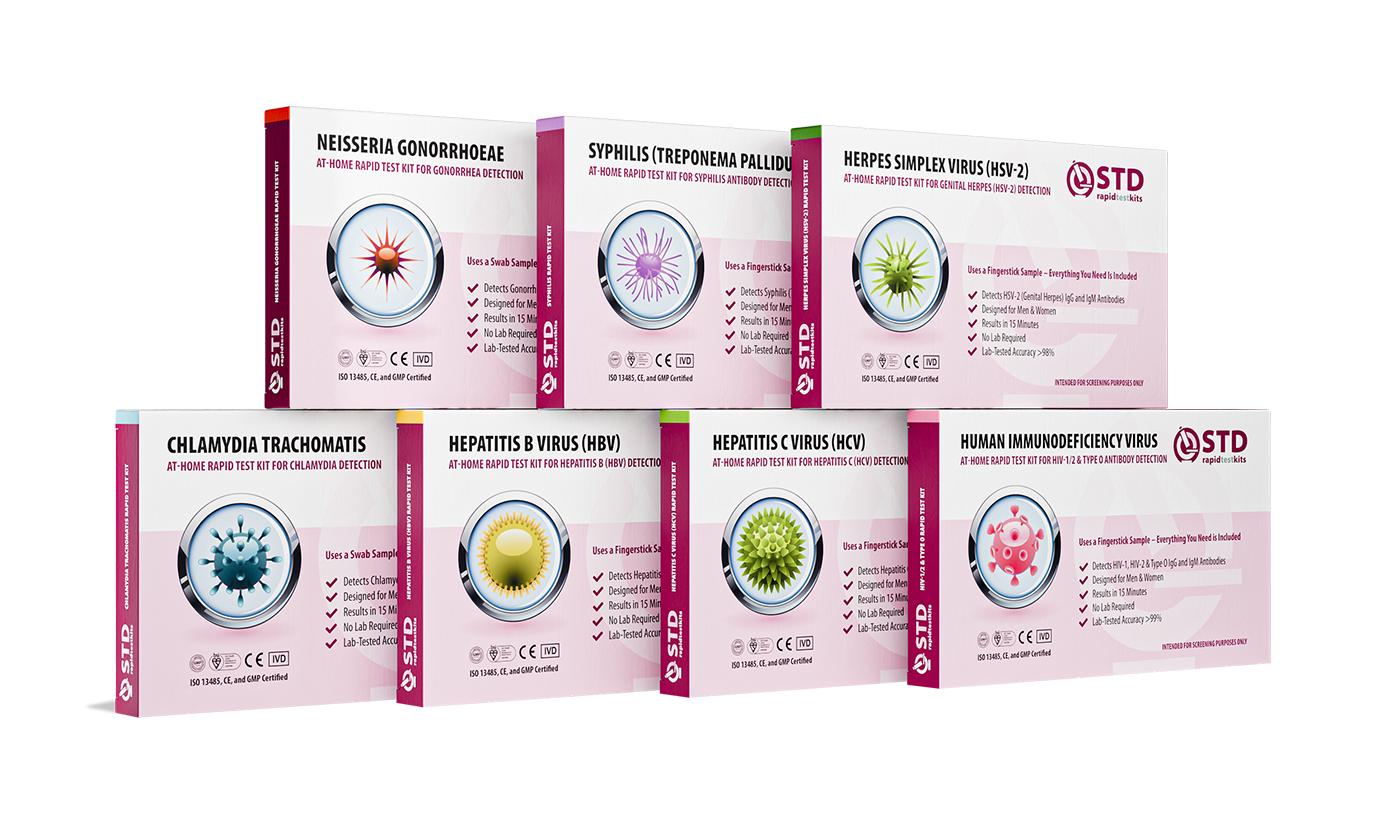
 For Men & Women
 Results in Minutes
 No Lab Needed
 Private & Discreet
Order Now $129.00 $343.00
For all 7 tests
How Fuzzy Surveillance Data Happens (And Why It Affects You)
It’s not just about missing stats. Surveillance data can be fuzzy for multiple reasons:
| Cause of Fuzziness | Impact on You |
|---|---|
| Delayed lab reporting | Recent spikes may not be visible for weeks or months |
| Low testing rates | Apparent “declines” could just mean fewer people are testing |
| Underreporting by providers | Clinics may skip official notification in high-volume times |
| Silent transmission (no symptoms) | People spread infections unknowingly, keeping stats artificially low |
| Stigma and privacy fears | People avoid testing entirely, especially in small communities |
Figure 1. How public health surveillance fails to reflect real-time STD risk, and why individual testing remains critical.
Most people never see these gaps. They scroll past a county dashboard that says everything’s “stable” and assume it applies to their social circle. But even one underreported cluster in your neighborhood, school, or dating app radius can shift your personal risk significantly. Surveillance isn’t personal. Your decisions have to be.
So How Do You Know When to Test?
In a perfect world, everyone would get a clear alert: “Hey, you were exposed, time to test.” But real life doesn’t hand out exposure alerts on a schedule. Maybe a partner ghosted you. Maybe you had a one-time encounter that seemed low-risk. Or maybe you’ve just got this nagging feeling that something isn’t sitting right. That’s enough. You don’t need permission to test. And you don’t need a confirmed contact to justify it.
Think of STD testing like checking your smoke alarm. You don’t wait until the fire is confirmed, you check because something smells off. Or because it’s just been a while. Or because the last battery might be dead and you can’t remember when you replaced it. Testing is not an admission of guilt. It’s maintenance. It’s how you stay ahead of problems that don’t announce themselves loudly.
Let’s break it down into timelines. These aren’t rules. They’re tools, to help you turn vague feelings into clear choices.
| Time Since Risky Encounter | What to Do |
|---|---|
| 0–5 days | Too early for most tests; wait unless severe symptoms or assault occurred |
| 6–13 days | Some infections may be detectable; testing is OK, but plan for a retest later |
| 14+ days | Ideal testing window for chlamydia, gonorrhea, trichomoniasis; still retest if ongoing exposure |
| 4–6 weeks | Recommended for syphilis, HIV (Ag/Ab), and to confirm earlier negative results |
| 3 months | Best time for full panel if you’re unsure or had multiple recent partners |
Figure 2. Testing windows based on time since exposure. These help guide smart choices when no official advice is available.
When the Only Clue Is a Feeling (And That’s Enough)
Some of the most powerful testing stories begin with, “I couldn’t stop thinking about it.” That voice in your head, the one reminding you about the condom that slipped, or the moment you trusted someone you barely knew, that’s not paranoia. That’s your brain running a silent risk calculation. And if it won’t shut up, the best way to end the loop is with action.
Jorge, 29, had a one-night stand after a breakup. “I was drunk, it wasn’t my proudest moment. I used protection, but I felt off for days after. Couldn’t sleep. Kept checking myself in the mirror. I finally ordered a rapid test just to make it stop. Turned out negative, but I’ve never felt more in control than after seeing that result.”
You don’t have to be in pain to be in danger. You don’t need symptoms to justify peace of mind. Sometimes, the clearest signal is your own uncertainty, and the smartest response is clarity.
Why “Low Risk” Isn’t the Same as No Risk
We love the idea of certainty. But STD transmission is not a math test with a neat formula. Even with low-risk behavior, like using condoms or limiting partners, there are still variables you can’t control:
Did the condom slip or break without you realizing it? Was your partner in a window period after their last test? Do they even test regularly, or did they just say that because it sounded responsible? “Low risk” is not a shield, it’s a lens. It can blur or clarify your decision, but it doesn’t erase your need to verify what’s happening in your body.
And for many STDs, the data on “low risk” doesn’t factor in things like oral sex, shared toys, or mutual masturbation. Yes, these are lower-risk routes, but they’re not risk-free. Especially when multiple partners, untreated infections, or immune system vulnerabilities enter the picture. Testing isn’t just about how risky the act was. It’s about how you want to live with uncertainty, or without it.
Taking Control When Contact Tracing Fails You
If you’ve ever waited for a partner to “let you know if something comes up,” you already know how fragile contact tracing can be. Ghosting kills the process. Embarrassment stalls disclosure. And public health systems are too underfunded to catch every chain. So what do you do when there’s no call, no text, and no clinic bulletin, but you still feel exposed?
You test anyway. Not out of fear, but out of ownership. Your health isn’t a community project, it’s your reality. Maybe you were part of a group setting. Maybe the person you were with just tested last week, but you don’t know what they tested for. Maybe your only exposure was oral. These all still count.
Rapid STD test kits can be your firewall when the chain of communication breaks. They’re not just for emergencies. They’re for days when you feel like you’re being gaslit by silence, by your partner, your clinic, or your own brain.
Order a discreet Combo STD Test Kit if your gut says “better safe than sorry.” You don’t need to wait for symptoms or a notification. Sometimes the absence of proof is the best reason to act.
What If You Already Tested Negative, But Still Feel Unsure?
This happens more often than people admit. You test. The result is negative. But something inside you still doesn’t feel settled. Maybe it was too soon. Maybe you misunderstood the risk. Maybe you just need a second check to move on emotionally. That’s not paranoia. That’s part of protecting your mental health, too.
Grace, 35, tested negative for chlamydia ten days after an encounter she regretted. “My doctor said that was fine, but I couldn’t stop thinking about it. I retested at home three weeks later, and that’s when it came back positive. I was shocked, but honestly, relieved to finally have an answer. I started antibiotics the next day.”
The first test isn’t always the final word. Especially if your exposure was recent, or your symptoms are evolving. Retesting is a reasonable step, not a sign of obsession. In fact, most medical guidelines suggest retesting at 2–4 weeks for certain infections if your first test was within the early window period.
Here’s how you can think about retesting with clarity:
| Initial Test Timing | When to Consider Retesting | Why It Matters |
|---|---|---|
| 0–7 days after exposure | Retest at 2–3 weeks | Too early for most infections to show |
| 8–13 days after exposure | Retest at 3–4 weeks | Some infections may be detectable, but not all |
| 14+ days after exposure | Retest only if symptoms persist or exposure was ongoing | More accurate window, but not perfect |
Figure 3. Retesting logic based on when your first test happened. Especially important when surveillance or contact tracing isn’t available to confirm exposure.
People are also reading: The Silent STD in the Queer Community: Chlamydia’s Hidden Impact
Your Testing, Your Privacy: Why Discreet Options Matter More Than Ever
In a world where everyone shares everything, but still whispers about sex, privacy matters. Maybe you don’t want your pharmacist to know. Maybe your partner checks your insurance logins. Maybe you’re not out yet, or you live in a small town where even asking about STD tests feels like setting off a gossip bomb. You’re not alone.
That’s why discreet, at-home STD testing is more than a convenience, it’s a lifeline. There’s no waiting room. No awkward small talk. No paper trail unless you want one. Just you, your decision, and your result. Delivered fast, sealed tight, and fully under your control.
STD Rapid Test Kits ships directly and discreetly in unmarked packaging. You choose the test, you collect the sample, and you get answers in minutes. Whether you’re on a road trip, hiding a new hookup from roommates, or just craving certainty before your next partner, this is how you take power back when public health systems leave you in the dark.
Explore all discreet testing options, no clinic, no stigma, no delay.
Getting a Positive Result Without a Known Exposure
Nothing messes with your brain like a positive result you didn’t expect. No one warned you. No one seemed sick. You tested “just in case”, and it turns out you weren’t imagining things. This happens more than people think, especially with herpes, chlamydia, and trichomoniasis. And when it does, you might question everything: Who gave it to me? How long have I had it? What if I passed it on without knowing?
First: breathe. A positive result is not a moral failure. It’s data. And that data lets you act, protect others, and feel less powerless. Your first steps should include confirmatory testing (especially for syphilis or HIV), notifying partners when possible, and getting treated. Many STDs are cured with a single course of meds. Others can be managed long-term with minimal disruption to your life.
This is where your strength shows up, not in avoiding risk, but in facing it head-on when no one gave you a heads-up.
Check Your STD Status in Minutes
Test at Home with Remedium8-in-1 STD Test Kit
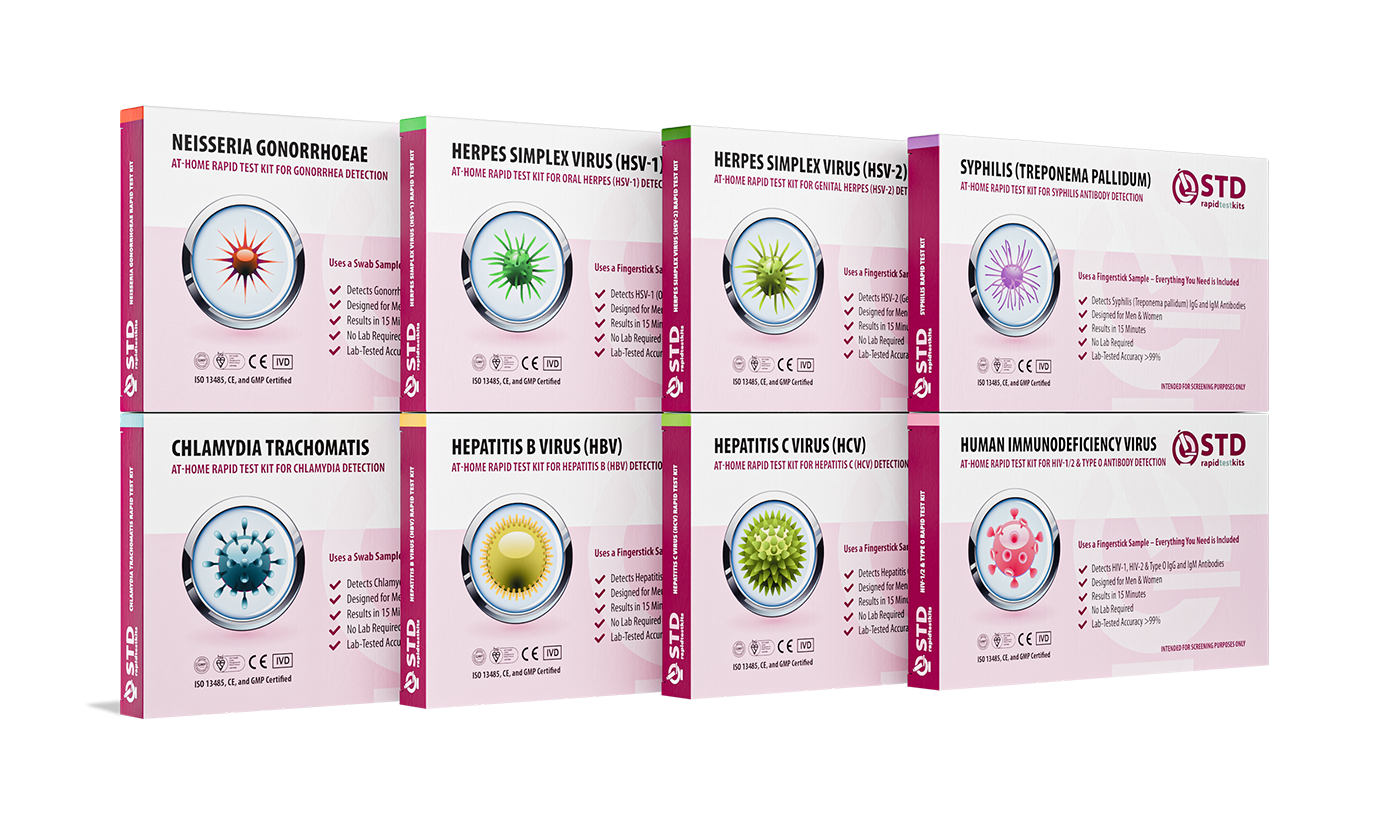 For Men & WomenResults in MinutesNo Lab NeededPrivate & Discreet
Order Now $149.00 $392.00
For all 8 tests
When STD Trends Are Political, But Your Body Isn’t
In some areas, public health data gets shaped by politics, not people. Maybe your state has abstinence-only sex ed. Maybe funding was cut for testing initiatives. Maybe reporting STD stats isn’t seen as a “priority” right now. But your body doesn’t care about red tape. Infection doesn’t pause while bureaucracy plays catch-up.
That’s why your best protection is never tied to a headline, a city dashboard, or a monthly report. It’s tied to how you listen to yourself. How you act even when no one’s urging you to. How you seek out tools, like at-home tests, that fill the gap when the system fails.
Testing doesn’t just tell you if something’s wrong. It proves you matter enough to find out, with or without permission.
FAQs
1. Can I still get an STD even if no one says there’s an outbreak?
100%, yes. Outbreaks don’t knock on your door with a warning label. They creep quietly through hookups, relationships, and “it was just oral” encounters. Public health alerts are slow, spotty, and sometimes political. If something feels off, or even if it doesn’t, testing is your real-time radar.
2. I used protection. Do I really need to worry?
Condoms are amazing, but they’re not magic. They don’t cover everything. STDs like herpes and HPV spread through skin, not just fluids. And honestly, protection is only as reliable as how it was used. If you’re asking this, your peace of mind is already in limbo. A quick test is often faster than spiraling.
3. How long should I wait before testing?
Think of it like waiting for film to develop (okay, retro, but stay with me). Most tests need at least 10–14 days to catch an infection. Earlier than that, you might get a false negative. If it’s been a week or two, you're in that sweet spot to get answers that actually mean something.
4. I tested negative but still feel weird. Am I overthinking this?
Not at all. Your body knows things before tests sometimes do. If you tested early, or your symptoms started later, it’s totally valid to test again. Listen to your gut. It’s gotten you this far.
5. Can I use a home test even if I don’t have symptoms?
You should. Most STDs don’t come with fireworks. Some don’t come with anything at all. That’s why they spread so easily. You don’t need to wait for pain or discharge to justify testing. Silence doesn’t mean safety.
6. Will anyone find out I tested?
Not unless you tell them. At-home tests are private. They show up in plain packaging, don’t touch your insurance, and don’t get reported anywhere. You’re in control from click to result. No clinic whispering your name in the waiting room. No paper trail unless you want one.
7. Is it silly to test “just in case” if nothing happened?
First of all, no question tied to your health is silly. Second, sometimes “nothing happened” isn’t totally true. Maybe you had oral. Maybe you touched. Maybe it was a vibe you couldn’t shake. Testing isn’t drama. It’s you saying, “I matter enough to check.”
8. I got a positive result and don’t even know who from. Is that normal?
Totally. You’re not Sherlock Holmes, and this isn’t a courtroom. Infections can sit quiet for weeks, and partners may not know they were carriers. What matters now is what you do with that info, not the exact who or when.
9. Can I use these tests if I’m off-grid or traveling?
Yep. Whether you’re backpacking, van-lifing, or hiding out at your aunt’s cabin, these tests are built for life on your terms. No Wi-Fi, no clinic, no problem. Toss one in your bag like you would Advil or condoms, just part of the kit.
10. How accurate are rapid tests really?
Surprisingly accurate, especially when you time them right. They’re not the bulky old-school clinic tests from the 90s. Today’s rapid kits catch most common STDs with high reliability after the window period. They’re not perfect, but they’re damn close when used smartly.
It’s Not About Panic, It’s About Power
This isn’t a fear article. It’s a power article. You’re not waiting for someone else to tell you it’s time. You’re not stuck in a holding pattern, refreshing dashboards or reading tea leaves in vague symptoms. You’re choosing to take control, even when no one else is talking about risk.
Whether you’ve had a near-miss, a lingering itch, or just a gut feeling that something’s off, you deserve clarity. Order your at-home STD combo test here and turn the question mark into a plan.
How We Sourced This Article: We combined current guidance from leading medical organizations with peer-reviewed research and lived-experience reporting to make this guide practical, compassionate, and accurate.
Sources
3. STI Screening Recommendations | CDC
4. Getting Tested for STIs | CDC
5. Sexually Transmitted Infections Surveillance, 2024 | CDC
6. STI Screening and Treatment Guidelines | NCBI Bookshelf
7. Sexually Transmitted Infections - Healthy People 2030
About the Author
Dr. F. David, MD is a board-certified infectious disease specialist focused on STI prevention, diagnosis, and treatment. He blends clinical precision with a no-nonsense, sex-positive approach and is committed to expanding access for readers in both urban and off-grid settings.
Reviewed by: Rachel M., RN, MPH | Last medically reviewed: December 2025
This article is not meant to give you medical advice; it is meant to give you information.


