





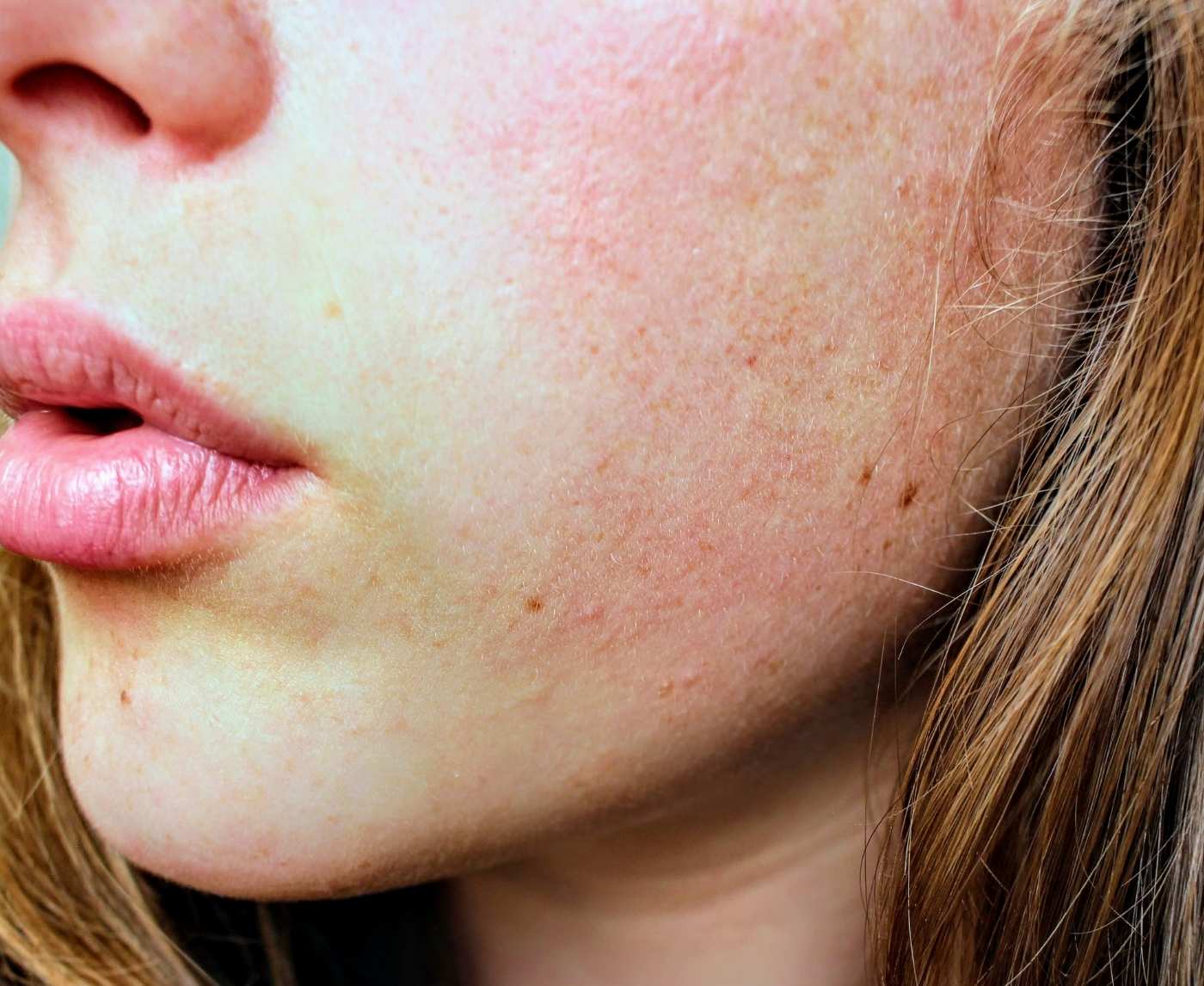

Quick Answer: STD-related rashes, especially from herpes, syphilis, or HPV, can mimic razor burn, allergies, or ingrown hairs. If symptoms persist, evolve, or follow sexual contact, testing is the only way to be sure.
When Razor Burn Isn’t Just Razor Burn
Janelle, 27, swore she knew the difference. “I’ve been shaving since I was 14,” she said. “I know what an ingrown hair looks like.” But this time, the redness didn’t fade. It spread. Then came the stinging, followed by two small blisters that she thought were from her leggings. By the time she made it to a clinic, the provider gently told her it was likely genital herpes.
This kind of story isn’t rare. Shaving, waxing, sweating, and sex, all activities that involve friction or skin disruption, can create skin irritation. But STDs can produce symptoms that overlap with everyday skin issues, especially in the early stages. Redness, itching, tiny cuts or “paper tear” lesions, even a single pimple can mean wildly different things depending on the context.
Here’s the kicker: many people with STDs experience mild or no symptoms. But when they do, the first sign is often a skin reaction that looks like something else entirely.
The Rash Confusion Trap: How STD Skin Symptoms Get Misread
When you’re staring at a red bump on your groin, your brain tries to make sense of it fast. Is it new? Does it hurt? Did it show up after shaving or after sex? Your mental checklist can help, but it can also lead you down the wrong path. STD rashes are famous for being deceptive.
Take herpes, for instance. Many people expect a “classic” outbreak, clusters of painful blisters. But early outbreaks can look like nothing more than irritated skin or a small cut. Others might feel burning or itching before any visible mark shows up. Syphilis often starts as a single, painless sore that many mistake for a pimple or even a shaving nick. HPV can appear as a tiny skin tag or flat wart, easily ignored.
Compare that to an allergic reaction, which might cause patchy redness, dry skin, or hives, often accompanied by itching. Or a heat rash, which appears as red dots or tiny pustules in sweaty areas. Ingrown hairs usually hurt slightly and have a visible hair trapped inside. But not always. And not reliably enough to make a medical decision based on looks alone.
To help illustrate how similar these skin issues can appear, here’s a comparison table you can reference if you're trying to decode what you’re seeing, or feeling.
| Condition | Appearance | Common Symptoms | Timing | Clue It Might Be an STD |
|---|---|---|---|---|
| Ingrown Hair | Red bump, visible hair inside, slight swelling | Minor pain, tenderness, occasional pus | Within 1–2 days of shaving | Usually isolated, not itchy or recurring |
| Allergic Reaction | Red patches, rash, dry or scaly skin | Itching, burning, spreading with contact | After using new product or detergent | No blisters or sores; improves with antihistamines |
| Herpes | Small blisters or painful red bumps | Burning, tingling, or pain before visible symptoms | 2–12 days after exposure; can recur | Blisters rupture into open sores; often cluster |
| Syphilis | Painless ulcer or flat red rash | Often no pain; may go unnoticed | 10–90 days post-exposure | Does not respond to topical creams |
| HPV | Flesh-colored warts, flat or raised | Often no symptoms at all | Weeks to months after exposure | Persistent growths that don’t heal |
Table 1. Rash and bump comparison across common causes. Use this to guide concern, not to self-diagnose. Only testing can confirm an STD.
People are also reading: What Happens After a Positive Syphilis Test, And What You Shouldn’t Do
Why Guessing Delays Treatment, and Increases Risk
Let’s be blunt. If it’s just an ingrown hair or a reaction to your new laundry detergent, great. But if it’s an STD, pretending it isn’t doesn’t make it go away. And waiting too long can make things worse, for you and your partner(s).
Herpes outbreaks are most contagious during symptoms, but virus shedding can still occur when you feel fine. Syphilis progresses silently and can cause long-term damage if untreated. HPV can be passed through skin contact even without visible warts. All of these can be managed, treated, or monitored, but only once you know what you’re dealing with.
There’s also the emotional toll. Many people live with low-level anxiety for weeks, googling images and second-guessing every itch. That kind of stress is its own form of harm. You deserve clarity. You deserve relief. And that starts with a test, not a guess.
Case Study: “I Thought It Was Just a Friction Burn”
Luis, 33, had recently started dating someone new. After a weekend getaway, he noticed redness on his inner thigh that stung in the shower. “I figured it was from walking around all day in jeans,” he said. But the spot turned into a sore. Then two. He hesitated to say anything to his partner, afraid of ruining things. A week later, she texted him a photo of a similar spot.
They tested together. It was herpes simplex virus type 2 (HSV-2). The diagnosis stung, but the worst part, Luis said, was waiting in silence and wondering if he'd messed up somehow. “Honestly, getting the result was less scary than all the time I spent overthinking it.”
The lesson? Testing doesn’t make something true. It just makes it known. And once it’s known, you can do something about it.
Check Your STD Status in Minutes
Test at Home with Remedium6-in-1 STD Test Kit
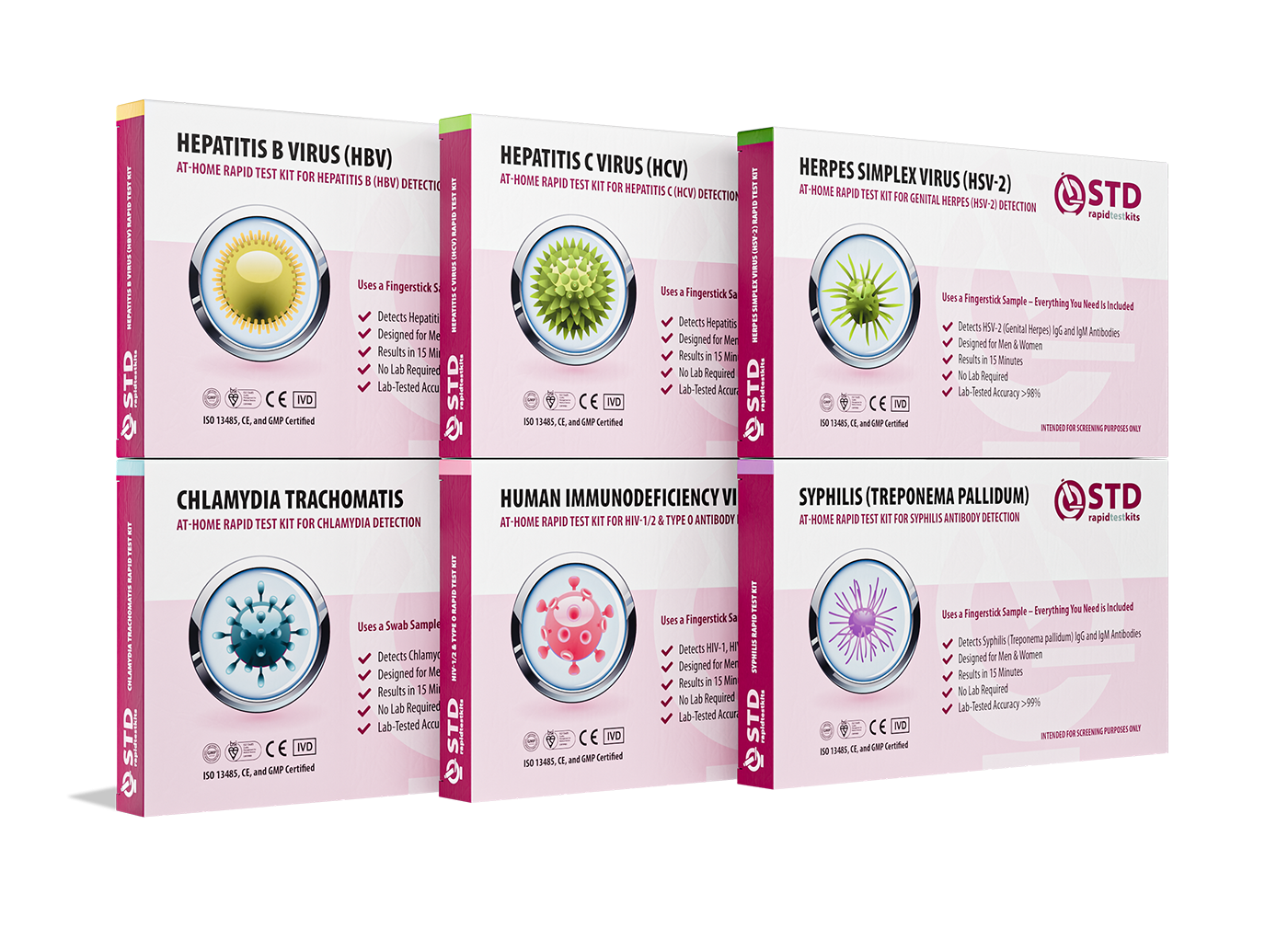
 For Men & Women
 Results in Minutes
 No Lab Needed
 Private & Discreet
Order Now $119.00 $294.00
For all 6 tests
When Should You Get Tested for an STD Rash?
If you’re staring at a bump right now, timing your test correctly can be the difference between peace of mind and a false negative. Unfortunately, many people test too early, especially after a scary hookup or a sudden rash, and end up in a confusing cycle of negative tests and lingering fear.
Here’s what you need to know: different STDs have different window periods. That’s the time between exposure and when a test can reliably detect the infection. If you test during this window, your results may be falsely negative even if you’re infected. This is why symptoms matter, but so does the calendar.
Here’s a table that shows when STD rashes might appear and when testing is likely to be accurate.
| STD | First Rash Symptoms May Appear | Best Time to Test | Notes |
|---|---|---|---|
| Herpes (HSV-1/2) | 2–12 days post-exposure | 2–3 weeks after exposure | Swab blisters immediately if present; blood test for antibodies if not |
| Syphilis | 10–90 days (avg. 21 days) | 3–6 weeks for blood test accuracy | Early sores may appear without pain and go unnoticed |
| HPV | 1–8 months | Warts may be visually diagnosed; no at-home test | Testing limited to cervical HPV screening in clinics |
| Chlamydia & Gonorrhea | Rarely cause skin rash | 1–2 weeks post-exposure (NAAT) | Still worth testing if exposure occurred |
Table 2. Typical timing of rash symptoms and testing accuracy. Always retest if symptoms persist but your first test was negative.
Can You Test at Home for These Symptoms?
Yes, and for many people, it’s the safest and most emotionally manageable way to get answers. At-home STD tests are designed to be discreet, fast, and accurate, especially for infections like herpes, chlamydia, gonorrhea, and syphilis. If you’re dealing with a rash or bumps, especially after a recent sexual encounter, testing for these four is a smart move.
Here’s how it typically works. You order a kit online, no in-person appointment required. You’ll provide a small sample (blood from a finger prick or a swab) and send it back if it’s a lab test, or read the results at home if it’s a rapid version. In either case, the key is to choose a trusted provider.
If you’re still in that panicked phase, sitting on the edge of your bed with your phone in one hand and a mirror in the other, here’s a grounding reminder: getting tested doesn’t change who you are. It just gives you information. And that information can quiet the noise in your head.
STD Rapid Test Kits offers FDA-approved at-home tests with fast, discreet shipping. You can order a combo test kit that checks for multiple STDs in one go, especially helpful if your symptoms are unclear.
When It’s Time to Retest (Even If You Already Did)
If you tested negative after noticing a rash, but that rash hasn’t gone away or is getting worse, it’s time to consider retesting. Sometimes the first test is done too early in the window period. Other times, people test for the wrong infection. Or they focus only on STDs with discharge (like chlamydia) and ignore skin-based infections like herpes or HPV.
Gabriela, 22, had a dry, itchy patch near her thigh that she assumed was eczema. A clinic gave her a swab test for gonorrhea and chlamydia, both came back negative. But weeks later, she had another flare-up, and this time a nurse practitioner recommended a herpes antibody test. “That’s when I found out,” she said. “The rash had nothing to do with discharge or pain. It was just my immune system reacting.”
Bottom line? If your body is still sending you signals, listen. Retesting is a sign of care, not panic. It means you’re giving your body a second opinion, one with better timing.
What If It’s Not an STD at All?
That’s the part everyone forgets to say: sometimes, it really isn’t an STD. Maybe your shaving technique caused microtears. Maybe you reacted to scented laundry detergent or a new soap. Maybe you’ve been sitting in sweaty gym shorts too long and gave yourself a textbook case of folliculitis. You’re allowed to hope it’s nothing serious, just don’t assume it is until you’ve ruled out what it could be.
When symptoms don’t go away with creams or time, or when they come back in patterns, it’s often worth investigating deeper. Some autoimmune conditions, like lichen planus or psoriasis, can affect the genital area. Other skin issues, like contact dermatitis, fungal infections, or eczema, can mimic STD symptoms almost perfectly.
But guess what: even in those cases, getting tested helps. Why? Because you’ll know it’s not herpes, not syphilis, not chlamydia, and that narrows down your next steps. You don’t have to carry the weight of “what if” forever.
Peace of mind isn’t a luxury. It’s a health tool.
Testing Discreetly: Privacy, Shipping, and Getting Support
Let’s be real, some people avoid testing not because they don’t want to know, but because they don’t want anyone else to know. Maybe you live with roommates. Maybe you don’t want it showing up on your insurance. Maybe your town is too small and your clinic too familiar.
At-home testing removes those barriers. Kits arrive in plain, unmarked packaging. Instructions are simple and private. You don’t have to explain anything to anyone, not a pharmacist, not a receptionist, not even a partner until you’re ready. Your results go to you and only you.
And if you test positive? Support doesn’t disappear. You’ll receive guidance on next steps, how to treat, how to disclose to partners, how to manage symptoms, and how to avoid reinfection. Some platforms even offer telehealth options or printable lab orders for confirmatory tests if needed.
You deserve safety, physically and emotionally, while seeking answers. Discreet testing makes that possible, without shame or exposure.
If It’s Positive: Don’t Panic, Plan
Let’s say it is herpes. Or syphilis. Or something else you hoped it wasn’t. Take a breath. Most STDs are either treatable, manageable, or both. What feels like the end of the world in the moment is often the beginning of a better-informed life.
Rami, 29, got his first herpes outbreak after a month of dating someone he liked. “I was devastated,” he said. “I thought it meant I’d never have sex again, that no one would want me.” But his doctor helped him understand antiviral treatment. He learned how to manage symptoms, disclose with confidence, and still have a healthy sex life. “It honestly forced me to become a better communicator,” he said. “I stopped guessing what other people felt and started asking.”
A positive result doesn’t define your worth. It doesn’t erase your history or cancel your future. What it does is give you tools. To treat. To talk. To plan your next move.
And if you’re not sure what to do next? That’s okay too. Start with this: test your partner or encourage them to test, especially if symptoms are new or unclear. Health is shared, and action creates clarity, for both of you.
People are also reading: Can You Get an STD From Clothes? Sorting Fact From Fear
How to Talk to a Partner About Skin Symptoms
This part might feel harder than any test. But honesty, especially when delivered with compassion, can build more intimacy than it breaks. If you’ve noticed a rash or bump and you’re not sure what it is, saying so doesn’t make you reckless. It makes you brave.
You don’t have to accuse, confess, or spiral. You can say something simple: “I noticed something weird on my skin. I’m getting it checked out, and I think we should both test to be safe.” Framing it as shared care, not blame, changes everything.
If you’ve already tested positive and need to inform someone else, you can still lead with respect. Resources like anonymous partner notification services or written message templates can help. You can even test together, turning an awkward moment into an act of mutual responsibility.
Testing isn’t betrayal. It’s protection. It says: I care about your health, and mine, too.
Check Your STD Status in Minutes
Test at Home with Remedium7-in-1 STD Test Kit
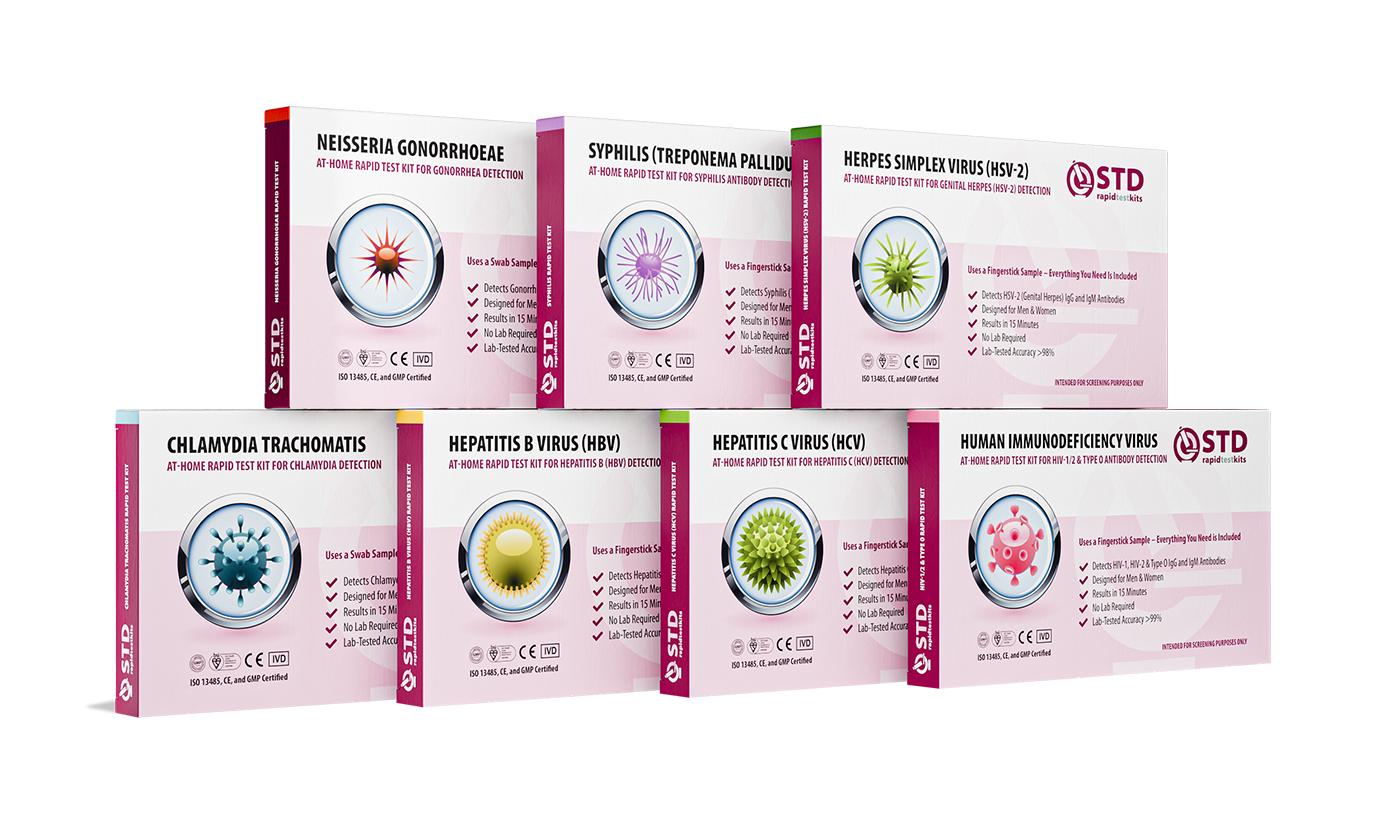 For Men & WomenResults in MinutesNo Lab NeededPrivate & Discreet
Order Now $129.00 $343.00
For all 7 tests
Why Skin Symptoms Deserve Just as Much Attention
In the world of sexual health, too much focus gets placed on discharge, pain, or bleeding, and not enough on what’s visible. Skin is your largest organ. It responds to stress, hormones, friction, and infection. A bump is never “just a bump” until you’ve ruled out everything else it could be.
Herpes and HPV in particular have long been shrouded in shame because their symptoms show on the outside. But that visibility is also their greatest opportunity: you can notice them early. You can interrupt transmission. You can get treatment before things escalate.
Don’t let embarrassment stop you. A rash doesn’t mean you’re dirty. A test doesn’t mean you’re guilty. These are just the tools your body and your brain use to protect you, and the people you care about.
And remember: it’s okay to hope it’s nothing. It’s just not okay to assume it is.
FAQs
1. Can herpes really look like razor burn?
Oh yes, and that’s the problem. Herpes doesn’t always show up as textbook blisters. Early outbreaks can look like small red bumps or irritated skin, especially after shaving or sex. If it tingles, stings, or comes back in the same spot, it’s worth testing.
2. I only saw one bump. Could it still be an STD?
Totally possible. Herpes and syphilis don’t always show up as multiple lesions. One lonely bump or sore, especially if it doesn’t go away, gets crusty, or stings, can still be a sign. You don’t need a cluster to need a test.
3. What’s the difference between an ingrown hair and an STD bump?
Ingrown hairs are usually shallow, tender, and you can often see the hair trapped under the skin. STD bumps might not have a hair and could blister, ulcerate, or just… hang around too long. If it doesn’t fade after a week or it gets worse, don't play dermatologist, get tested.
4. Could it be an allergy or reaction instead?
For sure, especially if you used a new soap, detergent, lube, or shaved with a dull blade. Allergic rashes tend to itch like crazy and show up in blotches or dry patches. But here’s the catch: allergic rashes usually calm down fast with antihistamines or skin cream. If yours doesn’t? You know the drill.
5. Can I have an STD even if my test was negative?
Yep. It depends on when you tested and what kind of test it was. Test too early, and your body might not show the infection yet. It’s like taking a pregnancy test the day after sex, it’s just too soon. If your symptoms stick around, retest in a couple of weeks.
6. Do herpes bumps always hurt?
Surprisingly, no. Some people get very painful sores, but others feel a mild itch or notice a tiny bump and that’s it. That’s why herpes gets passed around so easily, people think no pain means no problem. Not true.
7. Is it possible to get an STD without having full-on sex?
Absolutely. Skin-to-skin contact can spread herpes and HPV even without penetration. Oral sex can transmit syphilis, gonorrhea, and herpes, too. Basically, if bodies are touching in intimate places, there’s risk. Condoms help, but nothing’s foolproof.
8. How long after exposure should I test for a rash-related STD?
Aim for two to three weeks if you’re checking for herpes or syphilis. That gives your body time to show signs. But if you’ve got active sores now, swabbing them immediately is even better. Think of it like catching a criminal at the scene, it’s the most direct evidence.
9. What if my rash isn’t an STD at all?
Then good! Rule-outs are just as powerful as rule-ins. Maybe it’s friction, allergies, sweat rash, or even eczema. Testing helps you know, and knowing puts you in charge. No shame in being cautious. Your skin’s talking. You’re just listening.
10. How many STDs should I test for if I’m not sure what this rash means?
Go broad. A combo test kit that covers herpes, syphilis, chlamydia, and gonorrhea gives you a solid foundation. If you’ve had multiple partners or symptoms don’t match one infection, casting a wider net makes sense. Think of it as a health reset button.
You Deserve Answers, Not Assumptions
You don't have to guess about your health. Your body deserves to be taken seriously, whether you have an ingrown hair, an allergic reaction, or something worse. Your skin is asking for attention when it gets a bump, rash, or sting. You can respond with curiosity, not fear.
Don’t wait and wonder. Order an at-home combo test kit and get clarity on your terms. It’s private, fast, and empowering. The sooner you know, the sooner you can breathe easy again.
How We Sourced This Article: We combined current guidance from leading medical organizations with peer-reviewed research and lived-experience reporting to make this guide practical, compassionate, and accurate.
Sources
1. CDC – Genital Herpes Factsheet
2. Planned Parenthood – What Is Syphilis?
3. American Academy of Dermatology – Common Rashes
4. Diseases Characterized by Genital, Anal, or Perianal Ulcers | CDC
5. Ingrown Hair or Herpes: How to Tell the Difference | Healthline
6. Herpes Skin Rash: Identification, Location, and Differential | Medical News Today
About the Author
Dr. F. David, MD is a board-certified infectious disease specialist who works to stop, diagnose, and treat STIs. He blends clinical precision with a no-nonsense, sex-positive approach and is committed to expanding access for readers in both urban and off-grid settings.
Reviewed by: Dr. Melissa Hayes, MD | Last medically reviewed: December 2025
This article is for informational purposes and does not replace medical advice.


