





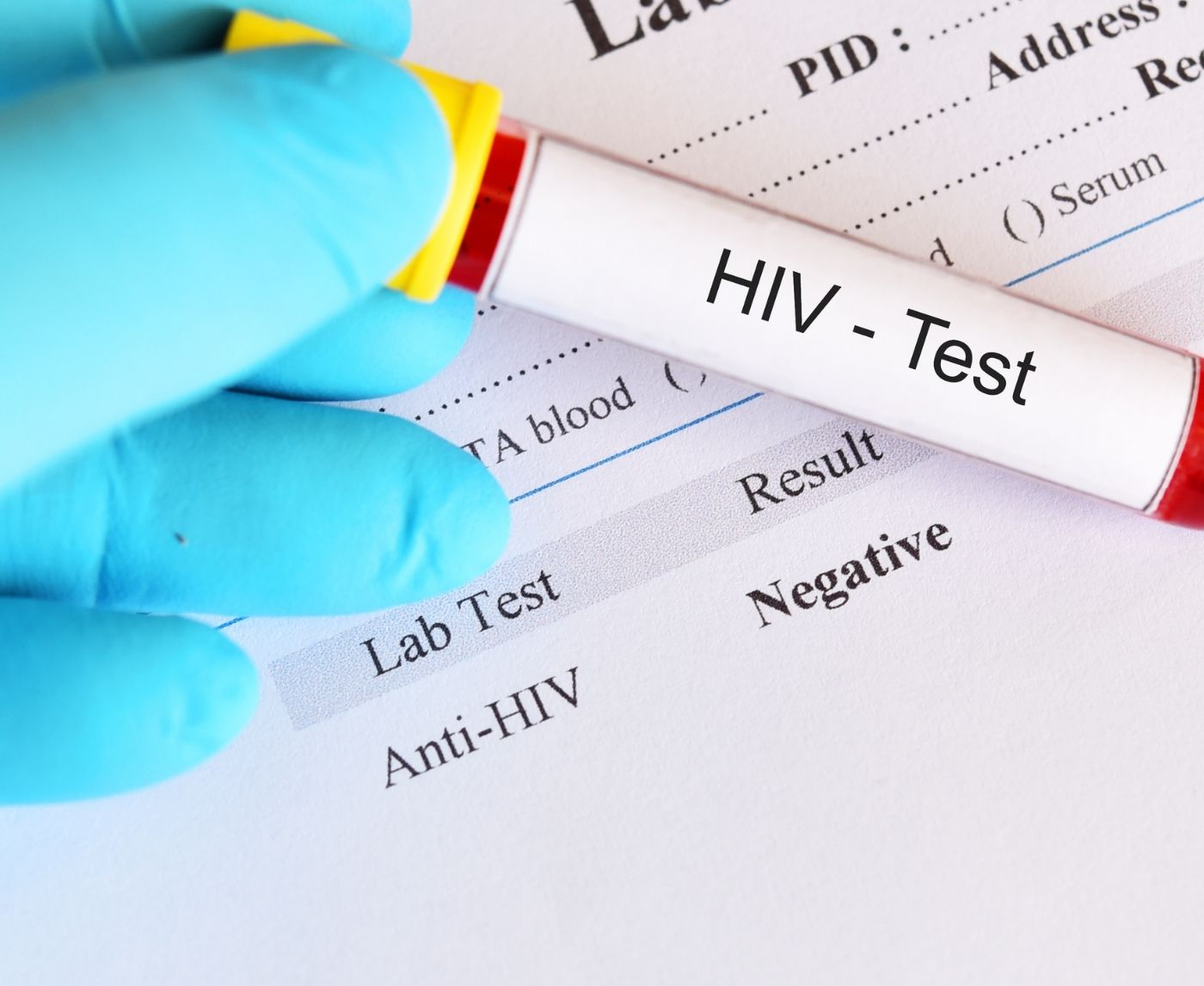

Quick Answer: Discharge can persist despite negative STD test results, due to timing inconsistencies, non-STD infections like bacterial vaginosis or yeast, hormonal variations, or false negatives. If the symptoms don't go away, you may need to be tested again or have a more thorough screening.
When Symptoms Don’t Match the Results
It's strange and unsettling to get clear test results when your body is sending a different message. For many, discharge is the first red flag that prompts testing. So when that warning light stays on after the all-clear, it’s natural to question everything, your tests, your providers, your own gut instincts.
Take Luis, for example. After a hookup that included unprotected oral, he noticed a thick, milky discharge within a week. He panicked, got tested at a clinic, and waited. Everything came back negative. But the discharge kept coming. “I thought maybe I was imagining it,” he later said. “Or worse, that it was something they just didn’t catch.”
This situation is more common than you might think. There are several reasons discharge can linger, flare up, or even appear out of nowhere, completely independent of an STD diagnosis.
Could the Tests Be Wrong? A Deep Dive into False Negatives
Let’s get one thing straight: no STD test is perfect. Even gold-standard diagnostics like NAAT (nucleic acid amplification tests) can produce false negatives if used too early, or if the sample collection misses the infected site. And for STDs like trichomoniasis, which often requires a swab or more sensitive methods, rapid tests may simply miss the infection altogether.
Timing plays a huge role here. If you test too soon after exposure, say, within 1 to 3 days, the pathogen may not have replicated enough to be detectable. This is called the “window period,” and it’s a common trap for people desperate for fast answers. Retesting at the right interval is often the missing piece.
| STD | Usual Window Period | When Retest Is Advised |
|---|---|---|
| Chlamydia | 7–14 days | After 14–21 days if symptoms persist |
| Gonorrhea | 7–14 days | After 14–21 days if initial test was early |
| Trichomoniasis | 5–28 days | After 14+ days with sensitive swab-based test |
| HIV | 10–33 days (NAAT) or 2–6 weeks (Ag/Ab) | Retest at 6 weeks, then 3 months |
Table 1. Common STD window periods and recommended retesting timelines if symptoms continue despite negative results.
If your discharge started shortly after a new sexual encounter, and your test was within the early part of that window period, you may have tested too soon. It doesn’t mean your test was wrong, it may have just been premature.
That’s why many sexual health experts, including those at the CDC, recommend retesting after 14 days if symptoms persist, or immediately if they worsen.
People are also reading: Can You Get an STD from a Public Toilet? Here’s the Truth
Other Infections That Can Look, and Feel, Like STDs
Let’s say your timing was perfect, your test was accurate, and your exposure risk was low, but the discharge hasn’t stopped. Now it’s time to widen the lens.
Not all discharge is caused by sexually transmitted infections. In fact, the most common causes of abnormal discharge are often non-STDs like bacterial vaginosis (BV) and yeast infections. These can occur spontaneously or after any disruption to the vaginal flora, including new sexual partners, douching, antibiotic use, or hormonal shifts.
What’s tricky? These infections are rarely part of standard STD panels. You might get tested for gonorrhea and chlamydia, but not BV or yeast, unless you specifically ask or your provider swabs for it. That’s how people end up with “negative” results but ongoing symptoms.
Another culprit: urinary tract infections (UTIs) or even non-specific urethritis (NSU) in men. These can cause burning, discharge, or discomfort without being picked up by a typical STD screen.
| Condition | Likely Symptoms | Appears on STD Panel? |
|---|---|---|
| Bacterial Vaginosis | Thin gray/white discharge, fishy odor | No (requires vaginal swab) |
| Yeast Infection | Thick white discharge, itching, swelling | No (requires fungal culture or swab) |
| UTI | Burning with urination, urgency, cloudy urine | No (requires urine culture) |
| Non-Specific Urethritis (NSU) | Clear or white discharge, especially in men | Sometimes missed (diagnosed by exclusion) |
Table 2. Common non-STD causes of discharge that require separate testing methods outside standard panels.
This is where advocacy matters. If your provider says everything looks normal but your symptoms are clearly not, don’t be afraid to ask: “Could it be BV, yeast, or something that wasn’t tested?” A swab, wet mount, or urine culture might be the missing puzzle piece.
Check Your STD Status in Minutes
Test at Home with Remedium7-in-1 STD Test Kit
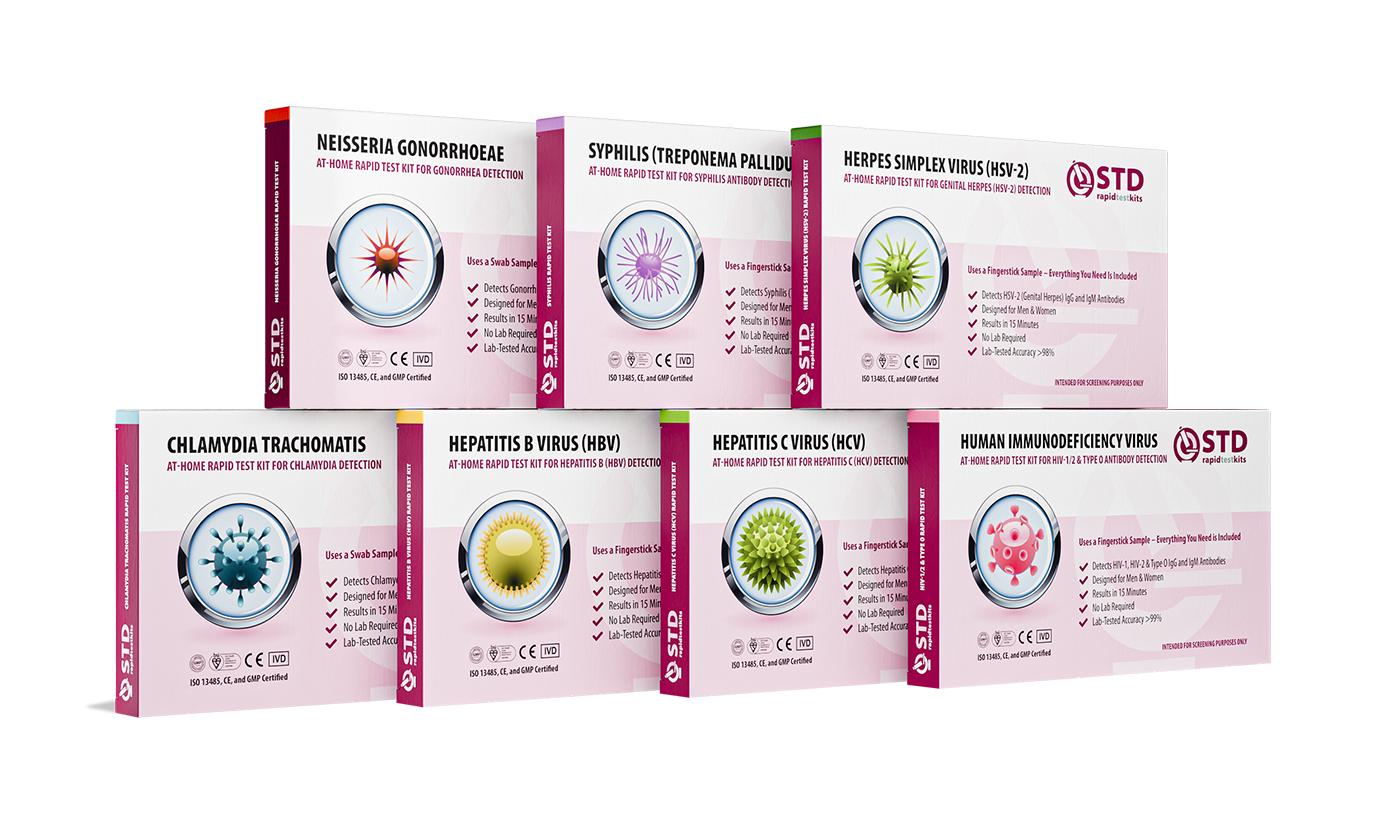
 For Men & Women
 Results in Minutes
 No Lab Needed
 Private & Discreet
Order Now $129.00 $343.00
For all 7 tests
It’s Not Always Infection: Hormones, Stress, and the Role of Your Cycle
Not every discharge mystery leads back to infection. For many people, especially those with vulvas, changes in discharge can be entirely hormone-driven. Ovulation, pregnancy, perimenopause, starting or stopping birth control, and even high-stress periods can all shift vaginal secretions in color, consistency, and volume.
Consider Andrea, who noticed an egg-white type of discharge two weeks after a breakup. She hadn’t had sex in months, tested negative for STDs earlier that year, and still worried something was wrong. “It felt so out of the blue,” she said. But her provider explained it was a classic ovulation pattern, her body adjusting after stopping her birth control pill and moving through emotional stress at the same time.
Estrogen plays a major role in mucus production. Around ovulation, discharge often becomes more clear, stretchy, and noticeable. In early pregnancy, some people experience more creamy or sticky discharge due to progesterone. Hormonal IUDs, emergency contraception, or even switching to a new pill can throw the whole system out of rhythm.
On the flip side, stress can activate your adrenal glands in a way that shifts hormone output, sometimes causing vaginal dryness, sometimes triggering a flood of clear discharge that mimics infection. None of these are inherently harmful. But when you’re already anxious and searching for answers, they can feel terrifyingly out of place.
If your discharge is odorless, colorless, doesn’t itch or burn, and seems to follow a cycle, it may not be a problem at all. Still, trust your instincts. You know your body’s normal. And if this is not it, don’t gaslight yourself into silence.
When Retesting Is the Smartest Next Move
There’s a reason so many clinics recommend a follow-up test even when the first one is negative. Retesting gives clarity over time. It accounts for late bloomers, those infections that take longer to show up, or user error, like not swabbing deeply enough or misreading a faint result line.
Re-testing is especially important for STDs like trichomoniasis or herpes, where detection often depends on symptom visibility or test sensitivity. Rapid tests may miss low-level infections. Mail-in tests might suffer in accuracy if the sample wasn’t collected precisely. And even lab tests can fail if taken at the wrong site (oral instead of genital, or vice versa).
If it’s been two weeks since your exposure, or since your symptoms began, and you’re still dealing with discharge, a repeat test is both reasonable and medically sound. It's not “overreacting.” It’s protecting your body and your peace of mind.
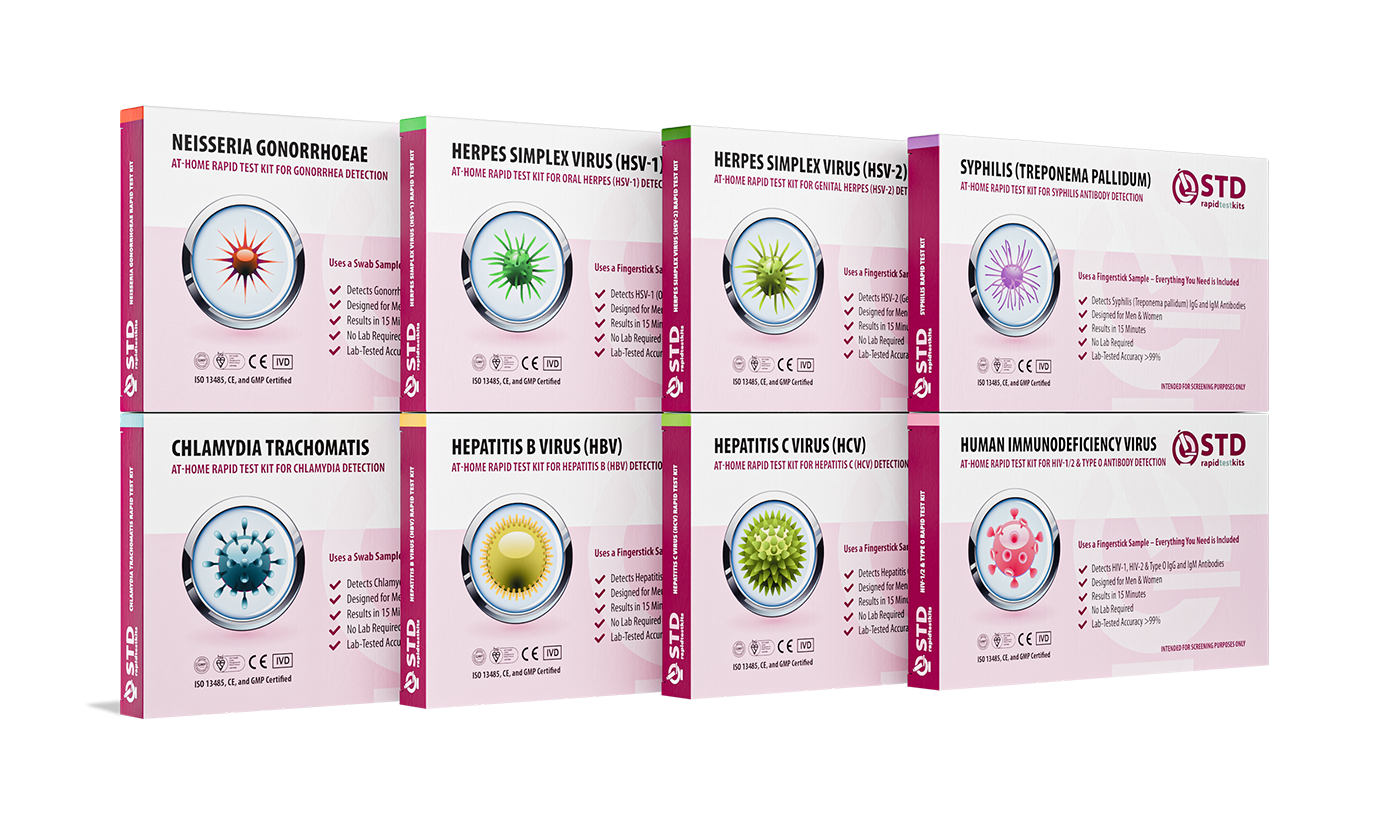
If your initial test was an at-home rapid kit, consider retesting with a lab-verified combo panel. These often include chlamydia, gonorrhea, trich, syphilis, HIV, and hepatitis B/C. You can order a discreet kit that ships in plain packaging and includes all the instructions you need.
Don't wait and wonder, get the clarity you deserve. This at-home combo test kit checks for the most common STDs discreetly and quickly.
The Emotional Toll of Not Knowing
There’s something quietly brutal about walking around with a symptom your tests don’t validate. It’s the medical version of gaslighting, when your experience doesn’t line up with the data, you start to doubt yourself. Is this in my head? Am I being dramatic? Should I just wait it out?
But these questions don’t come from nowhere. They come from a culture that still treats STDs as taboo, symptoms as shameful, and female or queer pain as less urgent. We hear it in the exam room: “Well, your tests are normal, so you’re probably fine.” We see it in online forums, flooded with people asking each other for help because they weren’t taken seriously elsewhere.
Here’s the truth: You deserve answers. And more importantly, you deserve to be believed when you say something isn’t right.
Your discharge is not just discharge. It’s communication. It may be hormonal, infectious, microbiome-related, or just cyclical. But it’s not imaginary. And if it’s persistent, smelly, painful, or causing you distress, it’s worth more than a pat on the back and a “just monitor it.”
Sometimes the best next step is asking for a swab. Other times, it’s starting probiotics, switching birth control, or doing a repeat test with a wider panel. The goal is not perfection, it’s peace of mind.
When to Ask for Additional Testing (Even If It’s Awkward)
It’s okay to advocate for yourself. If your clinic only ran a chlamydia/gonorrhea panel, ask: “Can you also test for trich, BV, and yeast?” If your provider brushed off your symptoms because you “look fine,” say: “I’d still like to rule some things out.”
Many providers now offer wet mount microscopy, pH testing, culture swabs, or extended panels that check for the infections standard STD tests miss. Others may refer you to a specialist, like a GYN, urologist, or infectious disease expert, if the problem doesn’t resolve with time or first-line treatment.
And yes, there are even situations where autoimmune or dermatologic conditions can mimic STD symptoms. Lichen sclerosus, eczema, and even psoriasis can cause discharge, burning, or irritation. That doesn’t mean STD testing was a mistake, it means your body deserves a second look with a different lens.
Don’t settle for silence just because your test came back “normal.” Normal is not the same as resolved.
People are also reading: Toilet Seats, Towels, and STDs: What You Really Need to Worry About
At-Home Tests vs. Lab Testing: Are You Using the Right One?
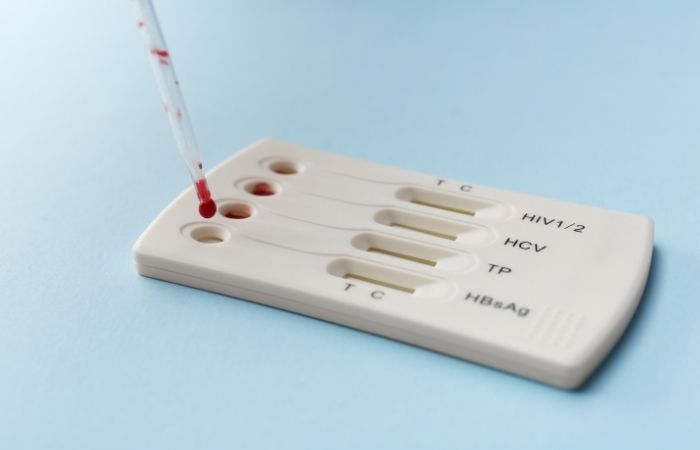
There are different kinds of tests, and if you're having a lot of discharge, the kind of test you took might be more important than you think. A lot of people use rapid at-home kits because they are quick and private, but they have some problems, especially when symptoms are mild or infections are harder to find, like trichomoniasis or herpes.
For example, rapid tests often rely on antibody detection, which can miss early-stage infections. Meanwhile, NAAT or PCR lab tests look for genetic material from the pathogen itself, meaning they can catch an infection much sooner, and with greater precision. But even lab tests can fail if taken at the wrong site or too early in the infection timeline.
Let’s break it down:
| Test Type | Privacy | Sensitivity | Best For |
|---|---|---|---|
| At-Home Rapid Test | Very High | Moderate to High | Quick answers when symptoms are clear |
| Mail-In Lab Test | High | High (NAAT/PCR) | Full panel with better accuracy |
| Clinic-Based Lab Test | Low to Moderate | Very High | Complex or unresolved symptoms |
Table 3. Comparing test types based on privacy, sensitivity, and ideal use case for those experiencing discharge or unclear symptoms.
If you originally used a rapid test and your symptoms haven't gone away, retesting with a more comprehensive lab-based panel may be the best next step. You don’t need to start from scratch, you just need the right tool for the current moment.
Check Your STD Status in Minutes
Test at Home with Remedium8-in-1 STD Test Kit
 For Men & WomenResults in MinutesNo Lab NeededPrivate & Discreet
Order Now $149.00 $392.00
For all 8 tests
When It’s Time to Stop Second-Guessing Yourself
By the time Tasha got her third negative result in two months, she wasn’t even relieved, just exhausted. She had discharge. Not just a little. Not the “normal” kind the nurse described. It was stretchy one week, chunky the next, and once it turned yellowish with a smell she couldn’t even explain. But every test said “negative.” Every visit ended with “monitor it for now.” And every time she left the clinic, she felt a little more invisible.
This isn’t rare. So many people sit in that exact same waiting room of confusion. You’re told the tests are clear, that there’s no infection. But you know your body. You know something’s different. And while yes, testing can be flawed, and hormones can wreak havoc, what often gets missed is the emotional toll of being stuck in between. Not sick enough to treat. Not clear enough to move on.
If that’s where you are? You're not alone. And you're not crazy for wanting answers that feel more satisfying than “just observe.” If your discharge is bothering you, physically or emotionally, it deserves to be addressed, whether it ends up being trich, BV, hormonal shifts, or something you can’t yet name.
This isn’t about being a hypochondriac. It’s about having agency over your health. It’s about recognizing that “negative” doesn’t always mean “nothing.” Sometimes it just means “not that thing” or “not yet detectable.” The point isn’t to panic. It’s to stay curious. Keep asking. Keep tracking. Keep testing. Because the only thing worse than a positive result is being dismissed with a false sense of certainty.
With that in mind, let’s clear up some of the most common questions about discharge and false negatives, because Google doesn't always tell the whole story.
FAQs
1. Why would I still have discharge if all my STD tests came back negative?
Because your body isn’t a math equation, it’s a complex, hormonal, microbe-filled system that doesn’t always follow the textbook. Discharge can stick around for all sorts of reasons: from a yeast imbalance to a recent antibiotic, from stress hormones to a missed test window. A negative result doesn't mean you're making it up. It just means it's time to look a little deeper.
2. Could my test have missed something?
Yes, especially if it was done too soon, didn't cover the right areas (oral, rectal, vaginal), or wasn't sensitive enough to find certain infections like trichomoniasis or herpes. Your first test is like a picture. You may need a few more frames to see the whole picture.
3. How long should I wait before retesting?
If you tested right after a new partner or symptoms first showed up, waiting 14–21 days before retesting is a smart move. It gives any potential infection time to become detectable. And no, that doesn’t mean you’re “paranoid”, you’re being thorough. That’s smart health behavior, not drama.
4. Could this just be BV or a yeast infection?
Absolutely. In fact, BV is the most common vaginal infection in people with vulvas, and it’s rarely included in standard STD panels. Same goes for yeast. If your discharge is thick, itchy, or smells a little “off” (like fish, bread, or metal), that’s a strong hint. These can happen even if you haven’t had sex in ages.
5. Can stress actually cause discharge?
Totally. Your brain and your vagina are in constant conversation (even if it’s a weird one). Stress can mess with estrogen levels, disrupt your vaginal flora, and make discharge either dry up or crank up. It's not “all in your head,” but it can absolutely start there.
6. I told my doctor but they said everything’s normal. What now?
If your provider dismissed you with a “you’re fine” but your underwear says otherwise, ask for a second opinion. You can request a swab for BV, yeast, or even a full vaginal pH panel. Or try a telehealth service that actually listens. “Normal” doesn’t mean “nothing’s wrong.” It just means they didn’t find it yet.
7. Does discharge mean I’m contagious or that I should avoid sex?
That depends. If your discharge is new, smells funky, or is paired with itching, burning, or pain, pause the sex until you get checked out. It's not about shame; it's about protecting both you and your partner. You deserve pleasure, not panic.
8. Could this be something that doesn’t show up on normal tests?
Yep. Some infections, like herpes or trich, can fly under the radar if the test is the wrong type or taken too soon. Also, most STD panels skip non-STDs like BV or yeast. So if your test didn’t include those, it might be time for round two (with better tools).
9. Are at-home STD tests reliable for stuff like this?
They can be! But not all are created equal. Rapid tests are great for fast peace of mind, but if you're dealing with lingering discharge, you may want a mail-in lab kit that checks more infections with higher sensitivity. Don't just look at the price when choosing a test; listen to what your body is saying.
10. What if I just want this discharge to stop and get on with my life?
Then start with the next test. Retest if it's been over two weeks. Ask for BV, yeast, and trich swabs if you haven’t already. Skip douching, start a probiotic if needed, and keep advocating for yourself until your body feels like yours again. You are not crazy. You are not alone. And you will get answers.
You Deserve Answers, Not Assumptions
Your test said negative. Your discharge said something else. That contradiction can feel maddening, but it’s also a doorway. A prompt to look closer. To ask better questions. To demand more precise answers.
Discharge is never “just discharge” when it comes with fear, discomfort, or disruption. You deserve clarity, not gaslighting, whether it's a hidden infection, a hormonal surge, or an imbalance in your microbiome.
Don’t wait and wonder, get retested or expand your testing panel. STD Rapid Test Kits offers discreet, clinically reliable options for when your symptoms don’t match your results. Your body is worth listening to.
How We Sourced This Article: We combined current guidance from leading medical organizations with peer-reviewed research and lived-experience reporting to make this guide practical, compassionate, and accurate.
Sources
1. Planned Parenthood: Getting Tested for STDs
2. Vaginal discharge Causes – Mayo Clinic
3. Bacterial vaginosis – Symptoms and causes – Mayo Clinic
4. Yeast infection (vaginal) – Symptoms and causes – Mayo Clinic
5. Vulvovaginal – STI Treatment Guidelines – CDC
6. Bacterial Vaginosis (BV) – STI Treatment Guidelines – CDC
7. Vaginal Discharge Syndrome – NIH/NCBI Bookshelf
8. Vaginal Discharge – Cleveland Clinic
About the Author
Dr. F. David, MD is a board-certified infectious disease specialist focused on STI prevention, diagnosis, and treatment. He blends clinical precision with a no-nonsense, sex-positive approach and is committed to expanding access for readers in both urban and off-grid settings.
Reviewed by: A. Simmons, MPH, NP-C | Last medically reviewed: December 2025
This article is for informational purposes and does not replace medical advice.


