







Quick Answer: MG-B is a newly identified STI that mimics bacterial vaginosis (BV) symptoms and may evade routine testing. At-home STD kits that use DNA-based testing or test for Mycoplasma Genitalium may help flag it sooner, but testing options are still evolving. Partner testing and extended treatment are crucial to stop its silent spread.
A recent article by Catherine Vercuiel at MSN shed light on MG-B, a treatment-resistant strain of Mycoplasma Genitalium that's been found to linger undetected in the body while remaining sexually transmissible. Experts believe millions may already carry it unknowingly, due to its subtle or symptom-free presentation and its ability to mimic common conditions like BV. This blog dives deeper into what this means for your sexual health, especially if you rely on at-home testing or worry about recurring symptoms. We'll walk you through what counts as a test, how timing affects results, and what to do if you or your partner test positive, or never got tested at all.

People are also reading: Think You’re Safe? Why STD Testing Still Matters in Pregnancy
Who This Guide Is For (And Why It Matters)
If you’ve ever been told you just have BV again, or been given antibiotics that didn’t seem to work long-term, this article is for you. If you’ve ever experienced odd discharge, fishy odor, or itching that comes and goes with no clear answers, you’re not alone. MG-B is a wake-up call for everyone who’s been stuck in a cycle of "normal" results despite persistent symptoms.
At-home testing has opened doors for people without insurance, those who live far from clinics, or those avoiding stigma. But with a stealthy infection like MG-B now on the radar, it's clear that some infections fly under even the best testing protocols. This guide breaks down what you can still do from home, what questions to ask your provider, and how to protect your body and your partners.
Testing is not about judgment. It’s about clarity. About breaking the shame spiral and giving people tools. We'll cover what types of tests matter, when to test, how accurate they are, how to tell if your symptoms are being missed, and what at-home kits can (and can't) catch.
What Actually Counts as an STD Test?
When we say “STD test,” most people imagine a blood draw or urine cup at a clinic. But that’s only part of the picture. STDs are caused by bacteria, viruses, and parasites, each needing different tools to detect. Some tests look for the bug’s DNA (NAAT or PCR), others look for your body’s immune response (antibody testing), and rapid tests detect proteins or antigens from the infection.
For Mycoplasma Genitalium (MG), including the new MG-B strain, diagnosis depends on nucleic acid amplification testing (NAAT). This test looks for the bacteria’s genetic material, but it’s not part of most standard panels. Routine BV tests, like pH strips or microscopy, cannot detect MG-B at all. That’s a problem, especially when symptoms look nearly identical.
At-home STD kits vary in scope. Some include Mycoplasma testing, especially advanced lab-based panels. Others do not. You can browse test options directly at STD Rapid Test Kits, where discreet packages offer screening for common STDs.
Window Periods: What to Know for Each STD
It’s not just about whether you test, it’s about when. Every STD has a “window period,” which is the time between exposure and when a test can reliably detect the infection. Testing too early may give you a false negative, even if the infection is already present. That’s especially true for emerging infections like MG-B, which may not be included in standard panels and may linger undetected even longer than common STDs.
Confused by the timing? You’re not alone. The terms “window period” and “incubation period” are often mixed up. The incubation period is how long it takes for symptoms to appear (if they ever do). The window period is how long it takes before a test can detect the infection. With MG-B, symptoms might show late, or not at all, but damage to fertility or partner transmission can still happen silently.
| STD | Common Test Type | Sample | Typical Window Period | When Accuracy Peaks |
|---|---|---|---|---|
| Chlamydia | NAAT/PCR | Urine or swab | 7–14 days | 14+ days |
| Gonorrhea | NAAT/PCR | Urine or swab | 7–14 days | 14+ days |
| Syphilis | Antibody (treponemal/non-treponemal) | Blood | 3–6 weeks | 6–12 weeks |
| HIV | Ag/Ab combo or NAAT | Blood or oral fluid | 2–6 weeks (Ag/Ab), 10–33 days (NAAT) | 6–12 weeks |
| Trichomoniasis | NAAT/Rapid antigen | Swab or urine | 5–28 days | 2–4 weeks |
| Mycoplasma Genitalium (MG) | NAAT (not routine) | Swab or urine | 14–21 days | 21+ days |
Figure 1. Estimated window periods for common STDs and MG-B. Always confirm with a healthcare provider for the most up-to-date testing guidance.
Rapid Test vs Lab Test: Pros, Cons, and Tradeoffs
You’re holding a test in your hand, and your heart is pounding. It’s 2 AM. Maybe you swab, maybe it’s a drop of blood. Maybe you're mailing it off and waiting days. Each method has its strengths, and limitations. Understanding them can help you make smarter choices.
At-home rapid tests give results in minutes and protect privacy, but may miss early-stage infections or those not included in the panel. Mail-in lab kits use higher-grade tools and may detect more subtle infections, like MG-B, especially if they include NAAT. Clinic tests may offer the most accuracy, especially when symptoms are present or complications are suspected, but come with time, travel, and sometimes judgment.
| Method | Privacy | Speed | Sensitivity/Accuracy | Good Fit When |
|---|---|---|---|---|
| At-Home Rapid | Very high | Minutes | Moderate–High | You need fast reassurance and privacy |
| Mail-In Lab | High | 1–3 business days | High | You want lab-grade accuracy without a clinic visit |
| Clinic Visit | Low–Moderate | Same-day to several days | Very high | You have symptoms, need MG-B testing, or follow-up care |
Figure 2. Comparison of testing methods for privacy, speed, and accuracy. MG-B detection typically requires lab-based NAAT, which may not be available in all kits or clinics.
When to Test After Exposure
If it’s been less than 5 days since exposure, most STDs, including MG-B, likely won’t show up on a test yet. If you're panicking, we get it. But waiting at least 7 days improves the odds of catching something. At 14 days, most bacterial STDs become reliably detectable. MG-B may require even longer, especially if you're using a test that doesn’t screen for it directly.
Consider this: Alana, 28, tested after a one-night stand because of unusual discharge and smell. Her BV test came back “normal,” but symptoms kept returning. It wasn’t until a specialist ran a DNA-based test that she was diagnosed with Mycoplasma Genitalium. Now, she and her partner are both undergoing treatment.
The takeaway? Test once, then again if symptoms persist. Ask about Mycoplasma testing. If the kit or clinic doesn’t include it, consider retesting with a more comprehensive option.
If your head keeps spinning, peace of mind is one test away. This combo home test kit offers discreet, lab-grade results for multiple STDs.
Check Your STD Status in Minutes
Test at Home with Remedium3-in-1 STD Test Kit
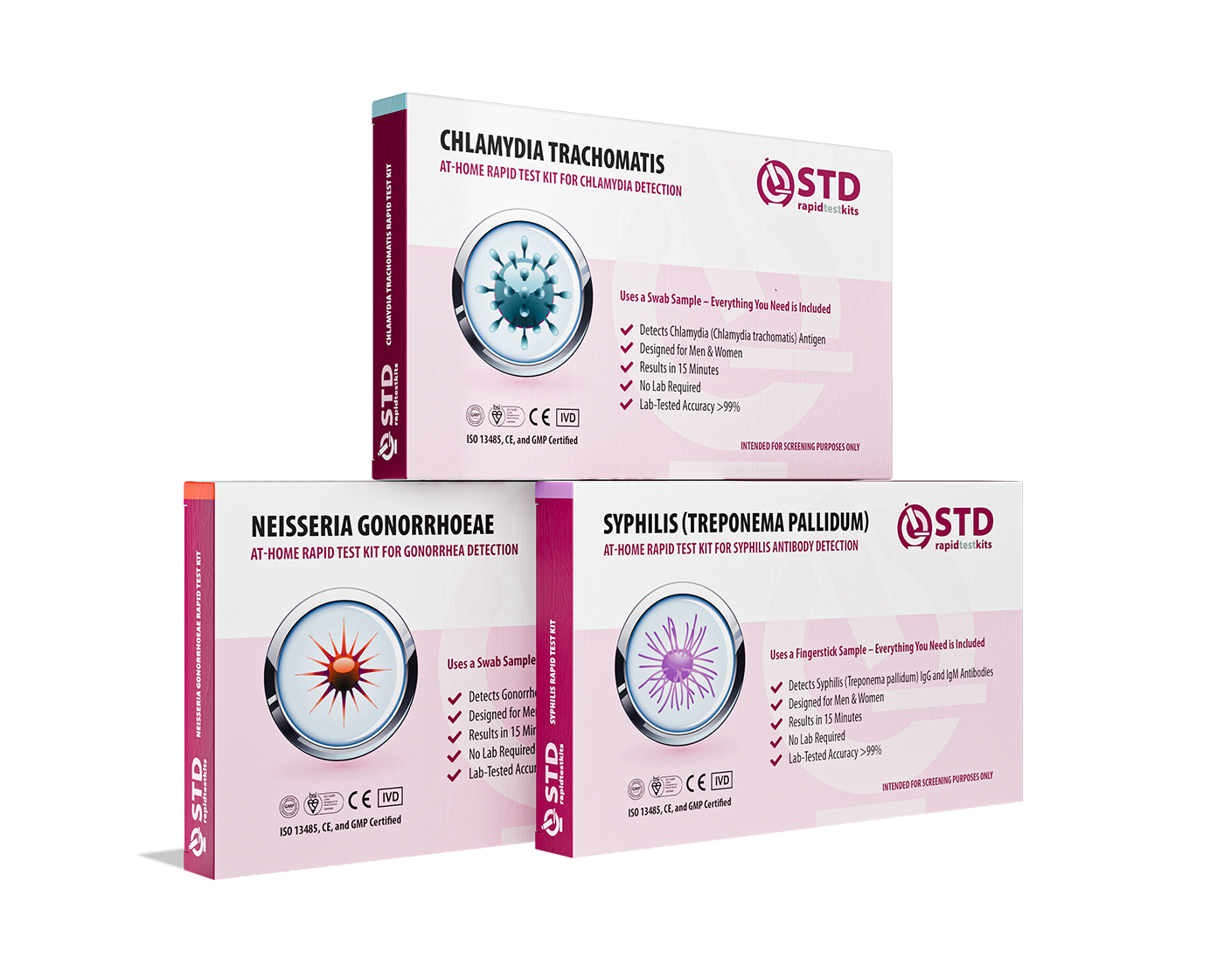
 For Men & Women
 Results in Minutes
 No Lab Needed
 Private & Discreet
Order Now $69.00 $147.00
For all 3 tests
Do You Need to Retest? Here’s How to Know
Testing once is a great first step, but it’s not always the last. Especially with emerging infections like MG-B, retesting can be the difference between catching something and letting it fester. If your initial test came back negative but your symptoms persist, or if you had unprotected sex again, you may need to test again within 30 to 45 days.
Imagine this: Jordan tested two weeks after a hookup when he noticed mild discomfort during urination. The test panel didn’t include Mycoplasma. His results came back negative. But the symptoms didn’t go away. A month later, after some online digging, he asked for a more specialized test and finally got the real answer. His partner had never been tested for MG either.
Retesting isn’t about paranoia, it’s about precision. Some infections stay hidden, especially if you’re using over-the-counter treatments or only testing for common STDs. Talk to your provider about whether your symptoms could signal MG-B. And if you’re treating BV or urethritis that keeps coming back, ask if your partner was tested and treated, too.
Privacy, Shipping, and Discreet Support
Let’s face it, going to a clinic can be a lot. Parking lots, waiting rooms, forms that ask more than you want to share. That’s why at-home testing exploded in popularity. But what happens after you click “buy” can still feel uncertain. Here’s what you should know.
At-home STD test kits arrive in plain, unbranded packaging. There’s no label, no clue what’s inside. Most kits ship within 24–48 hours and arrive within 3–5 business days. Some even offer overnight delivery. If you’re traveling, you can schedule shipping to match your return or send the kit to a trusted friend or location.
Once you collect your sample, usually a swab, drop of blood, or urine, you follow simple instructions to mail it to the lab. Results are sent securely through a portal or app. Nobody sees your results unless you choose to share them. If you need help interpreting the outcome or getting a prescription, some services offer telehealth support for follow-up.
What If You Test Positive?
It’s a moment that makes your chest tighten. The screen flashes “positive.” Maybe for chlamydia, maybe for something you’ve never heard of. Maybe it’s BV again, but this time it won’t go away. What now?
Breathe. Most STDs are treatable, and many, like Mycoplasma Genitalium, can be managed with antibiotics. MG-B, however, may require extended or combination therapy. That’s why follow-up is essential. Ask your provider whether your treatment is strong enough to clear resistant strains. Don't stop at symptom relief, insist on retesting to confirm the infection is gone.
Emma, 34, remembers breaking down in her car after her results came in. She’d been blaming herself for months of symptoms. When she finally had a name, MG, she felt both relief and rage. “Why didn’t anyone test me for this sooner?” she asked. Now, she’s on a longer course of treatment and having real conversations with partners.
If you’re facing a positive result, know this: You are not dirty. You are not broken. You’re dealing with a medical condition that deserves real answers. Consider testing your partner, even if they have no symptoms. Reinfection is real, and partner treatment is a game changer.

People are also reading: Is It a Wart or a Sore? The Real Symptoms of HPV and Herpes
FAQs
1. Wait, so what exactly is MG-B?
Think of MG-B as the stealth mode version of Mycoplasma Genitalium, a newer, tougher strain that hides better, resists treatment, and can mess with your body long before you know it’s there. It doesn’t show up on most standard tests, and it loves to pretend it’s something else, like bacterial vaginosis or just “irritation.”
2. Can I really get this and not feel anything?
Absolutely, and that’s part of the problem. MG-B can hang out for months or even years without obvious symptoms. You might feel fine, or maybe you’ve had some discharge or burning and chalked it up to a UTI or BV. Many people don’t realize they’re passing it to partners because they’ve never even heard of it.
3. Why does it get confused with BV so often?
Because it acts just like it. For women, MG-B can cause that classic fishy smell, grayish discharge, and itching, just like BV. But unlike BV, it needs a whole different type of test to detect and a different treatment plan. It’s like using allergy pills to treat a sinus infection, not going to cut it.
4. Can guys carry it too?
Oh yes, and most of them don’t know it. MG-B in men can show up as a little burning during peeing or a drop of discharge, but often there’s nothing noticeable at all. That means it gets passed along, quietly, from one person to the next, especially if no one’s talking about it or testing for it.
5. How would I even test for MG-B?
You’ll need a test that includes Mycoplasma Genitalium, usually a lab-based NAAT test. It’s not in most rapid tests or basic STD panels. If you’re testing from home, double-check the panel details. If you’re at a clinic, ask specifically. Don’t assume it’s included, because it probably isn’t.
6. Why is it so hard to treat?
MG-B doesn’t respond well to the usual BV or STD antibiotics like metronidazole or azithromycin. It often needs combo therapy, sometimes over weeks, and your partner needs to be treated too, or you’ll just pass it back and forth like a bad cold. It’s not about being dirty, it’s about bacteria being sneaky and stubborn.
7. If I’ve had BV over and over, could this be the reason?
Yep, it’s possible. Recurring BV that never quite goes away might be masking an undiagnosed MG-B infection. If you’re on your fourth round of antibiotics and still feel off, ask your doctor (or telehealth provider) if it’s time to look deeper.
8. Should I tell my partner?
Yes, this is one of those times where silence isn’t safer. Even if they feel fine, they could be carrying it and reinfecting you. The good news? Treating both partners works. One study showed that recurrence dropped from 63% to 35% when partners were treated together. That’s not just science, that’s a relationship win.
9. Will condoms protect me from this?
Mostly, but not perfectly. Condoms definitely help and should always be part of your toolkit. But MG-B can still sneak through if there’s skin contact or fluids exchanged in places condoms don’t cover. Bottom line: safer sex is better than nothing, but regular testing still matters.
10. Is anyone doing anything about this?
Finally, yes. Health authorities like the CDC and international STI researchers are watching MG-B closely. It’s being added to more test panels, and newer treatments are in the works. But it’s going to take time, and until then, education and testing are your best tools.
You Deserve Answers, Not Assumptions
If something doesn’t feel right in your body, itching, discharge, odor, discomfort, it’s not just “your imagination” or “another round of BV.” MG-B reminds us how easy it is to overlook infections that don’t show up on standard tests. But silence doesn’t mean safety.
Your story matters. Your health matters. Testing gives you power. Whether you use an at-home kit or work with a provider, stay curious, stay assertive, and don’t settle for vague answers. If you’re ready to take the next step, this combo STD test kit offers discreet, reliable options from home.
How We Sourced This Article: We combined current guidance from leading medical organizations with peer-reviewed research and lived-experience reporting to make this guide practical, compassionate, and accurate. In total, around fifteen references informed the writing; below, we’ve highlighted six of the most relevant and reader-friendly sources.
Sources
1. Doctors Find Evidence of New Sexually Transmitted Infection
2. Planned Parenthood: What Is Mycoplasma Genitalium?
3. Mycoplasma Genitalium STD: Symptoms, Treatment, and What You Should Know — WebMD
4. What Is Mycoplasma Genitalium? — Healthline
5. Labcorp: Mycoplasma Genitalium (Mgen) Testing and Risks
About the Author
Dr. F. David, MD is a board-certified infectious disease specialist focused on STI prevention, diagnosis, and treatment. He blends clinical precision with a no-nonsense, sex-positive approach and is committed to expanding access for readers in both urban and off-grid settings.
Reviewed by: Dr. Nina Caldwell, MPH | Last medically reviewed: December 2025
This article is for informational purposes and does not replace medical advice.


