






Quick Answer: A new Indian study shows HIV antibody treatments don’t offer equal protection against all global strains. That means region-specific mutations may lower vaccine effectiveness, but it doesn’t change the power of regular, accessible HIV testing. At-home test kits still detect infection regardless of the virus’s origin, making them a critical tool for prevention right now.
Why This Matters for You (Even If You're Nowhere Near a Lab)
If you're reading this from a college dorm in Texas, a shared flat in Nairobi, or a rural town in Maharashtra, this study applies to you. It’s a sharp reminder that HIV isn’t frozen in time or place. The virus evolves, and the tools we build to fight it need to keep up. But while vaccines and high-tech antibody injections might take years (and region-specific adaptations), a solid HIV test you can take at home today works across the board.
That’s not just theory, it’s backed by how at-home HIV tests are built. These tests target core viral components, not the shifting surface proteins that make antibody treatments tricky. In plain terms: an HIV test doesn’t care if your strain originated in South Africa, India, or the U.S., it can still pick it up. That’s why testing continues to be the real frontline of prevention, especially when you don’t have the luxury of waiting for clinical breakthroughs.
People are also reading: STD in Your Throat? What Oral Chlamydia Feels Like
What Counts as an HIV Test Today?
Not all HIV tests are created equal, but they all aim for the same thing: finding the virus, or your body’s response to it, fast enough to act. The most common and widely used option is the antibody test, which looks for the immune system’s response to the virus. But some advanced versions also include antigen detection, targeting the p24 protein that shows up early after exposure. PCR or NAAT tests go even further, detecting the virus’s genetic material itself.
When it comes to at-home testing, most kits on the market are either rapid antibody tests (giving results in about 20 minutes from a fingerstick) or mail-in lab kits where you collect a sample at home and send it to a lab for more detailed processing. Both have their place, but if timing and convenience are top priorities, a rapid test gives you near-instant answers.
Window Periods Still Rule the Accuracy Game
Timing is everything with HIV testing. The virus doesn’t show up right away, even the most accurate test needs the infection to reach detectable levels. This lag is called the window period, and it varies by test type. An antibody-only test might take up to three months to show a true positive. But combined antigen/antibody tests can often detect HIV within 2–6 weeks. And NAAT tests? Some can catch it as early as 10 days post-exposure.
| HIV Test Type | What It Detects | Sample Type | Earliest Detection | Best Time to Test |
|---|---|---|---|---|
| Antibody-only rapid test | HIV antibodies | Fingerstick blood or oral fluid | ~3 weeks | 12+ weeks after exposure |
| Antigen/Antibody combo test | p24 antigen + antibodies | Blood | ~2 weeks | 4–6 weeks after exposure |
| NAAT/PCR test | Viral RNA | Blood | ~10 days | 2–4 weeks after exposure |
Figure 1. Understanding the HIV window period can help you time your test for the most accurate result.
Why Antibodies (and Vaccines) Still Can’t Keep Up
Here’s the problem in a nutshell: HIV mutates fast. Not just over time, but across geography. The strain circulating in Mumbai isn’t necessarily the same one that dominates in Lagos, New York, or Manila. That means a treatment, like broadly neutralizing antibodies (bNAbs), might perform well in one population and flop in another.
According to the new study published in the Journal of Virology, the current bNAbs in testing don’t have uniform efficacy across global strains. Some variants evade these antibodies entirely, which could mean a person who believes they’re protected is still vulnerable, depending on which strain they encounter.
This is where testing becomes non-negotiable. Vaccines and antibody treatments may someday help, but they’ll need to be regionally adapted. Testing, on the other hand, remains your universal fallback. It doesn’t rely on matching the strain. It just checks: is HIV there or not?
Check Your STD Status in Minutes
Test at Home with RemediumHIV Rapid Test Kit
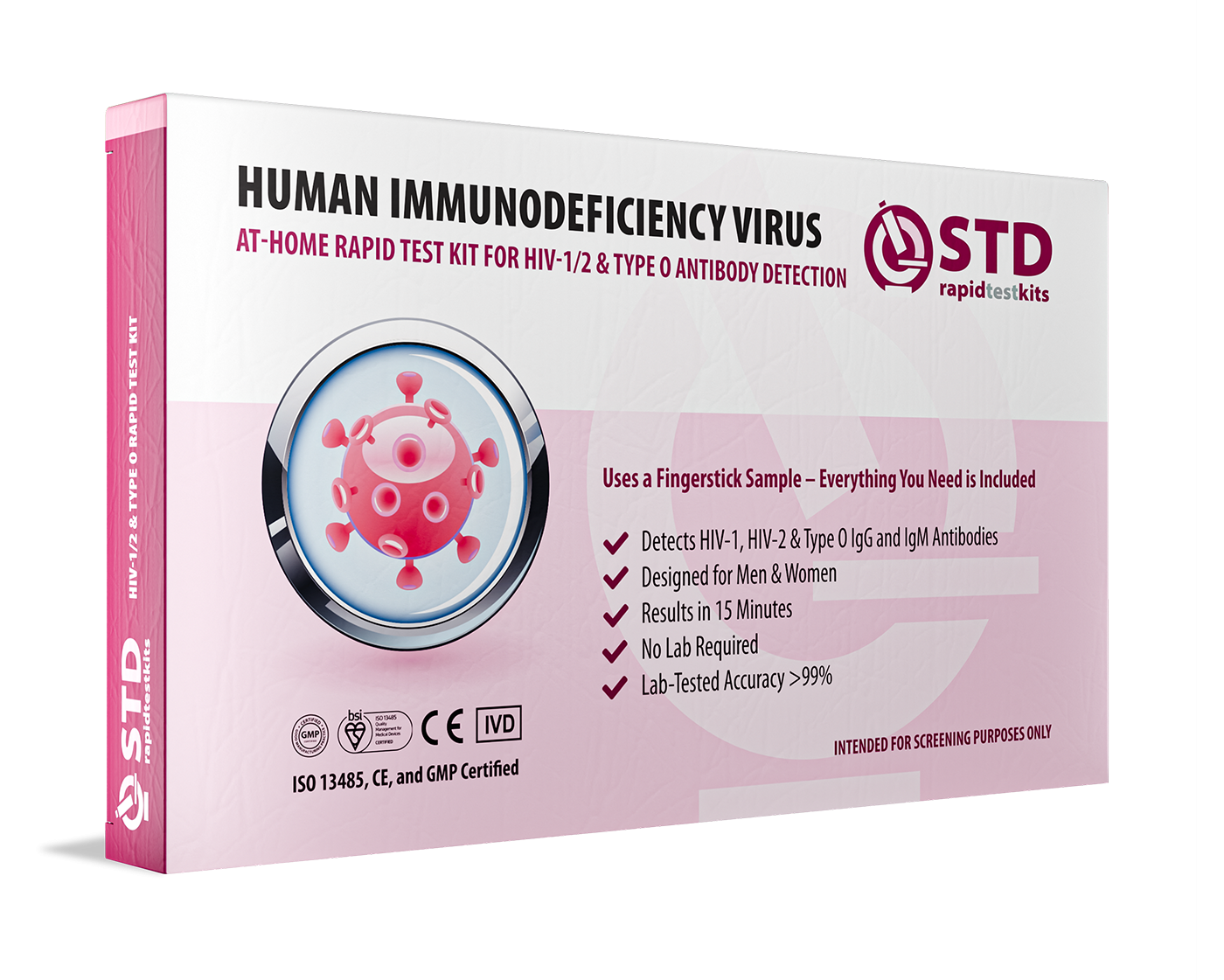
 For Men & Women
 Results in Minutes
 No Lab Needed
 Private & Discreet
Order Now $33.99 $49.00
“My First Test Was Negative. I Still Got Diagnosed.”
Victor, 32, took a rapid HIV test five days after a hookup that had him worried. It came back negative.
“I was relieved but still uneasy,” he remembers. “The guy said he was clean but had been overseas for work.”
Two weeks later, Victor started feeling run-down, with mild fever and a rash. He repeated the test at a clinic, this time, it was positive.
Victor had tested too early the first time, falling into the window period trap. “If I’d waited a week longer, I probably would’ve caught it,” he said. “But I was scared and just wanted peace of mind.” His case is a harsh but common example of why timing and follow-up matter more than wishful thinking.
If you’ve had a recent exposure and tested early, don’t assume you’re in the clear. Testing again at the optimal window, usually 3 to 6 weeks depending on the method, is how you get clarity. If your head keeps spinning, peace of mind is one test away. Order a combo test kit that checks for multiple STDs, including HIV, discreetly from home.
Which Test Makes Sense for You Right Now?
Choosing the right HIV test isn’t about being perfect, it’s about being practical. Where are you located? How recently was your potential exposure? Can you get to a lab, or do you need to handle this from home, under the radar? The table below breaks it down based on accuracy, privacy, and how fast you need answers.
| Test Method | Best For | Speed | Accuracy | Privacy |
|---|---|---|---|---|
| At-Home Rapid Test | Immediate peace of mind, private use | 15–20 minutes | Moderate–High (after window period) | Very High |
| Mail-In Lab Kit | Comprehensive results, higher accuracy | 2–5 days | High | High |
| Clinic NAAT/PCR | Early detection, confirmatory testing | Same-day to several days | Very High | Moderate |
Figure 2. Comparing HIV test methods by accessibility, timing, and trust level.
When Should You Retest? And When Can You Trust the Result?
Retesting isn’t a sign you messed up, it’s how you beat the window period system. If you test right after exposure and it’s negative, you’re not done. Depending on your test type, you may need to test again at 3 weeks, 6 weeks, or even 12 weeks to be sure.
And yes, it’s annoying, but retesting can save you from the false sense of security that lets HIV spread quietly. Especially now, when antibody therapies aren’t guaranteed and vaccines are still in the pipeline, testing remains the tool that works across strain differences and immune status.
If your risk is ongoing, like multiple partners, unknown partner status, or recent travel, it’s smart to test every 3 months. And if you’ve recently completed treatment for another STD, retesting for HIV is a logical step. You don’t have to guess. You can check.
Privacy, Packaging, and Getting Tested Without Everyone Knowing
Let’s face it: even in 2025, the words “HIV test” can still spike your heart rate. Not because testing is hard, but because of what it represents. Fear. Shame. Exposure. Whether you’re testing in secret, navigating a new relationship, or trying to protect your partner without freaking them out, privacy isn’t optional, it’s essential. And that’s where at-home test kits shine.
You don’t need a waiting room or a white coat. You don’t have to explain why you're there or who you slept with. Most kits arrive in plain, unmarked packaging, nothing on the label to tip anyone off. Inside, you’ll find clear instructions, a sterile testing device, and everything you need to get results without involving a single other person. That’s power. That’s peace of mind on your terms.
Even better, shipping is fast. Whether you're living off-grid, in a conservative home, or just trying to avoid another awkward clinic visit, your test can be at your door in 24 to 72 hours. You can take it alone, with a partner, or on a Sunday morning when you finally have the guts. Privacy means flexibility.

People are also reading: Why Syphilis in Pregnancy Is Rising (And How to Protect Your Baby)
Which At-Home STD Test Kit Is Right for You?
Not all kits test for the same infections. Some only screen for HIV. Others are comprehensive “combo kits” that check for 4 to 7 of the most common STDs, including chlamydia, gonorrhea, syphilis, and trichomoniasis. The right kit depends on your risk factors, symptoms, and what you want to rule out. Here’s how they compare:
| Test Kit Type | STDs Detected | Sample Type | Result Time | Ideal For |
|---|---|---|---|---|
| HIV 1/2 Rapid Test Kit | HIV Type 1 and 2 | Fingerstick blood | 15–20 minutes | Recent high-risk encounter, PrEP monitoring |
| Combo 6 STD Rapid Test Kit | HIV, Syphilis, Chlamydia, Gonorrhea, Hep B, Hep C | Fingerstick blood and urine | 15–25 minutes | General screening, multiple partners, routine testing |
| Mail-In STD Panel | Varies (up to 12 infections) | Urine, swabs, fingerstick | 2–5 business days (lab processing) | Full diagnostic depth, confirmatory testing |
Figure 3. Comparing at-home STD test options by scope, speed, and use case.
When in doubt, start with a combo kit. It casts the widest net and lets you rule out multiple infections in one sitting. For those hyper-focused on a single partner event, or looking to retest after a specific scare, a single HIV or chlamydia test may be enough.
And don’t forget: just because you don’t feel anything doesn’t mean you’re in the clear. The majority of STDs, especially chlamydia, gonorrhea, and early-stage HIV, can show zero symptoms while still being contagious.
What Happens If You Test Positive?
First of all, don’t spiral. You’re not alone. You’re not dirty. And you’re not doomed. A positive result is a signal, not a sentence. It tells you that your body needs attention, not punishment.
Let’s take HIV. If your at-home rapid test shows a positive line, the next move is a lab confirmation. That’s not a failure, it’s protocol. And if confirmed, you’ll start antiretroviral therapy (ART), which today means a normal lifespan, no risk of transmission once undetectable, and the ability to have sex, relationships, and even kids without fear.
Need to tell a partner? You can do it anonymously online. Tools like Tell Your Partner let you notify them without revealing your name. Or you can text them directly using scripts available on public health sites. What matters is stopping the chain, not the drama.
If you’re still negative but your partner tested positive? That’s your cue to test now, again in a few weeks, and talk about protection moving forward. This combo kit is a good step for both of you, and keeps the conversation grounded in facts, not panic.
FAQs
1. What’s the oldest STD we know about?
Depends who you ask, but syphilis gets the historical spotlight, it tore through Europe in the 1490s like wildfire. That said, ancient papyrus scrolls and Roman records describe symptoms suspiciously similar to gonorrhea. These infections have been around longer than soap.
2. Did Columbus actually bring syphilis back from the Americas?
That’s one theory, and it’s got legs. Some researchers think his sailors picked up syphilis in the Caribbean and gave Europe more than gold and tobacco. Others say syphilis was already there, just lying in wait. Either way: ouch.
3. How did people treat STDs before antibiotics?
Brace yourself, people literally rubbed mercury on their bodies. Others tried arsenic, leeches, herbs, or “sweat it out” rituals. Most of it didn’t work and made things worse. Think: medieval vibes with zero germ theory.
4. When did HIV show up?
Officially? 1981. But the virus likely jumped from primates to humans decades earlier. It just didn’t get recognized until the 80s, when whole communities started dying, and being ignored because of who they were. Spoiler: science caught up, stigma didn’t.
5. Can you tell if someone has an STD by looking?
Nope. You can’t see chlamydia on someone’s face. Or HPV. Or herpes if they’re not having an outbreak. Most STDs are invisible in early stages, which is why regular testing matters way more than guesswork.
6. Is oral sex actually risky?
Yes, and yes again. You can catch or pass on gonorrhea, syphilis, herpes, even HPV through oral. Dental dams and condoms exist for a reason, even if they don’t get starring roles in porn.
7. Are today’s STDs harder to treat?
Some are, yeah. Gonorrhea has mutated like a sci-fi villain and is now resistant to several antibiotics. That’s why testing, treating early, and not skipping doses matters. You don’t want to be the host body for super-gonorrhea.
8. What’s the deal with at-home STD tests?
They’re legit, as long as you get them from reputable sources. FDA-approved kits like the ones from STD Rapid Test Kits are accurate, discreet, and fast. Just follow the instructions, and don’t test too early after exposure. Timing matters.
9. Can you really have an STD with zero symptoms?
Oh absolutely. Chlamydia, for example, is famous for being sneaky. So is HPV. That’s why people unknowingly spread infections, and why relying on “I feel fine” is a losing strategy.
10. Are we ever going to eliminate STDs for good?
Maybe someday, but don’t hold your breath. Until there are vaccines for every major STI and universal access to care, they’ll keep circulating. The good news? You’ve got more tools than ever to stay informed, get tested, and protect yourself. That’s power.
Check Your STD Status in Minutes
Test at Home with Remedium7-in-1 STD Test Kit
 For Men & WomenResults in MinutesNo Lab NeededPrivate & Discreet
Order Now $129.00 $343.00
For all 7 tests
You Deserve Answers, Not Assumptions
This new study didn’t break the HIV prevention world, but it did expose one big truth: we’re still chasing the virus. Vaccine candidates will take time. Antibody solutions aren’t universal. But testing? It’s here. It works. And it’s one of the few tools that cuts through strain differences, borders, and the guesswork that keeps people anxious.
If you’ve been putting it off, questioning a past hookup, or simply want to take control of your health again, now’s the time. This combo STD test kit gives you clarity, privacy, and peace of mind, without leaving home.
How We Sourced This Article: We combined current guidance from leading medical organizations with peer-reviewed research and lived-experience reporting to make this guide practical, compassionate, and accurate. In total, around fifteen references informed the writing; below, we’ve highlighted some of the most relevant and reader-friendly sources.
Sources
1. HIV regional variations may affect antibody protection
2. Avert: How Antibodies Work Against HIV
3. Planned Parenthood: HIV & AIDS Basics
4. HIV/AIDS — Diagnosis & Treatment | Mayo Clinic
5. How Long Does It Take for HIV to Turn Into AIDS? | Verywell Health
About the Author
Dr. F. David, MD is a board-certified infectious disease specialist focused on STI prevention, diagnosis, and treatment. He blends clinical precision with a no-nonsense, sex-positive approach and is committed to expanding access for readers in both urban and off-grid settings.
Reviewed by: Dr. Lana Siegel, MPH | Last medically reviewed: November 2025
This article is for informational purposes and does not replace medical advice.


