






Quick Answer: HPV can live in your throat, genitals, anus, or mouth, even if you don’t have symptoms. You can still transmit it when it’s invisible, and most people don’t know they have it.
HPV Doesn’t Always Show Its Face
The tricky thing about HPV is how often it hides. Nearly 80% of sexually active people will encounter it in their lifetime, but most won’t have symptoms. That doesn’t mean it’s harmless. High-risk strains of HPV can lead to cancers, including cervical, anal, penile, and throat cancers, even if you’ve never seen a wart in your life.
Emily, 26, first learned about HPV in a health class where they passed around laminated photos of genital warts. But when her Pap smear came back abnormal during a routine checkup, she was stunned. “I thought HPV meant warts,” she says. “I didn’t have any. Nothing looked or felt wrong.”
This is the story for thousands of people. HPV doesn’t have to show up physically to affect your health. In fact, the most dangerous strains often don’t.
Where HPV Lives, And Where It Doesn’t Always Appear
Let’s clear something up: HPV isn’t just a “genital” virus. It infects the skin and mucous membranes, which means it can live in more places than people expect. Oral sex, deep kissing, even skin-to-skin contact around the genitals or anus can be enough to spread it.
| Location | HPV Transmission Risk | Common Symptoms (If Any) |
|---|---|---|
| Genitals (penis, vulva, vagina) | Very High (any skin-to-skin contact) | Genital warts, itching, bumps, or none at all |
| Throat & Mouth (oral HPV) | High (oral sex, deep kissing) | Sore throat, hoarseness, but often silent |
| Anus & Rectum | High (anal sex, contact near anus) | Warts, bleeding, but often asymptomatic |
| Skin near groin or inner thigh | Moderate (skin-to-skin contact) | Flat or raised lesions, may go unnoticed |
Figure 1. Where HPV can live, spread, and occasionally show symptoms, though most infections remain silent.
This table underscores the disconnect: just because you don’t see something doesn’t mean it’s not there. Most oral HPV infections, for instance, cause zero symptoms but can still spread and, in rare cases, develop into oropharyngeal cancer years later.
People are also reading: The Breakthrough HIV Injection You Need to Know About
But I Don’t Have Warts, So I’m Fine, Right?
Not necessarily. Warts are caused by low-risk strains of HPV, most famously types 6 and 11. But the strains most likely to cause cancer (like HPV 16 and 18) rarely show any symptoms. It’s one of the few STDs where what you don’t see matters more than what you do.
Josh, 33, thought he’d dodged the bullet. He was careful. Used condoms most of the time. Never saw or felt anything unusual. Then his long-term girlfriend tested positive during a Pap smear. “I was shocked. I didn’t even think I could be carrying something like that if I didn’t have symptoms.”
And that’s the catch, HPV lives in skin. Condoms reduce transmission but don’t eliminate it because the virus can infect areas condoms don’t cover: the base of the penis, labia, scrotum, or perianal skin.
If you’re sexually active, especially with new or multiple partners, exposure is incredibly common, even in the absence of visible symptoms.
Check Your STD Status in Minutes
Test at Home with RemediumPapillomavirus (HPV) Test
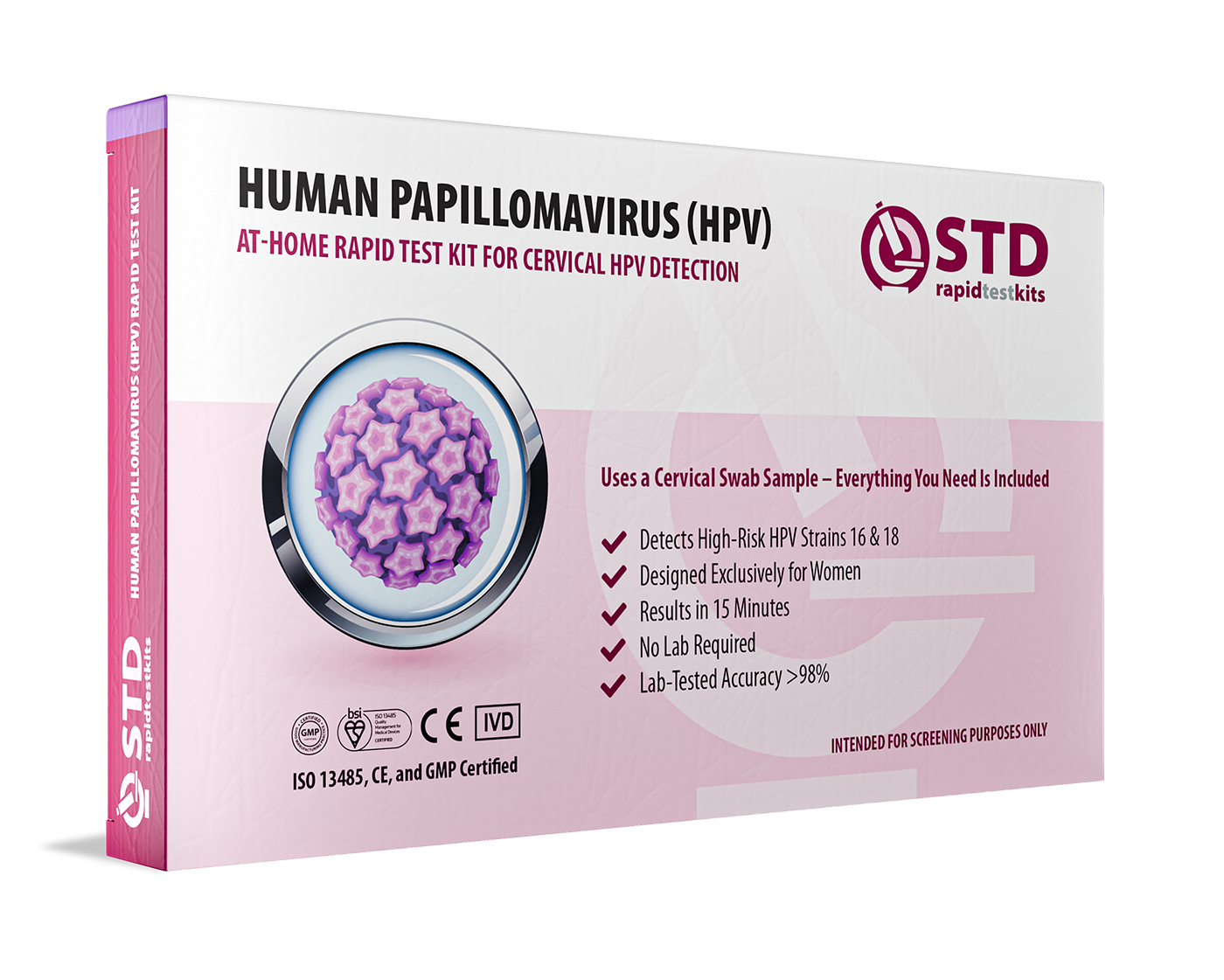
 For Women
 Results in Minutes
 No Lab Needed
 Private & Discreet
Order Now $33.99 $49.00
You Can Carry It Without Knowing It (For Years)
Many people clear HPV naturally within one to two years. But some don’t. The virus can linger in a dormant state, undetectable by tests, invisible to the eye, only to resurface later. For someone who hasn’t had sex in years, a positive HPV test can feel like a betrayal. “I thought my ex gave it to me, but then I read that it could have been from five years ago,” says Rachel, 29. “I’ll never really know.”
This uncertainty drives a lot of relationship anxiety, blame, and guilt. But HPV doesn’t follow clear timelines. And it doesn’t always “show up” in the way you’d expect.
Here’s how it plays out:
| Timeline | What Might Happen | Why It’s Misleading |
|---|---|---|
| 0–3 months post-exposure | Usually asymptomatic; virus replicates quietly | No symptoms = false sense of safety |
| 6–12 months | Body may clear the virus naturally | Still contagious even while clearing |
| 1–5 years later | Possible reactivation, abnormal Pap smear, or wart emergence | Feels unrelated to old exposures |
Figure 2. How HPV can remain hidden and unpredictable, misleading both patients and partners.
If you're seeing this kind of delay, or no symptoms at all, it’s not your fault. This is how HPV behaves. The answer isn’t shame. It’s testing, conversation, and choosing what to do next with clearer information.
Feeling Lost? You’re Not Alone
There’s no single path through HPV. Some people test positive and panic, while others carry it silently for years without knowing. Both are valid, and neither is wrong. The stigma around HPV, and STDs in general, often makes it harder to ask questions or even bring it up with a partner.
But clarity is power. And so is control. If you're wondering what your next step is, testing from home might offer a starting point that feels safer and more private than the clinic waitroom.
STD Rapid Test Kits offers discreet at-home options that include combo panels for HPV, chlamydia, and other common STDs. You can choose your pace, and get answers without judgment.
Don’t let the silence fool you. HPV might not make noise, but your health matters anyway.
Oral HPV Is More Common Than You Think
When you hear “HPV,” chances are your brain goes straight to genital warts or cervical cancer. But what about a scratchy throat that won’t go away, or that lump-in-the-throat feeling that shows up weeks after oral sex? These symptoms rarely make it into mainstream HPV conversations, but oral HPV is real, and rising.
According to the CDC, roughly 10% of men and 3.6% of women in the U.S. have oral HPV. Most won’t ever know it. Some will develop throat or tonsil cancers decades after the initial infection, often tied to high-risk strains like HPV 16. The frustrating part? There’s no widely available throat swab test for HPV unless you’re part of a research study or undergoing cancer screening.
After a weekend hookup with a new partner, Deon started feeling tightness in his throat and assumed it was just dehydration. “But it lasted two weeks. I went down a rabbit hole online and saw that oral HPV can cause throat cancer. That freaked me out,” he says. He couldn’t find a test to confirm it and eventually had to wait out the anxiety.
This story plays out more often than you’d expect. No lesions. No visible symptoms. Just worry and Google searches at 2AM. For many, the fear isn’t whether they have HPV, but where it might be hiding.
What About Kissing? Is That Enough to Catch It?
Yes, and no. HPV spreads through skin-to-skin contact, including kissing when the virus is present in the mouth or throat. But the risk is still considered lower than oral sex. That said, “lower” doesn’t mean zero. One study published in JAMA found that deep kissing, especially with multiple partners, increases the risk of oral HPV infection, particularly in men.
And let’s talk honestly: most people don’t use dental dams or condoms for oral sex. That leaves soft tissues, like the back of the throat, underside of the tongue, and tonsillar crypts, vulnerable to HPV transmission. The virus loves moist mucosa, and the mouth has plenty of it.
So if you’ve kissed, gone down on someone, or been on the receiving end of oral sex, yes, there’s a chance you’ve been exposed to HPV. And that doesn’t make you reckless. It makes you human.
HPV in Men vs Women: Who Shows What?
Here’s the blunt truth: men are less likely to show symptoms of HPV and more likely to carry it without ever knowing. Women, by contrast, benefit from cervical screenings that can detect early signs of trouble. That means many men are invisible carriers, unaware they’re passing it on.
“I thought HPV was a girl thing,” says Martin, 35. “My girlfriend had to get a colposcopy, and that’s when we found out I probably gave it to her. I didn’t even know I could get it.”
This misconception is dangerous because it allows the virus to circulate silently. Men don’t get routine HPV screening unless genital warts appear, and even then, it’s often dismissed unless symptomatic. Anal Pap tests exist but are usually reserved for immunocompromised individuals or men who have sex with men.
In women, HPV most commonly shows up as an abnormal Pap smear. Some may experience discomfort, discharge, or bleeding between periods if it progresses, but in early stages, it’s silent.
For both sexes, the most common symptom of HPV is no symptom at all.
So How Do You Even Test for HPV?
Let’s demystify this: there is no standard, routine HPV test for men. The FDA-approved HPV tests are designed for cervical samples, meaning only people with a cervix get regular access to HPV detection. That leaves others flying blind unless visible warts appear or cancer screenings happen later in life.
HPV tests usually involve one of the following:
| Test Type | Who It’s For | What It Detects |
|---|---|---|
| HPV DNA Test (cervical) | People with a cervix (usually over age 25) | High-risk HPV strains linked to cancer |
| Pap Smear (cytology) | People with a cervix (age 21+) | Cell changes from HPV exposure |
| Visual Exam (warts) | Anyone with visible lesions | Low-risk HPV strains (6, 11) |
| Anal Pap Test | Immunocompromised or high-risk men | Cell changes linked to HPV |
Figure 3. Current HPV testing options based on anatomy, access, and symptoms.
At-home testing for HPV is available in some regions, but it’s limited. You can order HPV rapid tests for certain strains, especially genital types, but they don’t cover throat or anal infection.
The gap in testing is a structural problem, not a personal one. If you’ve been exposed and want clarity, your best bet is to pair testing with routine screening (like Pap smears or physical exams), plus honest conversations with partners about any past diagnoses.

People are also reading: The Most Common Sexually Transmitted Diseases and How They Spread
What Happens If You Test Positive for HPV?
First, don’t panic. Most HPV infections go away on their own without causing long-term problems. Testing positive doesn’t mean you’re sick, dirty, or doomed, it means your immune system is doing what it does every day: managing viruses.
When Ava saw her HPV-positive result in her patient portal, she froze. “I thought it meant cancer,” she recalls. “I felt dirty. Ashamed. Like I’d done something wrong.” But her OB-GYN explained that HPV is incredibly common, and that her body would likely clear it on its own within two years. The Pap smear didn’t show any abnormal cells, so the plan was just to monitor. No treatment needed. Just time and care.
Testing positive for HPV might result in a few paths depending on the type and location:
If you have high-risk HPV (types 16 or 18), your provider may recommend a repeat test in 12 months, or a colposcopy if your Pap shows abnormal changes. If you have low-risk types that cause genital warts, treatment may involve topical solutions, cryotherapy, or removal. If you're a man and you have visible lesions, your provider may examine and treat them but won’t routinely test unless symptoms appear.
There’s no cure for the virus itself, but most people don’t need one. Your immune system often takes care of it on its own.
Check Your STD Status in Minutes
Test at Home with Remedium10-in-1 STD Test Kit
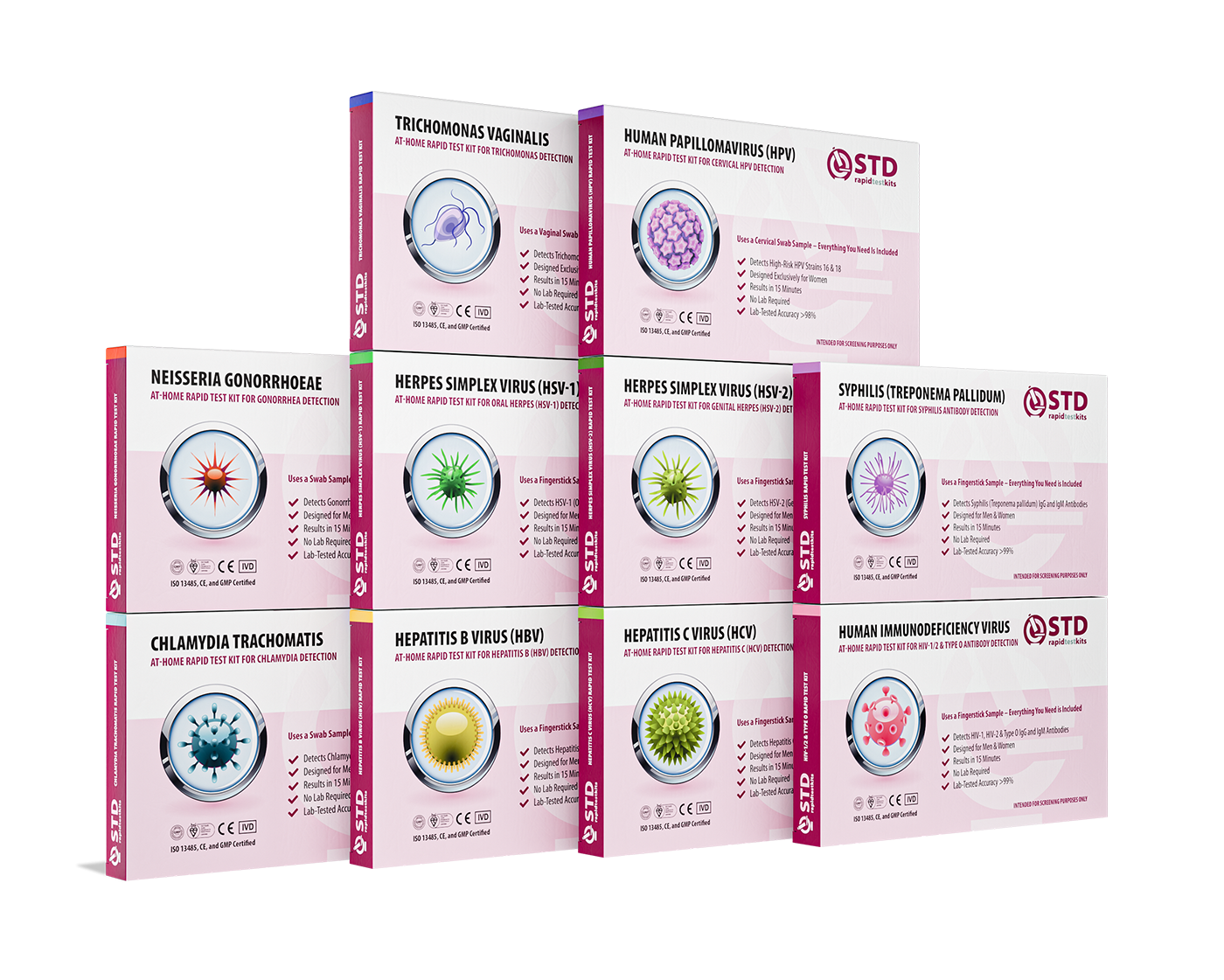 For WomenResults in MinutesNo Lab NeededPrivate & Discreet
Order Now $189.00 $490.00
For all 10 tests
Should You Tell Your Partner?
This is one of the most agonizing questions people face after an HPV diagnosis. The answer isn’t always simple, but here’s the truth: it depends on your relationship, the strain of HPV, and your emotional bandwidth.
In long-term relationships, your partner has likely already been exposed, even if neither of you knew it. Telling them may not change much medically, but it might open a new level of trust and shared responsibility. In newer relationships, disclosure can feel terrifying, but it also models honesty and lets the other person make informed choices.
Jas, 27, waited a week before telling their new partner. “I didn’t want him to think I was gross,” they say. “But when I finally told him, he said, ‘I had it once too.’ I felt relieved, like I wasn’t the only one.”
If you’re unsure what to say, try this: “I found out I have HPV. It’s super common and usually clears on its own, but I wanted to be upfront.” You can offer resources or talk through what testing or vaccination options look like together.
Being real doesn’t mean being graphic. It means giving your partner the dignity of choice, just like you’d want in return.
The HPV Vaccine Isn’t Just for Teens, It’s Prevention at Any Age
Many people assume they’ve missed the boat if they didn’t get the HPV vaccine as a teen. But current guidelines say people up to age 45 may still benefit from the HPV vaccine, depending on exposure history and risk. It’s most effective before sexual debut, but that doesn’t mean it’s useless after.
Here’s what the CDC recommends:
If you’re age 9–26, the HPV vaccine is universally recommended. If you’re 27–45, you can discuss the option with your healthcare provider. Even if you've had HPV before, the vaccine protects against multiple strains and may prevent reinfection or new types.
The vaccine doesn't treat existing infections, but it helps prevent future ones. And if you’ve tested positive for one strain, you can still benefit from protection against the others. That’s why many adults choose to get it after a diagnosis.
If you want to get vaccinated but don't want to wait for a doctor's appointment, you might want to check out local pharmacies, clinics, or telehealth platforms that offer it without making a big deal out of it.
What If You Never Get Symptoms, Do You Still Need to Do Anything?
Yes. Even if HPV stays silent, it can still be passed to others, and in rare cases, cause complications down the line. Routine screenings (Pap smears, HPV DNA tests, physical exams) help detect early warning signs before symptoms ever appear.
Think of HPV like an engine light that doesn’t turn on: just because you don’t see a problem doesn’t mean everything under the hood is running perfectly. That’s why testing and follow-up are crucial, even when you feel fine.
That doesn’t mean living in fear. It means knowing your status, protecting your partners, and letting your body do what it’s built to do: respond and adapt.
If you’re not sure where to start, consider ordering a discreet Combo STD Home Test Kit. It checks for HPV and several other common infections, all from the privacy of your home, with no waiting room and no awkward conversations unless you want them.
Peace of mind is sometimes just one test away.
FAQs
1. Can HPV really live in your throat?
Yep. It’s not just a “down there” thing. HPV can infect your throat after oral sex, or even deep kissing, especially if your partner has it orally. Most people never feel a thing, but in rare cases, it can lead to serious stuff like throat cancer years later. No wart, no warning, just silent and stealthy.
2. What if I have no symptoms, can I still pass it on?
Absolutely. In fact, that’s how most people spread it. You could be carrying HPV for months or even years without knowing, and your body might clear it without a single sign. But that doesn’t mean you can’t give it to someone else in the meantime. This is why it's called a “silent spreader.”
3. How do people even get oral HPV? Like, just from going down on someone?
Pretty much, yeah. HPV spreads through skin-to-skin contact, and oral sex is a direct invite. Some folks get it from deep kissing too, especially if there’s a cut or sore in the mouth. We’re not saying you should stop enjoying yourself, but protection matters more than people think when mouths are involved.
4. Can I get HPV just from kissing?
It’s rare, but not impossible. Think of it this way: if HPV is living in the mouth or throat, and there’s friction or a tiny tear in the skin (which happens during passionate kissing), transmission could happen. It’s not the main way, but it's still part of the picture, especially with multiple partners.
5. Is it true that guys don’t get tested for HPV?
Unfortunately, yeah. There’s no routine HPV test for men, unless you’ve got visible warts or you’re in a high-risk group that gets anal Pap smears. Most guys are flying blind, which means they can pass it on without a clue. It’s a public health gap, not a personal failure.
6. So if I test positive for HPV, what does that mean exactly?
It means you’ve got a super common virus that your body is probably already fighting. Most strains go away on their own. But if it’s a high-risk type, your doc might want to keep an eye on things, especially with cervical or anal screenings. It’s not a death sentence. It’s a heads-up.
7. Do I need to tell my partner I have HPV?
Short answer: it depends. Long answer: it’s about trust and context. In a long-term relationship, your partner probably already has it. In newer ones, sharing might feel awkward, but it also builds trust. You don’t need to read a medical textbook out loud. Just keep it real. “Hey, this came up, I wanted you to know.” That’s more than most people ever say.
8. Will a regular STD test catch HPV?
Not unless you ask for it. Most “standard” panels test for chlamydia, gonorrhea, HIV, and maybe syphilis. HPV? Only if you’ve got a cervix and you’re getting a Pap or DNA test. Some at-home kits include HPV, but many don’t, always check the fine print.
9. I had HPV once. Can I get it again?
Yes, and not just once. There are over 100 strains of HPV. Clearing one doesn’t give you a hall pass for life. It’s like getting a cold: same virus family, different strain. That’s why the vaccine covers multiple types, to give you backup defense.
10. Do condoms even help with HPV?
They help, but they’re not a magic shield. HPV lives on skin, not just fluids. So anywhere the condom doesn’t cover (like the base of the penis, scrotum, or labia) can still carry it. Still, condoms lower the risk and protect against other STDs too, so yes, wrap it up.
You Deserve Answers, Not Assumptions
HPV is complex, invisible, and emotionally messy. It’s one of the most common STDs in the world, and also one of the most misunderstood. But not seeing something doesn’t mean ignoring it. Whether you have symptoms, a positive test, or just that lingering fear in the back of your mind, you’re not alone, and you’re not powerless.
Clarity starts with testing. If you're ready to stop wondering, this at-home combo test kit checks for HPV, herpes, chlamydia, and more, privately, quickly, and without judgment.
How We Sourced This Article: We combined current guidance from leading medical organizations with peer-reviewed research and lived-experience reporting to make this guide practical, compassionate, and accurate.
Sources
1. Planned Parenthood – HPV Overview
2. Planned Parenthood – Human Papillomavirus (HPV)
3. Epidemiology of oral human papillomavirus infection
4. Transmission and clearance of human papillomavirus infection
5. Oral human papillomavirus (HPV) prevalence and genotyping
6. Oral and laryngeal HPV infection: Incidence, prevalence and transmission
7. Non‑sexual HPV transmission and role of vaccination
8. Oropharyngeal Human Papillomavirus (HPV) Infection
9. About Genital HPV Infection | STI
10. Oral‑genital HPV infection transmission, concordance of HPV types and risk
About the Author
Dr. F. David, MD is a board-certified infectious disease specialist focused on STI prevention, diagnosis, and treatment. He blends clinical precision with a no-nonsense, sex-positive approach and is committed to expanding access for readers in both urban and off-grid settings.
Reviewed by: J. Ortiz, MPH | Last medically reviewed: November 2025
This article is for informational purposes and does not replace medical advice.


