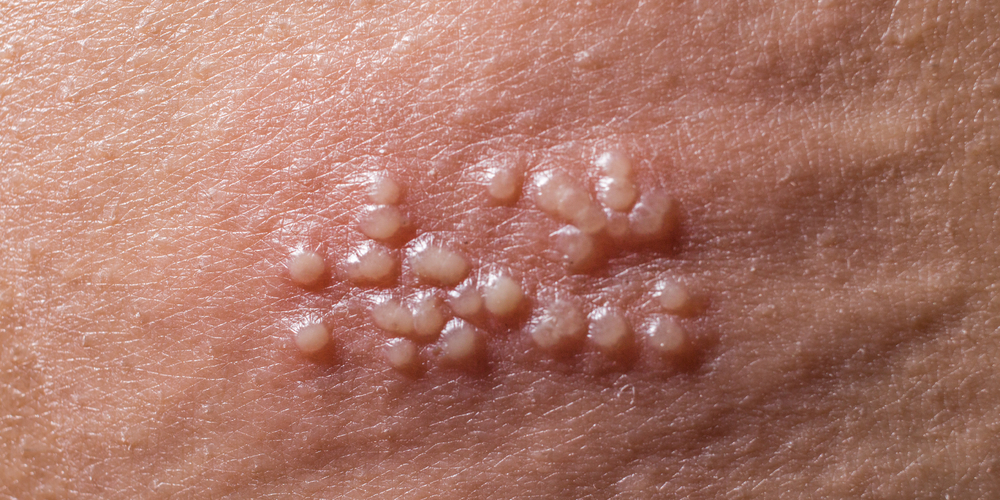
The formation of blisters or fluid-filled compartments between the skin layers may be due to one of several diseases, one of which is syphilis, a sexually transmitted infection. This professional guide demonstrates just how to identify syphilis blisters, differentiate them from other types of blisters, and what to do about diagnosis and treatment.
02 October 2024
4 min read
20143
Identifying Syphilis Blister
The formation of blisters or fluid-filled compartments between the skin layers may be due to one of several diseases, one of which is syphilis, a sexually transmitted infection. This professional guide demonstrates just how to identify syphilis blisters, differentiate them from other types of blisters, and what to do about diagnosis and treatment.
Identifying the Cause of Blisters
Though syphilis gives rise to blisters, it is not the sole cause of the same. Freezing, friction, chemical burns, and other infections cause the development of blisters. It is, therefore, essential to make a clear distinction between blisters that result from syphilis and those from other causes.
Syphilis Blisters
Syphilis blisters occur primarily during the infection's primary stage and may appear around the parts of the body that are infected. The disease is usually transmitted through unprotected oral, anal, or vaginal sexual contact with a person's sores.
Blisters of Other Medical Conditions
A whole range of other medical conditions can also develop blisters. These include:
Bullous impetigo - typically affects young children
Chickenpox
Eczema
Dyshidrosis
Herpes Simplex Virus
Some autoimmune diseases, including Pemphigus
Bullous pemphigoid
Cutaneous radiation syndrome
Dermatitis herpetiformis
Genetic disorders, such as Epidermolysis bullosa
Causes of Blisters: Non-Medical Reasons
Blisters may also be caused by factors unrelated to health/medical reasons, such as:
Friction caused by repetitive actions like playing musical instruments, running
Chemicals, which include solvents, soaps/detergents, cosmetics, nickel sulfate, stings, and insect bites
Temperature - extreme
Trauma, which includes pinching and crushing
How Syphilis is Diagnosed: When to Consult a Doctor
If a blister is found, seek immediate medical help. Testing generally includes a blood sample test and a physical examination. In addition, there are a few home test kits that can provide an indication regarding the infection of syphilis.
High-Risk Groups: Whom to Test for Syphilis
In case a blister is observed and you belong to one of the following categories, then testing for syphilis is highly recommended for you:
Sex workers
Pregnant women
Those having multiple sexual partners
People whose sexual partner has other sexual partners
Men having sex with men
Any person who has had sex without protection with someone who has syphilis
Getting tested regularly with your sexual partner(s)
Not sharing needles and other sharp objects
Treatment Of Syphilis Sores
When the infection of syphilis is diagnosed, injections of penicillin are usually prescribed. For those patients who develop an allergy to penicillin, there are other antibiotic medications such as azithromycin, ceftriaxone, and doxycycline.
In addition to prescription medications, here are some steps you can take in managing syphilis blisters:
Exposing the blister to the air promotes healing
After proper cleansing of the blister to rid it of germs, cover it with topical cream to prevent further infection
Drain the blister safely using a sterilized needle
Keep the blister clean by covering it with a clean bandage or gauze
Soak it in a saline solution and clean the area before bursting
Apply an inflammatory gel, like Aloe Vera, to keep the area moisturized
But There is Something Important to be Kept in Mind
Not every blister on the body indicates infection with syphilis. Many more reasons can cause blisters, and so if you find a blister, you must not diagnose yourself.
Be Cautious: Self Testing at the Start Then Getting Professional Help
It is not by jumping to conclusions in the presence of a blister that the exact diagnosis of a syphilis infection is made. We have heard how many other conditions, other than syphilis, also cause blistering. Thus, taking a self-test first may be an excellent avenue to ascertain whether your blisters are indeed caused by syphilis.
It will be important, upon detection of a positive result, to seek immediate care from a healthcare professional for further diagnostic tests, coupled with discussions on possible treatments.







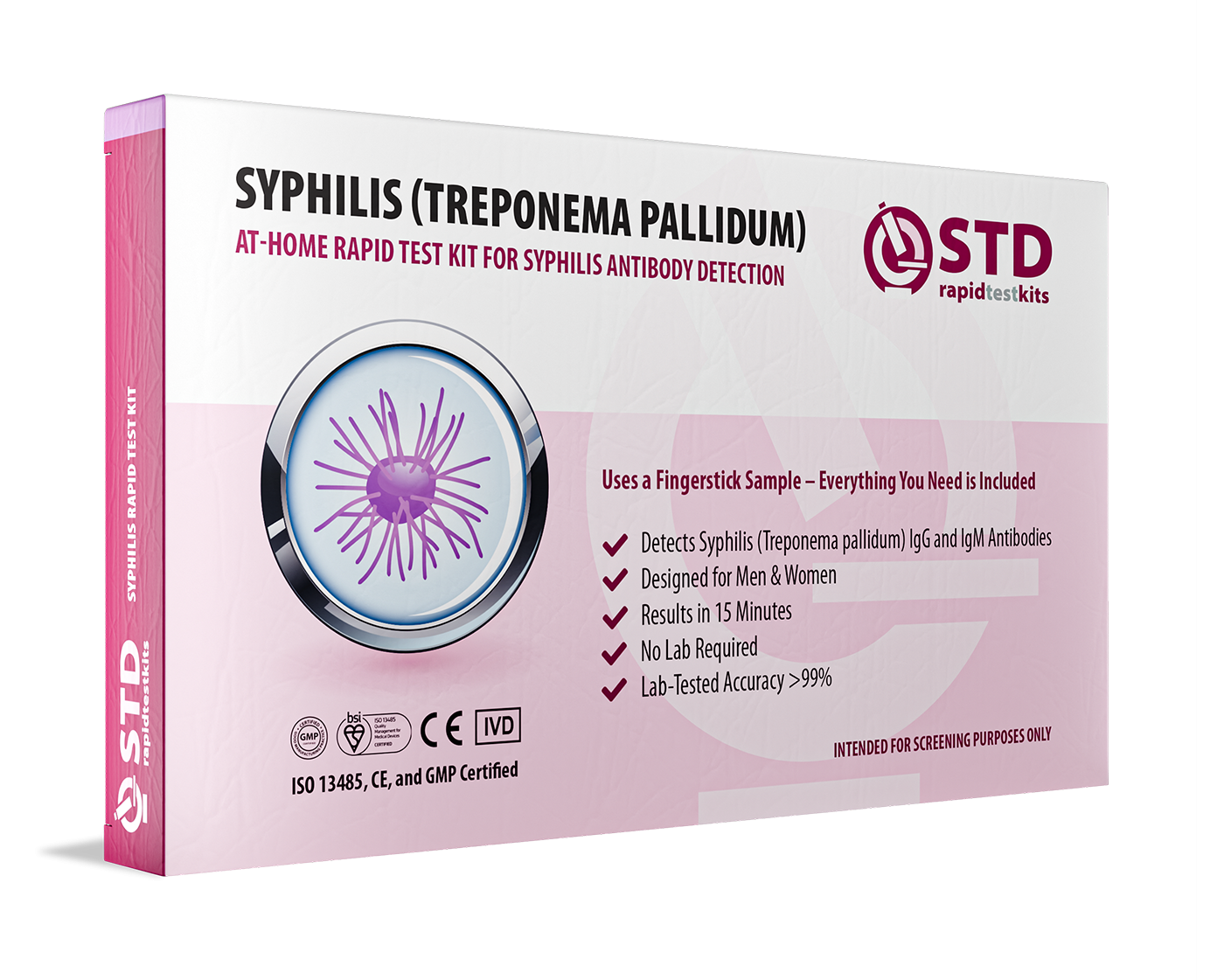
 For Men & Women
 Results in Minutes
 No Lab Needed
 Private & Discreet


