







Quick Answer: Syphilis can infect the eyes, causing redness, floaters, blurry vision, and even blindness. Known as ocular syphilis, this condition often goes misdiagnosed. Early treatment is critical to prevent permanent damage.
How an STD Ends Up in Your Eyes
It sounds dramatic, but the science backs it up: syphilis, a bacterial sexually transmitted infection caused by Treponema pallidum, can spread through the bloodstream and cross into the eyes. It doesn’t happen in every case, but when it does, the consequences can be devastating.
Ocular syphilis can emerge at any stage of infection, primary, secondary, or even years after latent syphilis. The bacteria penetrate the protective barrier of the eye, triggering inflammation in structures like the uvea, retina, or optic nerve. Depending on where the damage lands, symptoms can range from annoying to catastrophic.
According to a CDC bulletin, there’s been a sharp uptick in reported ocular syphilis cases in recent years. This isn’t a freak incident, it’s a trend.
Not Just Pink Eye: How Symptoms Sneak Past Doctors
Here’s the problem: most people, and even many healthcare providers, don’t associate STDs with eye symptoms. Redness is mistaken for allergies. Blurry vision gets blamed on digital eye strain. Pain gets written off as dry eye syndrome. And unless someone mentions a recent sexual encounter? The STD connection rarely even enters the room.
Maria, 29, experienced this firsthand. After a weekend hookup with a new partner, she noticed her left eye was irritated and overly sensitive to light. Her doctor prescribed antibiotic eye drops, assuming it was conjunctivitis. Two weeks later, she couldn’t read street signs. By the time a specialist asked about her sexual history, the bacteria had already scarred her optic nerve. She’ll never fully regain her peripheral vision.
Syphilis is often called “the great imitator” in medical circles. It’s not just a clever nickname, it’s a clinical warning. Ocular syphilis can look like anything from eye strain to autoimmune disease, and unless you or your doctor think to test for it, the clock keeps ticking.
What It Can Do to Your Vision
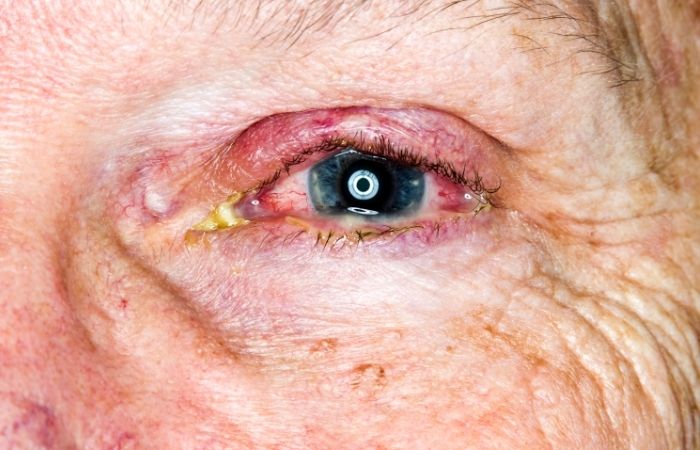
The effects of ocular syphilis depend on where it strikes, but none of them are benign. It can inflame the uvea, create retinal vasculitis, trigger optic neuritis, or even cause keratitis. The symptoms may come and go or escalate quickly. By the time you realize it’s more than an eye infection, damage may already be permanent.
| Eye Structure | Impact of Infection | Typical Symptom |
|---|---|---|
| Uvea | Uveitis | Floaters, photophobia |
| Retina | Retinitis or vasculitis | Blurry or patchy vision |
| Optic nerve | Optic neuritis | Sharp vision loss, color distortion |
| Cornea | Keratitis | Redness, pain |
These symptoms can mimic other conditions, autoimmune disease, multiple sclerosis, or viral eye infections, which makes accurate diagnosis more challenging.
People are also reading: When Pleasure Meets Risk: How Hepatitis Spreads Without Penetration
Diagnosis Delayed: A Second Story
Naveen, 38, started seeing light halos and felt a strange tightness around his right eye. He'd been treated for chlamydia years ago, but syphilis? That hadn’t even crossed his mind. His doctor referred him to neurology, suspecting multiple sclerosis. By the time the infectious disease team finally got involved, syphilis had been festering in his system for over a year. The MRI showed inflammation along his optic nerve sheath. It was too late for full reversal, but early enough to prevent complete blindness.
That’s the reality of ocular syphilis. It can masquerade as something else for so long that even experienced specialists get thrown off. By the time syphilis is on the table, the damage is already measurable.
Why Testing Isn’t Always Enough
You’d think a syphilis test would catch this in time. But here’s the kicker: it doesn’t always. Standard rapid tests (like RPR or VDRL) might be negative in early or previously treated infections. That’s why doctors use a combination of treponemal and non-treponemal tests, sometimes alongside imaging or even spinal taps if neuro-ocular involvement is suspected.
| Condition | Cause | Key Differentiator |
|---|---|---|
| Ocular Syphilis | Treponema pallidum (bacterial STD) | Often tied to systemic syphilis, may test negative early |
| Herpes Keratitis | HSV-1 or HSV-2 | Sharp pain, dendritic ulcers, more common in both eyes |
| Autoimmune Uveitis | Immune system dysfunction | No sexual history link, often recurring |
| Conjunctivitis | Viral or bacterial surface infection | External redness/goop, not inner eye damage |
If you’re having strange vision symptoms and recent sexual exposure, don’t wait for the “perfect test.” Ask for a syphilis panel anyway, and a referral to ophthalmology if symptoms persist.
Check Your STD Status in Minutes
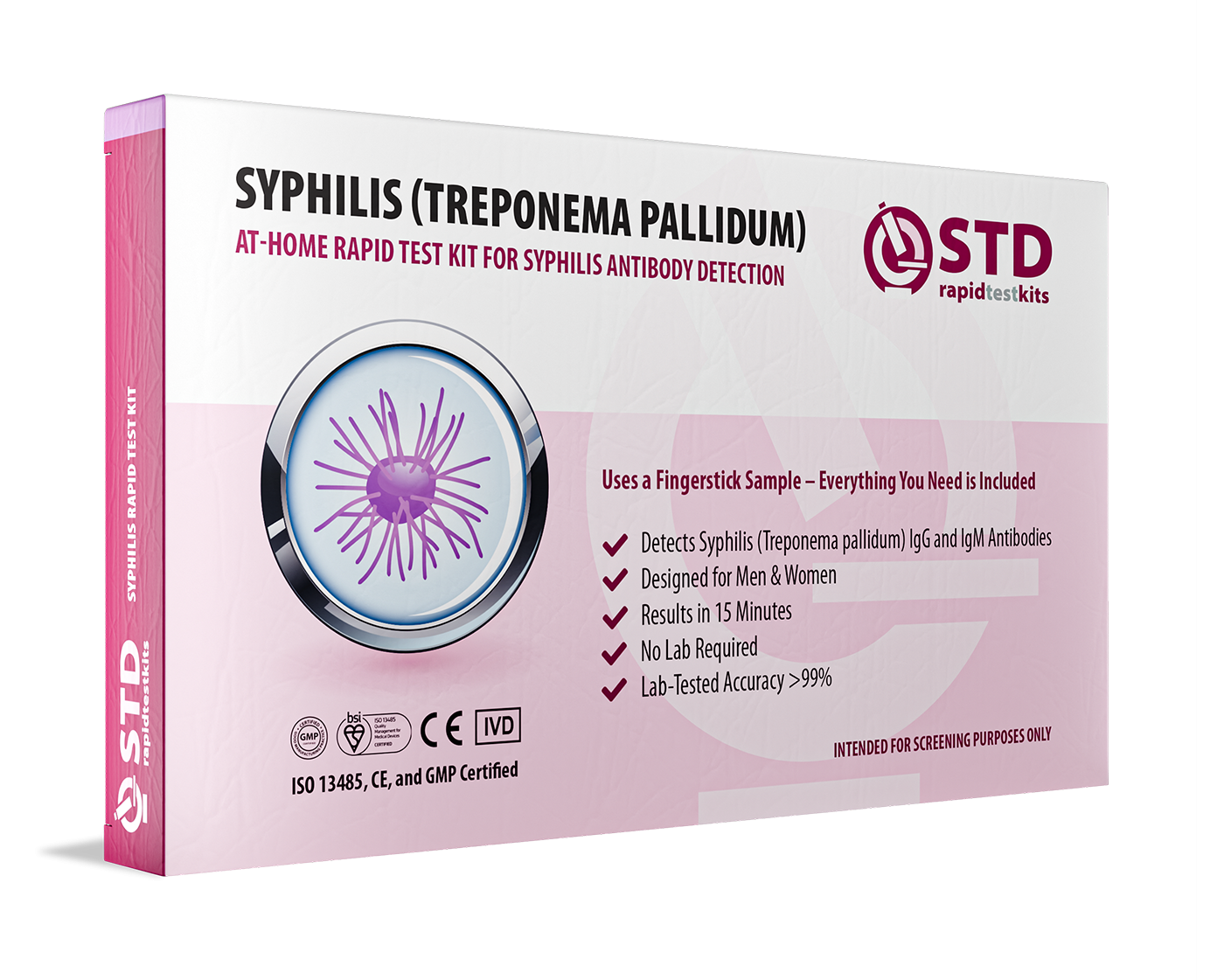
Test at Home with RemediumSyphilis Test Kit
 For Men & Women
 Results in Minutes
 No Lab Needed
 Private & Discreet
Order Now $33.99 $49.00
How Fast Is Too Fast? Timeline of Damage
Ocular syphilis can escalate rapidly. In some cases, people go from slight floaters to full vision loss within weeks. This isn’t alarmism, it’s clinical reality. Once the optic nerve is involved, every day matters.
| Days Since Symptom Onset | Likely Symptoms | Risk Level |
|---|---|---|
| 1–7 days | Redness, floaters, light sensitivity | Moderate – may be reversible |
| 8–14 days | Vision blur, dark patches, pain | High – optic nerve may be inflamed |
| 15+ days | Field loss, color changes, atrophy | Severe – risk of permanent blindness |
Treatment: What to Expect
The standard treatment is IV penicillin G, administered for 10 to 14 days, often under hospital observation. Some patients receive corticosteroids to reduce inflammation, but these are only safe when combined with antibiotics. Using steroids alone can accelerate the damage.
Post-treatment care includes follow-up with ophthalmology, repeat bloodwork, and often neurological imaging. Some patients regain full vision. Others don’t. The sooner treatment starts, the better the odds.
You Deserve to See Clearly, And Be Taken Seriously
Ocular syphilis isn’t just a fluke. It’s a growing concern, especially in people under 50 and in communities where testing access is limited. The truth? This isn’t just about sex. It’s about silence. About the way medicine sometimes overlooks sexual health when it shows up in unexpected places, like the eyes.
If you’re reading this and wondering if it applies to you, act on that instinct. Get tested. Get checked. You have every right to protect your body, your eyes, and your future. And if your doctor rolls their eyes? Find one who won’t.
People are also reading: Why Your Rash, Itch, or Discharge Might Not Be an STD
FAQs
1. Can syphilis really mess with your s?
Yes , and not in a minor way. If syphilis spreads to your eyes, it can inflame structures like the retina or optic nerve. The result? Floaters, blurry vision, light sensitivity, and in some cases, permanent blindness. It doesn’t happen to everyone, but when it does, it hits fast and hard. This isn’t about fear , it’s about catching things early, before they turn into something worse.
2. Wait, how would I even know it’s syphilis and not just pink eye?
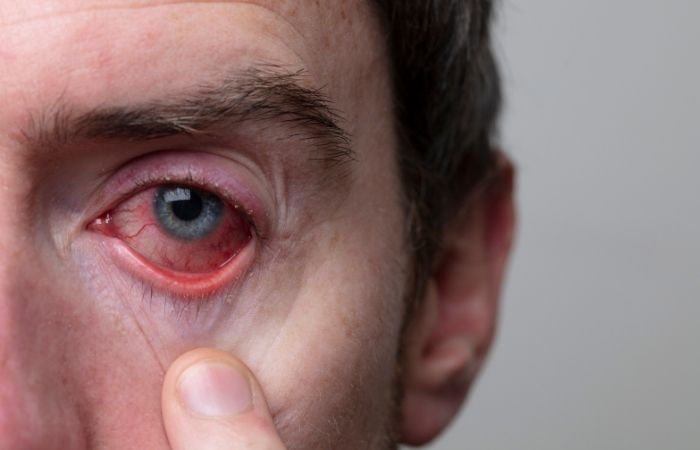
Great question , because they can look similar. But syphilis doesn’t usually make both eyes red and goopy. It tends to hit one eye, with floaters, blurry vision, or pain that doesn’t quite feel like a regular infection. If you’ve recently had unprotected sex or a new partner and your eye’s acting weird? Ask for syphilis testing. Not tomorrow. Now.
3. What if I already had syphilis and was treated , could it come back in my eyes?
Unfortunately, yes. We've seen cases where people had a past syphilis infection, were treated, and still developed eye symptoms months or even years later. Syphilis is sneaky. If your vision starts changing and you've got a syphilis history , even a distant one , tell your doctor. Be annoying. Your sight is worth it.
4. I had a rapid test and it was negative. That means I’m in the clear, right?
Not always. Some people with ocular syphilis test negative on standard rapid screens like RPR. That’s why follow-up matters, especially if you’re showing symptoms. A more sensitive treponemal test or further imaging may be needed. Don’t let a single “negative” lull you into ignoring the warning signs.
5. So… am I supposed to get my eyes tested every time I have sex?
Nope , that would be wild. But if you’ve had risky exposure (new partner, unprotected sex, known STD contact) and your eyes start doing weird things , like floaters, red spots, blurred vision, or pain , then yes, it’s worth asking your provider to consider ocular involvement. This isn’t routine stuff, but it’s not rare either anymore.
6. Can I just use a home syphilis test if I’m worried?
Home syphilis tests are great for screening, especially if you're shy about clinics. But if you’ve got actual eye symptoms? That’s a job for in-person care. You need an ophthalmologist and infectious disease evaluation , not just a finger prick. Use the home test for peace of mind, not diagnosis.
7. Could this be herpes instead?
It’s possible. Herpes can affect the eyes too, usually showing up as sharp pain, redness, or corneal ulcers. But syphilis tends to sneak in deeper, hitting the retina or optic nerve. The two can even co-exist in rare cases. That’s why your provider should test for multiple STDs if symptoms don’t add up. Trust your gut , and your symptoms.
8. If this is caught early, will my vision go back to normal?
Often, yes. Many people treated quickly regain most or all of their vision. But “quickly” is key. If inflammation has already damaged the optic nerve or central retina, there may be permanent loss. This is why those first few days , when you’re deciding whether it’s “worth checking out” , matter more than you think.
9. I’m scared to bring this up with my doctor. What should I say?
You’re not alone. Try this: “I’ve had recent unprotected sex and I’m noticing some strange vision changes. I read that syphilis can affect the eyes , can we rule that out?” That’s it. No shame. No big speech. You deserve answers, not judgment. If your doctor dismisses it, ask for a second opinion.
10. What’s the takeaway here?
If your eye symptoms show up after a sexual risk , even if it’s just one hookup , don’t ignore it. Ask the hard question: could this be an STD in my eye? The answer might save your sight. You’re not paranoid. You’re informed.
How We Sourced This:
Around fifteen reputable sources informed this article, including CDC data, ophthalmology case reviews, and peer-reviewed infectious disease research. We’ve highlighted some of the most relevant and reader-friendly sources below.
Sources
2. StatPearls: Ocular Manifestations of Syphilis
3. Ocular Syphilis in the Modern Era
4. Medical News Today: Eye Syphilis
5. Journal of Ophthalmic Inflammation and Infection
6. STD Rapid Test Kits Homepage
About the Author
Dr. F. David, MD is a board-certified infectious disease specialist focused on STI prevention, diagnosis, and treatment. He blends clinical precision with a no-nonsense, sex-positive approach and is committed to expanding access for readers in both urban and off-grid settings.
Reviewed by: A. Solano, NP | Last medically reviewed: October 2025
This article is for informational purposes and does not replace medical advice.


