






Quick Answer: A rash with no other symptoms after sex can be caused by irritation, allergic reactions, or early stages of an STD like herpes. Testing is the only way to know for sure.
“It Was Just a Rash, No Pain, No Symptoms, No Clue”
Ellis, 24, didn’t think it was anything serious. The rash was small, more of a blotchy patch than anything alarming. No itching, no stinging. He assumed it was razor burn or maybe some heat rash from a sweaty summer night. But a week later, it hadn't gone away. It had changed slightly in shape, maybe color. It was enough to make him book a telehealth appointment.
“The doctor asked me if I’d been tested for herpes,” he recalls. “I laughed. I said, ‘Why would I be? I don’t have any symptoms.’ And she said, ‘But you do.’”
What Ellis didn’t know, and what many people don’t, is that herpes doesn’t always arrive like it does in textbooks. No blisters. No tingling. Just skin that looks... off. A single clue in the quiet.
What Can Cause a Rash After Sex with No Other Symptoms?
Sex is messy, beautifully, biologically, hormonally messy. And your skin? It feels it all. From friction and sweat to lubes and latex, your body might react without warning. Not every post-sex rash is an STD. But not every STD screams its name either.
Here are some common causes of genital or body-area rashes that appear after sex but don’t come with typical STD symptoms:
| Possible Cause | What It Looks Like | Time to Appear |
|---|---|---|
| Friction/Irritation | Red, flat, mildly inflamed skin in contact zones | Immediate to a few hours |
| Latex Allergy | Red patches, hives, swelling near condom contact | Within 24 hours |
| Semen Allergy (Sperm Sensitivity) | Itchy, red rash inside or near genitals | Within 1–12 hours |
| Yeast Imbalance | Slight rash, occasional odor or discharge may follow | 1–3 days |
| Herpes (HSV-1 or HSV-2) | Flat or slightly raised red area, may blister later or never | 2–12 days post-exposure |
It’s important to understand that many people don’t realize herpes can present without pain, itching, or even blisters, especially during a first or asymptomatic outbreak. In fact, the CDC notes that most people infected with herpes are unaware they have it.
Wait, You Can Have Herpes Without Knowing It?
Yes. And that’s not just some scare line. According to multiple studies, up to 90% of people with genital herpes don’t know they have it. Why? Because their symptoms are so mild, or so easy to mistake for something else, they never get tested. That’s how Ellis ended up delaying diagnosis. He wasn’t being careless. He was just misinformed.
Herpes can show up as a small patch of irritated skin, or barely visible bumps, internal sores you can’t see, or even nothing at all.
It’s also worth noting that primary herpes outbreaks (your first time showing symptoms) are the most likely to come with obvious signs. But many people’s “first” outbreaks happen long after they were infected, when the virus reactivates later. That can make tracking the source confusing and emotionally messy.
People are also reading: It Was Protected Sex. Now I’m Itching.
How Long After Sex Can a Herpes Rash Appear?
Herpes has a frustratingly wide incubation window. After exposure, it can take anywhere from 2 to 12 days for symptoms to appear, if they appear at all. For some, the first outbreak doesn’t happen until weeks, months, or even years later.
That’s why testing based on symptoms alone can lead to false reassurance. By the time you notice a rash, especially one without pain or discharge, you may already be well outside the optimal window for detecting an early infection via swab. Blood testing can help, but it comes with its own timing limitations.
Here’s a table to help clarify herpes symptom timelines:
| Event | Time Frame |
|---|---|
| Sexual Exposure to HSV | Day 0 |
| Possible Symptom Onset | Day 2–12 (can be longer) |
| Best Time for PCR Swab Test | During visible rash/blister (within 48 hours) |
| Best Time for Blood Test (IgG) | 4–12 weeks post-exposure |
Timing matters. If you’re unsure whether the rash is herpes, or something else, the most empowering move you can make is testing.
This Isn’t Just Razor Burn, And Here’s Why
The first instinct most people have when they see a rash after sex? Minimize it. Maybe it’s from shaving. Maybe the condom rubbed too hard. Maybe the sheets were too rough. And hey, sometimes? That’s true. Friction-based irritation is real, and common.
But friction usually resolves fast. The redness fades within a day or two. There's rarely a change in shape, and it doesn’t linger beyond 72 hours unless re-irritated. Herpes, on the other hand, evolves. The rash might start flat and go unnoticed, then transform into small ulcers or blisters over the next few days. Or, it might never blister at all.
This gray area, the space between “harmless” and “serious”, is exactly where herpes thrives. It shows up just mild enough to ignore but lasts just long enough to unsettle you. And in the quiet, it spreads.
Why You Can’t Always Trust Visuals Alone
There’s a huge problem with how people learn about STDs: most of us think they’re obvious. Swollen, painful, dramatic. But many STDs, and especially herpes, are subtle. Your rash might not look like anything you’ve ever seen on a health site.
In fact, one 2023 study from the Sexually Transmitted Diseases journal found that over 60% of primary herpes infections in cis women were misdiagnosed as yeast infections, contact dermatitis, or UTIs on first visit. That’s not a failure of care. It’s a symptom of how tricky herpes can be.
If you're Googling photos, trying to match your rash to someone else's, be careful. Herpes doesn’t always look like its worst-case images. It can appear as a small patch of inflamed skin, a single “paper cut” that stings slightly, or a cluster of tiny, hard-to-see bumps. And sometimes, it's not even visible, it's just discomfort and tingling under your skin.
And no, herpes doesn’t always show up in the genitals. It can be on the buttocks, inner thighs, anus, or even the lower stomach area. It’s also possible to have oral HSV-1 present genitally if your partner gave you oral sex.
“But I Didn’t Feel a Thing” , Asymptomatic Herpes Is Real
The biggest myth about herpes? That it always hurts. That it always blisters. That you’d “definitely know” if you had it. The truth is harder, and more human, than that. According to the CDC, most people with herpes never experience noticeable symptoms, or they mistake them for something else entirely.
That means you could have herpes and feel nothing. Or, you could feel something, but not recognize it as a sexually transmitted infection. That tiny rash that healed in three days? That might have been your sign.
Here’s where it gets emotionally tricky. Because once people suspect herpes, they often feel betrayed, by their bodies, by partners, by their doctors. The silence feels like a setup. The shame creeps in. But herpes is not a moral failure. It’s a skin virus. A common one. And living with it is more normal, and manageable, than the stigma lets on.
Check Your STD Status in Minutes
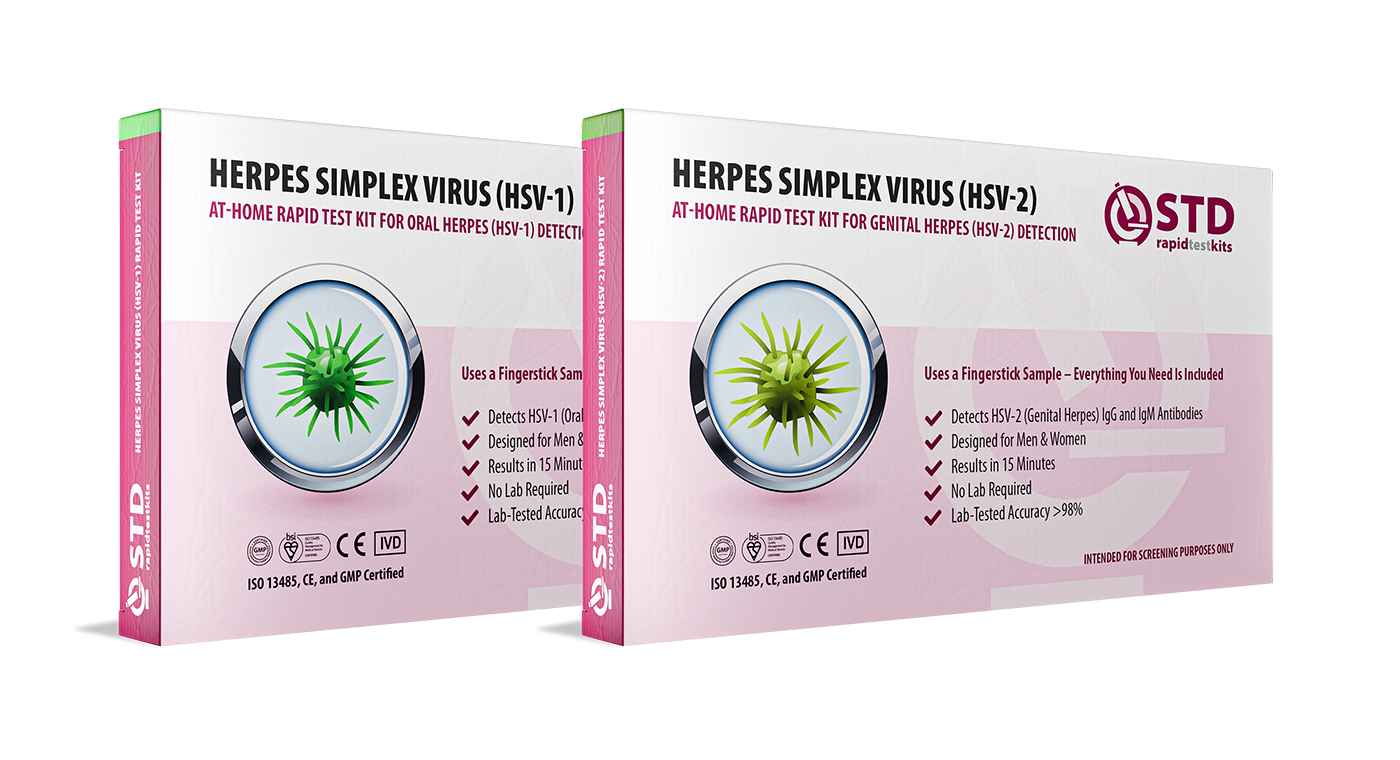
Test at Home with RemediumGenital & Oral Herpes Test Kit
 For Men & Women
 Results in Minutes
 No Lab Needed
 Private & Discreet
Order Now $75.00 $98.00
For all 2 tests
When Should You Get Tested If You See a Rash?
The short answer? Sooner rather than later, but with strategy. If the rash is still visible and suspicious (flat, clustered, unusually red), a swab test may detect herpes DNA directly. This is called a PCR test, and it’s extremely accurate, but only if done while symptoms are active.
If the rash fades, or if you’re outside the optimal swab window, a blood test can still help. The most common is an IgG antibody test, which detects past herpes exposure. However, it may take 4–12 weeks after exposure for antibodies to show up in blood. That means testing too early could give you a false negative.
Here’s the golden testing timeline if herpes is your concern:
| Situation | Recommended Test | Timing |
|---|---|---|
| Visible rash or bumps | PCR swab test | As soon as possible (within 48 hours of symptoms) |
| No visible symptoms, recent exposure | IgG blood test | Wait 8–12 weeks for accurate results |
| Recurrent rash in same area | PCR during symptoms or IgG between outbreaks | Test based on timing of recurrences |
Testing can be done at clinics, through your doctor, or discreetly from home using FDA-approved kits like the Combo STD Home Test Kit from STD Rapid Test Kits. These are ideal if you're worried about privacy or access.
The Emotional Minefield of “Maybe”
For some, the wait between symptom and test result is worse than any diagnosis. Your mind becomes a loop of possibilities, itching phantom symptoms, replaying hookups, wondering who “did this.” It’s natural. And it’s cruel. Especially when the only thing you can see is a rash that might not even be an STD.
Maria, 32, remembers her spiral vividly. “It was just a red mark. It didn’t hurt. But it wouldn’t go away. I waited six days before calling my doctor. Then another ten for results. I barely slept.”
Maria did have herpes. But the hardest part, she says, wasn’t the diagnosis, it was the uncertainty before. The feeling of isolation. The not knowing. Her story isn’t rare. In fact, it’s almost standard. The waiting game isn’t just a medical reality, it’s an emotional one. And it’s something we don’t talk about enough.
Why Some People Delay Testing, And Why It’s Okay If You Did
If you're reading this after Googling for days, or weeks, you’re not the only one. Most people don’t run out and get tested the moment they notice something weird. They hesitate. They stall. They tell themselves it’s probably nothing, because they don’t want it to be something.
Maybe you're afraid of what the doctor might say. Maybe the rash doesn’t seem “bad enough” to warrant attention. You might assume that if it were really an STD, there’d be pain, or discharge, or something unmistakable. You might trust the person you slept with. Or maybe testing just feels expensive, awkward, or confusing to navigate.
Whatever your reason, it's valid. Hesitation doesn’t mean you're reckless. It means you're human. The shame we carry around STD testing wasn’t born in you, it was built into sex education, into how we talk about “clean” versus “dirty,” into every whispered joke and awkward condom ad.
But here’s the real truth: You don’t owe anyone guilt. You don’t need to apologize for protecting your peace. Testing isn’t a punishment. It’s a power move. It’s a way of telling your body, “Hey, I hear you.” And clarity? That’s never something to be ashamed of.
What If It’s Not Herpes? Other Things That Cause a Rash After Sex
Let’s get clear on this too: just because you have a rash after sex doesn’t mean it’s herpes. There are plenty of other explanations, and many of them are treatable, non-contagious, and not STDs. Some people react to laundry detergents, soaps, condoms, lube ingredients, or even their own partner’s sweat.
Here’s how to distinguish common non-STD causes from STD-related symptoms, not with panic, but with informed curiosity:
- Allergic reactions usually appear fast, within hours, and tend to be itchy or inflamed. Think latex, flavored lube, spermicides, or even semen sensitivity.
- Friction rashes happen in places where skin rubs against skin or fabric. They fade fast with rest and barrier creams.
- Yeast infections can sometimes cause external rash-like symptoms without internal discharge. This is more common after antibiotic use or tight clothing.
- Folliculitis (infected hair follicles) can show up as small red bumps and often gets misidentified as herpes or pimples.
If your rash moves, grows, weeps, blisters, or persists for more than five days, especially in the same place, it’s smart to get it checked. Herpes tends to recur in the same spot, even if it looks different each time.
People are also reading: How Long Can You Have Syphilis Without Knowing It?
Recurring Rash in the Same Spot? Pay Attention
One of the more telling signs of herpes is repetition. If you’ve had a rash in the same area before, even if it didn’t seem serious, you should consider herpes as a possibility. The virus lies dormant between outbreaks and can reactivate due to stress, illness, menstruation, or no clear trigger at all.
James, 28, didn’t think much of it the first time. “I figured it was from biking. Just a little rawness near my groin.” But when it returned two months later, same place, slightly worse, he started connecting the dots. A PCR test confirmed it: HSV-2.
What James described is common. Recurrent outbreaks can be mild, almost ghostly. But they offer your body a message: something’s not quite right here. Listen. And respond with curiosity, not fear.
Testing from Home: No Clinic, No Judgment
Still feel nervous walking into a clinic? You’re not the only one. That’s why at-home testing is becoming the first choice for thousands of people each year. It's fast, private, and allows you to reclaim control without sacrificing accuracy.
The STD Rapid Test Kits platform offers a range of options, from individual herpes tests to full panels, shipped discreetly and processed by certified labs. You collect your sample at home, send it back, and get your results securely online. No awkward waiting room. No eyes on your rash.
It’s not just about convenience. It’s about dignity. If a rash has you stressed and you’re unsure what it means, testing shouldn’t be another source of fear. It should be the thing that sets you free.
Whether it’s a bump or a question mark, you deserve to know. This at-home combo test kit can help.
FAQs
1. Can I really have herpes and not know it?
Yep. It happens all the time. Some folks go years without a single blister or sore. Others just see what looks like a razor bump or a red patch and never think twice. Herpes can be sneaky, and silent. That doesn’t make you careless. It makes you normal.
2. So if it’s not itching, it’s probably not herpes, right?
Not exactly. Herpes doesn’t always itch. Sometimes it just shows up as a rash that doesn’t feel like anything. That’s why people miss it or get misdiagnosed. You don’t need to be in pain to be infected.
3. What does a herpes rash actually look like?
It’s not always a horror-show of blisters like you’ve seen online. It could be a small red area, a couple of tiny bumps, or even a paper-cut-looking mark. Think “weird skin thing” more than “obvious STD.”
4. Can allergies or irritation cause similar rashes?
Absolutely. Latex condoms, flavored lubes, even your partner’s body wash can trigger a rash. But those usually come with itchiness, show up quickly, and fade fast. Herpes tends to linger, come back, or change shape.
5. If I only had one rash and it went away, should I still test?
If the rash felt new or suspicious, and especially if it appeared 2 to 12 days after sex, testing is smart. Even a “one-time thing” could be your body’s quiet red flag.
6. How long after sex should I wait to get tested for herpes?
If you’ve got symptoms now, swab them right away. If you’re doing a blood test, wait at least 8 to 12 weeks. That’s how long your body takes to make detectable antibodies.
7. Do I have to go to a clinic to get tested?
Not anymore. You can test from your bathroom, bedroom, wherever, with discreet, FDA-approved kits like STD Rapid Test Kits. It’s real lab testing, minus the fluorescent lights and awkward vibes.
8. If it’s herpes, am I doomed?
No. You’re not gross, ruined, or unlovable. Herpes is incredibly common, like, 1 in 6 adults common. It doesn’t define you. It doesn’t end your sex life. It’s a manageable skin condition with really bad PR.
9. Do people still date and hook up with herpes?
Hell yes. With honest conversations, protection, and meds, people with herpes have great sex and great relationships. Disclosure feels scary, but trust me, rejection isn’t guaranteed. Clarity is sexy.
10. Okay... what should I do right now?
If the rash is fresh, get a swab test. If it’s gone, schedule a blood test. And if you’re still in your head, try a home test to break the spiral. You deserve peace of mind, not just search history tabs.
You Deserve Answers, Not Assumptions
If you’re here, you already care about your health, and that matters more than any label. A rash might seem small, but your peace of mind is big. Whether it turns out to be herpes, irritation, or something else entirely, knowing lets you breathe easier. It stops the spiral and starts the solution.
Don’t wait and wonder, get the clarity you deserve. This at-home combo test kit checks for the most common STDs discreetly and quickly.
How We Sourced This Article: We combined current guidance from leading medical organizations with peer-reviewed research and lived-experience reporting to make this guide practical, compassionate, and accurate. In total, around fifteen references informed the writing; below, we’ve highlighted some of the most relevant and reader-friendly sources.
Sources
1. NHS – Genital Herpes Overview
2. Planned Parenthood – Herpes FAQ
3. Screening for Genital Herpes – CDC
4. Herpes – STI Treatment Guidelines (CDC)
5. Herpes Simplex Virus – WHO Fact Sheet
6. Genital Herpes — Symptoms & Causes (Mayo Clinic)
7. Herpes Simplex Type 1 – StatPearls / NCBI
8. Herpes Simplex Type 2 – StatPearls / NCBI
9. Summary of CDC/NIAID Genital Herpes Workshop
About the Author
Dr. F. David, MD is a board-certified infectious disease specialist focused on STI prevention, diagnosis, and treatment. He blends clinical precision with a no-nonsense, sex-positive approach and is committed to expanding access for readers in both urban and off-grid settings.
Reviewed by: Dr. K. Alston, MPH | Last medically reviewed: October 2025
This article is for informational purposes and does not replace medical advice.


