







Quick Answer: Yes, you can have an STD without knowing. Many infections, including chlamydia, gonorrhea, HPV, herpes, and HIV, often show no symptoms for weeks, months, or even years. You can still transmit them even if you feel completely healthy.
When Silence Is a Symptom Too
There’s a reason public health experts call STDs the “silent epidemic.” Some infections are biologically designed to stay under the radar. Others mimic ordinary health annoyances, discharge that seems like yeast, a bump mistaken for a pimple, a sore throat chalked up to allergies.
But most often? There’s simply nothing at all. No burning, no itching, no discharge, no pain. Just life as usual, until a routine test or a partner’s diagnosis changes everything.
For example, gonorrhea can live in the throat or rectum without symptoms. HPV may go undetected for years before abnormal pap smears reveal its presence. Herpes can exist in a person who’s never once had a visible sore. And HIV, the most feared of all, often starts with nothing but fatigue, or nothing at all.
According to the CDC, over 70% of women and up to 50% of men with chlamydia report no symptoms. With HPV, the numbers are even higher. This invisibility is what makes STDs so insidious, and why symptom-based testing alone is not enough.
The Most Common Asymptomatic STDs
Let’s break down which infections are most likely to go unnoticed. The table below compares likelihood of being asymptomatic across different STDs. These estimates come from surveillance studies and clinical data across diverse populations.
| STD | Chance of No Symptoms | Silent Spread Risk | First Symptom (if any) |
|---|---|---|---|
| Chlamydia | 70–90% | Very high | Discharge, burning with urination |
| Gonorrhea | 40–70% | High | Sore throat, discharge, rectal pain |
| HPV | 90%+ | Extremely high | Genital warts (if visible) |
| Herpes (HSV-1/2) | 60–80% | High | Sores or tingling |
| HIV | 50–60% | Very high | Fatigue, fever, sore throat |
| Trichomoniasis | 70–85% | Moderate | Vaginal odor, itching |
Table 1: Estimated asymptomatic rates and common first symptoms. Based on CDC and WHO data.
Why Do Some People Never Show Symptoms?
The short answer: bodies are different. But there’s more going on beneath the surface. Some STDs, like HPV, are designed to avoid immune detection, lying dormant in tissues while replicating silently. Others may cause symptoms so mild, like slightly cloudy urine or fatigue, that they’re dismissed or missed entirely.
But it’s not just biology. Social and psychological factors matter too. People may not recognize symptoms because they don’t expect them, don’t know what to look for, or don’t want to believe something might be wrong. In one study from the Journal of Adolescent Health, over half of young adults who tested positive for an STD thought they were “low risk” and didn't believe they needed screening.
And then there’s the issue of gender. Women and people assigned female at birth are significantly more likely to have asymptomatic infections, partly because of anatomical differences, partly because vaginal discharge or pelvic discomfort can easily be mistaken for a yeast infection or hormonal changes.
Men, especially cisgender men, are more likely to notice burning, sores, or discharge because their anatomy offers fewer places for infection to “hide.” But even so, many still go months, or years, without knowing they’re infected.

People are also reading: The Most Dangerous Sex Act for STDs (And How to Stay Safe)
“I Thought I Was Just Tired”: Real Stories from the Asymptomatic
Daniel, 32, was in the middle of switching jobs and planning a move when his ex reached out to say she had tested positive for HIV. “I got tested out of courtesy,” he said. “I didn’t feel sick. I figured I was fine.” When his rapid screening came back reactive, his world collapsed. “I hadn’t even had a cold,” he said. “It made no sense.” But it was real, and thankfully, it was caught early.
Aisha, 19, discovered she had gonorrhea after joining a campus wellness challenge that included free STD testing. “I almost skipped it,” she said. “I wasn’t sexually active for months, and I felt fine.” When her results came in, she immediately called her last partner, who also had no symptoms and tested positive. Both were treated the same day, and both now test regularly.
These are just two of thousands of quiet stories, people walking around with infections they don’t know they have, risking transmission with every intimate contact. Some find out through chance. Others through tragedy. But all say the same thing in hindsight: “I wish I had known sooner.”
Check Your STD Status in Minutes
Test at Home with Remedium7-in-1 STD Test Kit

 For Men & Women
 Results in Minutes
 No Lab Needed
 Private & Discreet
Order Now $129.00 $343.00
For all 7 tests
How Long Can You Have an STD Without Knowing?
This is the haunting question that keeps many up at night after a hookup, a breakup, or a routine check. The answer depends on the specific STD, your immune response, and whether any symptoms appear at all.
The timeline of an infection involves three overlapping stages: incubation (when the infection starts growing), onset (when symptoms may appear), and the window period (the earliest point when a test can detect it). The problem? These stages don’t always sync up. You can be contagious before you test positive. You can test positive before you feel a thing.
| STD | Incubation Period | When Symptoms May Show | When Testing Is Most Accurate |
|---|---|---|---|
| Chlamydia | 7–21 days | 2–3 weeks (if at all) | 14 days after exposure |
| Gonorrhea | 2–10 days | Within 1 week (if at all) | 7–14 days after exposure |
| HPV | 1–8 months | Often never | Detected through Pap or DNA tests |
| Herpes (HSV-1/2) | 4–12 days | 1–2 weeks (or never) | Blood test 4–6 weeks after exposure |
| HIV | 2–4 weeks | Weeks to years | Antigen/antibody test: 18–45 days |
| Trichomoniasis | 5–28 days | Variable or never | 7+ days with NAAT test |
Table 2: Infection timelines for major STDs. Adapted from CDC and WHO guidelines.
Why Relying on Symptoms Alone Is Dangerous
There’s a common assumption that if something were wrong, you’d feel it. That your body would “tell you.” But when it comes to STDs, silence isn’t safety, it’s just silence. And in some cases, it’s the silence that causes the most harm.
If you don't treat chlamydia and gonorrhea, they can cause pelvic inflammatory disease (PID), which can permanently damage your ability to have children. HPV can change the cells in the cervix, which can lead to cancer. If HIV is not found and treated, it can turn into AIDS and greatly shorten life expectancy. And even though herpes isn't deadly, it can be very hard to deal with if you don't know you have it.
In one heartbreaking case, a man unknowingly passed herpes to his partner of six years. He had no idea he was a carrier. The trust fracture was worse than the diagnosis. “She thought I cheated,” he shared anonymously on a support forum. “But I didn’t even know I had it.”
This isn’t just about health, it’s about relationships, guilt, future plans. And it’s entirely preventable with testing.
Don’t Wait for Symptoms, Test Anyway
Whether you’re monogamous, newly dating, exploring hookup culture, or taking a sexual pause, regular STD testing is the only way to truly know your status. You don’t need to wait until something feels off. In fact, if you do, it might already be too late, for treatment, for transmission prevention, or for peace of mind.
The good news? Testing doesn’t have to mean a doctor visit, lab paperwork, or awkward conversations. With discreet at-home STD test kits, you can check your status privately, safely, and quickly. Most tests take just minutes to run and show clear results. And if you test positive, you’ll know exactly what to do next.
Need to test for multiple infections at once? This combo test kit checks for chlamydia, gonorrhea, syphilis, and more, all from home. No symptoms required.

People are also reading: Worried That Cold Sore Is Actually Syphilis? Read This First
Testing Too Early? Why Retesting Might Save You
Imagine this: You hook up with someone new. It’s chill, it’s consensual, it’s protected. But three days later, you start spiraling. You want answers, so you grab a test. It comes back negative. Relief, right?
Not necessarily. If the test was taken within the infection’s window period, before your body has had time to develop enough antigens or genetic material to be detected, you could still be infected. Early testing is often too early. False negatives aren’t uncommon when timing is off.
This doesn’t mean early testing is useless. It can help establish a baseline or detect rapid-onset infections like gonorrhea. But for peace of mind, or to protect partners, a retest 2 to 4 weeks after the exposure is smart. Especially if symptoms start to appear or exposure risk was high.
Marco, 27, tested negative five days after a one-night stand. But something didn’t sit right. He retested 17 days later, positive for chlamydia. “I’m glad I listened to my gut,” he said. “I could’ve passed it to someone else without knowing.”
If you’ve recently tested but feel unsure, or if your exposure was recent, don’t hesitate to retest. One test is good. Two, at the right times, is better.
Check Your STD Status in Minutes
Test at Home with RemediumChlamydia Test Kit
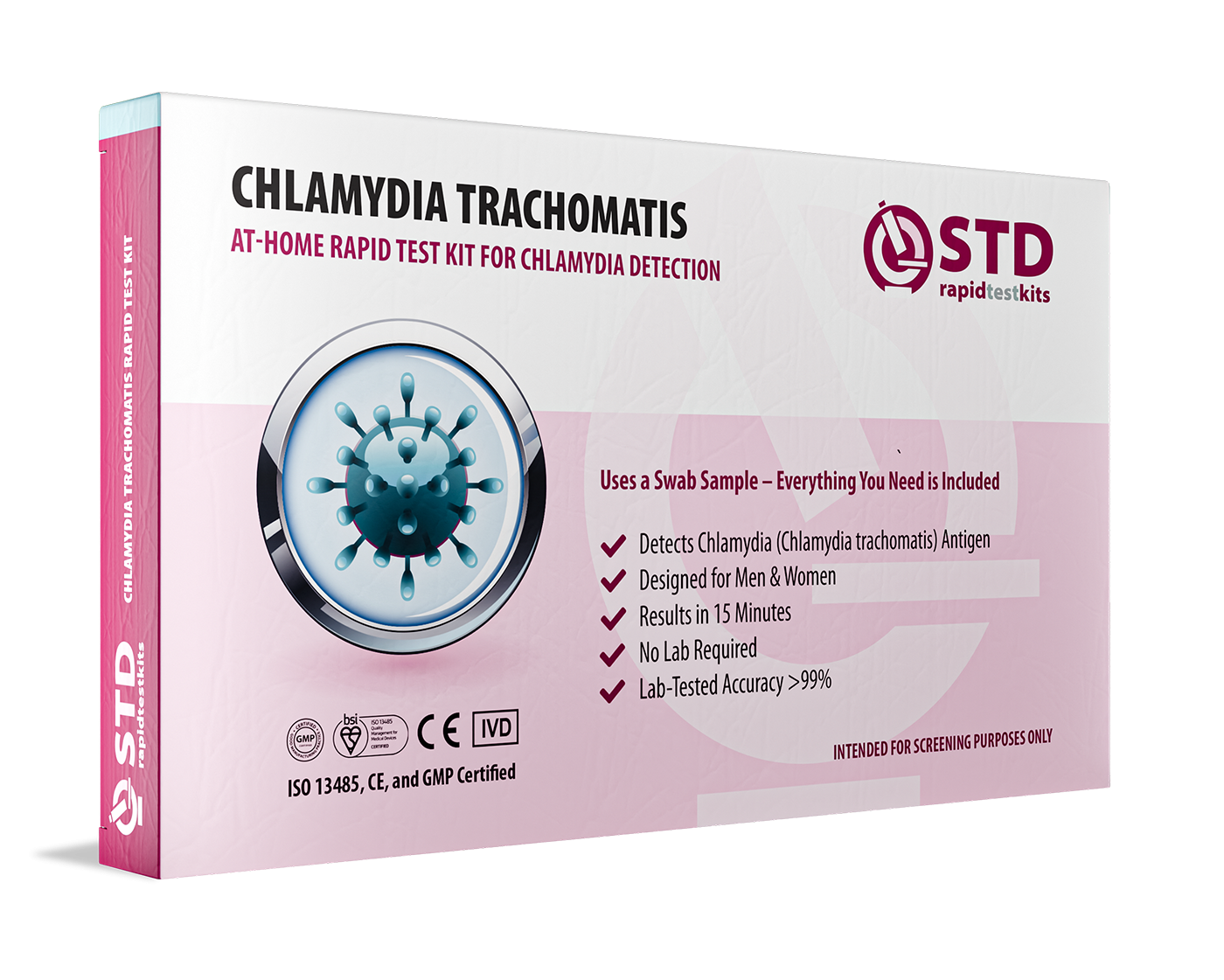 For Men & WomenResults in MinutesNo Lab NeededPrivate & Discreet
Order Now $33.99 $49.00
The Emotional Weight of a Surprise Positive
Finding out you have an STD when you feel perfectly fine can be more emotionally disorienting than if you had symptoms. There’s confusion, guilt, shame, and often, a deep fear of what others will think.
“I blamed myself for not knowing,” said Tina, 29, who tested positive for HPV during a routine cervical screening. “But then I learned how common it is, how most people never know they carry it. That helped me breathe again.”
STDs are infections. They are not character flaws. They don’t reflect your worth, your morals, or your intelligence. And they are incredibly common. More than half of people will contract an STD in their lifetime, often without realizing it. What matters isn’t when or how it happened, but what you do next.
Testing is not just about catching disease, it’s about reclaiming power. Even a positive result can be empowering when it’s followed by treatment, disclosure, and recovery.
Talking to a Partner When You Didn’t Know
This might be the hardest part. You didn’t have symptoms. You didn’t know. And now, you’re faced with telling someone else that you may have passed something to them. The temptation to stay quiet can be strong.
But disclosure, while terrifying, is also healing. It shows integrity. It opens space for honest conversations. It allows your partner to get tested, treated, and protected.
David, 34, tested positive for herpes after a new partner mentioned symptoms. “Telling my ex was brutal,” he said. “I had no signs. I felt guilty. But to her credit, she thanked me for being honest.”
Not everyone reacts with grace. But more often than not, people appreciate transparency. Scripts can help. So can anonymous partner notification services offered by clinics or health departments. What matters most is giving the other person a chance to protect themselves, and not letting shame write your story.
If you're unsure how to start, try: “Hey, I just got some unexpected results. I didn’t have symptoms and didn’t know, but I want you to be safe too. You might want to get tested.” That’s enough. That’s care.
Routine Testing Is Preventative Care
There’s no rule that says you need to feel something to get tested. In fact, the smartest thing you can do is build testing into your routine, just like dentist visits, blood pressure checks, or therapy sessions.
Experts recommend that anyone who’s sexually active, especially with new or multiple partners, should get tested every 3 to 6 months depending on risk level. That includes people in open relationships, those using dating apps, and anyone navigating hookups, kink, or polyamory. Even folks in long-term relationships should test occasionally, especially after periods of non-monogamy, breakups, or new symptoms.
You don't need a clinic or an awkward conversation to start. With rapid, discreet kits from STD Rapid Test Kits, you can test in your own space, on your own time. Whether you’re asymptomatic or just curious, testing is always valid. Always smart. Always worth it.
If your head keeps spinning and you just want peace of mind, this combo test kit checks for the most common STDs and gives you clear answers, without leaving your home.
FAQs
1. Can I really have an STD and feel totally fine?
Yes, annoyingly, yes. That’s what makes some STDs so sneaky. You could be walking around with chlamydia, HPV, or even HIV and feel completely normal. No burning, no sores, no nothing. That’s why testing based on how you “feel” is a gamble, and not a good one.
2. Which STDs hide the most?
HPV is the ultimate ghost, it can hang out in your body for months (or years) without ever throwing up a red flag. Chlamydia and gonorrhea are also pretty quiet, especially in people with vaginas. Herpes can be dormant for years before ever causing a visible sore. Bottom line: the louder STDs aren’t always the most common ones.
3. Should I still get tested if nothing feels off?
Absolutely. Think of it like brushing your teeth, you don’t wait for a cavity before you do it. Testing is just part of basic sexual self-care. If you're sexually active, especially with new or multiple partners, regular screening keeps you (and them) protected.
4. How long could I have had an STD without knowing?
It could be weeks... or years. We've seen folks discover HPV infections that likely started in college, now they're in their 30s. Herpes and HIV can go undetected for ages without symptoms. That’s why it’s so hard to know who gave what to whom, and why blame is pointless.
5. Can I pass it on if I don’t have symptoms?
Yes, and this is the part that hurts. Many STDs are most contagious when there are no visible signs. Herpes can shed virus even when there are no sores. Chlamydia and gonorrhea can spread quietly for months. You don't have to be sick to be a carrier.
6. Is testing still accurate if I’m symptom-free?
Totally, especially if you wait out the window period (that’s the time your body needs before a test can detect an infection). Most rapid and lab tests don’t need symptoms to work. Just make sure you’re testing at the right time post-exposure.
7. What happens if I test positive but still feel fine?
Even if your body isn't sending out any warning signs, you still need treatment. Some sexually transmitted diseases (STDs), like syphilis or chlamydia, can hurt you without you knowing it. Your doctor will help you with medications, telling your partner, and any follow-up appointments.
8. Do I need to tell my partner if I didn’t know I had it?
It’s complicated, but the short answer is yes. You might feel blindsided, but honesty prevents more harm. A simple “Hey, I didn’t know either, but I want you to be safe too” can go a long way. You’re not confessing a crime, you’re being responsible.
9. How often should I test if I’m not showing symptoms?
If you’re having sex, even just occasionally, a test every 3 to 6 months is a solid rule of thumb. More often if you’re dating, exploring, or playing outside the monogamy box. And even if you’re monogamous, a test now and then doesn’t hurt. It just helps.
10. What if I’m scared to know?
Then you’re human. Fear is normal, but not knowing doesn’t protect you. In fact, it can do the opposite. If something’s keeping you up at night, that’s your body asking for peace. And peace starts with a test. Quiet the fear with answers.
You Deserve Answers, Not Assumptions
Not having symptoms doesn't mean not having an infection. The scariest thing about STDs isn't always what they do to your body, it's what they do when you don't know they're there. But here's the truth: knowledge is power. And testing is one of the most powerful things you can do for yourself and your partners.
Don't wait for pain, sores, or something to feel “off.” Get clarity now. This at-home combo test kit offers a simple, discreet, and fast way to find out what’s really going on, whether you feel something or not.
How We Sourced This Article: We combined current guidance from leading medical organizations with peer-reviewed research and lived-experience reporting to make this guide practical, compassionate, and accurate.
Sources
1. WHO Guidelines for the Management of Asymptomatic Sexually Transmitted Infections
2. StatPearls — Sexually Transmitted Infections Overview
3. NIH HIVinfo – HIV and Sexually Transmitted Infections (STIs) Fact Sheet
4. Centers for Disease Control and Prevention
5. World Health Organization – STIs Overview
6. Planned Parenthood – STDs, Testing & Treatment
About the Author
Dr. F. David, MD is a board-certified expert in infectious diseases who works to stop, find, and treat STIs. He blends clinical precision with a no-nonsense, sex-positive approach and is committed to expanding access for readers in both urban and off-grid settings.
Reviewed by: Dr. M. Saidi, MPH | Last medically reviewed: September 2025
This article is for informational purposes and does not replace medical advice.


