






Quick Answer: STDs like chlamydia, gonorrhea, and syphilis can lead to infertility in both women and men, especially when left untreated. Early testing and treatment can prevent permanent reproductive damage.
Why You Might Never Know Until It’s Too Late
Most people expect warning signs. A burning sensation. A rash. Maybe unusual discharge. But the truth is, many STDs linked to infertility, especially chlamydia and gonorrhea, often show no symptoms at all. That means you can have an infection silently causing inflammation, scarring, or blockage in your reproductive organs without ever realizing something's wrong. In fact, according to the CDC, nearly 70% of chlamydia cases in women are asymptomatic, and in men, it's around 50%.
Jared, 32, learned this the hard way. He and his partner were trying for a baby for over a year with no success. It wasn't until a routine fertility screening that he found out he’d once had a case of gonorrhea, likely years ago, and it had caused a condition called epididymitis, which reduced his sperm count dramatically. He never knew. “It was just… gone before I even realized I had it,” he said. “I was too embarrassed to ever get tested when I was younger. Now I’m paying for that.”
These aren’t rare stories. They're common. And they’re often brushed off because the damage is quiet, until it’s permanent.
How STDs Impact Female Fertility
When untreated STDs climb upward through the reproductive system, they can cause inflammation in the uterus, fallopian tubes, and ovaries. This is how Pelvic Inflammatory Disease (PID) develops, and it’s the leading preventable cause of infertility in people with a uterus. Scar tissue from PID can block fallopian tubes entirely or create an environment where a fertilized egg cannot implant safely, increasing the risk of ectopic pregnancy.
Infections like syphilis and trichomoniasis can also interfere with cervical mucus and change the vaginal microbiome, both of which play key roles in conception. The body isn’t just trying to get pregnant, it’s trying to protect itself from harm. And chronic infection changes the rules of that game entirely.
| STD | Fertility Impact | How Damage Occurs |
|---|---|---|
| Chlamydia | Blocked fallopian tubes, PID, ectopic pregnancy risk | Silent infection spreads upward, causes scarring |
| Gonorrhea | Inflammation, tubal damage, infertility | Destroys reproductive tissue over time |
| Syphilis | Increased miscarriage and stillbirth risk | Crosses placenta if untreated in pregnancy |
| Trichomoniasis | Vaginal inflammation, poor fertility outcomes | Changes vaginal pH and immune response |
Table 1: Common STDs that can impact female fertility and how they cause damage when untreated.
And here’s the twist: even one untreated infection, even once, can cause this kind of harm. You don’t need repeated exposures. You don’t need symptoms. You just need time, time for the bacteria to quietly spread upward, day by day, unnoticed.
Male Fertility Isn’t Immune, Here’s How STDs Do Damage
The myth that only women are at risk for STD-related infertility is dangerous, and wrong. In men, STDs like chlamydia and gonorrhea can infect the urethra, prostate, and epididymis (a tube near the testicles that stores and carries sperm). If inflammation or scarring occurs, it can interfere with sperm transport or even kill off healthy sperm production entirely.
HPV, usually discussed in the context of cervical cancer, has also been linked to decreased sperm motility and poor sperm morphology. And untreated syphilis in men, though less common, can still damage testicular function or contribute to chronic inflammation.
When Carlos, 35, and his wife started IVF prep, his sperm analysis came back with near-zero motility. The specialist asked if he’d ever had an STD. “I told her I didn’t know,” he recalls. “I’d never tested. I figured I was clean because I felt fine.” It turned out an old, asymptomatic case of chlamydia had caused slow but permanent inflammation in his reproductive tract.
The hardest part of STD-linked infertility for men is that it rarely causes pain or visible symptoms. Unlike urinary tract infections or other conditions that cause discomfort, this kind of reproductive inflammation is silent, and often missed until fertility testing begins.
People are also reading: Casual SexSerious Consequences Navigating the Perils of FWB
Would You Know If It Was Happening to You?
Here's the cruel irony: the very people who need to test are often the ones least likely to think they need it. If you're in a monogamous relationship, if you use condoms “most of the time,” or if you haven’t had symptoms, you might believe you’re safe. But reproductive damage doesn’t wait for red flags. It builds in silence.
It also builds while we delay. When you tell yourself you’ll test “after the holidays,” or “when things settle down,” or “if it still feels weird,” the bacteria may already be causing damage. And that delay is costly, not just in terms of health, but future options.
If you’re sexually active, the most protective thing you can do isn’t to assume you’re safe. It’s to test even when you think you don’t need to.
STD Rapid Test Kits offers discreet, reliable test kits you can use from home, no awkward clinics, no waiting rooms, no judgment. Try a Combo STD Home Test Kit if you’re not sure where to start.
Check Your STD Status in Minutes
Test at Home with Remedium7-in-1 STD Test Kit

 For Men & Women
 Results in Minutes
 No Lab Needed
 Private & Discreet
Order Now $129.00 $343.00
For all 7 tests
How STDs Affect Your Fertility Over Time
Infection doesn't cause infertility overnight. The damage usually happens gradually. Think of it like rust building inside your pipes, not visible from the outside, but slowly narrowing the channels until nothing can flow. That’s how untreated STDs damage reproductive systems: not with a bang, but with a quiet decay that becomes irreversible the longer it's ignored.
Take Pelvic Inflammatory Disease (PID) as an example. It doesn’t hit all at once. At first, the bacteria climb upward from the cervix into the uterus and fallopian tubes. Then comes inflammation. Then scarring. Each stage narrows or blocks the fallopian tubes further. By the time someone feels severe pain, the scarring is often permanent. That’s how you go from asymptomatic chlamydia to no longer being able to conceive, without ever realizing it happened.
The same applies to men. Repeated or untreated infections can damage the epididymis or vas deferens, leading to what’s known as obstructive azoospermia, when sperm are still produced, but they can’t get out. Inflammatory damage to the prostate can also alter semen quality or reduce ejaculation volume, lowering fertility potential without affecting libido or erection. That’s why so many cases of male infertility are diagnosed after it’s too late to intervene naturally.
It’s not just physical scarring. Some infections alter hormone production, immune responses, or the body’s ability to maintain pregnancy. For people with uteruses, this can mean higher rates of miscarriage or implantation failure. For sperm producers, it can mean lower testosterone or altered sperm DNA. These invisible consequences rarely make headlines, but they shape real lives every day.
Real-Life Fertility Journeys Touched by STDs
Tasha, 31, had her IUD removed after five years. She was ready for a baby. She’d been with the same partner for two years, had no obvious symptoms, and didn’t think twice about her STD history. But months of negative pregnancy tests led her to a fertility clinic. There, a dye test revealed both her fallopian tubes were completely blocked. She had never been diagnosed with an STD, but antibody tests showed prior exposure to chlamydia. “I wish someone had told me this could happen even without symptoms,” she said. “I thought if I didn’t feel it, it wasn’t real.”
Devon, 38, had always been careful. He got tested once in college and again before moving in with his long-term girlfriend. But after they broke up, a few years passed before he tested again. When he and his new partner tried to conceive, they were shocked by his abnormal semen analysis. The fertility urologist said inflammation had likely damaged his sperm motility. “I didn’t even know chlamydia could do that,” he admitted. “Nobody talks about how it affects guys too.”
And that’s the common thread: silence. The silence around male vulnerability. The silence around female scarring. The silence that lets these infections do their worst because nobody thinks they’re “that person.”
Table: Which STDs Can Affect Fertility, And How to Catch Them Early
| STD | Symptoms | Testing Method | How It Affects Fertility |
|---|---|---|---|
| Chlamydia | Often none | NAAT (urine or swab) | Fallopian tube scarring, sperm damage |
| Gonorrhea | Sometimes discharge, pain | NAAT (urine or swab) | PID, blocked ducts, testicular inflammation |
| Trichomoniasis | Itching, odor, or none | Rapid antigen test or NAAT | Changes pH, impacts sperm survival |
| Syphilis | Sores, then rash, or nothing | Blood test (antibody) | Complicates pregnancy, affects sperm health |
| HPV | Usually none | Pap smear, HPV DNA test | Linked to poor sperm parameters, cervical changes |
Table 2: Fertility-related STD risks and how testing can catch infections before they cause permanent harm.
The takeaway? Don’t wait for symptoms. Don't assume your last test, five years ago, still counts. The most common STDs that impact fertility are often silent, and the earlier you catch them, the more likely you are to prevent irreversible harm.
People are also reading: It Started With a Tingle The Genital Herpes Symptoms You’re Probably Ignoring
Testing Is Protection, Not Punishment
If you’ve ever hesitated to test because of shame, fear, or inconvenience, you’re not alone. We live in a culture that still treats STD testing like a dirty secret instead of a smart step toward self-care. But the truth is, testing is what protects your future. It's not a confession. It’s not an admission of guilt. It’s how you keep your options open, your body safe, and your fertility intact.
Whether you’re hoping to start a family someday, actively trying, or simply want peace of mind, the act of testing says one thing: “I care about my body and my future.” And that’s powerful. Even more powerful? Testing before symptoms appear. Testing during a new relationship. Testing because you deserve clarity, not because you’re scared.
This discreet at-home test kit checks for multiple STDs at once and can be done on your schedule. It’s fast, private, and comes with clear instructions. No waiting room. No judgment. Just you, your health, and your answers.
After an STD: What Fertility Recovery Really Looks Like
One of the biggest misconceptions around STDs and infertility is that once you’re treated, everything resets. That’s not always the case. While prompt antibiotic treatment can prevent long-term complications, it can’t undo damage that’s already happened. Scar tissue doesn’t vanish. Blocked tubes don’t clear on their own. Damaged sperm may not fully recover.
But that doesn’t mean all is lost.
Mei, 34, had two miscarriages before finally being diagnosed with a history of PID, caused by a case of gonorrhea from years earlier. Her OB-GYN explained that while natural conception might be more difficult, fertility treatments could still work. “It was heartbreaking,” Mei admitted. “But also kind of a relief. At least I knew what I was dealing with.” Today, she’s seven months pregnant through IVF.
There’s a whole spectrum of fertility outcomes after STD treatment. Some people go on to conceive naturally. Others may need support, medication to improve ovulation, procedures to bypass blockages, sperm retrieval, or IVF. The earlier the infection is caught, the better the chances of preserving fertility without assistance. But even when damage has occurred, modern reproductive medicine offers options, and hope.
Check Your STD Status in Minutes
Test at Home with Remedium6-in-1 STD Test Kit
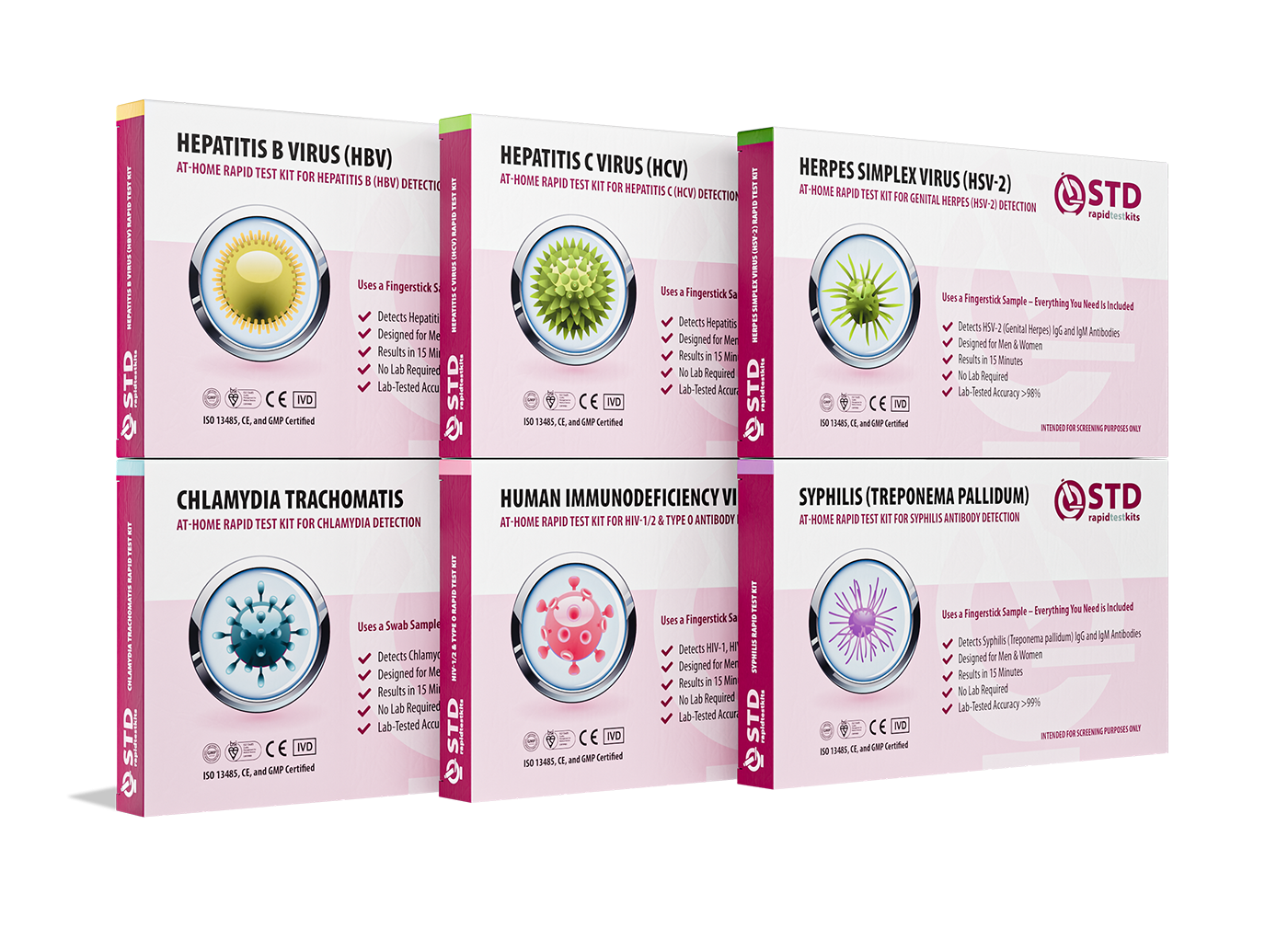 For Men & WomenResults in MinutesNo Lab NeededPrivate & Discreet
Order Now $119.00 $294.00
For all 6 tests
Fertility Testing After an STD: What to Expect
If you’ve had an STD in the past, or suspect you may have had one without symptoms, fertility testing can bring clarity. For people with uteruses, testing usually starts with bloodwork (to check hormone levels), a pelvic ultrasound (to assess ovaries and uterus), and a procedure called an HSG, where dye is used to check if the fallopian tubes are open.
The first step for people who make sperm is to have a semen analysis. It checks the number of sperm, their shape, how well they swim, and their overall quality. Based on those results, hormone tests or scrotal ultrasounds may be done next to see if there is inflammation or damage to the structure from past infections.
Doctors may also run antibody tests to see if your body has ever encountered chlamydia or gonorrhea, especially if you’ve never tested positive but have risk factors or unexplained fertility issues. These aren't always definitive, but they can help explain why someone with no “known” STD history still experiences blocked tubes or low sperm function.
Knowing your fertility status after an STD isn’t about blame, it’s about power. It’s about shifting from fear to action, from guessing to planning. It’s about building a future with open eyes instead of crossed fingers.
When to Test, and Retest, for the Sake of Your Future
If you've had unprotected sex in the last year, even once, it’s worth testing. The CDC recommends annual screening for chlamydia and gonorrhea for all sexually active women under 25, and for older women with new or multiple partners. Men who have sex with men, people with HIV, and anyone with multiple partners should also test at least once a year.
If you’ve been diagnosed with an STD before, follow-up testing is critical. You may need to retest three months after treatment to ensure the infection is gone, especially if you’re planning to get pregnant or begin fertility treatment. Re-infection is common, especially if partners aren’t treated at the same time, or if sexual activity resumes too soon after medication starts.
Retesting isn't paranoia, it's protection. It's not about whether you "trust" your partner. It's about acknowledging that even people we love make mistakes, and biology doesn’t care how in love you are. What matters is catching infections before they turn into infertility.
Return to STD Rapid Test Kits anytime you need clarity, privacy, or a next step. Whether it’s your first time testing or your third, you deserve answers without judgment.
The Emotional Toll of STD-Linked Infertility
This part is harder to quantify. The moment someone hears, “You may have trouble getting pregnant,” something breaks, and it’s not just physical. There’s grief, shame, anger, confusion. Many people feel betrayed by their own bodies, or furious that no one told them STD testing mattered “that much.”
For some, the emotional aftermath is worse than the infection itself. They wrestle with questions: “Did I cause this?” “Could I have stopped it?” “Will anyone want me if I can’t have kids?” These thoughts are normal, but they are also not the full story.
Ali, 36, put it this way: “When I found out I couldn’t conceive naturally, I felt like I lost something I didn’t even know I wanted. But I also realized, I’m still here. I still have options. I still have control.” And she’s right. The story doesn’t end with the diagnosis. It starts with what you choose to do next.
Whether that’s pursuing treatment, exploring IVF, deciding not to have kids, or advocating for better sexual health education, it’s all valid. There’s no right way to recover. Only your way.
FAQs
1. Can STDs really cause infertility even if I never had symptoms?
Sadly, yes. That's why they're so sneaky. You might feel fine, with no burning or discharge, and still have an infection that slowly hurts you. Chlamydia and gonorrhea are the two most common causes of this. Like termites in your reproductive system, they're quiet and hard to see, but if you leave them alone for too long, they can destroy everything.
2. How long does it take for an untreated STD to mess with fertility?
It’s not instant, but it doesn’t take years either. Infections like chlamydia can start climbing toward the uterus or testicles in a matter of weeks. Damage builds over time. Some people get lucky; others end up with blocked tubes or inflamed reproductive tissue before they even notice something’s off. It’s why testing early matters more than waiting for a red flag.
3. I had chlamydia back in college. Can I still get pregnant now?
You might be totally fine, especially if it was caught and treated quickly. But if you never got tested or the infection stuck around too long, there could be scarring in your fallopian tubes or lingering effects on sperm quality. The only way to know for sure is fertility testing. Either way, you're not doomed. Many people go on to have kids after treatment, with or without help.
4. Do STDs really mess with sperm?
Yep. They can wreck the swimmers, block the tubes, or mess with ejaculation itself. Gonorrhea and chlamydia can inflame the epididymis (that coiled tube where sperm mature), and once that’s damaged, fertility can take a hit. It’s not about how you feel, it’s about what’s happening under the surface. And no, you don’t need to “feel sick” for damage to be real.
5. Wait, HPV too? I thought that was just about cervical cancer.
You’re not wrong, HPV is mostly famous for cervical changes. But studies show high-risk strains might also affect sperm quality and embryo development. It’s not the biggest fertility threat on the list, but it’s part of the picture. Best protection? Vaccination, condoms, and regular testing.
6. Is STD-related infertility reversible?
Sometimes. If you catch the infection early, treatment can stop damage in its tracks. But once there's scarring or blocked tubes or inflamed ducts, that doesn’t always heal on its own. That’s when fertility support, like IVF or IUI, can help. Don’t wait to test and hope it’s fixable later. Get ahead of it now.
7. How often should I be testing if I care about my fertility?
Honestly? Once a year minimum if you’re sexually active. More if you’ve got new partners, overlapping partners, or are trying to conceive. Testing isn’t about drama, it’s maintenance, like oil changes for your reproductive health. And it costs a lot less than fertility treatment later.
8. Are condoms enough to protect my fertility?
Condoms are amazing, but they’re not magic. They cut down your risk, especially for infections spread by fluids like HIV or chlamydia. But STDs like herpes and HPV can spread through skin contact. Plus, condoms break. Rely on them, yes, but back it up with testing.
9. I’ve been with the same partner for years. Should I still test?
If you’ve never tested together, yes. A lot of people carry old infections without realizing. This isn’t about trust, it’s about biology. Testing is how you show care for each other, not suspicion. One five-minute test could save you from years of wondering why you're not getting pregnant.
10. Can you still get pregnant after PID?
You can. Some people do, naturally. Others need help. It all depends on how much scarring happened and how early the infection was caught. If you’ve had PID before, definitely talk to a fertility specialist. And don’t give up hope, people get pregnant after PID all the time. You just might need a different path.
You Deserve Answers, Not Assumptions
If you’re reading this, chances are you’ve either wondered about your fertility, or worried that an old infection might come back to haunt you. And that fear is real. But so is your power to act.
Infertility linked to STDs isn’t rare, but it’s also not inevitable. The earlier you test, the better your chances of protecting your future. Whether you’re just curious, planning for a baby, or trying to understand your body, testing is your first step toward clarity, not control.
Don't wait and wonder; get the answers you need. This at-home combo test kit checks for the most common STDs quickly and without drawing attention to itself.
How We Sourced This Article: We combined current guidance from leading medical organizations with peer-reviewed research and lived-experience reporting to make this guide practical, compassionate, and accurate.
Sources
1. Sexually Transmitted Diseases and Infertility – NIH/PubMed Central
2. Reproductive Tract Complications Following Chlamydia Infections – NIH
3. Chlamydia Antibodies and Fertility Outcomes – PubMed
4. Fertility-Related Adverse Outcomes After Chlamydia – NIH Review
5. HIV, HPV and Chlamydia: Effects on Male Fertility – NIH
About the Author
Dr. F. David, MD is a board-certified infectious disease specialist focused on STI prevention, diagnosis, and treatment. He blends clinical precision with a no-nonsense, sex-positive approach and is committed to expanding access for readers in both urban and off-grid settings.
Reviewed by: M. Reyes, MPH | Last medically reviewed: September 2025
This article is for informational purposes and does not replace medical advice.


