







Quick Answer: Chlamydia and other STIs are rising in older adults due to low condom use, limited testing, and re-entry into dating. Symptoms are often missed or confused with aging, but discreet at-home testing is available and effective at any age.
“I Thought STDs Were a Young Person’s Problem”
That’s what Roger, 59, told his nurse practitioner after a routine screening revealed gonorrhea. He had been recently divorced, back in the dating pool, and, like many others, hadn’t used condoms in years. “I figured, we’re both grown-ups,” he said. “She didn’t ask, and I didn’t think I needed to.”
According to the Centers for Disease Control and Prevention (CDC), STIs in adults aged 55 and older have more than doubled over the last decade. Chlamydia in particular is stealthy, often symptomless, easily misattributed to bladder issues, and able to lurk undetected for months. For men, it can present as a slight burning when peeing or mild testicular discomfort. For women, it might feel like a yeast infection that won’t clear or nothing at all. Both can pass it without ever knowing.
But what’s behind the rise? A lot, actually. More older adults are sexually active than ever, thanks to dating apps, longer lifespans, and erectile dysfunction medications. Many are divorced or widowed and back in the dating world after decades. But here’s the kicker, most aren’t using protection.
The Condom Myth: “We Can’t Get Pregnant, So We’re Safe”
Condoms were once about pregnancy prevention. That’s how they were taught in high school sex ed, if they were taught at all. But in retirement-age hookups, pregnancy isn't on the radar. So condoms? Often left in the drawer.
Rosa, 61, met her new partner at a yoga retreat. “We connected. We were open about being older and single. But I didn’t feel like I could ask him about condoms without killing the vibe. He was so respectful, it felt silly.” Months later, after recurring UTIs that didn’t respond to antibiotics, her doctor ran a full panel. The result: positive for chlamydia.
For many, it’s not just about neglecting condoms, it’s about not even considering them. There’s a pervasive myth that STIs “belong” to youth: college dorms, one-night stands, high school mistakes. But STIs don’t discriminate based on age. The viruses and bacteria don’t care if you’re on Medicare or TikTok.
Why Older Adults Are at Higher STI Risk
| Risk Factor | Explanation |
|---|---|
| Low Condom Use | Perceived lack of pregnancy risk and stigma around initiating “the talk.” |
| Re-Entering Dating | Divorced/widowed people often unaware of modern STI prevalence and risks. |
| Biological Vulnerability | Vaginal dryness, thinning mucosa, and reduced immune response increase susceptibility. |
| Lack of Testing | Older people don't usually get regular STI tests, even when they go in for their yearly checkup. |
| Erectile Dysfunction Medications | Increased sexual activity without corresponding rise in safer sex practices. |
Table 1: Key factors contributing to STI vulnerability in adults over 50.
When the Diagnosis Is Wrong: “It’s Probably Just a UTI”
For months, Harold, 67, kept returning to urgent care with painful urination. He was handed antibiotics each time and told, “It’s a simple UTI, happens at your age.” But it didn’t clear. On his third visit, a younger provider ordered a full STI panel. The real culprit? Chlamydia.
This isn’t rare. In older adults, STI symptoms are frequently confused with age-related conditions, overactive bladder, prostate inflammation, vaginal dryness, or hormone shifts. The result? Missed diagnoses. One study published in the journal Sexually Transmitted Diseases found that providers are significantly less likely to test older adults for STIs, even when symptoms suggest infection. And older patients, for their part, may not even bring it up, out of embarrassment or a belief that it “can’t happen to them.”
But it can. And it does. And when left untreated, infections like chlamydia can lead to long-term complications: pelvic inflammatory disease, infertility, and in men, epididymitis, a painful swelling near the testicles that’s often dismissed as sciatica or strain.
People are also reading: No Clinic, No Problem: Colorado’s Guide to At-Home STD Testing
“I Didn’t Know At-Home Testing Was for People My Age”
“I thought that was for teens or people doing hookups,” said Greg, 72, who used an at-home combo STD test kit after finding a box in his grandson’s medicine cabinet. The results shocked him, he tested positive for trichomoniasis. His doctor later confirmed it, and he began treatment. “If I hadn’t seen that test, I don’t think I ever would’ve known.”
At-home STI testing is not just for the tech-savvy or the under-40 crowd. In fact, it’s especially beneficial for older adults who want privacy, face mobility challenges, or live in remote areas. Most rapid kits now offer discreet shipping, finger-prick or urine collection, and results within minutes, all from home. And many older users report that it feels less shameful than walking into a clinic or asking a provider who might judge them.
Yet, most older adults don’t know these options exist. They assume STI testing is something you do only if you’re “promiscuous” or sick. But here’s the catch: most STIs have no symptoms at all. They sit quietly, passed between partners, especially in monogamous relationships where neither person realized they had been exposed years earlier.
Symptoms of Chlamydia vs Common Age-Related Conditions
| Symptom | Chlamydia Indicator | Often Misattributed To |
|---|---|---|
| Burning with urination | Yes | UTI or bladder irritation |
| Vaginal or penile discharge | Sometimes | Hormonal changes or natural lubrication |
| Pelvic or lower abdominal pain | Yes | Arthritis, digestion issues, or menopause |
| Testicular discomfort | Yes | Hernia, pulled muscle, or prostate issues |
| No symptoms at all | Very common | Assumed clean health |
Table 2: Chlamydia symptoms often overlap with age-related conditions, leading to misdiagnosis or missed detection.
Why You Can’t Trust Silence (Or Your Partner’s History)
One of the hardest truths about STIs in older adults is this: long-term relationships aren’t always monogamous. Sometimes there’s cheating. Sometimes there’s re-entry after a partner dies or a divorce. Sometimes both parties were infected long ago and never knew.
Dolores, 58, was in what she believed was a monogamous relationship. When she tested positive for chlamydia during a routine Pap smear, she was stunned. Her partner claimed ignorance, and tested negative. The source? A previous infection she’d unknowingly carried for years. “I kept thinking I’d feel something if something was wrong,” she said. “I didn’t.”
This is why testing isn’t about shame, it’s about care. It’s about prevention, honesty, and clarity. And it’s about knowing that age doesn’t mean immunity. In fact, testing becomes more important as you age, precisely because of how many symptoms can be missed or misread.
Reclaim Peace of Mind with One Simple Test
If your gut is stirring right now, that’s your intuition doing its job. Whether you’re newly partnered, haven’t tested in years, or are just curious, there’s no downside to getting checked. This at-home combo STD test kit checks for the most common infections, including chlamydia, gonorrhea, and syphilis, all with discreet shipping and rapid results.
Don't wait for a “real reason.” Testing is reason enough. You deserve clarity, and you’re never too old to protect your health.
Check Your STD Status in Minutes
Test at Home with Remedium8-in-1 STD Test Kit
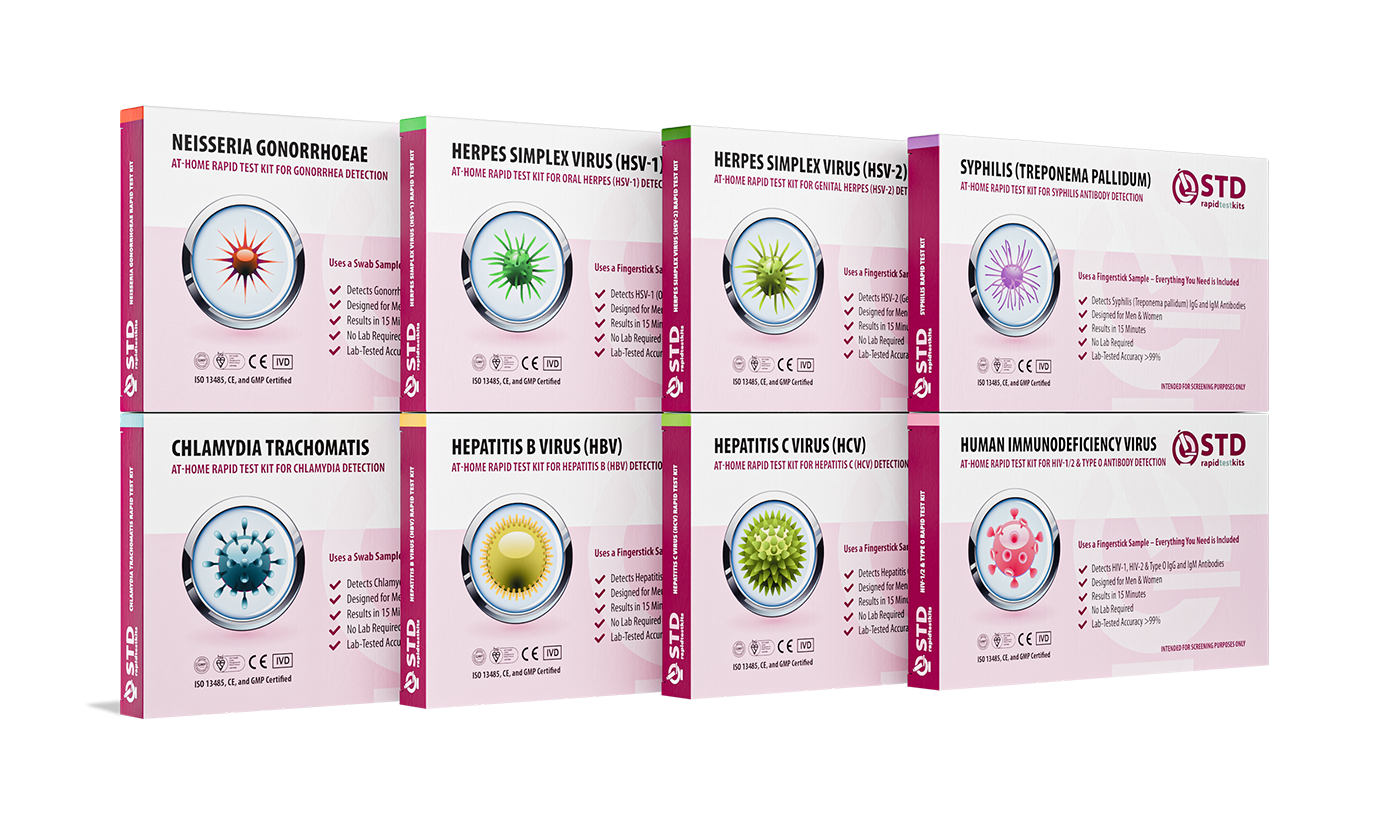
 For Men & Women
 Results in Minutes
 No Lab Needed
 Private & Discreet
Order Now $149.00 $392.00
For all 8 tests
“I Took the Test in Secret, Then Told My Best Friend”
Some stories don’t get told out loud. Camille, 66, didn’t tell anyone when she ordered an STD kit. She hid it in her scarf drawer and waited until her roommate was at the grocery store before taking it. “It felt like I was doing something wrong,” she said. “Even though I knew I wasn’t.”
She tested positive for chlamydia. After a long cry and two days of Google spiraling, she finally told her best friend. To her surprise, the friend hugged her and said: “You’re not dirty. You’re human.” That conversation started a ripple. Two of her other friends got tested. One of them was positive too. None of them had symptoms.
There’s a deep generational silence around STIs for people who grew up before the internet, before sex-positive education, before LGBTQ+ inclusion in health classes. Many older adults were raised on shame. On euphemisms. On the idea that “good” people didn’t get infections. That’s false. And it’s dangerous.
STIs aren’t moral failures. They’re part of being sexually active, at any age. And testing is not a confession. It’s a form of self-respect.
Myths vs Facts About STIs in Older Adults
| Common Myth | Reality |
|---|---|
| “Older people don’t get STDs.” | STI rates in adults over 55 have more than doubled in the last decade. |
| “If I don’t have symptoms, I’m fine.” | Most chlamydia infections are silent, especially in older adults. |
| “We’ve been together for years, so we’re safe.” | Infections can go undetected for years or arise from past partners. |
| “Condoms are only for pregnancy.” | Condoms prevent STIs regardless of pregnancy risk. |
| “Testing is for young or risky people.” | Testing is for everyone who is sexually active, at any age. |
Table 3: Challenging age-related myths can improve prevention and empower healthier conversations.
Testing Is Care, Not Confession
You don’t need to explain why you’re getting tested. You don’t need to justify your choices to a doctor, a partner, or yourself. You’re allowed to prioritize your health. You’re allowed to say, “I just want to be sure.”
Testing doesn’t mean you’ve done something wrong, it means you’re doing something right. For yourself. For your future. For anyone you’re close to now or will be in the future. And while it can feel awkward the first time, most people who test report that the second time feels empowering. Like finally stepping out of shame and into ownership.
We are all sexual beings, yes, even into our 70s, 80s, and beyond. We deserve accurate information, privacy, and tools that reflect the reality of our lives. That’s what at-home STD testing offers: agency. You get to know without anyone gatekeeping your body or judging your history.
You Deserve to Know, Not Guess
If something feels off, or even if it doesn’t, you don’t need a “reason” to check in with your health. STD Rapid Test Kits offers discreet, fast, FDA-approved testing you can do from the privacy of your home. No waiting rooms. No lectures. Just answers.
Whether it’s your first test in decades or your first one ever, you’re taking care of yourself. And that matters more than anything.

People are also reading: Can You Get Hepatitis B From Oral Sex? Yes, and Here’s How.
FAQs
1. Can older people really get chlamydia?
Yes, and not just a few. More people over 50 are testing positive than ever before. Chlamydia doesn’t care if you’re retired, divorced, or have grown kids. If you’re having sex (any kind of sex), you’re eligible. It’s not about being reckless. It’s about biology. This stuff spreads quietly, and condoms aren’t just for the under-40 crowd.
2. But I don’t have any symptoms. Should I still test?
Definitely. Most people with chlamydia feel nothing at all, no burning, no discharge, no clue. It’s like a houseguest who shows up, eats your snacks, and leaves a mess without saying a word. If you’ve had a new partner, or even if it’s just been a while, getting tested is smart, not paranoid.
3. Is it awkward to ask my doctor for an STD test?
Honestly? Sometimes. But it shouldn’t be. And you don’t have to wait for them to bring it up, many don’t. Just say, “I’d like to get screened for STIs.” You don’t owe anyone a backstory. If you’d rather skip the convo entirely, that’s where at-home kits come in clutch.
4. Are at-home STD tests accurate for people my age?
Yup. Age doesn’t change how these infections show up in your body, and today’s rapid tests are made to be simple, fast, and accurate. If you can pee in a cup or swab your cheek, you can take one. They’re great for folks who want privacy, especially in smaller towns or close-knit communities.
5. We’ve been together for years, why would I need to test now?
Because time doesn’t equal immunity. You or your partner might have carried something for years without knowing. Or maybe you’ve recently become sexually active again. Testing isn’t about mistrust. It’s about taking care of yourself and anyone you’re close to now. Think of it as checking your smoke alarms, not assuming your house is on fire.
6. Do I still need to use condoms if I can’t get pregnant?
100%. Pregnancy may be off the table, but STIs are not. In fact, postmenopausal bodies can be more prone to small tears or dryness, which can increase your risk of transmission. Condoms = protection, no matter how many candles are on your birthday cake.
7. How do I even bring up testing with a partner?
Try something low-key like: “Hey, I read this wild stat about STIs in our age group, can we both get tested just to be sure?” Make it about mutual care, not suspicion. If they scoff or refuse, that’s a red flag, not a dealbreaker, you just learned something important.
8. Can you get chlamydia again after you’ve been treated?
Yep. Treatment wipes it out, but it doesn’t give you immunity. If your partner wasn’t treated, or if you start seeing someone new, you can get reinfected. That’s why retesting a few weeks later is usually a good move.
9. What happens if I ignore it?
It doesn’t just vanish. Chlamydia can quietly cause real damage, pelvic pain, inflamed testicles, even fertility problems. And it doesn’t matter how old you are; your body still deserves care. The sooner you catch it, the easier it is to treat with a simple antibiotic.
10. Does Medicare or insurance cover this kind of testing?
Sometimes. Medicare covers STI screening if you’re considered “at risk,” which honestly applies to a lot more people than they think. Private insurance varies. But if you want full control, you can always get an at-home test without needing permission, or anyone’s approval.
You’re Not Done Living, So Don’t Stop Protecting Your Health
Just because you’re older doesn’t mean you’re exempt from the basics of sexual health. You still deserve pleasure, intimacy, connection, and the peace of mind that comes with knowing your status. Whether you’re dating again after a long time or navigating intimacy with a long-term partner, testing is a simple, powerful act of self-care.
Don’t wait for symptoms. Don’t wait for permission. This discreet combo test kit checks for the most common STDs from home. No clinic visit. No waiting room. Just clarity.
How We Sourced This Article: We combined current guidance from leading medical organizations with peer-reviewed research and lived-experience reporting to make this guide practical, compassionate, and accurate. In total, around fifteen references informed the writing; below, we’ve highlighted some of the most relevant and reader-friendly sources.
Sources
1. CDC
3. NHS
4. CDC
5. CDC
6. PMC
About the Author
Dr. F. David, MD is a board-certified infectious disease specialist focused on STI prevention, diagnosis, and treatment. He blends clinical precision with a no-nonsense, sex-positive approach and is committed to expanding access for readers in both urban and off-grid settings.
Reviewed by: Janelle Cruz, RN, MPH | Last medically reviewed: September 2025
This article is for informational purposes and does not replace medical advice.


