







Quick Answer: If you’re Googling “does this look normal?” about a bump, rash, or itch, you’re not alone, and yes, many STDs start with confusing or subtle symptoms. The best time to test is usually 2 to 3 weeks after exposure, but some signs warrant immediate attention. At-home testing can help you skip the shame spiral and get real clarity.
When a Bump Feels Like a Bomb: The Symptom Spiral Begins
Let’s start where most people do: not in a clinic, but in their bathroom mirror. You’re brushing your teeth and notice a small red spot on your lip. It doesn’t hurt, but it wasn’t there yesterday. You tell yourself it’s a pimple. Just an ingrown hair. Still, something nags at you. What if it’s herpes? You’ve never had an outbreak before. You always use protection, mostly. So you do what everyone does in 2025: you take a photo and Google it.
This is the moment where shame collides with technology. Most people don’t search “I think I have an STD.” They search “tiny bump inner thigh not itchy,” or “STD rash or heat rash.” These aren’t just awkward queries. They’re symptoms of a bigger public health failure: most people don’t know what STDs look like, when they show up, or how they spread. And when the only answers they’ve ever gotten were abstinence lectures or cartoon diagrams from tenth grade, the internet starts to feel like the only safe place to ask real questions.
Unfortunately, the internet is also full of misinformation. Dermatologists and sexual health professionals have noted a massive spike in patients misdiagnosing themselves thanks to Google Images. According to a 2023 study in the Sexually Transmitted Diseases Journal, more than 60% of patients who self-diagnosed via online photo searches had incorrect conclusions, often mistaking harmless conditions for serious STDs, or vice versa.
The Search History We’re Too Embarrassed to Admit
If we could crack open the search history of every phone in America, we’d see just how common these fears are. "STD bump or razor burn." "STD or jock itch." “Can you get herpes from a toilet seat?” It’s not stupidity. It’s a lack of education mixed with raw fear. Sex education in the U.S. is patchwork at best, and absent at worst. Only 17 states require medically accurate sex ed, and even fewer mandate LGBTQ-inclusive information. So when something doesn’t look or feel right, people turn to search bars instead of support systems.
One Reddit user wrote: "I kept googling ‘vaginal burning no discharge STD’ for two weeks before I worked up the courage to go to Planned Parenthood. I was sure it was herpes. It was BV. But I tortured myself first."
This is the cost of shame-based sex education: we make people feel so guilty about their bodies and their choices that they’d rather spiral online than ask for help. And the longer they wait, the higher the risk of transmission, complications, or emotional distress. This isn’t just about fear. It’s about access, autonomy, and dignity. And it’s why we have to start taking people’s Google searches seriously.
When Google Becomes Your Doctor (And Gets It Wrong)
Here’s what most people don’t know: STDs rarely look like the textbook photos we saw in school, if we saw them at all. Many infections, like chlamydia or gonorrhea, cause no symptoms at all, especially in the early stages. Others, like herpes, can show up as a single blister or a cracked corner of your mouth that you’d easily mistake for dry skin. Even doctors sometimes get it wrong without a test. So when you're comparing your skin to a photo on Google, you're playing a dangerous game of diagnostic roulette.
A 2022 analysis published in the Journal of Medical Internet Research found that visual symptom searches often increase health anxiety rather than providing clarity. The study tracked participants searching for terms like “STD rash on penis” and “herpes vs pimple on lip” and found they were more likely to delay care after viewing graphic images, either because they thought their symptoms didn’t look “bad enough,” or because they were so terrified they shut down.
This is why real testing matters. You can't confirm an STD from a photo. And you can't rule it out because “your bump doesn’t look like that one guy’s on WebMD.” But we also can't ignore why people are looking in the first place. They're scared. They're alone. And they’re trying to take care of themselves the only way they know how.
People are also reading: Why Your Belly Pain Might Actually Be an STD
This Isn’t Just Bad Sex Ed, It’s a Public Health Crisis
Let’s be blunt: if you’re typing “STD or ingrown hair?” into Google, it’s not just because you’re paranoid. It’s because no one ever showed you what to expect. U.S. sex education is riddled with gaps. Many states emphasize abstinence, skip over visual symptom education entirely, or limit instruction to heteronormative, cisgender frameworks that leave queer and trans people dangerously uninformed. And yet the CDC reports that STDs have risen for the eighth consecutive year, with 2.5 million cases of chlamydia, gonorrhea, and syphilis in 2022 alone. Something doesn’t add up.
What’s missing isn’t just facts, it’s access to honest, unfiltered, medically accurate information. It’s the ability to say, “I had unprotected sex three nights ago and now my testicles itch, what do I do?” without being met with shame or blank stares. Instead, people resort to late-night doomscrolling through anonymous forums, blurry photos, and search suggestions that turn minor symptoms into worst-case scenarios. This is modern sex ed, and it’s failing us.
“Google Told Me I Was Fine. I Wasn’t.”
Tariq, 23, was a college junior when he noticed a stinging sensation during urination and a single small sore near his groin. He googled “STD sore on thigh,” saw images of late-stage syphilis, and convinced himself he was safe. His sore didn’t look “that bad.” The pain faded in a day. He never got tested.
“I was scared,” he admitted later. “I didn’t want it to be real. And Google kind of confirmed it wasn’t. It didn’t look like those horror pictures. So I moved on.”
Three months later, he started experiencing fatigue and swollen lymph nodes. A campus clinic visit revealed he had syphilis, now in its secondary stage. He had also unknowingly passed it to his partner. All because an image search told him he didn’t look “infected enough.”
Tariq isn’t alone. Studies show that people often underestimate their risk when their symptoms don't match the extremes they've seen online. But most STDs don’t come with flashing neon signs. Many are quiet, mild, or invisible. And if no one teaches you what “mild” actually looks like, you assume you’re in the clear. That false reassurance can delay care, increase transmission, and in some cases, lead to long-term complications.
Myth-Busting the Top Symptom Searches
Let’s clear a few things up, because your browser history deserves better:
Searching “STD or pimple” is common, but misleading. Herpes can present as a single bump, even one that doesn’t blister. And it can show up in places you didn’t expect, mouth corners, inner thighs, even buttocks. If it tingles, hurts, or recurs, it’s worth checking. But many people dismiss it because it doesn’t look “gross enough.”
“Can you get chlamydia without having sex?” Yes. Oral sex counts. Genital contact without penetration counts. Sharing sex toys without cleaning them? Also counts. The myth that only “full sex” transmits infection is deeply rooted, and dangerously false.
“It burns when I pee but there’s no discharge.” Classic gonorrhea or chlamydia symptom, especially in men. Not everyone has obvious discharge. In fact, up to 50% of infected people show no visible signs at all.
“STD symptoms no discharge female” returns thousands of confused posts. Many women report general discomfort, mild cramping, or spotting and still assume it’s nothing. But trichomoniasis, HPV, and even early-stage syphilis often fly under the radar.
Google can’t tell you these things. But studies can. A 2022 NIH review confirmed that up to 80% of chlamydia cases and 70% of trichomoniasis infections are asymptomatic. That means you could have an infection for months, even years, without knowing, especially if you were relying on visual clues or outdated assumptions.
Check Your STD Status in Minutes
Test at Home with Remedium10-in-1 STD Test Kit
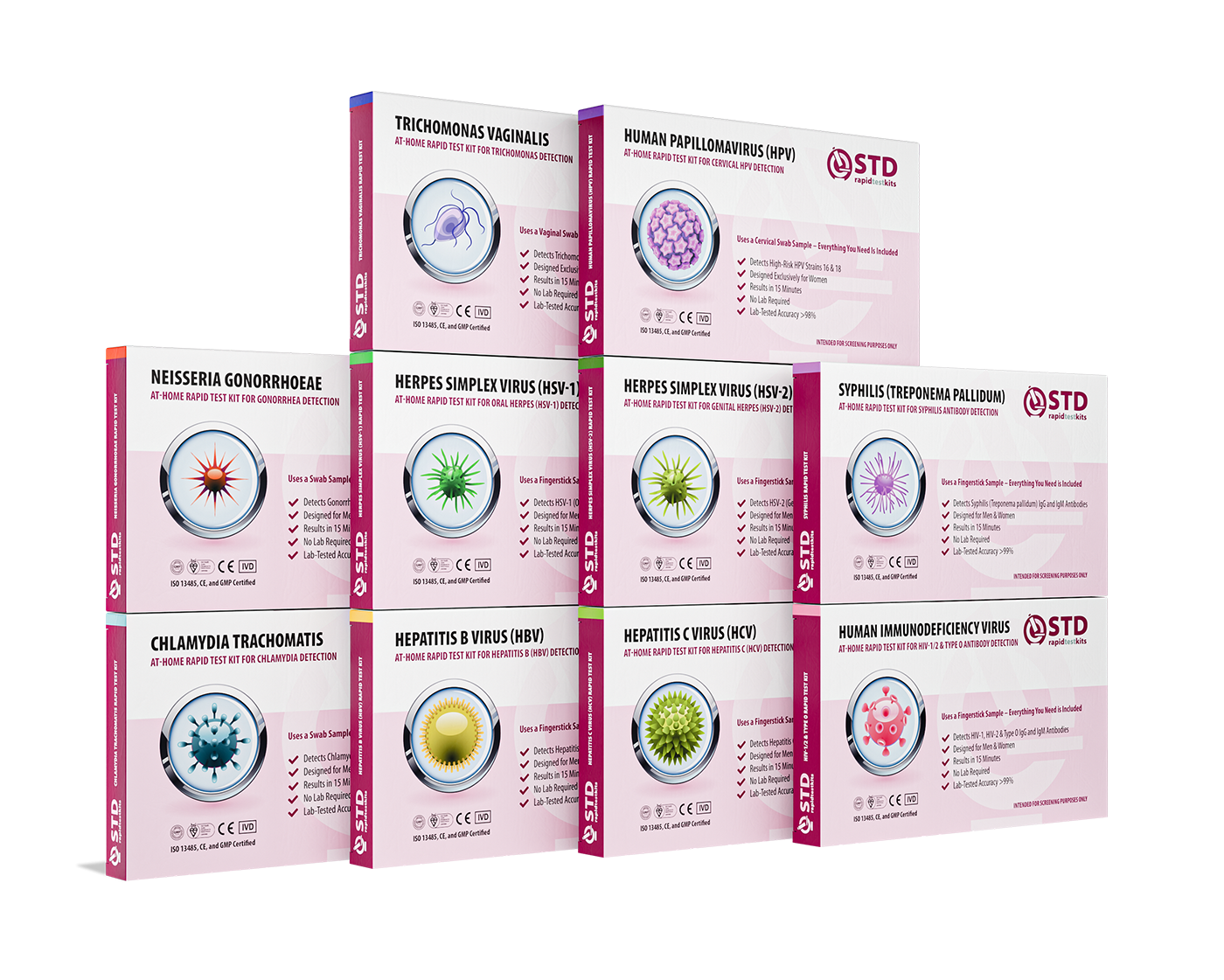
 For Women
 Results in Minutes
 No Lab Needed
 Private & Discreet
Order Now $189.00 $490.00
For all 10 tests
What That Bump Might Be, And Why You Should Still Test
Here’s the raw truth: many common STDs look like things they aren’t. You might assume it’s an ingrown hair, a shaving cut, a fungal rash from the gym. And sometimes, it is. But sometimes it’s not, and the only way to know is to test.
| Symptom | Common Misdiagnosis | Possible STD | Testing Needed? |
|---|---|---|---|
| Red bump, no pain | Ingrown hair, razor burn | Herpes, syphilis | Yes |
| Itching without discharge | Yeast infection, dry skin | Chlamydia, trichomoniasis | Yes |
| Sore throat after oral sex | Strep throat, cold | Gonorrhea, chlamydia | Yes |
| Single open sore | Cut, abrasion | Syphilis | Yes |
Table: Common symptom confusions that delay testing. If you're unsure, test, especially after new or unprotected sex.
Peace of Mind Doesn’t Need to Be Public
You don’t need to ask Reddit if your vagina looks “off.” You don’t have to zoom in on Google Images until your chest tightens. You can get answers, real ones, without ever leaving your house or telling a single soul. This at-home combo test kit checks for the most common STDs discreetly and quickly, no waiting rooms, no judgment, no awkward questions. Just a clear result and a plan for what’s next.
If your head keeps spinning, remember: you’re not overreacting. You’re paying attention. And that alone is worth a test.
From Panic to Power: Turning Fear Into Action
By the time you’re Googling “STD on lip or pimple,” you’ve already done the hardest part, you’ve admitted that something might be wrong. That moment matters. It means you care about your body, your partners, your peace of mind. But we don’t treat that moment with enough respect. Instead, we make people feel like they’re overreacting, being dramatic, or acting “dirty.” That stigma doesn’t just hurt feelings, it delays diagnoses, increases transmission, and pushes people away from care that could change everything.
Here’s what we rarely say out loud: it’s okay to be scared. It’s okay to be confused. But you deserve to move through those feelings with facts, not fear. Most STDs are treatable. All of them are manageable. And many can be caught early if you know when, and how, to test. That’s why at-home options exist. Not as a last resort, but as a real tool for people who need privacy, speed, and control.
Testing doesn’t have to mean outing yourself. It doesn’t mean you’re dirty. It means you’re human. And responsible. That’s not shameful, it’s powerful.

People are also looking for: How Soon After Sex Can You Test for STDs?
When to Test: Timing Matters More Than You Think
If you had unprotected sex on Friday and woke up itchy on Sunday, it makes sense that you’d want to test immediately. But here’s the science: most STDs have a window period, the time between infection and when it shows up on a test. Testing too early can lead to false negatives, which gives you the illusion of safety and the risk of unknowingly spreading infection.
For most common infections like chlamydia and gonorrhea, the best testing window starts around 7 to 14 days after exposure. For syphilis and HIV, it may take 3 to 6 weeks to show accurate results. That doesn’t mean you should wait to care. If you’re having symptoms, burning, sores, itching, spotting, get checked sooner. But if you test negative early on, plan to retest a few weeks later for confirmation. Think of it as part one and part two of the same story.
A lot of people test too soon, see a negative, and think they're fine, but then they get sick weeks later. A study that was published in 2023 and reviewed by other experts found that 1 in 4 patients who were tested within the first week after being exposed needed to be tested again to make sure they were infected. It's not about being paranoid; it's about being exact.
“I Thought I Was Just Being Paranoid”
Jade, 27, had just started dating again after a long-term breakup. Her first hookup was respectful, consensual, and mostly protected. But a few days later, she noticed itching around her vulva that didn’t feel familiar. She hesitated. It didn’t hurt, didn’t burn, and there was no discharge. She googled “STD itch no smell” and convinced herself it was irritation from a new soap. Still, something felt off.
“I told myself I was being paranoid,” she said. “I almost didn’t test because I didn’t want to be ‘that girl.’ But then I read about trichomoniasis and realized that not everything has to be dramatic to be real.”
Her at-home test confirmed trichomoniasis. With treatment, her symptoms cleared within days. More importantly, she didn’t pass it to her next partner, because she listened to her gut and got tested, even when the internet made her doubt it.
How to Protect Yourself, Without Losing Your Mind
There’s no perfect way to avoid every risk, but there are better ways to respond to it. Use protection during all types of sex, including oral. Clean your sex toys between uses. Get tested between new partners or after any condom break. And if you notice something weird, a bump, a burn, a change, don’t wait for it to get worse before you act.
More importantly, stop using fear as your only tool. You don’t have to be terrified to take your health seriously. You can test from home, plan for retests, and have calm conversations with partners about exposure. That’s what prevention actually looks like. It’s not a lecture. It’s a lifestyle.
If you’ve ever stared at yourself in the mirror wondering if you were “overreacting,” let this be your sign: you’re not. You’re being cautious. And you’re allowed to want answers without guilt. STD Rapid Test Kits exist to give you those answers, privately, accurately, and on your own terms.
It’s Not Just About You, It’s About Care
Here’s something we don’t say enough: testing isn’t just self-care. It’s community care. When you get tested, you protect your partners, even if things didn’t last. You normalize health as part of sex. You become the kind of person who doesn’t ghost someone after an awkward conversation, you become someone who knows how to show up with honesty.
And guess what? You don’t have to be perfect. You can screw up. You can forget. You can get scared. You can be late. But what you do next? That’s the part that matters.
Whether it’s a combo kit after a scary weekend or a quiet retest after a false negative, the tools exist. You just have to use them.
You Deserve Answers, Not Assumptions
If you’re here, you’ve already done something powerful: you chose to understand, not just react. That’s what matters most. You don’t need to decode your symptoms alone. You don’t have to suffer through 2AM search spirals or convince yourself you're overthinking. Testing is not punishment. It’s peace of mind. And the moment you stop guessing and start checking, everything changes.
Don’t wait and wonder, get the clarity you deserve. This at-home combo test kit checks for the most common STDs discreetly and quickly.
FAQs
1. Can a pimple down there mean I have an STD?
It might. A single bump could be from shaving, friction, or an ingrown hair. But herpes and syphilis also show up as small, painless sores. If it’s not healing, changes shape, or brings on weird tingles, don’t guess. Just test.
2. I searched “STD or yeast infection.” How do I know?
Welcome to the internet’s favorite confusion. Yeast infections usually come with thick white discharge and deep itchiness. But STDs like trichomoniasis and chlamydia can mimic those symptoms. Think you’ve got a “mild yeast thing”? If it’s new, persistent, or smells off, time to test, not treat it blind.
3. Why are STD photos online so damn scary?
Because most of them show untreated, late-stage cases. The kind that make you gasp. Real talk? Most STDs don’t look like that, especially early on. Many have no symptoms at all. So if you’re comparing your bump to Google Images, you’re probably comparing a mosquito bite to a medical textbook. It’s not helping.
4. Can I really get an STD from oral?
100%. Gonorrhea and chlamydia can live in the throat. Syphilis too. Even if it felt low-risk, unprotected oral can transmit infection. Sore throat that won’t quit? Pain after oral? You’re not imagining things. Oral sex is sex, and it counts.
5. I’m itchy but there’s no discharge. Still an STD?
Possibly. Chlamydia, gonorrhea, and trichomoniasis can cause itch, pressure, or irritation with zero discharge. Especially early on. You don’t need dramatic symptoms to have an infection, you just need contact.
6. Oops, I tested too soon. Now what?
Don’t panic. If you tested within a few days of exposure, your results might not be accurate yet. Many STDs take a week or more to show up. If you got a negative early on but you’re still nervous (or still hooking up), plan to retest after 2–3 weeks. One test doesn’t close the book.
7. Are at-home STD tests legit?
If they’re from trusted brands? Yes. Today’s rapid kits and mail-in lab tests use the same tech clinics do. Just follow the instructions, check the timing, and don’t skip the part where you read your results carefully. Privacy doesn’t mean DIY guessing, it means doing it right from your own space.
8. I’m way too embarrassed to go to a clinic. What now?
Then don’t. Seriously. That’s the point of at-home testing, you stay in control. No waiting room. No explaining your sex life to a stranger. Just order, test, know. You deserve answers without awkwardness.
9. Can I have an STD and not feel a thing?
Absolutely, and that’s the scariest part. Chlamydia, HPV, and trich are often completely silent, especially in people with vaginas. You could carry it for months with zero symptoms. That’s why “I feel fine” isn’t the same as “I’m clean.” Testing is the only way to know.
10. When’s the soonest I can get tested after unprotected sex?
Depends on the STD. For chlamydia and gonorrhea, aim for 7–14 days. Syphilis and HIV can take 3–6 weeks. If you have symptoms earlier, test right away, and retest later if needed. Timing is everything, especially if you’re trying to avoid false negatives.
How We Sourced This Article: We combined current guidance from leading medical organizations with peer-reviewed research and lived-experience reporting to make this guide practical, compassionate, and accurate. In total, around fifteen references informed the writing; below, we’ve highlighted six of the most relevant and reader-friendly sources. Every external link in this article was checked to ensure it leads to a reputable destination and opens in a new tab, so you can verify claims without losing your place.
Sources
1. CDC – Sexually Transmitted Diseases (STDs) Home
2. Journal of Sexually Transmitted Diseases (2022)
3. PP- STDs, HIV & Safer Sex Learning Hub
About the Author
Dr. F. David, MD is a board-certified infectious disease specialist focused on prevention, diagnosis, and treatment of STIs. He blends clinical precision with a no-nonsense, sex-positive approach and is committed to expanding access for readers in both urban and off-grid settings.
Reviewed by: A. Kwon, RN, MPH | Last medically reviewed: September 2025
This article is for informational purposes and does not replace medical advice.


