





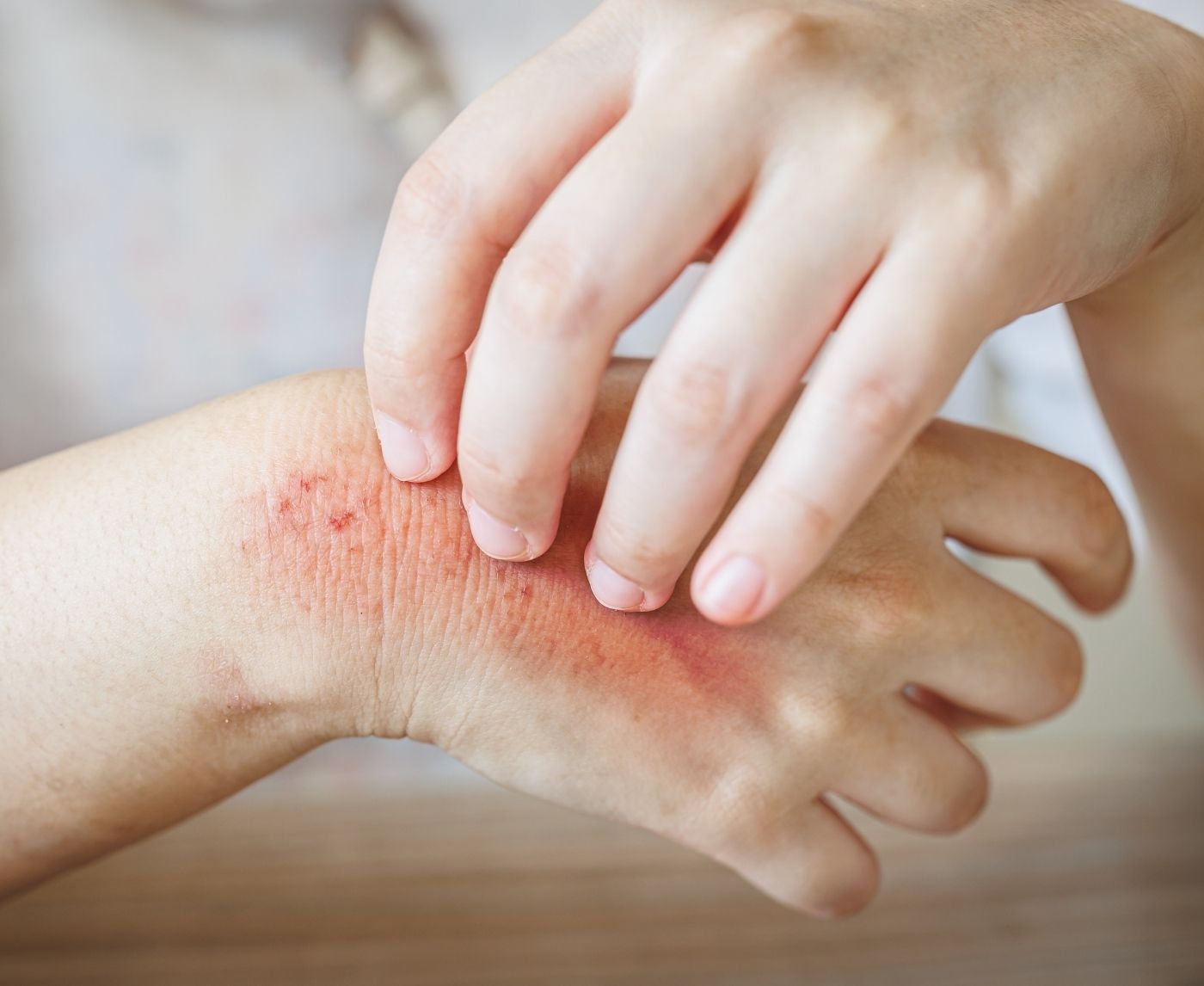

Quick Answer: Heat rash usually clears quickly with cooling and is not contagious. Herpes causes painful, fluid-filled blisters that recur and are contagious. If your rash is clustered, blistered, or lingers after heat or allergy triggers are gone, it’s time to get tested for an STD.
“I Thought It Was Just Sweat”, The Rash That Changed Everything
Maya, 27, laughed at herself when she first saw the red dots on her inner thighs. It was July in Atlanta, and she’d been out dancing in tight jeans. “I figured it was heat rash,” she later admitted. “I changed into shorts, showered, and put powder down there. But the next day, the bumps looked angrier. By day three, they weren’t bumps anymore, they were little blisters. That’s when I panicked.”
“The shame hit first. I thought, what will people think if it’s herpes? But honestly, the worst part was not knowing.”
Maya’s story isn’t unusual. Rashes in the groin or genital area are easy to dismiss as irritation, shaving burn, sweat, or even allergies. But while some rashes are harmless, others are warning signs of sexually transmitted infections like Herpes or Syphilis. The line between “irritation” and “infection” is thinner than most people realize, and Google searches at 2AM don’t make it any clearer.
This Isn’t Just Sweat: What Heat Rash Really Is
Heat rash, sometimes called prickly heat or miliaria, happens when sweat gets trapped under the skin. It’s common in hot, sticky environments and shows up as small red or pink bumps. They itch, they sting, but they usually fade once you cool down, change out of sweaty clothes, or step into air conditioning. Heat rash thrives in skin folds and tight waistbands. It’s not contagious, and it doesn’t turn into blisters that crust over.
That’s the key distinction: heat rash burns out quickly once the environment changes. If you spend the weekend at the beach and come home covered in itchy dots that vanish after a cool shower and loose clothing, that’s classic heat rash. But if your rash lingers past a couple of days, grows more painful, or morphs into something new, you’ve stepped out of “irritation” territory and into the land of possible STDs.
People are also reading: UTI or STD? Breaking Down the Symptoms and Risks
When It Isn’t Allergies, Either
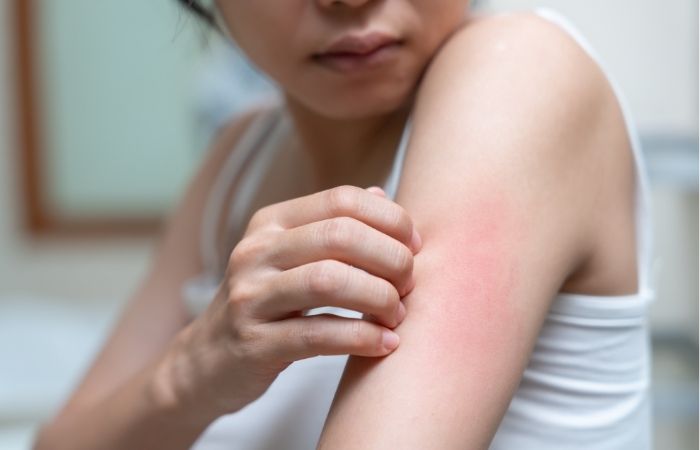
Another easy dismissal is “I must be allergic.” And it’s true, contact dermatitis and hives can erupt after exposure to detergents, condoms with latex, or even lubricants. Allergic rashes are often itchy and widespread, sometimes raised like hives, and they flare where your skin met the allergen. But allergies don’t cluster into fluid-filled blisters. They don’t keep reappearing in the same spot after a hookup. They don’t make you worry about what you might pass on to someone else.
This is why clinicians look at the pattern of a rash, not just its redness. Allergic rashes tend to be diffuse and improve once you remove the trigger. STD-related rashes tend to have a signature: blisters grouped together, sores in the same area, rashes on unexpected places like the palms or soles. If you’ve ruled out allergies and your rash keeps coming back, it’s time to consider a different explanation.
Check Your STD Status in Minutes
Test at Home with Remedium7-in-1 STD Test Kit

 For Men & Women
 Results in Minutes
 No Lab Needed
 Private & Discreet
Order Now $129.00 $343.00
For all 7 tests
When Skin Speaks: What Herpes Really Feels Like
Jordan, 32, remembers the first time he felt the warning signs. “It started as this weird tingling. Like static electricity under my skin. I thought maybe my jeans were too tight. Then, a couple days later, I had these small, painful blisters right where the tingling had been. That’s when I knew something wasn’t right.”
“I googled ‘blister rash after sex’ and saw herpes everywhere. I didn’t want to believe it. But when I finally got tested, it was herpes simplex virus.”
This is the hallmark of Herpes: painful, fluid-filled blisters that cluster together, usually around the mouth or genitals. Before the blisters appear, people often feel itching, burning, or tingling in the same spot. Once the blisters break, they crust and heal within 1–2 weeks. Unlike heat rash, herpes isn’t caused by sweat or friction. It’s viral, contagious, and it can come back, because the virus lives in nerve cells, ready to reactivate.
According to the CDC, herpes can spread even when there are no visible sores. That means the presence, or absence, of a rash isn’t the whole story. This is why herpes is often called “the great mimic.” People mistake it for ingrown hairs, razor burn, or allergic reactions until testing proves otherwise.
Syphilis: The Silent Rash on Palms and Soles
Herpes isn’t the only STD with a skin signature. Syphilis, an infection caused by the bacterium Treponema pallidum, has one of the most distinctive but overlooked rashes. During its secondary stage, syphilis can cause a widespread rash that often appears on the palms of the hands or the soles of the feet. Unlike allergic hives, syphilis rashes are usually reddish-brown, not itchy, and may be flat or slightly raised. They don’t vanish with a change of detergent or a day in cooler weather.
One 2020 review in the Journal of the American Academy of Dermatology notes that secondary syphilis often mimics benign skin conditions, leading to delays in diagnosis. What looks like “just a rash” can, in fact, signal a systemic infection that, if untreated, can damage the heart, brain, and nervous system years later. That’s the danger of dismissing rashes without testing.
HIV and Other Rashes That Don’t Play by the Rules
During the early, or acute, stage of HIV infection, some people develop a rash that spreads across the torso, arms, or face. It often looks like small red or purple spots, sometimes accompanied by fever, swollen lymph nodes, or flu-like symptoms. Because it resembles viral rashes from illnesses like mononucleosis or measles, many people don’t connect it to HIV until much later. A study published in The Lancet HIV underscores how early rashes are overlooked, missing the chance for early diagnosis and treatment.
Other STDs can rarely cause rashes too. Gonorrhea, when it spreads into the bloodstream, a condition called disseminated gonococcal infection, can produce pustules or spots on the skin. Hepatitis B and C may cause hives or rashes as part of the immune response. These aren’t the first signs most people expect, which is why rashes linked to STDs so often go ignored or mislabeled as “just irritation.”.
People are also reading: What Are the Benefits of Regular Partner STD Testing?
Why Rashes Get Misdiagnosed So Often
Part of the confusion is that rashes don’t follow strict rules. A heat rash can appear after a workout and look alarming, but vanish in hours. A herpes outbreak might start subtle and be dismissed as razor burn until it blisters. Allergies can flare in private areas after new laundry detergent or even after sex if condoms or lubes are involved. Add stigma and anxiety to the mix, and many people delay seeking care, hoping the rash will resolve on its own.
But doctors don’t rely on hope. They use context, your history, sexual exposure, onset of symptoms, and whether the rash spreads beyond typical heat or allergy zones. They may run blood tests or swabs to confirm what’s really going on. In the words of one infectious disease specialist: “If you’re asking whether a rash might be an STD, the safest answer is to get tested. Guessing leaves too much room for error.”
This is why rash anxiety is so common. It’s not paranoia; it’s your body telling you something you can’t decode on your own. And the truth is, you shouldn’t have to guess.
Check Your STD Status in Minutes
Test at Home with Remedium6-in-1 STD Test Kit
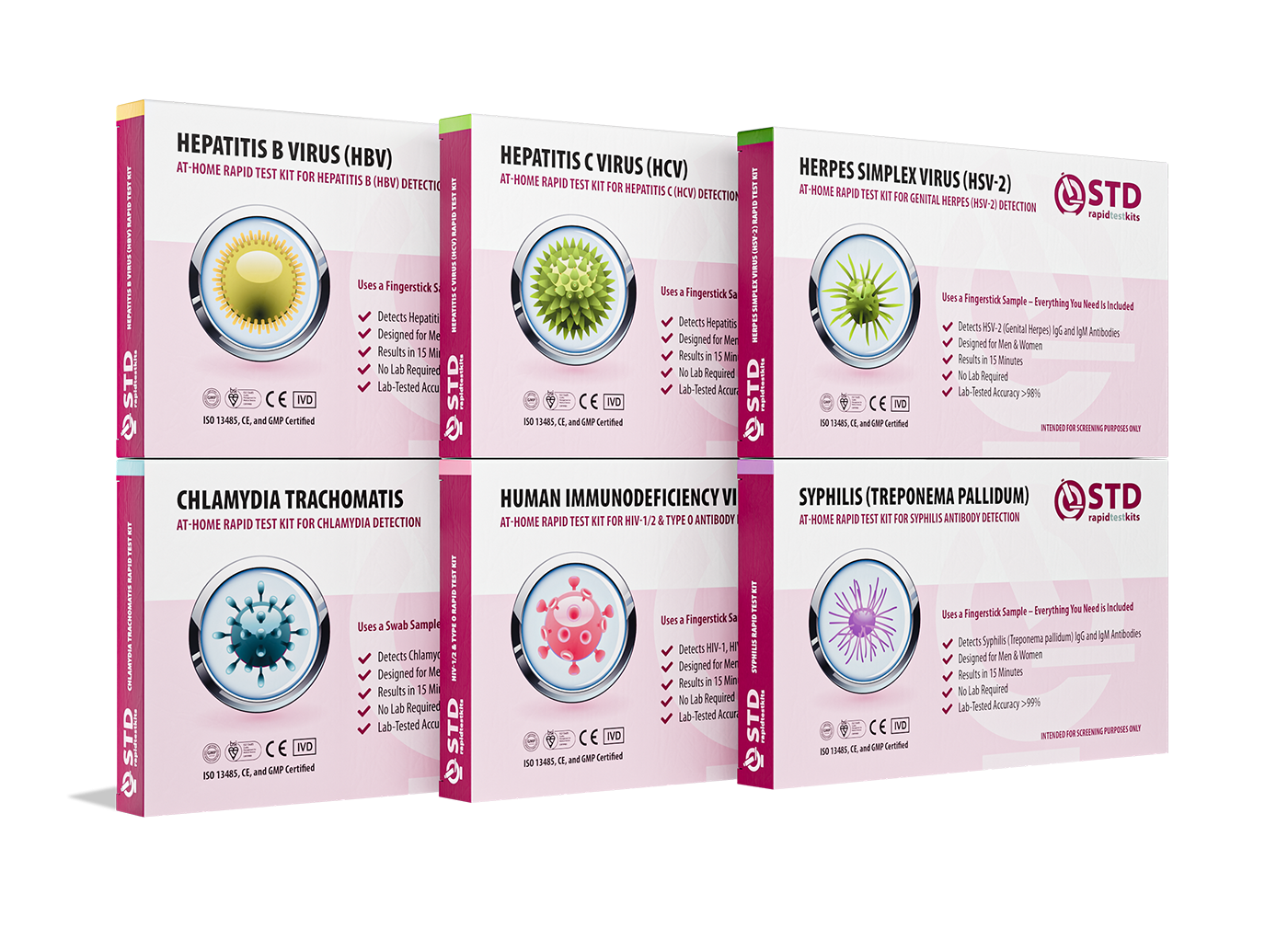 For Men & WomenResults in MinutesNo Lab NeededPrivate & Discreet
Order Now $119.00 $294.00
For all 6 tests
Myths That Keep People Guessing
If you’ve ever typed “heat rash or herpes?” into a search bar at 2AM, you know how overwhelming the answers can be. The internet is full of myths that keep people in a cycle of confusion and shame. One of the most common myths is that herpes always looks dramatic, that it’s only “real” if the blisters are huge and obvious. In reality, herpes can start as tiny, pinhead-sized bumps that people confuse with pimples or razor burn.
Another myth is that if a rash doesn’t itch, it can’t be an STD. That’s dangerous thinking. Syphilis rashes often don’t itch at all. HIV-related rashes may be flat and painless. And even herpes blisters can be more painful than itchy. Symptoms aren’t uniform, and assuming otherwise keeps people from seeking care when they need it most.
“I kept telling myself, ‘It doesn’t hurt, so it can’t be an STD,’” shared one anonymous Reddit user. “When I finally went in, it was syphilis. If I’d waited longer, it could have gotten way worse.”
Shame Is Not a Diagnosis
The hardest part for many people isn’t the rash itself, it’s the shame around it. Heat rash is embarrassing, sure, but you can chalk it up to the weather. An STD? That’s different. People fear what partners will say, what friends might think, or how their identity will change if they test positive. But here’s the truth: STDs are infections, not character flaws. They don’t mean you’re “dirty” or reckless. They mean you’re human, with a body that sometimes encounters viruses or bacteria through normal sexual activity.
Sexual health experts emphasize that stigma is one of the biggest barriers to testing. According to the Planned Parenthood, millions of people live with STDs, and most of them live healthy, full lives when they know their status and get treatment. The shame you feel is a social construct, not a medical one. Breaking that silence is as much a part of prevention as condoms or vaccines.
Sex-Positive, Science-Backed Reassurance
Let’s get real: sweating during sex can cause irritation. Condoms, lubes, or even laundry detergent can spark allergic rashes. Not every red spot is a crisis. But here’s the other half of the truth, if your rash doesn’t behave like irritation, if it lingers, if it clusters, if it keeps coming back after hookups, you deserve to know what’s behind it. That knowledge is sex-positive self-care. It means you can enjoy intimacy without the gnawing question in the back of your mind.
Think of it this way: testing isn’t a punishment. It’s a boundary-setting tool, a way to protect your partners and yourself. Just as you’d check your blood pressure or cholesterol, you can check for STDs when your body sends signals. That’s what responsible, empowered sex looks like. That’s what taking control of your health feels like.
“What Should I Actually Do?”
Imagine you’ve been out on a hot day, and you come home with a rash under your waistband. You cool down, shower, and by morning, it’s gone. That’s likely heat rash. But imagine instead that a rash shows up a few days after sex, starts tingling before blisters form, or spreads to unusual spots like your palms. That’s your cue to get tested.
If you can’t stop obsessing about whether a rash is heat, allergy, or STD, that’s also your cue. Anxiety itself is a sign you need clarity. And clarity doesn’t come from guessing; it comes from testing.
That’s why at-home kits exist. No waiting rooms, no awkward explanations, just answers. As the CDC notes, early diagnosis is the difference between simple treatment and long-term complications. With discreet, FDA-approved rapid kits, you can find out in minutes if that rash is linked to an STD.
Peace of mind is one test away. Whether it’s herpes, syphilis, or nothing at all, knowing your status means you can stop spiraling and start living.
FAQs
1. Can heat rash really be mistaken for herpes?
Totally. On a sweaty day, heat rash can pop up and look scary, almost like herpes. The difference is that heat rash usually fades once you cool down, while herpes blisters stick around, hurt more, and tend to come back in the same spot.
2. Can an allergic rash appear after sex?
Yes. Condoms, lubes, or even laundry detergent can trigger allergic contact dermatitis. These rashes are itchy and diffuse, not clustered blisters like herpes.
3. Does herpes always cause blisters?
Not always. Sometimes herpes looks like small cuts, red bumps, or even mild irritation. That’s why testing is critical if you’re unsure.
4. How fast does a herpes rash appear after sex?
Initial herpes outbreaks typically appear 2–12 days after exposure. Heat rash and allergic reactions often show up within hours of sweating or contact.
5. Can syphilis cause a rash without other symptoms?
Yes. Secondary syphilis often presents as a rash on palms, soles, or body, even without pain or itching. This stage can be missed without testing.
6. Does an HIV rash itch?
Usually not. Fever or enlarged glands may accompany early HIV rashes, which are frequently flat, red, or purple. Unlike allergies, they are usually not itchy.
7. Do genital rashes only result from sexually transmitted diseases?
No. Rashes on the hands, feet, torso, or face can be caused by gonorrhea, syphilis, or HIV. Although it can spread through skin contact, herpes is most frequently found on the mouth or genitalia.
8. If I don't see a rash, can I still spread herpes?
Even if there are no blisters, herpes can still come off the skin. This means that you could still pass it on to a partner through skin-to-skin contact, even if you feel fine.
9. My rash went away, should I still get checked?
If it disappeared quickly after cooling off or changing detergent, it was probably harmless. But if it shows up again, especially after sex, or if you’re losing sleep worrying, getting tested is the safest move.
10. Are at-home STD tests really trustworthy?
Yes. The ones that are FDA-approved are very accurate when used correctly. They’re private, quick, and can give you the clarity you need without the stress of a clinic visit. If something comes back positive, a doctor can confirm and get you treated.
You Deserve Answers, Not Assumptions
Your skin is trying to tell you something, but it’s not your job to decode the difference between irritation and infection alone. Heat, allergies, herpes, syphilis, HIV: they can all leave marks that look deceptively similar. The only way to move from panic to peace is through testing. That’s not weakness; that’s strength. It indicates that you value your relationships and your body enough to choose clarity over conjecture.
Get the clarity you deserve instead of waiting and wondering. You can take charge of your sexual health with this quick and discreet at-home combo test kit that checks for the most common sexually transmitted diseases.
Sources
1. Planned Parenthood – Get Tested for STDs
3. Verywell Health – Heat Rash vs Eczema
4. STI Guidelines – Skin Rash and Lesions


