

Published: November 2025 | Last updated: April 2026 | Editorial review and quality control: Martina N.
Sexually transmitted infections (often called STDs in older usage, STIs in current public-health language) are common, often silent, and very treatable when caught early. The World Health Organization estimates that more than a million STIs are acquired every day worldwide, and most carry no obvious symptoms. That combination of high prevalence plus low visibility is why testing matters more than gut-feel symptom checks.
This guide pulls together ten things current CDC, WHO, and NHS guidance say everyone who is sexually active should know: who's actually at risk, how transmission works beyond vaginal sex, what condoms do and don't cover, why so many infections are silent, when testing windows mean a result is reliable, what's curable versus manageable, and where vaccines fit in throughout, drawn from plain-English summaries of current public-health sources.
What are the most important things to know about STIs?
STIs are common, frequently have no symptoms, and most are either fully curable or well-managed with current treatments. Anyone who is sexually active can get one, transmission is not limited to vaginal sex, and condoms reduce but do not eliminate risk for skin-contact infections. The most reliable way to know your status is to test on a schedule that matches your activity level, even if you feel fine.
Key Takeaways
- Most STIs cause no obvious symptoms in the early phase, so feeling fine is not a reliable signal that you are uninfected.
- Routine testing, not symptom-watching, is the only reliable way to know your status. Most rapid tests need a window period (typically 2 to 12 weeks after exposure) before they read accurately.
1. Anyone sexually active is at risk
STIs do not sort by age, gender, income, faith, or relationship status. The CDC tracks tens of millions of prevalent and incident STI cases in the United States each year, with adolescents and young adults consistently carrying a disproportionate share of new diagnoses (CDC STI surveillance).
Long-term monogamous partners are not automatically safe either. Both partners can carry an infection that predates the relationship and remains dormant for years, particularly HPV, herpes, and chronic hepatitis B or C. Risk is non-zero whenever penetrative or skin-to-skin sexual contact has occurred.
Some activities carry meaningfully higher risk, and the CDC recommends more frequent testing for people in those categories, every 3 to 6 months for some, rather than the annual baseline (CDC STI testing guidance).
- Sex with new or multiple partners
- Sex with someone whose status is unknown
- Condomless vaginal, oral, or anal sex
- Shared injection-drug equipment
- A previous STI diagnosis in the past 12 months
2. Transmission is not limited to vaginal sex
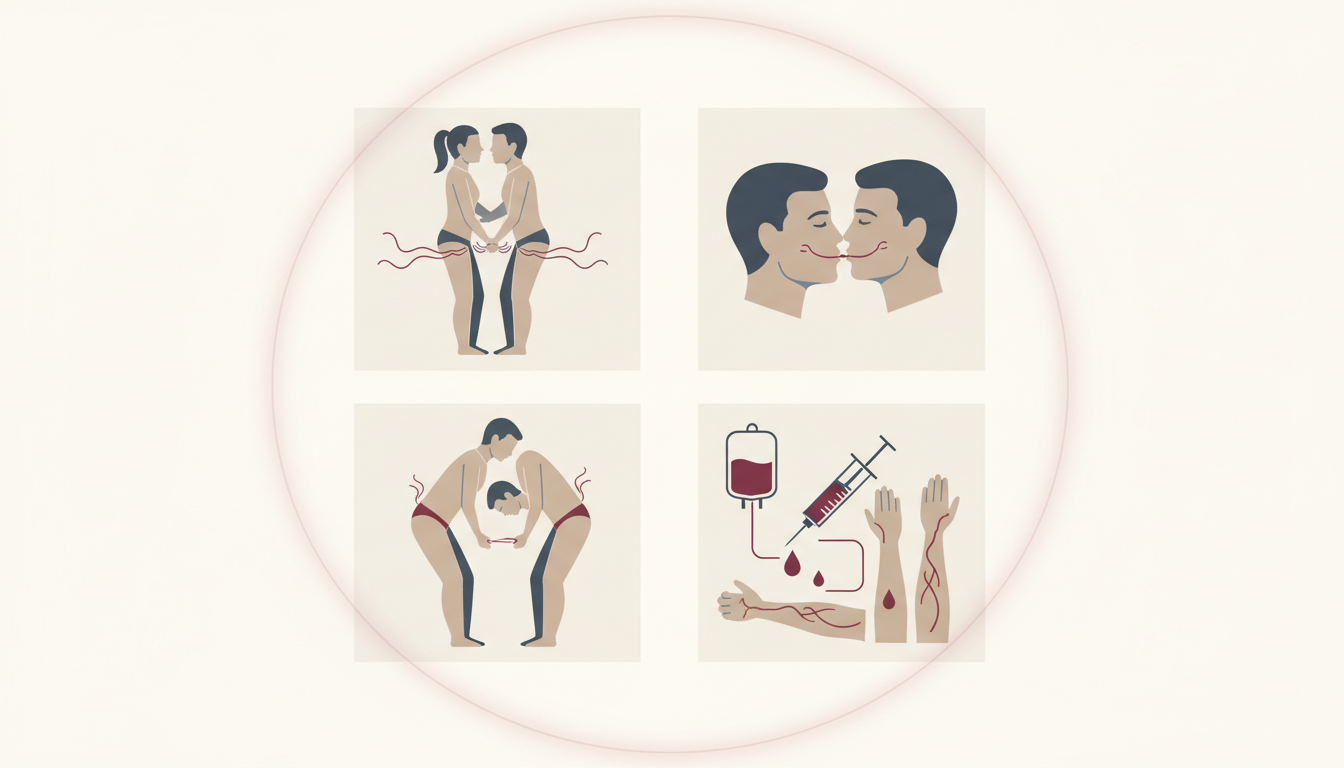
Vaginal intercourse is one route, not the route. Oral sex transmits gonorrhea, chlamydia, syphilis, herpes, HPV, and (less commonly) HIV. Anal sex carries elevated transmission risk for HIV and for rectal chlamydia or gonorrhea. Skin-to-skin contact in the genital region transmits HPV and herpes even when no visible sore or wart is present (CDC about STIs).
Bloodborne routes matter for hepatitis B, hepatitis C, and HIV. Sharing injection-drug equipment is the most common non-sexual transmission route. Mother-to-child transmission during pregnancy or birth is also possible for HIV, syphilis, hepatitis B, herpes, and others, which is why prenatal STI screening is part of standard antenatal care.
The toilet-seat fear belongs in the myth bin. STI pathogens require the warmth, moisture, and direct mucosal or skin contact of sexual exposure to transmit, and hard bathroom surfaces simply do not provide those conditions.
Routes that transmit STIs
- Vaginal, oral, and anal sex (with bacterial, viral, and parasitic infections each favoring particular routes)
- Direct genital skin-to-skin contact (HPV, herpes, syphilis chancres) without penetration
- Shared injection-drug equipment (HIV, hepatitis B, hepatitis C)
- Mother-to-child during pregnancy, delivery, or breastfeeding (HIV, syphilis, hepatitis B, herpes)
3. Condoms reduce risk but do not eliminate it
Abstinence is the only zero-risk option, which is why public-health agencies always list it first even though it is impractical for most adults. Consistent and correct condom use is the next-best layer for the average sexually active person. Condoms are very effective at blocking fluid-borne pathogens such as HIV, chlamydia, gonorrhea, and trichomoniasis, and they prevent unintended pregnancy at the same time.
The gap is in skin-contact infections. HPV, herpes, and syphilis chancres can transmit from any infected skin in the genital region, including areas a condom does not cover (the base of the penis, the labia, the inner thighs, the perineum). A condom lowers the probability of transmission for those infections, but does not zero it out. Pubic lice and scabies are similarly skin-contact infections that condoms do not block.
Internal (sometimes called female) condoms cover slightly more skin but are still not full barriers. Dental dams reduce risk during oral-vaginal or oral-anal contact and are underused.
Strong protection: HIV, chlamydia, gonorrhea, trichomoniasis (fluid-borne pathogens). Partial protection only: HPV, herpes, syphilis chancres, pubic lice, scabies (skin-to-skin contact in areas a condom does not cover). Pair condoms with vaccination (HPV, hepatitis B) and routine testing to close the gap.
4. Most STIs are silent for the people who have them
The CDC and WHO both estimate that the majority of STI cases are asymptomatic, meaning the infected person feels fine and has no visible signs (WHO STI fact sheet). Chlamydia is one of the starkest examples; the CDC notes that most chlamydia infections in both women and men cause no noticeable symptoms (CDC about chlamydia).
When symptoms do appear, the patterns vary widely. Possible signs include unusual discharge, burning during urination, genital sores or bumps, lower abdominal pain, intermenstrual bleeding, sore throat (after oral exposure), rectal pain (after receptive anal sex), or fever and rash in the case of acute HIV. Many of these overlap with non-STI conditions like urinary tract infections or yeast infections, which is why a clinical evaluation matters when something is unusual.
Symptoms can also fade on their own without the infection clearing. A herpes outbreak resolves in a couple of weeks, but the virus stays in the body and continues to shed periodically. A chlamydia infection may produce mild discharge that goes away while the bacterial infection silently progresses to pelvic inflammatory disease.
The CDC and WHO commonly cite chlamydia, gonorrhea (especially in the throat or rectum), trichomoniasis, HPV, herpes between outbreaks, and early-stage HIV as infections that frequently produce no symptoms in the people who carry them. This is the central reason testing on a schedule beats relying on how you feel.
5. You can transmit an STI without knowing you have one
The corollary of section 4 is uncomfortable but important: if most infections are silent, then most transmission happens between people who do not know they are infected. Asymptomatic shedding has been particularly well-documented for herpes (HSV-2 sheds intermittently from genital skin even when no lesions are visible) and for HPV, which infects without symptoms in most people.
This is not a moral failing on anyone's part. It is the biology of these infections. Acknowledging it changes the calculus of partner conversations. Asking a new partner about their last STI screen, sharing your own recent results, and using barrier methods are all reasonable, and none of them require either party to suspect they are infected.
Practically, the response is regular testing for sexually active adults, and especially before unprotected sex with a new partner. Under the Affordable Care Act in the U.S., most health plans cover STI screening as preventive care without cost-sharing, and public-health clinics offer free or sliding-scale testing regardless of insurance status.
HSV-2 sheds from genital skin even between outbreaks, with no visible lesion present. HPV similarly transmits without symptoms in most carriers. Routine testing and recent partner screens are the only reliable signals of current status, so feeling fine is not the same as being uninfected.
6. Testing is the only way to know your status
The CDC's screening guidance is age- and risk-stratified rather than one-size-fits-all (CDC STI testing guidance). The headline rules:
- All sexually active women under 25, and women 25 and older with risk factors, should test for chlamydia and gonorrhea annually.
- All adults aged 13 to 64 should test for HIV at least once, with annual or more frequent testing for higher-risk groups.
- All pregnant people should screen for HIV, syphilis, hepatitis B, and chlamydia early in pregnancy, with retesting in the third trimester for those at higher risk.
- Men who have sex with men and people with multiple partners benefit from testing every 3 to 6 months, including extragenital (throat, rectal) sites where exposed.
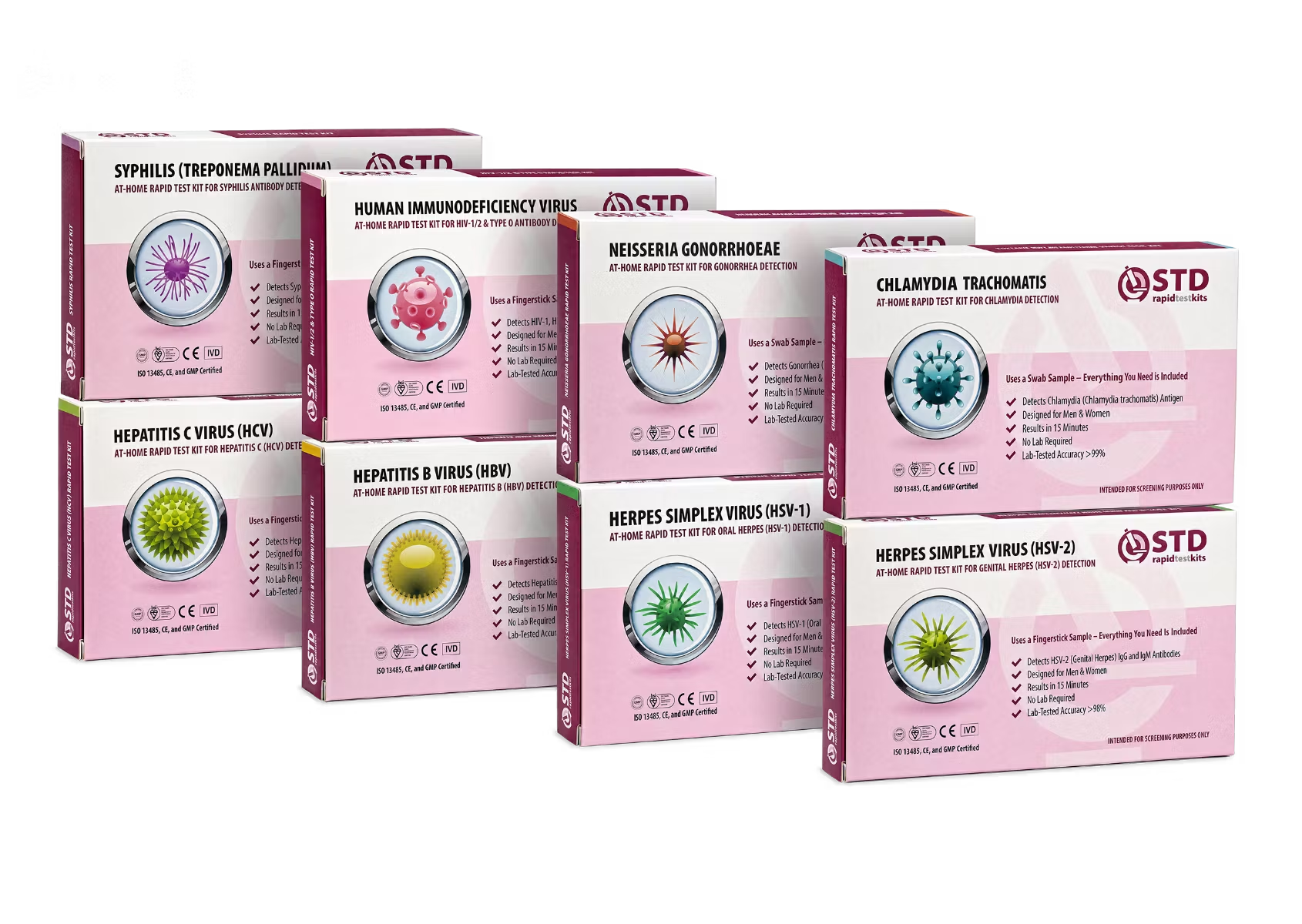
Sample types vary: urine for some bacterial NAAT panels, a self-collected vaginal or penile swab for chlamydia and gonorrhea, a fingerstick blood draw for HIV, syphilis, and hepatitis antibodies, and a clinician-collected swab for visible lesions. At-home rapid lateral-flow kits use the same swab or fingerstick samples but use a different chemistry from lab NAAT, which remains the analytical gold standard. Rapid kits are good screening tools and a positive at-home result is worth confirming with a lab test before starting treatment.
Important caveat: there is no FDA-approved screening test for HPV in people with male anatomy. HPV screening is currently female-only. For other infections, testing applies regardless of gender.
This article is published by stdrapidtestkits.com, which sells at-home rapid STI test kits. The panels we recommend below are products available on this site; they are screening tools and a positive rapid result is worth confirming with a lab test before treatment.
7. Most STIs are either curable or well managed
The treatment landscape has improved substantially. Bacterial STIs (chlamydia, gonorrhea, syphilis) and the parasitic infection trichomoniasis are curable with antibiotics, usually in a single course (CDC STI treatment guidelines). Hepatitis C, once chronic for life in most people, is now curable for most patients with an 8 to 12 week course of direct-acting antiviral pills.
The viral STIs that remain incurable, HIV, herpes (HSV-1 and HSV-2), and HPV, are no longer the prognoses they were a generation ago. Daily antiretroviral therapy lets people with HIV reach undetectable viral loads, at which point they cannot transmit the virus sexually (the U=U principle). Daily antiviral suppression cuts herpes outbreak frequency and reduces shedding. Most HPV infections clear naturally within two years; the dangerous high-risk strains are largely prevented by HPV vaccination, and cervical cancer screening catches precancerous changes early.
Catching any of these infections early reduces a course of treatment that fits in a few weeks to a much harder fight against complications. A bacterial STI caught at week 4 is a single antibiotic course; the same infection caught at month 12 may already have caused pelvic inflammatory disease, infertility, or chronic pain.
| Infection | Status | Current standard treatment |
|---|---|---|
| Chlamydia | Curable | Antibiotics, typically a short oral course |
| Gonorrhea | Curable | Antibiotics, current CDC regimen uses ceftriaxone |
| Syphilis | Curable | Penicillin (intramuscular) |
| Trichomoniasis | Curable | Antibiotics, often single dose |
| Hepatitis C | Curable | Direct-acting antivirals, 8 to 12 week course |
| HIV | Manageable, not curable | Daily antiretroviral therapy; U=U at undetectable viral load |
| Herpes (HSV-1, HSV-2) | Manageable, not curable | Episodic or daily antiviral suppression |
| HPV | Most clear naturally; vaccine prevents high-risk types | No virus-targeted cure; warts treated topically; cervical screening for precancer |
| Hepatitis B | Often manageable; some clear naturally | Antiviral therapy if chronic |
8. Untreated STIs cause serious downstream problems
The complications register depends on which STI is untreated, but every infection on this list carries a real one. Untreated chlamydia or gonorrhea can ascend to the upper reproductive tract and cause pelvic inflammatory disease (PID), which is a leading preventable cause of tubal-factor infertility, ectopic pregnancy, and chronic pelvic pain (CDC about PID).
Untreated syphilis progresses through stages over months to years and can cause cardiovascular damage, neurosyphilis (with stroke-like symptoms or dementia), and irreversible organ damage. Untreated HIV progresses to AIDS over a median of about 10 years without therapy. Chronic hepatitis B and C drive the majority of liver cirrhosis and hepatocellular carcinoma cases worldwide. High-risk HPV strains cause cervical, anal, oropharyngeal, and other cancers when persistent.
For pregnant people, untreated STIs are linked to ectopic pregnancy, miscarriage, preterm birth, stillbirth, and vertical transmission to the newborn (congenital syphilis, neonatal herpes, perinatal HIV). Routine prenatal screening exists precisely to catch these in time to treat.
Pelvic inflammatory disease from untreated chlamydia or gonorrhea is a leading preventable cause of tubal-factor infertility in U.S. women. The CDC reports that about 1 in 8 women with a history of PID experience difficulty getting pregnant. Early antibiotic treatment essentially prevents this outcome, which is the practical case for testing on a schedule rather than waiting for symptoms.
9. Vaccines exist for two STIs and they work
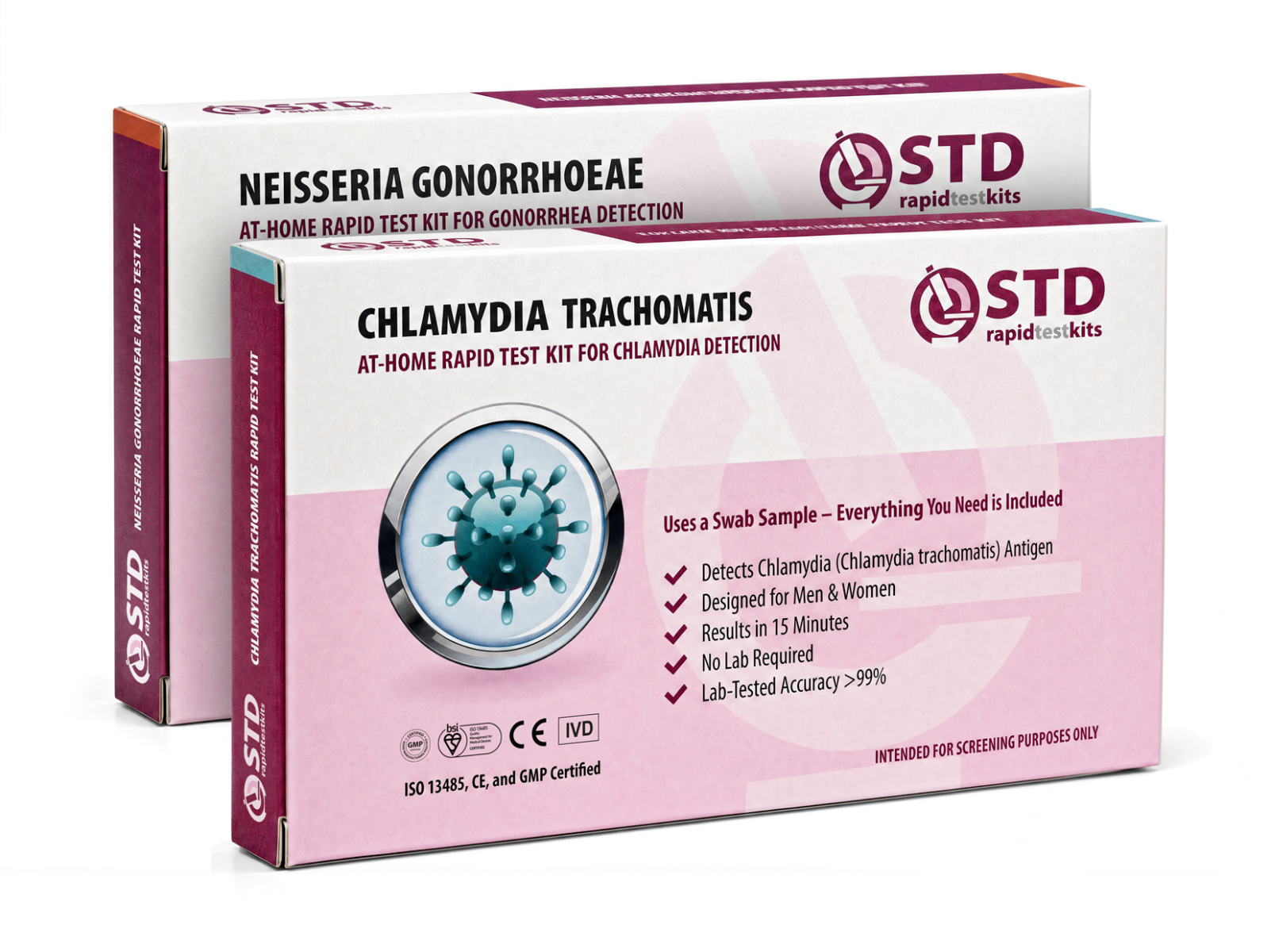
Two STIs have safe, highly effective vaccines: hepatitis B and HPV. Both have transformed disease incidence in countries with strong vaccine uptake.
The hepatitis B vaccine is given as a series (typically three doses over six months) and is recommended for all infants at birth, all unvaccinated children and adolescents, and all unvaccinated adults aged 19 to 59, with shared decision-making for adults 60 and older with risk factors per CDC guidance (CDC hepatitis B). Protection is long-lasting and routine boosters are not needed in immunocompetent adults.
The HPV vaccine (Gardasil 9 in the U.S.) is recommended routinely starting at ages 11 to 12, with catch-up vaccination through age 26 for those not adequately vaccinated earlier. For adults aged 27 through 45, ACIP recommends shared clinical decision-making rather than routine vaccination (CDC HPV vaccination). The vaccine prevents most cervical cancers, a large share of anal and oropharyngeal cancers, and genital warts.
There is currently no licensed vaccine for HIV, herpes, chlamydia, gonorrhea, or syphilis, though candidates are in trials for several.
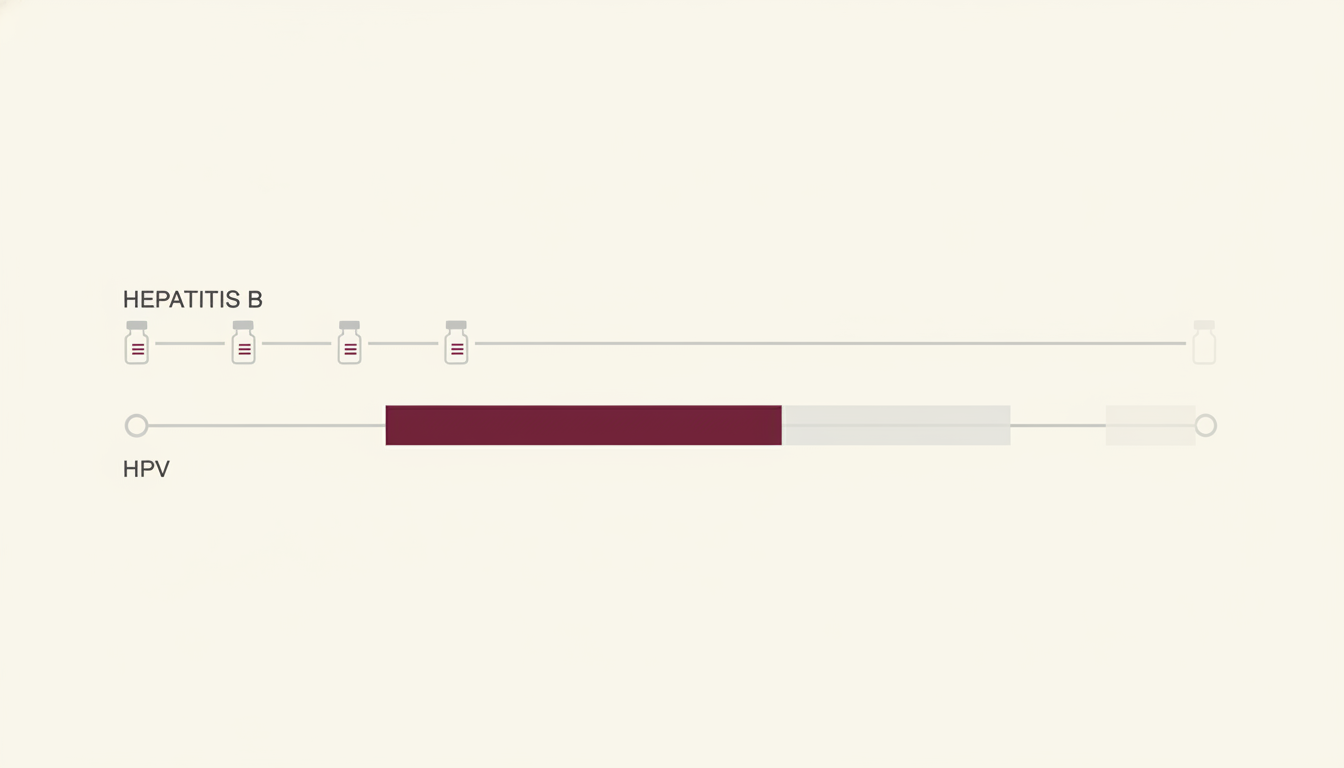
Both the hepatitis B and HPV vaccines are covered without cost-sharing under most U.S. insurance plans as recommended preventive care, and most public-health departments offer them free or on a sliding scale to people without coverage. The Vaccines for Children program covers eligible patients through age 18.
10. A previous STI does not protect you from getting it again
Curing a bacterial STI does not confer immunity. Chlamydia, gonorrhea, syphilis, and trichomoniasis can all be re-contracted from another infected partner, and reinfection rates are high. The CDC recommends a test of reinfection roughly three months after treatment for chlamydia, gonorrhea, and syphilis, regardless of whether partners were also treated (CDC treatment guidelines).
Some STIs additionally raise the risk of acquiring others. Genital ulcer infections (herpes, primary syphilis) disrupt the mucosal barrier and increase HIV-acquisition risk during exposure. Concurrent infections also tend to amplify each other's clinical course. The implication is that one STI diagnosis is a reason to screen for the rest of the panel, not just the one with symptoms.
More than 1 million curable sexually transmitted infections are acquired every day worldwide among people aged 15 to 49, the majority of which are asymptomatic.
Frequently asked questions
- How often should sexually active adults get tested for STIs?
- The CDC recommends at least an annual chlamydia and gonorrhea screen for sexually active women under 25 and older women with risk factors, an HIV test at least once for all adults aged 13 to 64, and a pregnancy-time screen for HIV, syphilis, hepatitis B, and chlamydia. People with multiple or new partners benefit from testing every 3 to 6 months, including throat and rectal sites where exposed.
- Can I have an STI without any symptoms?
- Yes, and it is the most common situation. The CDC and WHO both estimate that the majority of STI cases are asymptomatic. Chlamydia, gonorrhea (especially throat or rectal), trichomoniasis, HPV, herpes between outbreaks, and early HIV all commonly cause no symptoms in the person carrying them.
- Are at-home rapid STI test kits reliable?
- Yes, when used after the window period specific to each infection. Sensitivity is lower than lab NAAT, so a negative rapid result soon after an exposure is less reliable than a lab test taken at the right interval. A positive result should be confirmed with a lab test before treatment begins, and any test taken inside the window should be repeated once the window has passed.
- What is the difference between an STD and an STI?
- They refer to the same set of infections. Public-health language has shifted from STD (sexually transmitted disease) to STI (sexually transmitted infection) because many of these infections do not cause overt disease in the people who carry them. The terms are often used interchangeably; current CDC, WHO, and clinical guidelines prefer STI.
- Can I get an STI from oral sex?
- Yes. Oral sex transmits gonorrhea, chlamydia, syphilis, herpes (often HSV-1 to genitals or HSV-2 to throat), HPV, and rarely HIV. Pharyngeal infections are often silent and require a throat-swab test, which is a clinic visit rather than the genital swab kits sold for at-home use. We do not sell a pharyngeal swab; for a suspected throat infection, see a clinic.
- Do condoms protect against all STIs?
- No. Condoms are very effective for fluid-borne pathogens (HIV, chlamydia, gonorrhea, trichomoniasis) but only partially protect against skin-contact infections (HPV, herpes, syphilis chancres) because those can transmit from skin not covered by the condom. Combining condoms with vaccination, regular testing, and partner communication gives the strongest practical protection.
- Can untreated STIs affect fertility?
- Yes. Untreated chlamydia or gonorrhea is the most common preventable cause of pelvic inflammatory disease in women, and PID is a leading cause of tubal-factor infertility and ectopic pregnancy. In men, untreated infections can cause epididymitis and rarely infertility. Early diagnosis and antibiotic treatment essentially prevent these outcomes.
- If I have been treated for an STI, can I get the same one again?
- Yes. Treatment cures the current infection but does not produce immunity against future exposure. The CDC recommends a test of reinfection about three months after treatment for chlamydia, gonorrhea, and syphilis, because reinfection from a partner is common.
- U.S. Centers for Disease Control and Prevention. About sexually transmitted infections, including transmission routes, complications, and prevention basics.
- U.S. Centers for Disease Control and Prevention. STI Statistics homepage and access point for the annual surveillance reports of nationally notifiable STIs in the United States.
- U.S. Centers for Disease Control and Prevention. Getting Tested for STIs, the current testing-frequency and risk-group recommendations page.
- U.S. Centers for Disease Control and Prevention. STI treatment guidelines, including current first-line regimens and reinfection testing recommendations.
- U.S. Centers for Disease Control and Prevention. About chlamydia, including the asymptomatic-majority framing for chlamydia infections.
- U.S. Centers for Disease Control and Prevention. About pelvic inflammatory disease, including its association with untreated chlamydia and gonorrhea and downstream fertility outcomes.
- U.S. Centers for Disease Control and Prevention. HPV vaccination recommendations including ACIP guidance for ages 11 to 26 routine and 27 to 45 shared decision-making.
- U.S. Centers for Disease Control and Prevention. Hepatitis B vaccination recommendations and long-term immunity profile.
- World Health Organization. Sexually transmitted infections fact sheet, including the more-than-one-million-per-day curable-STI global incidence figure for people aged 15 to 49 and the asymptomatic majority.
- U.K. National Health Service. Overview of sexually transmitted infections and transmission routes.
