Published: December 2025 | Last updated: May 2026 | Editorial review and quality control: Martina N.
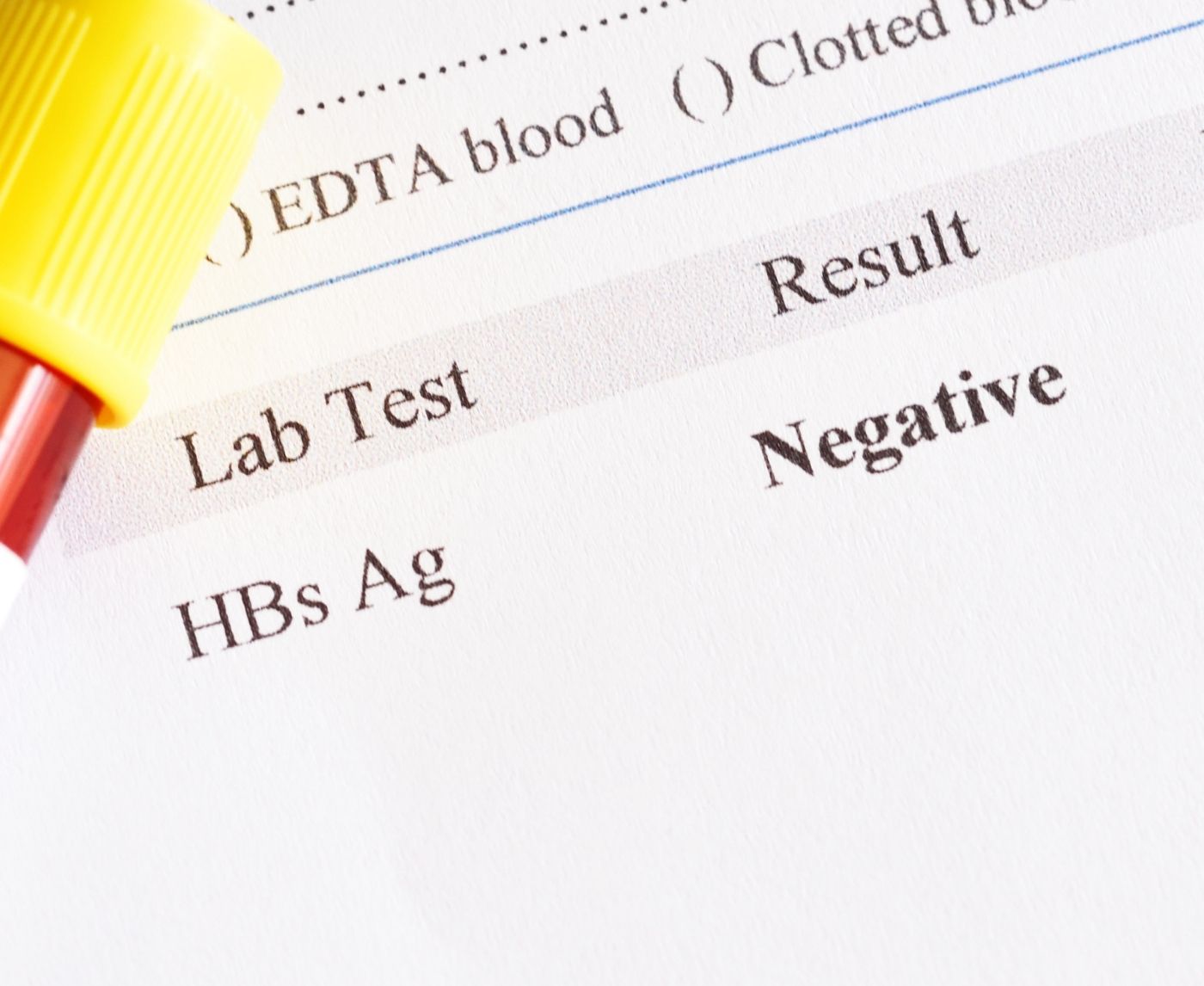
If your Hepatitis B test came back negative but the timing feels off, your immune system is suppressed, or something about the result just does not sit right, you are not being paranoid. You are reading the test correctly. A negative line on a Hepatitis B rapid test is a snapshot of one moment, of one type of marker, in one sample. It is not always the final word on whether the virus is in your blood.
This guide walks through the specific reasons a Hepatitis B test can return a false negative, when to retest, which test to ask for, and how to interpret a faint line. It is for anyone who tested at home, anyone who is pregnant or immunocompromised, and anyone whose instinct is telling them to check again.
Key Takeaways
- A negative Hepatitis B result does not always mean you are clear. Testing inside the window period, using an antigen-only rapid test, or having a suppressed immune system can each hide a real infection.
- After a known high-risk exposure with a negative initial test, a multi-marker follow-up panel (HBsAg plus anti-HBc plus anti-HBs) at six weeks to six months gives a much more reliable picture, and HBV DNA PCR can detect infection earlier than antigen tests.
How Hepatitis B tests actually work
Hepatitis B testing looks for signals in your blood. Different tests look for different signals, and each signal shows up on its own schedule after infection.
The most common at-home and rapid tests check for HBsAg, the hepatitis B surface antigen, which is a piece of the virus's outer protein coat. HBsAg becomes detectable on standard assays roughly 1 to 9 weeks after exposure, with an average around 4 weeks, and a positive result indicates active infection. Background guidance on hepatitis B serology is available from the CDC's hepatitis B program and the WHO hepatitis B fact sheet.
Standard lab panels go further. A full hepatitis B screen typically runs three markers together: HBsAg, anti-HBc (the antibody to the viral core protein), and anti-HBs (the antibody to the surface protein). Anti-HBc tells you about past or current infection. Anti-HBs tells you about recovery or vaccine response. Together, they separate active infection from past infection from vaccination, which a single rapid antigen test simply cannot do.
The most sensitive test is HBV DNA, which uses PCR to look for the virus's genetic material directly. PCR can detect infection earlier than antigen or antibody tests, sometimes within 1 to 3 weeks of exposure. It is the gold standard for early detection, for people on immunosuppression, and for confirming infection in newborns of HBV-positive mothers.
Why a negative result can still be wrong
Every false negative on a hepatitis B rapid test is, at root, a timing problem. The virus may already be in your blood, but the antigen or antibody the test is designed to detect has not yet reached the assay's threshold. That gap has a name: the window period.
For HBsAg, the window typically opens roughly 1 to 9 weeks after exposure and varies with viral load, the exposure route, and the test's analytical sensitivity. Test on day 10 after a needle-stick or a high-risk sexual exposure and the antigen may not have reached a detectable level yet. A rapid cassette read in your kitchen will look exactly like a real negative, because at that moment, by the rules of the assay, it is.
Here is roughly when each marker tends to become detectable after a fresh exposure:
| Marker | What it detects | Typically detectable after | Test type |
|---|---|---|---|
| HBV DNA | Viral genetic material | 1 to 3 weeks | PCR / NAAT lab test |
| HBsAg (surface antigen) | Active infection | 1 to 9 weeks | Rapid cassette or lab |
| Anti-HBc (core antibody) | Past or current infection | 4 to 12 weeks | Lab panel |
| Anti-HBs (surface antibody) | Recovery or vaccine response | 8 to 24 weeks | Lab panel |
Timing is everything
Imagine a typical pattern: a worrying exposure on a Friday, panic by Sunday, an online order Monday, a rapid test that arrives Wednesday, and a test on Thursday evening. The result is negative. Three months later, a routine pre-employment blood draw flags HBsAg.
The first test was not lying. It read the blood in front of it, looking for an antigen that had not yet reached detectable levels. This is a general principle of all assays with a window period: a single negative result obtained early after exposure does not rule out infection, and clinicians routinely recommend repeat testing after a known high-risk exposure (CDC hepatitis B information).
A simple working rule: if your test was within four weeks of a real exposure, treat the result as preliminary and schedule a follow-up at 6 to 12 weeks. If you have specific symptoms, are pregnant, are on immunosuppressants, are living with HIV, or had a known occupational exposure, ask a clinician about HBV DNA PCR, which can detect the virus earlier.
Not all Hepatitis B tests are built the same
The phrase "Hepatitis B test" covers at least three meaningfully different technologies, with meaningfully different sensitivity profiles and meaningfully different windows of usefulness.
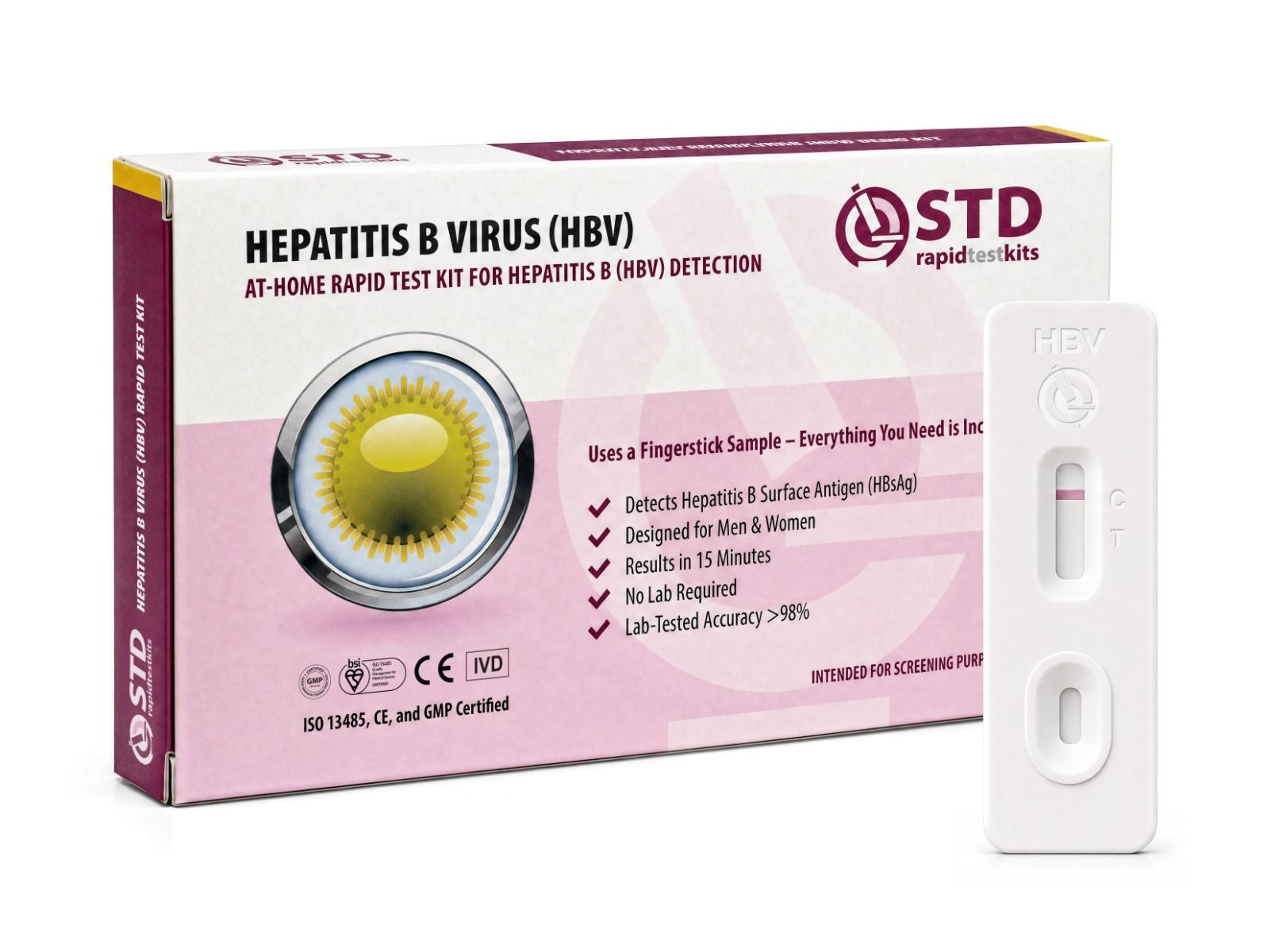
At-home rapid tests are lateral-flow immunoassays. They look for HBsAg on a test strip and give a visible band within 10 to 15 minutes. They are best used after the window has closed (roughly 4 or more weeks post-exposure), and they give a clean answer for active infection. They will not detect past infection, vaccine-induced immunity, or very low viral loads. A positive at-home result is a screening signal that needs lab confirmation, not a final diagnosis.
Lab serology panels are also immunoassays, but they run on calibrated lab instruments and are usually packaged as a panel rather than a single marker. A common bundle is HBsAg plus anti-HBc plus anti-HBs. The combination separates active infection from past infection from vaccination, and it catches more cases than HBsAg alone. This is what most clinicians order for screening, in line with the CDC's 2023 hepatitis B screening recommendations, which call for a triple-panel screen for adults.
HBV DNA PCR is the molecular test. It detects the virus's genetic material at very low concentrations and can catch infection days to weeks earlier than antigen tests. It is what a clinic uses for very early exposure, for immunocompromised patients, for suspected occult infection, and to monitor viral load during chronic infection. It is not an at-home test and the turnaround is hours to days.
None of these are interchangeable. A negative rapid cassette taken too early carries a very different weight than a negative PCR taken at six weeks.
| Test type | Detects | False negative risk | Best use scenario |
|---|---|---|---|
| Rapid HBsAg cassette (at-home) | Surface antigen | Moderate to high in the first 4 weeks or with low viral load | Screening 4 or more weeks after a known exposure |
| Lab panel (HBsAg, anti-HBc, anti-HBs) | Antigen plus immune response | Lower outside the early window | General screening, new partner, pregnancy, annual check |
| HBV DNA PCR | Viral genetic material | Very low | Early exposure, immunocompromise, pregnancy follow-up, post-needle-stick |
When your immune system changes the picture
Some Hepatitis B tests measure the virus directly. Others measure your immune system's response to the virus. When your immune system is not behaving in the usual way, the second category can read negative even when you are actually infected.
This matters for several specific groups. Pregnancy shifts the immune system toward tolerance and can blunt antigen-antibody responses. Chemotherapy, biologic immunosuppressants, post-transplant regimens, and untreated HIV all suppress antibody production. Long-term high-dose steroids can have the same effect. People in any of these groups can carry detectable virus in their blood while serology stays quiet, which is why molecular testing (HBV DNA PCR) plays a larger role in immunocompromised patients (CDC MMWR 2023).
For pregnant patients the stakes are high. An undetected maternal Hepatitis B infection can lead to vertical transmission at birth, which is why every standard prenatal visit in the United States includes HBsAg screening, and why a known high-risk exposure during pregnancy is usually followed up with HBV DNA PCR rather than a repeat rapid test.
If you are in one of these groups and your first screen was negative, the safer position is to ask your clinician for a molecular test rather than relying on a single antigen-only result.
This article is published by stdrapidtestkits.com, which sells at-home STI testing kits. We recommend products based on fit-for-purpose for the reader's concern, not commercial benefit.
Lab errors, expired kits, and reading the strip wrong
The remaining false-negative causes are less dramatic and largely fixable. Some are exotic. Rare HBsAg surface mutations (the sG145R variant, for example) can evade certain commercial assays and produce false negatives even on lab instruments, but those cases are uncommon and usually surface only in specialty hepatology workups.
At home, the failure modes are far more practical. The most common ones:
- Reading the cassette outside the manufacturer's read window. Reading too early can miss a band that is still developing. Reading 45 or 60 minutes later can let a real faint line evaporate or invite a false interpretation.
- A heat-damaged or expired kit. Lateral-flow strips degrade in high temperatures or after the printed expiry. Check both before using.
- Too little buffer or sample, or the wrong order of operations. Follow the instructions for use exactly.
- Misreading a faint band as a negative. More on that next.
If anything felt off during the procedure (the control line did not appear, you spilled the sample, you read the strip much later than instructed), the test is invalid, not negative. Use a fresh kit and start over.
If the control line did not appear at the printed read time, the test is invalid regardless of what the test line shows. An invalid result is not a negative. Discard the cassette and repeat with a fresh kit, paying attention to the buffer volume, the timing window, and the storage temperature stated in the instructions for use.
When faint lines are not actually negative
One of the most stressful moments in at-home testing is the faint band: a barely visible line in the test region, lighter than the control line, sometimes only visible at a certain angle. On a Hepatitis B rapid test, that faint line is usually not a negative.
Lateral-flow strips are read on a presence-or-absence basis, not on relative darkness. Any visible band in the test region within the manufacturer's read window indicates a reactive result. The strip grades on whether the test region produced any band at all, regardless of how bright that band is compared with the control line.
Faint bands often mean a low concentration of HBsAg, which can occur during early infection (when viral load is still climbing), late chronic infection (when viral load has dropped), or in someone with a partial immune response. Confirm any reactive rapid test with a lab panel before treating it as a diagnosis.
Practical advice: photograph the cassette under good light at the exact read time printed on the instructions. Keep the photo. Bring it with you when you go to a clinic or lab for confirmatory testing.
Symptoms but a negative test
Fatigue, nausea, vague abdominal discomfort, dark urine, or new yellowing of the eyes or skin alongside a negative Hepatitis B test is a specific combination that deserves a second look. The symptoms may not be Hepatitis B at all. Acute liver complaints can come from Hepatitis A, Hepatitis C, drug-induced liver injury, gallbladder disease, mononucleosis, or alcohol. A negative HBV test in someone with hepatitis-type symptoms should trigger a broader hepatitis panel and liver function tests, not relief.
You may also simply be early enough in Hepatitis B infection that HBsAg has not crossed the assay's detection threshold yet. Some people develop mild flu-like symptoms in the days before HBsAg becomes detectable, especially after a high-dose inoculation event like a needle-stick.
If your symptoms point to liver involvement and your rapid test was negative, the right next step is a clinician visit for a multi-marker panel and, if exposure was recent, an HBV DNA PCR. Do not treat a single negative as a clean bill of health when symptoms are present.
A negative result from any antigen test taken in the first few weeks after exposure means one of two things: you are not infected, or the antigen has not yet reached the threshold the assay can detect. That uncertainty is why public-health bodies recommend repeat testing after a known high-risk exposure, and why molecular testing (HBV DNA PCR) is the right tool for early-window or immunocompromised cases.
When retesting makes sense
Retesting after a negative is not panic. It is the protocol. Public-health guidance recommends repeat testing after high-risk exposures, with timing based on which marker is being measured and the suspicion level (CDC hepatitis B information).
A reasonable schedule for someone with a single high-risk exposure and a negative initial rapid test:
- Week 0 to 4: Initial rapid test, or PCR if available. A negative here is preliminary, not conclusive.
- Week 6: Repeat with a multi-marker lab panel (HBsAg plus anti-HBc plus anti-HBs), or HBV DNA PCR if you remain symptomatic or are in a high-risk group.
- Week 12 to 24: Final confirmatory panel. By this point any new infection will almost always be visible on serology.
Special situations change the timeline. A confirmed exposure to a known HBV-positive partner with no protection is a reason to talk to a clinician about post-exposure prophylaxis (hepatitis B immune globulin plus the vaccine) within 24 hours, not to wait and retest. Pregnancy, immunocompromise, occupational exposures (needle-sticks, blood splashes), and travel to high-prevalence regions all warrant earlier molecular testing (WHO hepatitis B fact sheet).
FAQs
- Can a Hepatitis B test really miss an infection?
- Yes, especially during the first few weeks after exposure. Most at-home rapid tests only check for HBsAg, the surface antigen, which typically becomes detectable 1 to 9 weeks after infection. Test too early and the antigen may not be at a level the assay can pick up, so the result reads negative even though the virus is present.
- I tested a week after a risky encounter. Negative. Should I relax?
- Not yet. A week is inside the window period for HBsAg, so a negative result at that point is preliminary. Plan a follow-up test at 6 weeks, and if you remain worried or are in a higher-risk group, ask a clinician about HBV DNA PCR, which can detect the virus earlier.
- What if I have symptoms but the test is negative?
- Fatigue, nausea, dark urine, or yellowing of the eyes or skin alongside a negative Hepatitis B test deserves a clinic visit, not relief. The symptoms could be from Hepatitis A or C, gallbladder issues, alcohol, drug-induced liver injury, or very early Hepatitis B that has not yet crossed the assay's detection threshold. Ask for a broader hepatitis panel and liver function tests.
- Does being vaccinated affect a Hepatitis B test result?
- Yes, but not in a way that causes false positives for infection. A successful vaccine course produces anti-HBs (surface antibody), which makes you positive on the anti-HBs portion of a lab panel. An HBsAg-only rapid test will not turn positive from vaccination alone, because the vaccine does not contain the active antigen at detectable levels in your blood.
- Are at-home Hepatitis B tests trustworthy?
- They are reasonable screening tools when used inside their intended window. Most at-home tests check only for HBsAg, so they work best 4 or more weeks after a known exposure. For very early exposure, immunocompromised patients, or pregnancy follow-up, a clinic panel or HBV DNA PCR is more appropriate. A positive (or reactive, including any faint band) at-home result should always be confirmed with a lab test.
- Can stress or illness affect my test result?
- Stress on its own does not change a Hepatitis B test result. A genuinely suppressed immune system can, however. Chemotherapy, biologics, transplant regimens, untreated HIV, and high-dose long-term steroids can blunt antibody production and slow the rise of HBsAg, which makes antigen-only and antibody-only tests less reliable. In those cases ask for HBV DNA PCR, which detects the virus directly.
- I saw a faint line on my rapid test. Does that count?
- On a lateral-flow strip, any visible band in the test region inside the read window counts as reactive, even if it is much lighter than the control line. The strip is not read on relative darkness. Faint bands often mean low antigen concentration, which can happen during early or late infection. Photograph the cassette at the printed read time and follow up with a lab confirmatory test.
- When should I retest after a negative result?
- If your initial test was within 4 weeks of exposure, retest at 6 weeks with a multi-marker lab panel, and again at 12 to 24 weeks if there is any ongoing concern. If you are pregnant, immunocompromised, or had a confirmed exposure to a known HBV-positive partner, contact a clinician about earlier molecular testing and, in the first 24 hours, about hepatitis B post-exposure prophylaxis.
What to do next
If your rapid test was negative and the exposure was within the last four weeks, plan to retest at 6 weeks and again at 12 weeks. If you are pregnant, immunocompromised, or facing a known high-risk exposure, contact a clinician and ask specifically about HBV DNA PCR and post-exposure prophylaxis within the first 24 hours. If your test was reactive in any way (including a faint band), confirm with a lab panel before drawing conclusions.
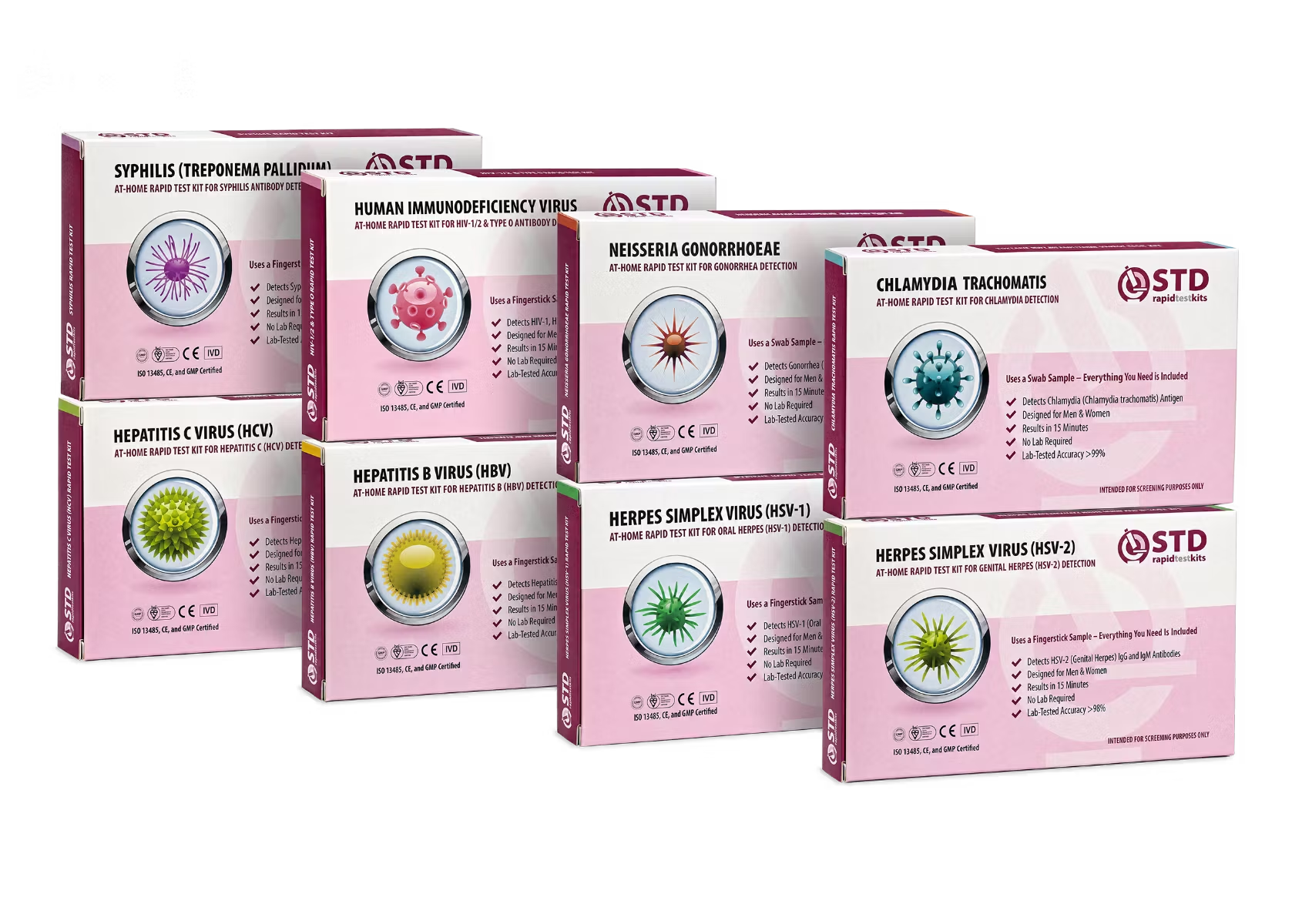
You can order another Hepatitis B home test in plain packaging for a 6-week follow-up, or use a broader 8-in-1 STI panel if the same exposure event also puts you at risk for HIV, Hepatitis C, syphilis, or other infections. Either way, the right move after an uncertain negative is another data point, not silence.
Three concrete next steps
- Retest at 6 weeks with a multi-marker lab panel (HBsAg plus anti-HBc plus anti-HBs), and again at 12 to 24 weeks if any concern remains.
- If you are pregnant, immunocompromised, or had a confirmed exposure to a known HBV-positive partner, see a clinician within 24 hours to ask about HBV DNA PCR and post-exposure prophylaxis (hepatitis B immune globulin plus the vaccine).
- Treat any visible band on a rapid cassette, even a faint one, as reactive. Photograph the cassette at the printed read time and confirm with a lab panel before acting on the result.
- U.S. Centers for Disease Control and Prevention. Hepatitis B information for the public. Background on transmission, symptoms, prevention, and post-exposure prophylaxis.
- U.S. Centers for Disease Control and Prevention. CDC recommendations for screening and testing for hepatitis B virus infection, MMWR 2023 update. Covers who should be tested and the recommended HBsAg + anti-HBc + anti-HBs triple-panel screen for adults.
- World Health Organization. Hepatitis B fact sheet. Global epidemiology, transmission routes, diagnostic approach, and prevention guidance including the role of HBsAg testing.
- U.S. Centers for Disease Control and Prevention. Viral hepatitis surveillance and clinical resources for healthcare professionals.
