
Published: October 2025 | Last updated: May 2026 | Editorial review and quality control: Martina N.
Testing for an STI in the days right after a possible exposure feels like the responsible move, and in many ways it is. The wrinkle is that almost every STI test has a built-in delay. Until enough of the infection (bacteria multiplying at the site, viral particles circulating, or antibodies your immune system produces against it) builds up in your body, a test cannot pick it up. Test too soon and a real infection can hide behind a negative result.
This delay is called the window period, and it is the single biggest reason an early negative STI result can be misleading. Following CDC, NHS, and WHO guidance, the right time to test depends on which infection you are worried about, and on the type of test you are using. Below is what is happening in your body during that window, how long it lasts by infection, and what to do with a too-early negative so the retest you take next gives you a meaningful answer.
Key Takeaways
- A negative STI result taken in the first days after possible exposure is often unreliable because most infections need a measurable amount of bacteria, antigen, or antibody before a test can detect them.
- Each infection has its own detection window: chlamydia and gonorrhea typically become detectable around 1 to 2 weeks; HIV by 18 to 45 days on modern combination tests; syphilis in 3 weeks to 3 months; herpes blood tests in 12 to 16 weeks.
Why “too soon” changes what a test can see
When people hear “false negative,” they often picture a broken kit or a contaminated sample. In most early-testing situations, nothing about the test failed. It did exactly what it was designed to do. There just was not enough infection present yet for the chemistry to react.
Different test types look for different things. Bacterial-infection swabs look for the bacteria themselves, which take time to multiply at the infection site before there are enough copies for a strip or a lab assay to detect. HIV tests look for the virus's antigens or your body's antibody response against it, neither of which appears in measurable amounts on day one. Syphilis and herpes blood tests look for antibodies your immune system produces over weeks of immune response. In every case, the signal exists on a biological timeline, and the result reads negative when that signal has not yet crossed the threshold a kit can detect.
This is the difference between a test that failed and a test that worked too early. The result on the strip is honest about what was in the sample.
I tested too soon. Is my negative result wrong?
Possibly, yes. A negative result taken inside the window period for that infection is not yet a reliable negative. Most rapid lateral-flow and standard lab tests need somewhere from 1 to 12 weeks after exposure (depending on the infection) before a clear result is possible. Mark the date of possible exposure, find the correct window for the specific infection from the table below, and plan one properly-timed retest. That second test is the one that gives you a meaningful answer.
What is happening in your body during the window period
The window period is not passive waiting. Your body is actively responding to the exposure during this time, sometimes producing early symptoms (mild discharge, a sore throat, swollen lymph nodes, a low-grade fever) and sometimes producing nothing you would notice. What changes day by day is whether the response has crossed the threshold the test can measure.
For bacterial infections like chlamydia and gonorrhea, the bacteria need to colonize and multiply at the infection site (genital, rectal, or pharyngeal tissue) before there are enough copies for a swab to detect. That usually takes about a week. For HIV, your immune system needs roughly 2 to 6 weeks to build a measurable antibody response, though newer combination antigen/antibody tests can pick up viral antigens earlier, in the 18-to-45-day range per the CDC's HIV testing guidance. For syphilis, the antibody response typically takes 3 weeks to 3 months. For herpes (HSV) antibody blood tests, reliable detection often takes 12 to 16 weeks after exposure, though in a small proportion of cases the antibody response takes longer, up to six months on some assays.
This is why a kit you trust completely can still hand you a wrong answer in the first days. The biology is working; the signal is just not visible yet.
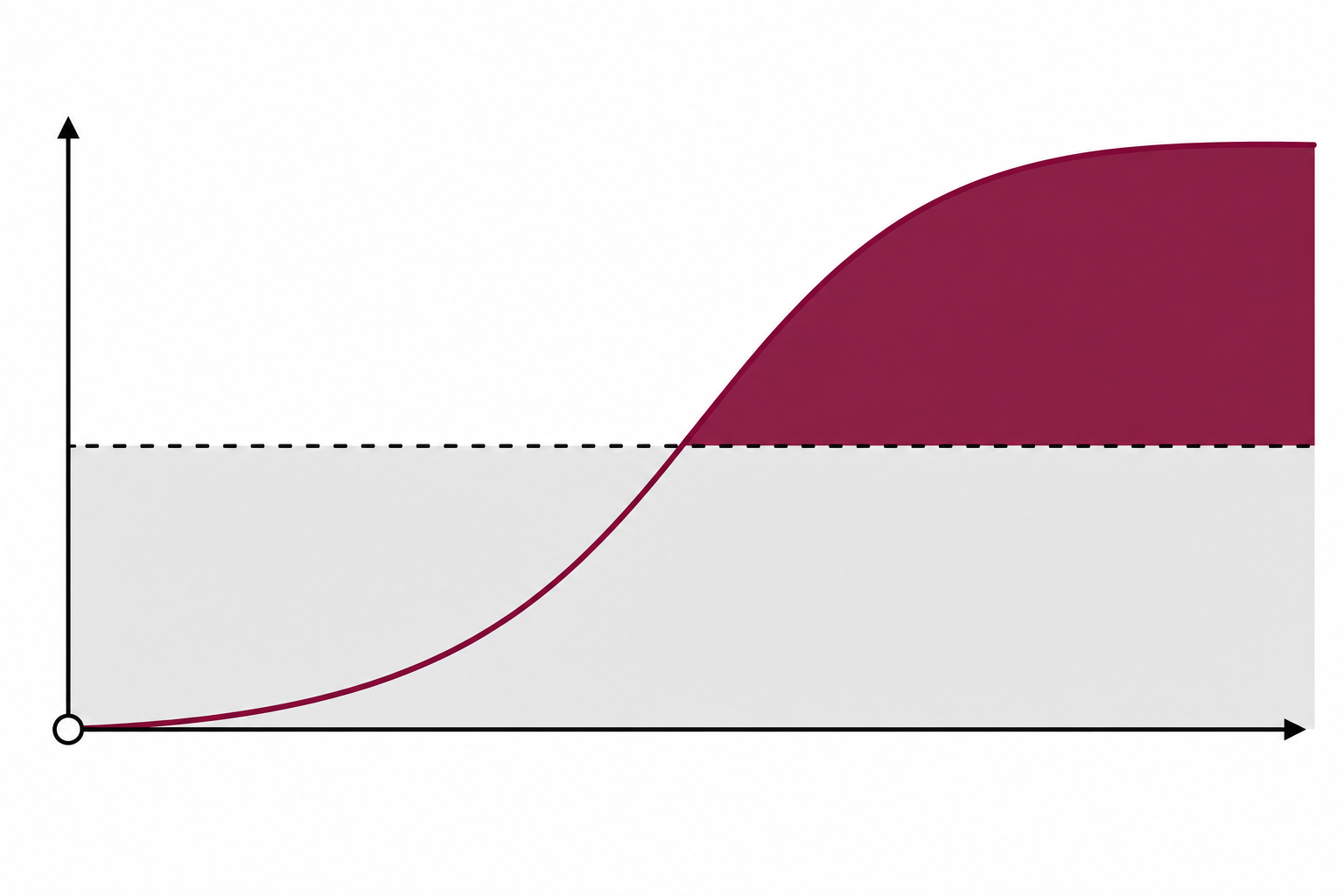
Detection windows by infection type
The single most useful thing you can do with a too-early negative is map it against the right detection window for the specific infection you are worried about. The numbers below follow CDC, NHS STI, and WHO STI fact sheet guidance, with the HIV-specific ranges drawn from the CDC's HIV testing page. They are conservative ranges, not exact dates.
| Infection | Reliable test typically possible from | Best time to retest after a too-early negative |
|---|---|---|
| Chlamydia (swab) | About 5 to 7 days after exposure | 1 to 2 weeks after exposure |
| Gonorrhea (swab) | About 5 to 7 days after exposure | 1 to 2 weeks after exposure |
| HIV (combination antigen/antibody lab test) | 18 to 45 days | At 45 days; if negative and concern remains, repeat at 90 days |
| HIV (antibody-only rapid) | 23 to 90 days | 12 weeks after exposure |
| Syphilis (blood antibody) | 3 weeks to 3 months | At 6 weeks; confirm at 3 months if exposure was high-risk |
| Herpes HSV-1 / HSV-2 (blood antibody) | About 12 to 16 weeks | 12 weeks after exposure |
| Hepatitis B (HBsAg blood) | 4 to 10 weeks | At 6 weeks; repeat at 3 months if needed |
| Hepatitis C (antibody blood) | 4 to 10 weeks | At 8 to 11 weeks; repeat at 6 months if exposure was high-risk |
Why testing again on day 5 does not fix a negative from day 3
One of the most common reactions to a too-early negative is the urge to repeat it almost immediately. It feels like the right correction. The problem is that if the timing has not changed in any meaningful way, the biology has not changed either. A second test taken two days after the first one is still inside the same window for almost every STI on the list above.
Repeating a test inside the same window does not move the result closer to truth. It just doubles the same uncertainty. The retest only becomes meaningful when enough time has passed for the relevant marker (bacteria, antigen, or antibody) to cross the detection threshold for the test you are using.
The strategy is patience with a clear deadline, not passive waiting. Mark the date of exposure on a calendar. Find the right retest window from the table above for the infection you are worried about, and set a reminder for that date.
Two negatives inside the same window do not equal one reliable negative. The accuracy of a result depends on whether enough time has passed for the infection to be detectable, not on how many times you tested. Save the retest for the date the window closes.
Matching the test to the right window
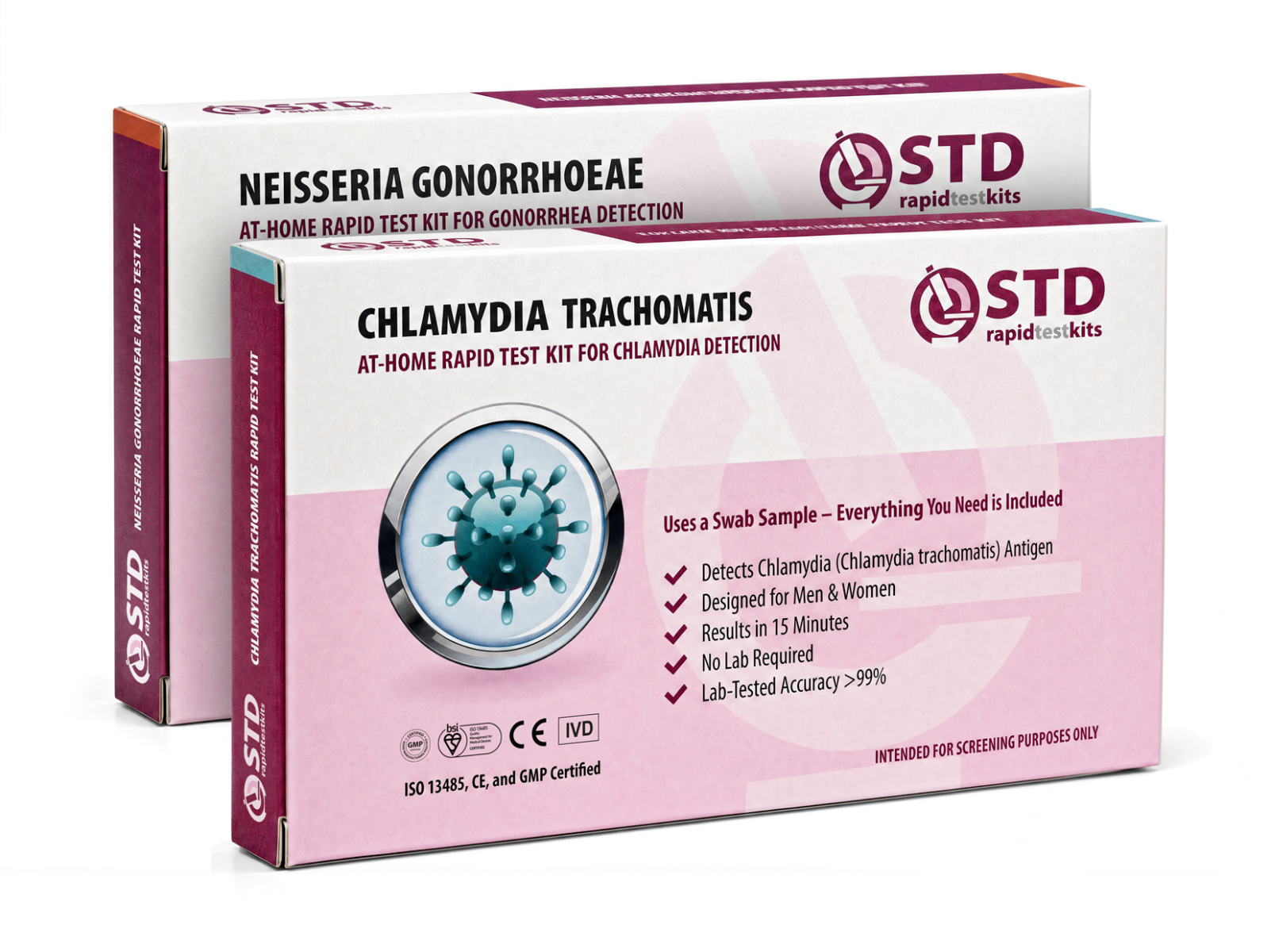
For bacterial infections (chlamydia, gonorrhea) the most common at-home option is a swab-based rapid lateral-flow test, which becomes most reliable around the 1-to-2-week mark after exposure. If your concern is specifically a bacterial exposure (a partner who tested positive for chlamydia, for example, or unprotected sex with someone whose status you do not know but who has had recent symptoms) a targeted two-infection swab kit is usually clearer than rerunning a single-infection kit early. A lateral-flow at-home cassette is not the same chemistry as a laboratory nucleic acid amplification test (NAAT or PCR), but it is a useful private screen when used at the right window.
If a positive result comes up on a rapid lateral-flow test, it is worth confirming with a clinic NAAT when possible, because lab NAATs are the most analytically sensitive method available. This site sells the at-home rapid tests referenced below.
When symptoms do not match what the test shows
One of the most disorienting parts of testing too early is feeling something, anything, and seeing a negative result. Mild urethral irritation, a faint sore throat, a single small bump, a low fever, swollen lymph nodes after a recent exposure. The symptom feels real but the test says no.
This mismatch is genuinely common, and there are two clean explanations. First, symptoms can appear before the marker the test is looking for has reached detectable levels. Acute HIV symptoms (fever, fatigue, rash, sore throat about 2 to 4 weeks after exposure) often arrive before HIV antibodies are measurable. Herpes can present as a visible lesion before HSV antibodies build up in the blood. Second, the symptom might not be from the STI at all. Throat irritation can be a viral cold. A bump might be folliculitis or an ingrown hair. Generic anxiety after a high-risk encounter can produce real physical sensations.
The honest move when something feels off is to see a clinician for a direct sample (a swab from the active symptom site, or a blood draw for an acute HIV viral load) rather than waiting on a home retest.
If you have visible lesions, discharge, persistent pain, or a fever right now, see a clinician rather than waiting on a properly-timed home retest. A swab or PCR taken directly from the symptom site is more informative than an antibody blood test at this stage, and faster treatment usually means less risk of complications.
How to manage the wait without making it worse
There is no shortcut through a window period, but there are ways to spend that time without spiraling. Three patterns tend to make the wait harder than it has to be, and each has a clean alternative.
- Repeated symptom-checking: inspecting yourself three times a day for the same imaginary bump amplifies anxiety without producing new information. A single check at the same time each day is plenty.
- Re-Googling the same question with different wording: the biology of the window period does not change because you reframed the search. Pick one authoritative source (the CDC, the NHS, your own clinic) and stop after that.
- Impulse retesting during the window: this is the most expensive pattern, financially and emotionally, and the least informative. Save the test for the proper retest date.
Staying grounded while you wait
The realistic frame is this: you are not stuck, you are inside a defined process with a specific next step. The next step is a properly-timed retest. Until then, normal protective behavior (condoms or abstaining from new exposure) covers the worst-case while the window plays out.
A negative result taken at or beyond the proper window for the infection in question is a meaningful negative. You can act on it. A positive result, similarly, is now reliable enough to take seriously, follow up on, and treat. Both versions of the answer are worth more than any number of too-early tests stacked on top of each other.
A positive result at the right window is not a failure of anything you did. It just means the timing finally lined up with detection. Most common STIs are treatable (chlamydia, gonorrhea, syphilis, hepatitis B in many cases) or manageable long-term (HIV, herpes, hepatitis C). The bigger problem is delayed detection, because untreated bacterial STIs can cause longer-term reproductive complications and untreated HIV is much more transmissible during the acute phase.
The CDC notes that a test taken before the window period closes may return a negative result even when infection is present, and that the right time to test depends on which STI is being screened for. The practical takeaway is the same one this article keeps returning to: map the test to the infection, not the urgency.
When a broader panel makes more sense than a single-infection retest
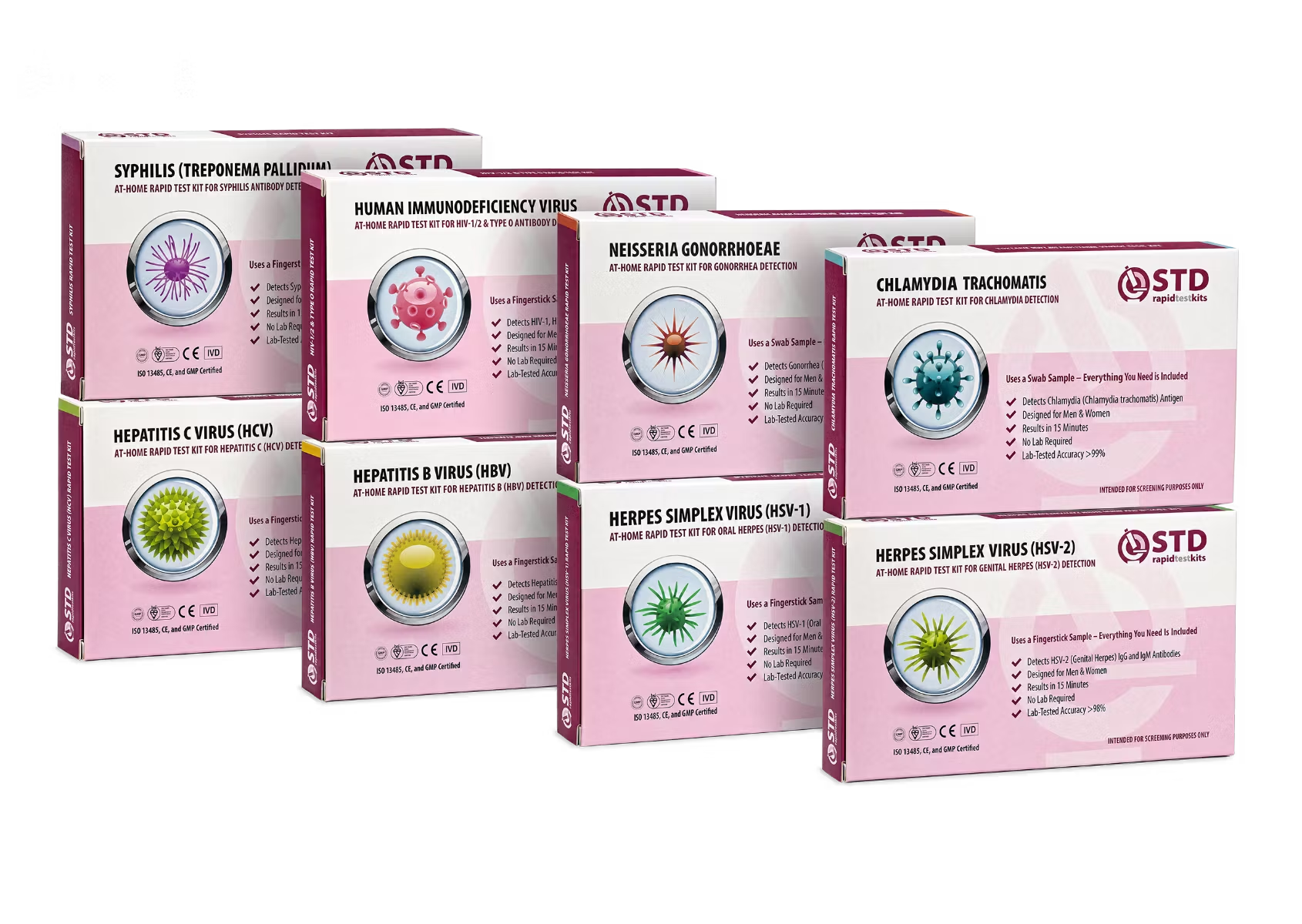
If the exposure was high-risk (unknown partner status, condom failure, multiple partners in a short window, or a partner who has had a recent STI of unknown type) a multi-infection panel is often the right move for the retest rather than guessing which specific kit to buy. A combination kit covers several infections at once, which is closer to what a clinic visit would screen.
The trade-off is straightforward: a single-infection kit is targeted and a little clearer when you know exactly which infection is on the table; a combo kit is broader and saves repeated retests when your concern is wide. After the window closes for the slowest infection on the panel (often herpes or HIV antibody-only rapid, around 12 weeks), one well-timed combo test answers more questions than a stack of single-infection retests across different weeks.
FAQs about testing too early
- How soon after a possible exposure can I get a reliable STI test?
- It depends on which infection you are worried about. Chlamydia and gonorrhea swabs are reliable from day 7 to 14. Modern combination HIV tests can detect infection between 18 and 45 days, while antibody-only rapid HIV tests can take up to 90 days. Syphilis blood antibody tests can turn positive from 3 weeks to 3 months. Herpes HSV blood antibody tests typically need 12 to 16 weeks. Testing earlier than these windows risks a false-negative result.
- If my early test was negative, do I still need to retest?
- If the first test was inside the window period for the infection you are worried about, yes. A negative result taken too early is not yet a definitive negative. Mark the date of possible exposure, find the right window from the table above, and plan one retest at that point. That second result is the one worth relying on.
- Why might I have symptoms before a test turns positive?
- Symptoms can appear before the body has produced enough of the marker a test is looking for. This is especially common with acute HIV symptoms (fever, fatigue, rash about 2 to 4 weeks after exposure) and with herpes (a visible lesion can show up before blood antibodies build). If something feels off, see a clinician for a direct sample test of the active symptom rather than waiting on a home retest.
- Is an at-home rapid test as accurate as a lab NAAT?
- An at-home rapid lateral-flow test and a lab NAAT/PCR are different chemistries. Lateral-flow tests are useful private screens at the right window. Lab NAATs are more analytically sensitive, which is why a positive rapid result is worth confirming at a clinic when possible. A negative rapid result taken at or beyond the right window is generally reassuring.
- Can I still transmit an STI to a partner during the window period?
- Yes. A negative test inside the window period does not mean you are not infectious. Bacterial STIs can be transmitted before they show on a test, and HIV is particularly transmissible during the acute (early) phase. Using condoms or pausing new exposure until your retest is the safer choice if you have real reason for concern.
- Should I retest with a single-infection kit or a combo panel?
- If you know which exposure is on the table (for example, a partner who tested positive for chlamydia), a targeted single-infection kit is clearer and cheaper. If the exposure was unknown-status or high-risk, a combo panel covers more in one go, which is closer to what a clinic would screen for. The right pick depends on what you want to rule out.
- What does a retest at the right window tell me?
- At the right window, a negative means you can move on from this exposure with confidence. A positive gives you a confirmed result to act on, and most common STIs are treatable, with earlier treatment meaning fewer complications. Either answer is more useful than a stack of negatives taken while the infection was still below the detection threshold.
- When should I skip home testing and see a clinician?
- If you have visible lesions, persistent symptoms, severe pain, fever, or a known high-risk exposure (a partner with a confirmed STI, condom failure, or potential HIV exposure that might warrant PEP within 72 hours), see a clinician right away. Home testing is for routine retesting at the right window; it is not the right tool for an urgent active symptom.
How we sourced this article: This guide is built from current public-health guidance on STI testing windows from the U.S. Centers for Disease Control and Prevention, the UK National Health Service, and the World Health Organization. The retest windows in the table are conservative ranges drawn directly from those sources. Real-world reader behavior patterns inform the framing around symptom-checking, retest impulse, and the wait-period anxiety section. We do not provide clinical diagnosis. For an active symptom or a known high-risk exposure, see a licensed clinician.
- U.S. Centers for Disease Control and Prevention. Getting Tested for STIs: an overview of who should be tested and how to access testing.
- U.S. Centers for Disease Control and Prevention. HIV testing guidance, including antigen/antibody combination test window of 18 to 45 days and antibody-only test window up to 90 days.
- U.S. Centers for Disease Control and Prevention. STI screening recommendations for the general population.
- UK National Health Service. Sexually transmitted infections (STIs): symptoms, testing intervals, and when to retest.
- World Health Organization. Sexually transmitted infections (STIs) fact sheet, including global testing recommendations.
- U.S. Centers for Disease Control and Prevention. Syphilis overview: symptoms, transmission, prevention, and treatment.
