






Quick Answer: Herpes, HPV, and chlamydia are the most common STDs because they often spread without symptoms, survive on skin or fluids, and evade detection unless you test at the right time.
Why So Common? The Real Transmission Game
You don’t need to be reckless to catch one of these. In fact, the reason chlamydia, herpes, and HPV are so widespread has more to do with biology and silence than with behavior. They thrive on three things: skin contact, fluid exposure, and lack of obvious signs. You can get infected even if you use condoms most of the time, even if you feel totally fine, even if you only had oral sex. That’s what makes them dangerous, but also what makes them manageable once you know the facts.
Let’s break it down:
| STD | Main Transmission Method | Symptoms Always Present? | Can Condoms Fully Prevent It? |
|---|---|---|---|
| Herpes | Skin-to-skin contact, oral sex | No , often symptomless | No , spreads outside covered areas |
| HPV | Skin contact, even brief exposure | Rarely , usually asymptomatic | No , spreads through uncovered skin |
| Chlamydia | Vaginal, anal, or oral sex | No , especially in men | Mostly , if condom used properly every time |
Table 1: Why these three STDs slip through protection and go unnoticed
It’s not about being dirty, careless, or promiscuous. It’s about viruses and bacteria designed to survive under the radar. And once you understand that, you stop blaming yourself, or your partner, and start getting smarter about testing.
What Makes Herpes So Stealthy?
Herpes simplex virus (HSV) can lie dormant for years. Some people never have a single visible outbreak. Others have mild symptoms they confuse with pimples, razor burn, or even allergic reactions. It doesn’t help that herpes can spread when there are no sores, what’s called “asymptomatic viral shedding.” That means your partner can pass it on even when they feel fine and look fine.
Picture this: someone has a tiny tingle on their lip. They think it's dry skin or irritation from toothpaste. They kiss a partner, maybe go down on them, and weeks later, that partner gets genital herpes. No one meant harm. No one noticed a thing. That’s how it spreads.
According to the CDC, about 1 in 6 people in the U.S. aged 14–49 have genital herpes, but most don’t know it. Because herpes isn't routinely included in STD panels unless you ask, it flies under the radar. The stigma sticks, but the symptoms don’t always show up. That disconnect fuels quiet transmission cycles in long-term relationships, hookups, and everything in between.
What makes it even more frustrating is how herpes behaves differently for everyone. Some people experience outbreaks a few times a year, others never do. It can show up weeks, months, or even years after infection. That timing gap causes major confusion in relationships. Who gave it to whom? When? Th at’s not always knowable, and that’s okay.
Order a discreet herpes rapid test kit if you’re unsure. You don’t have to wait for symptoms to get answers.
HPV: The STD That Doesn’t Feel Like One
Human papillomavirus (HPV) is the most common STD worldwide. Most people who have it will never know it. It doesn’t usually itch, burn, or create discharge. In fact, for most people, it clears on its own within two years. But that doesn’t mean it’s harmless.
There are over 100 strains of HPV. Some cause genital warts, soft, flesh-colored growths that may show up weeks or months after exposure. Others cause nothing at all, silently altering cells in the cervix, anus, or throat. That’s where the risk of cancer comes in. High-risk HPV strains can cause cervical cancer in people with a cervix, and anal or throat cancers in people of all genders.
Jamie was 31 when a routine Pap smear came back abnormal. They had no symptoms and had been in the same relationship for years. The test showed high-risk HPV, something Jamie had never even heard of in this context. “I thought HPV was just warts,” they said. “I had no idea it could cause cancer. I thought I was safe because we were monogamous.”
That story isn’t rare. What makes HPV so common is that you don’t need visible symptoms or multiple partners to get it. Even one encounter, oral, vaginal, or skin-to-skin, can pass it on. The virus can linger for years, and while the HPV vaccine protects against the most dangerous strains, not everyone got vaccinated at the ideal age. And adults can still get strains not covered by the vaccine.
The good news? There are ways to test for high-risk HPV strains. And just because you have it doesn’t mean something terrible will happen. But knowledge gives you the chance to monitor, prevent, and treat issues before they become serious.
If you're feeling unsure after a new partner or past exposure, this HPV test kit gives clarity without the clinic.

People are also reading: No Symptoms, No Problem? Not Always.
Chlamydia: The Infection That Rarely Speaks Up
Chlamydia is tricky, not because it's deadly, but because it's quiet. Among the most commonly reported STDs, chlamydia often causes no symptoms at all. That makes it incredibly easy to pass along without knowing you’re carrying it. In people with penises, it may cause a slight burning while peeing or a cloudy drip that’s easily ignored. In those with vaginas, it may cause spotting, cramping, or unusual discharge, but just as often, there’s nothing noticeable at all.
Consider this: over 1.6 million cases of chlamydia were reported in the U.S. in the latest CDC surveillance year, and that’s just what's diagnosed. Experts estimate the real number could be double. Many people don’t test unless symptoms show up or a partner says something. That delay leads to long-term consequences, especially in people with uteruses. Untreated chlamydia can travel to the fallopian tubes, causing pelvic inflammatory disease (PID), which raises the risk of infertility.
Maria, 22, only tested because her best friend had a scare. She’d never felt anything wrong, no itching, no pain, nothing. “I thought I was just being paranoid,” she said. When her results came back positive, she cried for two hours. Not out of shame, but from confusion. “I didn’t even know I could have an STD and feel fine.”
The reality? Most people with chlamydia feel fine. That’s why public health guidelines recommend regular screening for sexually active individuals under 25, especially those with new or multiple partners. Testing isn’t about panic, it’s about prevention.
For discreet, lab-accurate testing you can do from home, the Chlamydia Rapid Test Kit delivers peace of mind in minutes.
Why Symptoms Can’t Be Trusted
People want to believe that their body will “tell them” if something is wrong. But when it comes to STDs like herpes, HPV, and chlamydia, that’s a dangerous assumption. The absence of symptoms doesn’t mean the absence of infection. Many of the most common STDs are what we call “silent infections”, they settle in quietly and can do damage over time without warning signs.
Here’s a quick comparison of how these three STDs can feel, or not feel, based on real-world experiences:
| STD | When Symptoms Show (if any) | Common Misinterpretations | Long-Term Risks |
|---|---|---|---|
| Herpes | Within 2–20 days of exposure or never | Razor burn, ingrown hairs, stress rash | Recurring outbreaks, partner transmission |
| HPV | Months to years later (if at all) | Nothing (usually symptomless) | Cervical, anal, or throat cancer |
| Chlamydia | 1–3 weeks or never | UTI, period cramps, general fatigue | Pelvic inflammatory disease, infertility |
Table 2: When symptoms appear, and why they’re often missed
The take-home message? If you’re sexually active, especially with new or multiple partners, regular testing matters, even if you feel 100% fine. Your symptoms, or lack thereof, are not a reliable test.
And if you’re in a monogamous relationship? Testing still matters. Many people carry infections acquired long before their current partner, only discovering them during routine health checks, pregnancy testing, or after a partner experiences symptoms.
Can You Get These STDs Without “Sex”?
Yes. That’s part of what makes them so common. The word “sex” tends to mean different things to different people, but herpes, HPV, and sometimes even chlamydia don’t care about your definitions.
Let’s take oral sex, for example. Many people assume it’s “safe” or “safer”, and while it does reduce HIV risk, it’s still a major route for herpes and HPV. A cold sore during a blowjob can become genital herpes. A quick lick during foreplay can pass on HPV. Even kissing can spread oral herpes, which can then travel down through contact.
What about fingers or toys? If someone touches a genital area infected with chlamydia, and then touches yours, the bacteria can transfer. The risk isn’t as high as unprotected penetrative sex, but it’s not zero. Same with shared sex toys that aren’t cleaned between uses.
This isn't about creating fear. It's about giving you accurate context so you can make informed choices. Knowing how these infections spread helps you better understand your own risk and your partner's, not to shame yourself, but to protect both of you.
Our STD Rapid Test Kits homepage includes combo kits if you're unsure which infections to test for after skin contact, oral, or uncertain exposures.
When “Clean” Isn’t the Same as Tested
One of the most harmful myths in STD prevention is the idea that someone looks “clean” or that being clean means being safe. But let’s get this straight: cleanliness has nothing to do with infections like chlamydia, herpes, or HPV. The real question is, “Have you been tested recently, and after the window period?”
Ari, 26, had been sleeping with one person exclusively. They’d both said they were “clean.” But neither had been tested since starting the relationship. When Ari’s annual Pap test flagged abnormal cells, they were shocked. High-risk HPV. The strain likely came from a past relationship, one neither of them knew they’d carried. The emotional weight of that discovery broke trust not because of infidelity, but because they hadn’t been educated on how silent these infections can be.
The term “clean” is stigmatizing and medically meaningless. Swap it for “tested,” and better yet, ask when and for what. Not every clinic includes herpes in their routine panels. Not every at-home kit screens for HPV unless you choose the right one. Knowing what your test covers matters just as much as knowing when to take it.
If it’s been more than a few months, or if you’re entering a new relationship, testing is one of the most responsible and affirming things you can do. It's not about judgment. It's about care. For you and whoever comes next.
Check Your STD Status in Minutes
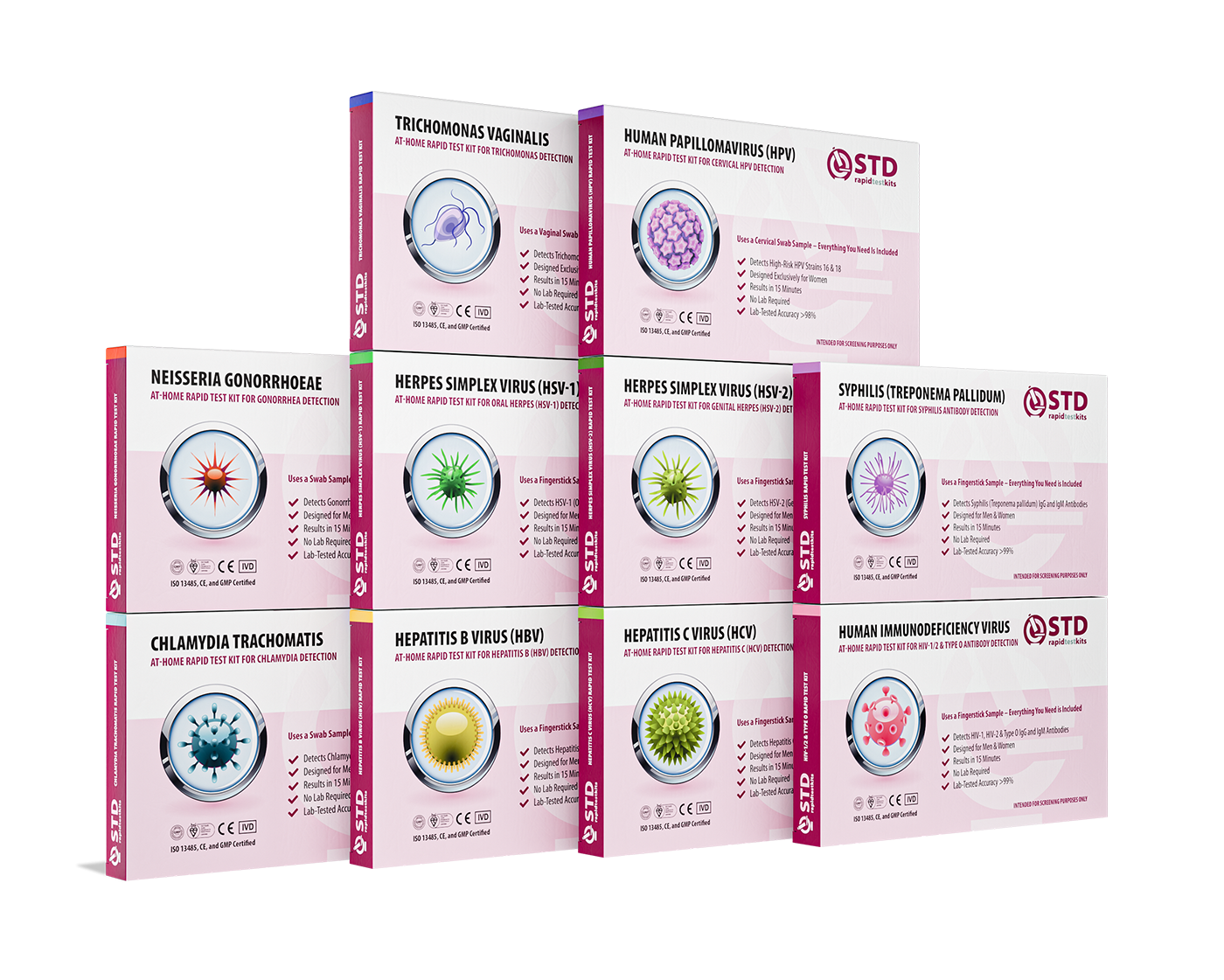
Test at Home with Remedium10-in-1 STD Test Kit
 For Women
 Results in Minutes
 No Lab Needed
 Private & Discreet
Order Now $189.00 $490.00
For all 10 tests
What About Testing Timing? Don’t Guess, Plan It
Most people don’t realize that timing is one of the most important parts of testing. If you test too soon after exposure, your result might be negative even if you’re infected. That’s called the “window period”, the time between when you’re exposed and when a test can detect the infection accurately.
Here’s how the window period looks for our three main players:
| STD | Earliest Test Time | Best Time to Test | Retest Needed? |
|---|---|---|---|
| Herpes | 10–14 days (blood test) | 4–6 weeks | Yes, if early or no symptoms |
| HPV | Weeks to months (Pap/HPV DNA test) | 3+ months after exposure | Varies, often part of annual screening |
| Chlamydia | 7–10 days | 2 weeks after exposure | Yes, if exposure was recent or ongoing |
Table 3: Recommended testing windows to improve accuracy and reduce false negatives
It’s tempting to test right away after a risky encounter, but in many cases, you'll need a follow-up. A negative result too soon doesn’t always mean you're clear. Use our Window Period Calculator to know when to test for each infection, based on your timeline.
For example, if you had unprotected oral sex five days ago, testing for chlamydia today might be too early. Testing at 14 days gives a more reliable result, and if you test earlier, plan a retest to confirm.
If You Test Positive, You’re Not Alone
Let’s say your result comes back positive. You feel your heart drop, your stomach twist, maybe your hands shake. First, breathe. These three infections, chlamydia, herpes, and HPV, are manageable, common, and treatable (in the case of chlamydia) or suppressible (in the case of herpes). You are not dirty. You are not doomed. You are now informed.
For chlamydia, the treatment is usually a short course of antibiotics. In many cases, a single dose clears it. For herpes, antiviral meds can shorten outbreaks and lower the chance of passing it on. And while HPV doesn't have a cure, your immune system often clears it naturally, especially in younger people. Abnormal Pap smears are followed up with monitoring or treatment as needed.
Partners can be notified privately or anonymously. Many clinics and apps allow you to send secure, confidential messages so your partner can get tested too. No awkward confrontation required, just responsibility and care.
You Deserve Answers, Not Assumptions
You don’t have to guess. You don’t have to wait for something to feel wrong. Testing is power. It’s peace of mind. It’s how we protect not just our own bodies, but the people we care about.
If you’ve had any kind of sexual contact, oral, skin-to-skin, penetrative, or shared toys, it’s okay to want clarity. It’s okay to not know. What matters is what you do next.
Don’t wait and wonder, get the clarity you deserve. This at-home combo test kit checks for the most common STDs discreetly and quickly.

People are also reading: Can Teens and Seniors Both Get Chlamydia? Yes, Here’s Why
FAQs
1. Can I really have herpes and not know it?
Yep, and that’s exactly why it spreads so easily. Most people don’t get the “classic” painful blisters. Some feel a weird itch, a bump they think is a pimple, or nothing at all. You could carry the virus for years before a doctor even mentions it, if they ever do.
2. Is it true almost everyone has HPV?
Kind of, yeah. It’s like the glitter of the STD world, everywhere, hard to see, and sticks around. Most sexually active people will get it at some point, but most won’t know because their immune system clears it before it causes problems. Still, some strains hang around and need watching, especially the high-risk ones tied to cervical and throat cancers.
3. Does chlamydia just go away on its own?
Technically it can, but should you wait and see? Absolutely not. Chlamydia might ghost you symptom-wise, but it can still wreck your reproductive health. A quick course of antibiotics clears it up fast, don’t leave it to chance or fate.
4. Is oral sex even risky for STDs?
Totally. It’s less risky for HIV, but herpes, HPV, and even chlamydia love oral environments. Cold sores (aka oral herpes) can absolutely become genital herpes after a fun-but-unprotected session. And yes, you can get chlamydia in your throat. Sexy, huh?
5. I tested negative, am I in the clear?
Maybe. It depends on *when* you tested. If it was right after exposure, you might’ve tested during the window period, aka too early for a reliable result. If in doubt, retest a few weeks later. Think of it like a safety net for your peace of mind.
6. Can I get HPV or herpes from someone who looks totally fine?
100%. Most people with either virus don’t have visible symptoms. No sores, no warts, nothing to tip you off. That’s why testing and vaccination (where possible) are key, not guesswork or gut feelings.
7. Do condoms stop herpes and HPV?
They help, big time, but they’re not full-proof shields. These viruses live on skin that condoms don’t cover (like the base of the penis, inner thighs, etc.). So while barriers lower your risk, they don’t erase it. Still worth using though!
8. Should I get tested even if I’m symptom-free?
Yes, yes, and yes again. These three infections in particular are the masters of flying under the radar. You don’t test because you think you’re sick, you test to stay well and keep your partners well too.
9. How does herpes testing even work?
Blood tests look for antibodies your body makes in response to the virus. But here’s the kicker: they’re not always offered by default. You usually have to ask for it directly. And timing matters, best to test at least 4–6 weeks after possible exposure for accuracy.
10. If I have HPV, does that mean I have cancer?
Nope, not even close. Most HPV infections go away on their own and never cause problems. But if a high-risk strain sticks around, it can lead to abnormal cells, hence why Pap smears and HPV tests are a lifesaver. Think of it like early-warning radar, not a death sentence.
How We Sourced This Article: We combined current guidance from leading medical organizations with peer-reviewed research and lived-experience reporting to make this guide practical, compassionate, and accurate. In total, around fifteen references informed the writing; below, we’ve highlighted six of the most relevant and reader-friendly sources.
Sources
1. CDC – Genital Herpes – Fact Sheet
2. CDC – Chlamydia – Fact Sheet
4. Planned Parenthood – Herpes
About the Author
Dr. F. David, MD is a board-certified infectious disease specialist who works to stop, diagnose, and treat STIs. He combines clinical accuracy with a straightforward, sex-positive approach and is dedicated to making his work available to readers in both cities and rural areas.
Reviewed by: Dr. Lydia Patel, MPH | Last medically reviewed: September 2025
This article is for informational purposes and does not replace medical advice.


