Published: August 2025 | Last updated: May 2026 | Editorial review and quality control: Martina N.
Genital warts have a frustrating habit of coming back. You see a clinician, get the visible bumps frozen or treated with a topical, and breathe out. Weeks or months later, another bump appears in the same neighborhood and your stomach drops. Did the treatment fail? Did something get missed? Did a partner pass it back?
None of those are the most likely answer. Genital warts are caused by the human papillomavirus (HPV), and HPV does not leave the body the moment a wart is removed. Treatments clear what you can see. The virus itself can stay quietly inside skin cells and reactivate later, especially while the immune system is still learning how to suppress it. Recurrence is common, well documented in the clinical literature, and almost always biological rather than behavioral. This piece walks through how often warts return, what makes a flare more likely, how to tell warts apart from common lookalikes, and how to think about disclosure, treatment, and prevention without spiraling.
Key Takeaways
- Genital warts often recur after treatment, especially during the first three months, per the CDC's STI treatment guidelines. Most people see fewer outbreaks over time as their immune system gets better at controlling HPV.
- A returning wart is almost never a new infection from a partner. It is usually the same HPV strain reactivating in nearby skin. About 9 out of 10 HPV infections clear within two years, even when outbreaks pop up along the way.
Why Genital Warts Return After Treatment
To understand recurrence, it helps to look at what HPV actually does. The virus infects basal skin cells, the layer that constantly divides to replenish your skin. Once HPV is established in those cells, treatments aimed at the visible wart, cryotherapy, topical creams, surgical excision, work on what you can see. They do not reliably reach the virus living in the surrounding, normal-looking skin. That residual HPV can then drive a new wart in the same area weeks or months later.
That mismatch between visible treatment and invisible infection is why the CDC's STI Treatment Guidelines describe genital warts as a condition where lesions often recur, particularly within the first three months after treatment. No single treatment is considered superior in head-to-head comparisons. They all clear the surface; none reliably eradicates the virus.
Removing visible warts still matters. It reduces discomfort, lowers transmission risk during the cleared period, and gives the immune system room to do its work between outbreaks.
Cryotherapy, topical creams, and surgical removal clear the visible wart. No current option reliably eradicates HPV from the surrounding skin. That is why recurrence is common and why it does not mean treatment failed.
How Often Recurrence Happens, and When
Published estimates of recurrence rates vary widely, generally landing somewhere in the 30 to 70 percent range within a few months of clearance, depending on the population studied and the treatment used. The variability is real: people with stronger immune control, fewer initial lesions, and good vaccination coverage tend to do better than the average; people with extensive disease or immunosuppression tend to do worse.
What the literature agrees on is the shape of the recurrence curve. The first three to six months after treatment carry the highest risk. After that, the curve flattens. By a year out, most people who are going to recur have already done so. By two years, the majority of HPV infections have cleared on their own, even in people who experienced outbreaks along the way, per the CDC's HPV overview. That clearance curve is also why most clinicians do not switch treatment plans after a single early recurrence; they wait to see whether the pattern continues past the first six months before changing approach.
How long do genital warts keep coming back after treatment?
Recurrence is most common in the first three to six months after a wart is cleared. Roughly 30 to 70 percent of people will see a new wart in that window. After the first year, recurrences become less frequent for most people, and around 9 in 10 HPV infections clear within two years as the immune system suppresses the virus. A returning wart is almost always the same HPV reactivating, not a new infection from a partner.
What Can Trigger a New Outbreak
Late-night searches often land on the same worry: did stress cause this? Stress alone does not create HPV out of nothing. What stress can do is blunt the immune response that has been holding HPV in check. Several other factors work the same way.
Systemic triggers that weaken immune control of HPV:
- Poor sleep, heavy alcohol use, and smoking
- Recent illness, especially viral infections
- Pregnancy (warts often flare in the second or third trimester and settle again postpartum)
- Conditions that suppress immunity: HIV, cancer treatment, long-term steroids, organ-transplant medications
Local triggers that irritate already-infected skin:
- Friction during sex
- Shaving or waxing the genital area
- Tight clothing rubbing the same spot
None of this means a flare is your fault. It means the virus has been patient, and your body briefly took its attention off of it. Hormonal shifts during pregnancy are an especially well-described trigger, which is why obstetric clinicians watch for new growths during routine prenatal visits.
Telling Genital Warts Apart From Common Lookalikes
Not every bump in the genital area is a wart. Confusion is one of the main reasons people delay care, and it often runs in the opposite direction too: a perfectly normal anatomical variant gets mistaken for a wart and triggers weeks of anxiety. Knowing the common lookalikes helps.
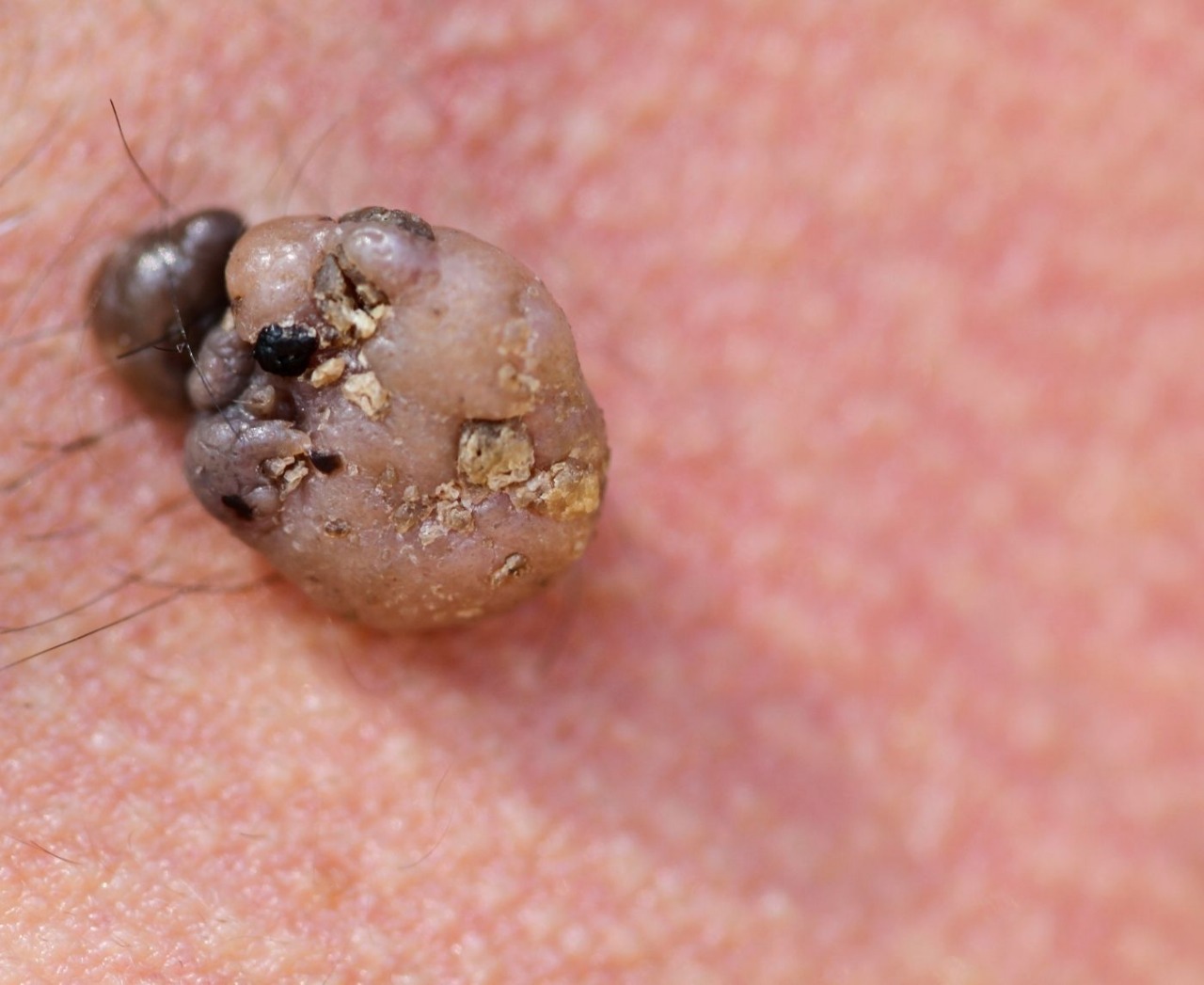
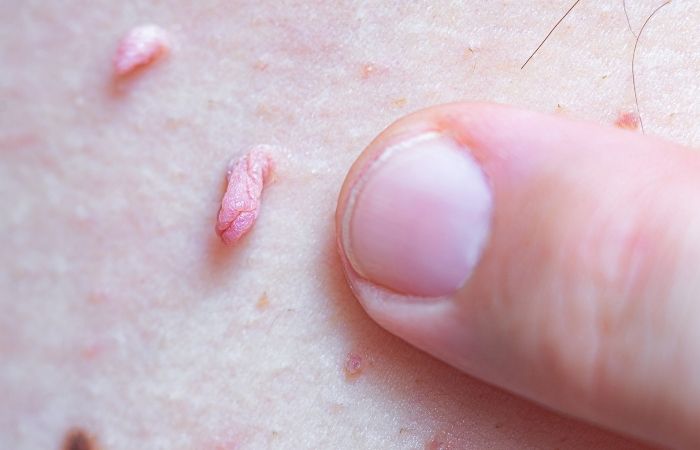
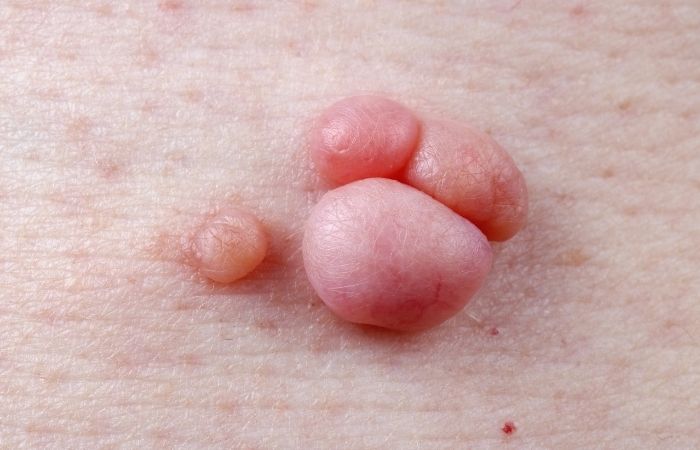
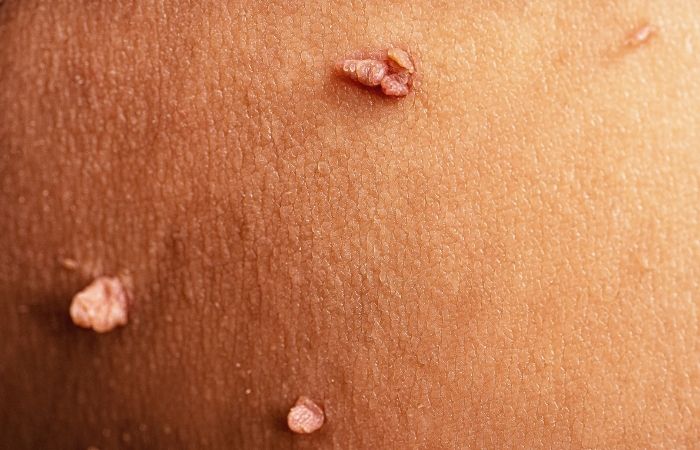
Genital warts, per DermNet's reference on anogenital warts, typically appear as soft, flesh-colored or slightly darker bumps. They can be flat, raised, or shaped like a tiny cauliflower. They may cluster, feel rough, and often appear on the vulva, penis shaft, scrotum, around the anus, or anywhere skin contacts skin during sex. Most do not hurt, though some itch.
Lookalikes That Often Get Mistaken For Warts
- Skin tags (acrochordons): soft, narrow-stalked flesh-colored growths that can appear in any folded skin area, including the groin. Not infectious and unrelated to HPV.
- Pearly penile papules: small, dome-shaped bumps arranged in one or two neat rows around the rim of the glans. A normal anatomical variant present in roughly 30 percent of men. They do not spread, change, or transmit anything.
- Vestibular papillomatosis: the female counterpart, small, symmetric, finger-like projections lining the inner labia. Like pearly papules, a normal anatomical pattern, not an infection.
- Molluscum contagiosum: dome-shaped bumps with a tiny central dimple. Caused by a different virus, contagious through skin contact, resolves on its own over months.
- Folliculitis or ingrown hairs: red, sometimes pus-filled bumps from shaving or waxing. Resolve within days to weeks; warts do not come and go that quickly.
If a bump is new, asymmetric, growing, or grouped in a cluster, and especially if it feels rough or cauliflower-textured, a clinician can usually identify a wart on visual exam alone. Imaging or biopsy is rarely needed.
Are You Still Contagious Between Outbreaks?
HPV transmission between outbreaks is more nuanced than a simple yes or no. HPV is most transmissible when visible warts are present; the lesions carry high viral loads and friction transfers virus efficiently. When warts are gone and have been gone for a while, transmission risk drops, but it does not fall to zero. Asymptomatic shedding from normal-appearing skin is documented, particularly in the months right after a treated outbreak.
Condoms and dental dams reduce transmission risk meaningfully but cannot fully prevent it, because HPV lives in skin that condoms do not cover (the base of the penis, the scrotum, the vulva outside the vaginal opening). NHS guidance on genital warts describes this nuance plainly: barriers help, but the virus can still pass from skin that is not protected by a condom.
The practical takeaway for couples is to know the rhythm, time intimate contact and barrier use around it, and have a frank conversation rather than guess at risk. Long-term partners of people with recurrent warts have very often been exposed to HPV at some point already, which changes the calculus around individual encounters.
Highest: during a visible outbreak. Wart lesions carry high viral loads.
Moderate: in the weeks just after a treated wart clears, while asymptomatic shedding may continue.
Lowest: long wart-free periods with stable immune control. Not zero, but meaningfully reduced.
The Cheating Myth: A Returning Wart Is Not Proof Your Partner Strayed
Few misconceptions damage relationships more than the assumption that a recurrent wart must mean a new infection from outside the partnership. The biology says otherwise. Recurrence is overwhelmingly reactivation of the original HPV infection in the same person's own skin, not reinfection from a partner. HPV can stay latent for months or even years before producing a visible wart again, which means a flare can appear long after exposure, with no new sexual contact required to explain it.
This matters because partner blame is one of the most common reasons relationships fracture after an HPV diagnosis. The CDC's HPV overview is explicit on this point: symptoms can develop years after sex with someone who had the infection, which makes it hard to know when you first acquired it. Two people may have been monogamous for a decade and still see warts appear in either partner if HPV was acquired earlier in life and only now reactivated.
HPV is the most common sexually transmitted infection. About 9 out of 10 HPV infections go away by themselves within 2 years without health problems.
Dating, Disclosure, and Sex With Recurrent Warts
There is no single right script for disclosing recurrent genital warts to a new partner. Some people prefer to bring it up early, before things get physical, to avoid feeling like they buried something. Others wait until the relationship has built a layer of trust. Both approaches are valid; the goal is honesty paired with accurate information, not a confession.
What helps almost every version of this conversation is leading with facts rather than apology. A simple framing: HPV is the most common sexually transmitted infection in the world. Most sexually active people have had it at some point, often without knowing. You have had visible warts before, they sometimes come back, and recurrence does not mean you are contagious every minute of every day. Condoms reduce but do not eliminate transmission. The HPV vaccine, if your partner has not had it, protects against the most common wart-causing strains.
And sex itself does not end with a diagnosis. Many couples navigate decades together with one partner experiencing periodic outbreaks. Pleasure, intimacy, and connection are not gated by HPV status. They are shaped by communication, basic care during active outbreaks (avoid friction on visible lesions; consider waiting for clearance before genital-skin contact in those areas), and not letting stigma become bigger than the actual infection.
This site sells rapid at-home STI tests, including an HPV swab for women and combination panels covering multiple infections, so a wart diagnosis is often the moment people start thinking about broader sexual-health screening too.
Three things worth saying in a disclosure conversation
- HPV is the most common STI in the world; about 80 percent of sexually active people will contract some form of it.
- Condoms reduce HPV transmission but do not eliminate it, because the virus lives in skin condoms do not cover.
- The HPV vaccine still helps an unvaccinated partner, because it protects against the strains they have not already been exposed to.

Treatment Options That May Reduce Recurrence
The CDC's anogenital warts treatment guidelines describe several first-line options, and no single therapy is considered uniformly superior. Choice depends on wart location, size, count, patient preference, and tolerance.
- Cryotherapy uses liquid nitrogen to freeze visible warts. It is fast and clinician-applied, typically requiring repeat sessions every one to two weeks until clearance.
- Podofilox (podophyllotoxin) is a patient-applied topical antimitotic, used in three-day cycles separated by rest days.
- Imiquimod is a topical immune-response modifier applied three to five times weekly for up to 16 weeks. Because it works by stimulating local immunity rather than chemically destroying the wart, some clinicians favor it when recurrence has been a pattern.
- Trichloroacetic acid (TCA) or bichloroacetic acid (BCA) are clinician-applied chemical agents useful for small or mucosal warts.
- Sinecatechins (a green-tea-derived ointment) and surgical removal (excision, electrocautery, laser) round out the standard options.
If recurrences have been frequent, ask whether switching to or adding an immune-modulating approach such as imiquimod is reasonable for your situation. Beyond the medication itself, the unglamorous basics, sleep, not smoking, managing chronic illness, treating any underlying immunosuppression, give your body the conditions it needs to suppress HPV between treatments.
Patient-applied topicals (podofilox, imiquimod, sinecatechins) are prescription medications. They are not appropriate for cervical, intra-anal, or urethral lesions, which need clinician-administered treatment. If you are pregnant or trying to conceive, discuss timing and option selection with your clinician; some therapies are not used in pregnancy. Over-the-counter wart removers labeled for common skin warts are not safe for genital skin.
Prevention: The HPV Vaccine and Day-to-Day Habits
The single most effective tool against new HPV infections, including the strains that cause most genital warts, is the HPV vaccine. The current 9-valent vaccine (Gardasil 9) protects against HPV types 6 and 11, the two strains responsible for roughly 90 percent of genital warts according to the CDC's STI Treatment Guidelines, along with seven high-risk types associated with cervical and other cancers. The World Health Organization's HPV fact sheet describes HPV vaccination as highly effective at preventing cervical cancer and other HPV-related disease.
Current ACIP guidance, summarized in CDC patient materials, recommends routine HPV vaccination through age 26, with shared clinical decision-making for adults age 27 through 45 based on individual risk. The vaccine is most effective before any HPV exposure, but adults already infected with one type can still benefit because the vaccine protects against the remaining strains.
When To See a Clinician (And When Self-Monitoring Is Fine)
Routine recurrences in the same general area, behaving the way previous warts behaved, can often be managed by an existing treatment plan with your clinician without an urgent visit. What does warrant a clinician visit:
- A bump that bleeds repeatedly, ulcerates, or grows quickly
- A lesion that changes color, becomes hard, or develops irregular borders
- New growths during pregnancy
- Warts that appear inside the urethra, anus, or cervix (these need clinician-administered treatment)
- Persistent recurrences despite treatment, which may warrant switching agents or evaluating for underlying immune issues
- Anyone who is immunocompromised (HIV, transplant, chemotherapy, chronic steroids), where lesions can behave atypically and warrant closer follow-up
Routine cervical screening also continues on its standard schedule regardless of wart history; the strains that cause visible warts are generally low-risk for cancer, but co-infection with high-risk strains is common, so screening matters.
Where Testing Fits Into the Picture
Genital warts themselves are diagnosed visually; no swab or blood test is needed to confirm a wart you can see. Where testing genuinely helps is the broader picture around them. People living with recurrent HPV often also want clarity on the other common STIs that can travel in the same exposure circumstances. Many of those, chlamydia, gonorrhea, HIV, syphilis, hepatitis B and C, are silent in their early stages and only get caught through deliberate testing.
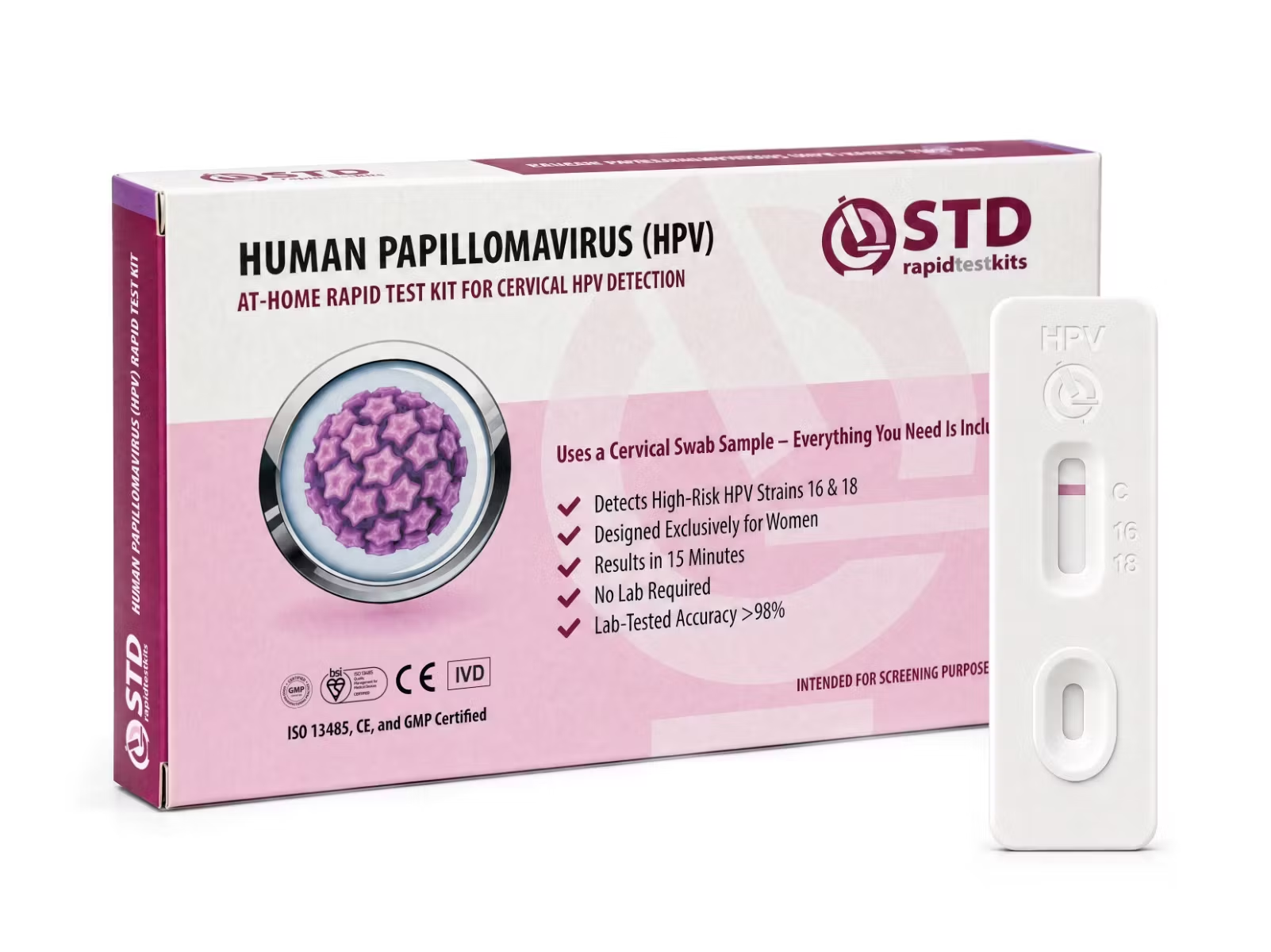
For women specifically, we offer an at-home HPV rapid swab that detects HPV virus presence from a self-collected vaginal sample. It does not change the management of visible warts, but it can be useful information alongside routine cervical screening. Male readers needing HPV testing should see a clinic; we do not currently offer a male-validated HPV home kit.
Frequently Asked Questions
- How often do genital warts come back after treatment?
- Roughly 30 to 70 percent of people see a recurrence within the first few months, with the highest risk in the first three months per the CDC's STI Treatment Guidelines. Numbers vary by treatment type, lesion count, and immune status. Recurrences become less frequent after the first year, and around 9 in 10 HPV infections clear within two years.
- Does stress cause genital warts to come back?
- Indirectly, yes. Stress does not create new HPV but it weakens immune control of the virus you already have, which can let a wart resurface. Poor sleep, smoking, illness, pregnancy, and immunosuppressing conditions or medications all have the same effect on HPV reactivation.
- If a wart comes back, does that mean my partner cheated?
- Almost never. A returning wart is overwhelmingly the same HPV reactivating in your own skin, not a new infection from outside the relationship. The CDC notes that HPV symptoms can appear years after the original exposure, which makes timing a poor signal for who passed what to whom.
- Am I contagious when I do not have a visible wart?
- Risk is highest with a visible wart, moderate in the weeks just after clearance, and lowest during long wart-free periods. It does not drop to zero, because HPV can shed from normal-looking skin. Condoms reduce but cannot fully prevent transmission, since the virus lives in skin condoms do not cover.
- Does the HPV vaccine help if I already have warts?
- Yes, for the strains you have not already encountered. Gardasil 9 covers types 6 and 11 (around 90 percent of genital warts) and seven high-risk cancer-causing types. ACIP currently recommends routine vaccination through age 26, with shared clinical decision-making through age 45 based on individual risk.
- Will genital warts eventually stop coming back?
- For most people, yes. The first three to six months carry the highest recurrence risk; after that, the curve flattens. Many people stop having outbreaks entirely within one to two years as their immune system suppresses HPV, even when flares happened along the way.
- Can I have sex during an active outbreak?
- It is possible but transmission risk is highest then. Avoid friction directly on visible lesions, consider waiting for clearance before genital-skin contact in the affected area, and use condoms or dental dams elsewhere. Discuss openly with your partner so the choice is shared.
- Should I see a clinician for every recurrence?
- Not necessarily. Routine recurrences in the same area can often follow an existing treatment plan. Book a visit for bleeding, fast-growing, ulcerating, or pigmented lesions; for warts during pregnancy; for lesions in the urethra, anus, or cervix; or for recurrences that no longer respond to treatment.
- U.S. Centers for Disease Control and Prevention. About Genital HPV Infection, including transmission, latency between exposure and visible symptoms, clearance rates, and prevention guidance.
- U.S. Centers for Disease Control and Prevention. STI Treatment Guidelines for anogenital warts, including the 90 percent figure for HPV types 6 and 11, recurrence patterns, and first-line treatment options (cryotherapy, podofilox, imiquimod, TCA, sinecatechins, surgical removal).
- National Health Service (NHS, UK). Patient guidance on genital warts, including presentation, transmission, and the limits of condom protection.
- DermNet (New Zealand). Clinical reference on anogenital warts (condylomata acuminata), including morphology and lookalike conditions.
- World Health Organization. Fact sheet on human papillomavirus (HPV) and cervical cancer, supporting the description of HPV vaccination as highly effective at preventing HPV-related disease.
