Why Symptoms Get Worse After Swimming: Chlorine or Infection?
How to tell if post-pool burning is chlorine or something more.



- Chlorine cannot transmit any sexually transmitted infection, but it disrupts the skin's surface barrier and can make an existing yeast imbalance, bacterial vaginosis (BV), or early STI suddenly impossible to ignore.
- If post-swim irritation fades within 24 to 48 hours, it is almost certainly chemical or friction irritation. If it lingers, intensifies, or comes with new discharge, odor, or sores, treat it as a separate signal and test.
Published: September 2025 | Last updated: May 2026 | Editorial review and quality control: Martina N.
Symptoms that show up, or get noticeably worse, right after swimming are one of the most common reasons people quietly start searching whether they have an STI. The pattern feels suspicious. You were fine in the morning, you got out of the pool in the afternoon, and now something itches, stings, or just feels off.
Here is the calm version of the answer. Chlorine does not give anyone an STI. Pool water does not transmit chlamydia, gonorrhea, HIV, or trichomoniasis. But chlorine is a strong skin irritant that strips natural oils, and the genital and pubic area is the part of the body most likely to react. For many people, that reaction fades within a day or two. For others, the post-swim discomfort is the first time they notice something else that was already happening quietly: a mild yeast imbalance, early bacterial vaginosis, friction dermatitis, or, less often, an early sexually transmitted infection.
This article walks through how to tell those apart, what the timing of your symptoms actually means, when other poolside factors are doing the real damage, and the point at which guessing stops being useful and testing becomes the faster route to clarity.
Key Takeaways
- Chlorine cannot transmit any sexually transmitted infection, but it disrupts the skin's surface barrier and can make an existing yeast imbalance, bacterial vaginosis (BV), or early STI suddenly impossible to ignore.
- If post-swim irritation fades within 24 to 48 hours, it is almost certainly chemical or friction irritation. If it lingers, intensifies, or comes with new discharge, odor, or sores, treat it as a separate signal and test.
Why Your Body Feels Different After Swimming
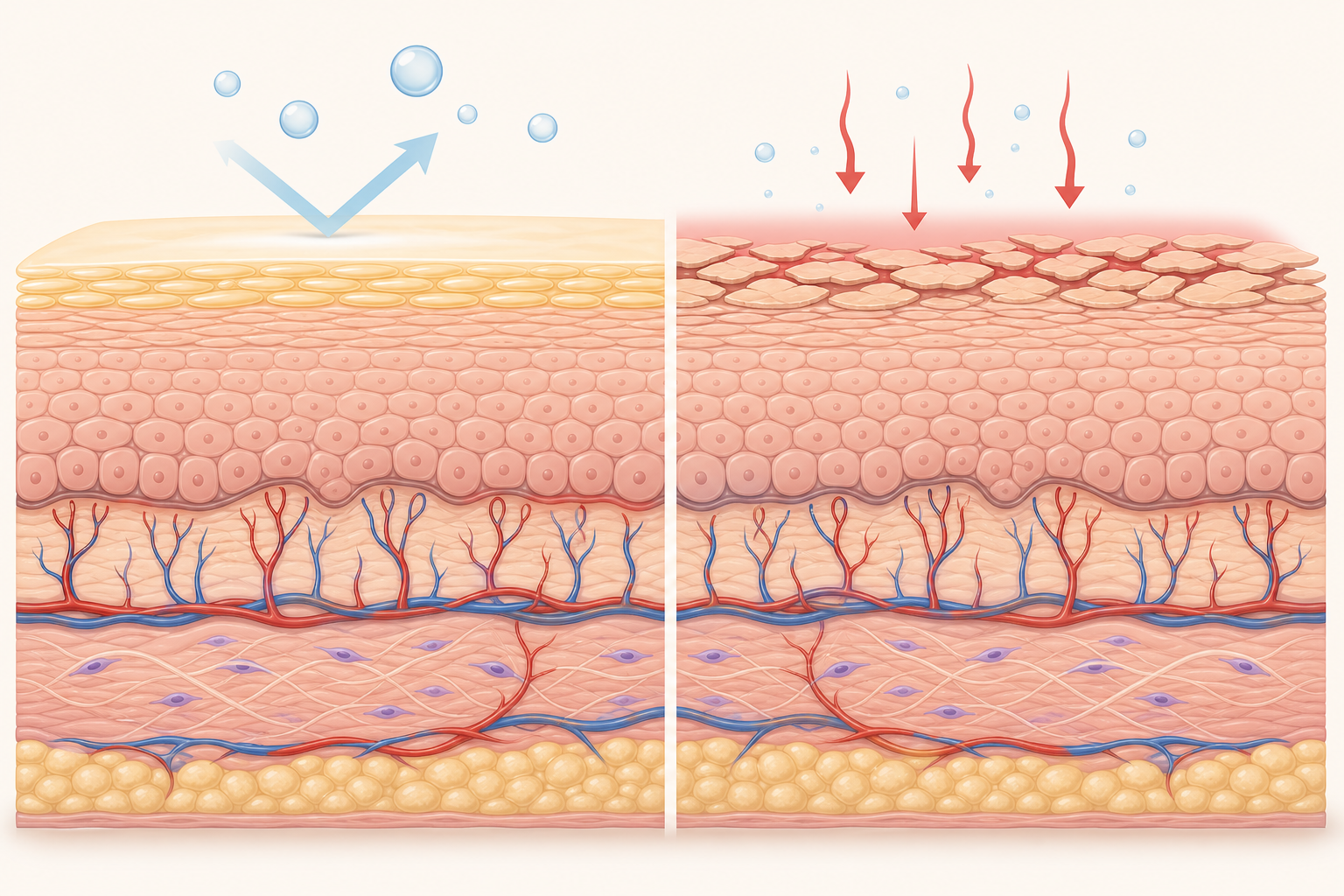
Water, especially heavily chlorinated pool water, does not just sit on the skin. It interacts with it. Chlorine is designed to neutralize bacteria, but in doing so, it also strips away natural oils and disrupts the skin's protective barrier.
That barrier disruption matters more in some places than others. Skin on the inner thigh, vulva, scrotum, and pubic area is thinner, more vascular, and home to a tightly balanced mix of bacteria and pH. When the protective oils are stripped away, the area is left more reactive to friction, sweat, fabric, and the body's own moisture. Sensations that would have stayed below the threshold of notice somewhere else, mild dryness, a hint of itching, a faint sting, get amplified.
So the way the body feels after swimming is not random. It is the predictable result of a chemical that does what it is designed to do, applied to skin that is unusually sensitive to that kind of disruption. The job becomes deciding what the new feeling is actually telling you.
Chlorine strips the lipid film that normally protects the surface of your skin. The area becomes temporarily hypersensitive, and ordinary friction, sweat, and moisture register as discomfort that you would not normally feel.
Chlorine Irritation Versus Infection: What Feels Different
This is where most people spiral. Chlorine irritation and a real infection can overlap in how they feel, especially in the first hours. The signal that helps tell them apart is not just the sensation itself; it is how the sensation behaves over time, and what else shows up alongside it.
Chlorine irritation tends to feel surface-level: a dry, stinging, hyper-aware quality, often in a band where a swimsuit sat against the skin. There is no new discharge, no smell change, and the discomfort usually peaks within a couple of hours and then steadily fades.
An infection-related flare, by contrast, tends to feel deeper, evolves rather than retreats, and pulls in other signs: changes in discharge, a stronger or different odor, tenderness during urination, or visible bumps and sores. The pool did not cause it. The pool made it loud enough to notice.
| Feature | Chlorine or friction irritation | Possible infection (yeast, BV, STI) |
|---|---|---|
| Onset | Immediately or within a few hours of swimming | Often present beforehand; just becomes noticeable after swimming |
| Itching or burning quality | Surface, dry, stinging | Deeper, persistent, may intensify or spread |
| Discharge | Usually unchanged | New, thicker, thinner, or different color than baseline |
| Odor | No change | May develop a strong or unusual odor |
| Visible signs | Mild redness, fine dryness, no sores | Bumps, blisters, ulcers, or persistent rash |
| Duration | Eases within 24 to 48 hours | Persists or worsens until treated |
What Chlorine Actually Does to Sensitive Skin
Most people picture chlorine as a sterilizing chemical and stop there. The mechanism that matters for post-swim symptoms is more specific. Chlorine and chloramines damage the lipid layer on the outer skin, dilute the natural sebum, and shift the local pH. On dermatologically sensitive tissue, that combination is the textbook setup for what dermatologists call irritant contact dermatitis: a non-allergic inflammatory response to a chemical that has thinned out the skin's defenses.
The result is a body that has temporarily lost its surface insulation, reactive to friction, sweat, and moisture that would normally go unnoticed. Friction from a swimsuit that would normally be unremarkable now drags across a slightly raw surface. Sweat that would normally evaporate cleanly sits longer and feels stickier. A mild yeast overgrowth that was producing no symptoms suddenly produces a clear itch because the local environment has tipped enough for it to be felt.
This is the part worth holding onto: chlorine does not create infections. It changes the local conditions just enough to surface ones that were already there, and to turn ordinary friction into something noticeable.
The Pool Is Not the Risk, Your Timeline Is
For anyone trying to work out whether a recent sexual encounter is connected to today's symptoms, the pool is almost always a red herring. Chlorinated water does not preserve gonorrhea, chlamydia, HIV, syphilis, or trichomoniasis in a way that would allow transmission. The CDC is clear that STIs require direct mucosal or fluid contact, which pool water does not provide. For anyone specifically worried about HIV after a recent sexual exposure, the pool itself carries no HIV risk: the only thing that matters is the exposure timeline. A combination antigen-antibody test becomes reliably accurate in the 18 to 45 day window after exposure, per CDC testing guidance.
What does matter is the timeline. Most bacterial STIs have a symptom window of one to three weeks after exposure. HSV-2 typically shows symptoms within two to twelve days when it does. HIV antibodies take longer to appear, often around three to twelve weeks depending on the test. If you swam two days after a new partner and now feel something, the pool did not create the infection; the timing of your exposure decides whether testing makes sense yet.
| What you are noticing | What it most likely means |
|---|---|
| Stinging starts in the pool, fades within hours | Chlorine and friction irritation |
| Itching that begins the next day and clears in 24 to 48 hours | Post-chlorine barrier disruption, often with a damp swimsuit |
| Itching, burning, or discharge that persists past 48 hours | Likely an underlying yeast imbalance, BV, or other infection the pool surfaced |
| Recent sexual exposure plus new persistent symptoms | Worth testing on the right schedule for the suspected infection |
| Visible bumps, sores, or ulcers that did not exist before | Not caused by chlorine; needs clinical evaluation or testing |
Other Poolside Factors That Amplify Symptoms
Chlorine gets most of the blame, but it rarely acts alone. A typical pool or hot tub session piles several small stressors onto the same area in a few hours, and any one of them can make a borderline issue feel intense.
The honest answer to the question "was it the chlorine?" is usually "chlorine plus everything else that came with the swim." The factors that tend to stack with chlorine exposure are predictable:
- Wet swimsuits kept on for hours, which trap warmth and moisture against the skin and create the exact environment in which Candida (yeast) and the bacteria behind BV can multiply.
- Tight or sand-abraded fabric, which adds friction injury on top of already-stripped skin.
- Pubic shaving in the day or two before swimming, which leaves micro-cuts that sting on contact with chlorinated water.
- Hot tub temperatures, which dilate blood vessels and intensify whatever inflammation is already there.
- A yeast or bacterial imbalance that was already building quietly and only became loud enough to notice after the swim.
When Discomfort Means Something More
Most people do not need a strict cutoff hour. They need a way to recognize when a symptom is following the irritation curve (peaks early, fades steadily) versus the infection curve (stays flat or worsens over days). The most useful signs that the conversation has shifted from irritation to infection are usually visible or measurable, not vague feelings.
- Symptoms still present 48 hours later, or getting worse rather than better.
- New discharge that differs from your normal in color, texture, or volume.
- A new or stronger odor that was not there before the pool day.
- Pain or burning during urination, or pain with sex.
- Visible bumps, blisters, ulcers, or a rash that spreads beyond where the swimsuit sat.
- Tingling or shooting nerve-like sensitivity, which can precede a herpes flare in someone who already carries herpes simplex virus (HSV-1 or HSV-2).
The Quiet Infections That Swimming Can Surface
Not every infection announces itself. Several common ones can sit at a low simmer and only become obvious when the local environment shifts. Yeast (Candida) overgrowth often starts as faint imbalance and turns into clear itching once chlorine and a damp swimsuit upset the local pH. Bacterial vaginosis can sit at a level that produces only an intermittent gray-thin discharge until friction and irritation make it more constant. Recurrent herpes simplex virus (HSV-1 or HSV-2) can be reactivated by skin trauma, including friction and chemical irritation, in someone who already carries the virus.
Bacterial STIs behave differently. Chlamydia is asymptomatic in roughly 70% of people with vaginas and around 50% of people with penises, per CDC surveillance summaries. Gonorrhea is similarly quiet in a large share of cases. They were not caused by the pool. The pool simply provided the irritation that made you finally pay attention to what your body was already doing.
This is why "my symptoms started after swimming" is rarely a diagnosis on its own. It is a prompt to look at the full timeline: any recent new partners, any change in birth control or hygiene products, any antibiotics in the past month, and how the symptoms behave over the next two days.
A Simple Decision Path When You Are Not Sure
When a single symptom is being interpreted three different ways inside your head, the useful move is not more research. It is matching your specific pattern to a clear next step, and then sticking with that step.
| What you are experiencing | Most likely cause | Reasonable next step |
|---|---|---|
| Mild itching or stinging that fades in 1 to 2 days | Chlorine and friction irritation | Rinse with plain water after swimming, change out of wet swimwear quickly, let skin recover |
| Persistent itching, sensitivity, or discomfort past 48 hours | Yeast or bacterial imbalance flaring | Consider an at-home screen or visit a clinician for a swab |
| New discharge, odor change, or unusual texture | Likely BV, yeast, or an STI surfacing | Get tested; do not self-treat with over-the-counter creams until you know which |
| New sores, blisters, ulcers, or worsening pain | Possible HSV, syphilis, or other infection | Do not wait; seek testing and clinical care promptly |
Testing Is the Fastest Way Out of Uncertainty
A lot of people put off testing until things feel bad enough. That instinct is what keeps the anxiety loop going for days or weeks. Testing is not a worst-case action. It is the cheapest way to swap a vague worry for an answer.
An at-home screen takes about 15 minutes and runs in a single room of your home. If everything is negative, that is a clean answer; the post-swim discomfort was almost certainly irritation, and you can stop running scenarios. If something comes back positive, you still got that answer earlier than you would have by waiting, and most things on a common STI panel are straightforward to treat. The mental load of not knowing is usually heavier than the result on the cassette.
STIs are often asymptomatic. When symptoms occur, they can be non-specific.
Before You Spiral, Read This Twice
Swimming did not give you an STI. Chlorine did not create an infection out of nowhere. What it may have done is highlight something your body had been signaling quietly, or simply created an entirely temporary irritation that will fade on its own in a day. Both are normal outcomes. Neither is a failure.
The right move is not to assume the worst. It is to read the timeline. Symptoms that ease within 48 hours, with no new discharge, no odor change, and no visible sores, are almost always chemical or friction irritation. Symptoms that linger, intensify, or come with anything from the warning-signs list above are a separate conversation, and the fastest version of that conversation is a test, not another night of searching.
If nothing has improved by hour 48, an at-home panel takes about 15 minutes and removes the guesswork. That is faster, calmer, and more honest with your body than another night of searching.
- Wait 24 to 48 hours and watch how the symptom behaves. True irritation steadily eases in that window.
- If the symptom persists past 48 hours, or new discharge or odor appears, run an at-home combination STI screen. Results in about 15 minutes.
- If visible sores, blisters, ulcers, or worsening pain show up at any point, do not wait for the timer. Book a clinician visit or seek prompt clinical care.
Frequently Asked Questions
- Can I actually get an STI from a swimming pool or hot tub?
- No. Chlorinated water does not preserve the bacteria or viruses behind gonorrhea, chlamydia, HIV, syphilis, or trichomoniasis in a way that allows transmission. Direct mucosal or fluid contact is required. The pool is not the route.
- Why did everything feel fine before I got in the pool?
- Many low-grade conditions, mild yeast overgrowth, early bacterial vaginosis, asymptomatic chlamydia or gonorrhea, produce no symptoms when the local environment is stable. Chlorine, friction, and a damp swimsuit shift that environment enough for an existing issue to surface.
- How long should I wait before doing something about post-swim symptoms?
- Give it 24 to 48 hours. True chlorine and friction irritation steadily eases in that window. If your symptoms stay the same or get worse, that is the signal to move from "wait it out" to either an at-home screen or a clinician visit.
- Can chlorine actually trigger a yeast infection or BV?
- Not directly. Chlorine itself does not create either condition. It can shift the local pH and damage the natural lipid barrier, and a damp swimsuit kept on for hours provides the warmth and moisture both yeast and BV-related bacteria need to multiply. Together, those conditions can tip a borderline imbalance into a symptomatic flare.
- I have new discharge after swimming. Does that change things?
- Yes. Chlorine irritation alone does not usually cause changes in vaginal discharge. If the texture, color, volume, or odor is different from your normal, treat it as a separate signal. Common culprits are yeast, BV, and bacterial STIs like chlamydia, and only testing can distinguish them reliably.
- Could swimming actually trigger a herpes outbreak?
- Not by infection; chlorine does not cause herpes. But for someone who already carries herpes simplex virus (HSV-1 or HSV-2), skin trauma, friction, and chemical irritation are well-documented triggers for reactivation. If you feel tingling or see small clustered blisters or sores after swimming, it warrants clinical evaluation.
- Is a hot tub more risky than a pool?
- Not for STI transmission, which the water cannot facilitate either way. Hot tubs do tend to produce more irritation: higher water temperatures, more concentrated chemicals in a smaller volume, and longer sitting times in a wet swimsuit. The end result is more skin barrier disruption, not infection.
- Which test should I take if symptoms do not go away?
- Start with a combination panel rather than a single-infection test, because post-swim symptoms are non-specific. A 7-in-1 or 8-in-1 home screen covers the most common bacterial and viral causes in one run. If a single result comes back positive, follow up with a clinician for confirmatory lab testing and treatment.
This article summarizes current public-health and dermatology guidance on chlorine and skin-barrier irritation, vaginal and pelvic health, and sexually transmitted infections from the CDC, WHO, NHS, Cleveland Clinic, Mayo Clinic, and DermNet NZ. It is written by editorial staff, not by a clinician, and is reviewed for medical accuracy by a licensed medical doctor. It is general health information, not personal medical advice. For symptoms that concern you, see a licensed clinician.
- U.S. Centers for Disease Control and Prevention. Sexually Transmitted Infections home: overview of bacterial and viral STIs, transmission routes, and asymptomatic infection rates referenced for the chlamydia and gonorrhea figures in this article.
- World Health Organization. Sexually transmitted infections (STIs) fact sheet. Source for the pull quote on the proportion of asymptomatic STIs and for the global symptom-recognition statement used in this article.
- NHS. Vaginitis overview: described causes of irritation, discharge changes, and the difference between irritant and infectious presentations.
- Cleveland Clinic. Vaginitis overview: clinical signs of yeast and bacterial vaginosis used to describe how each may surface after swimming.
- DermNet NZ. Irritant contact dermatitis: mechanism of non-allergic chemical irritation referenced for how chlorine disrupts the lipid barrier on sensitive skin, and used as the primary source for the natural-oil and barrier-protection claims in this article.
- Mayo Clinic. Vaginitis: symptoms and causes overview, used for clinical guidance on when a vaginal symptom warrants testing rather than self-treatment with over-the-counter products.