How Long After an Infection Do STI Symptoms Appear?
Chlamydia in one to three weeks. HIV in two to four. Hepatitis C in up to six months. STI symptom timelines vary more than most people expect, and many infections cause no symptoms at all. Here is what to expect for each common infection, when each test turns reliable, and how to plan testing instead of guessing from signs.




- Symptom timelines vary widely by pathogen: bacterial STIs in one to three weeks, HIV antibodies in three weeks to three months, hepatitis C up to six months. Many infections cause no symptoms at all.
- Symptoms cannot tell you which STI you have, and a test taken too early can give a falsely reassuring negative. Each test has a window period that needs to pass before results are reliable.
Published: August 2025 | Last updated: April 2026 | Editorial review and quality control: Martina N.
The gap between getting exposed to a sexually transmitted infection and noticing symptoms varies more than most people expect. Chlamydia can flare up within a week. HIV antibodies might not show on a test for two months. Hepatitis C can stay quiet for half a year. And many infections never produce symptoms a person would notice on their own, even when they are actively transmissible.
This guide walks through the common STIs, when their symptoms typically appear, why those windows are wide, and how the timing of testing matters as much as the timing of symptoms. The short version is that you usually cannot diagnose by waiting for signs to show. Testing on a sensible schedule is the only reliable answer for most infections.
How long after exposure do STI symptoms appear?
For bacterial STIs (chlamydia, gonorrhea, syphilis), symptoms most often appear within one to three weeks. For viral STIs, the range is wider: HIV acute symptoms appear in two to four weeks, hepatitis B in one to four months, and hepatitis C anywhere from two weeks to six months. Many infections, especially chlamydia, gonorrhea, trichomoniasis, and HPV, cause no noticeable symptoms in over half of cases. Testing on a clinically appropriate window after exposure is more reliable than waiting for symptoms to appear.
Key Takeaways
- Symptom timelines vary widely by pathogen: bacterial STIs in one to three weeks, HIV antibodies in three weeks to three months, hepatitis C up to six months. Many infections cause no symptoms at all.
- Symptoms cannot tell you which STI you have, and a test taken too early can give a falsely reassuring negative. Each test has a window period that needs to pass before results are reliable.
Why STI symptom timing varies so widely
Three things drive the gap between exposure and symptoms.
First, the pathogen itself has a biological replication cycle. Bacteria like Chlamydia trachomatis or Neisseria gonorrhoeae multiply quickly inside the urethra or cervix, often producing measurable inflammation within one to three weeks. Viruses like HIV and hepatitis C take longer to reach detectable antibody levels, because the immune system needs time to mount a response.
Second, the immune system varies between people. Two people exposed to the same infection on the same day may not develop the same response on the same schedule. Some immune systems control viruses faster, sometimes without ever showing acute symptoms. Others react with a few days of fever, swollen lymph nodes, or a rash.
Third, the inoculum dose matters. A larger viral or bacterial load often produces faster, more pronounced symptoms. A smaller dose can sit quietly for longer.
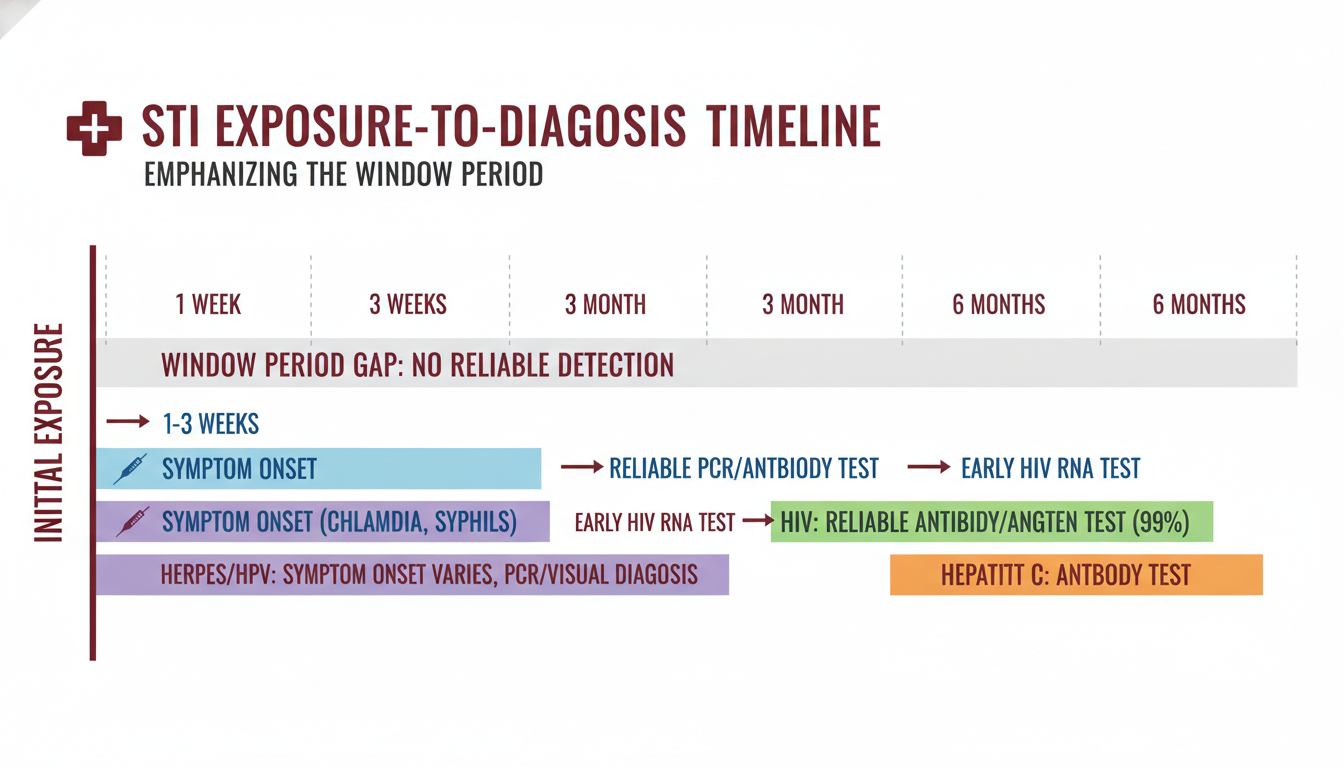
For the reader, the practical takeaway is that no single timeline applies. Public-health agencies publish typical ranges, not guarantees. You can be infected and contagious during the window when symptoms have not yet appeared. You can also test too early and get a falsely reassuring negative result. The window period is not the same as the symptom timeline; it is the time between exposure and when a particular test reliably picks up the infection. Window periods are usually longer than symptom timelines for viral infections, and similar to or shorter than them for bacterial ones. The CDC's STI prevention program publishes infection-by-infection windows that this guide draws from.
Common STI timelines at a glance
The table below summarizes typical symptom-onset ranges and the recommended testing windows for the most common STIs. Use it as a quick reference; the section-by-section detail that follows covers the nuance behind each row.
| Infection | Typical symptom onset | Recommended testing window |
|---|---|---|
| Chlamydia | 1 to 3 weeks | About 14 days post-exposure |
| Gonorrhea | Up to 2 weeks | About 14 days post-exposure |
| Syphilis | 10 days to 3 months | Blood antibody from about 6 weeks |
| Genital herpes (HSV) | 2 to 12 days for first outbreak | Lesion swab when symptomatic; antibody from 12 to 16+ weeks |
| HPV / genital warts | Weeks to years | No blood test; visual exam or HPV swab |
| Trichomoniasis | 5 to 28 days | About 1 week post-exposure |
| HIV | 2 to 4 weeks (acute, if any) | 4th-gen lab test: ~45 days. Rapid antibody: 23 to 90 days |
| Hepatitis B | 1 to 4 months | Surface antigen from about 3 to 6 weeks |
| Hepatitis C | 2 weeks to 6 months | Antibody test: 8 to 11 weeks |
Bacterial STIs: chlamydia, gonorrhea, syphilis
The three most common bacterial STIs share a pattern: relatively short symptom windows when symptoms appear at all, but a high asymptomatic rate that makes regular screening more reliable than waiting for signs.
Chlamydia: usually 1 to 3 weeks, often silent
Chlamydia symptoms most often appear between one and three weeks after exposure. When they do show, they include unusual discharge from the vagina or penis, burning or stinging during urination, bleeding between periods or after sex in women, pelvic pain, or testicular discomfort.
The catch is that the majority of chlamydial infections cause no symptoms a person would notice. CDC chlamydia surveillance consistently shows that most infected women, and a substantial share of infected men, have no symptoms. That is why the CDC recommends annual chlamydia screening for sexually active women under 25 and for older women with new or multiple partners, regardless of symptoms.
Gonorrhea: 2 to 14 days, with frequent silent infections
Gonorrhea symptoms typically appear within two weeks of exposure, sometimes as early as two days. Discharge tends to be more pronounced than in chlamydia (yellow, green, or thicker white) and urination is often more painful. Rectal and pharyngeal infections frequently cause no symptoms even when active and transmissible.
About half of infected women and roughly one in ten infected men develop no urogenital symptoms. Same-day testing on rapid lateral-flow swabs is reliable from about day 14 post-exposure, while laboratory NAAT (nucleic acid amplification testing) is the analytical gold standard for confirmation.
Syphilis: stages with very different timelines
Syphilis is the bacterial STI with the most spread-out timeline. Primary syphilis presents as a single painless ulcer (called a chancre) at the site of infection, typically appearing about three weeks after exposure but ranging from 10 days to three months. The chancre heals on its own within a few weeks, which often misleads people into thinking the infection has resolved.
Secondary syphilis follows weeks to months later with a non-itchy rash often involving the palms and soles, flu-like symptoms, and swollen lymph nodes. Without treatment, syphilis can enter a latent phase lasting years and progress to severe complications affecting the heart, brain, and nervous system. A blood antibody test is the standard diagnostic, with reliable results from about six weeks post-exposure.
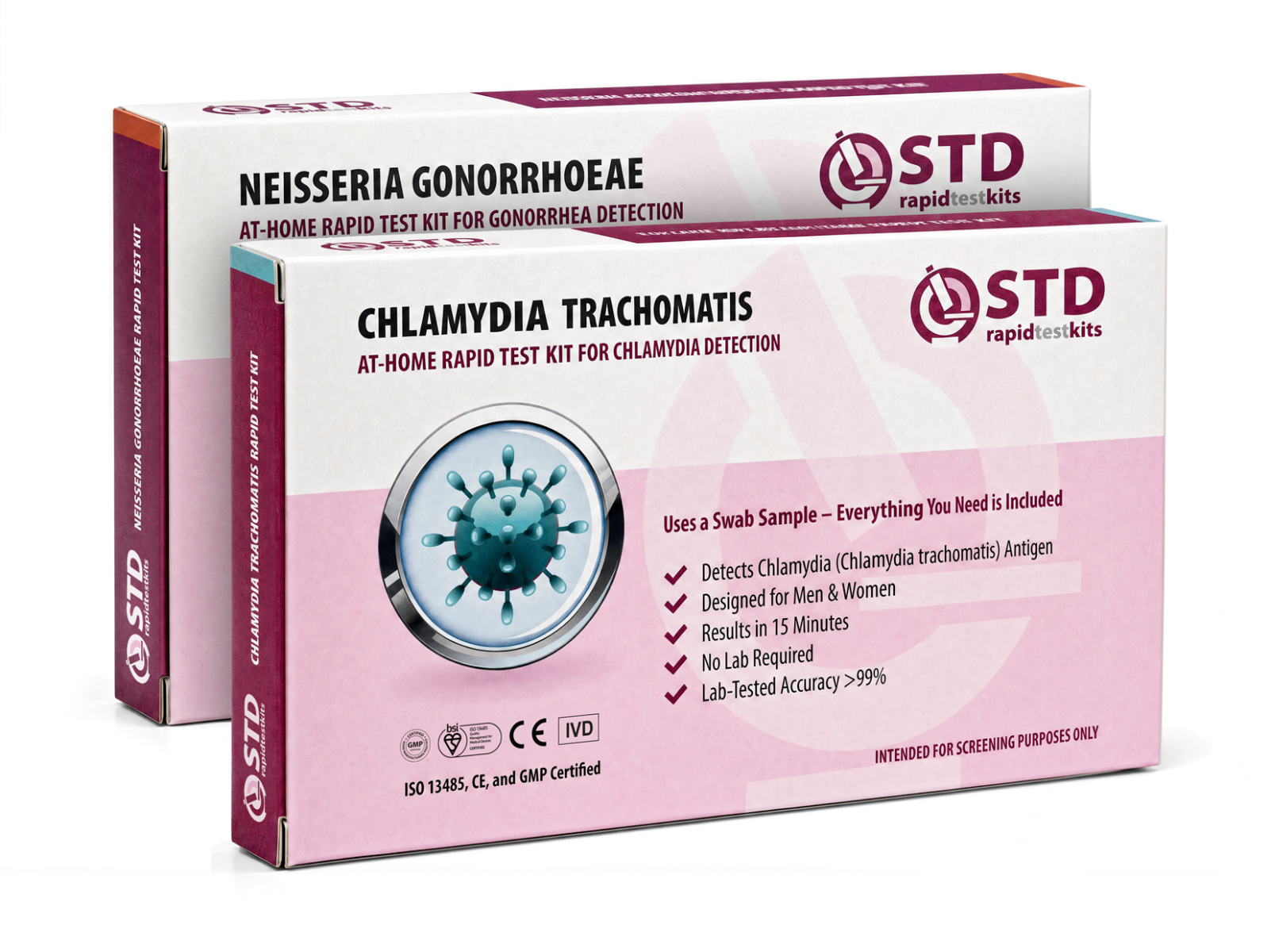
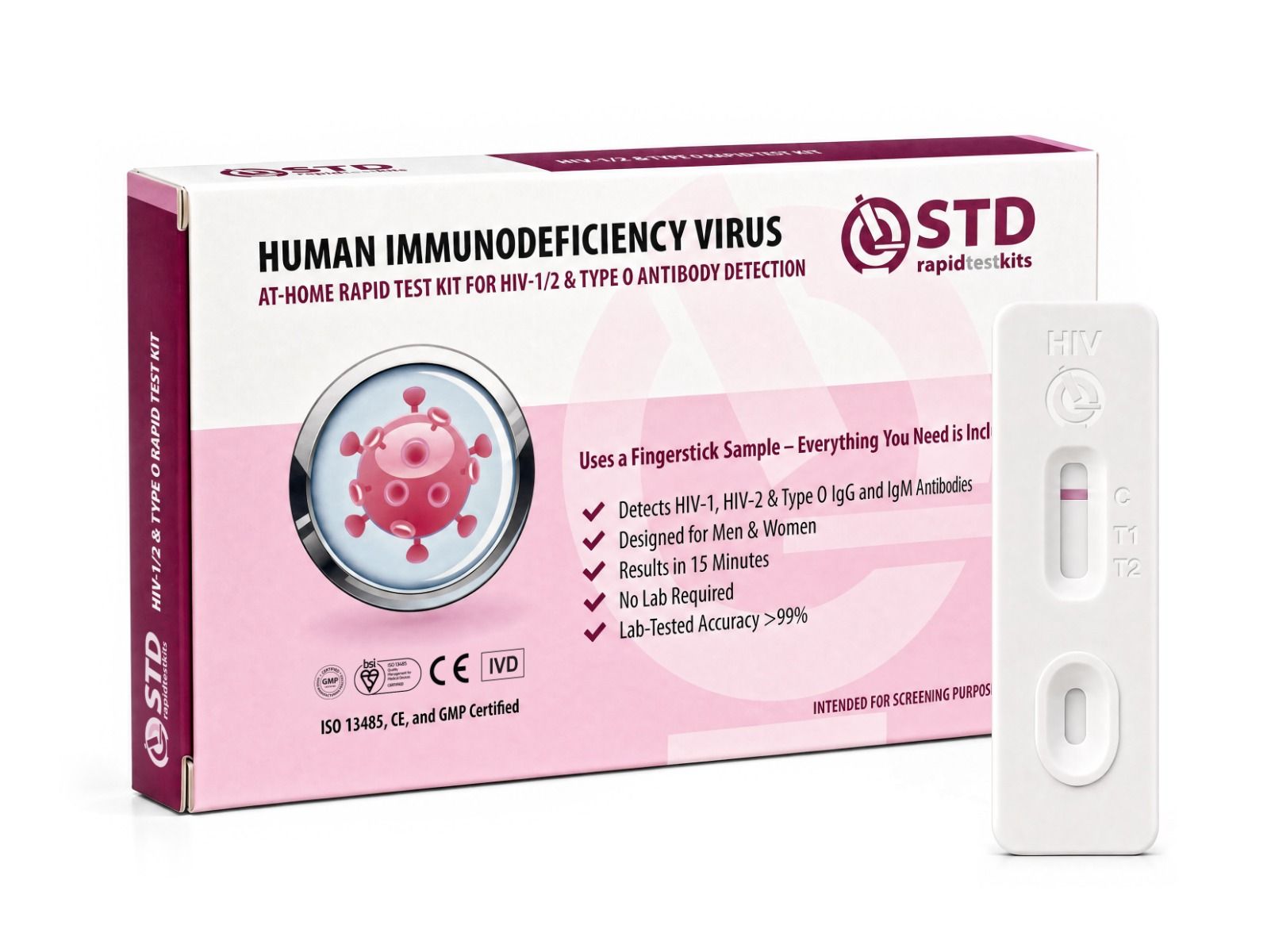
This site sells rapid at-home lateral-flow test kits for several of the infections described in this guide; the recommendations below link to those products where they fit the reader's situation.
Viral STIs: HSV, HPV, HIV, hepatitis B, hepatitis C
Viruses behave differently from bacteria. Symptoms (when they occur) often align with the immune system's first detection of the virus, but antibody-based tests, which most home rapid tests use, take longer to turn positive than the first symptoms might suggest.
Genital herpes (HSV-1 and HSV-2): first outbreak in 2 to 12 days
A first genital herpes outbreak typically appears within two to twelve days of exposure, with the most common range being four to seven days. Symptoms include painful clustered blisters or ulcers in the genital area, burning or tingling sensations, painful urination, and sometimes fever or swollen lymph nodes during the first episode.
Many people with HSV (the majority, in fact) never have a recognized first outbreak. They may have very mild signs they attribute to friction, ingrown hairs, or yeast, or no signs at all. For diagnosis when an active sore is present, a swab of the lesion using PCR is the most accurate method. Blood antibody tests measure seroconversion (the body's antibody response) and become reliably positive for most people within 12 to 16 weeks of exposure, though the CDC notes some current tests can take 16 weeks or longer to turn positive. A 12-week negative with ongoing concern should be followed by a retest at 16 weeks. Type-specific blood tests can identify HSV-1 versus HSV-2 antibodies but cannot tell you when or where infection occurred.
HPV / genital warts: weeks to years
HPV has the widest timeline of any common STI. Genital warts caused by certain low-risk HPV types appear anywhere from three weeks to several months or even years after exposure. Most HPV infections clear on their own within two years and never cause warts at all. The high-risk HPV types associated with cervical and other cancers typically produce no visible symptoms; they are detected through cervical screening, not from physical signs.
There is no widely used blood test for HPV. Our at-home rapid HPV kit is a self-collected vaginal swab validated for women only and is best understood as a screening adjunct, not a substitute for cervical Pap or HPV co-testing in clinic. Male readers needing HPV evaluation should see a clinic; we do not sell a male-compatible HPV home test.
HIV: acute illness around 2 to 4 weeks (when it occurs)
If acute HIV symptoms appear, they typically do so between two and four weeks after exposure. They mimic a bad flu or mononucleosis: fever, sore throat, swollen lymph nodes, fatigue, body aches, and sometimes a rash. Roughly a third to two-thirds of newly infected people experience these symptoms; many do not, or attribute them to a regular viral illness and never associate them with HIV.
The window period for testing matters more than acute symptoms. CDC HIV testing guidance reports that fourth-generation antigen-antibody lab tests detect most infections by 18 to 45 days post-exposure. Rapid lateral-flow antibody tests, including most at-home options, generally turn positive between 23 and 90 days, with most people seroconverting within the first three months. RNA (NAAT) testing is the earliest detection method, picking up HIV from about 10 to 33 days, but it is a clinic-only test.
Hepatitis B: 1 to 4 months
Hepatitis B symptoms, when they appear, typically begin one to four months after exposure, with an average around three months. Symptoms include fatigue, low-grade fever, mild nausea, abdominal discomfort, dark urine, pale stools, joint pain, and jaundice (yellowing of the skin and eyes). About half of infected adults have no symptoms during acute infection. The hepatitis B surface antigen (HBsAg) becomes detectable in blood approximately three to six weeks after exposure, often before symptoms appear. CDC hepatitis surveillance and the universal adult vaccination recommendation now in place have substantially reduced new acute infections in the U.S.
Hepatitis C: 2 weeks to 6 months
Hepatitis C has the widest mainstream timeline of the viral STIs. Acute symptoms (when they occur) appear two weeks to six months after exposure, most commonly around 6 to 9 weeks. Most people, perhaps 70 to 80 percent, develop no symptoms at all during acute infection. Antibody tests become reliable from about 8 to 11 weeks post-exposure. Because chronic hepatitis C can quietly damage the liver for decades, the CDC currently recommends universal one-time screening for all adults 18 and older, with pregnancy and risk-based retesting on top of that baseline.
Parasitic STIs: trichomoniasis, pubic lice, scabies
Parasitic STIs cover narrower clinical territory but matter for completeness, because all three present with symptoms easy to confuse with other conditions, and only one of them has a reliable at-home test.
Trichomoniasis: 5 to 28 days, often silent
Trichomoniasis (caused by the protozoan Trichomonas vaginalis) typically produces symptoms within 5 to 28 days of exposure when symptoms appear. In women, signs include frothy yellow-green discharge, vaginal itching or burning, painful urination, and discomfort during sex. In men, symptoms (when present) include irritation inside the penis, mild discharge, or burning after urination.
Roughly 70 to 85 percent of infected people have no notable symptoms, which is why trichomoniasis is among the most under-diagnosed STIs globally. Our at-home rapid trichomoniasis test is a self-collected vaginal swab validated for female anatomy only; male readers needing a test should see a clinic for a urethral swab or NAAT.
Pubic lice: 5 days to several weeks
Pubic lice ("crabs") symptoms develop in roughly 5 days to several weeks after infestation. The hallmark sign is intense itching in the pubic region, often worse at night, sometimes with visible lice or eggs (nits) attached to coarse hair shafts. Tiny reddish or bluish skin marks may appear on the lower abdomen or thighs from louse bites, and dark specks may be visible in underwear.
Diagnosis is by visual inspection. If you suspect pubic lice, a pharmacy permethrin-based treatment is usually sufficient, and a clinic visit is appropriate if it does not resolve within two weeks of treatment. Sheets and clothing should be hot-washed during treatment.
Scabies: 2 to 6 weeks the first time, 1 to 4 days on reinfection
Scabies (a mite infestation) takes longer to declare itself the first time, typically two to six weeks after infection, because the immune system takes that long to mount the inflammatory response that produces the itch. On reinfection, the immune system reacts faster and symptoms can appear within one to four days. The hallmark sign is intense itching, often worse at night, with a fine red rash and sometimes visible burrows in the skin between fingers, on wrists, around the waist, or in the genital area.
Like pubic lice, scabies is diagnosed by clinical examination, not at-home testing. A general practitioner or sexual-health clinic can confirm and prescribe a topical scabicide.
Our at-home rapid test covers trichomoniasis (women only, self-collected vaginal swab). We do not sell pubic lice or scabies tests; both are diagnosed visually by a clinician. If you have intense itching with visible lice or a fine red rash, see a GP or sexual-health clinic for confirmation and treatment.
Why asymptomatic infections are still worth catching
The single most important number across this article is the asymptomatic rate. For most common STIs, more than half of infections cause no symptoms a person would notice on their own. The downstream consequences of that quiet are real, and they show up in three places.
Transmission continues even when no one in the chain feels sick. Chlamydia and gonorrhea spread between asymptomatic carriers all the time, and many couples first learn one of them has chlamydia only after a routine annual screen comes back positive. The same pattern is common for trichomoniasis, HSV, and HPV.
Untreated bacterial infections also cause cumulative damage. Chlamydia and gonorrhea in women can cause pelvic inflammatory disease, which scars the fallopian tubes and is a leading preventable cause of infertility. Untreated syphilis can damage the heart, brain, and nervous system years after the initial chancre healed. None of these complications produce loud early warning signs.
Untreated viral infections compound their impact over time. Chronic hepatitis B and C cause liver fibrosis and eventually cirrhosis or liver cancer over decades. Untreated HIV depletes the immune system. HIV is now fully treatable with daily antiretrovirals when caught, but every year of untreated infection raises the cumulative risk of complications and the chance of onward transmission.
The practical implication: regular screening on a schedule appropriate for your sexual activity is the closest thing to a guarantee, far more reliable than waiting for symptoms to show. Annual chlamydia and gonorrhea testing for sexually active people under 25, more frequent testing for people with new or multiple partners, and at least one HIV and hepatitis C test in adulthood are standard public-health recommendations from the CDC's STI prevention program and the NHS sexual-health pages.
Most people who have STIs don't know it. STIs are often spread by people who don't have signs or symptoms and don't know they are infected.
What to do if symptoms appear (or don't)
Symptoms that warrant prompt action include any new genital ulcer or sore, any unusual discharge that lasts more than 48 hours, painful urination not explained by a urinary tract infection, or a flu-like illness in the few weeks following a higher-risk encounter. If you notice any of these, schedule a clinic visit. Most STIs are easily diagnosed and treated in a single visit when caught early.
If you have had a recent exposure but no symptoms, the right move is testing on the schedule appropriate for the infections you might have been exposed to. The reference panel below summarises the shortest sensible test windows by infection.
If a test comes back negative within the window period and you have ongoing concerns, retest at the end of the recommended window. A negative inside the window is not a confirmed negative; it is a "too early to tell" result, and the right reading is to retest rather than to feel reassured.
If a test comes back positive, do not panic. Bacterial STIs are curable with antibiotics. HIV, hepatitis B, and hepatitis C are highly treatable with modern antivirals. Genital herpes is manageable with episodic or suppressive antivirals. If your first test landed inside its window period, book a follow-up retest at the end of the recommended window to confirm.
When to test: quick reference by infection
- Chlamydia and gonorrhea: about 14 days post-exposure for swab-based rapid tests; same window for lab NAAT.
- HIV: 23 to 90 days for rapid antibody tests; 18 to 45 days for fourth-generation lab tests; 10 to 33 days for RNA NAAT (clinic only).
- Syphilis: about 6 weeks for blood antibody tests, with a follow-up test at 12 weeks if the first is negative and risk was high.
- Hepatitis B: surface antigen detectable from about 3 to 6 weeks; wait 6 weeks for a reliable result and follow up with a confirmatory antibody panel.
- Hepatitis C: 8 to 11 weeks for antibody tests; clinic RNA testing detects earlier.
- Trichomoniasis: about 1 week after exposure for swab-based rapid testing in women.
- HSV (genital herpes): swab a lesion immediately if one appears; otherwise wait at least 12 weeks for a blood antibody test, and retest at 16 weeks if the 12-week result is negative and exposure risk was real.
Pick the right test for your situation
If a single recent exposure has you worried, the most efficient move is a panel that covers the bacterial STIs (chlamydia and gonorrhea) at the two-week mark and the blood-borne viruses (HIV, hepatitis B and C, syphilis) at the longer windows. The combination kit below is designed for exactly that scenario, with single-infection kits available when you only need to retest one specific concern. If you are still in the early window after exposure, plan to retest at the end of the relevant window before drawing conclusions.

Frequently asked questions
- Can I tell which STI I have from symptoms alone?
- No. Many STIs share symptoms (discharge, pain on urination, genital sores, flu-like illness), and many produce no symptoms at all. Symptom-based guessing is unreliable. The only way to know which infection is present is testing, and the right test depends on which infections you might have been exposed to and how long ago.
- How soon after sex can I get tested?
- It depends on the infection. Chlamydia and gonorrhea can be reliably tested at about 14 days post-exposure. Syphilis blood antibody is reliable at about 6 weeks. HIV rapid antibody tests turn positive between 23 and 90 days, with most seroconversions in the first 3 months. Hepatitis C antibody is reliable at 8 to 11 weeks. Testing earlier than these windows risks a false negative.
- Is a negative test result reliable if I tested early?
- Not necessarily. A negative result inside the window period is a "too early to tell" result, not a confirmed negative. If you tested early because you were anxious, plan to retest at the end of the recommended window for the infections you were exposed to. Most clinics and at-home test instructions list these windows clearly.
- Why do some STIs stay symptomless for so long?
- Some pathogens replicate slowly, integrate into host cells, or actively suppress the immune response. HIV, HPV, and HSV all hide from the immune system in different ways. Bacterial STIs like chlamydia and gonorrhea often cause inflammation that the body tolerates without producing obvious symptoms, especially at sites like the rectum or pharynx. Asymptomatic does not mean inactive or non-transmissible.
- Do at-home rapid tests detect infections as early as lab tests?
- Mostly yes for bacterial swab tests like chlamydia and gonorrhea, where the at-home rapid uses the same swab sample type as the lab. For HIV, the at-home rapid antibody test detects somewhat later than a fourth-generation lab antigen-antibody test (which adds the p24 antigen for earlier detection) and substantially later than clinic RNA NAAT. At-home rapid tests are lateral-flow immunoassays, which is a different technology from lab NAAT/PCR, so a positive at-home result is best confirmed with a lab test.
- If my partner tested positive but I have no symptoms, do I need to test?
- Yes. Asymptomatic transmission is common for chlamydia, gonorrhea, trichomoniasis, HSV, HPV, and HIV. A partner's positive result is itself an indication that you should test, regardless of whether you feel anything. Most STIs are easier to treat early, and you may be transmitting onward without knowing.
- Can the same symptoms be caused by something other than an STI?
- Often, yes. Vaginal yeast infections, bacterial vaginosis, urinary tract infections, and skin conditions like contact dermatitis or folliculitis all produce symptoms that can mimic STIs. Genital herpes outbreaks can be confused with ingrown hairs or pimples. Testing distinguishes these from STIs and points to the right treatment.
- How often should I test if I'm sexually active with new partners?
- Public-health guidance varies by population, but a reasonable baseline for sexually active people with new or multiple partners is annual chlamydia, gonorrhea, syphilis, and HIV testing, plus a one-time hepatitis C test in adulthood. People at higher risk (more partners, condomless sex, men who have sex with men, people who inject drugs) benefit from testing every 3 to 6 months. Always test after a known exposure to a partner with a confirmed STI.
- U.S. Centers for Disease Control and Prevention. STI prevention program overview, infection-by-infection symptom timelines, and screening recommendations for chlamydia, gonorrhea, syphilis, and trichomoniasis.
- U.S. Centers for Disease Control and Prevention. HIV basics, acute infection symptoms, and HIV testing window-period guidance for fourth-generation, rapid antibody, and NAAT testing.
- U.S. Centers for Disease Control and Prevention. Viral hepatitis program, including hepatitis B and hepatitis C symptom timelines, antigen and antibody detection windows, and universal-screening recommendations.
- World Health Organization. Sexually transmitted infections fact sheet covering global asymptomatic-rate estimates, transmission patterns, and clinical timelines for the most common STIs.
- U.K. National Health Service. Sexually transmitted infections topic page, with patient-facing symptom descriptions and testing guidance used to cross-check ranges in this article.
- U.S. National Library of Medicine, MedlinePlus. Sexually transmitted diseases topic page, used to cross-check symptom presentations and testing guidance for the U.S. consumer audience.