
Published: September 2025 | Last updated: May 2026 | Editorial review and quality control: Martina N.
The sudden positive STI test in a long-term relationship rarely fits the explanation people reach for first. Couples assume infidelity. Clinicians often see something quieter: an old infection that finally became visible. Herpes, HPV, and untreated syphilis can stay in the body for years without warning, and shifts in the immune system, not new exposure, decide when they show up.
This piece walks through what dormant means biologically, which infections behave this way, why test results can shift over time, and what a fair, calm conversation looks like when one partner tests positive and the other does not. It is written for couples who already trust each other and want the medical context to back that trust up.
Key Takeaways
- Herpes, HPV, and untreated syphilis can stay dormant for years or decades. A new positive test in a long-term relationship is not automatic evidence of a new exposure.
- Schedule routine STI retesting as maintenance, not detective work. Earlier panels may have missed an infection that is only visible now because the immune system stopped suppressing it.
What Doctors Mean by Dormant or Latent
When doctors call an infection latent, they mean the pathogen is still in the body but hidden, kept quiet by the immune system most of the time. Several viruses settle into the body's cells or nervous tissue after the first infection and stay there for life. Symptoms appear only when the balance tips. Stress, illness, hormone shifts, sleep loss, immunosuppressive medication, or even an unrelated infection can be enough to wake the virus up.
During latency, a person can have no symptoms, no visible signs, and sometimes no detectable infection on standard tests. The virus is biologically present but immunologically suppressed. The body is not cured of it; the body is winning a quiet, ongoing fight that does not always stay quiet.
Bacterial STIs behave differently. Chlamydia and gonorrhea typically announce themselves within days to a few weeks of infection when they cause symptoms at all, and lab testing finds them through direct detection of the bacteria. Syphilis is the major exception on the bacterial side: untreated syphilis enters a well-documented latent stage that can persist for years, with no visible symptoms and only blood serology to catch it (CDC, About Syphilis).
So when people talk about an STI surfacing years later, the conversation is usually about herpes simplex virus, HPV, or untreated syphilis. HIV has its own clinically latent phase, though widely available combination antibody/antigen testing catches it well before symptoms develop.
A virus the immune system clears is gone. A virus the immune system suppresses is still there, just quiet. HPV is often cleared within one to two years of exposure. Herpes simplex virus is not cleared by the body; once acquired, it stays for life, controlled but not eliminated. Knowing which category a given STI falls into changes how to interpret a later positive test.
Which STIs Stay Hidden, and for How Long
The honest answer differs by pathogen. Herpes simplex virus enters sensory nerves at the original site of infection and travels back to nerve ganglia near the spine, where it stays for the rest of a person's life. HPV embeds in skin and mucous-membrane cells and can persist undetected for years, especially in people whose immune system never fully cleared the original exposure. Untreated syphilis follows a defined staged progression with a latent phase that can persist for years before late complications develop (CDC, About Syphilis).
Reactivation triggers are usually immune-related. The body that quietly carries HSV for a decade may produce its first noticeable outbreak after a major illness, a divorce, a new prescription that suppresses immunity (like long-course steroids or biologics for autoimmune disease), or an unrelated infection. The same applies to HPV: dormant viral DNA tends to resurface when the immune system is diverted to fight something else.
The table below summarizes the rough dormancy windows for the four STIs most often involved in delayed positives.
| STI | Can It Stay Dormant? | Typical Dormancy Window | Common Reactivation Triggers |
|---|---|---|---|
| Herpes (HSV-1, HSV-2) | Yes, lifelong once acquired | Months to decades | Stress, illness, hormone shifts, sleep loss, immune-suppressing medication |
| HPV | Yes | Several years; some persist long-term | Immune suppression, hormonal changes, aging |
| Syphilis (latent stage) | Yes, if untreated | Years | Often asymptomatic until late complications appear |
| HIV | Yes, clinically latent phase | Up to 10 years without treatment | Without antiretroviral therapy, immune exhaustion drives progression |
How Herpes Surfaces Years Later
Herpes simplex virus is the textbook example. HSV-1 (commonly associated with oral cold sores) and HSV-2 (commonly genital) both enter sensory nerves at the site of infection and travel to nerve ganglia near the spine. Once there, they stay. According to the CDC's overview of genital herpes, most people with the infection have no symptoms or have very mild symptoms, and mild symptoms may go unnoticed or be mistaken for other skin conditions like a pimple or ingrown hair.
The line between HSV-1 and HSV-2 has also blurred. A meaningful share of new genital herpes cases are now caused by HSV-1 acquired through oral sex, while HSV-1 picked up in childhood through a relative's kiss can stay quiet for decades before producing its first noticeable cold sore. Either virus, in either location, can sit silent for a long time.
Once HSV is established, the first noticeable outbreak can come years or decades after exposure. Stress is the most commonly named trigger. Hormonal shifts during pregnancy, perimenopause, or a major life change, unrelated infections like flu, and medications that suppress immunity also lower the threshold for reactivation.
This is why a partner who tests positive years into a relationship may have carried the virus since adolescence without knowing it. The other partner may have been exposed many times during the relationship and never seroconverted; some immune systems handle herpes exposure without becoming durably infected, and some carry the virus without ever producing enough antibody for a blood test to flag. A swab from an active lesion is more specific than an antibody blood test, so if a new sore appears, the most useful test is a swab taken within the first 48 hours, before the lesion crusts over.
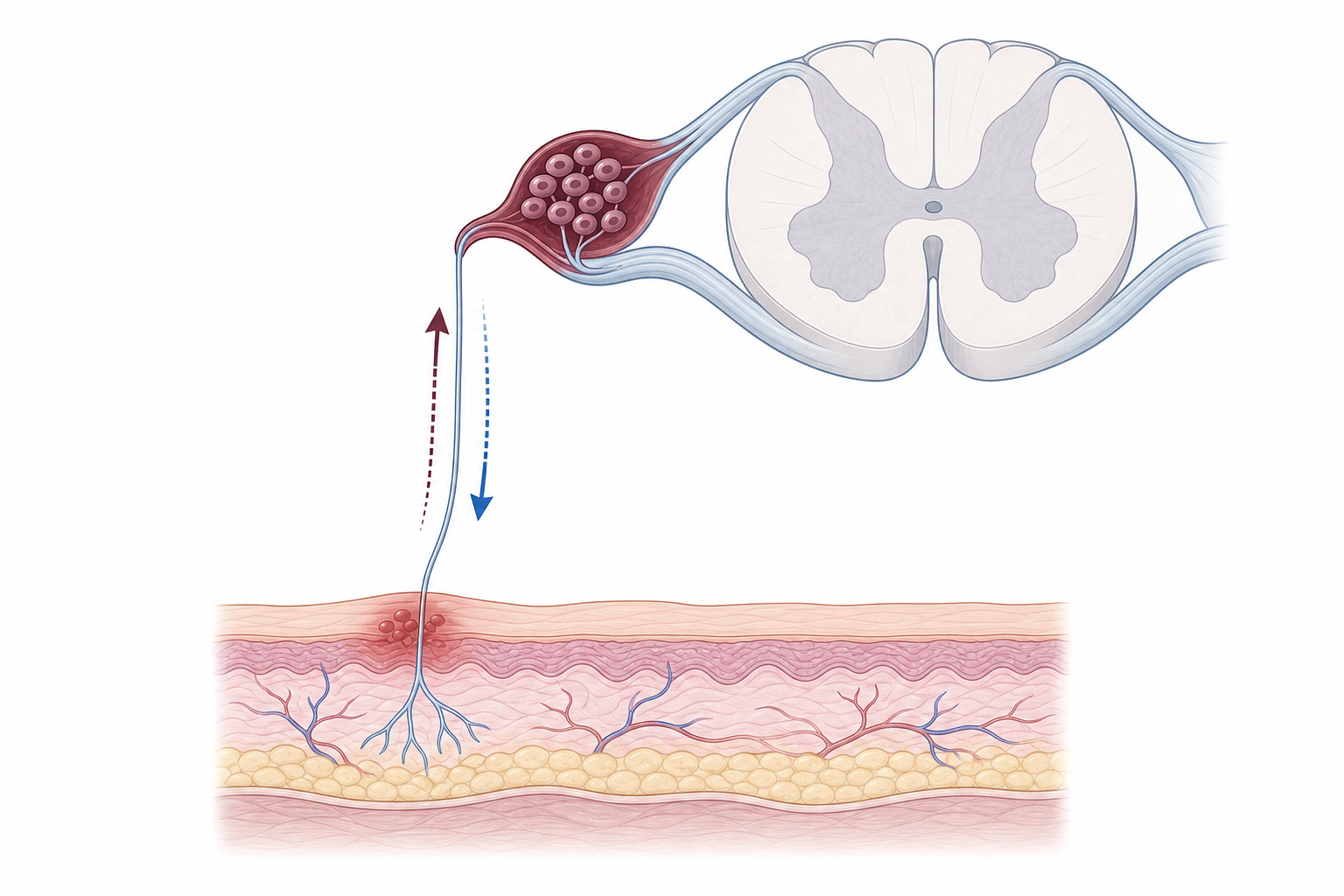
The diagram shows why herpes is so good at delayed surprises. After the first infection, the virus is not patrolling the bloodstream where antibody tests would catch it readily. It is parked in the nerve ganglia, a place the immune system has limited access to. Most of the time, that arrangement is invisible. When the immune system is stressed, the virus travels back along the same nerve and produces a visible lesion at or near the original infection site.
HPV Hides Differently But Just as Long
HPV does not live in nerves. It integrates into the basal layer of skin or mucous-membrane cells, especially in the cervix, anus, oropharynx, and external genital skin. The CDC reports that in most cases (9 out of 10) HPV goes away on its own within two years without health problems. In people whose immune system does not clear it, the virus can persist quietly for years before causing cellular changes that show up on a Pap smear or HPV DNA test.
When high-risk HPV strains persist, the slow story matters. The virus can cause cellular changes in the cervix that, over years to decades, can progress to cervical cancer if untreated, and high-risk HPV is also linked to other cancers including anal cancer (WHO STI fact sheet). This is one of the main reasons cervical screening still matters in long-term monogamous relationships: an HPV strain acquired before the current partnership can sit silent for a decade and only show up on a screening done now.
The NHS notes that you can have HPV even if you have not been sexually active or had a new partner for many years. This is why cervical screening sometimes returns a first positive result long into a stable relationship. The virus was there. The screening method finally caught it.
Our at-home HPV rapid kit is validated for vaginal self-collection only and is therefore for women. We do not sell a male-compatible HPV home test. Men needing HPV-related care typically rely on visual examination for warts, biopsy of suspicious lesions, and clinic-based testing for high-risk strains when symptoms appear.
Window Periods vs Latency: Two Different Problems
A window period is the gap between exposure and the point where a test reliably detects the infection. A negative result inside the window is too early to interpret, not a clean bill of health. The infection may still be brewing below the test's threshold.
Latency is a separate phenomenon. After the initial window closes and the infection becomes established, viral load can drift back below detection limits, either because the immune system has suppressed replication or because the test relies on antibodies that wax and wane over time.
The practical takeaway: detection windows vary by infection and test type. Herpes blood antibody tests may take weeks to months to turn reliably positive, and some early or mild cases never seroconvert in a way standard antibody tests catch. Syphilis serology becomes reliable some weeks after exposure but can stay negative longer in some cases, with the latent stage potentially silent for years (CDC, About Syphilis). HIV fourth-generation antigen-antibody combo tests detect most infections within 18 to 45 days (CDC, HIV Testing).
The table below maps test types against their reliable detection windows and notes where latency complicates the picture.
| Infection | Test Type | Reliable Detection Window | Can Latency Affect the Result? |
|---|---|---|---|
| Herpes (HSV) | IgG antibody blood test | Weeks to months after exposure | Yes. Early or mild cases may not seroconvert reliably |
| HPV | DNA test on a cervical sample | Any time the virus is replicating in surveyed cells | Yes. Can be undetectable for years between active phases |
| Syphilis | RPR or treponemal antibody serology | Weeks after exposure, longer in some cases | Yes. Can enter latent stage and stay clinically silent |
| HIV | Antigen/antibody combo (4th-gen) | 18 to 45 days after exposure | Not for detection. Clinically latent phase affects symptom timing only |
When You and Your Partner Get Different Results
Mismatched results are common in long-term couples and rarely point to deception. Several real biological reasons can explain a one-positive, one-negative outcome:
- Window-period mismatch: one partner is inside the detection window, the other is past it.
- Different immune responses: one body has produced enough antibody to test positive, the other has not, even if both have been exposed.
- Historical infection on one side: one partner brought the infection into the relationship from a prior exposure and the other has never acquired it, or has been exposed and cleared it without seroconverting.
- Test-type difference: at-home rapid antibody tests can miss what a lab PCR catches, and vice versa for very recent exposures where antibodies have not yet developed.
A mismatched result is information, not a verdict. The right next step is a confirmatory test using a different sample type or methodology, ideally through a clinic. Then have an honest conversation about timing without assigning fault. Two immune systems can respond very differently to identical exposure histories, and the conversation gets easier with one more reliable data point in hand.

Why Routine Retesting Belongs in Long-Term Relationships
Couples often stop screening after the early-relationship all-clear. That decision misses three things. Standard STI panels frequently exclude herpes and HPV unless specifically requested, so it is possible to be tested for the common bacterial STIs and still miss a viral one entirely. Window periods may have masked an early infection that has since become detectable. And dormant infections may simply not have been visible the first time around, but are now.
The simplest cadence is an annual retest for both partners, scheduled the way a dental cleaning is scheduled. Most at-home rapid panels can be done together at the kitchen table with results in about 15 minutes. Treat the result as a data point, not a verdict on the relationship. The point is the same as any other health screening: catch what is catchable while it is treatable, and have answers before symptoms force the conversation on harder terms.
If either partner has had a recent immune challenge (a major illness, surgery, a new immunosuppressive medication, or a difficult life stretch), it is worth retesting sooner rather than waiting for the next yearly window. Reactivation tends to cluster around those events.
This article is published by stdrapidtestkits.com, which sells at-home STI testing kits. We recommend the panel below because its coverage matches what a long-term couple typically needs from a routine retest, not because it is the most expensive option in the catalog.

How to Talk About a Late-Emerging Diagnosis
The hardest part of a delayed STI diagnosis is usually the conversation that follows, not the medical treatment. A few practical patterns make that conversation go better.
Have the talk when both of you can sit, not stand. Lead with the biology, not the accusation. Bring a one-page summary of the latency window for the specific infection (this article counts) so the discussion has a shared factual baseline instead of two competing assumptions. Schedule a confirmatory test together, ideally through a clinic that can run a different methodology than the at-home kit. A swab PCR on an active lesion, or a lab-run combination antibody panel, are common confirmatory follow-ups.
If trust feels genuinely shaken even with the biology laid out, a couples therapist with sexual-health training can hold the conversation longer than either of you can on your own. A primary-care provider can also put the timeline into plain medical language and take some of the emotional charge out of the moment. Both are good neutral parties to invite into the room.
What rarely helps: repeated re-litigation of past partners, isolating from each other in separate rooms, or treating the at-home test result as the final medical word on what is or is not in your body. The goal of the conversation is clarity about what to do next, not assignment of blame for an event the body may have been carrying since long before the two of you ever met.
Most STIs that surface late are still treatable or manageable. Syphilis is curable at every stage with the right antibiotic, though late complications can be permanent. Chlamydia and gonorrhea are curable with antibiotics. Herpes and HIV are not curable, but both are controllable with modern antiviral medication. HPV is usually cleared by the immune system itself, with clinical care focused on any cellular changes the virus caused. Catching a late-emerging infection is still worth doing.
- Read the latency window for the specific infection so both of you start with the same biology, not assumptions.
- Pick a calm time and a private place; do not raise it in the middle of an argument or a busy errand.
- Lead with the test result and the medical timeline; postpone blame.
- Book a confirmatory clinic test together for the partner who tested positive, and have the other partner retest with a different methodology.
- Identify one neutral third party (primary-care provider, sexual-health clinic nurse, or couples therapist) you would both feel comfortable consulting if the conversation stalls.
FAQs
- Can you really get an STI years into a monogamous relationship?
- Yes. Herpes, HPV, and untreated syphilis can sit quietly in the body for years before causing symptoms or showing up on a test. A positive result years into monogamy usually traces back to an exposure long before the current relationship, not a new event. The biology is well documented in CDC and NHS guidance, even when the timing surprises people.
- Why did my earlier STI test miss this?
- Two reasons most often. First, standard panels frequently exclude herpes and HPV unless specifically requested, so it is possible to be tested for the common bacterial STIs and still miss a viral one. Second, infections inside the window period or in a deep latent phase can produce a negative result that turns positive years later when the immune system finally produces measurable antibody or the testing method improves.
- Does a positive test in one partner mean the other is infected too?
- Not always, and the gap is biology rather than dishonesty. Some immune systems handle exposure without ever developing a measurable infection. Others carry the infection without producing enough antibody to test positive on a standard panel. The right next step is a confirmatory test, ideally at a clinic, using a different methodology than the at-home kit.
- How accurate are at-home STI tests for dormant infections?
- At-home rapid tests are lateral-flow immunoassays. They are useful screening tools when the immune response is established, usually some weeks to months after exposure for antibody tests. For deeply dormant infections that are not currently replicating or shedding, both at-home tests and lab tests can produce false negatives. A positive result is worth confirming with a lab-grade test when possible; a negative result during an active symptom flare is worth re-checking with a swab PCR.
- Should we both test if neither of us has symptoms?
- Yes. Annual asymptomatic screening is a public-health recommendation in many guidelines, and it is especially worth doing when either partner has had a major immune challenge recently (a serious illness, surgery, a new immunosuppressive medication) or when neither of you has been tested in over a year. Treat it as routine maintenance, like an eye exam.
- Can herpes really stay quiet for decades?
- Yes. Herpes simplex virus enters the nervous system after the first infection and can stay there for life. Some people have one mild outbreak and never another. Others have their first noticeable outbreak years after the original exposure, triggered by stress, illness, or a major life change. The CDC and NHS both document this latency pattern as common rather than rare.
- What should we do if we get different results from at-home tests?
- Confirm with a clinic. A clinic can run a different methodology (PCR on an active lesion swab, or a lab-grade antibody panel) that will either match the at-home result or contradict it. Mismatches between methodologies do happen, especially with herpes antibody testing where sensitivity varies. The conversation gets easier with one more data point and a clinician available to interpret it.
- Is treatment still worth it for a late-emerging STI?
- Almost always. Syphilis is curable at every stage with the right antibiotic, though late complications may be permanent. Chlamydia and gonorrhea are curable with antibiotics. Herpes and HIV are not curable but are well controlled with antiviral medication. HPV is usually cleared by the immune system, with clinical care focused on any cellular changes it caused. Catching a late-emerging infection is still worth doing for your own health and for your partner's.
How we sourced this article: We assembled this piece from current guidance published by the U.S. Centers for Disease Control and Prevention, the U.K. National Health Service, and the World Health Organization, with cross-checks against peer-reviewed sexual-health literature. We focused on what major public-health bodies consistently agree on rather than novel claims. Six of the most relevant root-domain references are listed below.
- U.S. Centers for Disease Control and Prevention. About Genital Herpes. Overview of symptoms, asymptomatic infection, and recurrence patterns.
- U.S. Centers for Disease Control and Prevention. About Genital HPV Infection. Clearance rates and persistence patterns in adults.
- U.S. Centers for Disease Control and Prevention. About Syphilis. Stage progression and persistence of untreated syphilis in the body.
- U.S. Centers for Disease Control and Prevention. HIV Testing. Window periods and detection timing for fourth-generation antigen/antibody combo tests.
- U.K. National Health Service. Human Papilloma Virus (HPV). Notes that HPV can be present without recent sexual activity or a new partner.
- World Health Organization. Sexually Transmitted Infections (STIs) fact sheet. Global epidemiology, HPV cancer link, and screening guidance.
