Why STDs Can Be Silent for Years Then Suddenly Show Up
Latency, not betrayal: how a long-quiet STI can surface years later.




- Herpes, HPV, syphilis, and (less dramatically) untreated chlamydia can stay symptom-free for months or years after exposure, so the appearance of symptoms today does not pinpoint when transmission actually happened.
- Stress, illness, hormonal shifts, and immune changes can trigger a first noticeable outbreak years later. Testing confirms what is present now; it can rarely confirm exactly when it started.
Published: November 2025 | Last updated: May 2026 | Editorial review and quality control: Martina N.
A positive STI test years into a steady relationship can feel like a betrayal of biology. The infection is supposed to announce itself at the moment of exposure. Symptoms are supposed to keep an honest calendar. Neither rule is true.
Several sexually transmitted infections can live in the body for years without producing a single visible sign, then surface during a stressful month, a new pregnancy, a bad case of the flu, or seemingly nothing at all. That gap between when an infection arrives and when symptoms appear is not unusual; it is part of how these organisms evolved. Understanding the gap takes most of the panic out of a late-appearing positive, because latency is a biological state, not a moral one.
Key Takeaways
- Herpes, HPV, syphilis, and (less dramatically) untreated chlamydia can stay symptom-free for months or years after exposure, so the appearance of symptoms today does not pinpoint when transmission actually happened.
- Stress, illness, hormonal shifts, and immune changes can trigger a first noticeable outbreak years later. Testing confirms what is present now; it can rarely confirm exactly when it started.
Silence Is Not the Same as Absence
When someone searches “STD symptoms years later,” the real question underneath is: how could something show up now if nothing showed up before? The answer lives in the gap between three different clocks: when infection happens, when symptoms develop, and when a test can detect it. Those three timelines rarely line up.
Herpes is the textbook example. After initial exposure, herpes simplex virus travels along sensory nerves and settles into clusters of nerve cells called ganglia, where it sits in a dormant, non-replicating state. The virus is present, the immune system holds it in check, and no skin lesions appear. According to the CDC's genital herpes information, most people with genital herpes never recognize symptoms even though the virus stays in the body for life.
The same quiet pattern shows up in other infections. HPV can be suppressed below detection by the immune system and reappear later. Untreated syphilis moves into a latent stage where the bacteria stays in tissue but causes no outward signs. Untreated chlamydia can persist without noticeable symptoms, particularly in women, for extended stretches before complications appear. Each mechanism is different, but the lived experience is similar: someone feels fine, lives their life, and then a test or a symptom arrives years later. Biology does not follow the emotional rule that the first sign equals the first moment of infection.
The Three Timelines That Get Confused
Three biological clocks run inside most STIs: incubation period, window period, and latency. Most conversations lump these together, which is why a late-appearing positive feels so disorienting. They describe completely different things, and only one of them maps onto how someone feels day to day.
| Term | What it means | What you might notice | Why it causes panic |
|---|---|---|---|
| Incubation period | Time between exposure and the first symptoms | Nothing at first, then sores, discharge, rash, or pain | Symptoms may appear long after the exposure you remember |
| Window period | Time between exposure and when a test can reliably detect the infection | A negative test despite a real infection if you tested too early | False reassurance or a delayed diagnosis |
| Latency | A symptom-free phase after the infection is already established in the body | No symptoms at all, sometimes for years | Later symptoms feel like a brand-new infection |
Why the Body Lets a Virus Stay Quiet
Viruses like herpes are exceptional at evading immune attention. After the initial infection, the immune system produces antibodies and suppresses viral replication. In many people, that suppression is so effective that symptoms stay minimal or completely absent. The virus is not gone; it is being controlled. The World Health Organization's herpes simplex virus fact sheet notes that most HSV infections are asymptomatic or go unrecognized by the person carrying them.
A useful mental image is a smoldering ember. It is not a fire, and it is not extinguished. When stress hormones rise, when sleep collapses for weeks, when another illness diverts immune resources, that ember can flare. Searches for “can stress cause a herpes outbreak” are common for a reason: stress is one of the most consistently documented triggers for reactivation, alongside fever, UV exposure, hormonal shifts, and immunosuppressive medications.
HPV behaves on a similar logic. Most HPV infections are cleared or controlled by the immune system within one to two years, but some can be suppressed below detection rather than fully cleared, and immune changes later in life can let the virus reappear. Syphilis sits in latency for entirely different reasons: the bacterium downshifts metabolism and hides in tissues where antibiotics and antibodies have less access. Silence in each of these cases is not a mistake or a quirk. It is a negotiation between the immune system and a persistent organism.
When clinicians say an infection is latent, they mean it is present in tissue without actively producing symptoms. Latency does not imply that anyone hid anything, lied, or made a mistake. It is a biological state the organism uses to survive between flares.
When Silence Still Means Contagious
One of the harder truths to accept is that asymptomatic does not always mean non-contagious. Asymptomatic shedding is real, particularly for herpes. Viral particles can appear intermittently on skin or mucosal surfaces even when no sores are visible and the person feels completely well. That means transmission can happen during a stretch when both partners genuinely believe nothing is wrong.
Biology, not blame, explains why this happens. Many people who carry herpes have no idea, because their symptoms are mild, attributed to something else, or absent entirely. From an evolutionary standpoint, an infection that spreads without dramatic symptoms has an advantage: quiet transmission keeps the organism in circulation without triggering immediate avoidance behavior.
That quiet phase can lull couples into believing risk has resolved. Years later, when a first outbreak finally surfaces, relationships sometimes spiral into suspicion. But the timeline of the infection often predates the current relationship entirely.
Most HSV infections are asymptomatic or unrecognized.
How Long Can Each STD Actually Stay Silent?
The length of silence depends on the infection, the person's immune status, and their testing history. Some bacteria typically produce symptoms quickly. Some viruses specialize in dormancy. The table below collapses the patterns into one view, because clarity here helps more than fear.
| Infection | Can it stay silent? | Can it reactivate later? | Typical pattern |
|---|---|---|---|
| Herpes (HSV-1 and HSV-2) | Yes, frequently | Yes | Initial infection, lifelong latency in nerve cells, periodic flares |
| HPV | Yes, often | Possible, especially if immunity drops | Cleared or suppressed by the immune system; may reappear |
| Syphilis | Yes, in the latent stage | Progresses rather than flares | Primary → secondary → latent → possible tertiary if untreated |
| Chlamydia | Yes, especially in women | Persists rather than reactivates | Often mild or absent symptoms until complications appear |
| Gonorrhea | Sometimes, especially in throat or rectum | Persists rather than reactivates | Can be asymptomatic, but reinfection is common |
When It Appears in a Relationship That Felt Safe
This is the part that cracks people open. You are in a steady relationship, maybe married, maybe living together, maybe planning a future. Then one day a sore appears, or a routine screening comes back positive. The room shrinks. Your mind starts assembling timelines like a detective board with red string. “I have not had sex with anyone else.” “I know they have not.” “So what does this mean?”
Here is where the science quietly interrupts suspicion. If an infection like herpes or HPV can remain silent for years, the appearance of symptoms today does not prove recent transmission. It does not automatically mean infidelity. It does not automatically rewrite a relationship's history.
Consider a common scenario: a 34-year-old tests positive for HSV-2 after six years of monogamy. The first reaction is rarely calm. But neither she nor her partner has ever been specifically screened for herpes before, and HSV serology is routinely omitted from standard STI panels unless the patient asks for it by name. One of them almost certainly carried the virus before the relationship began, and it stayed quiet long enough that the “before” never came up.
A second common scenario: a 41-year-old has his first noticeable herpes outbreak twelve years into a marriage, both partners test positive afterward, and the virus had likely been latent in nerve tissue the entire time.
HSV serology is not part of standard STI panels in most countries unless the patient specifically asks for it. That gap in default testing is one of the most common reasons a positive result surprises a couple years later, even when neither partner has been with anyone else during the relationship.
Why Reactivation Happens, Without Always Being Predictable
When people ask “why did my STI show up now,” they are usually looking for a cause they can control. Sometimes there is one. Often there is not. Reactivation patterns vary, particularly for viruses that establish latency.
Stress is one of the most cited triggers. Chronic stress shifts immune balance in ways that allow a dormant virus to replicate briefly, a well-documented pattern even when the stress itself feels routine. Elevated cortisol can dampen cell-mediated immunity just enough to let the virus reactivate for a short window. Lack of sleep, intense physical training, a major illness, pregnancy, hormonal shifts, sunburn (for oral HSV-1), and immunosuppressive medications such as corticosteroids are all documented in Mayo Clinic's overview of genital herpes triggers.
Plenty of people go through stressful seasons and never experience a flare. Others have outbreaks during calm periods. The body is not a simple switchboard; it is a moving negotiation between organism and immune surveillance that happens entirely below conscious awareness.
Bacterial infections like chlamydia and gonorrhea play by different rules. They do not “reactivate” in the herpes sense. When symptoms appear late, the infection has usually been quietly ongoing the whole time, slowly causing tissue inflammation that finally becomes noticeable. That difference is important because it changes the conversation with partners.
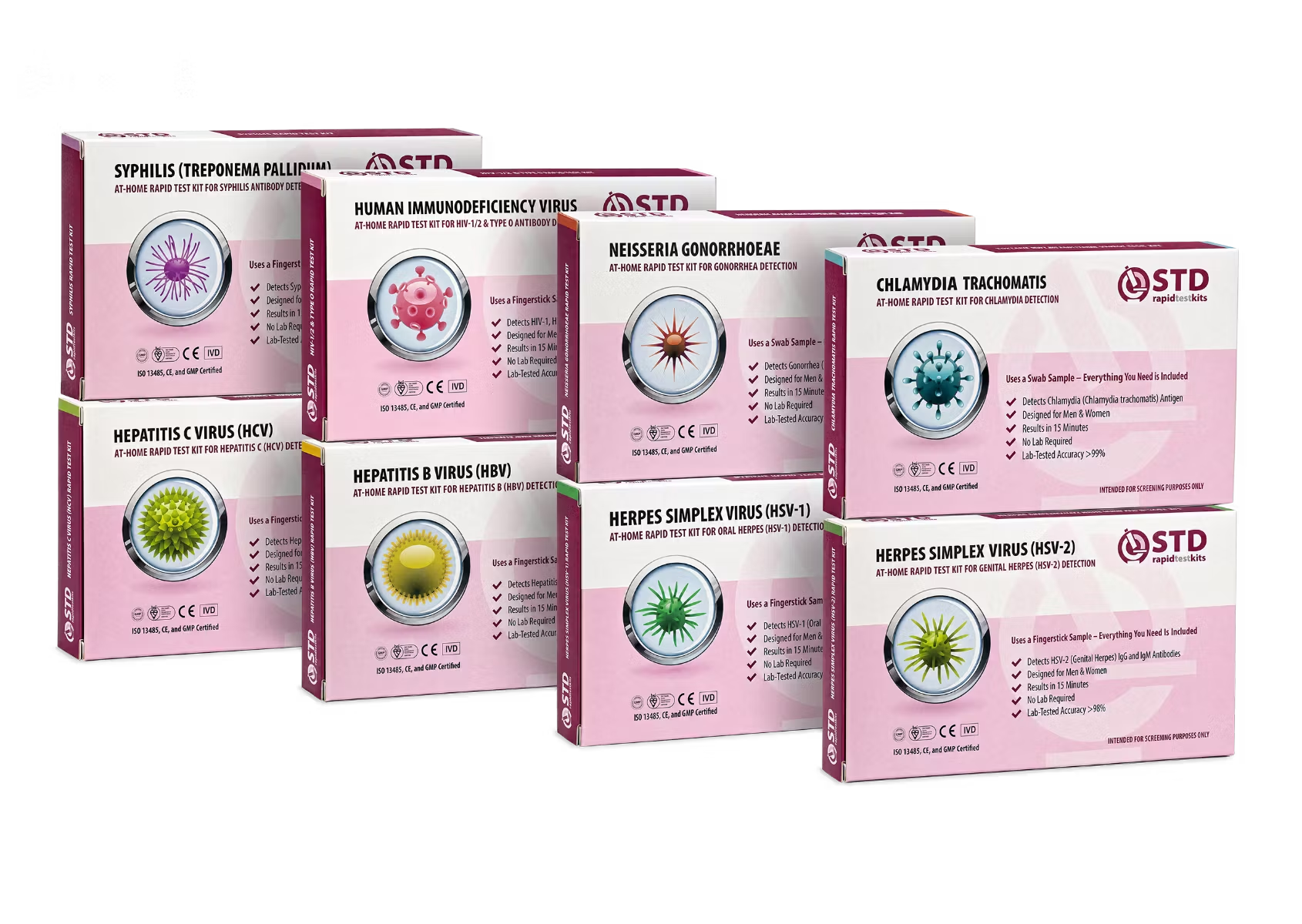
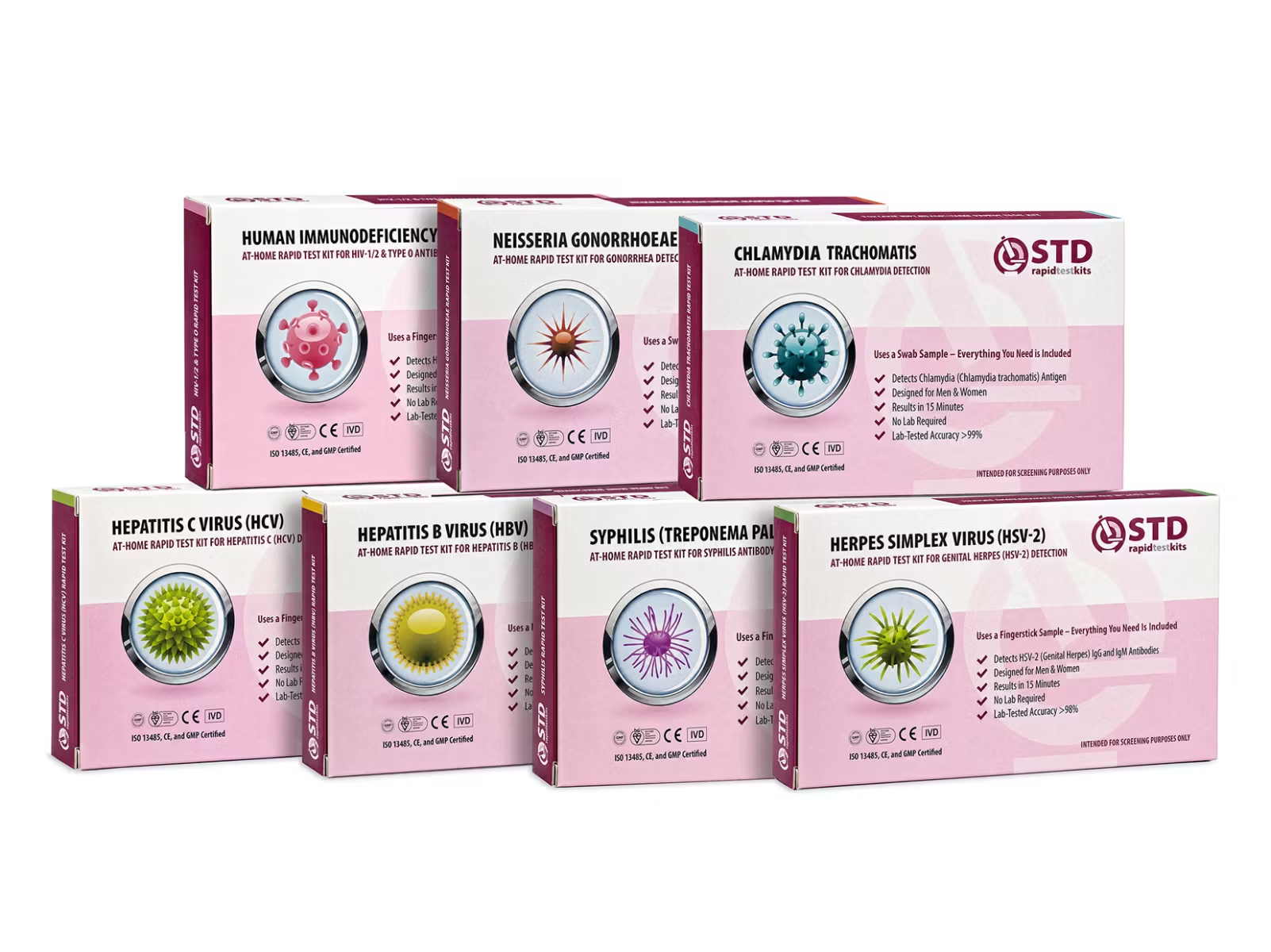
Note: stdrapidtestkits.com sells rapid lateral-flow at-home STI tests. The kit below covers the infections discussed in this article.
Documented reactivation triggers
- Chronic or acute stress
- Sleep deprivation across several weeks
- Another concurrent illness, especially with fever
- Hormonal shifts including menstrual cycle, pregnancy, and perimenopause
- Strong UV exposure (most relevant for oral HSV-1)
- Immunosuppressive medications such as corticosteroids
What Testing Can, and Cannot, Tell You
Testing brings clarity, but it rarely brings timeline precision. A positive antibody test for herpes confirms prior exposure, but cannot tell you exactly when transmission occurred. A positive HPV result can reflect a recent exposure or reactivation of an older one. This is where many people spiral. They want a date. They want certainty. Medicine usually offers probability instead.
The window-period side of testing is different from latency. Window period refers to detection delay: the gap between exposure and when a test can find evidence of infection. Latency refers to symptom delay. The two can overlap in ways that feel confusing, especially when someone tested early and got a negative result, then sees symptoms much later.
| Infection | Earliest reliable testing | Optimal confirmation window | Notes |
|---|---|---|---|
| Herpes (blood antibody test) | 3 to 4 weeks | 6 to 16 weeks (most seroconvert by 12) | Direct swab of an active lesion is the preferred test during an outbreak |
| Chlamydia | 7 days | 14 days | Lab NAAT on urine or swab is the gold standard; rapid lateral-flow swab tests are useful for screening |
| Gonorrhea | 7 days | 14 days | Frequently asymptomatic in throat and rectum; site-specific testing matters |
| Syphilis | 3 weeks | 6 weeks or later | Blood antibody testing; rising prevalence makes routine screening more important |
| HIV | 10 to 14 days (RNA test) | About 45 days (fourth-generation antigen/antibody) | Retest at the appropriate window for a definitive result |
If Symptoms Show Up Years Later: A Practical Plan
If something just surfaced (a sore, a rash, a positive result, an unfamiliar discharge) the worst thing to do is build a courtroom in your head. The best thing is to move one careful step at a time.
Start by confirming what you are actually dealing with. Visible lesions during the active phase usually give the clearest answer. Direct swab tests for herpes work best when sores are fresh. Lab NAAT (or rapid lateral-flow swabs as a first-line screen) detects chlamydia and gonorrhea past the short window period. Blood tests can detect antibodies for infections like syphilis and HIV once the immune response has developed.
If years have passed since your last test, this is overdue information, not a crisis. If you are in a relationship, testing together is a structural reframe that turns an interrogation into a shared problem. If a result is positive, the next step depends on what was found. Most bacterial STIs (chlamydia, gonorrhea, syphilis) are curable with antibiotics, according to CDC chlamydia treatment guidance and the CDC syphilis fact sheet. Viral STIs like herpes and HIV are managed long-term with antiviral medication that reduces outbreaks, complications, and onward transmission. None of these define a person's worth.
Information, Not Accusation
When something surfaces years after you thought you were in the clear, the human instinct is to fill in the blanks. We build timelines, replay old relationships, and interrogate ourselves and our partners, because uncertainty about transmission feels unbearable.
The steadier truth is that biology does not follow emotional logic. An STI can stay silent for years. Symptoms can appear long after the exposure event. Dormancy and reactivation are documented medical realities, not rare anomalies. Once that becomes the working frame, the story shifts from accusation to information.
If you are reading this while staring at a test result or noticing a symptom that feels out of place, the next move is clarity, not a verdict. Accurate testing, calm interpretation, and a plan that points forward will resolve more in a week than speculation will in a year. Most STIs are treatable, manageable, or both, according to the NHS overview of genital herpes and parallel guidance from the CDC.
Next steps if you just got a positive result
- Confirm what you are dealing with: direct swab for an active lesion, blood test for HIV or syphilis after the window period, or a multi-infection panel if testing history is incomplete.
- Distinguish bacterial from viral. Bacterial STIs are usually cured with antibiotics; viral STIs are managed long-term with antivirals.
- Start treatment promptly once the infection is confirmed; do not wait for a follow-up appointment to begin a curable course.
- Plan the partner conversation around shared health rather than blame, since the timing of symptoms is not evidence of when transmission occurred.
Frequently asked questions
- Can an STI really stay in the body for years without producing any symptoms?
- Yes. Viral infections like herpes and HPV can settle into the body and stay quiet for months or years because the immune system suppresses replication. Some bacterial infections, especially chlamydia in women, can also persist with mild or absent symptoms for long stretches before complications appear.
- If symptoms appear years into a relationship, does that mean someone cheated?
- Not by itself. A first outbreak years into a monogamous relationship is medically plausible because herpes and HPV can stay latent or suppressed below detection for that long. The timing of symptoms is not a reliable indicator of when transmission actually happened.
- Why does an old infection flare up after being quiet for so long?
- Sometimes there is no identifiable trigger and the immune system simply lets a dormant virus through for a short window. When there is a trigger, it usually tracks an immune shift: significant stress, sleep deprivation, another illness, hormonal changes, pregnancy, or immunosuppressive medication. The body is not a switchboard; it is an ongoing negotiation between organism and immune surveillance.
- I have tested regularly and never been positive. How is this still happening?
- Standard STI panels typically do not include herpes serology unless the patient specifically requests it. If a previous test occurred during a window period, the infection may not have been detectable yet. Negative results are tied to which tests were run and when.
- Can someone with no visible symptoms still transmit herpes?
- Yes. Asymptomatic viral shedding means herpes simplex virus can appear on skin or mucosal surfaces without producing sores. That is one of the main reasons people transmit the infection without realizing they carry it.
- Can HPV genuinely come back after going away?
- It can become undetectable and then reappear, especially when immune surveillance shifts. That does not automatically mean a new exposure; it can mean reactivation of suppressed virus. HPV is also extremely common in the population, which is why screening focuses on monitoring for cell changes rather than panicking at every detection.
- How should a couple talk about a late-appearing positive test?
- Lead with the biology, not the blame. Many infections can stay dormant for years, and routine panels often skip herpes testing entirely. Reframing the conversation as a shared health question rather than an interrogation changes the tone quickly and makes the next steps (testing together, treatment, prevention planning) easier to act on.
- What is the practical first step after a late-appearing positive?
- Confirm what you are dealing with through a clinic or a rapid at-home panel, depending on access and timing. Bacterial infections (chlamydia, gonorrhea, syphilis) are usually cured with antibiotics. Viral infections (herpes, HIV) are managed long-term with antivirals that reduce flares and onward transmission. Treatment exists for all of the common infections; the next step is confirming which one you are dealing with and following through.
How we sourced this article: We pulled from current public-health guidance from the World Health Organization, the U.S. Centers for Disease Control and Prevention, the NHS, Mayo Clinic, and Johns Hopkins Medicine, along with peer-reviewed clinical references on viral latency, asymptomatic shedding, and STI testing windows. Where guidance differs across sources, we defer to the most recent CDC or WHO position. This article is editorial in nature and is not a substitute for evaluation by a licensed clinician.
- U.S. Centers for Disease Control and Prevention. Genital herpes information page covering asymptomatic infection, latency in nerve tissue, and lifelong persistence after initial infection.
- World Health Organization. Herpes simplex virus fact sheet, used here for the claim that most HSV infections are asymptomatic or unrecognized.
- U.S. Centers for Disease Control and Prevention. Syphilis fact sheet covering the primary, secondary, latent, and tertiary stages and the antibiotic treatment standard.
- U.S. Centers for Disease Control and Prevention. Chlamydia fact sheet covering high rates of asymptomatic infection in women and standard antibiotic treatment.
- U.S. Centers for Disease Control and Prevention. Gonorrhea fact sheet covering asymptomatic pharyngeal and rectal infection and reinfection patterns.
- Mayo Clinic. Genital herpes overview, used here for documented reactivation triggers including stress, illness, hormonal changes, and immunosuppressive medications.
- NHS. Genital herpes overview covering transmission, treatment, and long-term management in a publicly funded health system.
- Johns Hopkins Medicine. HSV-1 and HSV-2 patient information covering the difference between oral and genital infection and the lifelong nature of the infection.