Published: July 2025 | Last updated: May 2026 | Editorial review and quality control: Martina N.
Most full STD panels are built around a specific shortlist of infections, and herpes usually is not on that list. That sounds counterintuitive: herpes is one of the most common viral infections in the world, with the World Health Organization estimating that roughly two-thirds of people under 50 carry HSV-1, and a meaningful share of adults carry HSV-2. So why does standard screening leave it out?
The short answer is that herpes testing works fundamentally differently from testing for chlamydia, gonorrhea, syphilis, or HIV. It relies on antibody timing rather than direct viral detection, and the results need careful interpretation. That mismatch between how the virus behaves and how routine screening is structured is exactly why many people leave a clinic believing they were “tested for everything,” when herpes was never part of the panel.
Key Takeaways
- Standard STD panels almost always skip herpes. A negative result on a routine panel tells you nothing about HSV-1 or HSV-2 unless a herpes-specific antibody test was specifically ordered.
- Herpes blood tests measure immune memory, not active infection. Antibodies typically become detectable around 6 weeks after exposure, with retesting near 12 weeks recommended for confirmation.
The missing test on most “full” STD panels
When you ask for a “full” STD panel, the assumption is straightforward: everything gets checked. In practice, most panels are built around a specific shortlist of infections that can be reliably detected early and acted on immediately. That typically includes chlamydia and gonorrhea via NAAT (nucleic acid amplification testing) on a swab or urine sample, plus blood tests for HIV and syphilis. Hepatitis B and C are sometimes included depending on the clinic and your individual risk profile.
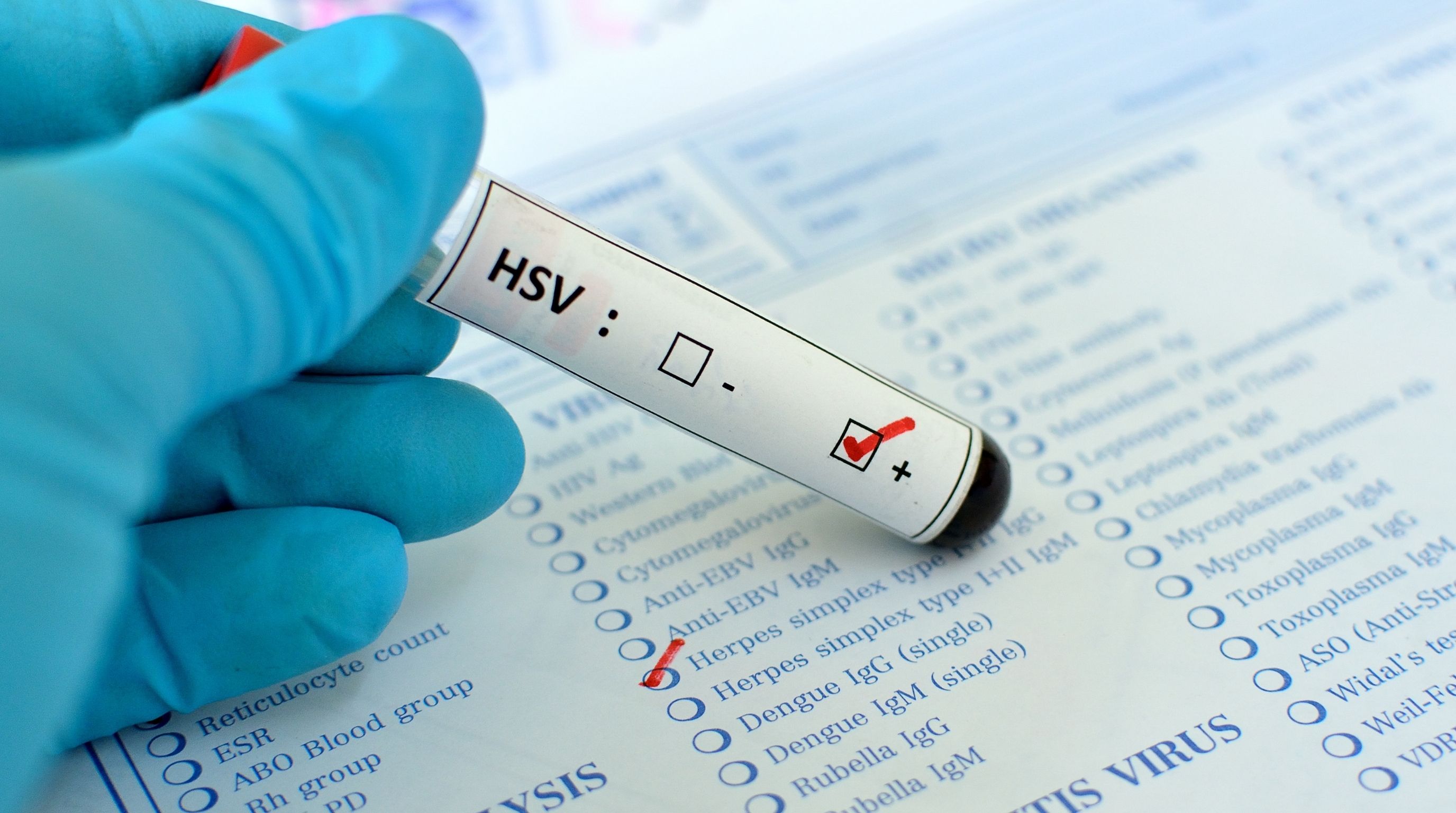
Herpes testing works on a different principle. Rather than detecting the virus itself, standard herpes screening uses IgG antibody blood tests that measure your immune response to HSV-1 or HSV-2. That response takes weeks to develop, and once it does, it stays in your system indefinitely. So a positive IgG test tells you that your immune system has encountered HSV at some point, but it does not tell you when, where in your body the infection sits, or whether you are currently shedding the virus.
This is why herpes becomes a quiet blind spot. You can test negative for every infection on a standard panel and still carry HSV-1 or HSV-2 without knowing it. The exclusion is not an oversight; it is a deliberate guideline-driven decision based on how the biology of the virus interacts with the testing methods we have. The downside is that, unless someone explains it clearly, most people walk away from a “clean” panel believing they have been comprehensively screened, when one of the most common viral infections in the country was never on the menu.
Why the medical system leaves herpes out
The decision to exclude herpes from routine screening comes down to how antibody testing behaves in real-world populations. IgG tests detect immune memory, not active infection, and that creates two practical problems: timing and interpretation.
On timing, herpes antibodies typically become detectable from about 6 weeks after exposure, but in some people they only reach reliable levels closer to 12 weeks. During that window, a test can return a false negative even when the virus is genuinely present. On interpretation, low-positive IgG values, especially for HSV-2, can occur in people who have never had symptoms and who may not have the infection at all. Without follow-up testing such as a confirmatory assay, those low positives can produce uncertain or misleading results that change how someone sees themselves and approaches relationships, often without changing any actual clinical management.
Because of that, organizations including the CDC's guidance on herpes testing and the USPSTF recommendation on serologic HSV screening currently advise against routine herpes testing in asymptomatic adults. The concern is not that herpes is unimportant. It is that, at population scale, ambiguous results can do more harm than good when there is no clear treatment decision waiting on the result.
That logic is sound at the population level. The trouble is that the system is optimized for population-level outcomes, not individual clarity. Those two goals often overlap, but they are not the same thing.
CDC does not recommend herpes (HSV) testing for people without symptoms in most situations. Testing is recommended for people who have symptoms suggesting genital herpes or who have a sex partner with genital herpes.
Most people who have herpes don't know they have it
The CDC estimates that the majority of people in the United States with genital herpes are undiagnosed, and the reason is not mysterious. When a virus is not part of routine screening, and most infections produce no obvious symptoms, the math is predictable: most cases stay invisible by default.
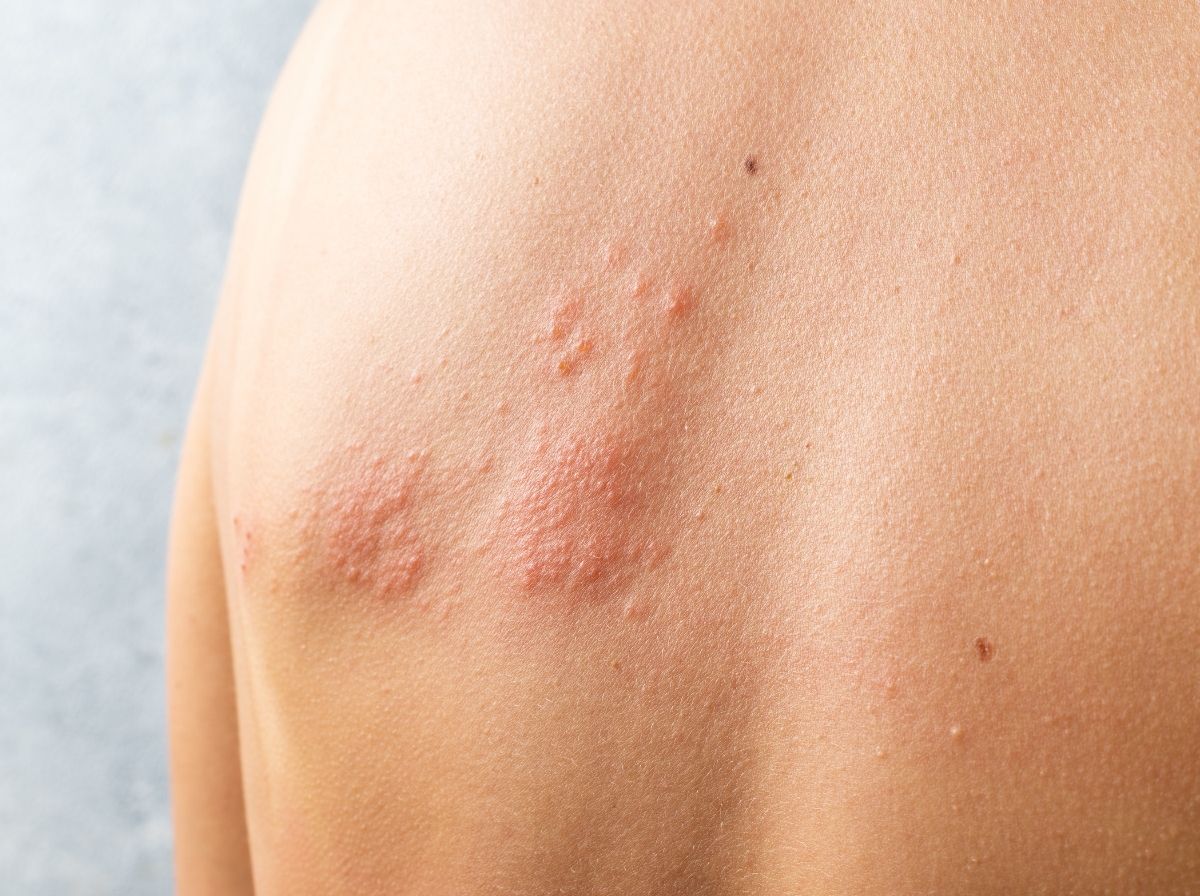
Herpes often flies under the radar because the virus can sit dormant in nerve cells for long stretches between outbreaks, or it can cause symptoms so mild they get mistaken for something else. A small ulcer can look like razor burn. An itchy patch can read as a yeast irritation or eczema. A first outbreak can feel like the flu, with body aches and a low-grade fever, and pass before anyone connects it to a viral infection. Without targeted testing, there is no biological trigger that forces detection. The body does not “announce” HSV in a consistent way.
Now combine that quiet biology with the testing structure. Most standard STD panels skip herpes unless specifically requested, so people test regularly, receive negative results, and reasonably assume that includes HSV. It does not. That gap between perceived testing and actual testing is exactly why such a large share of infections stay undiagnosed.
Timing matters here too. Because herpes screening relies on antibody detection, testing too soon after exposure can produce a false-negative result even in someone who is genuinely infected. Around 6 weeks after exposure provides the first reliable signal, and a follow-up test around 12 weeks confirms whether the immune response has fully developed.
HSV can be present on skin or mucous membranes without any visible sores. That silent transmission window is one of the main reasons most people who carry the virus have never been diagnosed.
When herpes testing makes sense
Even though routine screening is not recommended for everyone, there are specific situations where testing for HSV is medically useful and consistent with how the virus behaves.
The clearest case is symptoms. If you have a new genital sore, blister cluster, painful ulcer, unexplained tingling, or an unusual rash in the genital area, a clinician should sample directly from the lesion using a swab and send it for PCR or viral culture. That is the most accurate way to confirm an active herpes infection. Antibody testing in this situation only adds context; it does not replace direct lesion sampling.
The next clear case is a confirmed-positive partner. If a current or recent partner has been diagnosed with genital herpes, type-specific IgG antibody testing can establish whether transmission has likely occurred. This is one of the situations the CDC STI Treatment Guidelines specifically support testing in.
Another reasonable case is meaningful exposure with a new or untested partner, particularly if you want a comprehensive picture of your sexual health status. For asymptomatic people pursuing this for personal clarity rather than because their provider ordered it, the right approach is to align the test with the antibody window: a first test from 6 weeks after exposure, with a confirmatory test around 12 weeks.
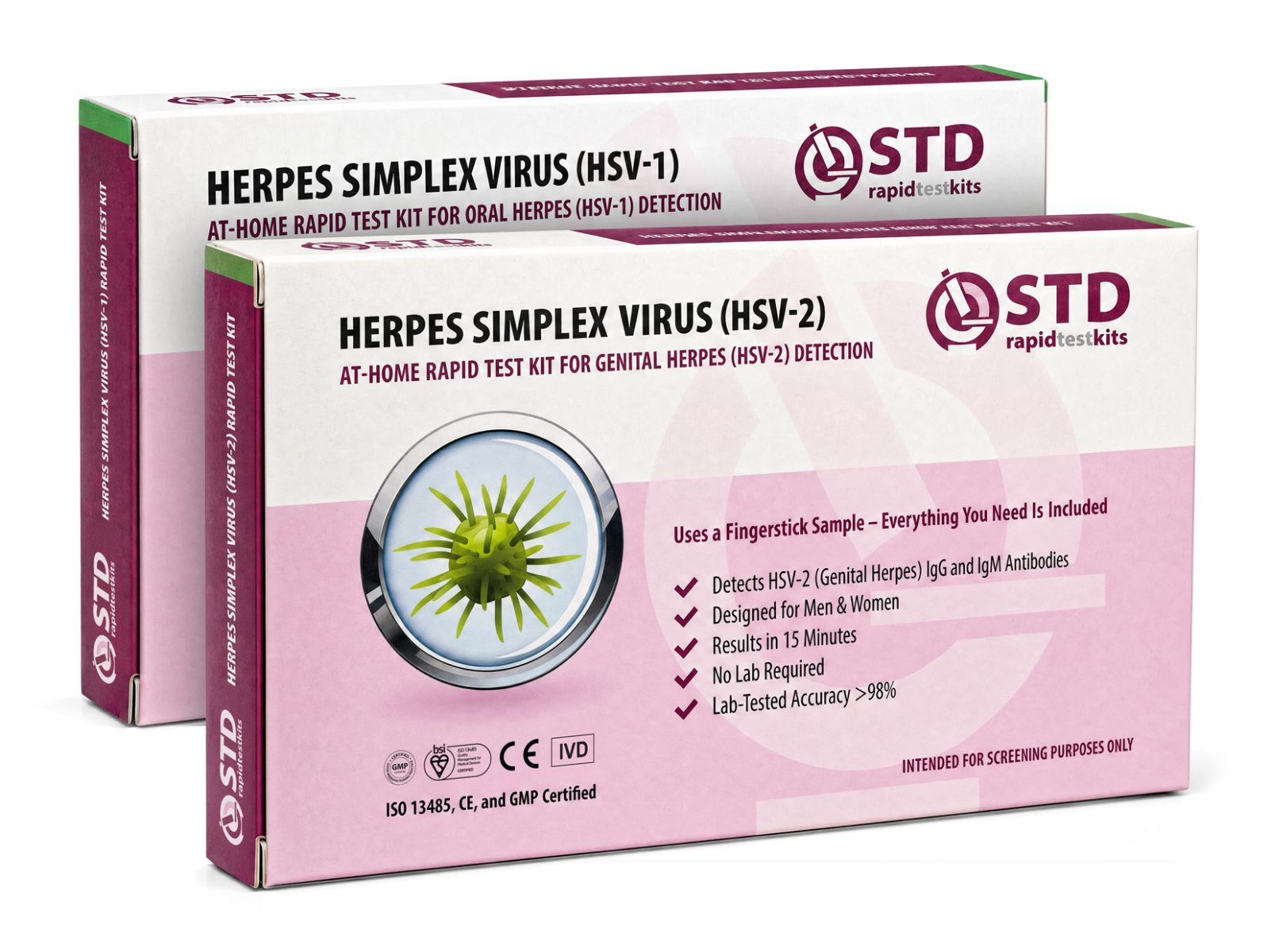
For people who want that complete picture without depending on whether a clinic includes herpes in its panel, at-home antibody testing covers the same biology on your own timeline. The HSV-1 and HSV-2 rapid home test kit uses the same antibody-detection principle as a clinic blood test.
| Infection | Why timing and test type matter for routine screening |
|---|---|
| Chlamydia | NAAT detects the bacterium directly. Test from about 14 days after exposure for a reliable result. Direct-detection makes early screening straightforward. |
| Gonorrhea | NAAT also detects gonorrhea directly. Test from about 3 weeks after exposure. Same reason as chlamydia: a clear screening pathway built around direct detection. |
| Syphilis | Blood antibody testing is standard. Test from about 6 weeks after exposure for a reliable signal, with a follow-up test if the first is negative and exposure is recent. |
| HIV | Modern blood antibody/antigen testing is widely standardized. Most clinics use a test that detects HIV from about 6 weeks for a first signal, with retest at about 12 weeks for high confidence. |
| Herpes (HSV-1 and HSV-2) | IgG antibody detection only. Test from 6 weeks for a first signal, retest near 12 weeks for confirmation. Because antibody timing is involved, herpes is excluded from routine panels. |
| Hepatitis B | Blood testing is standard. Test from about 6 weeks after exposure. Fits established screening workflows. |
| Hepatitis C | Blood testing is also standard. Test from about 8 to 11 weeks after exposure for a reliable result, with PCR confirmation if needed. |
How at-home herpes testing works
At-home herpes tests work on the same principle as the antibody blood test a clinic would order: they detect IgG antibodies your immune system has produced in response to HSV-1 or HSV-2. Those antibodies are not the virus. They are evidence that your immune system has encountered the virus and built a memory response, which is why timing matters so much.
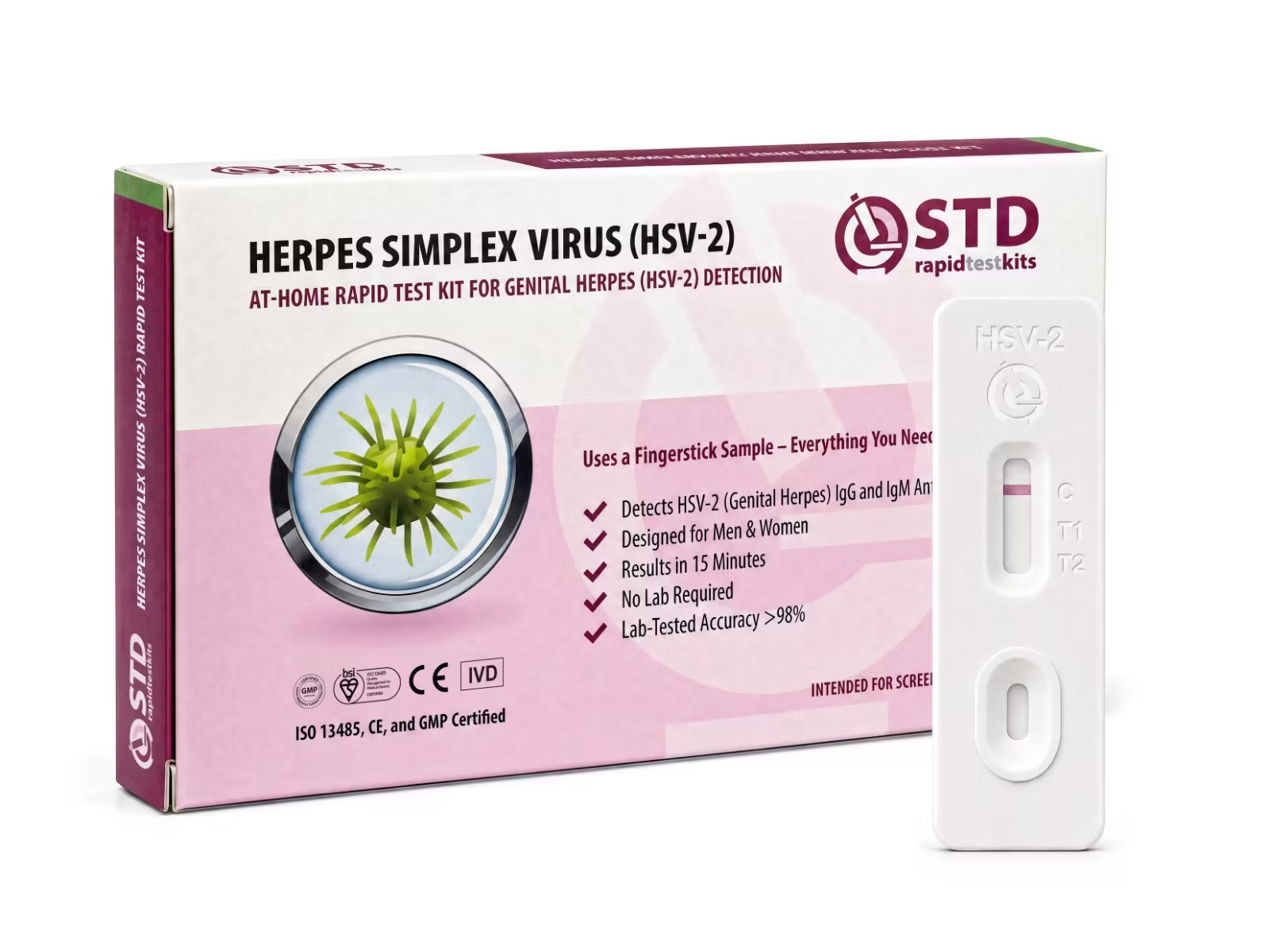
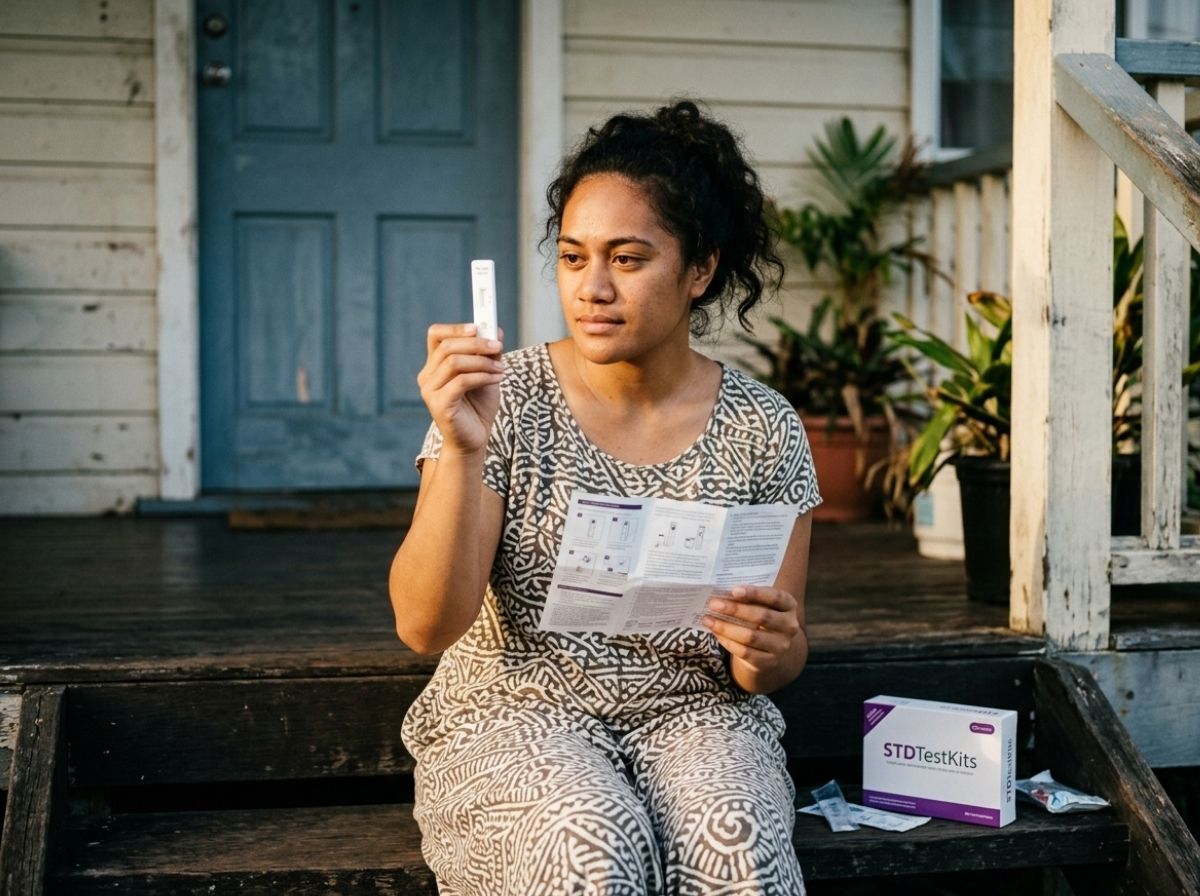
The mechanics are straightforward. You collect a small fingerstick blood sample using the lancet in the kit, transfer the drop onto the test cassette's sample well, and add a few drops of buffer solution. The cassette contains test strips with HSV-1 and HSV-2 antigens immobilized at the test lines. If your sample contains IgG antibodies to those antigens, the antibodies bind and trigger a visible colored line. A separate control line confirms the test ran correctly.
This is a lateral-flow blood antibody test, not a NAAT or PCR. NAAT and PCR detect the virus itself in a laboratory setting and they are more analytically sensitive in early infections. A rapid antibody test screens for the immune response that develops in the weeks after exposure. Both methods have a place; they answer slightly different questions.
Timing is identical at home and in a clinic. Testing before antibodies develop returns a false-negative result regardless of where the test is run, because the immune system has not yet produced detectable antibodies. The 6-week mark is the first reliable signal; the 12-week mark is the confirmation point. Skipping the second test is one of the most common ways people end up with false reassurance.
The cost of not knowing your status
When herpes is excluded from testing, the immediate consequence is straightforward: people assume they are negative when they have actually never been tested. That misunderstanding shapes how they think about new relationships, when they disclose, and how they manage risk.
The biology matters here. HSV is transmitted not only during a visible outbreak but also during periods of asymptomatic shedding, when the virus is present on skin or mucous membranes without lesions. Shedding happens because HSV resides in nerve cells and reactivates intermittently, releasing viral particles that can transmit the infection without producing inflammation visible to either partner. A real-world implication: someone can pass HSV to a partner without ever realizing they had it.
For many people, the first time they discover their status is either during a symptomatic first outbreak or after a partner tests positive and the conversation traces back to them. At that point, the situation is not just clinical, it becomes emotional and relational. The shock rarely comes from the virus itself, since most people manage HSV with minimal disruption. It comes from the gap between what someone believed about their own health and what is actually true.
Knowing your status earlier does not make herpes more dangerous than it actually is. Most people with HSV-1 or HSV-2 live with it as a manageable, intermittent condition rather than a serious health threat. Knowing earlier just removes the shock and gives you the same options sooner: informed disclosure, suppressive antiviral medication if outbreaks are frequent, and clearer planning around partners.
Common myths about herpes testing, and why they persist
Most confusion around herpes testing does not come from the virus itself. It comes from assumptions about how STD testing works in general. When a test is not part of the routine, people fill in the gap with what they think should happen rather than what happens in practice.
One persistent myth is that herpes “would have shown up” on a standard STD panel. It would not. Unless a herpes-specific antibody test is specifically ordered, HSV-1 and HSV-2 are simply not screened. Another is the belief that doctors automatically include every relevant test. Providers follow guidelines designed to balance accuracy, cost, and clinical impact across large patient populations, which means individual preferences for total clarity do not necessarily drive what is on the panel.
A third myth is that testing is unnecessary because herpes is “not serious.” It is true that for most people HSV is medically manageable rather than dangerous, but that has no bearing on whether knowing your status matters. From a transmission standpoint, asymptomatic shedding makes status awareness directly relevant to partner risk. From an emotional standpoint, knowing in advance lets people manage the information rather than be blindsided by it.
Finally, there is the assumption that a positive result would automatically derail relationships or sex life. Most of that reaction traces back to the gap between believing you were tested and finding out you were not, which is the same gap that routine screening structures leave open.
| Common belief | The biological and clinical reality |
|---|---|
| If I tested negative on a “full” STD panel, I don't have herpes | Standard panels typically exclude HSV-1 and HSV-2 unless specifically requested. A negative result only reflects the infections that were actually tested for, not your herpes status. |
| If herpes mattered, doctors would automatically test for it | Screening guidelines prioritize infections with clear treatment pathways and unambiguous test results. Herpes is excluded because antibody timing and low-positive interpretation create population-level uncertainty, not because it is unimportant. |
| I would know if I had herpes because I would have symptoms | HSV can stay dormant in nerve cells for long periods, or cause symptoms mild enough to be misidentified as razor burn, irritation, or a yeast issue. Asymptomatic shedding allows transmission without visible signs. |
| A positive antibody test means I have an active infection right now | IgG blood tests detect past exposure and immune memory, not active outbreaks. The result tells you the immune system has encountered HSV at some point, not whether you are currently shedding the virus. |
| If I test negative once, I'm in the clear | If testing happens before antibodies are detectable, the result can be a false negative. A test from 6 weeks after exposure gives a first reliable signal; a confirmatory test around 12 weeks closes the window. |
What taking control looks like
Once you understand how herpes testing works, the next step is straightforward: align the test to exposure timing rather than to assumptions about what was on a previous panel.
If you have had sexual contact with a new or untested partner and you want to know your HSV status, the practical approach is clear. Test from about 6 weeks after the most recent exposure for a first reliable antibody signal. Retest around the 12-week mark to confirm whether the immune response is fully developed. This two-step approach removes most of the uncertainty that comes from testing too early in a single shot.
If a partner has a confirmed HSV diagnosis, the situation is the same in mechanics but more clearly indicated medically. Type-specific IgG testing helps establish whether transmission has likely occurred and lets both of you make informed decisions about prevention strategies, including suppressive antiviral medication for the partner with HSV.
The same principle applies whether you test through a provider or use an at-home option. The biology does not change. What changes is access and control. When you choose to test intentionally, the HSV-1 and HSV-2 rapid home test kit applies the same antibody-detection method without making you depend on whether herpes is on a clinic panel.
For broader screening, especially if you want to remove uncertainty across multiple infections at once, a comprehensive option like the complete STD home test kit package includes herpes alongside HIV, syphilis, hepatitis, and others, closing the gap that a standard clinic panel often leaves open.
If your doctor won't test you, here's what to do
At some point, many people run into the same friction: they ask their provider to be tested for herpes and the answer is hesitation, pushback, or a flat no. That response is not random. It follows directly from how current screening guidelines are designed for asymptomatic adults. It does not mean testing is off the table.
If a provider declines to order a herpes test, the first move is to be specific. Request a type-specific IgG blood test for both HSV-1 and HSV-2. The “type-specific” wording matters because some older or non-type-specific assays do not separate HSV-1 from HSV-2, which produces results that are hard to act on. Being precise removes one of the ambiguity points that often drives the pushback.
It also helps to give your reason for asking. If you have had a confirmed-positive partner, recent symptoms that resolved before you could be seen, or a meaningful exposure event you want clarity on, say so. Those situations are aligned with the indications listed in the CDC STI Treatment Guidelines for herpes, and most providers will reconsider when the indication is clear.
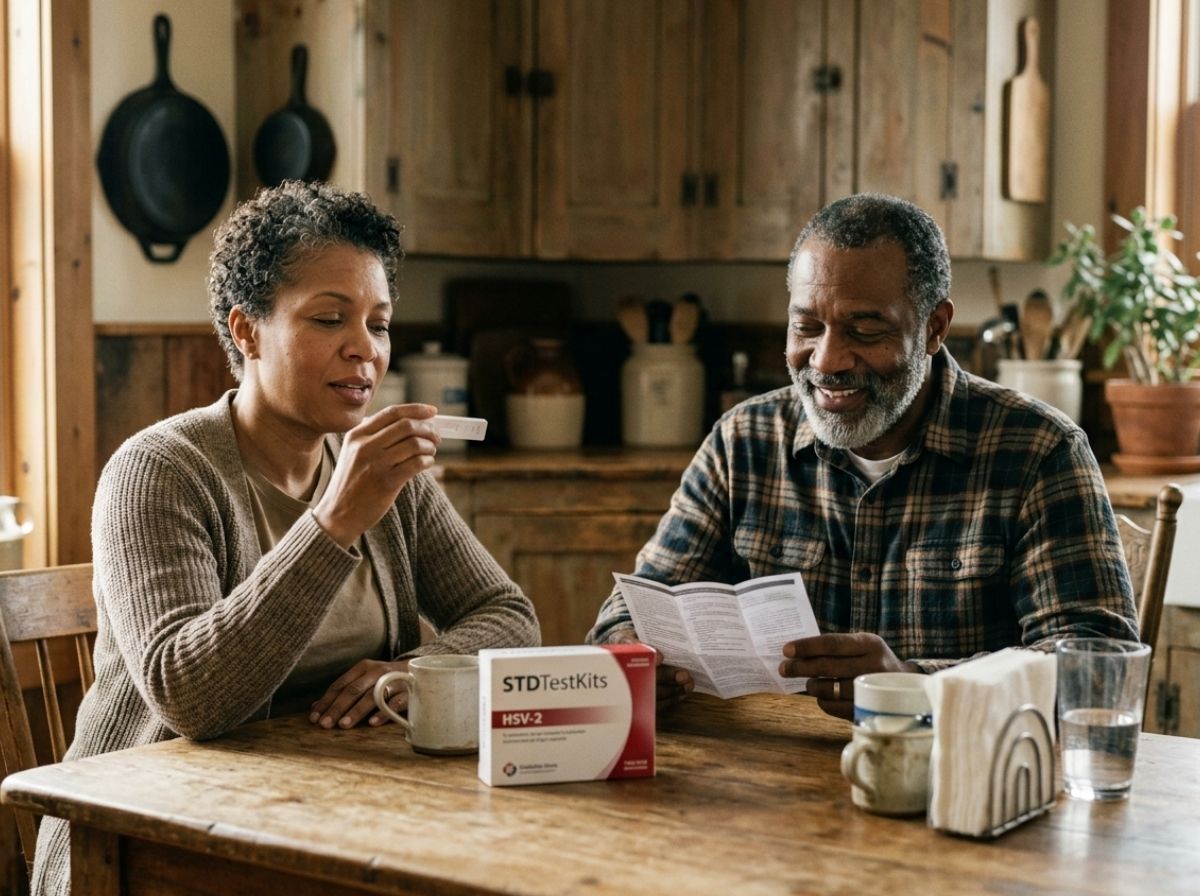
If the answer is still no, you have a clear alternative. You are not required to depend on a single provider's interpretation of guidelines to understand your own health status. An at-home antibody test applies the same detection technology, on your timeline. Options like the HSV-1 and HSV-2 rapid home test kit or the dedicated Genital HSV-2 rapid test let you close the gap without waiting for institutional permission.
FAQs
- Why is herpes not included in standard STD testing?
- You can leave a clinic with a clean panel result and still have no idea whether you carry HSV, because herpes was never on that panel. The reason is that herpes testing relies on antibody detection, which has timing and interpretation challenges that make routine asymptomatic screening unreliable at population scale. The CDC and USPSTF currently recommend against it for that reason.
- Can I get tested for herpes even without symptoms?
- Yes. You can request a type-specific IgG blood test for HSV-1 and HSV-2 from a provider, or use an at-home antibody test that uses the same detection method. Testing without symptoms is most useful when you have had a meaningful exposure or a partner with a confirmed diagnosis.
- How long after exposure can I get tested for herpes?
- Antibodies typically become detectable around 6 weeks after exposure, which is the first reliable testing point. Confirmation testing around 12 weeks is recommended because some people produce detectable antibodies later in that window. Testing earlier than 6 weeks risks a false-negative result.
- What does a negative herpes antibody test mean?
- It means no IgG antibodies to HSV-1 or HSV-2 were detected at the time of testing. If you tested within the window period, the negative may not be conclusive and a retest at 12 weeks is recommended. If you tested well after the window, a negative is a reliable result.
- What does a positive herpes antibody test mean?
- A positive result does not mean you are currently contagious or mid-outbreak. It means your immune system has built IgG antibodies to HSV at some point, which tells you exposure occurred but not when, where in your body, or whether you are shedding now. Low-positive HSV-2 results sometimes need a confirmatory assay to interpret correctly.
- Can herpes be transmitted without visible symptoms?
- Yes. HSV can shed from skin or mucous membranes during periods of asymptomatic shedding, when there are no visible lesions. This is one of the reasons knowing your status matters even if you have never had a noticeable outbreak.
- What's the difference between HSV-1 and HSV-2?
- HSV-1 has historically been associated more with oral infections (cold sores) and HSV-2 with genital infections. In practice, either type can infect either anatomical area depending on the route of exposure. A type-specific antibody test distinguishes between them.
- Are at-home herpes antibody tests as accurate as clinic tests?
- When used within the correct testing window (6 weeks for first signal, 12 weeks for confirmation), at-home rapid antibody tests use the same antibody-detection chemistry as standard clinic blood tests and produce comparable results. They do not replace direct lesion sampling for diagnosing an active outbreak, which still requires a clinic-collected swab sent for PCR or culture.
- U.S. Centers for Disease Control and Prevention. About Genital Herpes: general overview of genital herpes, including transmission routes, symptoms, and how healthcare providers diagnose the infection.
- U.S. Centers for Disease Control and Prevention. Herpes Testing: states that CDC does not recommend herpes testing for people without symptoms in most situations, and covers blood-test timing limitations, IgG serologic testing nuances, and false-positive risk.
- U.S. Preventive Services Task Force. Recommendation on serologic screening for genital herpes simplex virus infection in asymptomatic adolescents and adults (Grade D recommendation against routine screening).
- World Health Organization. Herpes simplex virus fact sheet, with global epidemiology and prevalence data for HSV-1 and HSV-2.
- U.S. Centers for Disease Control and Prevention. STI Treatment Guidelines: genital herpes section, with recommended testing indications and management.
- NHS UK. Genital herpes overview, with patient-facing guidance on diagnosis, testing, and management.
