
Published: August 2025 | Last updated: May 2026 | Editorial review and quality control: Martina N.
Herpes feels different from most sexually transmitted infections the moment you get the diagnosis. Other infections clear with antibiotics or antivirals. This one does not. The virus stays inside the nervous system for life, hiding from the immune system in nerve cell bodies near the spine and at the base of the skull, and reactivating at unpredictable intervals. That permanence, more than the physical symptoms, is the part most people struggle with the most.
The science behind why is straightforward, and it leads to better answers than the panic of the first diagnosis suggests. Lifelong does not mean uncontrollable. Daily antiviral therapy can sharply reduce outbreaks and lower the risk of passing the virus to a partner. Honest disclosure keeps relationships healthier than concealment ever does. Most people with herpes have long stretches where the virus is dormant and live the same sex lives, relationships, and futures as everyone else. What follows is the biology of why herpes stays, what reactivates it, and what the practical answers look like for sex, dating, and day-to-day life.
Key Takeaways
- Herpes simplex viruses establish lifelong latency inside sensory nerve cells, which is why no current medication can fully eradicate the infection.
- Daily antiviral therapy, awareness of personal triggers, and honest disclosure substantially reduce outbreaks and transmission risk for most people.
Why Herpes Cannot Be Cured
The reason herpes is permanent has nothing to do with willpower, hygiene, or the strength of your immune system. It is a feature of how the virus replicates. After the initial infection, HSV-1 and HSV-2 enter sensory nerve endings at the site of exposure and travel up the nerve fibers to the cell bodies in the dorsal root ganglia for genital herpes, or the trigeminal ganglion for oral herpes. There the virus switches into a quiet state called latency, producing almost no viral proteins. The immune system, including antiviral drugs, has no good way to find a virus that is not actively replicating.
Periodically, something flips the switch back. The virus restarts replication, travels back down the same nerve fibers, and surfaces in the skin or mucous membrane it originally entered. That return trip can produce a visible outbreak with blisters, ulcers, and tingling, or it can happen silently with only brief viral shedding. Either way, the latency and reactivation cycle is the central feature of the entire herpes virus family, shared by chickenpox and shingles (varicella zoster) and Epstein-Barr virus. According to the World Health Organization, no current vaccine or treatment can eliminate established HSV infection, and HSV-2 infection raises the risk of acquiring HIV, which is another reason consistent management matters beyond outbreak control alone.
This is also why suppressive medications work but do not cure. Antivirals like acyclovir and valacyclovir block the virus from copying itself when it tries to reactivate. They do not eliminate the latent reservoir, but they can keep most reactivations from progressing to a visible outbreak. A herpes diagnosis today is best understood as a chronic, manageable infection, not a one-time event waiting to be cleared.
HSV stops producing proteins once it has settled inside nerve cell bodies. Antiviral drugs block active replication. They have nothing to block when the virus is silent, which is the gap no current medication can close.
Inside the Nerve Cells: What Latency Looks Like
A clearer picture of latency helps explain the unpredictability. Sensory nerves are the same fibers that carry temperature, touch, and pain signals from your skin to your brain. After a first herpes episode heals, the virus is essentially asleep inside the cell body of those nerves. Researchers studying autopsied human ganglia have repeatedly found HSV DNA in nerve cells without any active virus production, sometimes decades after the original infection.
Reactivation is not random, but it is not strictly predictable either. Some people have a single outbreak after primary infection and rarely have another. Others cycle every few months. The clearest pattern in the published literature, summarized by the U.S. Centers for Disease Control and Prevention, is that recurrences tend to be more frequent in the first year after the initial infection and gradually decline over time, with the rate of decline varying widely between people.
When reactivation happens, the prodrome (the body's warning signs) often precedes the visible lesion by hours to a couple of days. Tingling, itching, or a burning sensation at the site of past outbreaks is the body's way of signaling that the virus is moving back through the nerve. Starting antivirals at the prodrome stage tends to produce shorter, milder outbreaks than starting once lesions have already appeared, which is the practical reason most clinicians ask patients to keep medication on hand.

What Triggers a Flare-Up
Triggers vary between people, but a handful of patterns show up consistently in clinical studies and patient outbreak diaries. Knowing your own list takes a few months of tracking, but the common ones are worth recognizing right away.
- Physical stress and other infections. A cold, the flu, COVID-19, or any infection that diverts your immune system can let HSV reactivate. The same is true for major surgery or significant injury.
- Psychological stress. The relationship between sustained stress hormones, immune function, and viral reactivation is well-documented for both HSV and the closely related varicella zoster virus that causes shingles.
- Sleep deprivation. Going more than a few nights with poor sleep is one of the most commonly reported triggers in patient surveys.
- Hormonal changes. Many women report flare-ups in the days before menstruation. Pregnancy and perimenopause can also shift outbreak patterns, sometimes in unexpected directions.
- Ultraviolet light. Strong sunlight on the lips is a particularly well-established trigger for HSV-1, which is why some people get a cold sore reliably after a beach day or a ski trip.
- Local friction or skin trauma. Vigorous sex, tight clothing, dental work for HSV-1, or any abrasion at past outbreak sites can prompt reactivation.
- Immunosuppression. Chemotherapy, organ transplant medication, advanced HIV, or high-dose steroid courses can produce outbreaks that are both more frequent and more severe.
Keeping a simple note in your phone the day before or the day of each outbreak (sleep, stress, diet, weather, menstrual cycle day, recent sex, recent illness) gives you a usable personal map within a year. The point is not to blame yourself for an outbreak. The point is to identify which factors are within your control to adjust, and which you need to plan around.
Asymptomatic Shedding and Why Testing Matters
The single most underappreciated fact about herpes is that you can transmit the virus without any visible symptoms. This is called asymptomatic viral shedding, and it has been documented in multiple longitudinal studies that swabbed the genital area of HSV-2 positive participants daily, regardless of symptoms. Shedding happens in short bursts, often less than a day, with no reliable warning sign.
That is why most new genital herpes infections are transmitted by people who do not know they are infected, or who feel completely fine on the day of transmission. CDC guidance specifically emphasizes that avoiding sex only during visible outbreaks is not sufficient on its own to prevent transmission. Consistent condom use, daily suppressive antivirals, and honest disclosure together produce the strongest protective effect.
This is also why home antibody testing is meaningful even when you feel fine. A blood test for HSV antibodies tells you whether your immune system has encountered the virus and produced antibodies against it. It does not require an active outbreak. For people with new sexual partners, a possible exposure, or unexplained recurrent genital symptoms, testing closes the uncertainty rather than leaving it open. A negative test more than three months out from the relevant exposure is reliable evidence you are not infected, with the caveat that a small fraction of people seroconvert later than that.
Most genital herpes infections are transmitted by persons unaware that they have the infection or who are asymptomatic when transmission occurs.
Suppressive Antivirals: How They Help
Daily suppressive therapy is the most-studied intervention for reducing both outbreaks and transmission. The standard agents in the United States are acyclovir, valacyclovir, and famciclovir. Of those, valacyclovir has the largest body of evidence specifically for transmission reduction. The U.S. CDC sexually transmitted infections treatment guidelines note that daily valacyclovir 500 mg decreases the rate of HSV-2 transmission to a susceptible partner in serodiscordant heterosexual couples, and the same guidelines describe suppressive therapy as reducing the frequency of genital herpes recurrences by 70 to 80 percent in patients with frequent outbreaks.
The same drugs also reduce the severity of outbreaks. Most people on daily suppression see substantially fewer recurrences than they did off therapy, and outbreaks that do occur tend to be shorter and milder. Side effects are uncommon. The most frequent are mild headache and nausea, and serious reactions are rare even with years of continuous use.
Suppressive therapy makes the most sense when:
- You have frequent outbreaks (typically more than four or five per year).
- You are in a serodiscordant relationship, meaning your partner is HSV-negative and you are HSV-positive.
- You are immunocompromised and outbreaks are unusually severe or prolonged.
- The unpredictability itself is the main burden, even if your outbreaks are infrequent.
Episodic therapy, where you only take medication when you feel a prodrome or see an early lesion, may suit you better if outbreaks are rare and respond quickly to medication. Both approaches are legitimate. A clinician familiar with your case can help you weigh the trade-offs.
This article is published by stdrapidtestkits.com, which sells at-home STI testing kits. We recommend products based on fit for the reader's concern, not commercial benefit. Antiviral prescriptions and active outbreak management require a clinician.
Disclosure: The Hardest Conversation, and How to Have It
Disclosure is, for most people, the hardest single part of living with herpes. The shame attached to the diagnosis is older than the science, and it is reinforced by jokes and misinformation that have very little to do with what the diagnosis actually means. None of that shame is earned.
The mechanics of disclosure get easier with practice. A few approaches tend to work better than others:
- Tell partners before sexual contact, not after. A short factual sentence is usually enough: "I have genital herpes. I am on daily antivirals, my last outbreak was several months ago, and I take precautions. I wanted you to know before we go further."
- Lead with what you do to reduce risk. Suppressive therapy, condoms, avoiding sex during prodromes and outbreaks. This shifts the conversation from "you have a virus" to "here is how we manage it together."
- Give partners time to process. Some people will Google, ask follow-up questions, and come back the next day. That is healthy curiosity, not rejection.
- Do not apologize for existing. Herpes is common. According to the World Health Organization, an estimated 3.8 billion people under age 50 have HSV-1 globally, and around 520 million people aged 15 to 49 have HSV-2. A calm, informed conversation lands much better than a tearful one.
Some partners will respond poorly. That is real, and it hurts. The longer-term pattern in research on couples managing serodiscordant herpes is that disclosure does not predict relationship failure; lack of disclosure does. Partners who find out later, often by their own diagnosis, generally feel more betrayed than partners told before sex. There is no version of "never bring it up" that holds up over years.
Day-to-Day Management: Sleep, Stress, and the Long View
Outside of medication and disclosure, the most useful thing most people can do is treat their immune system well enough that the virus stays mostly dormant. That does not mean a special diet, expensive supplements, or any of the wellness industry's herpes-specific products. It means the same things that help any chronic condition.
- Sleep consistently. Most adults need seven to nine hours. Chronic sleep restriction is a well-documented herpes trigger and shows up in nearly every outbreak diary.
- Manage chronic stress. Therapy, regular exercise, time outside, time away from work. Choose what you will actually do, not what sounds most impressive.
- Treat infections promptly. Do not push through a flu or untreated dental issue if you have the option to address it sooner.
- Avoid known personal triggers. If sunlight on your lip reliably brings on a cold sore, sunscreen lip balm goes in your bag.
- Talk to a therapist if shame or anxiety is the main weight of the diagnosis. Cognitive behavioral therapy has been studied specifically for herpes-related distress, with good outcomes for anxiety reduction. It is worth discussing with a clinician if shame or worry is the main weight of the diagnosis.
The arc most people describe is the same. The first year is the hardest; by the second, most people find the diagnosis has settled into a manageable background fact rather than a daily preoccupation. Outbreaks usually become less frequent and less severe over time, especially if you have learned your triggers and started suppressive therapy if you needed it.

Testing: When and Why
For a home rapid blood antibody test, the relevant rule is timing. HSV antibody tests look for evidence that your immune system has responded to the virus, which takes time to develop after initial exposure. Most people seroconvert (produce detectable antibodies) within about 6 to 12 weeks of infection, though some take longer. A test taken too soon after a possible exposure can come back negative even if you have been infected. If a recent exposure is the reason you are testing, repeat testing about three months out is the standard recommendation.
Home antibody testing makes sense in several situations. You have had a new sexual partner and want a baseline rather than assuming you are negative. You have had recurrent genital symptoms (recurring itching, fissures, or small ulcers) that have never been formally diagnosed. You and a partner are deciding together whether suppressive therapy makes sense for one or both of you.
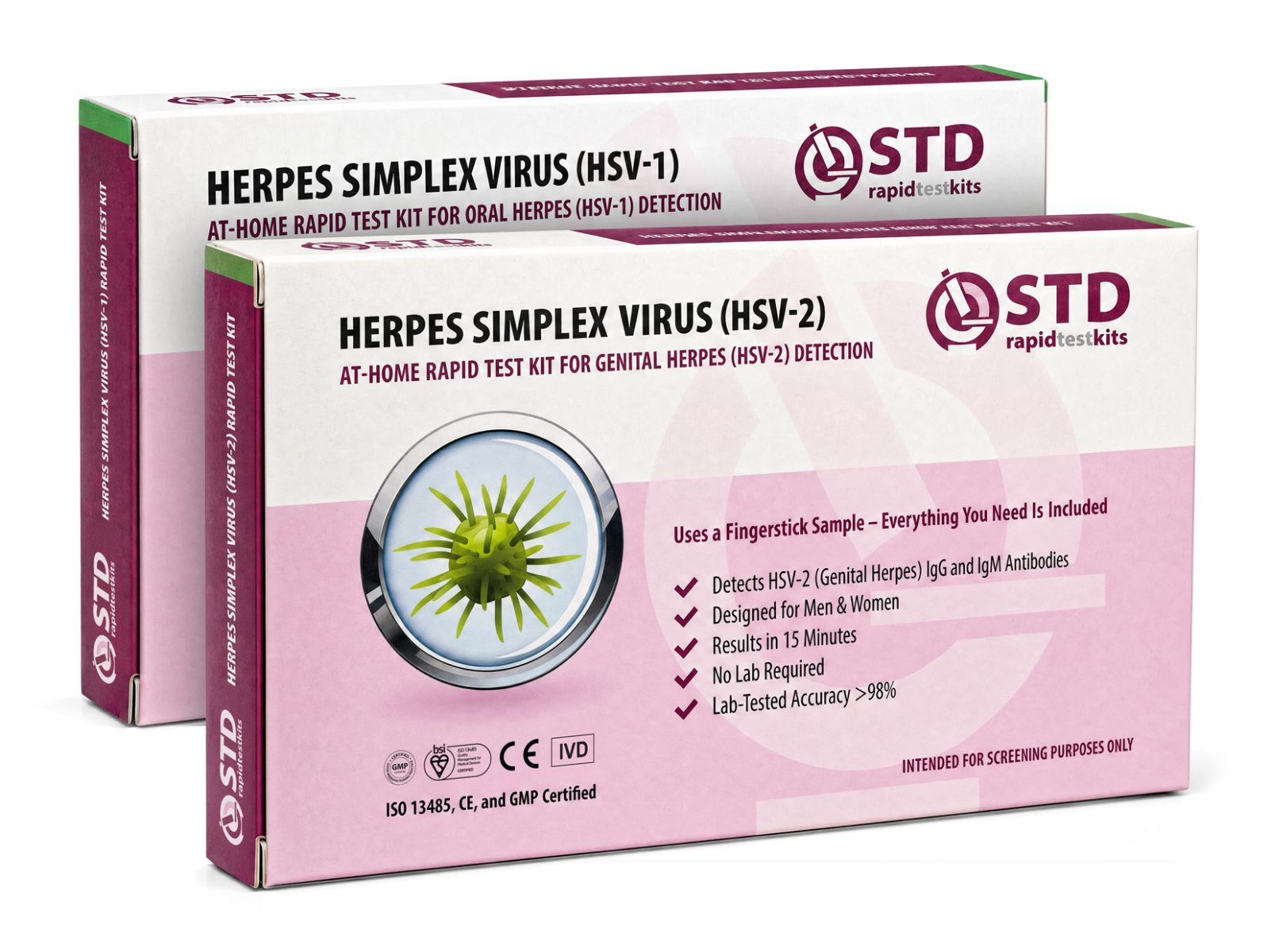
A positive home antibody result should be confirmed by a clinician, who can also start you on antivirals and discuss disclosure with current and recent partners. Our at-home kit uses a lateral-flow immunoassay to detect HSV antibodies, a different technology from the PCR and culture tests a clinic uses for active lesions, which is why a positive home result is a prompt to see a clinician, not a final diagnosis. An active visible outbreak is best diagnosed in the clinic by swab testing of the lesion itself (PCR or culture), which gives a faster and more specific answer than antibody testing during an outbreak. We do not sell a home lesion swab; for an active sore, a clinic visit is the right next step.
Frequently Asked Questions
- Will there ever be a cure for herpes?
- Several experimental approaches are in research, including gene-editing strategies that aim to disable the latent viral genome inside nerve cells. None is yet available as a treatment. For now, suppressive antiviral therapy and outbreak management are the proven options.
- Why does the virus come back even when I am on medication?
- Suppressive antivirals block viral replication when the virus tries to reactivate. They do not eliminate the dormant virus inside nerve cells. Most people on daily suppression see substantially fewer outbreaks, but occasional breakthroughs are normal and not a sign the medication has stopped working.
- Can I spread herpes when I do not have an outbreak?
- Yes. The virus periodically sheds from the skin or mucous membranes without symptoms. This is why daily suppressive therapy and consistent condom use both matter, even during long symptom-free stretches. CDC guidance emphasizes that avoiding sex only during visible outbreaks is not enough on its own to prevent transmission.
- How long after exposure can a herpes blood test detect the infection?
- Most people produce detectable HSV antibodies within 6 to 12 weeks of infection. A blood test taken sooner than that can miss a recent infection. For a possible exposure, repeat testing at about three months out is the standard recommendation.
- Is HSV-1 the same as HSV-2?
- They are closely related but distinct viruses. HSV-1 is the more common cause of oral herpes (cold sores) and is also an increasing cause of genital herpes through oral-to-genital transmission. HSV-2 most commonly causes genital herpes. Both establish lifelong latency by the same mechanism.
- Does suppressive therapy work long term?
- Yes. Studies have followed patients on daily acyclovir or valacyclovir for years without loss of effectiveness and without major safety concerns. Periodic check-ins with a clinician are still useful, mainly to confirm whether continued suppression remains the right approach for your situation.
- Can I have unprotected sex if my last outbreak was a long time ago?
- Asymptomatic shedding makes unprotected sex with an HSV-negative partner a real transmission risk, even after long symptom-free stretches. Daily suppressive therapy plus condoms substantially lowers the risk. Disclosure and a joint decision with your partner is the appropriate approach, not silent assumption that you are non-infectious.
- What is the difference between an outbreak and a prodrome?
- A prodrome is the early warning phase, often tingling, itching, or a burning feeling at the site of past outbreaks, that precedes visible lesions by hours to a day or two. Starting antiviral medication at the prodrome stage usually produces a shorter and milder outbreak than waiting until blisters appear.
- U.S. Centers for Disease Control and Prevention. About Genital Herpes: transmission, asymptomatic shedding, recurrence patterns, and suppressive therapy guidance.
- World Health Organization. Herpes simplex virus fact sheet, including global prevalence estimates for HSV-1 and HSV-2, clinical context on latency and reactivation, and HSV-2 association with increased HIV acquisition risk.
- National Health Service (United Kingdom). Genital herpes overview, symptom management, and recurrence guidance.
- U.S. Centers for Disease Control and Prevention. Sexually Transmitted Infections Treatment Guidelines, Genital Herpes section: episodic and suppressive antiviral therapy regimens, transmission reduction with daily valacyclovir, and recurrence-rate reductions on suppressive therapy.
- National Health Service (United Kingdom). Cold sores (oral HSV-1) information, triggers, and outbreak management.
