Published: November 2025 | Last updated: May 2026 | Editorial review and quality control: Martina N.
Pain during ejaculation can feel both alarming and confusing. One moment everything functions the way it always has, and the next a sharp or burning sensation shows up at the worst possible time. The question that follows is almost always the same. Is this normal, is it temporary, and could it be something I caught?
Painful ejaculation is rarely something to ignore, but it almost always has a clear explanation. Most causes are treatable. Some resolve on their own. A few require testing to confirm or rule out, especially after a recent change in sexual activity. This guide walks through what clinicians actually look for, what tends to help, and when at-home testing or a clinic visit makes the most sense.
Key Takeaways
- Painful ejaculation almost always signals inflammation along the urethra, prostate, or pelvic floor, not permanent damage to the reproductive tract.
- If the pain shows up after a new sexual partner, an STI test is the fastest way to rule in or rule out a treatable infection.
The Anatomy Behind Why Ejaculation Hurts
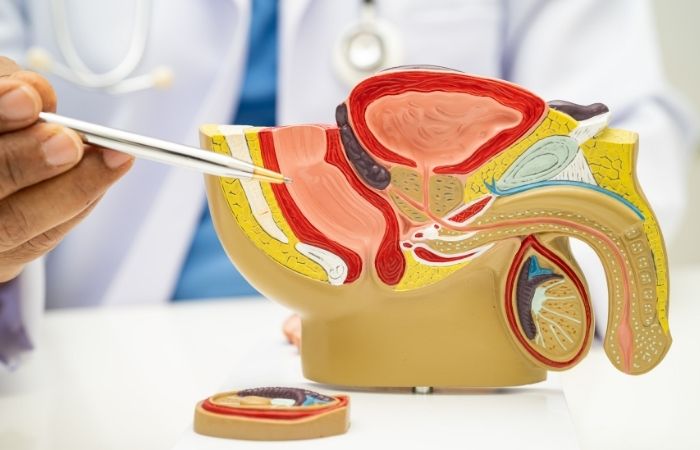
Ejaculation is a coordinated event, not a single contraction. Semen is produced and stored in several structures: the prostate gland, which sits just below the bladder, the seminal vesicles behind it, and the small ducts that connect to the urethra. During orgasm, the muscles of the pelvic floor and the smooth muscle of the prostate contract in rhythmic waves to move semen through the urethra and out of the body. Nerves from the lower spinal cord trigger all of this within seconds.
When any link in that chain is inflamed, those normally pleasurable contractions can register as pressure, burning, or sharp pain. An irritated prostate gets squeezed during its own contraction. An inflamed urethra burns as fluid passes through. A pelvic floor that has been chronically tight for weeks can spasm instead of pulsing. The pain is real, but it is the inflammation or tension causing it, not the act of ejaculation itself.
That framing is where clinicians start. Pain during orgasm is a signal pointing at one of those structures. Identifying which one usually requires a focused conversation with a doctor and, sometimes, a urine sample, a swab, or a blood test. The table below shows the most common starting points.
| Cause | What Is Inflamed | Common Companion Symptoms |
|---|---|---|
| Prostatitis | Prostate gland | Pelvic pressure, urinary burning, frequent urination |
| Urethritis | Lining of the urethra | Burning urination, discharge from the tip of the penis |
| Bacterial STI (chlamydia, gonorrhea, trichomoniasis) | Urethra, prostate, or epididymis | Discharge, painful urination, testicular ache |
| Pelvic floor tension | Pelvic floor muscles | Pelvic pressure, low back discomfort, painful sitting |
| Seminal vesicle inflammation | Glands behind the prostate | Deep pelvic pain, sometimes blood in semen |
Prostatitis: The Most Common Pelvic Cause Doctors Find
The single most common explanation for painful ejaculation in adult men is prostatitis, the umbrella term for inflammation of the prostate gland. Because the prostate wraps around the upper part of the urethra and contracts during ejaculation, any inflammation there gets compressed at exactly the wrong moment. The result is usually a deep, dull ache that arrives just before or during orgasm and can linger for minutes afterward.
The National Institute of Diabetes and Digestive and Kidney Diseases describes four categories of prostatitis. Acute bacterial prostatitis is the dramatic version, with fever, severe pelvic pain, and a urine test that grows bacteria. Chronic bacterial prostatitis is the same infection in a slow-burning form. Chronic prostatitis and chronic pelvic pain syndrome, often shortened to CP/CPPS, is the most common type and frequently shows no detectable infection on testing. Asymptomatic inflammatory prostatitis is found by accident during workup for something else.
For most men reporting painful ejaculation, the diagnosis lands in the CP/CPPS bucket. There is real inflammation, but no clear bacterial cause driving it. Triggers can include past urinary infections that never fully cleared, chronic stress, prolonged sitting, intense cycling, and pelvic floor dysfunction. Treatment usually combines anti-inflammatory medication, alpha-blockers to relax the muscle around the prostate, and pelvic floor physical therapy.
The reassuring part is that prostate inflammation is rarely a sign of cancer or a structural problem in younger men.
When an Infection Is Driving the Pain
The fear that often pulls someone into a search engine at midnight is straightforward. Did I catch something? It is a fair question. Several common sexually transmitted infections can inflame the urethra, the prostate, or the epididymis, and any of those will make ejaculation hurt. The infections most often responsible are bacterial: chlamydia, gonorrhea, and trichomoniasis. Each one tends to show up first as urethritis, with burning during urination and sometimes a discharge from the tip of the penis. Painful ejaculation can appear at the same time or shortly after.
Chlamydia is the most common reportable bacterial STI in the United States. The CDC chlamydia overview notes that most infections cause no symptoms at all, which is why many people are surprised to find out they have one. When symptoms do show up in men, urethral burning and painful ejaculation are two of the most frequent presentations. Gonorrhea behaves similarly but tends to produce more visible discharge. The CDC gonorrhea overview describes the typical urethral picture: yellow-green discharge with painful urination.
The World Health Organization estimates that more than one million new sexually transmitted infections are acquired every day worldwide, the majority of them asymptomatic. That last word matters. Plenty of carriers have no idea they are infected until a partner tests positive, or until a symptom like painful ejaculation finally appears.
If the pain started after a new partner, after a condom break, or after any other change in sexual activity, an STI test is the first step that makes sense. Bacterial STIs are treatable with antibiotics once identified, and treating them early prevents complications like epididymitis and prostate infection. The fertility question deserves a direct answer, because it drives a lot of the anxiety around this topic. Untreated chlamydia or gonorrhea that spreads to the epididymis can cause scarring that reduces fertility, though this happens in only a small percentage of cases. Catching and treating the infection early essentially eliminates that risk; a single course of antibiotics after a positive test is usually all it takes.
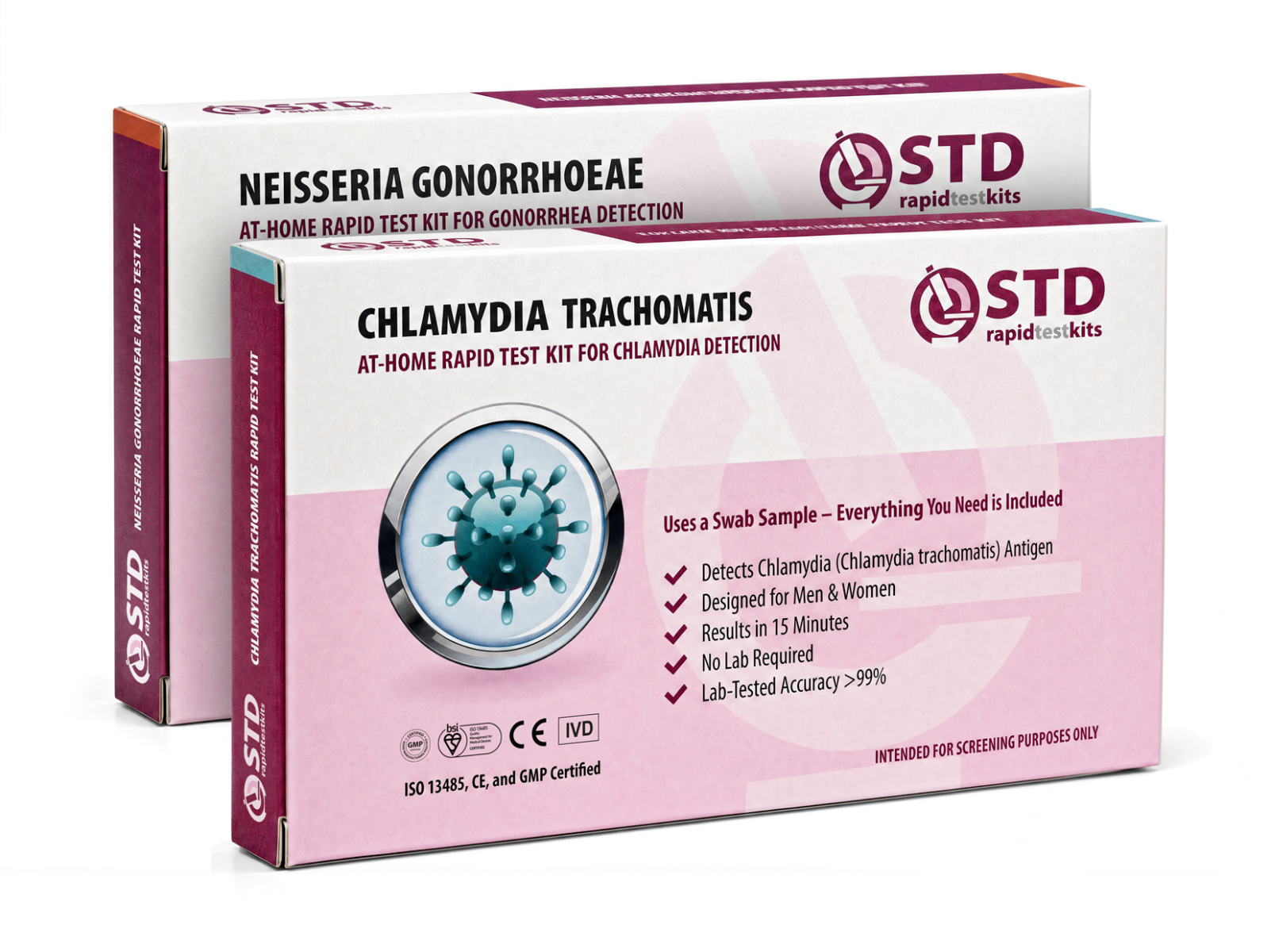
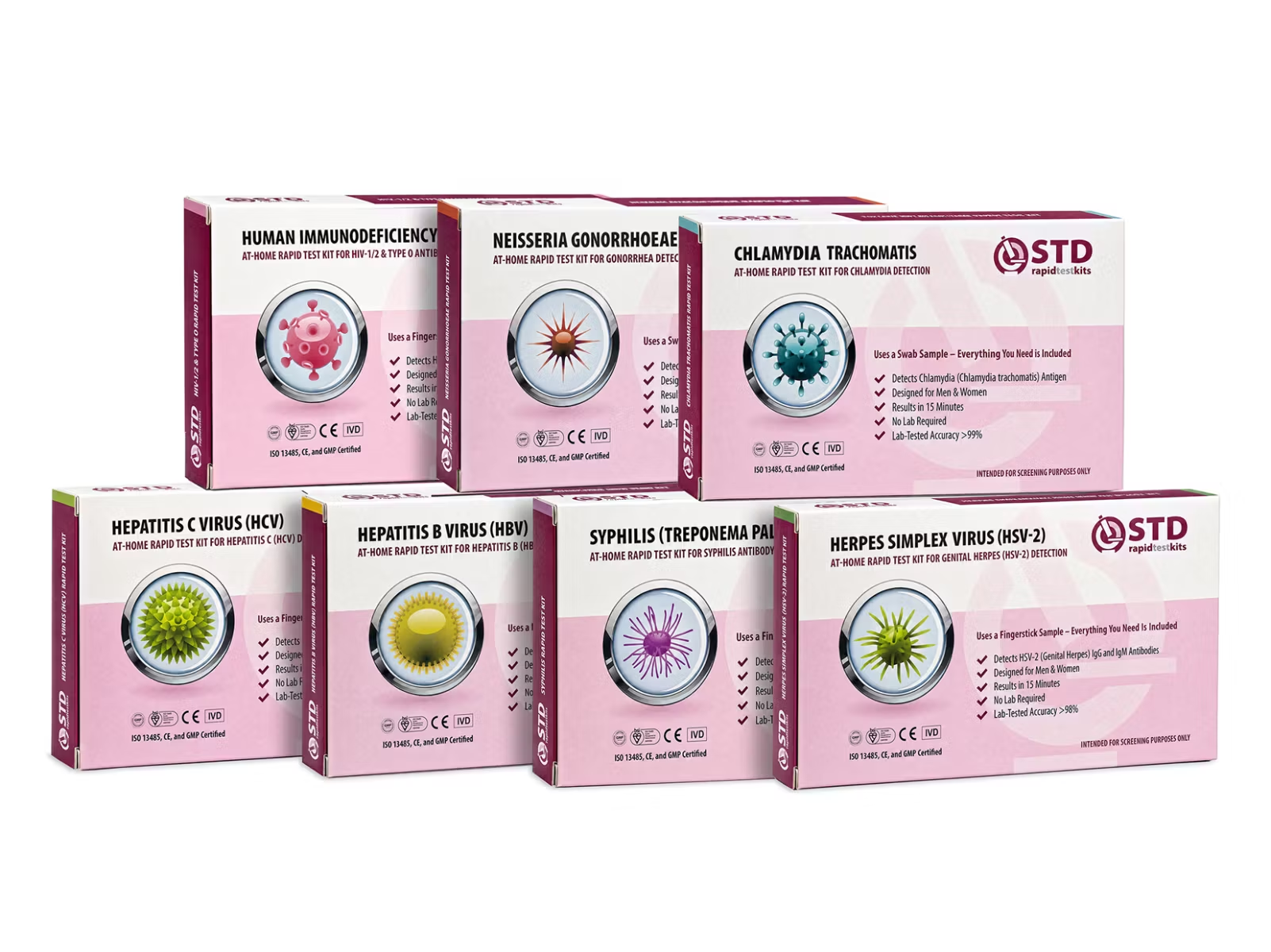
As a brief disclosure, this article is published by stdrapidtestkits.com, which sells the at-home rapid kits mentioned below. We recommend tests based on whether they fit the situation, not because they are ours.
Pelvic Floor Tension: The Cause People Rarely Expect
One of the more counterintuitive causes of painful ejaculation has nothing to do with infection or with the prostate gland directly. It is the pelvic floor, a hammock of muscles that supports the bladder, the rectum, and the base of the penis. Those muscles contract during orgasm to help propel semen through the urethra. When they are chronically tight, those contractions can spasm rather than pulse, and the sensation that follows is closer to cramping than pleasure.
Pelvic floor dysfunction develops gradually and quietly. The risk factors are everyday ones: long hours sitting at a desk, intense cycling, heavy lifting at the gym, chronic stress that the body holds in the pelvis without anyone noticing. Some men also tighten the pelvic floor subconsciously as a habit during stressful periods, in the same way other people clench the jaw. Over months or years, the muscle group loses the ability to fully relax.
Pelvic floor physical therapy, sometimes called pelvic health physiotherapy, is the most effective treatment for this pattern. A trained therapist uses breathing exercises, manual release techniques, and posture adjustments to teach the muscles to let go on demand. Many men are surprised at how much progress is possible within a few weeks. The pain often eases substantially before the muscle tension fully resolves.
What makes this cause easy to miss is that infection tests come back negative, prostate exams look unremarkable, and urinalysis is clean. The patient is told everything looks fine, which is technically true but unsatisfying when the symptom is still happening. A urologist who is familiar with chronic pelvic pain syndromes will usually be the one to suggest pelvic floor evaluation.
- Prolonged sitting at a desk or in a car
- Intense cycling, rowing, or core-heavy training
- Heavy lifting without controlled breathing
- Chronic stress that the body holds in the pelvis or jaw
Sudden Versus Persistent Symptoms
Two different patterns of painful ejaculation tend to point at two different causes. Pain that shows up suddenly, especially within days or weeks of a new sexual partner, almost always pulls clinicians toward infection first. The body has a clear before-and-after, and the timing fits with how chlamydia, gonorrhea, and trichomoniasis incubate and present.
Pain that has been there for months, that comes and goes without an obvious trigger, and that is paired with pelvic pressure or back discomfort, looks more like chronic prostatitis or pelvic floor dysfunction. There may have been a triggering event a long time ago, such as a urinary infection that was treated and seemed to clear, but the inflammation or muscle pattern never fully resolved. The workup in this case is broader and slower, often involving multiple visits and sometimes a referral to a urologist who handles chronic pelvic pain syndromes.
The middle category is the most confusing one. Symptoms that come on without a clear sexual exposure but also without a long history can fit either picture. Some asymptomatic bacterial infections only declare themselves after weeks of low-level inflammation. Other times, a stressful period at work or a new exercise routine has quietly aggravated the pelvic floor. Testing followed by an exam usually sorts these cases out within a single visit or two.
| Symptom Pattern | Most Likely Diagnostic Direction |
|---|---|
| Sudden onset within days or weeks of a new partner | Bacterial STI screen first; chlamydia, gonorrhea, trichomoniasis |
| Months of intermittent pain plus pelvic pressure or back ache | Workup for chronic prostatitis or pelvic floor dysfunction |
| Onset without sexual exposure and without a long history | Test first to rule out infection, then evaluate non-infectious causes |
Other Less Common Causes
Prostatitis, infection, and pelvic floor tension account for most cases of painful ejaculation, but a smaller set of conditions can produce similar symptoms. The reproductive system has several structures involved in ejaculation, and any of them can become inflamed for reasons that are not immediately obvious.
One of those structures is the seminal vesicles, paired glands sitting behind the prostate that produce most of the fluid in semen. When they become inflamed, the discomfort tends to sit deeper in the pelvis rather than at the tip of the penis. Some men with seminal vesiculitis notice blood in the semen, a finding that sounds alarming but is usually benign and resolves with anti-inflammatory treatment and time.
Another less common contributor is epididymitis, inflammation of the coiled tube that stores sperm at the back of each testicle. Epididymitis often follows an untreated bacterial STI or a urinary infection in younger men. The pain tends to radiate into the testicle and can be felt during and after orgasm. Treatment is usually antibiotics plus scrotal support and rest.
Rarer causes include nerve irritation in the pelvis, certain medications that alter pelvic nerve signaling (some antidepressants in particular), and post-surgical scarring after procedures involving the prostate or bladder. These come up less often, but a urologist will consider them when the more common explanations have been ruled out.
| Condition | What Happens | Where Pain Is Felt |
|---|---|---|
| Seminal vesicle inflammation | Glands producing semen become irritated | Deep pelvic pain during or after ejaculation |
| Epididymitis | Inflammation in the sperm-storage tube behind the testicle | Testicular ache or pressure during and after orgasm |
| Pelvic nerve irritation | Nerves in the pelvis transmit altered pain signals | Sharp or electric sensations in the perineum or penis |
| Medication side effects | Drugs (e.g. some SSRIs) change nerve sensitivity | Generalized pelvic discomfort during orgasm |
When You Should See a Doctor
Most cases of painful ejaculation are worth getting checked, but a few situations make the case especially clear. Any of the following should prompt a visit within a week:
- Fever, chills, or feeling generally unwell alongside the pain
- Visible discharge from the tip of the penis
- Burning during urination that has persisted for more than a couple of days
- Testicular pain or swelling
- Blood in the urine or semen
- A new sexual partner within the past one to three months
The first scenario, fever plus pelvic pain, is the most urgent. Acute bacterial prostatitis can progress quickly and is one of the conditions clinicians treat without waiting for confirmation. The other items are not emergencies, but each one substantially raises the likelihood that an infection is involved and that earlier testing will lead to earlier treatment.
For someone whose only symptom is mild discomfort during ejaculation, with no fever, no discharge, no urinary symptoms, and no recent change in partners, a slightly more relaxed approach is reasonable. Waiting a week to see if the symptom resolves with rest, hydration, and reduced sexual frequency is fine. If the pain is still there after that, or if it gets worse at any point, schedule the appointment.
What Treatment Usually Looks Like
The encouraging part of nearly every case of painful ejaculation is that the underlying problem responds well to treatment once it has been identified. The body is reacting to inflammation, not breaking down, and inflammation has a path forward.
For bacterial infections, the treatment is straightforward antibiotics. Chlamydia, gonorrhea, and trichomoniasis all have well-established treatment regimens that resolve the infection within days. Pain usually fades within a week. The full course must be finished even after symptoms disappear, because incomplete treatment is one of the main routes to antibiotic resistance and to recurrence. The CDC also recommends retesting after three months for patients treated for chlamydia or gonorrhea, since reinfection from an untreated partner is common.
For prostatitis without a clear bacterial cause, the playbook is different. Anti-inflammatory medications, alpha-blockers, warm baths, hydration, and pelvic floor relaxation all play a role. The Mayo Clinic prostatitis overview describes a typical treatment timeline of several weeks to months for chronic forms, which can test patience but tends to lead to substantial improvement.
Pelvic floor dysfunction takes the longest to resolve but responds reliably to specialized physical therapy. The goal is teaching muscles to relax rather than to contract, which is a slower retraining process than antibiotics but produces lasting results. Many men are surprised at how directly their daily stress patterns connect to symptoms.
Most STIs have no symptoms or only mild symptoms that may not be recognized as an STI.
The Anxiety That Comes With Sexual Symptoms
Physical pain during ejaculation rarely arrives alone. Most people who experience it also start carrying a quiet weight: anxiety about what it might mean, a temporary loss of interest in intimacy, and a habit of checking and rechecking the body for new sensations. None of that is irrational. Sexual symptoms touch on health, identity, and relationships all at once.
Sexual health clinicians often point out that the body and mind feed each other in these situations. Anxiety raises baseline pelvic tension, which can make symptoms worse. Worsened symptoms increase anxiety. Breaking that loop sometimes requires more than treating the underlying physical cause. It can mean talking honestly with a partner, accepting a temporary pause in sexual activity, or scheduling an evaluation specifically to take the unknown off the table.
One of the simplest mental-health interventions for anyone in this situation is to get tested. The act of resolving the question, regardless of which way the test goes, almost always reduces the anxiety loop more than continuing to wonder. A positive result leads to treatment. A negative result frees up attention to look at other causes.
Whatever the result, taking the test moves you from open uncertainty to a concrete next step. A positive result starts antibiotics. A negative result shifts the workup toward prostatitis, pelvic floor evaluation, or the less common causes covered above.
FAQs
- Is painful ejaculation normal?
- No. Ejaculation should not hurt. Occasional mild discomfort happens, especially after a long stretch without ejaculating, but a pattern of pain points at inflammation along the urethra, prostate, or pelvic floor and is worth evaluating.
- Can chlamydia or gonorrhea cause painful ejaculation?
- Yes. Both are common causes. They inflame the urethra and sometimes the prostate or epididymis, which makes the contractions of orgasm uncomfortable. Both are also frequently asymptomatic at first, which is why testing matters after any change in partners.
- How long after exposure should I test?
- Bacterial STIs like chlamydia and gonorrhea become detectable within roughly one to two weeks after exposure. Testing immediately after sex is too early; waiting two weeks gives a more reliable result. If symptoms appear sooner, get evaluated right away regardless of timing.
- Can stress alone cause painful ejaculation?
- Indirectly, yes. Chronic stress is one of the main contributors to pelvic floor tension, which can make ejaculation painful even when no infection or prostate problem exists. The fix involves addressing both the symptom and the underlying tension pattern, often through pelvic floor physical therapy.
- Does masturbation cause painful ejaculation?
- Masturbation does not cause the underlying conditions, but it can occasionally trigger short-term discomfort after a long abstinence, dehydration, or aggressive technique. Pain that persists across multiple sessions, or that occurs with both partnered sex and masturbation, points at something else.
- Can painful ejaculation resolve on its own?
- Mild cases tied to dehydration, an unusually long abstinence, or temporary irritation often clear within a few days. Anything that lasts beyond a week or recurs across multiple weeks should be evaluated. Prostatitis and pelvic floor dysfunction tend to be harder to reverse the longer they go unaddressed.
- Should I see a urologist or a primary care doctor first?
- Primary care is usually the right first stop. Most cases can be sorted with an STI panel, a urine test, and a focused exam. Referral to a urologist is helpful when symptoms persist after initial workup or when chronic prostatitis or pelvic floor dysfunction is suspected.
- Is at-home STI testing reliable for working this up?
- Rapid lateral-flow home tests for chlamydia and gonorrhea use the same kind of swab sample type that labs use, and they give a fast screening read. A positive result is worth confirming with a clinic test and starting treatment. A negative result with persistent symptoms still warrants an in-person evaluation, since the cause may be non-infectious.
Finding Real Answers
Painful ejaculation is one of those symptoms that makes the calendar feel longer than it is. A few days of not knowing can feel like weeks. The best thing anyone can do is stop estimating and start gathering information. An at-home rapid test answers the infection question in a few days. A primary care visit usually clarifies whether prostatitis or pelvic floor dysfunction is involved within one or two appointments.
The condition is treatable in almost every case once the cause is identified. An at-home swab test or a single primary care visit is usually enough to start that process.
How We Sourced This Article: This article was constructed from current public-health and clinical guidance on painful ejaculation, prostatitis, and sexually transmitted infections, then translated into plain English for general readers. We drew specifically on CDC fact sheets for chlamydia and gonorrhea, the WHO global STI overview, the NIDDK clinical summary of prostatitis, and the Mayo Clinic and Cleveland Clinic patient-facing materials on chronic pelvic pain. Anywhere a specific statistic or recommendation appears, it traces back to one of those sources.
- U.S. Centers for Disease Control and Prevention. About Chlamydia: symptom frequency in men, asymptomatic carriage, and testing recommendations.
- U.S. Centers for Disease Control and Prevention. About Gonorrhea: urethritis presentation, discharge characteristics, and follow-up testing guidance.
- World Health Organization. Sexually Transmitted Infections (STIs) fact sheet, including the global daily incidence estimate and notes on asymptomatic carriage.
- National Institute of Diabetes and Digestive and Kidney Diseases. Prostatitis (Inflammation of the Prostate), including the four-category classification used in this article.
- Mayo Clinic. Prostatitis: Symptoms and Causes, including treatment timelines for chronic forms.
- Cleveland Clinic. Prostatitis overview, including patient guidance on pelvic floor physical therapy and supportive care.
