Published: October 2025 | Last updated: May 2026 | Editorial review and quality control: Martina N.
Choosing a chlamydia test should not be the hardest part of taking care of yourself. The label on a box, the words a doctor used at a previous appointment, and the differing recommendations you find online can pile up fast. This guide cuts through it. The collection method matters more than the brand on the kit, and the right method depends on your anatomy, what kind of contact you had, and how long ago it happened.
One scope note up front: stdrapidtestkits.com sells at-home rapid lateral-flow swab tests, including a single-infection chlamydia kit and broader combo panels that combine genital swab with fingerstick blood. We do not sell urine-based home tests, throat (pharyngeal) swabs, or rectal swabs. If your situation calls for one of those sample types, a clinic visit is the right path. This article is published by stdrapidtestkits.com, and our recommendations follow fit-for-purpose, not commercial benefit. Where a clinic is the better answer, we will say so plainly.
Key Takeaways
- For people with vaginas, a self-collected vaginal swab usually finds more cervical chlamydia than a urine sample. For people with penises, first-catch urine and a urethral swab perform similarly for urethral infection.
- Most chlamydia tests, in clinic or at home, become reliably accurate after roughly 14 days post-exposure. Testing earlier is fine if you plan to retest later.
How chlamydia tests actually work
Almost every chlamydia test that matters, in a clinic or in a kit you order online, is trying to find the genetic material of Chlamydia trachomatis. Laboratory tests do this with nucleic acid amplification (NAAT, sometimes called PCR), which the CDC describes as the recommended method for chlamydia detection (CDC laboratory recommendations for chlamydia detection). At-home rapid kits use a different technology called lateral-flow immunoassay, which detects bacterial antigens on a paper-strip cassette in about 15 minutes. The two technologies are complementary, not equivalent: lab NAAT has higher analytical sensitivity, while rapid lateral-flow trades a small amount of sensitivity for speed and privacy.
That distinction matters when you read marketing copy. A home rapid swab is not the same instrument a hospital lab uses, and you should not expect identical numbers. What home rapid kits do well is screening: they catch real infections quickly, in private, without a clinic visit, and a positive result is reliable enough to act on. A negative result close to a known exposure is worth confirming, especially if symptoms develop later.
The bigger lever for accuracy is sample type, not test technology. A test can only find chlamydia in the sample you give it. If the bacteria live in the cervix and you provide urine, the lab analyst could be using the most precise NAAT in the country and still come up empty. The site you swab, or the stream of urine you catch, is what determines whether the bacteria reach the test at all.
| Test Type | Sample Collected | Best For | Comfort Level |
|---|---|---|---|
| Urine test (clinic) | First-catch urine stream | Urethral infection, especially in people with penises | High |
| Vaginal swab (clinic or home) | Self-collected vaginal sample | Cervical chlamydia in people with vaginas | Moderate to high |
| Urethral swab (clinic) | Clinician-collected urethral sample | Urethral infection, sometimes used for confirmation | Moderate |
| Pharyngeal swab (clinic) | Throat swab from tonsillar area | Oral exposure, asymptomatic carriage | Moderate |
| Rectal swab (clinic) | Anal canal swab | Receptive anal exposure | Moderate |
| Combo at-home panel | Genital swab plus fingerstick blood | Multi-infection screening at one go | Varies |
Why vaginal swabs find what urine often misses
Chlamydia in people with vaginas usually settles in the cervix, the narrow passage at the top of the vagina. A urine sample washes the urethra; the cervix sits inches away and rarely gives up its bacteria into a urine stream. Self-collected vaginal swabs, on the other hand, sample exactly where the infection lives. The StatPearls overview of Chlamydia trachomatis identifies vaginal swabs as the preferred specimen type for women, noting that urine testing is an acceptable alternative but may be less sensitive (StatPearls: Chlamydia trachomatis).
For people with penises, the picture is different. Urethral infection is closer to the urinary stream, so urine NAAT and urethral swab perform similarly. The CDC's lab recommendations note that first-catch urine is acceptable for chlamydia testing in this population (CDC, 2014). Many people prefer urine because it is painless and feels familiar, which makes screening more likely to actually happen.
The takeaway is anatomical, not ideological. There is no universally best sample. The right answer follows the body and the exposure. If your worry is internal symptoms with no obvious site, a swab tends to be the more sensitive choice. If you simply want to screen after vaginal sex with a new partner and you have a penis, urine is fine and easy.
Recommended specimens for C. trachomatis testing using NAATs include first-catch urine (from men), vaginal swabs (from women), and endocervical swabs (from women).
When a combo panel makes more sense than a single test
One sexual encounter rarely brings a single risk. A condom that slipped during vaginal sex after a stretch of oral sex is not a chlamydia question alone; it is a chlamydia, gonorrhea, syphilis, HIV, and possibly hepatitis B question. Single-infection tests are useful when the worry is narrow. Combo panels are useful when it is not.
Real-world example pattern (not a single patient story, just the shape of how this commonly plays out): a person tests after a multi-act encounter, comes back negative on a urine chlamydia test, and finds out three weeks later from the partner that throat gonorrhea is in the picture. A urine-only test will never catch what is in the throat. A combo panel that bundles genital screening with bloodwork at least covers more of the same exposure event in one go.
Combo kits also reduce co-infection blind spots. Chlamydia and gonorrhea travel together often enough that the FDA has cleared throat and rectal NAAT tests for both organisms on laboratory platforms used in clinical settings. For at-home users, the practical version of that pairing is a combo kit that includes a genital swab plus fingerstick blood for the bloodborne infections that often appear alongside chlamydia.

Do you have symptoms? That changes the picture
Most people with chlamydia have no symptoms at all. Many men and a higher share of women carry the infection without obvious signs, per the CDC's chlamydia treatment guidelines. That is the strongest argument for screening even when nothing feels wrong, especially after a new partner or a known exposure.
When symptoms do show up, they cluster around the site of infection. Burning during urination and unusual discharge in people with penises usually point to urethral involvement, which a urine sample or urethral swab can find. In people with vaginas, the typical pattern is mild discharge, pelvic pain, post-sex spotting, or pain during intercourse, which suggest cervical involvement and favor a swab. A sore throat that lingers after recent oral sex is worth a clinic-administered throat swab, not a home swab.
If symptoms persist after a negative test taken during the early window, a follow-up test or clinical exam is the practical next step.
| Symptom Pattern | Likely Site | Best At-Home Sample |
|---|---|---|
| Burning during urination, urethral discharge (people with penises) | Urethra | Genital swab (or urine NAAT at clinic) |
| Mild discharge, pelvic pain, post-sex spotting, painful intercourse (people with vaginas) | Cervix | Self-collected vaginal swab |
| Sore throat persisting after oral sex | Pharynx | Clinic-administered throat swab (not sold at home) |
| Rectal pain, discharge, or bleeding after receptive anal sex | Rectum | Clinic-administered rectal swab (not sold at home) |
| No symptoms after a new partner | Most often genital | Self-collected vaginal swab or genital swab kit |
Timing is everything: when to test for an accurate result
Every test has a window period, the gap between exposure and reliable detection. Chlamydia replicates over days, and a test that runs too early can return a false negative simply because the bacterial load has not yet crossed the detection threshold. This is the most common reason people get a clean result, then keep having symptoms, then test again and find the infection.
The general rule for chlamydia is straightforward. NAAT testing, the laboratory standard, becomes reliably positive around 14 days after exposure. Some people test positive earlier, especially if symptoms are present, but anything before day 5 to 7 is more likely to miss a real infection. At-home rapid lateral-flow kits follow a similar curve, with their own modest sensitivity tradeoff baked in. The practical move when you have to test early is simple: test now, treat the result as a snapshot, and plan to retest at day 14 or later.
The CDC also recommends a retest about three months after treatment for anyone who tests positive, because reinfection from an untreated partner is common (CDC chlamydia treatment guidelines). That three-month retest applies even when symptoms have cleared and the first course of doxycycline went smoothly.
| Test Type | Earliest Reliable Testing | Peak Accuracy Window | Retest? |
|---|---|---|---|
| Urine test (clinic NAAT) | Around day 7 | Day 14 onward | Yes if testing before day 14 |
| Vaginal swab (clinic or home) | Around day 7 | Day 14 onward | Yes for early or symptomatic cases |
| At-home rapid swab | Around day 7 to 10 | Day 14 onward | Recommended if first test is early |
| Combo at-home panel | Day 7 for swab portion; HIV/syphilis windows are longer | Day 14 to 21 for the chlamydia portion | Yes for high-risk exposures |
Matching the test to your situation
The shortest version of this whole article is a small decision table. Anatomy and exposure site do most of the work; symptoms and timing fine-tune the rest. If you had vaginal sex and you have a penis, a urine NAAT at a clinic or an at-home genital swab kit are both reasonable. If you had vaginal sex and you have a vagina, a self-collected vaginal swab is the more sensitive home option. If oral or anal sex was part of the picture, a genital test alone will not catch infection at the throat or rectum. The FDA has cleared extragenital tests for chlamydia and gonorrhea for use in clinical laboratory settings; home-collection options for throat or rectal sites do not yet exist outside a clinic workflow.
For multi-site or unclear exposures, a combo kit covers more ground in one go, while single-infection kits remain the right call when the worry is narrow and the exposure was simple.
| Situation | Best At-Home Option | Why |
|---|---|---|
| Person with penis, unprotected vaginal sex, no symptoms | Single-infection chlamydia rapid swab | Urethral chlamydia is reliably caught at the genital site |
| Person with vagina, new partner, no symptoms | Single-infection chlamydia rapid swab (vaginal self-collection) | Vaginal self-swab outperforms urine for cervical infection |
| Multi-act exposure or unsure of risks | Combo panel (swab plus fingerstick blood) | Covers chlamydia, gonorrhea, and bloodborne infections together |
| Sore throat after oral sex | Clinic-administered pharyngeal swab | Home kits do not include a throat swab; a clinic is the right path |
| Receptive anal exposure | Clinic-administered rectal swab | Home kits do not include rectal swabs; clinic NAAT is appropriate |
| Partner just tested positive | Test now and retest at day 14 to 21 | Catches early positives and confirms negatives at the right window |
What at-home rapid swabs do well, and where to go elsewhere
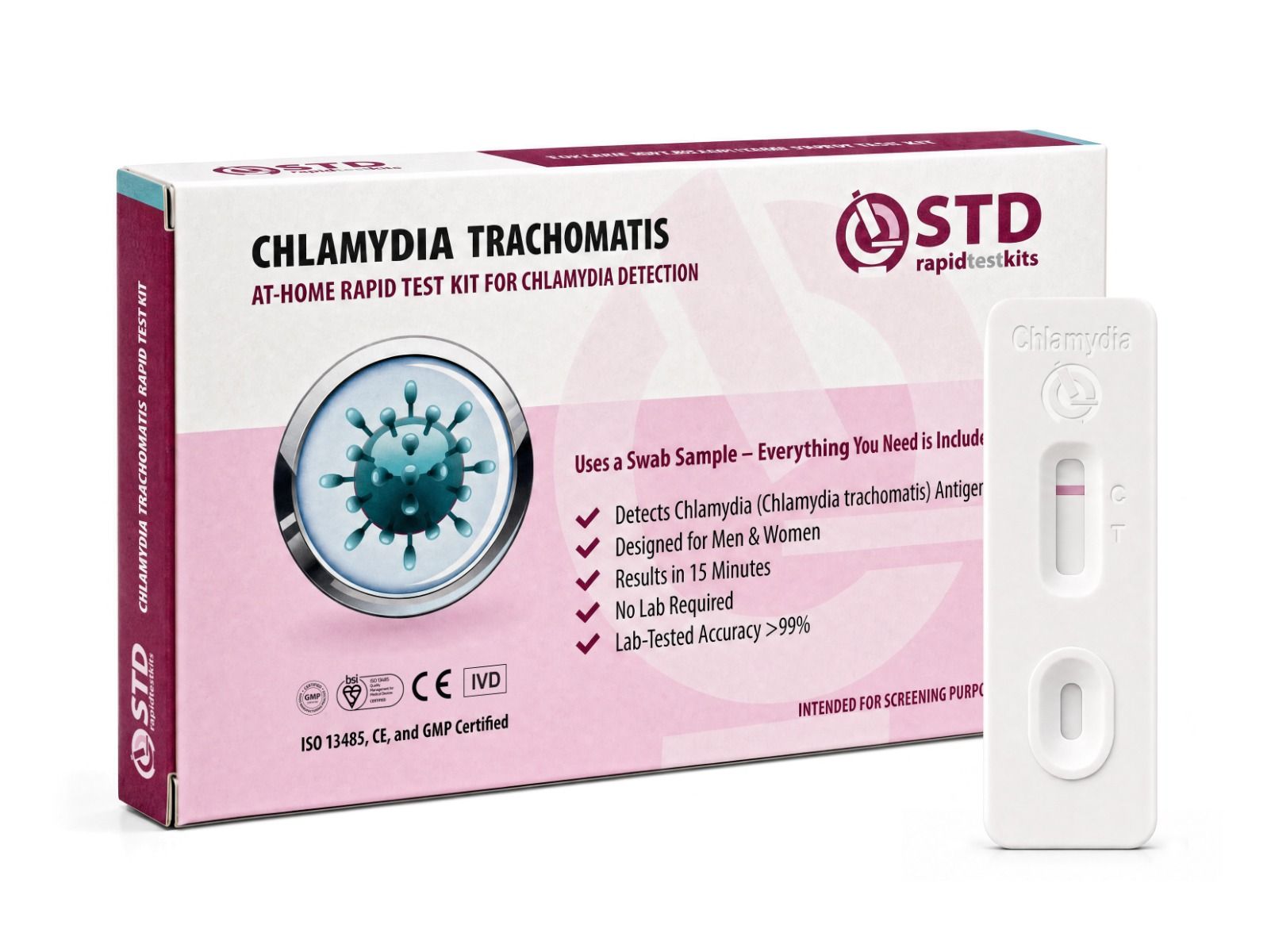
At-home rapid swabs are screening tools first, decision tools second. They earn their place by removing barriers: a clinic visit during work hours, a copay, the conversation with a stranger about the sex you had. A positive at-home rapid result is reliable enough to act on (call a clinician, get treated, notify partners). A negative result close to the exposure window is worth a second test or a clinic visit if symptoms persist.
The home rapid kits sold here are lateral-flow tests, not laboratory NAAT, and they do not match the analytical sensitivity of a hospital lab assay, do not test the throat or rectum, and do not detect co-infections outside their design scope. No rapid test, however precise, can outpace the body's bacterial replication; the window period applies to home and lab tests alike.
Phrases like "NAAT-equivalent" or "lab-grade rapid kit" conflate two different technologies. The accurate term for the kits sold here is rapid lateral-flow swab: useful, accessible, and fast, though not a substitute for clinic NAAT in every clinical scenario.
What it covers: urethral, vaginal, and cervical chlamydia using a self-collected swab and lateral-flow chemistry, with results in about 15 minutes.
What it does not cover: pharyngeal (throat) infection, rectal infection, or laboratory-grade NAAT confirmation. For those, a clinic-administered swab and lab NAAT are the correct path.
Privacy, shipping, and what arrives at your door
Logistics deserve a paragraph because they often decide whether someone tests at all. Kits from stdrapidtestkits.com ship in plain packaging with no logos or condition names on the outside. The contents include the test cassette, the sample collection swab, sample buffer, written instructions, and (for combo kits) a fingerstick lancet. Nothing on the outer box says STI or chlamydia. If a roommate, parent, or partner sees the package, it reads like any other small parcel.
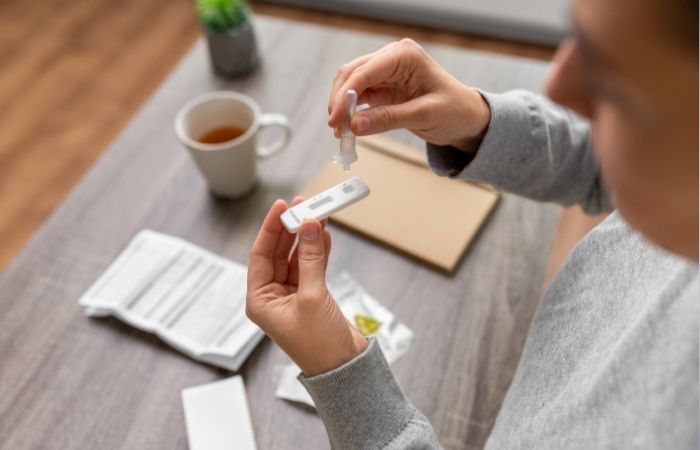
The collection process is meant to be done alone, in a bathroom, with the instructions in front of you. For a vaginal self-swab, the swab is inserted a few inches and rotated for a few seconds. For a male urethral swab, a small swab samples the urethral opening. The cassette reads automatically over about 15 minutes; you read the result line in private and decide what to do with it. Mail-in lab options, where offered, return digital results to a secure portal in a few days.
After your result: what to do next
A positive chlamydia test is a treatable result. The current first-line treatment is a 7-day course of doxycycline (100 mg twice daily), per the CDC's 2021 STI Treatment Guidelines (CDC chlamydia treatment guidelines). Telehealth services and most primary care clinicians can prescribe it. If a rapid test gave a faint or unclear line, a clinic NAAT confirms the result; do not let uncertainty delay treatment if the line is clear.
Partner notification matters as much as your own treatment. Untreated partners are the most common reason chlamydia comes back. The CDC guidelines support expedited partner therapy in some states, where a clinician can prescribe treatment for a partner without a separate visit. Anonymous notification tools are a reasonable middle path when a face-to-face conversation is hard.
Retesting is not optional. The CDC recommends a retest at three months after treatment for anyone with a positive chlamydia result, because reinfection from a new or untreated partner is common, especially in people under 25. The retest can use the same sample type as the first one, or a different sample type if your exposure pattern has changed.
If the result is positive:
- Contact a clinician or telehealth service for a prescription (doxycycline 100 mg twice daily for 7 days, per CDC guidelines).
- Notify recent partners directly or through an anonymous notification tool.
- Avoid sex for 7 days after starting treatment.
- Retest at three months to catch any reinfection.
If the result is negative:
- If the test was taken before day 14 post-exposure, retest after the window has closed.
- If you are under 25 or have new partners, plan annual screening as a habit.
- If symptoms persist despite a clean test, a clinic NAAT or extragenital swab covers what a home swab does not.
FAQs
- Are at-home chlamydia tests as accurate as clinic tests?
- The main gap is sensitivity. A clinic NAAT can detect lower bacterial loads; a rapid lateral-flow swab needs more bacteria present to read positive. For a well-timed test at day 14 or later, the practical difference for most people is small. A positive at-home result is reliable, and a very-early negative is worth confirming.
- How long after exposure should I wait to test?
- Aim for day 14 or later. NAAT testing becomes reliably positive around 14 days post-exposure. Testing before day 7 has a higher chance of missing a real infection, even with a clinic-grade test. If you must test early, treat the result as preliminary and plan to retest at day 14 or beyond.
- Can a swab miss chlamydia that urine catches, or the other way around?
- Yes, both directions. In people with vaginas, urine often misses cervical chlamydia that a vaginal swab finds. In people with penises, urine and urethral swab perform similarly for urethral infection. Neither catches chlamydia in the throat or rectum; those sites need their own swabs, which are clinic-administered.
- I had oral or anal sex. Will a genital swab help?
- Only for the genital site. Oral exposure can leave chlamydia in the throat, and receptive anal exposure can leave it in the rectum. A genital swab does not sample either of those sites. If your exposure included oral or anal contact, a clinic that offers extragenital screening is the right path. The FDA has cleared extragenital chlamydia and gonorrhea tests for laboratory use; clinic access remains the only path for throat and rectal screening.
- Should I retest after a positive result?
- Reinfection is the reason for the three-month retest. Antibiotics clear the bacteria in almost every case, so treatment failure is rarely the concern. The follow-up checks whether a new or untreated partner has reintroduced the infection, a risk that depends on factors outside your own treatment. The CDC recommends this retest at about three months for anyone with a positive chlamydia result.
- What if I feel fine but my partner tested positive?
- Test now and again at day 14 to 21. Most people with chlamydia have no symptoms, so feeling fine does not rule out infection. Testing now gives a chance to catch an early positive; the second test confirms a negative when the window has fully closed. A clinician may also offer expedited treatment without waiting on test results, depending on the state.
- How private is the shipping and the result?
- Kits ship in plain packaging with no logos or test names on the outside, no signature required. The collection happens at home, the result reads on the cassette in about 15 minutes, and nothing is reported to your medical record unless you take that step yourself. For mail-in lab versions, results post to a secure private portal.
- Is one test ever enough?
- Often yes, sometimes no. One well-timed test after a single low-risk exposure is usually enough. After a high-risk exposure, an early test, or any positive result, plan on a follow-up: a retest after the window for early tests, and a three-month retest after a positive to catch reinfection. Annual screening is also a reasonable habit for sexually active people under 25 or with new partners.
How we sourced this article: Our article was constructed based on current advice from the most prominent public health and medical organizations, then translated into plain-English explanations for the situations people actually face when deciding whether and how to test for chlamydia at home.
- U.S. Centers for Disease Control and Prevention. Chlamydia treatment guidelines, including doxycycline first-line therapy and three-month retest recommendation.
- U.S. Centers for Disease Control and Prevention, MMWR. Recommendations for the laboratory-based detection of Chlamydia trachomatis, covering recommended sample types and NAAT methodology.
- U.S. Centers for Disease Control and Prevention. About Chlamydia. Patient-facing overview, including asymptomatic infection patterns and annual screening recommendations.
- StatPearls: Chlamydia trachomatis. Background on infection biology, sample-type sensitivity, and screening recommendations.
- World Health Organization. Sexually transmitted infections fact sheet, including global prevalence and screening principles.
