
Published: September 2025 | Last updated: May 2026 | Editorial review and quality control: Martina N.
You had sex that felt fine in the moment and complicated afterward. Now you are wondering whether to test, when to test, and whether testing too soon will tell you anything useful. Trichomoniasis is a quiet infection, the kind that often shows up without symptoms and stays for months if no one checks for it. Timing matters more than speed.
This guide explains exactly when a trichomoniasis test becomes reliable after exposure, why testing in the first few days often produces a false negative, and what to do if you already tested too early. The short answer: aim for the 7 to 14 day window after exposure, with a retest at the two-week mark if anxiety or risk remain high.
Key Takeaways
- Testing for trichomoniasis becomes reliable about 7 to 14 days after exposure. Earlier tests often produce false negatives because the parasite has not multiplied to detectable levels yet.
- If you tested before day 7 and got a negative result, plan a retest at the two-week mark. A single early negative is not a final answer, especially if the exposure was high-risk or symptoms appear later.
What Trichomoniasis Actually Is and Why It Often Goes Undetected
Trichomoniasis is caused by a microscopic parasite called Trichomonas vaginalis. It passes through vaginal, oral, or anal sex, and ejaculation is not required for transmission. Skin-to-skin genital contact and shared fluids are enough.
What surprises most people is how often the infection produces no obvious signs. According to the CDC's overview of trichomoniasis, about 70 percent of people with the infection do not develop any signs or symptoms. The rest may feel completely fine for months while the infection persists and raises the risk of acquiring other STIs. When symptoms do appear, they can look almost identical to a yeast infection, bacterial vaginosis, or a mild urinary tract infection.
About 70% of people with trichomoniasis have no signs or symptoms. Feeling fine after a hookup is not the same as being clear. Timing-based testing matters more than waiting for your body to send a signal.
Incubation Period vs Window Period: Why They Differ
This is where most online advice gets sloppy, so it helps to slow down. The incubation period is the time between exposure and when symptoms might first appear. The window period is the time between exposure and when a test can reliably detect the infection. These two timelines are related but operate on different clocks.
For trichomoniasis, the incubation period is commonly cited as roughly 5 to 28 days, per the CDC's overview of trichomoniasis. Symptoms, if they appear, can show up weeks after the hookup. The testing window is usually shorter but not immediate. Most lateral-flow rapid tests and lab-based assays for Trichomonas vaginalis are generally considered reliable from around 7 to 14 days after exposure, though exact windows vary by assay type and individual immune response. Manufacturer instructions for use are the most specific source on a given kit.
Testing earlier than the window can produce a false negative. The result is not wrong on its own terms; the parasite simply has not multiplied enough to be detected.
Symptoms (if any appear at all) can show up anywhere from 5 to 28 days after exposure. Tests, by contrast, become reliable from around day 7 regardless of whether symptoms have started. Waiting for symptoms before testing usually delays the answer; testing on the calendar instead of the body is the more reliable path.
The Trichomoniasis Testing Timeline, Day by Day
Anxiety wants certainty immediately while biology runs on a slower schedule. Knowing what each window actually means stops you from testing too early or waiting too long out of fear.
| Time Since Exposure | What Is Happening Biologically | What Testing Can (and Cannot) Tell You |
|---|---|---|
| 0 to 4 days | The parasite may not have multiplied enough to detect | Testing now often produces a false negative and false reassurance |
| 5 to 7 days | Early incubation phase, parasite load is rising | Some tests may detect infection, but results are not yet fully reliable |
| 7 to 14 days | Detectable levels are more likely in most people | This is the recommended first testing window |
| 14+ days | Infection is well established if present | Testing is highly reliable, even without symptoms |
Why an Early Negative Can Be Misleading
Testing immediately after a sexual exposure feels proactive, but it often backfires emotionally. A negative result during the first few days can feel like permission to stop worrying, even though the biology is not finished yet. The harm is less about immediate medical risk and more about the psychological permission a false negative grants; it short-circuits the follow-up test that would have produced a real answer.
People who get an early negative sometimes stop using protection with new partners, skip the recommended retest, or dismiss later symptoms because they trust a result that was never meant to be definitive. If you tested early and got a negative, the test did exactly what it could do at that stage.
A negative result in the first five days is not a clearance. It is a result from a window that was not yet reliable. If you tested in that window, schedule a second test at day 14 or later so you have an answer you can act on.
Testing Options: Clinic, Lab, or At-Home
You do not have to walk into a clinic if that feels overwhelming or unsafe. Many people choose at-home testing for the privacy, control, and shorter path between the question and the answer. The key is choosing a test that fits the timing window.
Lab-based nucleic acid amplification testing (NAAT) is the clinical gold standard for trichomoniasis because of its high analytical sensitivity, especially in asymptomatic cases. At-home rapid tests use lateral-flow immunoassay chemistry, the same kind of strip technology behind home pregnancy tests. The two are complementary rather than equivalent. Lab NAAT is more sensitive; at-home rapid is faster, more private, and well-suited as a first-line screen when used after the window period.
Some situations make a clinic visit the smarter starting point rather than an at-home kit:
- You have severe or worsening symptoms (pelvic pain, fever, heavy abnormal discharge).
- You are pregnant, since untreated trich during pregnancy can affect birth outcomes and treatment plans differ.
- You have had repeated high-risk exposures, multiple recent partners, or symptoms that have already failed one treatment course.
No matter where you test, the timing rules stay the same.
What to Do If You Already Tested Too Early
If your first test came back negative within five days of the exposure, the most useful next move is to schedule a retest at the two-week mark. Waiting another week or two is what makes the second result meaningful.
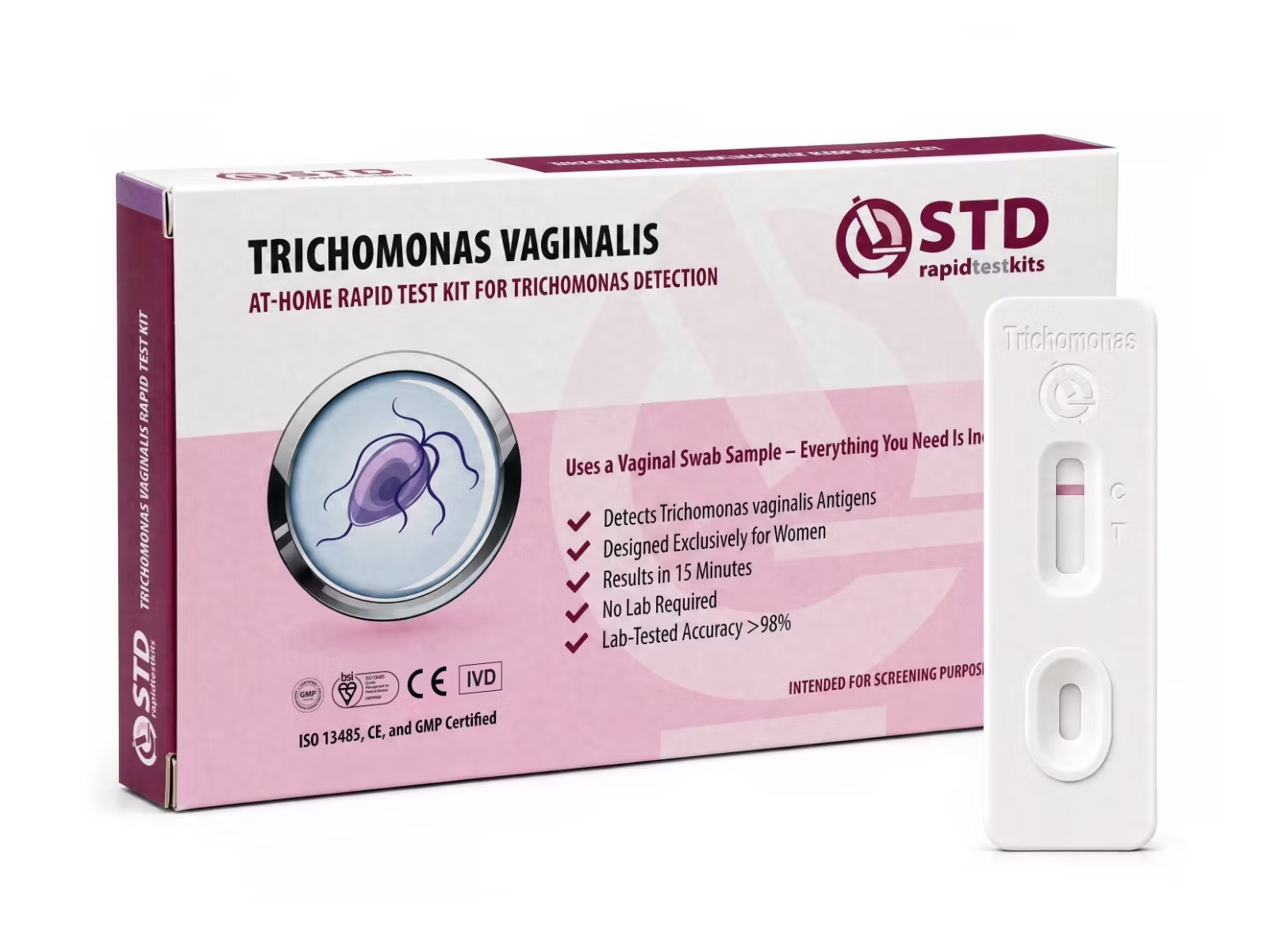
In the meantime, avoid new sexual contact or use barrier protection consistently. That reduces reinfection risk and keeps the testing timeline clean. If clinic visits are a barrier, an at-home swab kit lets you retest on your own schedule. One scope note: our trichomoniasis kit is validated for vaginal self-swab only, so male readers who need a test should plan a clinic visit instead, where a urethral swab or urine NAAT is the standard option.
This article links to at-home rapid-test products sold on this site; they are included because they directly apply to the testing window discussed above, not because they are the only option.
Symptoms Are Not a Reliable Timing Signal
A lot of people wait for symptoms because it feels logical. If something is wrong, the body should say so. Trichomoniasis does not play by those rules.
Many people never develop noticeable symptoms at all. Others experience symptoms that come and go or that feel mild enough to dismiss as irritation, friction, stress, or a pH shift. Relying on symptoms to time testing almost always leads to delays. When symptoms do appear, they often show up after the ideal testing window has already passed, which leaves people thinking they missed the chance. They have not; testing remains effective at 14 days and beyond, even without symptoms.
People with vaginas may notice changes in discharge, odor, irritation, or discomfort during sex or urination. The discharge can appear thin, frothy, or slightly yellow-green, but plenty of infections never produce dramatic changes. People with penises often have no symptoms at all; when they do, mild urethral irritation or discomfort after urination are the usual signs and are easy to attribute to something else.

Retesting Rules After Treatment
A single test does not always close the question. If you tested before day 7 and got a negative, plan a second test at two weeks or later. The first result was not wrong; it just was not designed to be your final answer.
After a positive result and treatment, the rules change in a way that often gets blurred online. For lab-based NAAT, CDC STI treatment guidance recommends waiting at least 3 weeks after completing antibiotic treatment before retesting with NAAT. Residual genetic material from dead or dying parasites can otherwise generate a false positive. The 3-month mark is a separate recommendation: routine rescreening for reinfection in sexually active people, since the most common reason for a repeat positive is reinfection from an untreated partner rather than treatment failure.
Most people who have trichomoniasis cannot tell they are infected. Without treatment, the infection can last for months or even years.
If Your Trich Test Comes Back Positive
Pause first. A positive trichomoniasis result is not a verdict on your character or hygiene. It means a common, treatable parasitic infection showed up on a test designed to find it. Treatment is straightforward: CDC treatment guidance recommends a course of metronidazole or tinidazole, with dosing that depends on anatomy and pregnancy status. Symptoms, if any, typically resolve within a week.
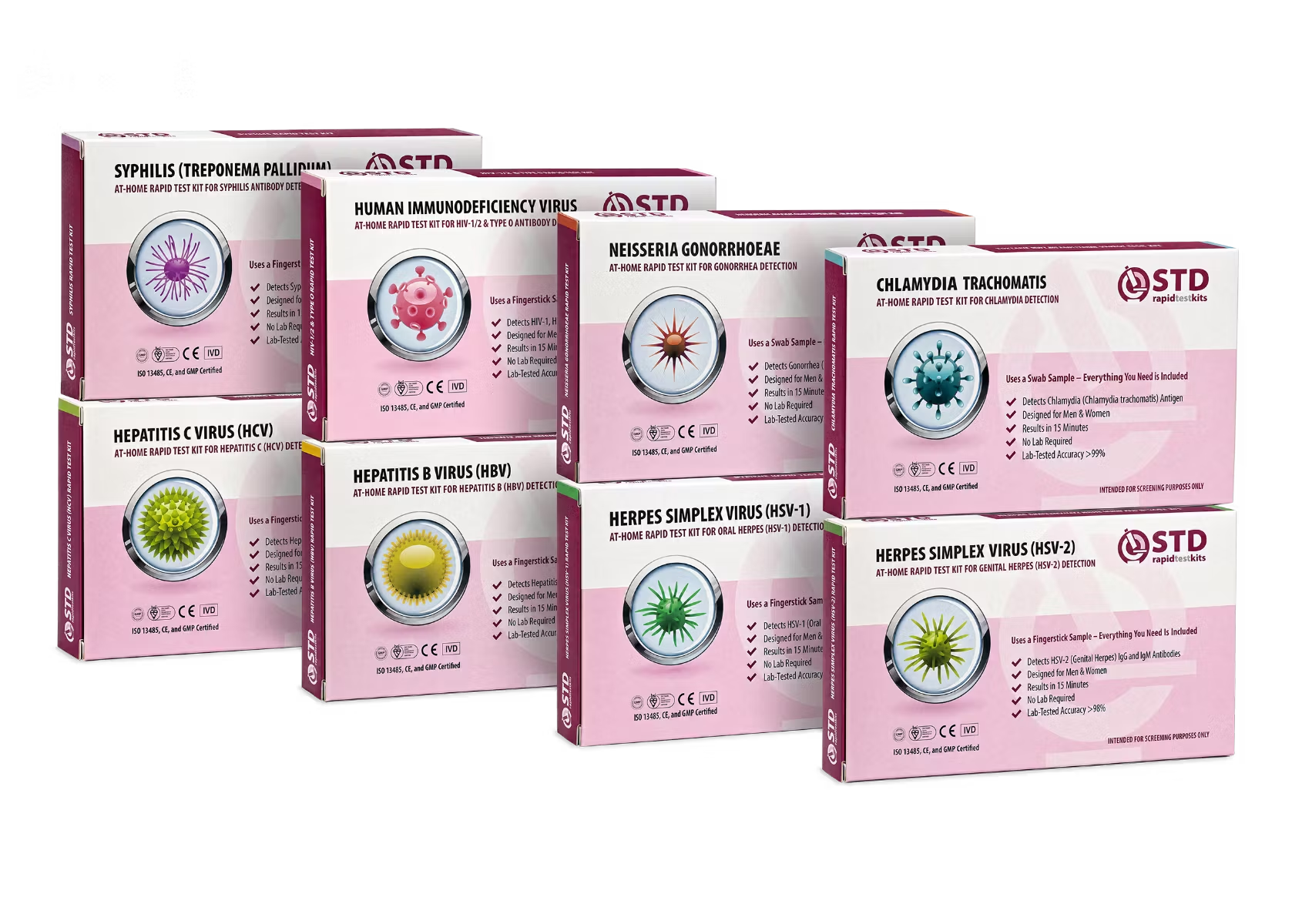
The most important step after treatment is preventing reinfection. Sexual partners from the past few months should be informed and treated as well, even if they have no symptoms. Treating yourself without treating your partner usually leads straight back to a second positive. A positive trich result is also a useful prompt to screen for the other infections that travel with it, since coinfections are common.
Two specific risks deserve a direct mention because they are what readers actually worry about. Untreated trichomoniasis during pregnancy is associated with preterm birth and low birth weight, according to CDC data, which is why early detection and treatment matter especially for pregnant readers and anyone trying to conceive. Untreated trich also raises the risk of acquiring or transmitting HIV, because the inflammation it produces creates easier pathways for viral transmission, per the same CDC overview. Both risks resolve quickly once the infection is treated with effective antibiotics.
How to Tell a Partner Without It Turning Into a Crisis
Telling a partner about possible trich exposure can feel scarier than the test itself. People worry about being judged, rejected, or accused of wrongdoing. In practice, most conversations go better than expected when they are calm and factual.
You do not need to share a full sexual history or justify your choices. A simple message such as "I tested positive for trich, which is common and treatable. You should get tested too," is enough; sharing relevant health information is the entire purpose of the conversation. If you are no longer in contact with the person or reaching out feels unsafe, many clinics and public-health services offer anonymous partner notification or expedited partner therapy.

When the Test Is Negative but the Anxiety Is Not
A negative result does not always bring instant peace, especially if the exposure felt high-stakes. Sometimes the fear lingers even after the data says you are okay.
If you tested during the recommended window and have not had new exposures, a negative is genuinely reassuring. Ongoing symptoms at that point may come from irritation, pH changes, yeast, bacterial vaginosis, friction, or stress, all of which can produce real physical sensations that mimic an STI. If symptoms intensify or persist past the recommended window period, a clinic visit is the practical next step.
Taking Control Without Letting Fear Drive
Testing after a hookup is about getting clear information so you can move forward without guessing. Whether you test at home or at a clinic, choosing the right timing over panic is what actually matters, and a clear plan with realistic dates will get you further than a rushed one.
Frequently Asked Questions
- How soon after a hookup can I actually test for trichomoniasis?
- Day 7 is the earliest a result is worth trusting; day 14 is more reliable. If you tested before day 5 and got a negative, plan a follow-up at the two-week mark so the early result becomes an actual answer.
- Can I have trichomoniasis without any symptoms at all?
- Yes, and this is the most common pattern. The CDC estimates that about 70 percent of people with trichomoniasis never develop signs or symptoms. Feeling fine does not mean you are clear; it just means your body is not sounding an alarm.
- I tested negative on day 3. Am I in the clear?
- Not necessarily. A negative result before day 7 may simply mean the test did not have enough to detect yet. If you tested early, schedule a retest at or after the two-week mark to confirm.
- What is the difference between an at-home rapid test and a lab NAAT?
- Lab NAAT (nucleic acid amplification testing) is the clinical gold standard because of its higher analytical sensitivity, especially in asymptomatic cases. At-home rapid kits use lateral-flow immunoassay chemistry: faster, more private, and well-suited as a first-line screen when used after the window period. A positive at-home result is usually worth confirming with a lab test.
- Do condoms fully protect against trichomoniasis?
- Condoms lower the risk substantially, though they are not absolute protection. Trich spreads through infected fluids and skin-to-skin contact in areas a condom may not fully cover. Using protection is smart, and it does not replace testing after a risky exposure.
- If my partner tested positive but I have no symptoms, do I still need to test?
- Yes. Asymptomatic trichomoniasis is the rule rather than the exception. Testing and treating partners together is the only way to stop a back-and-forth reinfection loop, even if one of you feels completely fine.
- How long does untreated trichomoniasis last?
- Trichomoniasis does not resolve on its own. Untreated infections can persist for months or even years, and they raise the risk of acquiring or transmitting other STIs, including HIV. Treatment is a short course of prescription antibiotics and is usually fast and effective.
- When can I have sex again after treatment?
- Wait until you and all recent sexual partners have finished treatment and any symptoms have cleared. Most guidance suggests waiting at least 7 days after a single-dose treatment. Skipping this step is the most common reason people end up back at the clinic with a second positive.
How we sourced this article: This guide is based on current clinical recommendations from major public-health organizations, including the U.S. Centers for Disease Control and Prevention and the U.S. National Library of Medicine's MedlinePlus. The sources listed below represent the most relevant and authoritative references used.
- U.S. Centers for Disease Control and Prevention. STI Treatment Guidelines for Trichomoniasis, including recommended metronidazole and tinidazole regimens, the 3-week minimum interval before NAAT retesting after treatment, and partner-treatment guidance.
- U.S. Centers for Disease Control and Prevention. About Trichomoniasis. Patient-facing overview covering the 70 percent asymptomatic rate, 5 to 28 day symptom-onset range, transmission basics, the inflammation pathway that raises HIV risk, and associations with adverse pregnancy outcomes such as preterm birth and low birth weight.
- U.S. National Library of Medicine, MedlinePlus. Trichomoniasis patient information page covering transmission, symptoms, diagnostic basics, and treatment.
- U.S. Centers for Disease Control and Prevention. Sexually Transmitted Infections Treatment Guidelines, 2021. Master document underpinning the trichomoniasis-specific guidance referenced above.
