
Published: October 2025 | Last updated: May 2026 | Editorial review and quality control: Martina N.
A positive trichomoniasis result is one of the easier sexually transmitted infections to act on, even though it rarely feels that way in the moment. It is a parasitic infection, it is curable with a short course of antibiotics, and it does not stay in the body forever. The harder part is the one nobody warned you about: your partner needs treatment at the same time, whether or not they have a single symptom.
This guide walks through what the result means, why the parasite is so good at hiding in plain sight, how the treatment works, and how to navigate the conversation that comes next. You will leave knowing what to do this week and what to expect over the following three months.
Key Takeaways
- Trichomoniasis is curable with a short antibiotic course. For women, the CDC recommends metronidazole 500 mg twice daily for 7 days; for men, a single 2-gram dose. Both partners must complete treatment at the same time so the infection does not bounce back between you.
- About 70 percent of people with trichomoniasis have no symptoms, so a positive result inside a long-term relationship does not automatically point to recent infidelity.
What Trichomoniasis Actually Is
Trichomoniasis (often shortened to trich) is caused by Trichomonas vaginalis, a single-celled parasite that lives in the urogenital tract. The U.S. Centers for Disease Control and Prevention describes it as one of the most common curable sexually transmitted infections in the country, with millions of cases each year and a strong tendency to go undiagnosed (CDC, About Trichomoniasis).
The parasite spreads through sexual contact: vaginal, penile, or vulva-to-vulva. It does not spread through swimming pools, shared towels, gym equipment, or toilet seats. The organism needs warm, moist human tissue to survive, and it dies quickly outside the body.
What makes trichomoniasis confusing inside a relationship is that it can live in the body for months or even years without producing any obvious symptoms. So when a long-monogamous partner suddenly tests positive, the most likely explanation is not recent infidelity. It is usually that the infection was acquired earlier, possibly well before the current relationship, and is only surfacing now because someone finally tested for it.
Trichomoniasis is the most common curable non-viral STI globally. The World Health Organization estimated 156 million new infections worldwide in 2020 (<a href="https://www.who.int/news-room/fact-sheets/detail/sexually-transmitted-infections-(stis)" target="_blank" rel="noopener">WHO STI fact sheet</a>). The CDC estimates about 70 percent of those infections produce no symptoms at all (<a href="https://www.cdc.gov/trichomoniasis/about/index.html" target="_blank" rel="noopener">CDC, About Trichomoniasis</a>).
Why Most People Have No Symptoms
The CDC estimates that about 70 percent of people with trichomoniasis have no symptoms. That is not a small number. It means the typical course of this infection is silence, not signs you can feel.
When symptoms do appear, they are easy to confuse with other conditions:
- Unusual vaginal discharge that may be greenish, yellow, or frothy, sometimes with a strong odor
- Genital itching or irritation
- Burning during urination
- Pain during sex
- Mild lower-abdominal discomfort
In people with vaginas, these symptoms get routinely misdiagnosed as bacterial vaginosis or a yeast infection. Over-the-counter treatments for those conditions sometimes give partial relief without curing the underlying trichomoniasis, which makes the misdiagnosis stick. In people with penises, the infection is almost always silent and is rarely tested for unless a partner's diagnosis prompts it.
That asymptomatic majority is exactly why trich keeps cycling between partners. One person gets treated for what their doctor assumes is recurrent BV, the parasite is never actually targeted, and the loop continues.

Why Your Partner's Test Might Have Come Back Negative
This part is maddening, and it is more common than most people realize. Trichomoniasis is not included in most standard sexually transmitted infection panels unless a clinician specifically requests it. Many urine-based screens for chlamydia and gonorrhea do not test for it at all, especially in male patients. So a partner can be tested, get a clean result, and still be carrying the parasite.
The table below covers the most common ways trich diagnoses fail to line up between partners.
| Situation | Likely reason |
|---|---|
| Partner feels fine but you tested positive | They are asymptomatic (the majority of cases) and have not been screened for trich specifically |
| Partner tested negative but was not treated | Trichomoniasis is not in standard STI panels unless explicitly requested |
| You were recently treated and got it again | Partner did not get treated at the same time, leading to ping-pong reinfection |
| Confused about where it came from | Trich can stay dormant for months or years; tracing the exact timing is rarely possible |
Treatment: One Short Course, Cured
Here is the genuinely good news: trichomoniasis is curable. The standard treatment is metronidazole or tinidazole, both prescription antibiotics. For women, the CDC's current STI Treatment Guidelines for Trichomoniasis recommend metronidazole 500 mg taken twice daily for 7 days, which replaced the older single-dose regimen because it cuts reinfection rates. For men, the single 2-gram dose of metronidazole is still recommended in the same guidelines.
During treatment and for at least seven days after the final dose, avoid sex of any kind, even with condoms. The parasite needs that window to clear from genital tissue in both partners. If you resume sex before both of you finish, the infection can pass right back.
If you are pregnant, talk to your obstetric provider before starting any medication. Metronidazole is routinely used in pregnancy and is considered safe at standard doses, but the timing and dose should come from your clinician, not from a blog.
Do not drink alcohol while taking metronidazole and for at least 24 hours after your last dose. With tinidazole the window is at least 72 hours. The combination triggers a disulfiram-like reaction: severe nausea, vomiting, flushing, and headache. Ask your prescriber about the exact timing for your specific medication.
When is it safe to have sex again after trichomoniasis treatment?
Wait at least 7 days after the medication is fully taken AND confirm your partner has completed treatment too. If only one of you took the antibiotic, the parasite can pass right back. The CDC also recommends a repeat test about 3 months after treatment because reinfection is common.
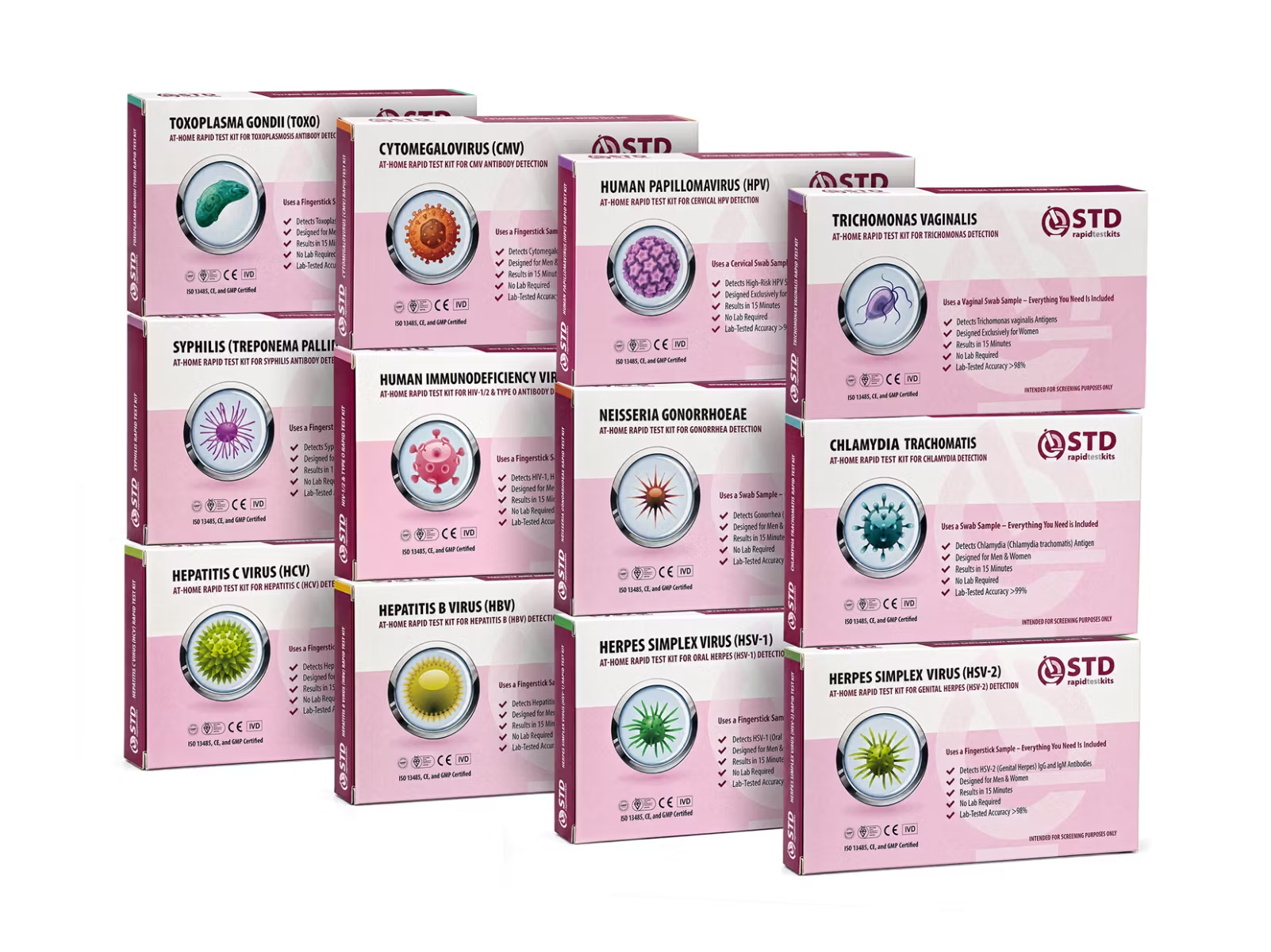
This article includes links to at-home rapid test kits sold by stdrapidtestkits.com. We recommend products based on fit-for-purpose for the reader's concern, not commercial benefit.

Why Both of You Have to Be Treated at the Same Time
This is the single most important thing to take away from a trich diagnosis: treatment only works as a couple. The CDC's guidance is explicit. Sex partners of people diagnosed with T. vaginalis should be treated, and both partners should abstain from sex until they have both completed treatment (CDC STI Treatment Guidelines).
When one partner gets antibiotics and the other does not, what happens is biologically predictable. The treated partner clears the parasite from their body. They feel better. They resume sex. The untreated partner, who never had symptoms in the first place, transmits the same parasite back, and the cycle restarts. Reinfection within three months is common when partners are not treated together, which is a core reason the CDC recommends a follow-up test around 3 months regardless of symptoms.
There is a second reason prompt, shared treatment matters: untreated trichomoniasis raises the risk of acquiring or transmitting HIV. The genital inflammation caused by the parasite makes mucosal tissue more vulnerable, and research summarized by the CDC and WHO suggests this can roughly double the risk of HIV acquisition during exposure. Treating trich quickly removes that elevated vulnerability, so acting on the diagnosis matters beyond clearing the trich itself.
The fix is mechanical, not emotional. Both prescriptions filled. Both pill courses finished. Seven days of abstinence after the second person completes treatment. Then sex again, and a follow-up test in three months to confirm.
Both partners must finish the full course of antibiotics AND abstain from sex for at least 7 days after the second person's final dose. Resuming sex before that window, even with a condom, can restart the reinfection cycle and waste both of your prescriptions.
Talking to Your Partner Without It Becoming a Fight
There is no perfect script for telling a partner you tested positive for an STI. What helps is being direct, calm, and focused on health rather than blame. A few framings that tend to work better than the obvious ones:
- "I tested positive for trich. It is treatable, but we both need the meds or it will come back."
- "I know you do not have symptoms. Most people with this do not. That does not mean you are not carrying it."
- "This probably did not come from either of us doing anything recent. The parasite can stay quiet for a long time. Let's just take care of it."
It helps to lead with the biology, not the timing. Trichomoniasis can live in someone's body for months or years before showing up. That means the math of "who gave it to whom" almost never works the way TV implies, and acting like it does is the fastest way to derail a productive conversation.

When Your Partner Refuses Treatment
Sometimes the conversation does not land. Maybe they ghost. Maybe they say they will get the prescription and never do. Maybe they say "I feel fine, I do not need it." This happens often enough that clinicians have a name for it: nonadherence by the untreated partner.
Here is the hard reality. Trichomoniasis will keep spreading silently unless both people are treated. If a partner refuses, you have two practical choices:
- Pause sexual activity entirely with that person until they reconsider.
- End the sexual relationship, get retested in three months to confirm you are clear, and protect yourself going forward.
Neither option is fun. Both are reasonable. What is not reasonable is continuing unprotected sex with someone who is knowingly untreated. Retesting at the 3-month mark, with or without symptoms, is the clearest way to confirm you are no longer in that loop.
In many U.S. states and jurisdictions, your clinician can write a prescription for your sex partner without requiring them to come in for a separate visit. This is called expedited partner therapy (EPT), and it can break the impasse if your partner is willing to take the medication but unwilling or unable to see a provider themselves. If your clinician has not offered it, ask whether EPT is available where you live.
After Treatment: Sex, Retesting, and What Comes Next
One of the hardest parts of a trich diagnosis is not the medication, it is the question of when you can stop worrying. Symptoms often clear within a few days, but symptoms clearing is not the same as the infection clearing. And even after both of you finish the course, the window for reinfection is real, especially in the first three months.
The table below maps the post-treatment timeline so you know what is happening in your body and when each milestone applies.
| Time since starting treatment | What is happening | Safe to have sex? | Time to retest? |
|---|---|---|---|
| 0 to 24 hours | The medication is beginning to act; infection is still active | No. You are still contagious. | No. Far too early. |
| 24 to 48 hours | Symptoms may begin to ease; treatment is working but not finished | No. CDC recommends abstaining through the full course. | No. Still too soon. |
| 72 hours | Parasite clearance is well underway if meds are taken correctly | No. Wait until the full 7-day window passes. | No. Premature. |
| 7 or more days after both partners finish | Cleared in most cases when both partners completed treatment and abstained | Yes, if your partner also completed treatment and abstained. | Optional unless symptoms return. |
| 3 months | CDC-recommended retest window to confirm no reinfection | Continue practicing safer sex. | Yes. Retest is recommended even if you feel fine. |
Trichomoniasis and Pregnancy
If you are pregnant and test positive for trichomoniasis, do not panic, and do not skip treatment. Untreated trich during pregnancy has been linked to preterm birth and low birth weight (NHS, Trichomoniasis; CDC STI Treatment Guidelines). Treatment lowers those risks, and metronidazole is routinely used during pregnancy at standard doses.
Two things to coordinate with your obstetric provider:
- The exact dose and timing of metronidazole during pregnancy.
- Your partner's parallel treatment, so you do not get reinfected before delivery.
Follow-up testing during pregnancy is also worth discussing, particularly if you are in your second or third trimester at diagnosis.
Sex partners of women with T. vaginalis should be treated. Women should be advised to abstain from sex until they and their sex partners are treated and any symptoms have resolved.
Frequently Asked Questions
- How long can someone have trichomoniasis without knowing?
- The CDC has not established a firm upper bound, and silent infections lasting months or years are the norm. Tracing where a positive result came from rarely yields useful answers, so focus on completing treatment and confirming clearance, not on origin.
- Can you get trichomoniasis from a toilet seat?
- No. The parasite does not survive well on dry surfaces. It needs warm, moist human tissue to live and dies quickly outside the body. Trichomoniasis is transmitted through sexual contact, not through toilets, towels, or pool water.
- I am in a monogamous relationship. How is this possible?
- Trich can stay dormant in the body for months or years, and most people are never specifically tested for it. A positive result inside a monogamous relationship usually means the infection was acquired before the current relationship, by either partner, and is only being found now.
- Could my partner have given it to me without knowing?
- Very likely yes. Most people with trichomoniasis have no symptoms at all, and standard STI panels rarely include it unless specifically requested. Many men carry the parasite without any sign that something is wrong.
- Can I catch trichomoniasis again after being cured?
- Yes. Treatment cures the current infection but does not provide immunity. Reinfection is most often caused by an untreated partner. The CDC recommends a repeat test about 3 months after treatment for this reason.
- Does trichomoniasis show up on standard STI panels?
- Often not. Many standard panels test for chlamydia, gonorrhea, syphilis, and HIV but skip trichomoniasis unless specifically requested. If you want to confirm clearance, ask your clinician or use an at-home kit that explicitly lists trich in its panel.
- What does trichomoniasis discharge look like?
- When symptoms occur in people with vaginas, the discharge is often yellow-green and may be frothy, with a noticeable odor. In people with penises, discharge is rare. Most cases of trich have no visible discharge at all, which is why testing matters more than self-checking.
- Is trichomoniasis dangerous if untreated?
- It is not life-threatening, but untreated trich can raise the risk of acquiring HIV and other STIs, and during pregnancy it has been linked to preterm birth and low birth weight. Treatment is short, cheap, and highly effective, so there is no reason to leave it untreated once diagnosed.
- U.S. Centers for Disease Control and Prevention. About Trichomoniasis: prevalence, transmission routes, and the high rate of asymptomatic infection.
- U.S. Centers for Disease Control and Prevention. STI Treatment Guidelines for Trichomoniasis: recommended regimens, partner treatment, abstinence window, pregnancy considerations, and follow-up retesting at 3 months.
- National Health Service (UK). Trichomoniasis: symptoms, diagnosis, treatment, and pregnancy considerations for men and women.
- Mayo Clinic. Patient health information on sexually transmitted infections, including trichomoniasis symptoms, diagnosis, and treatment.
- World Health Organization. Sexually transmitted infections fact sheet, including global trichomoniasis burden and screening recommendations.
