
Published: July 2025 | Last updated: May 2026 | Editorial review and quality control: Martina N.
The second positive test is the one that shakes everything. You did the responsible thing the first time. You got treated, told your partner, waited the recommended week, and moved on. Now there is another positive result on the screen, and the questions are no longer about bacteria. They are about trust.
Recurrent chlamydia inside a relationship looks like betrayal. Most of the time it is not. The pattern that brings couples back to the clinic is rarely about a hidden affair. It is about one untreated partner, a missed antibiotic dose, a misjudged timeline, or an infection that was already quietly present when the relationship began. Knowing which of those is happening matters. The fix for reinfection is medical. The fix for a trust problem is not. This article walks through both, with the actual clinical timelines, the conversations that work, and a calm way to test without lighting a fire under your relationship.
Key Takeaways
- Both partners need to complete treatment and avoid sex for the full waiting period afterward. Skip either step and reinfection is the expected outcome, not bad luck.
- Most chlamydia infections cause no symptoms in either sex, so feeling fine is not evidence of being clear. Only a test is.
The Chlamydia Ping-Pong Effect and Why It Keeps Happening
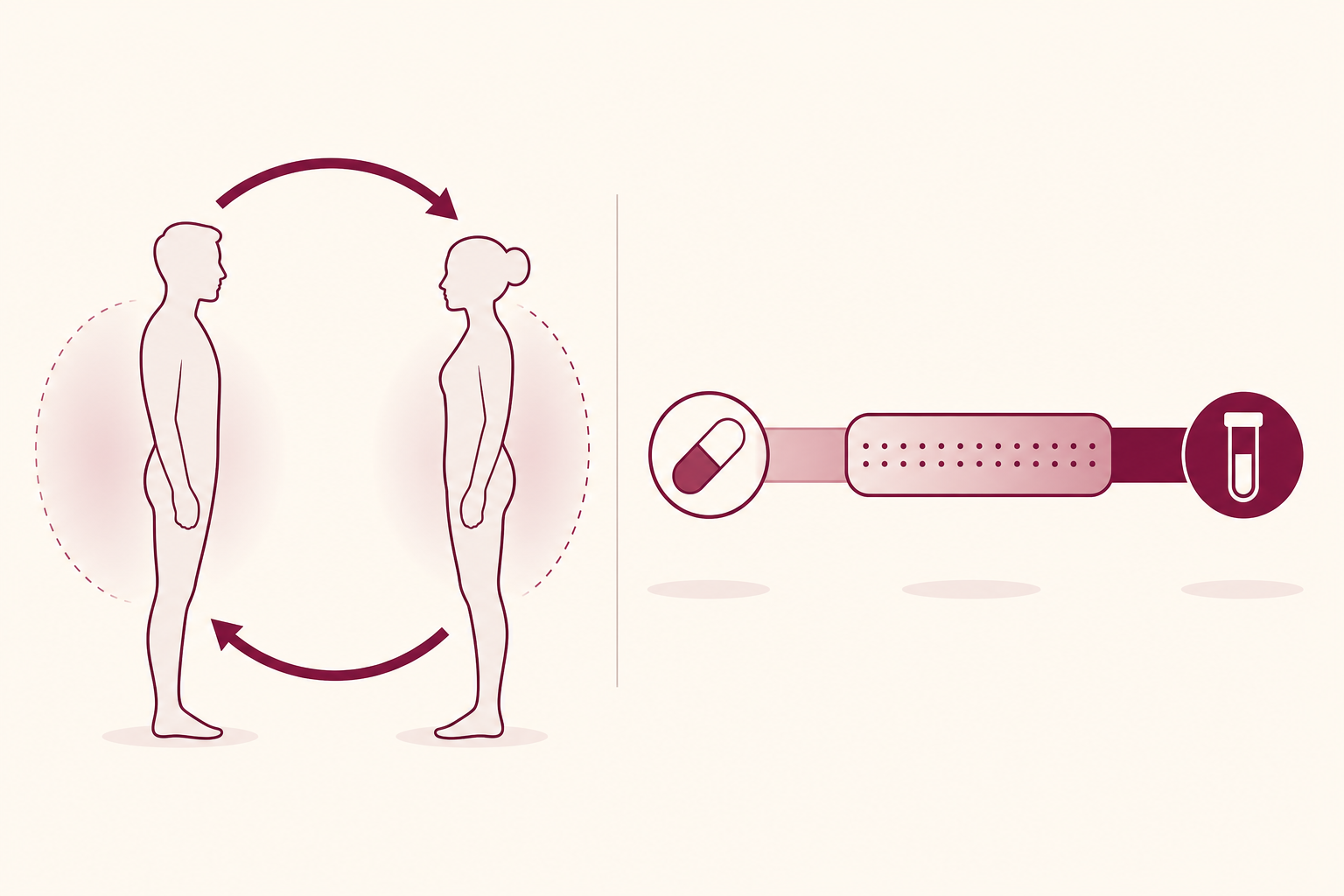
Clinicians have a name for the pattern where a couple keeps reinfecting each other. They call it the ping-pong effect. The mechanics are unglamorous. One person tests positive and is treated. The partner is told to get treated too, but does not. Or they take half a course of antibiotics. Or the couple has sex again before the recommended waiting period is over. The bacteria, which had no obligation to vanish on a convenient timeline, simply moves back across.
The U.S. Centers for Disease Control and Prevention reports that reinfection with chlamydia within several months of treatment is common, especially in young women, with documented retest-positivity rates in the mid-teens in many clinical studies (CDC chlamydia treatment guidelines). The single biggest driver of those numbers is not new exposure to a stranger. It is sex with the same partner whose infection was never effectively treated.
What makes this so persistent is the combination of how the infection presents and how people feel about it. Chlamydia is mostly silent. Most women and around half of men with chlamydia notice no symptoms (NHS chlamydia guidance). For the partner who feels nothing, the urgency to swab, fill a prescription, finish a full antibiotic course, and abstain for a week is invisible. Their body is offering no reminder. The diagnosed partner ends up carrying the entire weight of the situation alone.
Layer on the shame factor, especially for men who associate clinics with judgment, and the practical outcome is predictable. One person treats, one person nods along, and the bacteria stays in the relationship. Two months later, the diagnosed partner is back in the same chair with the same result, and the conversation that follows is harder than the first one was.
Why do my partner and I keep getting chlamydia even though we got treated?
The most common reason is that one partner did not complete treatment, or the couple had sex again before the recommended waiting period. Chlamydia is asymptomatic in most cases, so a partner who feels fine may delay treatment or assume they are clear. Until both partners finish the full antibiotic course and wait at least seven days afterward before resuming sex, the same infection can move back across. Retesting three months after treatment is recommended by the CDC.
The Real Reasons Chlamydia Reinfection Happens in Couples
If you are stuck in this cycle, it helps to narrow down which of the realistic causes is at play. The list is shorter than people expect, and only one of them is what couples typically fear.
1. The partner did not actually get treated. They said they would, picked up the prescription, and then put it on a shelf. Or they took two doses and stopped when they felt fine. Single-dose antibiotic regimens still need to be taken in full, and the seven-day doxycycline course used as a first-line option in many U.S. clinics requires every dose to be effective.
2. Sex resumed too early. The CDC instruction is clear: wait at least seven days after a single-dose treatment, or until completion of a seven-day course, before having sex again, even with condoms. The bacteria can still be present during that window. Couples who get to day five and decide they are probably fine are the textbook case for reinfection.
3. The partner was infected before the relationship started. Chlamydia can sit quietly in the body for weeks or months. If your partner had a previous exposure and never tested, they may have been carrying it the whole time. The first positive result in the relationship is then misread as a recent infection from someone outside.
4. There was a new outside partner. This is the explanation couples fixate on, and it does happen. Out of the five reasons on this list, it is the least common. The way to tell the difference does not involve interrogating a partner. Test, treat, retest at three months per CDC guidance, and watch what the pattern does (CDC chlamydia information).
5. A different infection is producing symptoms. Chlamydia and gonorrhea co-occur often enough that the CDC recommends testing for both at the same time. If treatment cleared chlamydia but symptoms continue, gonorrhea, trichomoniasis, or another cause may be the actual driver. A broader test usually clarifies this quickly.
Stopping the Cycle Without Damaging the Relationship
The honest version of breaking out of this cycle has three parts that work only when they happen together: both people test, both complete the full antibiotic course, and both wait the clinical window before resuming sex. None of those steps is interesting. All three are non-negotiable if you want the next test to be negative.
The reason couples skip steps is almost never laziness. It is the emotional charge around the situation. The partner who tested positive feels exposed and a little ashamed. The partner who has been told to get treated feels accused. Neither of them wants to keep talking about it. So the prescription sits on the counter, the abstinence window gets shortened, and the bacteria gets a second pass.
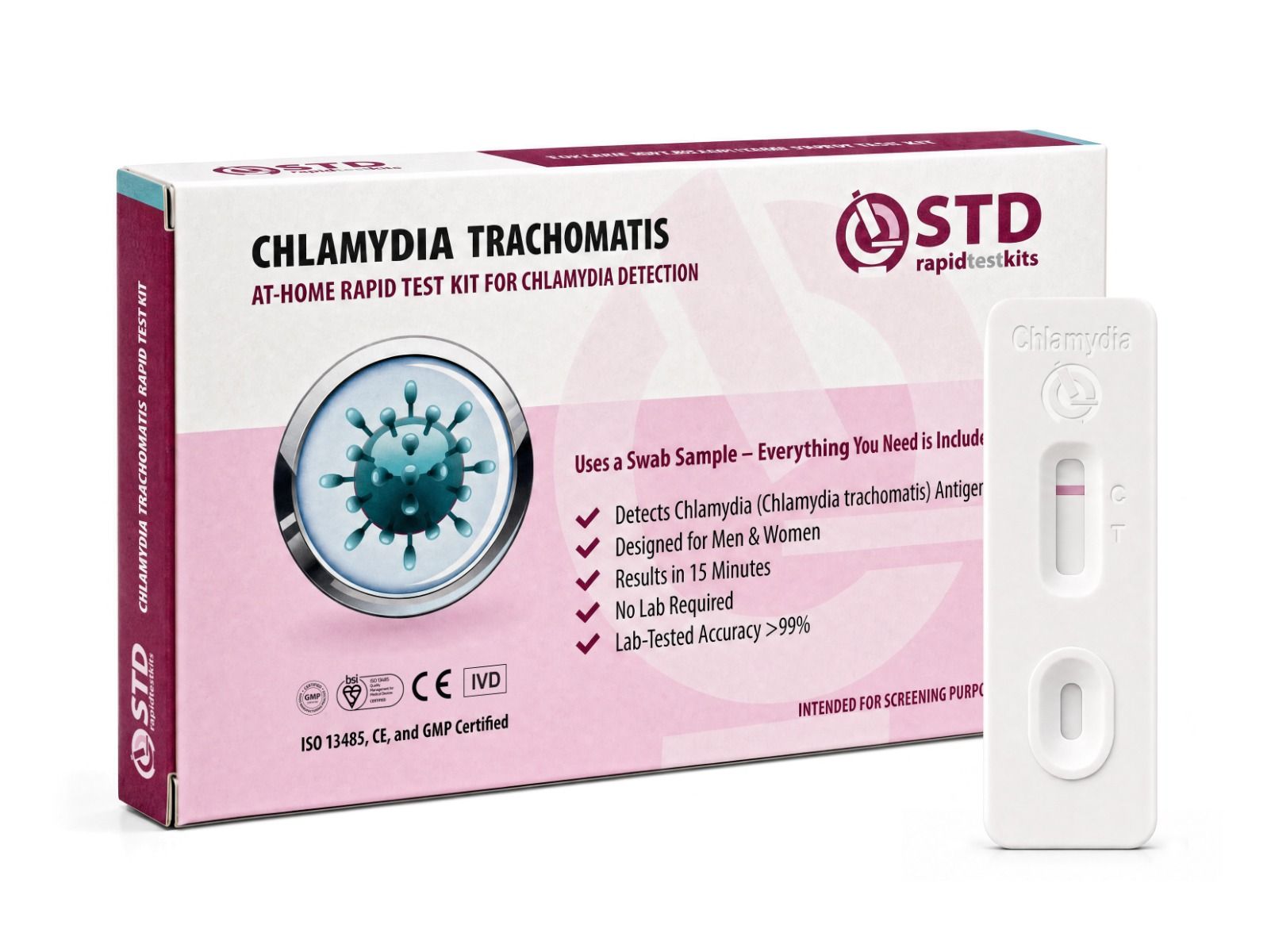
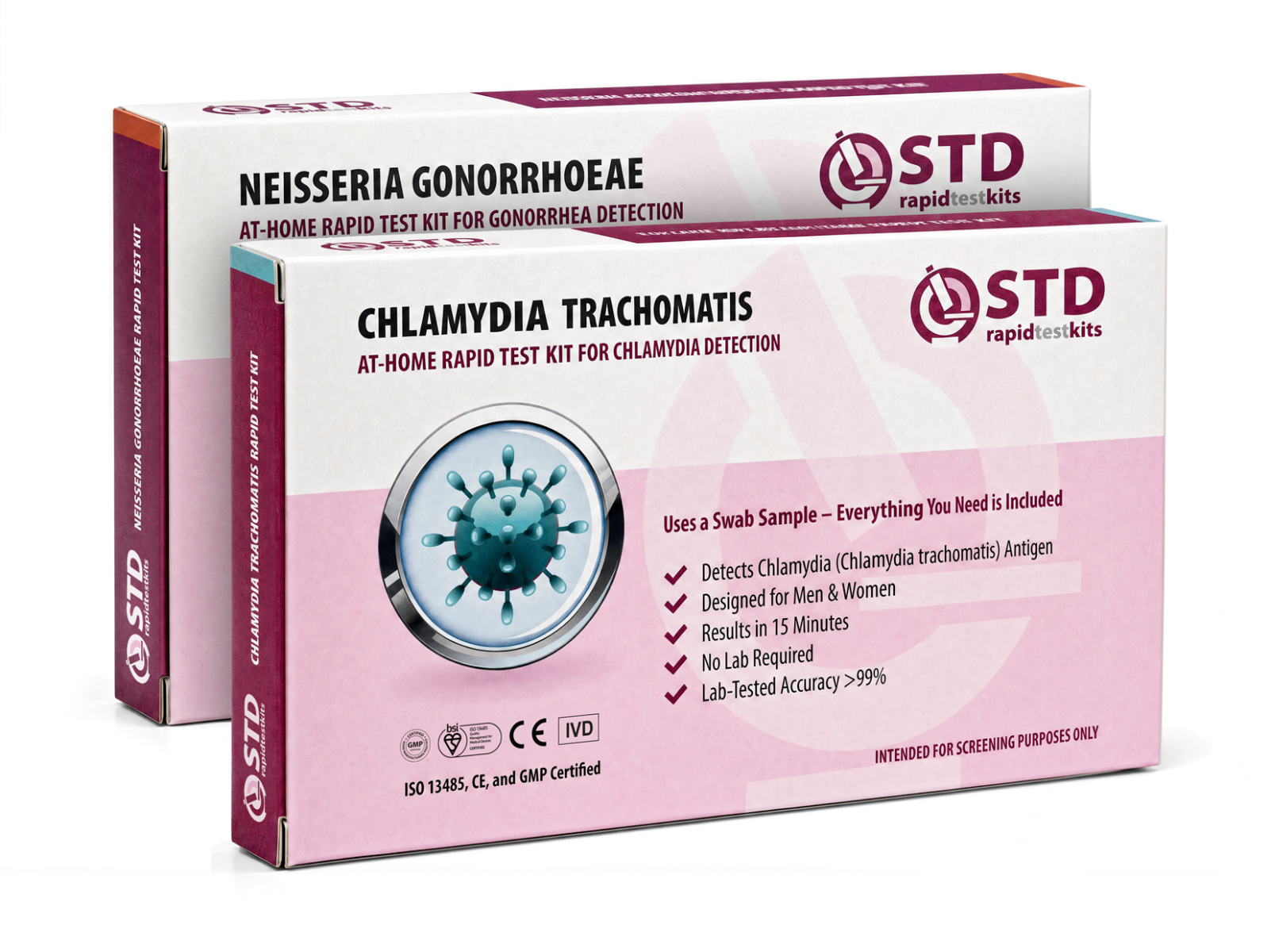
The single most useful reframe is this: testing as a couple stops feeling like an accusation when both people do it at the same time. A home test kit takes the clinic visit, the waiting room, and the awkward intake form out of the equation. You sit down together, swab, and read the results in around 15 minutes. The act of doing it together is what changes the tone. Nobody is the suspect. Nobody is the source. You are two people checking for something the same way you would check the batteries in a smoke alarm.
After treatment, the CDC recommends a retest at around three months. Treatment failure is rare; the retest exists to catch reinfection from an untreated partner or an exposure the couple missed. This is the step couples most often skip, and it is the one that confirms the cycle is actually broken.
For a single-dose antibiotic, wait at least seven full days after treatment before having sex again. For the seven-day doxycycline course, wait until you have completed every dose. This window applies even when using condoms. Both partners need to complete the same regimen, or the count restarts.
Talking About It Without Lighting a Fire
The conversation that follows a positive result is the one couples dread more than the diagnosis itself. The dread is reasonable. A clumsy version of it can do real damage. A careful version of it can leave the relationship stronger than it started.
Two practical shifts make the difference. The first is to lead with the test result, not with a theory about how it got there. "I tested positive for chlamydia and the clinic told me both of us need treatment" is a different sentence from "I tested positive and I need to know who you have been sleeping with." The first invites a partner into a problem with you. The second puts them on trial. Most defensive reactions come from feeling accused, not from actual wrongdoing.
The second shift is to separate the medical conversation from the relationship conversation. The medical conversation is short and concrete: both of you get treated, wait the window, and retest. That is the entire script. Whatever bigger conversation needs to happen about trust, history, or fidelity can happen on a different evening, when there is not also a prescription waiting to be filled.
People who navigate this well usually report the same thing afterward. The bacteria becomes the smaller part of the story. The fact that they handled something uncomfortable together becomes the bigger part. That dynamic is not guaranteed, but it is available, and it starts with the framing of the first sentence.
Most people who have chlamydia do not have any symptoms.
When Monogamy Stops Being Protection
One of the quietest patterns in sexual health is that people in committed monogamous relationships often test less than people who date casually. The logic feels sound from the inside. You are exclusive, your partner is exclusive, so where would an infection come from? The blind spot is that monogamy starts on a specific date. Whatever happened before that date does not disappear at the moment two people decide to be exclusive.
Most chlamydia diagnoses come from routine screening, not from symptoms (WHO global STI fact sheet). Many monogamous relationships begin after casual encounters where neither person tested between partners. The first joint screening in such a relationship sometimes turns up something that has been there for months, carried in by either partner, and neither of them knew.
This is the scenario where blame is most useless and most likely. The result reads as betrayal. The actual cause is silence between two prior chapters of life. The way to defuse it is to schedule a baseline test as a normal part of becoming exclusive. It is the same logic as exchanging keys or merging finances. Knowing what each person is bringing in, medically, costs almost nothing and removes the worst version of this conversation later on.
A single screen when a relationship turns exclusive resolves the most common version of this whole problem. Think of it less as a trust check and more as a baseline record of what each person was carrying in, before either of you had any way to know.
The Myths About Chlamydia That Hurt Couples Most
Several beliefs about chlamydia survive longer than they should. Each of them turns a treatable infection into a relationship crisis. The honest corrections are short.
Myth: A positive test proves cheating. Not reliably. Chlamydia can sit in the body for months or longer before being detected, especially in the absence of symptoms. A positive result tells you the infection is present. It does not, by itself, tell you when or how it arrived.
Myth: No symptoms means no infection. Most people with chlamydia feel nothing. The infection is detected by testing, not by paying attention to your body. Waiting for a symptom is how the infection becomes pelvic inflammatory disease, which can cause permanent damage to fertility (CDC PID information).
Myth: Monogamous couples do not need screening. Both partners carry their pre-relationship history with them. A single baseline screen at the start, plus a retest if there is any change, is the difference between assuming you are clear and knowing you are.
Myth: Treating one partner clears both. No. Each partner is treated independently. If one is treated and the other is not, the untreated partner will reinfect the treated one. This is the entire mechanism of the ping-pong effect.
Myth: Condoms make reinfection impossible. Condoms reduce the risk of chlamydia transmission substantially when used consistently and correctly, but they are not a substitute for treating an active infection in both partners. The CDC still recommends abstaining during the post-treatment waiting period, with or without condoms.
Treating one partner does not clear both. Each person needs their own diagnosis, prescription, and full antibiotic course. Skip this step and the bacteria moves back across as soon as sex resumes. That is the entire mechanism of the ping-pong effect.
Building a Chlamydia Plan That Actually Holds
If a positive result has just landed in your relationship, the next 48 hours matter more than the next argument. A workable plan has the same shape in almost every case.
Start by confirming the infection in both partners, ideally on the same day. If one partner is uncertain, a home swab test removes the friction of scheduling a clinic visit and lets the conversation move forward with actual information. From there, the rest is mechanical: fill the prescriptions, finish every dose, mark the end of the abstinence window on a shared calendar, and book a retest at three months to confirm the cycle is broken.
The piece couples most often forget is the retest. Treatment usually works, but reinfection in the meantime is common enough that the CDC explicitly recommends rechecking. Skipping the retest is the most common reason couples believe they have moved past chlamydia and then turn out not to have.
It is also worth noting that the body that has just had chlamydia treated is also the body that may want testing for related infections. Chlamydia and gonorrhea co-occur in a meaningful share of cases, and a combined swab makes more sense than two separate clinic visits.
What This Chapter Can Mean for Your Relationship
Couples who get through a chlamydia diagnosis well almost never describe it as the worst thing that has happened to them. They describe it as the first time they had to talk about something uncomfortable together and did not break. The conversation about who tests, who treats, who waits, and who retests is concrete in a way most relationship conversations are not. It has dates and prescriptions and follow-up appointments. There is something useful about having a shared problem with a checklist attached.
The couples who do badly with it are usually the ones who treat it as a moral verdict instead of a clinical one. The bacteria does not know whether either partner is a good person. It knows whether both of them are infected, and whether both of them are treated. Aligning your behavior to those two facts is the entire job. Aligning your judgment of each other to anything beyond those two facts is a separate, optional, much harder project, and it does not have to happen this week.
The boring conclusion is the right one. Test together, treat together, wait together, and retest at three months. Then go back to being two people with regular lives, who once had a small medical thing and handled it like adults.
Frequently Asked Questions
- Can my partner and I really keep passing chlamydia back to each other?
- Yes. This is the classic ping-pong effect. If one partner completes treatment and the other does not, the untreated partner can transmit the infection back as soon as sex resumes. Both partners must be treated and must complete the post-treatment waiting period before having sex again.
- Does a positive chlamydia test mean my partner cheated?
- Not necessarily. Chlamydia can remain in the body for months without symptoms before being detected. A positive result confirms the infection is present. It does not, on its own, indicate when or how it was acquired. Plenty of long-term couples test positive years into a relationship from an exposure that pre-dated it.
- We both got treated. Why did it come back?
- Three usual reasons. One, sex resumed too early before the seven-day post-treatment window ended. Two, one partner did not finish the full antibiotic course. Three, a new exposure occurred. The CDC recommends a retest at three months after treatment to catch reinfection in this window.
- How long should we wait to have sex again after treatment?
- At least seven days after a single-dose antibiotic. For the seven-day doxycycline course, wait until you have completed the full course before resuming sex. Both partners need to complete the same regimen, with or without condoms.
- My partner refuses to test. What should I do?
- Refusal to test when you have a documented positive result is a meaningful signal about the relationship beyond the medical situation. A home test kit removes the most common stated barriers, which are clinic embarrassment and scheduling. If your partner still refuses, you are entitled to consider that information when deciding whether to resume sex with them.
- Can chlamydia cause infertility even without symptoms?
- Yes. Untreated chlamydia is a well-documented cause of pelvic inflammatory disease in women, which can lead to scarring of the fallopian tubes and reduced fertility. Most of the women who develop PID from chlamydia had no obvious symptoms from the original infection, which is why screening matters.
- Should we test for anything besides chlamydia at the same time?
- Worth considering. Chlamydia and gonorrhea co-occur in a meaningful share of cases, so a combined swab is more efficient than two separate tests. Couples who are doing a clean-slate screen often also include syphilis and HIV to establish a complete baseline.
- Do we still need to test if we are monogamous?
- Yes, at least once at the start of the relationship. Both partners carry whatever was unaddressed before the relationship began. A single baseline screen prevents the most common version of this exact problem, which is discovering months later that one partner had a silent infection the whole time.
- U.S. Centers for Disease Control and Prevention. About Chlamydia information page, including public-facing guidance on asymptomatic presentation and testing.
- U.S. Centers for Disease Control and Prevention. STI treatment guidelines for chlamydia, including post-treatment abstinence windows and three-month retest recommendation.
- U.K. National Health Service. Chlamydia symptoms, screening, and prevalence-of-asymptomatic-infection guidance for the general public.
- World Health Organization. Fact sheet on sexually transmitted infections globally, including burden of asymptomatic chlamydia and screening rationale.
- Mayo Clinic. Patient-facing reference on chlamydia symptoms, diagnosis, and complications.
- U.S. Centers for Disease Control and Prevention. About Pelvic Inflammatory Disease (PID), including the connection between untreated chlamydia and long-term fertility risk.
