

Published: October 2025 | Last updated: April 2026 | Editorial review and quality control: Martina N.
Most adults can recall the broad strokes of their sex-ed class. A nervous teacher, a slideshow of worst-case images, a heavy emphasis on either pregnancy or abstinence, and very little about the specific things that send people Googling at 2 a.m. years later. The result is a generation that knows STIs exist but can't say which ones cause no symptoms, when a test result becomes reliable, or whether oral sex 'counts.' This article is the catch-up class your school skipped.
What does most sex ed leave out about STDs?
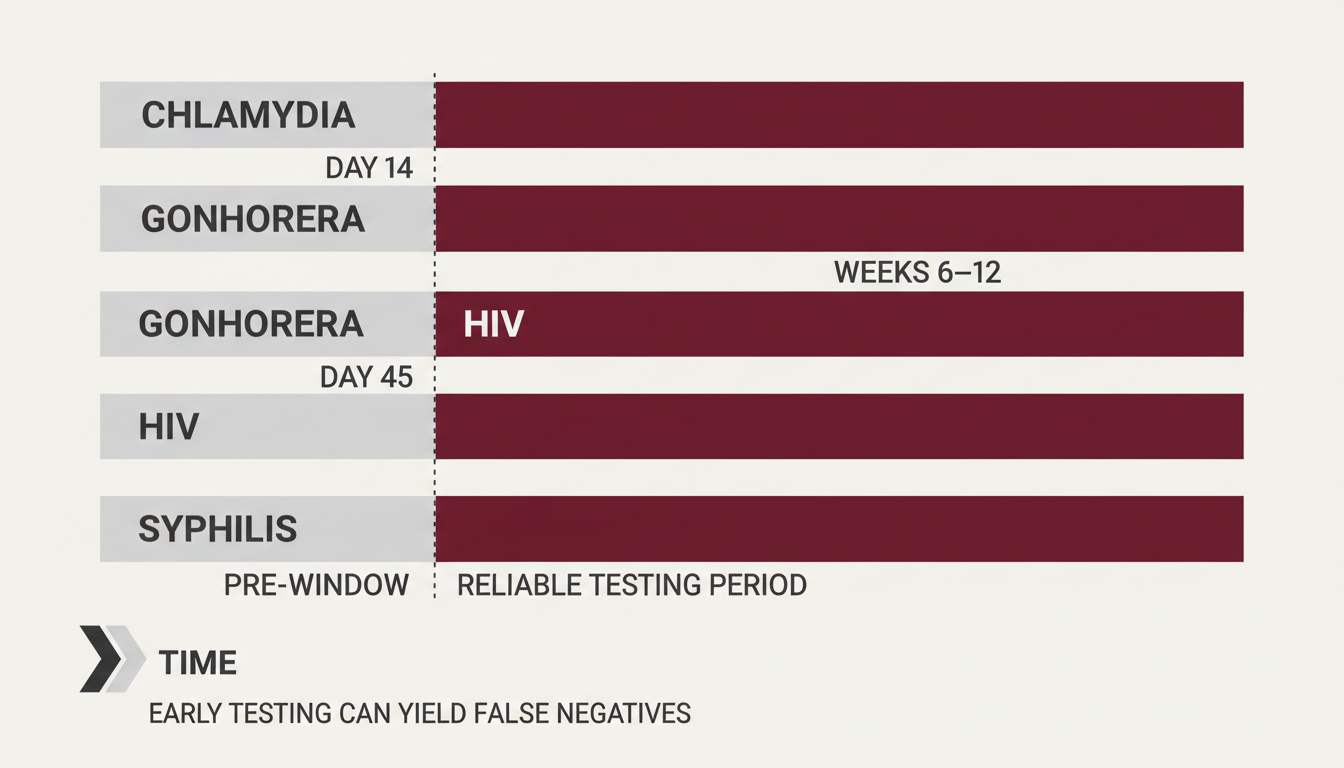
Most school programs skip three things that matter for adults: how often common STIs cause no symptoms (often the majority of cases), when a test becomes reliable after exposure (usually 14 days for chlamydia and gonorrhea, about 45 days for HIV, and 6 to 12 weeks for syphilis), and how skin-to-skin contact spreads herpes, HPV, and syphilis even with consistent condom use. Catching up on those three points is the main thing.
Key Takeaways
- Most chlamydia and gonorrhea infections cause no obvious symptoms, so feeling fine is not the same as testing negative.
- Reliable testing windows differ by infection: roughly 14 days for chlamydia and gonorrhea, about 45 days for HIV, and 6 to 12 weeks for syphilis.
When 'Just don't' was the whole curriculum
In a lot of classrooms, sex education starts and ends with one tired sentence: 'Just don't do it.' Whether the framing is religious, political, or public-health, the message is usually the same. Avoid sex, avoid problems. That isn't how biology works, and it isn't how teenagers behave. Data from the CDC's Youth Risk Behavior Survey shows that by age 18, a substantial share of U.S. teens have had sexual intercourse. Young people are sexually active. The question is whether they are also informed.
Coverage is uneven across borders. The U.S., Nigeria, India, the Philippines, and many parts of Latin America still rely heavily on abstinence-first programs or curricula that gloss over STIs in favor of pregnancy prevention. The Netherlands, Sweden, Denmark, and parts of Canada offer comprehensive programs that include consent, anatomy, emotional readiness, and clear, medically accurate STI information. The World Health Organization reports that comprehensive sexuality education is consistently associated with delayed sexual debut and higher condom use. Where it's offered, the public-health math improves.
The cost of silence is measurable. The WHO estimates more than one million curable sexually transmitted infections are acquired every day worldwide, and most are preventable. You cannot prevent what you were never taught to recognize. That gap, not personal carelessness, is the underlying issue.
The WHO estimates more than 1 million curable STIs are acquired every day worldwide in people aged 15 to 49, and the majority are asymptomatic. The four curable infections (chlamydia, gonorrhea, syphilis, and trichomoniasis) account for the bulk of that daily incidence. Other common STIs (HIV, HPV, herpes, hepatitis B) are manageable but not curable, which is why early detection matters even more.
The symptoms sex ed skipped
If sex ed covered STIs at all, it probably involved a slideshow of graphic late-stage images. The day-to-day reality looks different. Most common STIs cause no obvious symptoms in their early stages. When symptoms do appear, they are often subtle and easy to confuse with a yeast infection, a UTI, razor burn, or seasonal allergies. Discharge is not always a warning sign. Sometimes the absence of obvious signs is the warning sign.
Below are common patterns that rarely make it into a high-school curriculum.
| Overlooked symptom | Possible cause | Why it gets missed |
|---|---|---|
| Sore throat with no cold or fever | Pharyngeal gonorrhea or syphilis | Rarely linked to recent oral sex unless a clinician asks |
| Itching or tingling on the lip, mouth, or genitals | Herpes (HSV-1 or HSV-2) | Blamed on dryness, allergies, or shaving |
| Clear, odorless vaginal or penile discharge | Chlamydia | Mistaken for normal fluid or arousal-related |
| Tiny painless bumps on genital skin | HPV or HSV | Dismissed as ingrown hairs or razor burn |
| A single painless ulcer that heals on its own | Primary syphilis chancre | Goes away without treatment, infection does not |
| No symptoms at all | Chlamydia, gonorrhea, HIV, HPV, herpes | Up to the majority of cases per CDC surveillance |
Why condoms aren't a force field
Condoms are excellent. They are not a perfect barrier. Three of the most common STIs (genital herpes, HPV, and syphilis) spread through direct skin-to-skin contact, including contact with skin a condom does not cover. That means a partner can use a condom every time, correctly, and still pass on or acquire one of these infections.
The skin-contact piece is also why oral sex matters. Oral sex can transmit chlamydia, gonorrhea, syphilis, herpes, and HPV. A small cut from flossing or brushing too hard can be enough of an entry point. Most school programs never connect 'just oral' to those infections, which is how stories like the canonical 'sore throat after a hookup' end with a pharyngeal gonorrhea diagnosis weeks later. Extragenital infections (oral and rectal) are dramatically underdiagnosed because they aren't routinely screened unless a clinician knows to ask, and patients aren't told to ask either.
Condoms are highly effective at preventing fluid-transmitted infections like HIV, chlamydia, and gonorrhea when used consistently. They reduce, but do not eliminate, the risk of skin-to-skin infections (herpes, HPV, syphilis chancres) because viral shedding can occur on skin outside the latex barrier.
Testing windows: the lesson nobody finished
Ask most adults when they should test after a possible exposure and you'll get a shrug or a wildly wrong answer. That isn't personal failure. Schools rarely teach what testing involves, when it should happen, or what a 'window period' is. The idea that you can test negative too soon and still be infected is almost never explained.
Different infections have different timelines. The summary below reflects current CDC and NHS guidance.
| Infection | Earliest test reliability | Most reliable timing | Test type |
|---|---|---|---|
| Chlamydia | About 7 days post-exposure | 14+ days | Lab NAAT (urine or swab) or rapid lateral-flow swab at home |
| Gonorrhea | About 7 days post-exposure | 14+ days | Lab NAAT (urine or swab) or rapid lateral-flow swab at home |
| HIV (4th-gen lab antigen/antibody) | 18 to 45 days | 45+ days | Fingerstick or venous blood, lab or rapid |
| Syphilis | About 21 days | 6 to 12 weeks | Blood antibody test (RPR with treponemal confirmation) |
| HSV-2 (antibody) | 12 weeks | 12 to 16 weeks | Blood antibody test |
| HPV | Variable, often months | Routine cervical screening for those eligible | Cervical sample at clinic |
When Google becomes your sex-ed teacher
If schools won't teach it, the internet will. TikTok, Reddit, YouTube, Discord, and group chats now do most of the heavy lifting for adult sexual-health questions. Some creators are excellent. Many aren't, and algorithms don't fact-check. Common misconceptions you'll see in viral posts: 'STIs only spread through fluid exchange' (wrong, skin contact spreads HSV, HPV, and syphilis), or 'you'll know within two weeks if you caught something' (wrong, the majority of chlamydia and gonorrhea cases in people with vaginas show no symptoms at all, per CDC data).
Search trends tell the same story. Queries like 'STD vs UTI' and 'burning but no discharge' run consistently high traffic. People aren't searching out of curiosity. They are searching out of fear, because the institutions that should have explained this didn't. A short list of trustworthy starting points helps when search results turn into a panic spiral.
When the algorithm spirals, switch to source material. The <a href="https://www.cdc.gov/std/" target="_blank" rel="noopener">CDC's STI hub</a>, <a href="https://www.nhs.uk/conditions/sexually-transmitted-infections-stis/" target="_blank" rel="noopener">NHS STI overview</a>, and <a href="https://www.plannedparenthood.org/learn/stds-hiv-safer-sex" target="_blank" rel="noopener">Planned Parenthood's safer-sex resources</a> are reliable, plain-language, and inclusive of the questions sex ed skipped.
This article is published by stdrapidtestkits.com, which sells at-home STI testing kits. We recommend products based on fit-for-purpose for the reader's concern, not commercial benefit.
Pleasure, body literacy, and the missing vocabulary
One quiet failure of most curricula: pleasure was rarely on the syllabus. That sounds like a soft topic next to infection rates, but the public-health link is real. Research summarized in the WHO's comprehensive-sexuality-education guidance suggests that pleasure-inclusive programs correlate with higher condom use, more confident negotiation around sex, and a stronger willingness to seek testing. When people are taught what 'normal' sex feels like for their own body, they notice when something changes. That noticing is what gets people in for early testing.
The flip side is harder to discuss. People who feel disconnected during sex (numb, dissociated, going-through-the-motions) often don't have language for it, and rarely connect it to physical health at all. Sometimes the cause is emotional. Sometimes it's hormonal. Sometimes it's an infection that started subtly and was never named. None of those should be dismissed as 'just nerves.' Body literacy (knowing what your own baseline feels like) is a foundational health skill, and one that abstinence-first programs explicitly avoid teaching.
Queer-inclusive sex ed is part of the same gap. Most school programs still center penis-in-vagina intercourse as the default model. In the real world, people have sex in a much wider range of configurations. STIs spread through every one of them. Many U.S. school programs do not meet the WHO's standard for inclusive comprehensive sexuality education, which is one reason that lesbians, queer women, and people who only have receptive oral sex still get told (sometimes by clinicians) that they don't need to test. They do.
More than 1 million curable sexually transmitted infections (STIs) are acquired every day worldwide in people 15 to 49 years old, the majority of which are asymptomatic.
Where to get tested without the clinic shuffle
Suppose you're ready to test, but no one ever explained what that looks like. Blood draw or swab? How many infections at once? Where do you go? How much does it cost? Confusion is one of the biggest side-effects of weak sex ed, and it pushes people to delay testing even when something feels off.
The good news: there are several legitimate paths, and they each fit a different situation.
| Testing option | Privacy | Speed | Best for |
|---|---|---|---|
| Sexual-health clinic or urgent care | Moderate | Same day to 3 days | Active symptoms, partner-notification support, treatment in the same visit |
| Mail-in lab kit (NAAT panel) | High | 2 to 5 days after the lab receives the sample | Comprehensive NAAT screening for asymptomatic exposure |
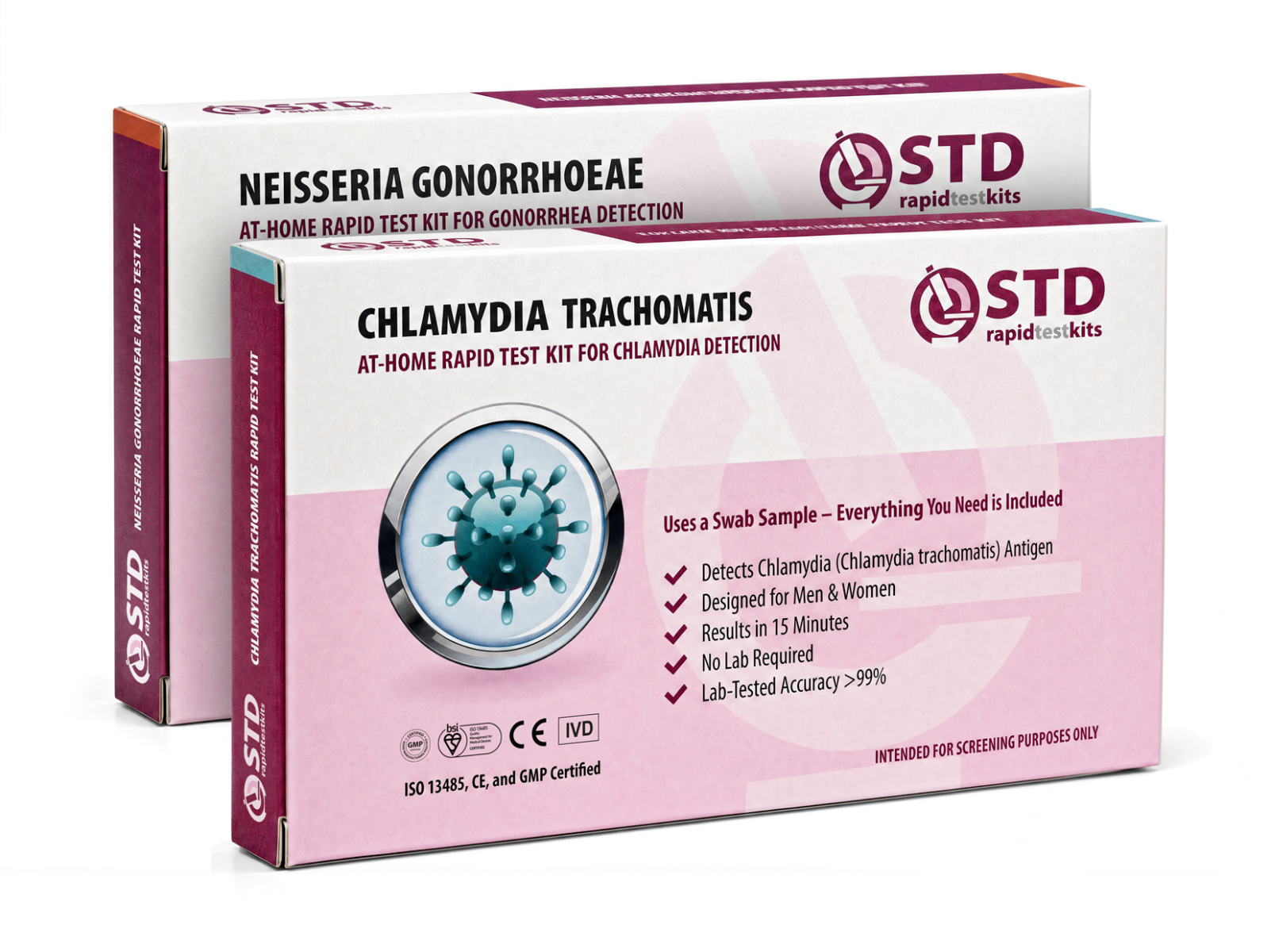
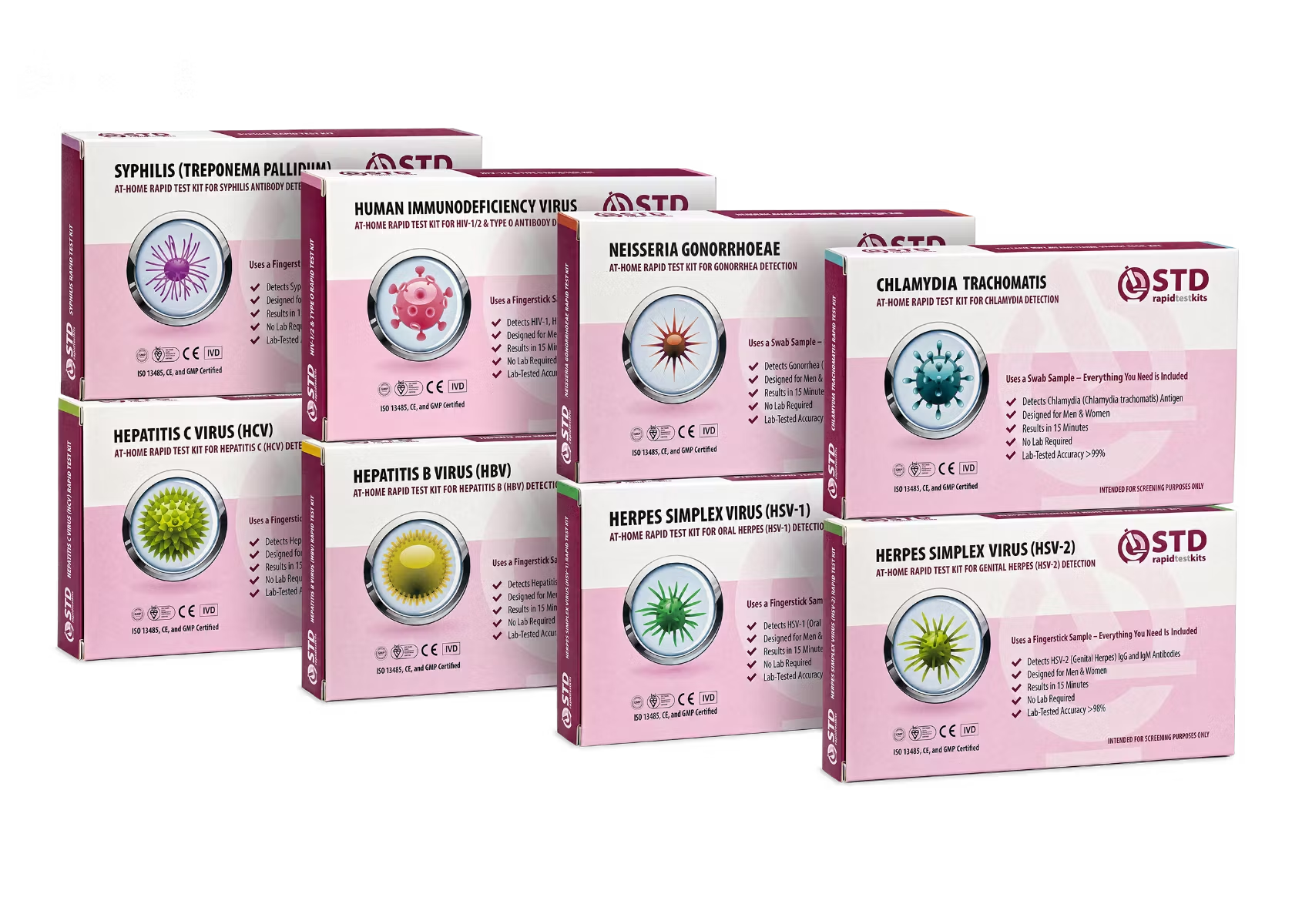
| At-home rapid lateral-flow test | Very high | 15 to 30 minutes | Fast reassurance, regular screening, retesting after a window period |
| Telehealth with home sample collection | High | Varies by provider | Prescription treatment plus screening combined |
Testing is relational, not just personal
The other thing classroom sex ed forgot to say: testing protects partners, not just you. Knowing your status is consent culture in action. It's also the unglamorous infrastructure of trust. People who internalize testing as accusation tend to stay silent about symptoms and pass on infections without meaning to. People who internalize testing as care tend to bring it up early, set a shared rhythm with partners, and move on.
If you're not sure how to start the conversation, a clean version sounds like this:
'Hey, I'm planning to test for STIs soon as part of a routine check. Want to do it together, or share recent results so we're both on the same page?' That sentence reframes testing from suspicion to mutual care. It also gives a partner an easy yes.
What schools should have said (but didn't)
If your sex-ed class skipped the basics, here is the shorter, more honest version.
The plain-English version
- Most STIs cause no symptoms in the early stages, so testing is not just for people who feel sick.
- Herpes, HPV, and syphilis spread through skin-to-skin contact, not only through fluids.
- Oral sex can transmit chlamydia, gonorrhea, syphilis, and herpes. It counts.
- Test reliability depends on a window period: 14 days for chlamydia and gonorrhea, about 45 days for HIV, and 6 to 12 weeks for syphilis.
- Testing is healthcare. It is not a confession, a punishment, or a verdict on your character.
Frequently asked questions
- Can I get an STI without 'real' sex?
- Yes. Oral sex, manual contact, and sex-toy sharing can all transmit infections. Herpes, HPV, and syphilis spread through skin-to-skin contact, so even non-penetrative activity can transfer them. If there has been any genital, oral, or skin-to-genital contact, testing is reasonable after the relevant window period.
- I feel completely fine. Why would I need to test?
- Because the majority of chlamydia and gonorrhea cases (and a large share of HIV and herpes cases) cause no symptoms in the early stages. Untreated infections can quietly cause pelvic inflammatory disease, fertility problems, or onward transmission. Routine testing is how silent infections get caught.
- How soon after sex can I test and trust a negative result?
- It depends on the infection. Chlamydia and gonorrhea are reliably detectable from about 14 days. HIV antigen/antibody tests are most reliable from 45 days. Syphilis takes 6 to 12 weeks. HSV-2 antibodies take about 12 to 16 weeks. Test before those windows close and a negative result may be a false reassurance, so retest at the right interval.
- Do I have to go to a clinic to test?
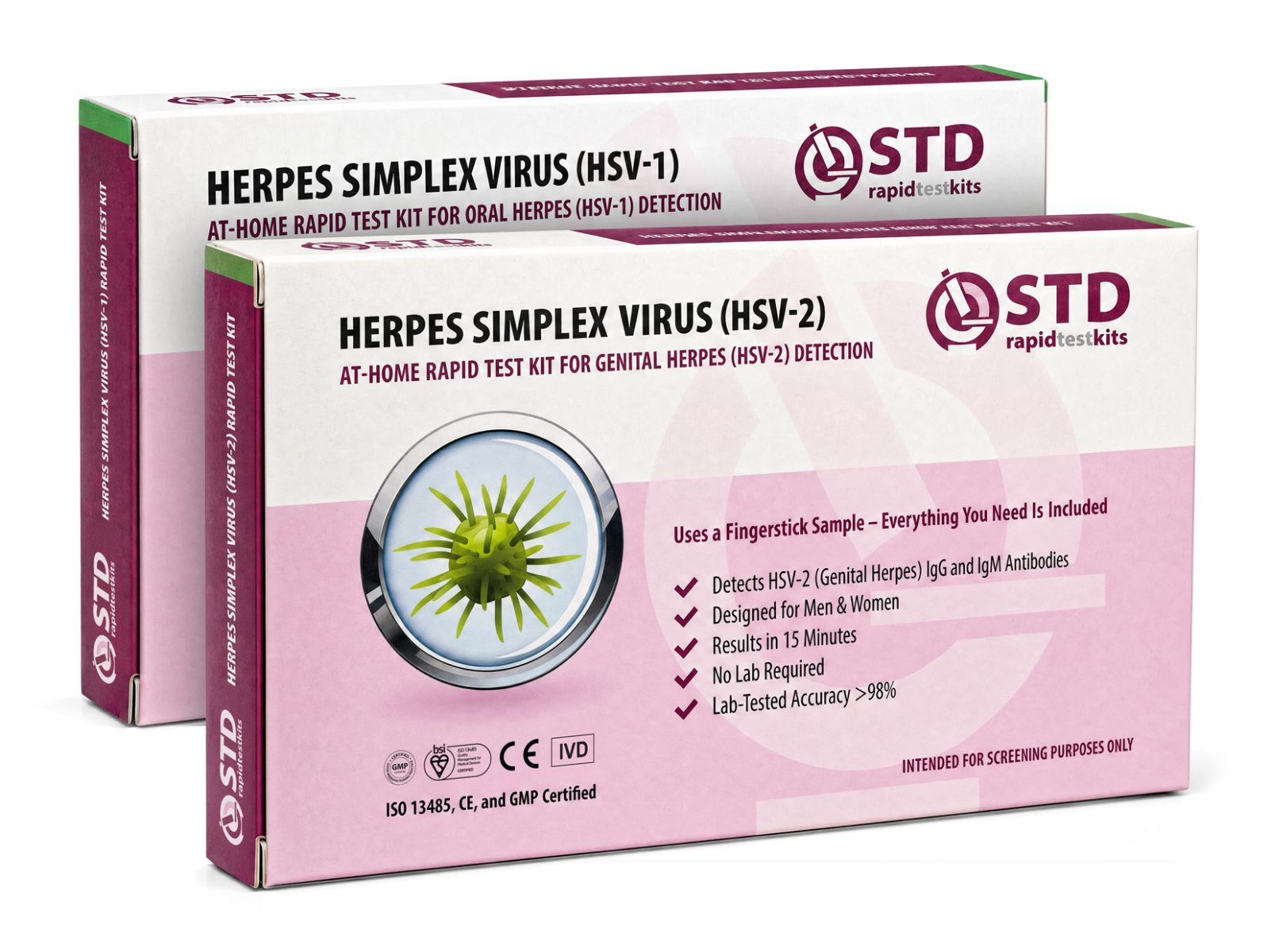
- No. You can self-collect a vaginal or penile swab for chlamydia and gonorrhea at home, or do a fingerstick blood test for HIV, syphilis, and herpes antibodies. A clinic remains the right call for active symptoms, partner-notification help, and same-visit treatment, but routine screening can happen privately at home.
- Why didn't anyone teach me this in school?
- In many regions, sex-ed curricula are shaped by political, religious, or budget constraints rather than current public-health evidence. Abstinence-first programs were designed to discourage sexual activity, not to prepare people for adult decisions about testing, consent, and risk. The gap is structural, not personal.
- What if my partner thinks testing is 'too much'?
- Reframing helps. Testing is routine healthcare, the same as a dental cleaning. Offering to test together can shift the conversation from suspicion to mutual care. If a partner refuses to engage at all, that's information about whether they're a fit for the kind of relationship you want.
- Are at-home rapid tests actually accurate?
- They are when used correctly and after the right window period. Per the manufacturer data sheets for our lateral-flow kits, sensitivity is typically reported in the mid-to-high 90s and specificity above 99%. Lab NAATs remain the analytical gold standard for chlamydia and gonorrhea, so a positive home result is worth confirming with a clinician, especially for treatment.
- How common is herpes really?
- Very common. CDC surveillance estimates that more than half of U.S. adults carry HSV-1 (oral or genital), and roughly 1 in 8 adults aged 14 to 49 carry HSV-2. Most are asymptomatic and unaware. The stigma is far heavier than the medical reality.
- I don't know what I might have been exposed to. Which test should I get?
- An 8-in-1 or 10-in-1 combination panel covers the most common infections in one go and is the practical choice when the exposure scenario is unclear. Time the testing to the longest window period in the panel (usually HIV at 45 days or syphilis/HSV-2 at 12 weeks) for a fully reliable read.
- U.S. Centers for Disease Control and Prevention. Sexually Transmitted Diseases (STD) hub: screening recommendations, asymptomatic transmission, and surveillance data.
- U.S. Centers for Disease Control and Prevention. Youth Risk Behavior Survey: U.S. adolescent sexual-activity prevalence by age and demographic.
- U.S. Centers for Disease Control and Prevention. HIV testing guidance, including window periods and test-type comparisons.
- World Health Organization. Sexually Transmitted Infections fact sheet: global incidence (1 million curable STIs daily), asymptomatic burden, and prevention strategies.
- World Health Organization. Comprehensive Sexuality Education Q&A: evidence base for inclusive curricula, delayed sexual debut, and condom-use outcomes.
- NHS. Sexually transmitted infections (STIs) overview: symptom patterns, testing pathways, and treatment.
- Planned Parenthood. STDs, HIV, and Safer Sex education resources: plain-language, inclusive guidance.
